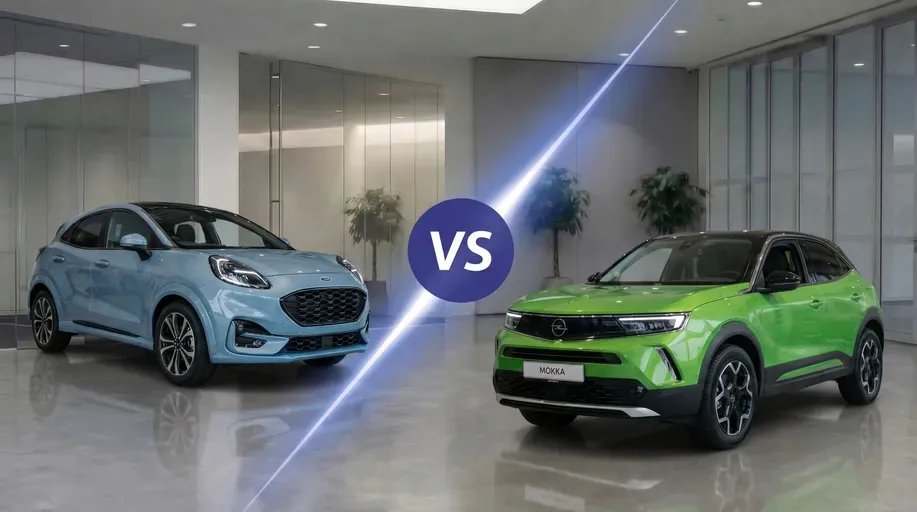
Car battle
Ford Puma vs. Opel Mokka: Complete comparison 2026
Ford Puma vs Opel Mokka: City SUV comparison. Read a detailed evaluation of engines, space, and driving characteristics and choose your ideal used car.
Apr 14, 2026
Articles
Car battle
Detailed comparison of the DS 7 Crossback and Volkswagen T-Roc. Discover the differences in spaciousness, engines, and equipment. Read the verdict and choose the best used SUV.
April 20, 2026
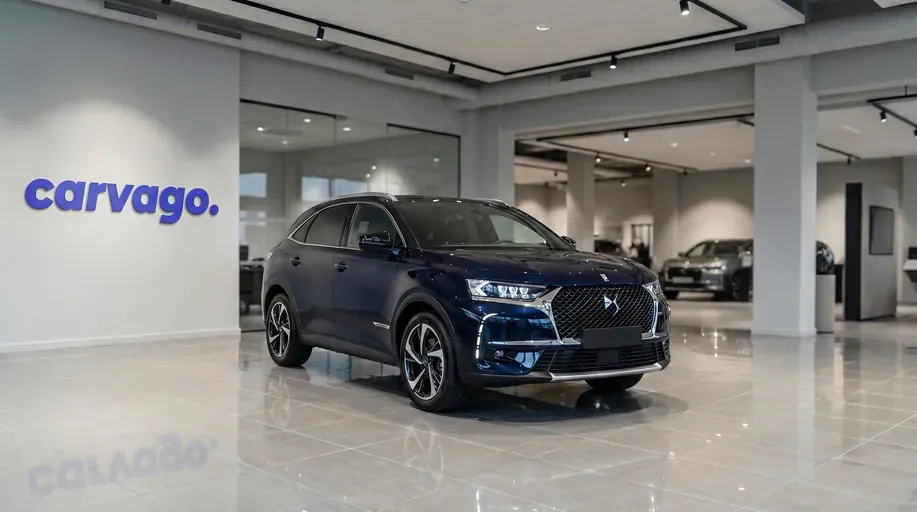
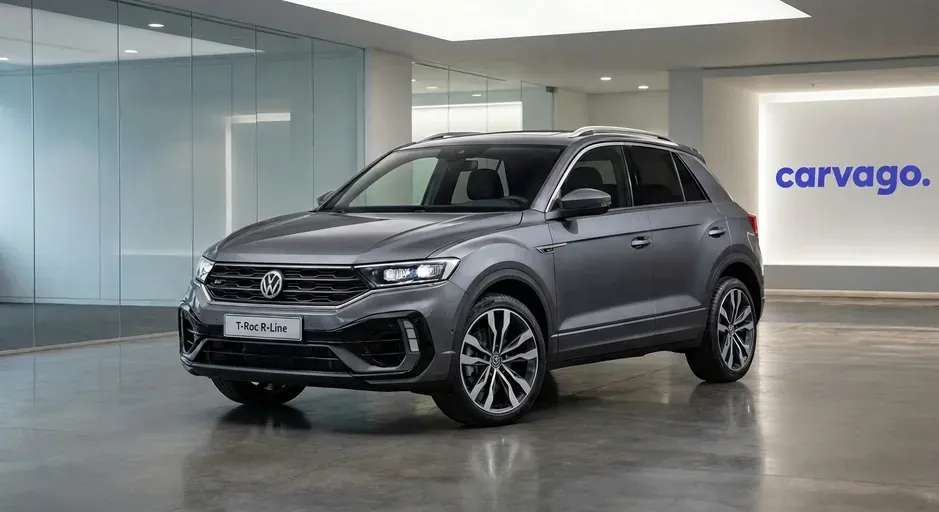
DS 7, previously also sold under the name DS 7 Crossback, represents the pinnacle of French avant-garde design and premium comfort in the modern SUV segment. Standing against it is the Volkswagen T-Roc, an exceptionally popular compact crossover that, by contrast, relies on proven German engineering, solid craftsmanship, and maximum everyday practicality. Let's take a detailed look at how the battle between distinctive French charm and rational German efficiency turns out, and which of these cars will be the best choice for you in our direct comparison.
In a direct comparison of the DS 7 and Volkswagen T-Roc models, you will immediately notice a significant difference in their overall size. The DS 7 is a premium SUV that, in terms of its dimensions, falls more on the boundary between the compact and mid-size classes, while the Volkswagen T-Roc is a typical representative of smaller city crossovers. With a length of 4 573 mm, the DS 7 is up to 339 mm longer than the standard T-Roc (whose length varies between 4 234 and 4 241 mm depending on the version). In terms of width, the French car adds a noticeable 76 mm (1 895 mm compared to 1 819 mm). This larger footprint gives the DS 7 a much more dominant appearance on the road and naturally offers more generous interior space for the crew and luggage. Conversely, the more compact T-Roc is much more agile in narrow city streets and is significantly easier to park. The larger dimensions of the DS 7 thus represent an advantage for frequent family travel, while the T-Roc clearly scores points for daily maneuverability in a crowded city.
The second key aspect is the wheelbase and height of both vehicles, which directly shape driving comfort and overall interior proportions. The DS 7 features a generous wheelbase of 2 738 mm, which is roughly 145 to 148 mm more than the classic Volkswagen T-Roc SUV. In practice, this difference manifests primarily in more generous legroom for rear-seat passengers and a noticeably smoother ride during longer highway journeys. The T-Roc, on the other hand, is noticeably lower (with a height ranging from 1 559 to 1 584 mm, it lags behind the 1 618 mm tall DS 7), which provides it with a slightly sportier silhouette and a lower overall center of gravity. The longer wheelbase of the DS 7 is thus a logical choice for those seeking maximum comfort for adult passengers in the second row, while the T-Roc will certainly satisfy drivers who prefer more agile and nimble driving characteristics.
An interesting point for used cars on today's market is the fact that Volkswagen also offered the T-Roc Cabriolet in a stylish body with a canvas roof. This rarer version has slightly different proportions compared to the regular model – with a length of up to 4 271 mm and a wheelbase of 2 630 mm, it is a little bit longer, yet with a height under 1 530 mm, it sits noticeably closer to the asphalt. Regardless of which of these body versions you choose, the choice between the DS 7 and the Volkswagen T-Roc in terms of physical dimensions boils down to a simple decision. If you need a full-fledged, spacious family SUV with dominance on the highway, you will appreciate the exterior proportions of the DS 7. If, on the other hand, a practical, easy-to-park, and compact format for the metropolis makes more sense to you, the T-Roc will become your ideal companion.
| Parameter | DS 7 SUV | Volkswagen T-Roc SUV | Volkswagen T-Roc Cabriolet |
|---|---|---|---|
| Width (mm) | 1895 | 1819 | 1811 |
| Length (mm) | 4573 | 4234 - 4241 | 4268 - 4271 |
| Height (mm) | 1618 | 1559 - 1584 | 1522 - 1527 |
| Wheelbase (mm) | 2738 | 2590 - 2594 | 2630 |
When choosing a used car approximately four years old, trunk capacity is often a key factor, especially if the car is to serve as the primary family vehicle. There is a noticeable difference in this area between the DS 7 and the first-generation Volkswagen T-Roc, which logically stems from their overall focus. While the DS 7 falls into the category of larger premium SUVs and offers generous space ideal for comfortable travel, the Volkswagen T-Roc represents the class of compact city crossovers, where more modest dimensions and agility play the main role.
The French SUV DS 7 boasts a basic trunk capacity of 555 liters. Such a value represents ample space for several extra suitcases, a large family grocery shop, or a bulky stroller. After folding down the rear seatbacks, the capacity increases to a massive 1,752 liters. A significant advantage of this model is also the fact that the popular plug-in hybrid powertrains labeled E-Tense do not lose a single liter of volume compared to conventional internal combustion versions, thanks to the clever placement of the batteries under the floor. In practice, the DS 7 is an exceptionally practical companion even for a summer holiday by the sea.
In contrast, the Volkswagen T-Roc provides 445 liters in its standard front-wheel-drive version, which can be expanded to 1,290 liters by folding the seats. The trunk has a very good shape and is perfectly sufficient for a weekend grocery shop or a shorter trip for two. However, attention should be paid to specifications when choosing a used car – if you opt for the 4Motion all-wheel-drive variant, the basic volume drops to 392 liters due to the installation of the technology and the rear differential. Also worth mentioning is the specific lifestyle version, the T-Roc Cabriolet, where the complex folding roof mechanism takes up a significant portion of the trunk, leaving just 284 liters of capacity, although even here the split rear backrests can be folded down to transport skis or other longer items.
| Parameter | DS 7 SUV | Volkswagen T-Roc SUV | Volkswagen T-Roc Cabriolet |
|---|---|---|---|
| Basic volume (liters) | 555 | 445 (392 for 4Motion) | 284 |
| Maximum volume with seats folded (liters) | 1,752 | 1,290 | Not specified |
If you require maximum practicality and a large trunk for the whole family from your car, the DS 7 will reliably impress you with its capacity. The Volkswagen T-Roc, on the other hand, targets couples and individuals who are satisfied with a slightly more modest, yet still fully sufficient space for everyday use.
Towing capacity is a key factor for many buyers, whether they plan to tow a large family caravan for a long holiday or just occasionally need to attach a trailer for a weekend trip to the DIY store. Although the DS 7 and Volkswagen T-Roc target different market segments, both models of roughly four-year-old used cars (1st generation) offer a relatively wide and sometimes surprising range of capabilities.
The premium French SUV DS 7 Crossback offers a maximum braked towing capacity from 1200 kg to 1850 kg. The chosen powertrain makes a fundamental difference here. If you opt for the powerful BlueHDi 180 diesel engine, you get an excellent 1850 kg. Conversely, the E-Tense plug-in hybrid versions (with 225 or 300 hp) are significantly limited due to the additional weight of the heavy traction batteries – they can only tow 1200 to 1250 kg. For standard PureTech petrol variants, the weight ranges between 1290 and 1550 kg.
The smaller but technically very robust Volkswagen T-Roc does not lag behind its larger competitor; on the contrary. Its standard one-litre three-cylinder engines (1.0 TSI) can handle a trailer weighing 1300 kg, which is sufficient for a typical weekend shop or space for a few extra suitcases in a small enclosed trailer. The 1.5 TSI versions with a capacity of 1500 to 1600 kg are the middle ground. However, the maximum for the T-Roc model reaches a great 1700 to 1800 kg if you choose the 2.0 TDI diesel engines, two-litre petrol engines, or even the high-performance T-Roc R version.
Note on unbraked trailers: Exact data for unbraked trailers are not directly listed in the official technical specifications for these specific model years. In practice, however, for cars of this size, a legislative limit of around 740 to 750 kg usually applies. For this reason, the unbraked weight for both vehicles is omitted from the table.
In practice, these values mean that the powerful diesel engines of both cars will allow you to tow a heavier family caravan or an animal trailer without any problems. However, if you prefer the more eco-friendly plug-in hybrid with the DS 7, you must expect its towing power to be sufficient only for smaller trailers.
Final verdict:
Although the Volkswagen T-Roc is a smaller car overall, thanks to its platform and available engines, it proves to be a very capable hauler. It offers a more balanced and, for many common engines, even a slightly higher towing capacity than the elegant French DS 7, where towing ability is heavily dependent on the absence of heavy batteries.
| Model and engine | Braked trailer weight (kg) | Unbraked trailer weight (kg) |
|---|---|---|
| DS 7 Crossback E-Tense (PHEV) | 1200 - 1250 | - |
| DS 7 Crossback 1.2 / 1.6 PureTech | 1290 - 1550 | - |
| DS 7 Crossback 1.5 BlueHDi 130 | 1430 - 1500 | - |
| DS 7 Crossback 2.0 BlueHDi 180 | 1850 | - |
| VW T-Roc 1.0 TSI | 1300 | - |
| VW T-Roc 1.5 TSI / 1.6 TDI | 1500 - 1600 | - |
| VW T-Roc 2.0 TDI | 1500 - 1800 | - |
| VW T-Roc 2.0 TSI / T-Roc R | 1700 | - |
The range of powertrains for the DS 7 and Volkswagen T-Roc models clearly shows the different focus of both cars, which is an absolutely key factor for buyers of used cars roughly four years old. While the French representative bets on a premium experience, extensive electrification, and standard automatic transmissions, the German crossover offers a wider range of traditional internal combustion engines satisfying a much broader spectrum of drivers. With the T-Roc, you can choose from the economical 1.0 TSI three-cylinder to the full-blooded sporty two-liter in the R version with all-wheel drive. The DS 7, on the other hand, attracts with quiet and economical highway cruisers with BlueHDi diesel engines and advanced plug-in hybrids with up to 300 hp. For buyers with a budget focused on a four-year-old used car, this means a choice between a versatile German classic and French technological avant-garde.
In the DS 7 Crossback model (generation produced between 2018–2022), the used car market is dominated by sophisticated powertrains paired almost exclusively with the excellent eight-speed EAT8 automatic transmission. The basic petrol choice is the 1.2 PureTech three-cylinder, but for a car of this size, the more powerful 1.6 PureTech four-cylinder with 133 kW or 165 kW makes more sense. Fans of long highway journeys will appreciate the refined diesel units. The smaller 1.5 BlueHDi is ideal for economical driving, while the more powerful 2.0 BlueHDi offered confident pull, but its sale was discontinued around 2020 due to tightening emissions regulations and is missing from the secondary market for newer cars. The top of the lineup consists of the E-Tense plug-in hybrid versions. While the E-Tense 225 offers front-wheel drive, the top-of-the-line E-Tense 300 features advanced 4x4 all-wheel drive thanks to an additional rear electric motor.
| Engine Type | Fuel | Power (kW) | Torque (Nm) | Transmission |
|---|---|---|---|---|
| 1.2 PureTech 130 | Petrol | 96 | 230 | 6-speed manual / 8-speed EAT |
| 1.6 PureTech 180 | Petrol | 133 | 250 | 8-speed EAT |
| 1.6 PureTech 225 | Petrol | 165 | 300 | 8-speed EAT |
| 1.5 BlueHDi 130 | Diesel | 96 | 300 | 8-speed EAT |
| 2.0 BlueHDi 180 | Diesel | 130 | 400 | 8-speed EAT |
| E-Tense 225 | PHEV (Petrol+Elec.) | 165 | 360 | 8-speed EAT (4x2) |
| E-Tense 300 4x4 | PHEV (Petrol+Elec.) | 220 | 520 | 8-speed EAT (4x4) |
The first-generation Volkswagen T-Roc takes a much more classic approach with an emphasis on pure internal combustion engines in roughly four-year-old used cars. The absolute king of sales and the most sensible choice for most drivers is the 1.5 TSI four-cylinder with 110 kW and cylinder deactivation technology (ACT), which ensures an excellent balance between dynamics and fuel consumption. The affordable base is the 1.0 TSI three-cylinder (81 to 85 kW). For those interested in 4MOTION all-wheel drive, there is the powerful 2.0 TSI petrol (140 kW), and for true speed enthusiasts, the manufacturer offered the T-Roc R model with an extreme output of 221 kW. As for diesel variants, the long-term favorite is the proven 2.0 TDI (110 kW) unit. The smaller 1.6 TDI (85 kW) gradually disappeared from the range after 2020 and you won't find it in four-year-old cars anymore. The T-Roc gives drivers a choice between a precise six-speed manual transmission and the popular seven-speed dual-clutch DSG automatic.
| Engine Type | Fuel | Power (kW) | Torque (Nm) | Transmission |
|---|---|---|---|---|
| 1.0 TSI | Petrol | 81 - 85 | 200 | 6-speed manual |
| 1.5 TSI | Petrol | 110 | 250 | 6-speed manual / 7-speed DSG |
| 2.0 TSI | Petrol | 140 | 320 | 7-speed DSG (4x4) |
| 2.0 TSI (R) | Petrol | 221 | 400 | 7-speed DSG (4x4) |
| 1.6 TDI | Diesel | 85 | 250 | 6-speed manual |
| 2.0 TDI | Diesel | 110 | 340 - 360 | 6-speed manual / 7-speed DSG |
Short evaluation of powertrains:
If you are a tech-oriented driver, have a place to charge, and are looking for premium comfort without vibrations, the E-Tense plug-in hybrids in the DS 7 will be a great choice for you. Conversely, the Volkswagen T-Roc is ideal for traditionalists and practical-minded buyers – the 1.5 TSI variant is a fantastic all-rounder for both city and highway, while models with the 2.0 TDI engine will please thrifty highway mile-munchers. Spirited drivers looking for performance will clearly find satisfaction in the T-Roc R version, which has no direct driving alternative in the French brand's portfolio.
While the DS 7 scores with quiet plug-in hybrids and a smooth automatic for maximum comfort, the T-Roc wins thanks to the huge variability of proven TSI and TDI engines, which are tailored to both thrifty families and sporty drivers.
Choosing the right power unit is crucial for long-term satisfaction with a used car. While the DS 7 relies primarily on quiet French units and a wide range of complex plug-in hybrids (E-Tense), the Volkswagen T-Roc benefits from a rich and proven range of traditional group TSI and TDI engines. Our recommendation for roughly four-year-old used cars is based on a balance of performance, real-world fuel consumption, everyday usability, and, above all, long-term mechanical reliability.
This 1.6-liter turbocharged petrol four-cylinder is the ideal and most sensible choice for those looking for a relaxed premium ride without the potential risks associated with battery degradation in used plug-in hybrids. While the base three-cylinder 1.2 PureTech 130 might discourage used car buyers due to risks associated with the wet timing belt (belt-in-oil), the more powerful four-cylinder 1.6 PureTech relies on a much more robust timing chain, and its power is more than sufficient for a heavier luxury SUV.
In real-world driving, you can expect a combined consumption of around 7 to 8 liters per 100 km, which is an acceptable value given the automatic transmission and higher body style. The excellent and highly sought-after diesel alternative 2.0 BlueHDi 180 unfortunately left the range during 2020. Therefore, if you are targeting a car approximately four years old, the 180 hp petrol engine is the most accessible and reliable way to fully enjoy French comfort in terms of age and mileage.
The group's 1.5 TSI petrol four-cylinder is the absolute sweet spot in the T-Roc model and makes by far the most sense for the vast majority of drivers. The 150 hp output ensures very brisk dynamics on the highway even with a fully loaded car, significantly outperforming the weaker one-liter three-cylinder (1.0 TSI). At the same time, it is a unit equipped with the Active Cylinder Technology (ACT) system, which shuts down the two middle cylinders under low load. Thanks to this, the car can typically be driven with a real consumption between 6.0 and 6.5 liters per 100 km.
In used cars from around 2021 and 2022, this engine is already very well-tuned. A typical ailment from the first years of production – occasional "kangarooing" and jerking when cold – has been fully eliminated by Volkswagen in these newer model years through engine control unit software optimization. This engine is therefore ideal for commuting from suburban areas as well as for family trips, where a more complex 2.0 TDI diesel engine would not pay off with lower mileage and would suffer from frequent DPF filter regeneration.
Official manufacturer-rated fuel consumption figures almost always differ from what drivers experience in real-world traffic. Especially with popular SUVs, which have a higher body structure and the associated higher aerodynamic drag, driving style and total weight play a crucial role. To get the most accurate picture, we rely on real-world data from thousands of users of the Spritmonitor.de community portal. This data faithfully reflects the daily use of cars relevant to the market for approximately four-year-old used vehicles.
Source: Spritmonitor.de /
| Model and engine | Average consumption (l/100 km) |
|---|---|
| Volkswagen T-Roc 1.0 TSI 81 kW | 6,2 |
| Volkswagen T-Roc 1.5 TSI 110 kW | 6,7 |
| DS 7 Crossback 1.6 PureTech 132 kW | 7,8 |
| Volkswagen T-Roc 2.0 TDI 110 kW | 5,5 |
| DS 7 Crossback 1.5 BlueHDi 96 kW | 5,8 |
| DS 7 Crossback 2.0 BlueHDi 130 kW | 6,4 |
| DS 7 Crossback E-Tense 225 165 kW | 4,5 |
A detailed look at the collected data clearly highlights several trends. In the petrol engine category, a somewhat surprising finding emerges: the small turbocharged three-cylinder 1.0 TSI in the Volkswagen T-Roc does not bring significant fuel savings compared to the more powerful version. Due to the higher load in an SUV-type vehicle, the engine has to work harder, so the difference compared to the much more dynamic four-cylinder 1.5 TSI is in practice only about half a litre per 100 kilometres. The heavier and larger DS 7 in the 1.6 PureTech petrol version then shows that a large body takes its toll – its consumption quickly climbs towards eight litres. Traditional diesel engines, on the other hand, confirm their dominance on long routes. The economical Volkswagen 2.0 TDI and the French BlueHDi units easily stay in the favourable range between 5,5 and 6,5 litres. A completely specific chapter is the plug-in hybrid DS 7 E-Tense. With an average of 4,5 l/100 km, it is the most economical on paper, but this value is balanced by the necessity of diligent and regular charging.
What does this mean for average drivers? If you drive mostly in the city or over shorter suburban distances, the Volkswagen T-Roc with TSI petrol engines is a rational choice. They warm up quickly, do not suffer on short trips, and maintain reasonable operating costs. For regular long-distance commuting or frequent motorway driving, the diesel variants of both models represent the absolute foundation that will save you considerable money at the filling station. However, if you are among the technology enthusiasts and have the opportunity to recharge the car every day at home or at work, the plug-in hybrid DS 7 E-Tense becomes a surprisingly economical choice for daily operation with the possibility of absolutely emission-free driving in the city.
Fuel consumption is therefore definitely one of the main factors when deciding between these two vehicles. Thanks to its smaller dimensions and lower weight, the Volkswagen T-Roc is noticeably more economical in petrol versions and serves as an ideal city or family all-rounder. In contrast, the DS 7 brings unmistakable luxury and comfort, for which you will pay significantly more in fuel with conventional petrol engines. The only real way to exceptionally low costs with the French model remains only an effectively used plug-in hybrid.
When looking for an approximately four-year-old used car (model years 2021–2022), both cars fall into different price and size categories, even though the price gap between them on the used car market is starting to narrow slightly. While the DS 7 (sold as the DS 7 Crossback until 2022) featured as a premium SUV with a confident list price, the Volkswagen T-Roc targeted mainstream buyers, and the development of their prices on the secondary market reflects this.
The French representative of the premium segment offers luxurious materials, a unique avant-garde design, and a sophisticated chassis. However, as a four-year-old used car, it experiences a relatively steep drop in value, making it an unexpectedly interesting choice from the second-hand market.
The Volkswagen T-Roc is among the exceptionally popular and reliable compact SUVs, which, conversely, hold their value very well. There is a significantly larger quantity of them on the market, so you have a vast array of options and color combinations when choosing a used one.
| Criterion | DS 7 Crossback | Volkswagen T-Roc |
|---|---|---|
| Depreciation | Higher percentage drop in the first years | Very slow loss of value |
| Selection on the used market | Limited (harder to find specific equipment) | Huge (wide range of engines and trims) |
| Service and spare parts | Higher prices (premium components and complex PHEV) | Standard prices, easy availability |
While the T-Roc represents a rational safe bet, a wide selection, and easy future resale, a used DS 7 Crossback can offer substantially more luxury, space, and comfort features for a price that, for a new car, belonged to a completely different league. If you desire comfort and don't mind a more challenging subsequent resale, the DS 7 makes great sense from a value-for-money perspective on the used car market.
As a four-year-old used car, the Volkswagen T-Roc holds its value flawlessly and offers a huge selection on the market, while the DS 7 Crossback attracts with a steep drop from its original price tag, allowing you to get a premium SUV for the price of a well-equipped compact.
Both compared models, the DS 7 and the Volkswagen T-Roc, received the maximum five-star rating in independent Euro NCAP safety tests. When evaluating the safety of used cars, however, it is necessary to put these results into the correct context and emphasize the year of testing. Euro NCAP test protocols are constantly evolving and becoming stricter – today's standards include, for example, new frontal impact simulations, advanced cyclist detection, or emergency scenarios at intersections. For this reason, percentage scores from different years cannot be directly compared. Both models available on the market as roughly four-year-old used cars fall under the 2017 testing methodology, which means that while they were not tested according to the very latest and strictest rules, their mutual comparison is completely objective and highly informative for buyers.
The French premium SUV DS 7 (formerly known as the DS 7 Crossback) underwent crash tests in 2017. The cabin demonstrated excellent structural integrity, for which the car earned a great rating of 91% in adult occupant protection and 87% for child protection. Protection of vulnerable road users reached 73%. In the safety assist systems category, the car scored 76%, indicating a solid basic equipment level including a standard autonomous emergency braking system and lane departure warning. Although the validity of this initial certification has formally expired due to the gradual aging of earlier standards, the DS 7 offers a highly modern level of active safety on the used car market thanks to its often richer premium equipment (including, for higher versions, e.g., night vision and advanced blind spot monitoring).
The Volkswagen T-Roc completed its tests in the same year (2017) and, from the perspective of passive safety, offered even more convincing results in some respects. Adult occupant protection climbed to a top-tier 96%, slightly surpassing its rival. The child protection result was an identical 87%. The T-Roc also performed slightly better in pedestrian collisions, scoring 79% for the protection of vulnerable road users. In the safety assist rating, the car achieved 71% at the time. From today's perspective, this means that while basic passive safety is exemplary, some advanced assistance features might have been optional on early models. However, for roughly four-year-old used cars with upgraded packages, the range of assistants has been substantially modernized.
| Parameter | DS 7 | Volkswagen T-Roc |
|---|---|---|
| Year of testing | 2017 | 2017 |
| Adult protection | 91 % | 96 % |
| Child protection | 87 % | 87 % |
| Vulnerable road user protection | 73 % | 79 % |
| Safety assist systems | 76 % | 71 % |
In conclusion, both cars offer highly above-average safety for the occupants, both in terms of body rigidity and the presence of basic and advanced assistance technologies. However, if we evaluate which car offers a more comprehensive and modern safety package by today's standards, the DS 7, due to its premium focus, more often features a wider range of advanced electronic assistants even in the base version. On the other hand, the Volkswagen T-Roc will please drivers looking for maximum passive protection, as its 96% score for adult passengers is among the absolute best in the compact SUV market.
Although the VW T-Roc is a champion in passive adult protection, the DS 7 slightly beats it in the overall complexity of active safety assistants thanks to its richer standard equipment.
In addition to standard equipment, both models offer much more than just basic functions, with each having its own very distinctive approach to added value, technology, and the overall driving experience.
Extravagant and luxurious design, giving the car an unmistakable look
Top-tier driving comfort thanks to the adaptive suspension (Active Scan Suspension)
Selection of high-quality interior materials, including premium leather and Alcantara
Excellent acoustic insulation of the cabin for quiet long-distance travel
Powerful and efficient E-Tense plug-in hybrid versions with optional all-wheel drive
More complex control ergonomics, where design sometimes takes precedence over functionality (e.g., window buttons on the center console)
Slower and less intuitive multimedia system compared to German competitors
More significant and faster depreciation of residual value on the used car market
Driving characteristics lack sporting agility; the focus is purely on a comfort-oriented setup
The DS 7 is the perfect choice for drivers looking for unusual luxury, maximum comfort on long journeys, and who want to stand out from mainstream production. This French model will primarily appeal to lovers of avant-garde design and premium materials who don't mind minor ergonomic compromises.
Straightforward ergonomics and intuitive layout of physical and touch controls
Confident and predictable driving characteristics, benefiting from the sophisticated MQB platform
Wide range of proven and efficient internal combustion engines (TSI and TDI)
Stable residual value on the used car market and high liquidity for resale
Fast and user-friendly infotainment, especially in post-2022 facelift versions
Harder and cheaper-feeling interior plastics in older model years and lower trim levels
Smaller trunk capacity and more limited rear legroom compared to larger SUVs
Rational and conservative design that may not evoke as much emotion
Relatively high purchase price on the used car market given the car's compact dimensions
The Volkswagen T-Roc is an ideal all-round crossover for those who require robust and reliable technology, easy daily use, and confident driving characteristics. Thanks to its more compact dimensions, it is great for maneuvering in city traffic, while representing a safe bet in terms of value retention.
Based on our own CarAudit inspections, breakdown statistics, long-term user feedback, and service reports, we have compiled an overview of the most common problems that buyers of these used cars should watch out for.
For the DS 7 model (especially earlier versions bearing the Crossback designation), common faults revolve around onboard electronics and specific weaknesses in diesel or plug-in hybrid powertrains.
When choosing a used DS 7 model, focus on a documented service history, flawless infotainment operation, and carefully check the functionality of the AdBlue system on diesel versions.
The Volkswagen T-Roc benefits from proven Group technology, yet it shares several typical faults associated with certain types of transmissions and material quality of older model years.
Most technical problems with the T-Roc model can be easily detected during a longer test drive; the critical points are the smoothness of the DSG transmission shifts and the condition of the brake components.
When buying a used car, a thorough inspection is key. Here are some specific points to focus on for these two models to avoid unpleasant surprises and potentially expensive repairs.
The French DS 7 offers a significantly larger trunk with a base volume of 555 liters. The Volkswagen T-Roc has a smaller trunk with a capacity of 445 liters for front-wheel-drive versions, while it drops to 392 liters for all-wheel-drive models. The larger French model is thus a much more practical choice for family vacations.
The DS 7 is a premium SUV focused on maximum luxury and offers an exceptionally smooth ride, especially with the optional adaptive suspension that scans the road ahead. The competing Volkswagen T-Roc has a stiffer and sportier setup, which provides confidence in corners but slightly worse isolation from road imperfections. For tireless highway cruising, the DS representative is therefore clearly more comfortable.
Yes, the DS 7 is available in several powerful plug-in hybrid versions labeled E-Tense, which allow for daily pure electric driving. The German rival, on the other hand, relies exclusively on traditional gasoline and diesel engines; it does not offer hybrid technology in this generation. Those interested in electrification and emission-free city driving must therefore choose the French car.
Thanks to its noticeably more compact dimensions and shorter body, the Volkswagen T-Roc is much more agile in narrow city streets and offers an excellent view from the cabin. The larger and wider DS 7 requires more caution when maneuvering in underground garages and tight spaces, and more frequent reliance on parking cameras. The smaller German crossover is thus more user-friendly for typical city traffic.
The T-Roc is generally cheaper to maintain thanks to shared technology within the VW Group, which means more affordable spare parts and a very wide network of independent service centers. As a representative of the premium segment, the DS 7 has a higher hourly rate in authorized service centers and its specific parts are more expensive. However, you can significantly reduce the operating costs of the DS 7 E-Tense if you have the option to charge the car regularly at home.
Sources: ADAC, garaz.cz, aktualne.cz, fdrive.cz, autojournal.cz, autosystem.cz
This article was prepared using artificial intelligence tools. The section guarantor is Petr Dušek.
Ford Puma vs Opel Mokka: City SUV comparison. Read a detailed evaluation of engines, space, and driving characteristics and choose your ideal used car.
Apr 14, 2026
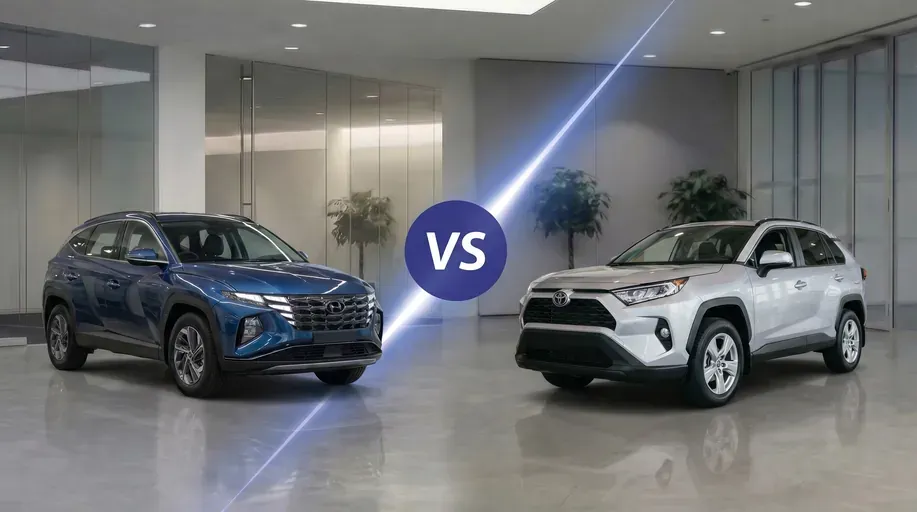
Detailed comparison of Hyundai Tucson vs. Toyota RAV4. Read real-world experiences, a comparison of reliability, fuel consumption, and equipment, and find out our final verdict.
Apr 17, 2026
Opel Grandland vs. Seat Ateca: Which SUV to choose? Our detailed comparison will reveal the key differences and help you find the right car for you.
Apr 14, 2026