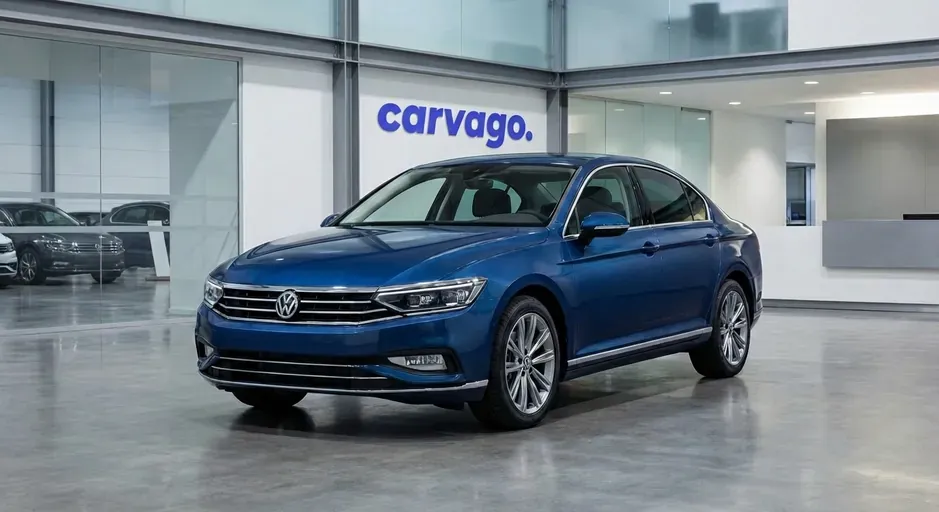
Review Honda Accord: What do owners and experts really say?

Honda Accord (2008-2015) review: real owner experiences, common faults, engine picks, and used prices for the final European generation.

October 29, 2026

Honda Accord

Verdict at a Glance

  • Who it suits: Long-distance commuters and family buyers seeking a well-built, quiet, and comfortable cruiser.
  • Recommended engine: The 2.0 i-VTEC petrol for city driving, or the 2.2 i-DTEC diesel for frequent motorway trips.
  • What to avoid: Diesel models used for short urban journeys, and cars without documented recall repairs checked by VIN.

Introduction

The eighth-generation Honda Accord represents the manufacturer's final offering in the European mid-size segment. Competing against established D-segment alternatives, European customer deliveries began in June 2008 for the Honda Accord Saloon, with the Honda Accord Tourer following in September and October 2008. European retail sales concluded in June 2015, marking the end of the nameplate's official presence in Europe without a direct successor.

Available exclusively in four-door saloon and five-door estate body styles, the model received a mid-cycle revision that premiered in March 2011 and reached showrooms in April 2011. The update introduced subtle exterior styling alterations alongside minor chassis and interior refinements, leaving the car's distinctive profile largely intact.

On the pre-owned market, this generation of the Honda Accord is targeted at long-distance commuters and family buyers seeking a well-engineered saloon or estate with traditional switchgear, clean mechanical layouts, and an alternative character to mainstream European fleet vehicles.

Owner Experiences: Common Faults and Recalls

Long-term owner reports across European markets paint a consistent picture of the eighth-generation Honda Accord: naturally aspirated petrol variants demonstrate durable mechanical components requiring little beyond routine servicing, whereas diesel versions show higher sensitivity to operating patterns and demand stricter vigilance.

Repeated Model-Specific Faults

Tests and owners frequently report sticking rear brake calipers across both saloon and estate body styles. The rear parking brake mechanism and slider guide pins are prone to corrosion and road grime accumulation, leading to uneven brake pad wear in as little as 30,000 to 45,000 km. In mild cases, binding brakes cause localized disc overheating and increased drag; routine cleaning, lubricating guide pins with high-temperature silicone grease, and fitting revised return springs can resolve the issue, though pitted slider bores require caliper replacement.

On the estate Honda Accord Tourer, owners report occasional failures of the electrically powered tailgate. The door may unlatch, travel partially open, and emit an audible warning before halting or reversing direction. In most cases, this is caused by aging conventional gas-assist struts losing pressure, which places excessive load on the electric drive motor and triggers the anti-pinch sensor. Replacing the auxiliary gas struts typically resolves the fault, although failing latch cinch microswitches require latch renewal in isolated cases.

For the diesel Honda Accord equipped with the 2.2 i-DTEC engine, urban duty cycles with frequent short trips frequently disrupt particulate filter regeneration cycles. Unburnt diesel fuel injected during post-injection phases washes past the piston rings into the oil sump, elevating the oil level above the maximum mark on the dipstick and prompting warning indicators or reduced engine power. Maintaining long-distance motorway driving cycles prevents premature soot saturation, alongside applying factory engine management software revisions.

Verified Safety Recalls

Official European registers record three significant safety recall campaigns applicable to this generation.
SubjectAffected Production WindowMarket ReachDefect & Remedial Action
Driveshaft Corrosion01 August 2012 to 31 January 2013Worldwide (verified European register entries)The driveshaft can snap due to corrosion, potentially causing a loss of motive power and vehicle roll-away if the parking brake is disengaged. Workshops inspect the protective coating and replace corroded shafts free of charge.
Takata Passenger Airbag04 July 2008 to 20 May 2015Worldwide and Pan-EuropeanDefective front passenger airbag inflator propellants can cause uncontrolled inflation and metal fragment deployment upon activation, risking occupant injury. Authorised dealers replace the inflator module with a revised component.
Diesel Particulate Filter Dilution24 March 2008 to 20 January 2011Pan-European (2.2 i-DTEC diesel)Excessive engine oil rise from particulate filter regeneration can lead to oil entering combustion chambers and causing an uncontrolled rise in engine speed. Dealers update engine control software and replace the engine oil and filter.

🔍 What to check before buying

  • Request an official dealer verification using the car's VIN to confirm completion of all safety campaigns, specifically the Takata front passenger airbag inflator replacement and the driveshaft corrosion inspection.
  • On diesel models, check the engine oil dipstick to ensure the oil level does not sit above the maximum mark, which signals fuel dilution from repeated incomplete particulate filter regenerations.
  • On manual diesel versions, test for dual-mass flywheel judder and clutch slipping by accelerating under full load in fourth gear from low engine speeds.
  • Inspect the rear brake discs for heat discolouration or dragging, and confirm the handbrake levers return freely off the caliper stops.
  • On estate models with an electric tailgate, cycle the opening and closing sequence from both the key fob and dashboard switch to confirm the mechanism moves smoothly without pausing or reversing.

Engines: Which One to Choose

The eighth-generation European Honda Accord was sold with a focused line-up of naturally aspirated four-cylinder petrol engines alongside Honda's proprietary turbo-diesel. All variants drive the front wheels through either a six-speed manual gearbox or a five-speed torque-converter automatic.

EngineFuelPowerGearboxModel years
2.0 i-VTECPetrol115 kW (156 hp)6-speed manual / 5-speed automatic2008–2015
2.4 i-VTECPetrol148 kW (201 hp)6-speed manual / 5-speed automatic2008–2015
2.2 i-DTECDiesel110 kW (150 hp)6-speed manual / 5-speed automatic2008–2015
2.2 i-DTEC Type SDiesel132 kW (180 hp)6-speed manual2009–2015

Short trips and city driving

For frequent urban journeys and short commutes, the 2.0 i-VTEC is the most sensible recommendation as a used car. As a naturally aspirated petrol unit without a particulate filter, it tolerates repeated cold starts without soot-related complications. Low-end torque is modest, which requires the driver to shift down when quick acceleration is needed. Opting for the automatic transmission eases stop-and-go city traffic, though it blunts acceleration compared to the manual.

Mixed use and balanced driving

Drivers seeking stronger pace across mixed routes will find the larger 2.4 i-VTEC more flexible. It delivers its strongest performance higher in the rev range, making brisk overtaking straightforward on rural roads when paired with the manual gearbox. The automatic transmission shifts smoothly but reacts more deliberately to throttle kick-down commands, so an enthusiast-minded buyer is better served by a manual petrol Honda Accord.

Long motorway distances and towing

For regular long-distance motorway driving, a diesel Honda Accord is the most suitable choice. The standard 2.2 i-DTEC provides steady low-end pulling power that holds cruising speeds easily without requiring gear changes on motorway gradients. The higher-output 2.2 i-DTEC Type S offers broader mid-range pulling reserves, though Honda produced this variant exclusively as a manual Honda Accord.

For towing trailers, the manual diesel is clearly preferable to the automatic Honda Accord, as the manufacturer applied a substantially lower braked towing limit to diesel automatic versions.

For documented mechanical faults, recall campaigns, and maintenance requirements across each engine, consult the owner experiences section.

Space & Practicality

In everyday use, the eighth-generation Honda Accord prioritises driver-focused ergonomics and exterior styling over ultimate load-hauling volume. Rear seating provides sufficient room for two adults, though taller occupants will encounter tighter knee clearance and restricted foot space beneath the front seats. Ingress to the back bench is somewhat hampered by relatively narrow rear door openings and a sloping roofline. Everyday loading is helped by a fixed rear bench with split-folding backrests that drop completely flat in a single movement without removing the head restraints. While the Honda Accord Saloon has a wide but shallow boot accessed via a traditional saloon aperture, the Honda Accord Tourer adds greater utility through a level loading sill, separate underfloor storage, and a flush cargo deck, trading outright boxy cargo capacity for a steeply raked tailgate design.

Dimension / MetricSaloonTourer
Length (mm)4,725–4,7264,740–4,750
Width (mm)1,8401,840
Height (mm)1,4401,470
Wheelbase (mm)2,7052,705
Boot capacity, seats up (l)467*406
Boot capacity, seats folded (l)—1,252

*On saloon versions fitted with the optional premium audio subwoofer and navigation hardware, standard luggage capacity is reduced to 460–464 litres. Tourer maximum capacity reflects total available volume including the underfloor compartment.

What the Tests Say

On the road, the Honda Accord proves a composed, stable motorway cruiser. Its suspension delivers controlled damping that absorbs coarse surfaces smoothly while maintaining balance during abrupt avoidance manoeuvres. Steering responses are secure and accurate, though testers noted that ultimate cornering grip trails sharper mid-size rivals. Acoustic refinement is a shared highlight, with wind and road rumble well isolated and engines operating smoothly at cruising speeds.

Inside, testers commended the durable fit and finish, noting tight panel gaps and resilient cabin materials that resist wear over high mileages. The front seats provide effective lateral bolstering and supportive posture on long trips. However, ergonomics drew consistent criticism: the centre console relies on a cluttered array of small physical buttons that distract while driving, and thick pillars restrict rearward visibility.

Professional tests broadly agree on the car’s cruising comfort, structural solidity, and low cabin noise. Opinions diverge primarily on driver engagement, with some finding the chassis agile while others view the overall driving experience as somewhat forgettable. The facelift introduced revised dampers for slightly smoother compliance, upgraded sound insulation, and refreshed dashboard textures, though the busy switchgear layout remained intact.

Prices and Market Offer

All the market charts in this section are drawn from Carvago's listings of the whole Honda Accord model family, including other generations represented in the data, not only the reviewed generation. Because official European sales concluded earlier, the figures recorded here reflect later international model years on the platform. Across these available listings, the median asking price spans from €10,200 for 2018 models to €24,800 for 2025 vehicles. Consequently, this chart does not establish a separate price level for the reviewed generation.

The chart tracks advertised Honda Accord listings per month from April 2026 to September 2026, rising from 365 vehicles in April to a peak of 476 in July.

Honda Accord - availability over time

Active listings over time

MonthHonda Accord
2026-04365
2026-05411
2026-06449
2026-07476
2026-08405
2026-09364

Source Carvago

Supply declined in the late summer to 364 listings by September 2026, meaning buyers generally had between 364 and 476 cars to choose from across this six-month span.

Among used listings advertised today, the median asking price of cars built in 2018 is €10,200, while the median asking price of cars built in 2025 is €24,800. The chart below illustrates how these median asking prices compare across build years.

Honda Accord - median price by model year

Median advertised price by year of manufacture

Model yearHonda Accord
201810 200
201910 700
202012 700
202114 100
202216 900
202321 500
202423 100
202524 800

Source Carvago

Buyers exploring earlier build years see median asking prices of used listings advertised today ranging from €10,200 for 2018 models to €12,700 for 2020 models. In contrast, those seeking newer vehicles need budgets corresponding to median asking prices of €23,100 for 2024 models and €24,800 for 2025 models.

Between April and September 2026, petrol led the advertised selection, starting at 230 listings in April alongside 131 hybrids. The chart below illustrates how active listings evolved across each fuel type over these months.

Honda Accord - supply by fuel over time

Supply composition by fuel type

  • Petrol

  • Diesel

  • Hybrid

MonthPetrolDieselHybrid
2026-042304131
2026-052482161
2026-062562191
2026-072582216
2026-082210184
2026-092140150

Source Carvago

By September 2026, the offer consisted of 214 petrol cars and 150 hybrids, with diesel listings at 0. Realistic options for buyers are effectively limited to petrol and hybrid powertrains, with all other fuel types absent from the market.

The chart tracks the average asking price of advertised Honda Accord models from April 2026 to September 2026, opening at €11,800 and peaking at €13,200 in July.

Honda Accord - price trend over time

Average price development over time

MonthHonda Accord
2026-0411 800
2026-0512 000
2026-0612 500
2026-0713 200
2026-0813 000
2026-0913 100

Source Carvago

After a dip to €13,000 in August, the average finished at €13,100 in September, marking an overall increase of approximately 11% across the six months.

Pros & Cons

Honda Accord

Pros

Composed motorway ride with low cabin noise

Durable interior build quality and hard-wearing materials

Robust naturally aspirated petrol engines requiring straightforward upkeep

Cons

Cluttered centre console switchgear that distracts while driving

Diesel engines prone to oil dilution on frequent short journeys

Tight rear knee clearance and restricted foot space for taller adults

Frequently asked questions

Naturally aspirated petrol versions of the Honda Accord demonstrate high mechanical durability and require little beyond routine servicing. In contrast, diesel variants demand stricter vigilance, as repeated short journeys lead to particulate filter soot saturation and oil dilution.

The 2.0 i-VTEC is the most sensible choice for city driving and shorter commutes because it lacks a particulate filter and tolerates cold starts without soot complications. For mixed routes with frequent overtaking, the larger petrol Honda Accord provides greater pace, although extracting its best performance requires revving the engine higher.

No, the diesel Honda Accord is suited to steady long-distance motorway cruising rather than urban stop-and-go driving. Frequent short trips interrupt particulate filter regeneration cycles, causing unburnt fuel to dilute the engine oil and raise the level on the dipstick.

Have an authorised dealer verify the car's VIN to confirm that official safety recalls for the Takata passenger airbag inflator and driveshaft corrosion were carried out. You should also inspect the rear brake calipers for sticking guide pins and check that the diesel engine oil level has not risen above the maximum mark.

Sources: global.honda, adac.de, autocar.co.uk, autoexpress.co.uk, autobild.de

This article was prepared using artificial intelligence tools. The section guarantor is Petr Dušek.

Related articles

Car battle

Volvo S60 vs. Volvo V60: Complete comparison 2026

Detailed comparison of Volvo S60 vs. Volvo V60: Sedan or estate? We reveal the differences in spaciousness, equipment, and driving characteristics. Find out which car to choose.

May 16, 2026

Review

Review Volvo V60: What do owners and experts really say?

Volvo V60 review: real owner insights, reliability, running costs, engine picks and used prices — everything you need to know before buying.

Oct 20, 2026

Review

Review Volkswagen Passat: What do owners and experts really say?

Volkswagen Passat B9 review: real owner experience, engine picks, estate practicality, running costs and our definitive buying verdict.

Oct 21, 2026

We accept online card payments as well as wire transfers.

visa payment provider logovisa-electron payment provider logomastercard payment provider logomaestro payment provider logodiners-club payment provider logodiscover payment provider logo