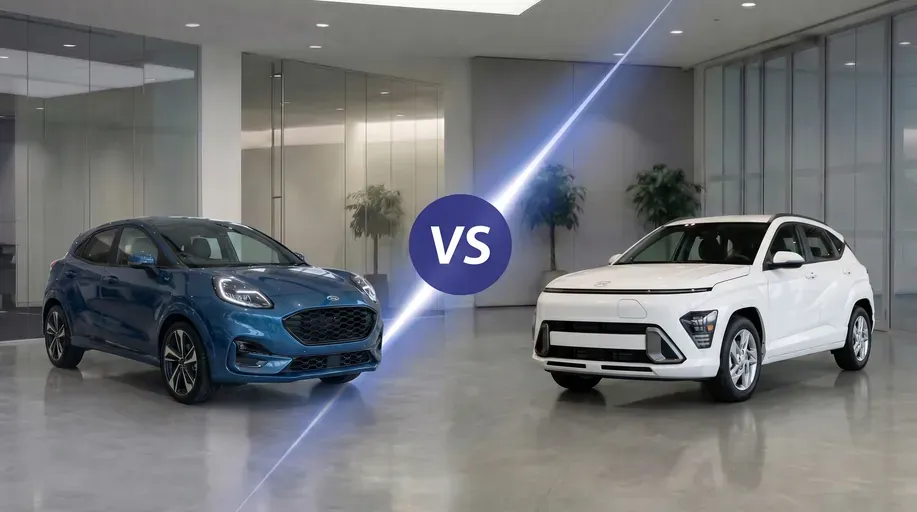
Car battle
Ford Puma vs. Hyundai Kona: Complete comparison 2026
Ford Puma vs Hyundai Kona: A detailed comparison of popular city SUVs. Compare driving characteristics, fuel consumption, and space, and read our final verdict.
Oct 16, 2026
Ford Puma review: real owner feedback, MegaBox practicality, engine picks and reliability — everything you need to know before buying.
October 31, 2026
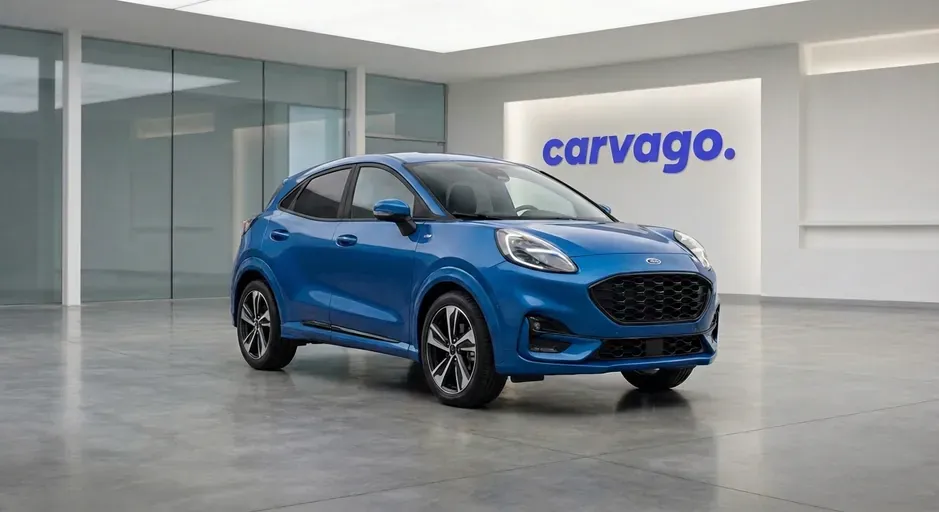
The first-generation Ford Puma crossover competes in Europe's competitive small crossover segment. Series production began on 8 October 2019, with the first European customer deliveries following in January 2020.
Sold exclusively as a five-door crossover, the Ford Puma received a mid-cycle facelift premiered on 7 February 2024, which brought revised exterior styling and a thoroughly redesigned interior digital interface. The model range expanded further when the all-electric version was unveiled on 3 December 2024, with its initial European customer deliveries starting in spring 2025.
Targeted primarily at urban commuters and small families, the Puma bridges the gap between traditional superminis and larger family transport by combining a compact footprint with an elevated driving position and practical day-to-day cargo utility. This review evaluates the first-generation Puma across its production run, covering pre-facelift models, the updated version, and the battery-electric variant.
Owner reports and inspection data show that the Ford Puma delivers durable structural and mechanical reliability, though earlier production years from 2020 to 2024 generate recurring complaints regarding low-voltage electrical systems. Running gear and chassis components perform consistently well over time, whereas electronics, lighting adjustments, and auxiliary power management represent the primary service areas. For the all-electric version introduced in December 2024, with customer deliveries commencing in spring 2025, long-term durability and high-voltage battery degradation data are not yet established across European registries.
The most frequent complaint among owners of early mild-hybrid models concerns auxiliary 12-volt battery discharge. Vehicles driven primarily on short urban journeys frequently drop below required charge thresholds, prompting the vehicle to enter an automated power-saving mode. Owners report that this status disables keyless entry, ambient lighting, remote application connectivity, and start-stop operation. Dealership software recalibrations for the battery monitoring system and body control modules improved charge retention, and replacing the factory battery with an upgraded absorbent glass mat (AGM) unit resolved recurring power drops in many instances. Inside the cabin, professional tests describe occasional touchscreen latency, intermittent Bluetooth disconnection, and delayed reversing camera feeds on early model years, which manufacturers resolved through software updates.
Official periodic technical inspection findings reveal that while suspension, brake lines, and steering mechanisms demonstrate lower fault rates than the small crossover average, lighting equipment accounts for an unusually high share of initial roadworthiness failures. Incorrect vertical aiming of the low-beam headlights and misaligned front fog lamps are frequently recorded during three-year and five-year inspections, though both require only optical adjustment during routine servicing. Mechanically, the three-cylinder petrol engine employs a durable timing chain for camshaft drive. However, the oil pump is driven by a separate internal belt running directly in engine oil, requiring strict compliance with manufacturer-specified low-viscosity engine lubricants to prevent material breakdown.
Several safety and compliance recalls have been issued across European markets for this generation:
| Production Window | Affected Component | Defect & Official Safety Consequence | Workshop Remedy |
|---|---|---|---|
| Nov 2019 – Feb 2022 | Telecommunications module | Software anomaly causing module loss of function and potential eCall failure | Reprogram telematics control module with updated software |
| Nov 2021 – Sep 2024 | Fuel line assembly | Chafing between fuel line and support shield, creating risk of fuel leaks and fire | Inspect fuel line; install protective sleeve and revised mounting bracket |
| Feb 2024 – Jan 2025 | Hybrid energy control module | Software fault in hybrid Ford Puma models causing loss of torque assist and start-stop | Reprogram battery energy control module |
| Jan 2025 – Sep 2025 | Rear brake drums (Electric) | Drum retaining bolts not tightened to specification, risking fluid leaks or wheel jamming | Inspect and torque rear drum bolts to factory specification |
| Jun 2024 – May 2025 | Exhaust assembly | Incorrect exhaust system cold end fitted during factory production | Replace cold end of the exhaust system with correct specification unit |
| Sep 2025 – Feb 2026 | Front drive shaft | Potential break in the inner joint of the right-hand front drive shaft, resulting in complete loss of drive | Inspect and replace affected drive shaft |
On the used market, vehicles fitted with the dual-clutch transmission require verification during low-speed manoeuvres. While mechanically robust under regular maintenance, tests describe low-speed hesitation or minor shuddering on neglected automatic Ford Puma examples when pulling away from rest.
The Ford Puma engine range focuses primarily on three-cylinder petrol units—mostly paired with 48-volt mild-hybrid technology—alongside an early four-cylinder diesel, dedicated performance derivatives, and an all-electric powertrain. All versions drive the front wheels exclusively.
| Engine | Fuel | Power | Gearbox | Model years |
|---|---|---|---|---|
| 1.0 EcoBoost (95 hp) | Petrol | 70 kW (95 hp) | 6-speed manual | 2020–2021 |
| 1.0 EcoBoost (125 hp) | Petrol | 92 kW (125 hp) | 6-speed manual | 2020 |
| 1.0 EcoBoost (125 hp) | Petrol | 92 kW (125 hp) | 7-speed automatic | 2020–2021 |
| 1.0 EcoBoost Hybrid (125 hp) | Petrol mHEV | 92 kW (125 hp) | 6-speed manual | 2020–present |
| 1.0 EcoBoost Hybrid (125 hp) | Petrol mHEV | 92 kW (125 hp) | 7-speed automatic | 2021–present |
| 1.0 EcoBoost Hybrid (155 hp) | Petrol mHEV | 114 kW (155 hp) | 6-speed manual | 2020–2024 |
| 1.0 EcoBoost Hybrid (155 hp) | Petrol mHEV | 114 kW (155 hp) | 7-speed automatic | 2021–present |
| 1.0 EcoBoost Hybrid ST | Petrol mHEV | 117 kW (170 hp) | 7-speed automatic | 2023–present |
| 1.5 EcoBoost ST | Petrol | 147 kW (200 hp) | 6-speed manual | 2020–2024 |
| 1.5 EcoBlue | Diesel | 88 kW (120 hp) | 6-speed manual | 2020–2021 |
| Puma Gen-E | Electric | 124 kW (168 hp) | Single-speed automatic | 2025–present |
For urban commuting and short trips, the baseline hybrid Ford Puma paired with a manual gearbox represents a sensible starting point. Its belt-driven starter-generator provides electrical assist off the line, reducing hesitation when pulling away. Those seeking zero tailpipe emissions for local driving can consider the electric Puma Gen-E.
For mixed everyday driving across city and secondary roads, the standard mild-hybrid petrol engine provides sufficient flexibility. Buyers who frequently travel with passengers or cargo should consider the more powerful mild-hybrid petrol variant, which offers superior mid-range pull. While earlier examples were available with a manual transmission, later models paired this output exclusively with an automatic gearbox.
On motorways, the higher-output mild-hybrid petrol unit cruises with less strain and requires fewer downshifts for high-speed overtaking. High-mileage drivers looking at early production years can evaluate the diesel Ford Puma as a used car, which offers steady motorway economy, though cold-start clatter is evident. Enthusiasts seeking genuine performance will find the manual Puma ST the most engaging option as a used car, whereas the later automatic Puma ST delivers a comparatively muted driving experience.
For towing duties, a manual Ford Puma with mild-hybrid petrol power offers the highest braked trailer capacity in the lineup, making it the most suitable choice for pulling light trailers. By comparison, an automatic Ford Puma and the electric model carry lower limits, while certain early factory configurations fitted with specific panoramic roof or wheel options were not homologated to tow.
For a comprehensive analysis of auxiliary battery behaviour, electrical recalls, and mechanical durability, consult the dedicated owner experiences section.
| Dimension | Mild Hybrid & Petrol | Electric (Gen-E) |
|---|---|---|
| Length | 4,186–4,207 mm | 4,214 mm |
| Width | 1,805 mm | 1,805 mm |
| Height | 1,537–1,550 mm | 1,555 mm |
| Wheelbase | 2,588 mm | 2,588 mm |
| Boot capacity (seats up) | 456 l | 523 l |
| Boot capacity (seats folded) | 1,216 l | 1,284 l |
Note: Dedicated sports variants have slightly different exterior dimensions due to revised bumpers and lowered suspension. Usable boot capacity is reduced if an optional spare wheel or upgraded audio subwoofer occupies the underfloor well.
Practicality in the Ford Puma centres on its cargo area and underfloor storage. A waterproof, drainable compartment situated beneath the load floor allows owners to pack dirty outdoor kit, wash it clean with water, or carry tall items upright with the folding floor removed. A 60/40 split-folding rear backrest is standard across all versions, though the rear bench is fixed and cannot slide fore or aft. While front occupants have adequate space in all directions, rear accommodation reflects the car's small-hatchback platform roots. Adults sitting in the back face restricted knee clearance and compact footwells behind a taller driver, while the tapered roofline and rising beltline narrow the side window aperture for rear passengers.
Professional road tests highlight the Ford Puma for its responsive steering and chassis control, noting that it limits body lean through rapid bends more like a hatchback than a tall crossover. Ride comfort divides opinion, however. While standard chassis configurations on smaller wheels absorb broken bitumen reasonably well, versions fitted with sports suspension and low-profile tyres feel distinctly firm at urban speeds, transmitting sharp transverse ridges and potholes directly into the passenger compartment. Cabin refinement also draws criticism; tyre roar becomes prominent on coarse motorway surfaces, and the three-cylinder engine generates a vocal thrum under heavy acceleration accompanied by mild vibration when cylinder deactivation operates.
Interior ergonomics are sound from the driver's perspective, though lower door sections and the centre console rely on scratchy, hard plastics. The mid-cycle facelift modernised the cabin with larger digital displays and faster infotainment software, but testers universally criticised the migration of physical heating and ventilation controls into touchscreen submenus. In the dedicated performance version, reviewers were also critical of the revised drivetrain line-up, which dropped the original manual gearbox in favour of an automatic mild-hybrid unit that hesitates during kickdown.
All the charts in this section are drawn from Carvago's listings of the whole model family, including other generations represented in the data, rather than only the reviewed generation, and do not establish a separate price level exclusively for the newest model. Across available used listings, the median asking price for a Ford Puma spans from €16,200 for 2019 examples to €20,900 for 2023 vehicles, reaching €28,200 for 2026 builds. These differences reflect later equipment revisions and updated powertrains entering the market, while earlier model years form the entry-level price band across the overall range.
Active listings for the Ford Puma remained between 18,613 in April 2026 and a peak of 19,085 in July 2026. The chart below tracks how the volume of advertised vehicles moved over this six-month span.
Active listings over time
| Month | Ford Puma |
|---|---|
| 2026-04 | 18 613 |
| 2026-05 | 18 805 |
| 2026-06 | 18 982 |
| 2026-07 | 19 085 |
| 2026-08 | 18 653 |
| 2026-09 | 18 824 |
Source Carvago
With inventory holding above 18,600 cars each month and finishing at 18,824 in September 2026, buyers can rely on a large and consistent selection on the market.
For used listings advertised today, the median asking price of cars built in 2019 is €16,200, compared to a median asking price of €28,200 for those built in 2026, as detailed across build years below.
Median advertised price by year of manufacture
| Model year | Ford Puma |
|---|---|
| 2019 | 16 200 |
| 2020 | 17 200 |
| 2021 | 17 900 |
| 2022 | 18 000 |
| 2023 | 20 900 |
| 2024 | 24 000 |
| 2025 | 26 000 |
| 2026 | 28 200 |
Source Carvago
Buyers evaluating 2019 to 2022 model years encounter median asking prices spanning from €16,200 to €18,000, while securing a 2026 model year requires a median asking price of €28,200.
This depreciation curve tracks how the model's residual value falls with vehicle age. The steepest decline occurs early on, with the car shedding 15% of its value in the first year and 34% by age three.
Residual value by vehicle age
| Vehicle age | Ford Puma |
|---|---|
| New | 28 400 |
| 1 yr | 24 000 |
| 2 yrs | 20 800 |
| 3 yrs | 18 700 |
| 4 yrs | 18 100 |
| 5 yrs | 17 000 |
| 6 yrs | 15 400 |
| 7 yrs | 13 800 |
Source Carvago
Across the seven years shown, the car loses 51% of its initial residual value. Depreciation slows considerably between age three and age four, where the annual loss drops to 3% before continuing downward through age seven.
Between April and September 2026, petrol models made up the bulk of available stock, ending at 17,309 advertised cars in September 2026 alongside 1,035 electric examples. The chart below shows how active listings split across each fuel type over these six months.
Supply composition by fuel type
Petrol
Diesel
Hybrid
Electric
LPG
| Month | Petrol | Diesel | Hybrid | Electric | LPG |
|---|---|---|---|---|---|
| 2026-04 | 17 204 | 314 | 98 | 891 | 0 |
| 2026-05 | 17 408 | 313 | 99 | 874 | 0 |
| 2026-06 | 17 475 | 298 | 109 | 988 | 0 |
| 2026-07 | 17 575 | 293 | 103 | 991 | 1 |
| 2026-08 | 17 198 | 239 | 96 | 992 | 1 |
| 2026-09 | 17 309 | 234 | 106 | 1 035 | 4 |
Source Carvago
Petrol heavily dominates the current selection, while electric models provide a secondary choice on the market. In contrast, buyers seeking diesel or hybrid options face a much narrower field, with only 234 diesel and 106 hybrid cars advertised in September 2026.
Between April 2026 and September 2026, the average asking price for the Ford Puma began at €20,900, as shown in the monthly figures below.
Average price development over time
| Month | Ford Puma |
|---|---|
| 2026-04 | 20 900 |
| 2026-05 | 20 600 |
| 2026-06 | 20 600 |
| 2026-07 | 20 500 |
| 2026-08 | 20 600 |
| 2026-09 | 20 500 |
Source Carvago
Across this six-month period, the average asking price stayed within a narrow range, moving from €20,900 to €20,500 with overall fluctuations of under two percent.
Agile handling with responsive steering and disciplined body control through bends
Practical, drainable underfloor storage compartment for dirty or tall cargo
Durable chassis components and running gear showing low inspection fault rates
Restricted rear knee clearance and tight footwells for adult passengers
Firm urban ride on sports suspension combined with prominent motorway tyre roar
Auxiliary battery discharge on earlier mild-hybrid models used mainly for short trips
The Ford Puma delivers dependable chassis and mechanical reliability, though earlier models frequently suffer from auxiliary 12-volt battery discharge during urban driving. Ensure battery software updates have been applied and service records confirm correct engine oil specifications.
The standard hybrid Ford Puma provides helpful low-speed electrical assist and sensible economy for daily commuting. Buyers who frequently travel on motorways or carry full passenger loads should opt for the higher-output mild-hybrid petrol engine, which offers superior mid-range pull for overtaking.
Check the vehicle by VIN to confirm manufacturer recall repairs have been completed and ensure the 12-volt battery operates without triggering power-saving warnings. On automatic versions, test low-speed crawling to verify smooth clutch engagement.
It offers versatile luggage capacity thanks to the washable, drainable underfloor storage compartment beneath the boot floor. However, rear knee room and footwell clearance are restricted, meaning the back bench is better suited to younger children than tall adults.
Sources: ford.co.uk, adac.de, autobild.de, autocar.co.uk, autoexpress.co.uk
This article was prepared using artificial intelligence tools. The section guarantor is Petr Dušek.
Ford Puma vs Hyundai Kona: A detailed comparison of popular city SUVs. Compare driving characteristics, fuel consumption, and space, and read our final verdict.
Oct 16, 2026
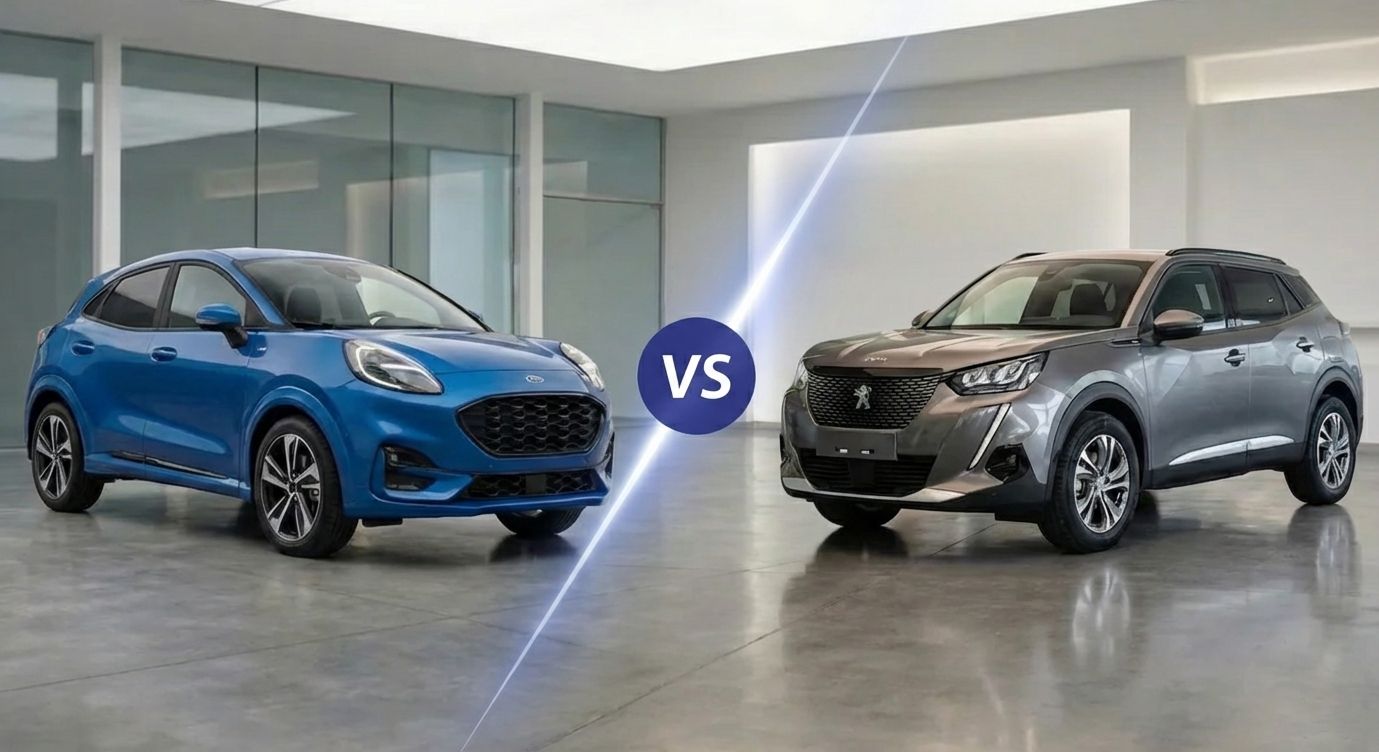
Ford Puma vs Peugeot 2008: Which crossover should you choose? Our detailed comparison, real-world insights, and verdict will help you decide.
Oct 23, 2026
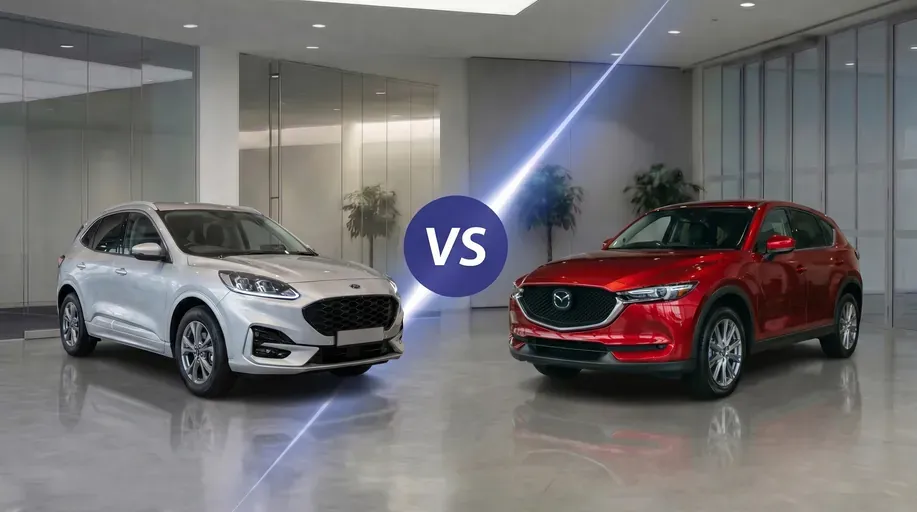
Detailed comparison of Ford Kuga vs. Mazda CX-5. Discover real-world experiences, differences in engines and equipment, and read a clear verdict before choosing a used SUV.
Apr 17, 2026