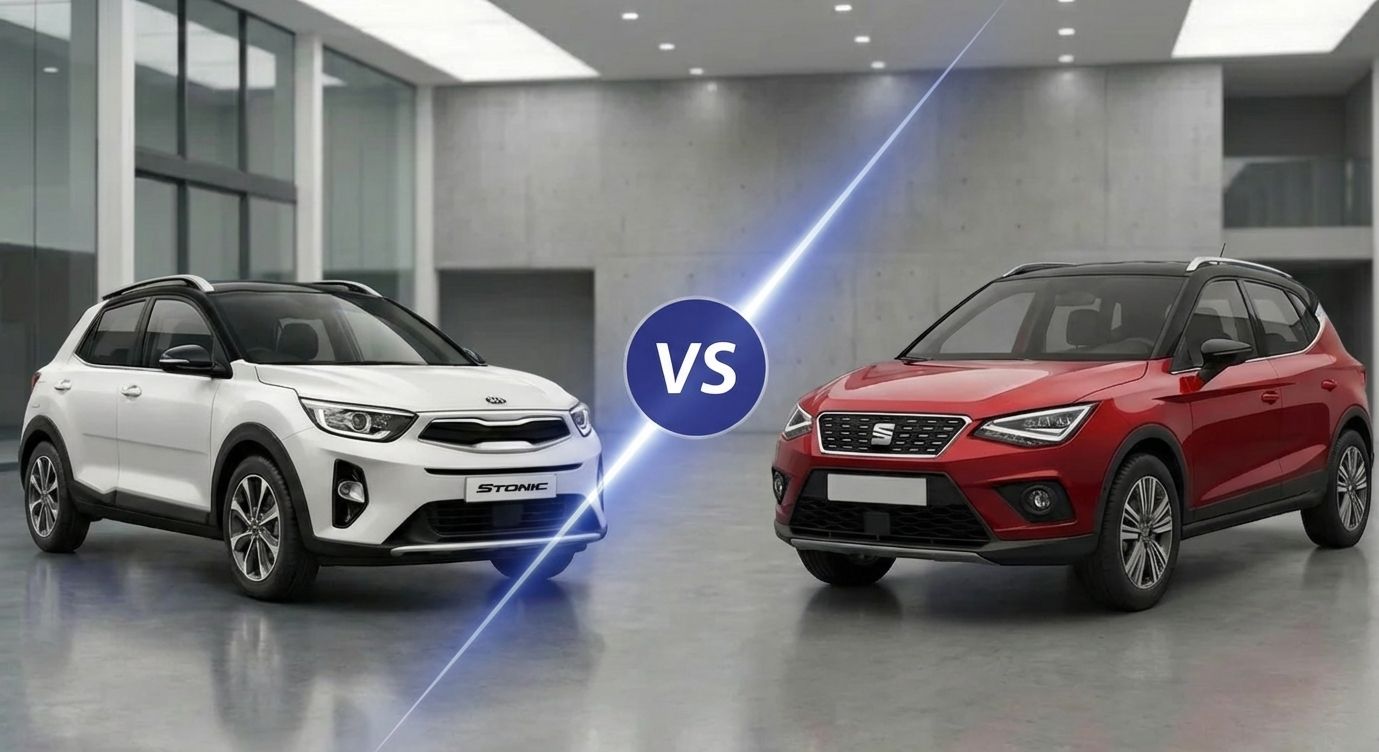
Car battle
Kia Stonic vs. Seat Arona: Complete comparison 2026
Kia Stonic or Seat Arona? We compare their engines, reliability, and practicality. Find out which used SUV is a better fit for you.
Oct 16, 2026
DS 7 review: real owner experience, common faults, hybrid running costs and used prices. Our comprehensive verdict on the French luxury SUV.
November 4, 2026
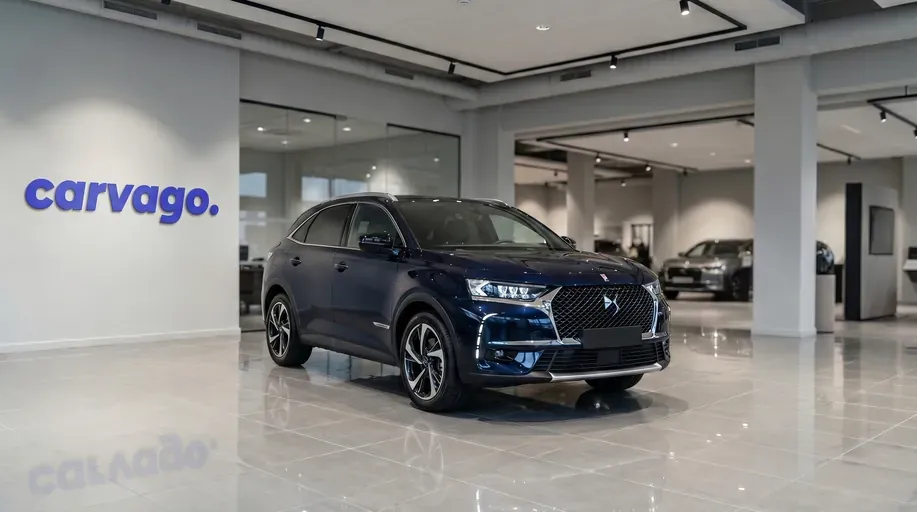
The DS 7 Crossback arrived as the first standalone model from DS Automobiles, positioned in the competitive premium mid-size SUV segment. This review covers the first generation, which commenced European customer deliveries in January 2018 and concluded series production in July 2026. Built exclusively as a five-door DS 7 SUV, the model was engineered to provide an unconventional French alternative to established premium crossovers.
A comprehensive mid-cycle revision premiered on 27 June 2022, with order books opening on 12 July 2022 and first customer deliveries following in November 2022. The update dropped the "Crossback" suffix to become simply the DS 7, reconfiguring the European engine line-up to focus on plug-in hybrids alongside a single diesel offering.
As a used buy, the DS 7 aims to attract buyers considering alternatives to mainstream German rivals, but potential owners must evaluate whether its distinctive design is backed by long-term dependability and practical everyday usability.
Owner feedback and workshop technical bulletins for the first-generation DS 7 reveal an ownership profile dominated by powertrain-specific maintenance items and complex electronic systems. Because the SUV relies on hardware shared with other Stellantis models alongside brand-specific chassis technology, reliability hinges largely on the chosen engine and whether workshop updates were completed.
The most widely reported mechanical fault concerns diesel DS 7 models equipped with the 1.5 BlueHDi engine manufactured before February 2023. Manufacturer technical bulletins confirm that the factory 7 mm inter-camshaft drive chain suffers premature wear and elongation. Owners report a metallic chattering sound from the upper cylinder head on cold idle; left unaddressed, the chain can snap and cause extensive valve gear damage. A reinforced 8 mm assembly was integrated into production from February 2023 and serves as the official mechanical remedy during workshop repairs. Pre-2022 diesel builds also show repeated issues with the AdBlue emission system, where urea crystallization can deform the tank and disable the integrated pump, necessitating a complete tank replacement.
On models equipped with the camera-controlled adaptive suspension, owners report occasional warning prompts restricting vehicle speed to 90 km/h, which locks the dampers into their firm fail-safe setting. Service bulletins attribute this behavior to windscreen camera miscalibration, rear ride-height sensor deviations, or damper solenoid wiring faults, which workshops resolve through sensor recalibration and chassis software updates. In the cabin, owner reports and technical bulletins note that the pre-facelift touchscreen system fitted from 2018 to 2022 is prone to cold-boot latency, delayed parking camera activation, and occasional reboots, though subsequent system software updates significantly reduced crash frequency.
Several official safety recalls affect the first generation in Europe. Plug-in hybrid variants of the DS 7 E-TENSE hybrid have been subject to campaigns addressing both traction battery safety and chassis alignment, while newer diesel builds faced manufacturing defects on fuel and timing components.
| Affected Model & Powertrain | Production Window | Scope & Geographic Reach | Defect & Workshop Remedy |
|---|---|---|---|
| 1.5 BlueHDi diesel | 04 October 2017 to 31 January 2023 | Pan-European campaign | Premature wear of the 7 mm camshaft drive chain causing abnormal noise or breakage. Dealer updates software, checks noise, and retrofits the upgraded 8 mm assembly if elongated. |
| BlueHDi diesel | 27 March 2017 to 15 November 2022 | Worldwide (23,982 vehicles) | Engine control unit software fails to illuminate the malfunction indicator light (MIL) when SCR/DPF emissions faults occur. Dealer updates ECU software calibration. |
| E-TENSE plug-in hybrid | 07 March 2019 to 27 September 2021 | Pan-European campaign | Internal battery defect creating an overheating and fire risk. Owners were advised to stop plug-in charging until an authorised workshop updates management software or replaces the battery pack. |
| E-TENSE plug-in hybrid | 01 April 2022 to 30 June 2023 | Worldwide (15,995 vehicles) | Incorrectly mounted rear axle adjuster lever can slide over its collar, causing steering misalignment or vehicle veering off course. Workshops replace both rear adjustment rods. |
| 1.5 BlueHDi diesel | 29 August 2025 to 07 October 2025 | European Union | Non-conforming common rail cone causes union nuts to loosen, creating a high-pressure fuel leak and engine bay fire risk. Dealer inspects union nuts and replaces fuel rails where required. |
| 1.5 BlueHDi diesel | 19 October 2025 to 05 February 2026 | European Union | Water pump drive pulley slippage can misalign the timing belt and cause sudden engine shutdown. Workshops inspect the drive assembly and install a conforming pulley sprocket. |
Before committing to a purchase, having a used model independently inspected through CarAudit provides peace of mind that safety recalls and essential software calibrations have been properly documented.
The first-generation DS 7 Crossback arrived with a conventional selection of turbocharged petrol and diesel engines, before plug-in hybrid technology took center stage. Following the 2022 facelift, pure petrol units were discontinued in major European markets, leaving a single diesel alongside a trio of electrified options.
| Engine | Fuel | Power | Gearbox | Drivetrain | Model years |
|---|---|---|---|---|---|
| PureTech 130 | Petrol | 96 kW (130 hp) | 6-speed manual | Front-wheel drive | 2018–2020 |
| PureTech 130 | Petrol | 96 kW (130 hp) | 8-speed automatic | Front-wheel drive | 2020–2022 |
| PureTech 180 | Petrol | 133 kW (180 hp) | 8-speed automatic | Front-wheel drive | 2018–2022 |
| PureTech 225 | Petrol | 165 kW (225 hp) | 8-speed automatic | Front-wheel drive | 2018–2022 |
| BlueHDi 130 | Diesel | 96 kW (130 hp) | 6-speed manual | Front-wheel drive | 2018–2020 |
| BlueHDi 130 | Diesel | 96 kW (130 hp) | 8-speed automatic | Front-wheel drive | 2018–2026 |
| BlueHDi 180 | Diesel | 130 kW (180 hp) | 8-speed automatic | Front-wheel drive | 2018–2020 |
| E-TENSE 225 | Petrol plug-in hybrid | 165 kW (225 hp) | 8-speed automatic | Front-wheel drive | 2020–2026 |
| E-TENSE 4x4 300 | Petrol plug-in hybrid | 220 kW (300 hp) | 8-speed automatic | All-wheel drive | 2019–2026 |
| E-TENSE 4x4 360 | Petrol plug-in hybrid | 265 kW (360 hp) | 8-speed automatic | All-wheel drive | 2022–2026 |
For urban driving and short daily commutes, the front-wheel-drive E-TENSE 225 makes practical sense if you have regular access to home or workplace charging. Running primarily on electric power avoids the cold-start wear typical of combustion engines in congested traffic. If charging at home is not an option, a used petrol DS 7 Crossback such as the PureTech 180 delivers quiet low-speed manners without the emissions-hardware complications that short trips inflict on diesels. The base manual PureTech 130, by contrast, requires frequent gear changes to maintain momentum.
For mixed everyday driving, the four-cylinder PureTech 180 and PureTech 225 offer smooth throttle response and flexibility without the penalty of carrying a depleted high-voltage battery. Paired exclusively with the eight-speed automatic, they provide an unhurried, comfortable balance for suburban commuting.
Frequent motorway travellers should focus on the diesel DS 7 Crossback. The pre-facelift BlueHDi 180 stands out as the most relaxed long-distance cruiser, settling into low cruising speeds with good sound insulation. The smaller BlueHDi 130 delivers lower long-haul running costs, though mid-range power feels modest when carrying a full load.
For towing duties, the BlueHDi 180 and the automatic BlueHDi 130 are well-suited used choices. Buyers needing all-wheel drive and strong pulling power should consider the DS 7 Crossback 4x4 E-TENSE 300, which offers confident traction on wet or loose surfaces. Keep in mind that the performance-focused hybrid DS 7 Crossback E-TENSE 4x4 360 is not approved for towing from the factory.
For detailed information on common mechanical faults, safety recalls, and maintenance vulnerabilities across these powertrains, refer to the owner experiences section.
Rear passenger accommodation in the DS 7 Crossback SUV provides sufficient legroom and headroom for two adults, supported by a flat floor that eases foot placement for a middle occupant. While the rear bench is fixed fore and aft without a sliding mechanism to vary passenger room against luggage space, higher trims feature electrically reclining backrests that improve seating comfort on long journeys. Everyday cargo usability in the DS 7 Crossback benefits from identical boot volume across both combustion and plug-in hybrid variants, as the traction battery is packaged beneath the cabin floor rather than intruding into the luggage compartment. A standard 60/40 split-folding rear bench includes a central ski hatch for carrying long items, though folding the backrests down leaves a pronounced step in the extended load area unless the car has the optional raised boot floor panel.
| Dimension / Parameter | DS 7 Crossback (2018–2022) | DS 7 Facelift (2022–2026) |
|---|---|---|
| Length | 4,570–4,573 mm | 4,595 mm |
| Width (excluding mirrors) | 1,895–1,906 mm | 1,906 mm |
| Height | 1,618–1,625 mm | 1,620–1,625 mm |
| Wheelbase | 2,738 mm | 2,738 mm |
| Boot volume (seats up / folded) | 555 / 1,750–1,752 l | 555 / 1,752 l |
The boot capacity figures apply equally to front-wheel-drive, all-wheel-drive, and plug-in hybrid versions.
Professional evaluations characterize the DS 7 Crossback as an easygoing cruiser that prioritizes visual flair over agile dynamics. On smooth motorways, the camera-based predictive suspension smooths out long undulating tarmac, and acoustic glass keeps wind rush subdued. However, testers consistently observe that broken surfaces and sharp transverse ridges filter abruptly into the cabin, particularly on models fitted with larger wheels. In faster bends, body roll is evident, and the light steering provides little mechanical feedback. Drivetrain refinement is strongest in electric running on hybrid DS 7 variants, though the combustion engines become vocal under hard acceleration, and the automatic gearbox can hesitate during hybrid transitions.
Inside, testers highlight the distinctive cabin architecture, where stitched leather, Alcantara, and supportive seats on upper grades create a comfortable environment for long journeys. Conversely, everyday usability draws universal criticism. Basic climate settings remain buried within touchscreen menus rather than on physical switches, the interface response can feel sluggish, and the window switches positioned on the centre tunnel take time to master.
Testers agree that the crossover is best enjoyed at a relaxed pace and align on its ergonomic frustrations. They disagree on whether the adaptive suspension delivers genuine suppleness, with several reviewers noting unsettled body motion on undulating secondary roads. The facelift introduced a firmer, performance-tuned all-wheel-drive flagship that corners flatter, but road tests note this setup introduces noticeable restlessness over uneven pavement.
All the charts in this section are drawn from Carvago's listings of the whole DS 7 Crossback model family, including other generations represented in the data, not only the reviewed generation. Because this market data does not establish a separate price level for the reviewed generation alone, the figures reflect the broader used offering across the nameplate. The median asking price stands at €21,900 for 2019 models and reaches €36,800 for 2026 vehicles, with 2023 cars recorded at €29,900. Later model years reflect a greater proportion of plug-in hybrid powertrains alongside revised equipment.
Active DS 7 listings on the platform stood at 2,610 in May 2026 before rising to a high of 2,933 by October 2026. The chart below illustrates how advertised availability shifted across this six-month period.
Active listings over time
| Month | DS 7 |
|---|---|
| 2026-05 | 2 610 |
| 2026-06 | 2 675 |
| 2026-07 | 2 699 |
| 2026-08 | 2 509 |
| 2026-09 | 2 684 |
| 2026-10 | 2 933 |
Source Carvago
Buyers can expect a broad selection of vehicles on the used market, with monthly availability staying above 2,500 listings throughout the period despite a brief dip to 2,509 in August.
For used listings currently advertised on the platform, the median asking price of cars built in 2019 is €21,900, while the figure for cars built in 2026 reaches €36,800, as detailed across model years below.
Median advertised price by year of manufacture
| Model year | DS 7 |
|---|---|
| 2019 | 21 900 |
| 2020 | 23 500 |
| 2021 | 25 000 |
| 2022 | 26 800 |
| 2023 | 29 900 |
| 2024 | 31 200 |
| 2025 | 34 300 |
| 2026 | 36 800 |
Source Carvago
Buyers targeting the earliest available build years in this dataset face a median asking price of €21,900 for a 2019 car, whereas those choosing 2025 or 2026 vehicles encounter median asking prices of €34,300 and €36,800.
This depreciation curve traces how the model's residual value declines with age, showing a loss of nearly 16% in the first year and roughly 32% by age three.
Residual value by vehicle age
| Vehicle age | DS 7 |
|---|---|
| New | 36 800 |
| 1 yr | 31 000 |
| 2 yrs | 28 800 |
| 3 yrs | 25 100 |
| 4 yrs | 21 100 |
| 5 yrs | 19 100 |
| 6 yrs | 17 300 |
| 7 yrs | 16 300 |
Source Carvago
Across the seven years shown, the model sheds nearly 56% of its initial residual value. The pace of depreciation eases markedly past age four, with subsequent year-over-year losses remaining under 10%.
Between May and October 2026, advertised listings were dominated by diesel and hybrid options, starting at 1,606 diesel and 786 hybrid cars in May. The chart below details the monthly count of advertised cars across each fuel type over this period.
Supply composition by fuel type
Petrol
Diesel
Hybrid
Electric
| Month | Petrol | Diesel | Hybrid | Electric |
|---|---|---|---|---|
| 2026-05 | 208 | 1 606 | 786 | 1 |
| 2026-06 | 199 | 1 718 | 749 | 1 |
| 2026-07 | 172 | 1 774 | 746 | 1 |
| 2026-08 | 154 | 1 638 | 712 | 1 |
| 2026-09 | 149 | 1 741 | 789 | 1 |
| 2026-10 | 130 | 1 954 | 842 | 1 |
Source Carvago
In October 2026, diesel remained the most common choice with 1,954 listings, followed by 842 hybrids, while petrol accounted for 130 cars and electric just 1. Buyers will find the largest selection among diesel and hybrid versions, whereas sourcing a purely petrol or electric model requires searching a much smaller pool.
Between May 2026 and October 2026, the average asking price for the DS 7 started at €24,500 and fluctuated within a narrow band, as shown in the data below.
Average price development over time
| Month | DS 7 |
|---|---|
| 2026-05 | 24 500 |
| 2026-06 | 24 400 |
| 2026-07 | 24 700 |
| 2026-08 | 25 000 |
| 2026-09 | 24 900 |
| 2026-10 | 25 400 |
Source Carvago
Over the six-month period, the average moved from €24,500 to €25,400, reflecting slight dips and gains that amounted to an overall shift of less than 4 percent.
Boot capacity remains unaffected by hybrid battery placement across all variants
Quiet motorway cruising supported by high-grade cabin materials and supportive seating
Low-emission urban driving on plug-in hybrids alongside frugal diesel options for long journeys
Climate functions buried within touchscreen menus and awkward console-mounted window switches
Noticeable body roll in bends and abrupt reaction to sharp road imperfections
Camshaft chain vulnerabilities on early diesels alongside several recalls requiring VIN verification
Overall reliability on the DS 7 depends heavily on the chosen powertrain and maintenance history. While the chassis and cabin hold up well, buyers should verify that relevant safety recalls and known engine upgrades have been completed.
The PureTech 180 petrol is the most balanced choice for mixed everyday driving, delivering smooth power without the weight of a traction battery. Commuters with home charging access are well served by the front-wheel-drive E-TENSE hybrid, whereas long-haul motorway drivers should choose a diesel DS 7.
Verify the car's VIN with an authorised dealer to confirm all factory safety recalls have been carried out. On a test drive, ensure the infotainment operates smoothly and listen for unusual engine rattle on cold idle.
Used asking prices start around €21,900 for early models, with depreciation slowing noticeably past the fourth year of ownership.
Sources: media.stellantis.com, adac.de, autocar.co.uk, autoexpress.co.uk, whatcar.com
This article was prepared using artificial intelligence tools. The section guarantor is Petr Dušek.
Kia Stonic or Seat Arona? We compare their engines, reliability, and practicality. Find out which used SUV is a better fit for you.
Oct 16, 2026
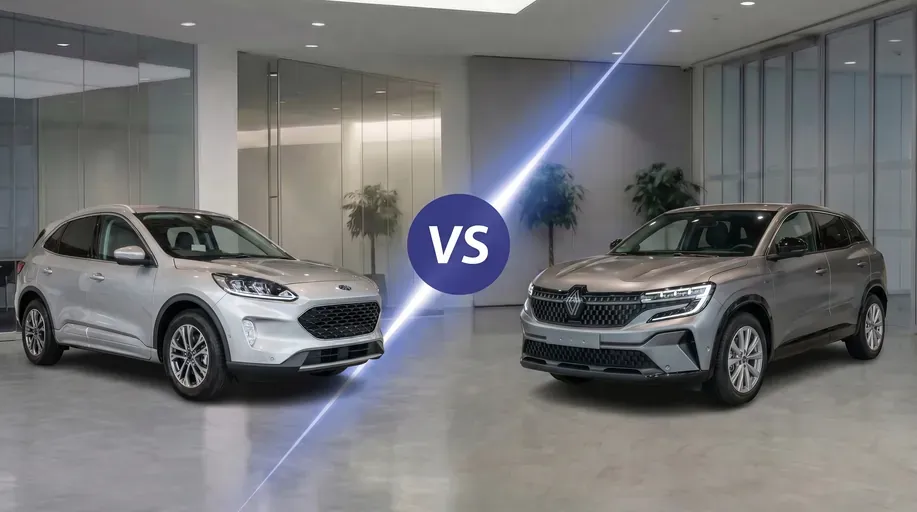
Used SUV comparison: Ford Kuga vs. Renault Austral. Find out which model offers better engines, equipment, and real value. Read our final verdict!
Oct 16, 2026

Detailed comparison: BMW X1 vs Jaguar E-Pace. Find out which premium SUV offers better equipment, space, and reliability. Read our final verdict!
Nov 12, 2026