Review Citroën C5 Aircross: What do owners and experts really say?
Citroën C5 Aircross review: real owner experience, hybrid and EV efficiency, practicality, specs and our definitive buying verdict.
October 31, 2026
Verdict at a Glance
Who it suits: Families and company-car drivers seeking an accommodating, comfort-oriented crossover for daily usability.
Recommended engine: The mild hybrid for urban commuting, or a plug-in hybrid for drivers with regular home charging.
What to avoid: Vehicles without documented completion of safety recalls—verify fuel rail and inverter campaigns by VIN.
Introduction
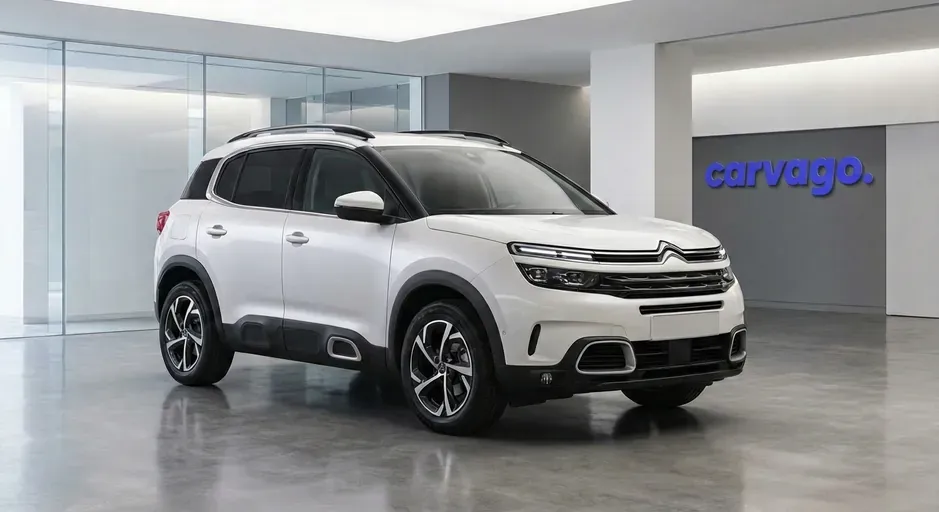
The second-generation Citroën C5 Aircross SUV represents the French manufacturer’s entrant in the European compact-to-mid-size crossover class. Built on the STLA Medium platform, this generation succeeded its predecessor following a world premiere on 29 April 2025. Production commenced on 01 July 2025 at the Rennes plant in France, with initial customer deliveries starting in October 2025 in major European markets. As a recent introduction, this generation has undergone no facelift.
Sold exclusively as a five-door SUV, the model lineup spans petrol hybrid, plug-in hybrid, and all-electric configurations. Initial deliveries focused on standard hybrid and electric versions, while order books for an extended-range electric model opened in the first quarter of 2026. This review evaluates the second-generation vehicle across the 2025 and 2026 model years.
The Citroën C5 Aircross primarily attracts family buyers and company-car drivers seeking an accommodating five-seat vehicle tailored for everyday usability and multi-energy powertrain flexibility.
Owner Experiences: Common Faults and Recalls
Because customer deliveries of the second-generation Citroën C5 Aircross commenced in Europe in October 2025, long-term durability and high-mileage wear patterns are not yet established. Early service records indicate that widespread mechanical defects have not surfaced on this generation. For this generation, the hybrid petrol engines utilize a timing chain rather than an oil-immersed wet belt, eliminating that premature degradation failure mode.
Two official European safety recalls involve this generation. In April and May 2026, authorities registered a recall for vehicles equipped with the electrified dual-clutch transmission built on 20 March 2026, as part of a campaign covering assembly dates from 19 March 2026 to 20 March 2026. In the notice's words, metal soldering residues may pass into the engine control unit inverter, creating internal short circuits that can lead to overheating and a fire. Dealerships replace the complete motor control unit inverter free of charge. The official advice directs drivers to stop the vehicle in a safe location if they observe smoke, detect a burning smell, or encounter gearbox failure warnings on the dashboard.
An earlier campaign, initiated in July and August 2025, affects direct-injection petrol engines across a worldwide build window spanning 11 January 2023 to 20 May 2025, which captures pre-series pilot examples of this generation produced between 05 March 2025 and 14 April 2025. Loose nuts between the high-pressure pump and the fuel rail create a risk of fuel leakage and fire. Authorized technicians inspect the connections, retorque the fasteners to specification, and replace the fuel pipes if leaks are detected.
Recall completion by VIN: Check dealer service records to confirm that any applicable safety campaigns—including the inverter replacement on hybrid models and the high-pressure fuel rail inspection on pilot builds—have been carried out.
Electrified dual-clutch crawl behavior: During a low-speed test drive in a hybrid model, verify smooth clutch engagement and linear power delivery when crawling below 10 km/h in stop-and-go traffic.
Traction battery health certificate: On electric and plug-in hybrid variants, request an official diagnostic state-of-health readout to verify usable high-voltage battery capacity.
Modular rear bench latches: Ensure the release mechanisms for the split rear bench fold down cleanly, lock into each backrest rake position, and do not foul the underfloor storage compartment.
Engines: Which One to Choose
The second-generation Citroën C5 Aircross abandoned standalone combustion engines and manual transmissions, adopting an electrified line-up comprising a mild hybrid, plug-in hybrids, and fully electric powertrains. Across the entire range, output is directed exclusively to the front wheels through automatic gearboxes.
Engine
Fuel
Power
Gearbox
Model years
Hybrid 145
Petrol mild hybrid
107 kW (145 hp)
6-speed automatic
2025–present
Plug-in Hybrid 195
Petrol plug-in hybrid
143 kW (195 hp)
7-speed automatic
2025–2026
Plug-in Hybrid 225
Petrol plug-in hybrid
165 kW (225 hp)
7-speed automatic
2026–present
Electric 210 Comfort Range
Electric
157 kW (210 hp)
Automatic
2025–present
Electric 230 Long Range
Electric
170 kW (230 hp)
Automatic
2026–present
Which engine to choose
For urban commuting and frequent short trips, the mild-hybrid petrol variant represents the most sensible choice. It keeps initial purchase costs accessible, requires no charging cable, and shuts off the petrol unit during slow-speed crawling.
Drivers with regular access to home or workplace charging who cover a balanced mix of city journeys and weekend travel will be best served by a plug-in hybrid. The initial plug-in variant is found as a used car, whereas the uprated replacement serves subsequent production years. Both enable tailpipe-emission-free daily commutes while retaining petrol convenience for longer excursions.
For extended motorway journeys, the electric Citroën C5 Aircross Long Range model delivers quiet high-speed cruising and a larger battery pack that minimizes charging stops. Motorway drivers who prefer not to depend on high-power public charging networks should look to the mild hybrid instead.
If regular towing is required, the hybrid Citroën C5 Aircross plug-in variants are the most suitable choice in the line-up, offering the highest certified towing allowances and ample low-speed pulling capability.
For details on factory safety recalls and early service actions concerning these powertrains, refer to the owner experiences section.
Space & Practicality
Dimension / Parameter
Value
Length
4,652 mm
Width (excluding mirrors)
1,936 mm
Height
1,688–1,691 mm
Wheelbase
2,784 mm
Boot capacity (seats up / folded)
565 / 1,668 l
The stated height spans from hybrid to fully electric variants, while luggage capacity remains uniform across all powertrain choices.
The Citroën C5 Aircross SUV adopts a 40/20/40 split-folding rear bench with reclining backrests in place of sliding individual seats. Outer rear passengers enjoy ample legroom and thick seat padding, though taller occupants may find the rear seat cushions somewhat short on thigh support, and the narrower middle seat is less accommodating for adults. Practicality in everyday use remains strong: the main cargo floor is broad and flat, and an underfloor compartment provides a dedicated space for small items or charging cables. Crucially, battery integration does not penalise boot volume in the plug-in hybrid or electric variants, leaving luggage space identical across the entire line-up. Folding down the rear seats creates an expansive, level load area that makes sliding bulky cargo forward straightforward.
What the Tests Say
Road testers consistently describe the Citroën C5 Aircross as a cruiser tuned deliberately for soft primary comfort rather than sharp cornering. The suspension cushions larger road undulations and road humps effectively, though sharper potholes and coarse asphalt can transmit loose thuds into the cabin. The electric Citroën C5 Aircross exhibits pronounced pitch under braking and acceleration alongside noticeable body lean through bends due to its heavy battery pack. The plug-in hybrid controls its body movements more harmoniously, although its steering remains light, uncommunicative, and artificially self-centring regardless of the selected driving mode.
Acoustic insulation is strongest on battery-powered versions, where tyre roar remains subdued except for faint mirror rustle at motorway paces. In contrast, the petrol units in the hybrid variants run smoothly at low speeds but become coarse and vocal when accelerating hard, occasionally accompanied by low-speed dual-clutch transmission thuds in stop-start driving.
Inside, the cabin presents an original visual layout and thick seat padding, but reviewers criticize the widespread hard plastics across the upper dashboard, door casings, and window sills. Ergonomics also cause frustration: housing climate adjustments entirely inside touchscreen sub-menus proves awkward, particularly when smartphone mirroring obscures the shortcut keys. Lower-tier cupholders positioned behind the central screen are similarly awkward to reach. Professional tests broadly agree on the model's relaxed, undemanding nature, but they diverge on secondary ride quality over fractured pavement.
Prices and Market Offer
All the charts in this section are drawn from Carvago listings of the whole Citroën C5 Aircross model family across multiple generations, rather than the reviewed generation alone. Because production spans overlap, this dataset does not establish a separate price level for the newest generation. Across the entire model family, the median asking price moves from €18,300 for 2019 models up to €24,000 for 2024 models. The latest offerings reach a median asking price of €27,900 for 2025 and €33,900 for 2026 cars, reflecting newer registrations across the wider market.
Across the six months from April to September 2026, the volume of advertised Citroën C5 Aircross models moved between 7,589 listings in April and a peak of 8,264 in July, as tracked in the chart below.
Citroën C5 Aircross - availability over time
Active listings over time
Month
Citroën C5 Aircross
2026-04
7 589
2026-05
8 075
2026-06
7 943
2026-07
8 264
2026-08
7 709
2026-09
7 692
Source Carvago
Buyers can expect a broad selection of vehicles on the market, with overall availability remaining between 7,589 and 8,264 listings throughout the period before finishing at 7,692 in September 2026.
For used Citroën C5 Aircross listings advertised today, the median asking price of cars built in 2019 is €18,300, while those built in 2026 reflect a median asking price of €33,900. Asking figures are generally higher for newer build years, with 2024 models presenting a slight exception in the distribution below.
Citroën C5 Aircross - median price by model year
Median advertised price by year of manufacture
Model year
Citroën C5 Aircross
2019
18 300
2020
18 800
2021
19 900
2022
22 000
2023
24 300
2024
24 000
2025
27 900
2026
33 900
Source Carvago
Buyers looking at 2019 and 2020 cars encounter median asking prices of €18,300 and €18,800, while listings from 2024 are slightly cheaper at €24,000 than 2023 models at €24,300. For the newest 2025 and 2026 model years, median asking prices stand at €27,900 and €33,900 respectively.
This depreciation curve illustrates how the Citroën C5 Aircross loses residual value over its first seven years. The sharpest decline occurs in the first year alone, with the car shedding roughly 25% of its initial value and reaching an accumulated loss of about 40% by age three.
Citroën C5 Aircross - value loss by age
Residual value by vehicle age
Vehicle age
Citroën C5 Aircross
New
34 300
1 yr
25 800
2 yrs
22 700
3 yrs
20 700
4 yrs
18 400
5 yrs
16 400
6 yrs
16 100
7 yrs
14 700
Source Carvago
Across the entire seven-year span shown, the model sheds approximately 57% of its starting residual value. The pace of depreciation eases considerably after the opening year, with value loss flattening out noticeably between five and six years of age.
Across the six months from April to September 2026, petrol consistently recorded the highest number of listings, starting at 3895 in April 2026 and reaching 4474 in July 2026. The breakdown below shows the monthly count of advertised cars across each available powertrain.
Citroën C5 Aircross - supply by fuel over time
Supply composition by fuel type
Petrol
Diesel
Hybrid
Electric
LPG
Month
Petrol
Diesel
Hybrid
Electric
LPG
2026-04
3 895
2 421
1 029
232
0
2026-05
4 253
2 566
1 007
238
1
2026-06
4 206
2 540
904
283
2
2026-07
4 474
2 561
922
292
2
2026-08
4 178
2 315
887
314
2
2026-09
4 102
2 363
900
310
3
Source Carvago
In September 2026, petrol and diesel made up the bulk of the offer with 4102 and 2363 listings respectively, while hybrid models stood at 900 and electric versions at 310. Buyers will therefore encounter the greatest variety when shopping for conventional combustion engines, with electrified options appearing in considerably smaller numbers.
The chart below tracks the average asking price for the Citroën C5 Aircross from April 2026 to September 2026, starting at €23,400.
Citroën C5 Aircross - price trend over time
Average price development over time
Month
Citroën C5 Aircross
2026-04
23 400
2026-05
23 300
2026-06
23 400
2026-07
23 300
2026-08
23 400
2026-09
23 300
Source Carvago
Across the six-month span, the average asking price alternated narrowly between €23,300 and €23,400, shifting by less than one percent overall to conclude at €23,300.
Soft suspension tuned for comfort over large road undulations and speed humps
Uniform luggage space across all powertrains without battery compromise
Petrol hybrid engines adopt a durable timing chain rather than a wet belt
Cons
Awkward touchscreen-only climate controls that can be obscured by smartphone mirroring
Fixed rear bench eliminates the individual sliding seats of the previous generation
Noticeable body lean and pitch through corners and under braking on electric variants
Frequently asked questions
Is the second-generation C5 Aircross reliable?
Long-term reliability is not yet established because customer deliveries began in late 2025, though widespread mechanical defects have not surfaced. For peace of mind, the hybrid petrol engines in this generation utilize a timing chain rather than the failure-prone wet timing belt found in older models.
Which engine is the best choice?
The mild hybrid is the most sensible choice for city commuting without plug-in charging. Drivers who charge regularly or need higher towing limits will be better served by the hybrid Citroën C5 Aircross plug-in models.
What should you check before buying a used model?
Check official dealer records by VIN to ensure all safety recalls have been completed. On electrified versions, also verify smooth crawl behavior at low speeds and request an official traction battery health certificate.
Does luggage space shrink on hybrid or electric versions?
No, luggage capacity remains identical across all powertrains because the battery packaging does not intrude into the cargo area.