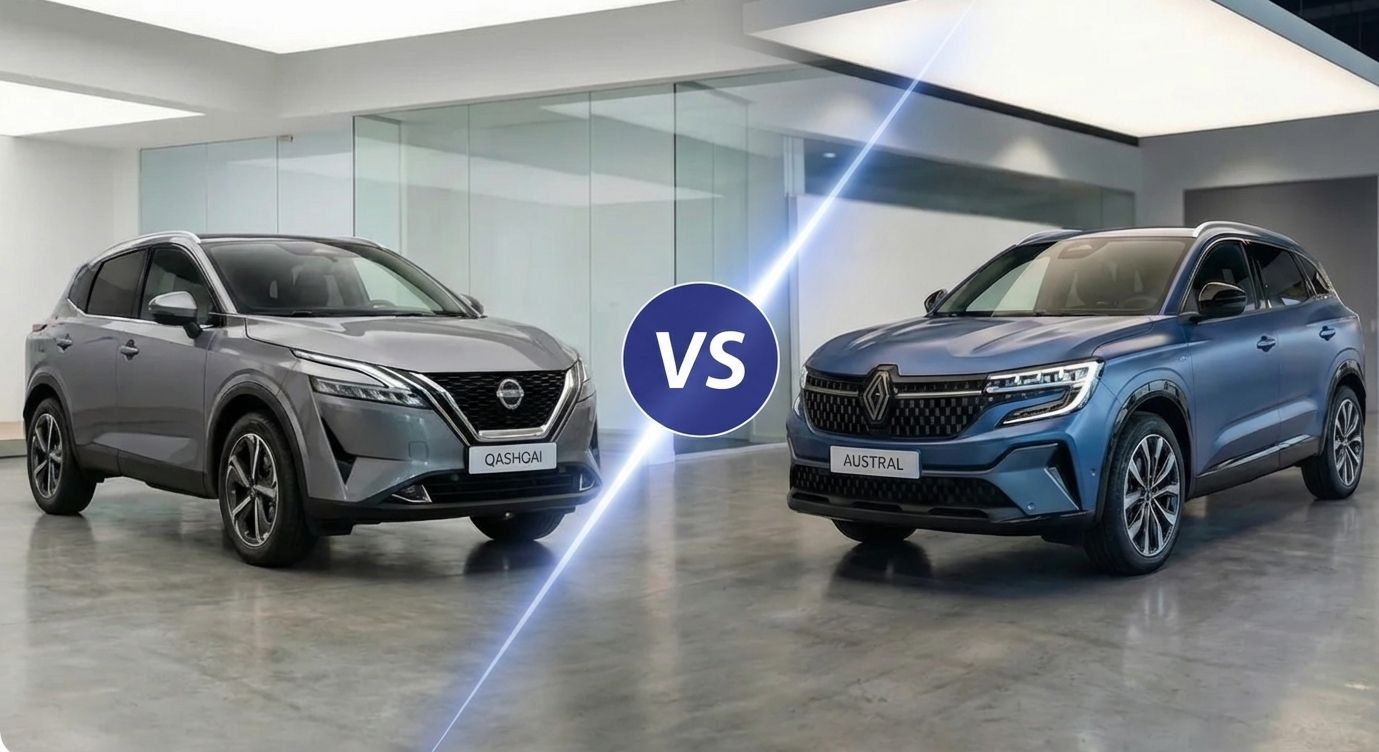
Car battle
Nissan Qashqai vs. Renault Austral: Complete comparison 2026
Nissan Qashqai vs. Renault Austral: A detailed comparison to help you choose. We compare design, engines, prices, and deliver a clear verdict.
Apr 14, 2026
Articles
Car battle
Citroën C3 Aircross vs Opel Mokka: A major comparison of popular SUVs. Discover the differences in spaciousness, engines, and equipment, and find out our final verdict.
April 16, 2026
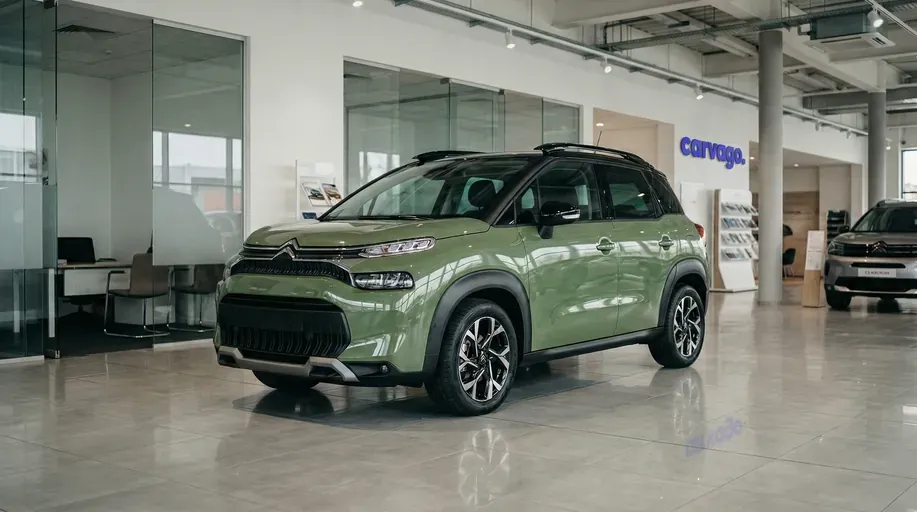
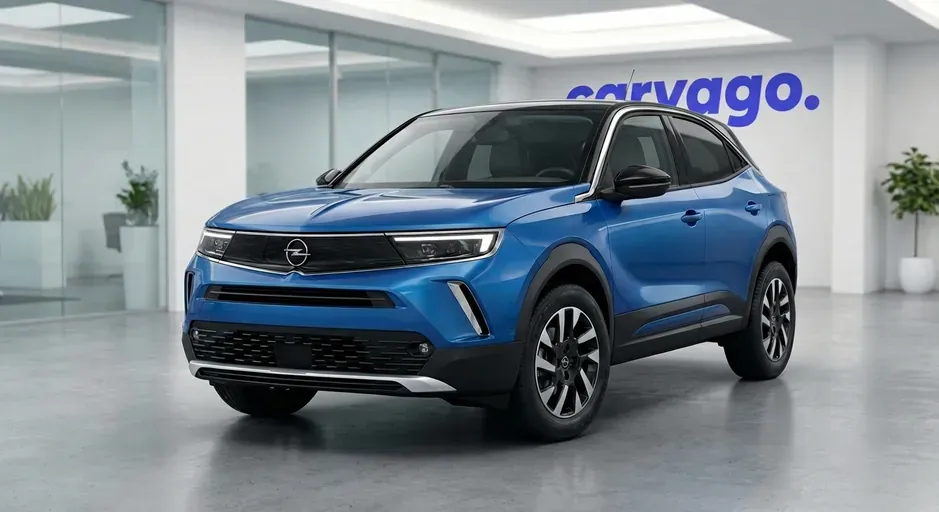
The Citroën C3 Aircross represents an exceptionally practical and comfortable city SUV that scores points with its original French design and generous interior space. Its challenger is the confident Opel Mokka, also sold in selected markets under the sister brand as the Vauxhall Mokka, which instead bets on sharp-cut features, modern technologies, and a more dynamic driving feel. Let's find out together which of these popular crossovers will be the best choice for your daily journeys on the nearly-new used car market.
When you place the first-generation Citroën C3 Aircross and the Opel Mokka (generation B) side by side, you immediately notice a completely different approach to the proportions of a modern city crossover. While both cars from roughly the same period are almost identical in length – the Citroën measures 4154 mm, making it a negligible 3 mm longer than the Opel (4151 mm) – their paths diverge in width. The Opel Mokka is 1785 mm wide, which is 29 mm wider than its French competitor (1756 mm). The Mokka's wider body not only provides more shoulder room for front passengers but also gives the car a sportier and more stable stance on the road, while the nearly identical length means that both cars are just as easy to park in crowded city streets.
Fundamental differences that define the character of both cars can be found when looking at the height and wheelbase. The C3 Aircross stands at a height of 1597 mm, making it a significant 63 mm taller than the more aerodynamically styled Mokka (1534 mm). The French representative also adds a longer wheelbase of 2604 mm, surpassing its German rival by 43 mm. The taller roofline and longer distance between the axles in the Citroën mean significantly better interior airiness and more legroom and headroom for rear passengers, making it a more ideal choice for families with older children, while the lower Mokka prioritizes style and better aerodynamic efficiency on highways.
| Parameter | Citroën C3 Aircross SUV | Opel Mokka SUV |
|---|---|---|
| Width (mm) | 1756 | 1785–1787 |
| Length (mm) | 4154 | 4150–4151 |
| Height (mm) | 1597 | 1515–1534 |
| Wheelbase (mm) | 2604 | 2561 |
When it comes to choosing a compact crossover from the used car market, trunk capacity often determines whether the vehicle will hold its own as the main family car or serve more as a stylish city runabout. In this regard, the Citroën C3 Aircross (first generation, post-facelift) and the Opel Mokka (generation B) represent two completely different approaches. While the French representative bets on maximum interior space, modularity, and family utility, its German competitor prioritizes attractive dynamic design at the expense of absolute liters in the trunk. You will feel this difference even during a routine weekend shopping trip, let alone when packing for a longer vacation.
The Citroën C3 Aircross is a true champion of its class when it comes to spaciousness. In its standard configuration, it offers a very respectable base trunk volume of 410 liters. However, its secret weapon is the sliding rear bench, which allows the space to be easily increased to a fantastic 520 liters without having to fold down the backrests – meaning hassle-free room for a few extra suitcases or a bulky stroller. If you fold the rear seats down completely, you get a massive cargo area with a maximum capacity of 1289 liters. This makes the Aircross an exceptionally practical companion for families with children, for whom transporting almost anything is no problem.
In contrast, the current Opel Mokka targets primarily couples and individuals who don't mind somewhat more modest transport capacities. With a standard volume of 350 liters, it comfortably handles everyday tasks, but family trips will require a bit more packing and planning. After fully folding the rear seats, the Mokka offers a maximum volume of 1105 liters. Furthermore, if you are eyeing the popular all-electric Mokka Electric variant, you must account for a slight loss of space due to the battery storage in the floor. In the electric version, the base volume decreases to 310 liters, and after folding the backrests, you reach a total of 1060 liters.
| Parameter | Citroën C3 Aircross SUV | Opel Mokka SUV |
|---|---|---|
| Base volume (liters) | 410 | 350 (Electric: 310) |
| Max. volume with seats folded (liters) | 1289 | 1105 (Electric: 1060) |
If interior space and flexibility are your priorities, the Citroën C3 Aircross is the clear choice thanks to its cleverly designed variable interior, which can easily handle the role of a primary family car. The Opel Mokka, on the other hand, will appeal to buyers looking for an original, distinctive style and for whom maximum cargo capacity is secondary, making it an ideal partner primarily for urban and suburban driving.
While the Citroën C3 Aircross easily swallows a family vacation thanks to its sliding seats and large trunk, the Opel Mokka prioritizes attractive design and will satisfy less demanding couples with its more modest liters.
Towing weight, or towing capacity, is a key practical parameter for all drivers who need to regularly tow loads with their vehicle. When comparing four-year-old used cars (with a production year around 2022), the Citroën C3 Aircross and Opel Mokka show relatively significant differences. The standard internal combustion version of the first-generation Citroën C3 Aircross can handle a braked trailer weighing 840 kg, with the maximum weight reaching 870 kg for selected diesel engines. Conversely, the second-generation Opel Mokka (produced since 2021) offers noticeably higher utility, as its standard and maximum towing capacity for common internal combustion versions reaches up to 1200 kg.
However, for both models, there are engine versions where these capacities differ significantly. For example, hybrid versions of the Opel Mokka have their towing capacity reduced to 1100 kg, and purely electric variants (Mokka Electric) are not homologated for towing at all. For the purely electric variant of Citroën (e-C3 Aircross), the capacity drops to just 350 kg. These differences have a fundamental impact on everyday use: while the higher towing capacity of the Opel Mokka is easily sufficient for weekend shopping for bulky materials or a longer holiday with a smaller caravan, the Citroën C3 Aircross is more suitable for attaching a light trailer. In the context of lower load capacity, this represents more of a useful space for a few extra suitcases.
In conclusion, it can be stated that if the ability to tow heavier loads is a selection criterion for you, the more modern generation of the Opel Mokka will serve you significantly better. Given that the database for the Opel Mokka generation B does not primarily list values for internal combustion versions and electric variants do not allow towing, the attached table summarizes the available data intended exclusively for the Citroën model.
| Model and engine | Braked trailer (kg) | Unbraked trailer (kg) |
|---|---|---|
| Citroën C3 Aircross 1.2 PureTech (81-96 kW) | 840 | 600 |
| Citroën C3 Aircross 1.5 BlueHDi (73-88 kW) | 840-870 | 600 |
| Citroën C3 Aircross 1.2 PureTech 82 (60 kW) | 650 | 600 |
When choosing a used car approximately four years old (manufactured around 2022), the Citroën C3 Aircross and Opel Mokka represent two quite different philosophies, although they share a technical foundation under the surface within the Stellantis group. While the first-generation Citroën C3 Aircross relies exclusively on proven internal combustion engines, where the 1.2 PureTech three-cylinder petrol engines and exceptionally economical 1.5 BlueHDi four-cylinder diesels play the leading role, the second-generation Opel Mokka (Mokka B) diversifies its range with a fully electric variant. The Electric Mokka gives the model a significant advantage for buyers who require locally emission-free operation in the city. Citroën, on the other hand, appeals more with conservative configurations ideal for longer journeys as well as undemanding city driving. For thrifty drivers with high mileage, the diesel engine will be a major draw in both cars, but the Mokka scores points for the availability of a more modern eight-speed automatic transmission in the more powerful petrol versions compared to the older six-speed automatic in the Citroën.
The engine range of the first-generation Citroën C3 Aircross, which is the most relevant for four-year-old used cars, stands firmly in the traditional world of internal combustion engines. The basis of the petrol range is the turbocharged 1.2 PureTech three-cylinder, available on the market in versions with 81 kW (110 hp) and 96 kW (130 hp). Initially, a naturally aspirated base engine, the 1.2 PureTech 82 (60 kW), was also sold, but this unit soon disappeared from the range due to emission standards and lower popularity, and it is no longer found in newer used cars from the period we are monitoring (around 2022). For drivers with high annual mileage, Citroën prepared excellent four-cylinder turbodiesels from the BlueHDi family. These were previously available in the BlueHDi 100 (75 kW) version, later replaced by the more modern 110 (81 kW) version paired with a manual gearbox. The top diesel version, BlueHDi 120 (88 kW), was then conveniently paired with a traditional planetary six-speed automatic EAT6. All versions of the C3 Aircross feature front-wheel drive exclusively.
| Engine type | Fuel | Power (kW) | Torque (Nm) | Transmission |
|---|---|---|---|---|
| 1.2 PureTech 82 | Petrol | 60 | 118 | 5MT |
| 1.2 PureTech 110 | Petrol | 81 | 205 | 6MT / 6AT |
| 1.2 PureTech 130 | Petrol | 96 | 230 | 6AT |
| 1.5 BlueHDi 100 | Diesel | 75 | 250 | 6MT |
| 1.5 BlueHDi 110 | Diesel | 81 | 250 | 6MT |
| 1.5 BlueHDi 120 | Diesel | 88 | 300 | 6AT |
The second-generation Opel Mokka (generation B, produced since 2021) represents a more technologically advanced competitor for the segment of used cars around 4 years old. Under the hood, you will find technically related petrol and diesel engines from the joint development of the Stellantis group, but with their own tuning and different types of transmissions. The 1.2 Turbo petrol three-cylinder delivers 74 kW (100 hp) with a manual, and for more demanding drivers, a peppier version with 96 kW (130 hp) is available, where a major benefit is the availability of a modern eight-speed automatic transmission. Compared to the six-speed gearbox in the Citroën, it offers smoother shifting and better efficiency. The 1.5 Diesel unit is available with parameters of 81 kW (110 hp). However, the fundamental differentiator for the Mokka model is the Mokka Electric version. This brings an electric motor with 100 kW and a 50 kWh battery, while a Long Range version with 115 kW appeared in models delivered from late 2023. Just like its French sibling, the Mokka exclusively drives the front wheels.
| Engine type | Fuel | Power (kW) | Torque (Nm) | Transmission |
|---|---|---|---|---|
| 1.2 Turbo 100 | Petrol | 74 | 205 | 6MT |
| 1.2 Turbo 130 | Petrol | 96 | 230 | 6MT / 8AT |
| 1.5 Diesel 110 | Diesel | 81 | 250 | 6MT |
| Mokka Electric | Electricity | 100 | 260 | 1AT |
| Mokka Electric Long Range | Electricity | 115 | 260 | 1AT |
While the Citroën C3 Aircross will appeal more to conservative buyers with proven, classic automatics and economical diesels for long trips, the Opel Mokka, thanks to the available fully electric version and smoother eight-speed automatic, is the clear choice for those looking for a more technologically advanced used car optimized for the city.
Choosing the right engine is crucial for long-term satisfaction with the vehicle, which is why our recommendations are based on real-world experience with dynamics, actual fuel consumption, owner feedback, and mechanical reliability. Looking at the overview tables of available model years for roughly four-year-old used cars, you will encounter several important limitations. For the Citroën C3 Aircross, you will no longer find the naturally aspirated PureTech 82 petrol base or the BlueHDi 100 and BlueHDi 120 diesel variants in newer production years, as their availability ended gradually between 2019 and 2022. For the Opel Mokka, the transition to the new generation was even more radical – for the market of nearly-new four-year-old vehicles, the popular and reliable 1.4 Turbo or 1.6 CDTI four-cylinders from the previous generation (A) are already completely unavailable. The current generation (B) therefore offers exclusively modern turbocharged technology from the Stellantis group, in addition to the fully electric Mokka Electric versions.
Official fuel consumption figures provided by manufacturers often differ significantly from everyday reality, where real traffic, driving style, and vehicle load come into play. To obtain the most accurate picture possible, we have relied on long-term user data from the independent portal Spritmonitor.de. We focused on the engine options of both cars that are most commonly seen on the used car market at around four years of age – namely the first-generation Citroën C3 Aircross and the current generation of the Opel Mokka (referred to as Mokka B, produced since late 2020).
Data source: Spritmonitor.de
| Model and engine | Average consumption (l/100 km) |
|---|---|
| Citroën C3 Aircross 1.2 PureTech 110 (81 kW) | 6.5 |
| Citroën C3 Aircross 1.2 PureTech 130 (96 kW) | 6.8 |
| Citroën C3 Aircross 1.5 BlueHDi 110 (81 kW) | 5.1 |
| Opel Mokka 1.2 Turbo 100 (74 kW) | 6.3 |
| Opel Mokka 1.2 Turbo 130 (96 kW) | 6.6 |
| Opel Mokka 1.5 Diesel 110 (81 kW) | 5.0 |
User data clearly shows that on paper, economical small turbocharged three-cylinder petrol engines are not such a miracle in practice as car manufacturers' brochures might suggest. In both cars, they consume roughly 6.3 to 6.8 litres per 100 kilometres during normal driving. A surprising finding for many buyers may be the fact that the more powerful petrol variants (with 96 kW) do not mean a dramatic increase in appetite – the difference is only around 0.3 litres per hundred kilometres compared to the weaker versions. Conversely, the diesel engines (in both cars, it is practically the same 1.5 engine developed by the Stellantis group) perform their role excellently and easily push consumption down towards the five-litre mark, clearly proving their worth.
For typical buyers of a used urban crossover, there is a clear recommendation. If you spend most of your time in the city and on shorter suburban routes, the petrol three-cylinder is still a more sensible choice despite the slightly higher real-world consumption, as it warms up faster and does not suffer as much in stop-and-go traffic. The fact that the difference between the more powerful and weaker petrol versions is almost negligible in both cars means that you can focus more on the equipment and overall condition of the vehicle when choosing a used car. However, for drivers who regularly tackle long motorway journeys or often drive fully loaded, the diesel variants make a lot of sense, as they can realistically save around 1.5 litres of fuel for every hundred kilometres.
In conclusion, fuel consumption should not be the main deciding factor in a direct battle between the Citroën C3 Aircross and Opel Mokka models. Shared group technology means that the real-world appetite of both cars is almost identical with similar engines. Thanks to its slightly lower and more modern body design, the Opel Mokka is slightly more aerodynamically efficient, which gives it a slight advantage of about two-tenths of a litre across the petrol versions. In practice, however, the final costs at the petrol station will be decided more by the weight of your right foot and your specific driving profile than by the logo on the bonnet.
When searching for a used compact SUV on the market, you will most often come across cars approximately four years old. This age represents an ideal compromise for buyers between a significant drop from the original price and still excellent technical condition. In this comparison, we will therefore focus on models manufactured between 2021 and 2022, where the Citroën C3 Aircross (often already after the facelift) faces off against the second, design-wise very attractive generation of the Opel Mokka (Mokka B).
| Model | Estimated average price | Main advantages on the used car market |
|---|---|---|
| Citroën C3 Aircross | €11,000 – €14,000 | Significantly lower purchase price, focus on interior airiness and driving comfort. |
| Opel Mokka | €14,000 – €18,000 | Lifestyle design, more modern interior layout, better future value retention. |
If you are looking for maximum practicality and comfort for the least amount of money, a used Citroën C3 Aircross is an exceptionally sensible choice; the Opel Mokka, on the other hand, will please drivers who are happy to pay extra for imaginative style and a sportier look.
When evaluating the safety of used cars, it is crucial not to view Euro NCAP crash test results solely through the absolute lens of the overall score, but to always consider the context and the year of testing. Although you will encounter a maximum five-star rating for many cars from earlier years – including the Citroën C3 Aircross – while the newer Opel Mokka received "only" four stars, a direct comparison of their percentage results makes no sense. The methodology and testing protocols of the Euro NCAP consortium are constantly evolving and becoming significantly stricter. While older tests focused primarily on passive safety and body strength during impact, newer ones take into account much more demanding scenarios, such as collisions at intersections, and place enormous emphasis on advanced protection for pedestrians and cyclists through smart electronics.
Citroën C3 Aircross (Tested 2017)
The French crossover underwent safety tests in 2017, where it earned a full five stars according to the significantly milder rules of the time. It scored a very respectable 85% in adult occupant protection and 82% in child protection. Protection of vulnerable road users reached 64%, and safety assistance systems received a rating of 60%. Although it was an exemplary safe car in its time, it is important to note that its five-star certification formally expired at the beginning of 2024 according to the organization's rules. Furthermore, the car does not possess modern active safety systems to the extent required by current standards.
Opel Mokka (Tested 2021)
The second generation of the Opel Mokka underwent testing in 2021 under substantially more demanding conditions. The overall four-star result is a clear reflection of this stricter methodology. The car recorded 73% for adult protection, 75% for child occupant protection, 58% for vulnerable road users, and 64% for assistance systems. The main reason the Mokka did not reach the top mark was the lack of cyclist detection in the base version of the automatic braking system and the absence of an advanced center airbag that prevents front occupants from colliding with each other. However, the car's construction and platform themselves are built to much newer standards.
| Parameter | Citroën C3 Aircross | Opel Mokka |
|---|---|---|
| Year of testing | 2017 | 2021 |
| Adult occupant protection | 85 % | 73 % |
| Child occupant protection | 82 % | 75 % |
| Vulnerable road user protection | 64 % | 58 % |
| Safety assistance systems | 60 % | 64 % |
In the overall safety assessment, it is clear that a higher percentage score for an older car does not automatically mean better protection on today's roads. Despite the four-star result in terms of absolute numbers, the Opel Mokka, tested according to the strict 2021 standards, represents a more modern and comprehensive safety package. While the Citroën C3 Aircross remains a solid and honestly built family car, in terms of the sophistication of active assistants and the ability to prevent accidents, its German competitor has a clear advantage thanks to its more modern architecture.
Although the Citroën from earlier years has five stars on paper, the Opel Mokka tested in 2021 offers a realistically more advanced level of active and passive safety thanks to its newer platform and more current regulations.
In addition to standard equipment, each model offers several unique features and technologies that highlight their character and can be decisive for customers during the final selection. While the French representative focuses primarily on family practicality and a relaxed ride, the German competitor brings advanced digitalization and a sharper style to the segment.
In the small crossover class, Citroën focuses on what it does best – maximum comfort, an airy cabin, and clever solutions for a family's everyday life.
The second-generation Opel Mokka represents a design turning point for the brand and attracts with a modern clean look, top-tier technologies from higher classes, and the possibility of emission-free driving.
Generous interior space and high variability thanks to the sliding rear bench
Superior ride comfort ensured by a softer chassis and comfortable Advanced Comfort seats
Larger luggage compartment volume, which can be increased from 410 to 520 liters
Excellent visibility from the car thanks to the higher driving position and generous glazing
More favorable purchase price and an attractive price-to-utility ratio on the used car market
More pronounced body roll in corners and less confident behavior during dynamic driving
More outdated and slower infotainment system with a less intuitive interface
Impractical climate control exclusively via the touchscreen
Absence of a fully electric version in the engine lineup
The Citroën C3 Aircross is an ideal choice for families and calmer drivers who prioritize maximum comfort, practicality, and clever interior variability. The softly tuned chassis and generous space make it a great companion for daily travel without ambitions for sporty driving.
Attractive and modern design with the distinctive Opel Vizor front grille
Much more confident and agile driving characteristics with more precise steering
Modern digital driver's cockpit (Pure Panel) with better ergonomics and retained physical climate control buttons
Availability of a fully electric version (Mokka-e) for those interested in locally emission-free operation
Excellent availability of modern assistance systems and advanced LED Matrix headlights
Significantly smaller luggage compartment with a base volume of only 350 liters
Cramped space for rear-seat passengers, especially in the knee area and with more difficult entry
Stiffer chassis tuning, which, in combination with larger wheels, reduces comfort on poor-quality roads
Higher average purchase price on the used car market
The Opel Mokka will primarily appeal to individuals or smaller families looking for a stylish compact crossover with a focus on design, modern technology, and driving experience. It offers much more attractive driving dynamics and a sharper look, but at the cost of obvious compromises in overall interior space and practicality.
Based on long-term user experience, service reports, and data from our own comprehensive car inspections, we have compiled an overview of the most common problems that buyers of used cars around four years old should watch out for in both models.
The facelifted Citroën C3 Aircross (from 2021 onwards) is considered a very practical and generally reliable car, but it shares the group technology of the Stellantis group, where it is necessary to watch out for several known ailments.
The key to the long life of the C3 Aircross is a flawless service history and preventive shortening of oil and timing belt change intervals for petrol engines.
The second generation of the Opel Mokka (known as the Mokka B, from 2020) brought a completely new CMP platform and a bold design, however, it is associated with several group and specific electronic faults.
When buying a used Mokka, do not focus only on the condition of the engine and timing belt, but carefully test the functionality of all LED headlights and, for electric versions, the capacity and functioning of the on-board network and charging.
When buying a used car, a thorough inspection is crucial. Both of these city SUVs have their specifics and occasional teething problems, so it is important to focus on a detailed check. Here are some specific points you should watch out for, and remember that a detailed Independent technical inspection of the car can reveal hidden defects that an average buyer might not notice during a short test drive.
Citroën C3 Aircross offers a significantly larger and more versatile luggage space. The base volume is 410 litres and, thanks to the sliding rear seats, it can be increased up to 520 litres by sliding them forward. The Opel Mokka has fixed rear seats and a smaller base boot volume of 350 litres.
Citroën is the clear choice for those seeking maximum driving comfort, as it uses a softer-tuned chassis and special comfortable Advanced Comfort seats. The Opel Mokka, on the other hand, is tuned more sportily, but its stiffer chassis provides better stability and confidence in corners.
Of the two, only Opel offers a fully electric powertrain in the Mokka-e version, which features a 50 kWh battery. In this generation, the Citroën C3 Aircross relies exclusively on traditional internal combustion PureTech petrol engines and BlueHDi diesel units.
For family use, the Citroën C3 Aircross is much more practical thanks to its airier cabin, higher roof, and overall greater spaciousness in the rear. The Opel Mokka has noticeably less space in the rear seats and a smaller door opening, which makes daily handling of child car seats slightly more difficult.
Both cars use proven engines from the Stellantis Group; the 1.2 PureTech three-cylinder petrol engine dominates the market for four-year-old used cars. When choosing a used car with this engine, it is important to verify timely oil changes in the service history and check the condition of the timing belt.
Sources: ADAC, svetmotoru.cz, lidovky.cz, smartmania.cz, autosalon.tv, ceskyautoblog.cz
This article was prepared using artificial intelligence tools. The section guarantor is Petr Dušek.
Nissan Qashqai vs. Renault Austral: A detailed comparison to help you choose. We compare design, engines, prices, and deliver a clear verdict.
Apr 14, 2026
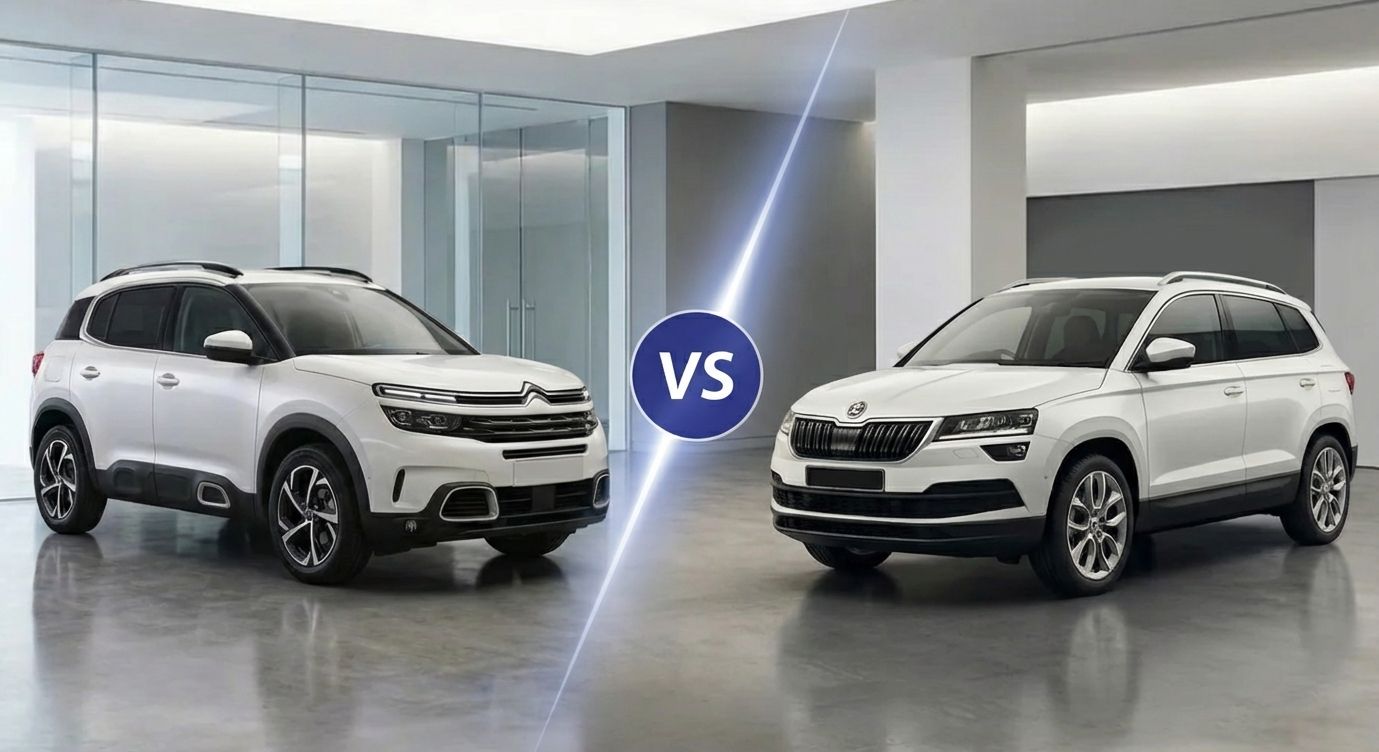
Hesitating between the Citroën C5 Aircross and the Škoda Karoq? Our detailed comparison and verdict will help you choose the right SUV for your needs.
Apr 8, 2026
Detailed comparison of Škoda Kamiq vs Toyota Yaris Cross. Discover the differences in space, fuel consumption, and equipment. Our verdict will help you choose the right city SUV.
Apr 14, 2026