Car battle
Suzuki Vitara vs. Škoda Kamiq: Complete comparison 2026
Suzuki Vitara or Škoda Kamiq? A detailed comparison of engines, equipment, and prices. Find out which of these popular small SUVs is the better choice for you.
Apr 13, 2026
Articles
Car battle
Detailed comparison of Škoda Kamiq vs Toyota Yaris Cross. Discover the differences in space, fuel consumption, and equipment. Our verdict will help you choose the right city SUV.
April 14, 2026
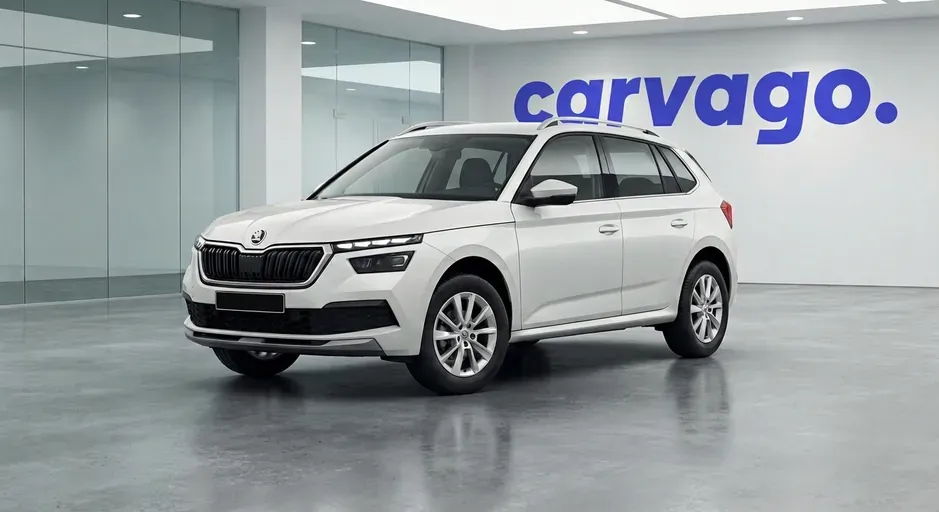
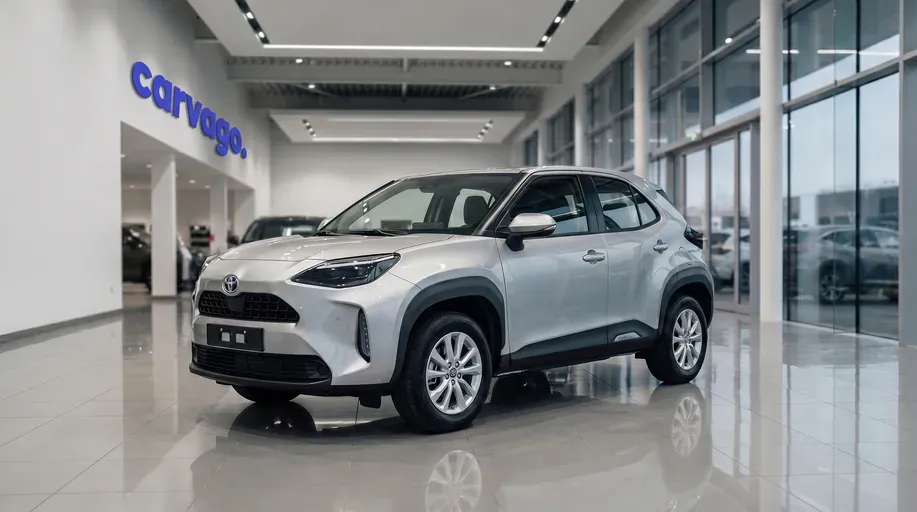
Škoda Kamiq, the smallest SUV from the Mladá Boleslav-based carmaker, attracts customers primarily with its above-standard interior space and traditional everyday practicality. In contrast, the Toyota Yaris Cross represents a confident Japanese crossover that stands out in its class particularly for its exceptionally fuel-efficient hybrid powertrain and legendary reliability. Let's take a detailed look at how these popular representatives from roughly 2021 and 2022 fare in a direct comparison and which of them represents a smarter choice on the used car market.
Although the Škoda Kamiq and Toyota Yaris Cross both belong to the highly competitive segment of small urban crossovers (B-SUV), their approach to overall proportions differs quite fundamentally. The Toyota Yaris Cross bets on more traditional styling in the vein of a scaled-down off-roader, while the Škoda Kamiq, with its shapes and silhouette, is closer to a slightly raised family hatchback. This different design approach is directly reflected in their external dimensions and practical utility.
Looking at the numbers, the Škoda Kamiq is 61 mm longer (4241 mm) and 28 mm wider (1793 mm) than its Japanese competitor. By far the most important parameter for interior spaciousness, however, is the wheelbase. In this discipline, the Kamiq clearly dominates with a value of 2651 mm, outperforming the Yaris Cross by a very noticeable 91 mm. In practice, this means that the Czech representative offers disproportionately more legroom for rear-seat passengers and an overall airier feel in the cabin, making it a more suitable choice for family use and longer trips.
On the other hand, the Toyota Yaris Cross has an indisputable advantage in height. With a value of 1595 mm, it is nearly 7 centimetres taller than most Kamiq models available on the used car market. This provides the driver with a higher seating position, better visibility from the vehicle, and a more authentic SUV driving feel. Furthermore, the Toyota's more compact footprint – a shorter body and narrower width – represents a huge advantage when navigating narrow city streets daily and makes parking in crowded city centres easier.
| Parameter | Škoda Kamiq SUV | Toyota Yaris Cross SUV |
|---|---|---|
| Length (mm) | 4241 | 4180 |
| Width (mm) | 1793 | 1765 |
| Height (mm) | 1527 - 1562 | 1595 |
| Wheelbase (mm) | 2651 | 2560 |
The luggage compartment is often a deciding factor for compact city crossovers, especially if the car serves as the main family vehicle. Although both cars belong to the category of smaller SUVs with a length just over four meters, their interior layout can pleasantly surprise with its practicality. Differences in total volume, shaping, and the availability of a double floor fundamentally influence whether the car will serve you only as a city helper or offer sufficient capacity for weekend shopping and longer vacations.
Škoda Kamiq benefits in this regard from its long wheelbase and cleverly designed interior space. The standard trunk offers exactly 400 liters, which in practice means ideal space for several extra suitcases or easy storage of a folded stroller. Furthermore, after folding the rear seats, the capacity increases to an impressive 1395 liters, making the Kamiq capable of transporting larger cargo. However, those interested in the used 1.0 TGI G-TEC variant running on compressed natural gas (CNG) should be careful – due to the installation of pressure tanks, the basic trunk volume drops to a below-average 278 liters.
Toyota Yaris Cross in its standard front-wheel-drive version certainly doesn't lag behind and offers a respectable 397 liters, which is only three liters less than its Czech competitor. However, a significant compromise comes with the highly sought-after hybrid version with all-wheel drive (AWD-i). Due to the additional electric motor on the rear axle, the basic volume drops to 320 liters, and you lose the practical double floor. With the rear backrests folded, the Toyota offers a maximum of 1097 liters, which is a noticeable difference compared to the Škoda, especially felt when moving bulkier items.
Overall, it can be said that if total transport capacity and variability are your top priorities, the Škoda Kamiq represents a more versatile choice. The Toyota Yaris Cross matches it in the default configuration, and its trunk is excellently usable, but you have to forgo the all-wheel drive and accept that it carries significantly less with the seats folded.
| Parameter | Škoda Kamiq SUV | Toyota Yaris Cross SUV |
|---|---|---|
| Basic volume (liters) | 400 l (278 l for G-TEC) | 397 l (320 l for AWD-i) |
| Maximum volume with seats folded (liters) | 1395 l | 1097 l |
While both models are remarkably similar in standard volume at around 400 liters, after folding the seats, the Škoda Kamiq clearly wins and easily takes on the role of a mover for a small family.
The ability to tow a trailer is often a key parameter when choosing a practical urban crossover, whether you plan to haul garden waste, transport construction materials, or want to go on holiday with a caravan. In this regard, roughly four-year-old used Škoda Kamiq and Toyota Yaris Cross models differ quite significantly, which is mainly due to their different approach to propulsion and construction. While the Czech representative relies on classic internal combustion engines, the Japanese model is dominantly represented by advanced hybrid technology, which, however, brings certain limitations in total towing capacity.
In its first generation, the Škoda Kamiq offers very solid values for its class, covering a wide range of needs. The basic three-cylinder 1.0 TSI can tow a braked trailer weighing 1,150 to 1,200 kg, while for an unbraked one, the values range around 610 to 620 kg. The more powerful four-cylinder 1.5 TSI version and the economical 1.6 TDI diesel engine can handle up to 1,250 kg on the hitch for a braked trailer and 640 kg for an unbraked one. In practice, this means that the Kamiq provides safe space not only for heavier loads from building supplies but can also handle towing a smaller caravan without difficulty, which is fully sufficient for weekend trips and longer summer holidays. A specific exception in the model range is only the ecological 1.0 TGI G-TEC version burning compressed natural gas, for which towing trailers is not approved at all.
On the other hand, the Toyota Yaris Cross, whose core in the four-year-old used car market consists of the 1.5 Hybrid 116 version, offers significantly more modest limits. The maximum weight of a braked trailer for this full-hybrid is limited to 750 kg for structural reasons, while an unbraked trailer can weigh at most 550 kg. Although you won't tow a family caravan with the Yaris Cross, this capacity is still highly useful for common tasks around the house. It means ideal space for a few extra suitcases in a light utility trailer, and this limit is easily sufficient for transporting a larger purchase, spring garden cleanup, as well as for the popular installation of a rear bike rack.
In conclusion, if regular towing of heavier trailers or larger loads is an absolute necessity for you, the Škoda Kamiq will be a more reliable and versatile choice thanks to its higher technical load capacity. The Toyota Yaris Cross, on the other hand, targets drivers who will use the towing device more as a supplement for light recreational purposes or smaller occasional transports.
| Model and motorization | Braked weight of trailer (kg) | Unbraked weight of trailer (kg) |
|---|---|---|
| Škoda Kamiq 1.0 TSI (70–85 kW) | 1150–1200 | 610–620 |
| Škoda Kamiq 1.5 TSI ACT (110 kW) | 1250 | 640 |
| Škoda Kamiq 1.6 TDI SCR (85 kW) | 1250 | 640 |
| Škoda Kamiq 1.0 TGI G-TEC (66 kW) | Cannot tow | Cannot tow |
| Toyota Yaris Cross 1.5 Hybrid 116 (68 kW) | 750 | 550 |
When comparing the engine options of the Škoda Kamiq and Toyota Yaris Cross models, we encounter two diametrically different approaches that fundamentally influence both driving performance and operating costs. For roughly four-year-old used cars, Škoda relies on traditional internal combustion engines, dominated by refined turbocharged TSI petrol units. These offer solid dynamics for both highway and city driving, but due to their classic design, they do not achieve such efficiency in heavy traffic. Conversely, the Toyota Yaris Cross has bet everything on its renowned full hybrid technology. While it may not impress with maximum power on paper, in practice, it excels in city fuel consumption. A fundamental difference is also the absence of all-wheel drive for the Czech carmaker – the Kamiq is exclusively a "front-wheel drive" car under all circumstances. In contrast, the Yaris Cross offers an optional intelligent AWD-i all-wheel drive for its hybrids, which utilizes an independent additional electric motor on the rear axle. For drivers looking for a reliable and dynamic car for highways and longer routes, the Škoda Kamiq is more suitable, while budget-oriented drivers who spend most of their time in stop-and-go city traffic or require a 4x4 for light terrain and snow will appreciate the qualities of the Yaris Cross model.
Under the hood of the Škoda Kamiq, you will find a relatively wide range of classic engines. The base consists of reliable 1.0 TSI three-cylinder petrol engines with power ranging from 70 kW to 85 kW, which are more than sufficient for normal daily driving. For more demanding users or individuals preferring faster travel, the most powerful 1.5 TSI four-cylinder with 110 kW, equipped with ACT cylinder deactivation technology, is the ideal choice. However, the market for roughly four-year-old used cars also brings two very interesting and economical alternatives that you will no longer find in the current price list. These are the 1.6 TDI SCR diesel four-cylinder (85 kW), production of which ended in late 2020, and the factory 1.0 TGI G-TEC gas engine burning CNG, which disappeared from the range during 2022. For most units, it was possible to choose between a manual gearbox and a seven-speed dual-clutch DSG automatic.
| Engine type | Fuel | Power (kW) | Torque (Nm) | Transmission |
|---|---|---|---|---|
| 1.0 TGI G-TEC | CNG / Petrol | 66 | 160 | 6MT |
| 1.0 TSI | Petrol | 70 / 81 / 85 | 175 / 200 | 5MT / 6MT / 7DSG |
| 1.5 TSI ACT | Petrol | 110 | 250 | 6MT / 7DSG |
| 1.6 TDI SCR | Diesel | 85 | 250 | 6MT / 7DSG |
Unlike its rival, the Toyota Yaris Cross focuses exclusively on hybrid powertrains for used cars of the analyzed model year. The standard is the highly proven 1.5 Hybrid 116 engine with a combined system output of 85 kW (116 hp). This drive very cleverly combines a naturally aspirated three-cylinder, a powerful electric motor, and an e-CVT continuously variable planetary transmission. A major advantage of this solution is the fact that the car generates its own electrical energy through recuperation during braking, thus completing a significant portion of city driving with zero petrol consumption. According to database records, a more powerful 1.5 Hybrid 130 specification with 96 kW (130 hp) entered the market in 2024, but you won't come across it much in the range of more affordable four-year-old used cars for now. As already mentioned, an interesting benefit across the model years is the optional AWD-i all-wheel drive system.
| Engine type | Fuel | Power (kW) | Torque (Nm)* | Transmission |
|---|---|---|---|---|
| 1.5 Hybrid 116 | Hybrid (Petrol) | 85 | 120 | e-CVT |
| 1.5 Hybrid 130 | Hybrid (Petrol) | 96 | 120 | e-CVT |
*The stated torque of 120 Nm corresponds to the naturally aspirated internal combustion engine; the hybrid system automatically supplements it during driving with the immediate pull of the electric motor, whose specified torque reaches 141 Nm.
While the Škoda Kamiq targets lovers of more dynamic driving with a wide selection of traditional engines suitable even for longer highway trips, the Toyota Yaris Cross is an unbeatable choice for city traffic, where it scores with phenomenally low consumption and available all-wheel drive.
Choosing the right powertrain is essential for long-term satisfaction, as it directly affects driving comfort, overall reliability, and real-world operating costs. While the Škoda Kamiq relies on traditional and advanced turbocharged internal combustion engines, the Toyota Yaris Cross dominates the field of exceptionally efficient, maintenance-free full hybrid systems. An interesting fact when choosing a nearly new Škoda Kamiq is that the previously offered 1.6 TDI diesel engines were discontinued as early as autumn 2020 due to lack of interest, and the eco-friendly 1.0 TGI G-TEC compressed natural gas variant disappeared from the range for good in mid-2022. When looking for a roughly four-year-old used car, you will encounter petrol units almost exclusively. In contrast, for the Yaris Cross, the manufacturer bet almost everything on one proven hybrid card with 116 hp, and since the more powerful and dynamic 130 hp version only joined the price lists in 2024, the basic hybrid is the clear and logical choice on the used car market.
The turbocharged 1.0 TSI petrol three-cylinder from the EA211 Evo series with 81 kW (110 hp) is clearly the best and, in the long run, the most balanced choice for this urban crossover. Although it has only three cylinders, it offers very refined operation, smooth pull, and surprisingly brisk dynamics stemming from sufficient torque from as low as 2,000 rpm. A strong technical advantage of the engine is its admirable efficiency, thanks to which real-world combined consumption during normal use easily stays between 5.5 and 6 liters of fuel per 100 kilometers. In terms of overall mechanical reliability, it is an exceptionally durable and trouble-free unit without typical teething problems. If there is still any risk of increased service costs, it lies not in the engine itself, but rather in the optional dual-clutch DSG automatic transmission. At higher mileages (especially over 150,000 km), it may require an expensive replacement of worn clutches – therefore, the classic manual six-speed gearbox is a safe bet for minimal maintenance bills. When inspecting a specific vehicle, always focus on the condition of the rear brake discs; if the car is often parked outside and not driven dynamically, they tend to develop surface corrosion, which can be easily prevented by regular annual cleaning and lubrication. This engine is an ideal choice for a wide range of drivers, and although it excels particularly in urban and suburban traffic, you can handle long motorway journeys or a fully loaded holiday trip without breaking a sweat and with a sufficient power reserve.
The basic 1.5 Hybrid with 116 hp (85 kW), which absolutely dominates the four-year-old used car market, represents the absolute benchmark in terms of durability and user-friendliness. The "self-charging" system seamlessly combines a naturally aspirated petrol three-cylinder with an auxiliary electric motor and can recharge the traction battery completely autonomously during braking and deceleration. The greatest technical strength of this full hybrid is its overwhelming efficiency in the city – the car can spend a large part of the time crawling purely on electricity, thanks to which real-world consumption confidently hovers around the 4.0 l/100 km mark. A huge advantage for those interested in a used car is the mechanical simplicity of the platform itself; this engine does not need any classic friction clutch, vulnerable starter, complex alternator, nor does it suffer from expensive clogging of particulate filters, which usually plague conventional cars operated in city traffic jams. Paradoxically, one of the few known risks and specifics lies in the ordinary 12V starter battery – if the car stands idle for many weeks or if you drive it mostly just a few kilometers a day, the small battery can discharge. The defense against this is simply to use the car normally and regularly, or occasionally connect it to a smart charger. The driving experience is complemented by a typical continuously variable planetary transmission (e-CVT), whose minor drawback is a slightly noisier "vacuum cleaner" sound when trying to achieve maximum acceleration, for example on the motorway. This indestructible workhorse is the perfect choice for residents of densely populated areas, calmer drivers, and for everyone for whom predictability of operation, absolute reliability, and minimal visits to service centers are a priority.
Paper fuel consumption figures provided by manufacturers according to the WLTP standard often differ from everyday reality, as laboratory conditions cannot simulate all the pitfalls of real-world traffic. For the most accurate idea of the actual appetite of used cars from around 2022, it is therefore worth looking into databases that collect data directly from drivers. In this comparison, we draw on real records from users of the Spritmonitor.de platform, which reliably reveal actual operating costs.
| Model and engine | Average consumption (l/100 km) |
|---|---|
| Hybrid engines | |
| Toyota Yaris Cross 1.5 Hybrid 116 | 5.1 |
| Diesel engines | |
| Škoda Kamiq 1.6 TDI 85 kW | 5.1 |
| Petrol engines | |
| Škoda Kamiq 1.0 TSI 81/85 kW | 6.2 |
| Škoda Kamiq 1.5 TSI ACT 110 kW | 6.5 |
Looking at the measured data, the huge benefit of hybrid technology is obvious. The Toyota Yaris Cross, equipped with the Hybrid Synergy Drive system, can easily compete even with diesel engines with an average of 5.1 l/100 km. Conversely, the Škoda Kamiq shows a traditional ailment of small turbocharged engines: the base 1.0 TSI three-cylinder petrol engine does not save as much fuel in the real world as one might expect, and its consumption of 6.2 l/100 km is not much different from the significantly more powerful 1.5 TSI four-cylinder (6.5 l/100 km). For diesel fans, a 1.6 TDI diesel was also available for the Czech crossover in the first years of production, which, with an average of around 5.1 l/100 km, confirms its reputation as an economical mile-muncher. However, you will practically no longer come across it on the market for approximately four-year-old used cars (2021 and 2022 models), as its production ended in 2020.
These identified trends are key to choosing the right car according to your lifestyle and daily routine:
In conclusion, it can be clearly said that fuel consumption plays a very crucial role in deciding between these two cars. While the Yaris Cross appeals to those interested in the lowest possible operating costs and maximum efficiency in the city, the Kamiq, despite slightly higher real-world consumption, scores with the versatility of classic petrol engines on longer journeys. However, if your primary criterion is maximum fuel savings during a regular commute, the Japanese hybrid is a logical and clear choice on the used car market.
The comparison focuses on cars approximately 4 years old (specifically the 2021 and 2022 model years), which represents the optimal intersection of price, modern equipment, and still very good reliability for both representatives on the used car market. Both models are in their first generation – the Škoda Kamiq revitalized the small SUV market in 2019, while the Toyota Yaris Cross celebrated its premiere right at the turn of 2020 and 2021.
The Škoda Kamiq is one of the most widespread models on the used car market, which results not only in a huge selection across various trim levels but also much more friendly price tags. Given the breadth of the offer, you can find a car exactly to your liking.
The Toyota Yaris Cross represents a completely different price phenomenon on the market. Due to its later market launch, 4-year-old cars represent the very oldest models on the used car market. Japanese cars, especially those with a hybrid powertrain, benefit from a global reputation for long-term reliability and durability.
| Parameter | Škoda Kamiq (2021-2022) | Toyota Yaris Cross (2021-2022) |
|---|---|---|
| Starting price of a used car | From approx. €14,000 | From approx. €18,000 |
| Price of a better / more powerful version | €16,000 – €20,000 | €21,000 – €24,000 |
| Depreciation | Standard (very good value used car) | Exceptionally low (holds price excellently) |
| All-wheel drive availability | Not offered | Available for a higher surcharge (AWD-i) |
While the Škoda Kamiq will appeal to buyers looking for an excellent price-to-utility ratio thanks to a significantly lower purchase price, the Toyota Yaris Cross may initially strain the budget more but will reward you with minimal depreciation and renowned hybrid reliability.
Both cars, the Škoda Kamiq and the Toyota Yaris Cross, earned the maximum five-star rating in their original Euro NCAP crash tests. For those interested in purchasing an approximately four-year-old used SUV, this is great news; however, it is crucial to put these results into the correct temporal context.
The testing protocols of the independent Euro NCAP organization are constantly evolving and becoming stricter. For this reason, percentage scores from different years cannot be compared purely mathematically. Newer tests place much greater emphasis on the sophistication of assistance systems and introduce more demanding scenarios, such as advanced cyclist detection or emergency braking when turning at intersections.
The Škoda Kamiq underwent crash tests in 2019, where it absolutely shone in adult occupant protection with a respectable score of 96%. Although it offers excellent passive safety, its testing took place before the introduction of newer and stricter rules for active assistants. The Toyota Yaris Cross, on the other hand, was tested in 2021 according to a significantly more demanding methodology, which included, among other things, a more complex simulation of a frontal collision with a moving barrier. Even though its percentage score for adult protection (86%) is seemingly lower, the car had to withstand substantially tougher conditions in the test. In the area of assistance systems, the Yaris Cross thus earned a very strong 81%. At the same time, it is good to know that official Euro NCAP certification usually expires after six years, so the Japanese crossover's 2021 protocol is formally more up-to-date from today's perspective.
| Parameter | Škoda Kamiq | Toyota Yaris Cross |
|---|---|---|
| Year of testing | 2019 | 2021 |
| Adult occupant protection | 96 % | 86 % |
| Child occupant protection | 85 % | 84 % |
| Vulnerable road users protection | 80 % | 78 % |
| Safety assist systems | 76 % | 81 % |
In a detailed comparison, it is clearly evident that the Škoda Kamiq scores mainly with its solid construction and excellent passive protection of the occupants when an accident occurs. However, the Toyota Yaris Cross benefits from tighter integration of active safety systems. Its Toyota Safety Sense package provides more modern responses and more comprehensive collision prevention, which is also reflected in the higher score for assistance features from a stricter testing year. Both cars will safely protect the whole family, but the Japanese model offers a safety concept that is slightly more aligned with current strict standards.
While the Škoda Kamiq impresses with excellent raw passive protection for the occupants, the Toyota Yaris Cross benefits from more recent testing and more advanced assistance systems that prevent critical situations with greater efficiency.
In addition to standard equipment, each model offers several unique features that can be decisive for the customer and provide specific added value for everyday use.
Generous passenger space, offering above-average legroom in the rear seats
Practical and highly usable luggage compartment with a volume of 400 liters
Very comfortably tuned chassis that filters out city bumps excellently
"Simply Clever" features making daily life easier (retractable door edge protection, umbrella)
Wide range of refined and reliable TSI petrol engines
Complete absence of all-wheel drive (only front-wheel drive versions available)
The base 1.0 TSI engine can lose dynamics when the car is fully loaded
More conservative and sedate design that may not attract attention
Slightly higher aerodynamic noise is noticeable at highway speeds
The Škoda Kamiq is an ideal choice for those looking for maximum interior space, great ergonomics, and driving comfort in a compact city package. It excels as a very practical car that can easily serve as the main family vehicle for a smaller family.
Top-tier hybrid powertrain with unbeatably low fuel consumption in city traffic
Option of intelligent all-wheel drive (AWD-i), which is a rarity in this class
Toyota's traditionally high reputation for reliability and the associated excellent residual value retention
Very rich standard equipment of advanced safety assistants (Toyota Safety Sense)
Higher ground clearance (170 mm) making entry and driving through light terrain easier
Significantly more cramped space in the rear seats compared to the Kamiq
Smaller luggage compartment volume, reduced to just 320 liters in the 4x4 version
Specific acoustic behavior of the e-CVT transmission (engine drone during sharp acceleration)
Older versions of the multimedia system suffer from poorer graphics and slower response times
The Toyota Yaris Cross will primarily appeal to drivers who drive mostly in the city and want to benefit from the exceptionally efficient hybrid system and the overall reliability of the Japanese brand. Thanks to the available all-wheel drive, it is also a great companion for couples or individuals looking for a compact car for trips to active outdoor recreation.
Based on our own CarAudit data, long-term user experience, failure statistics, and service bulletins, we have compiled an overview of the most common problems that used car buyers should watch out for.
The Škoda Kamiq is a generally reliable city SUV, but certain specific defects can appear in used units, which a thorough independent technical inspection of the car will reliably reveal.
While the mechanical foundation of the Kamiq is robust, the biggest headaches for owners are the freezing infotainment and the risk of worn clutches in DSG transmissions from city traffic.
The Toyota Yaris Cross enjoys a reputation as an exceptionally reliable car, especially in the popular hybrid version, yet it has a few weak spots that a comprehensive pre-purchase car inspection focuses on.
Toyota's hybrid drive is practically bulletproof and requires no extraordinary service, but owners should monitor the condition of the 12V battery and come to terms with cheaper-feeling interior details.
When buying a used car, a thorough inspection is key, and even though both models are among modern and reliable crossovers, they have their specifics to watch out for. To avoid unpleasant surprises after purchase, a detailed used car inspection by an expert is always a safe bet.
Škoda Kamiq is one of the most spacious cars in its class, offering generous rear legroom and a 400-liter trunk. Toyota Yaris Cross provides a very similar 397 liters in the base version (or 320 liters for the AWD version), but is noticeably more cramped in the rear seats. For frequent travel with adult passengers in the back or for family use, the Czech representative is therefore more practical.
Thanks to its top-tier full hybrid powertrain, Toyota excels especially in the city, where it can achieve an average of even under 4 l/100 km. Škoda relies on proven TSI petrol engines, which are economical on country roads and highways, but have roughly 1.5 to 2 liters higher consumption in pure city traffic. If you are looking for a car primarily for heavy city traffic, the Japanese model will be more operationally efficient.
Yes, the Japanese automaker offers its intelligent AWD-i all-wheel drive for its model, which is a complete rarity in the small city SUV segment. Škoda, on the other hand, is sold exclusively with front-wheel drive, as it shares the group's MQB-A0 platform, which technically does not allow for an AWD setup. For cottage owners or residents of mountainous areas, Toyota therefore has an undeniable advantage.
Thanks to its longer wheelbase and more careful cabin soundproofing, the Škoda Kamiq offers a more stable and noticeably more comfortable ride at higher speeds. Especially in combination with the more powerful four-cylinder 1.5 TSI engine, it is a calm and confident companion on the highway. The Japanese hybrid model is significantly noisier and less dynamic at highway speeds due to the e-CVT continuously variable transmission and poorer aerodynamics.
Toyota's hybrid technology is famous among four-year-old used cars for its extreme longevity and the absence of many wear parts, such as a traditional clutch or starter. However, Škoda has a major advantage in the Central European market in the form of a much denser service network and generally cheaper spare parts for routine maintenance. With proper and regular servicing, however, both cars are among the most reliable choices in their category.
Škoda Kamiq and Toyota Yaris Cross represent two very different yet exceptionally successful approaches to the small city SUV category. While the Czech representative attracts with its above-standard interior space, everyday practicality, and comfortable driving characteristics suitable even for longer highway trips, the Japanese crossover excels with its renowned reliability and phenomenally efficient hybrid powertrain. If you are looking for a versatile car with an excellent price-to-value ratio that can easily handle the role of a primary family vehicle, the more spacious Škoda Kamiq with its refined internal combustion engine will be the more logical choice for you. Conversely, the Toyota Yaris Cross is absolutely ideal for drivers who spend most of their time in heavy city traffic, want to benefit from minimal operating costs, and appreciate the rare option of all-wheel drive in this class.
Sources: ADAC, svetmotoru.cz, forbes.cz, elektromobil.cz, techfocus.cz, autickari.cz
This article was prepared using artificial intelligence tools. The section guarantor is Petr Dušek.
Suzuki Vitara or Škoda Kamiq? A detailed comparison of engines, equipment, and prices. Find out which of these popular small SUVs is the better choice for you.
Apr 13, 2026
Deciding between the Nissan Qashqai and the Seat Ateca? Our detailed comparison of engines, equipment, and prices will help you choose the right SUV for you.
Apr 14, 2026
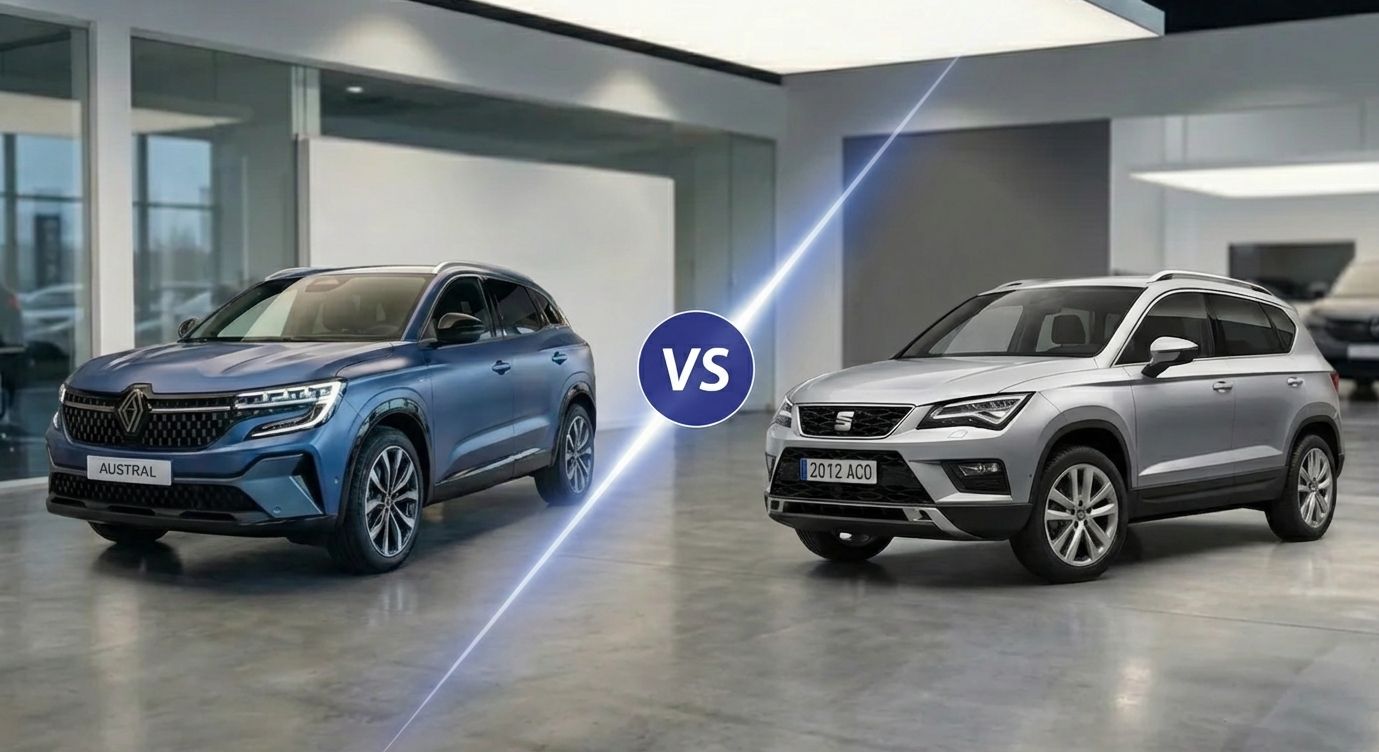
Detailed comparison of Renault Austral vs Seat Ateca. Discover the differences in equipment, driving characteristics, and fuel consumption. Our verdict will make it easier for you to choose the right SUV!
Apr 13, 2026