Car battle
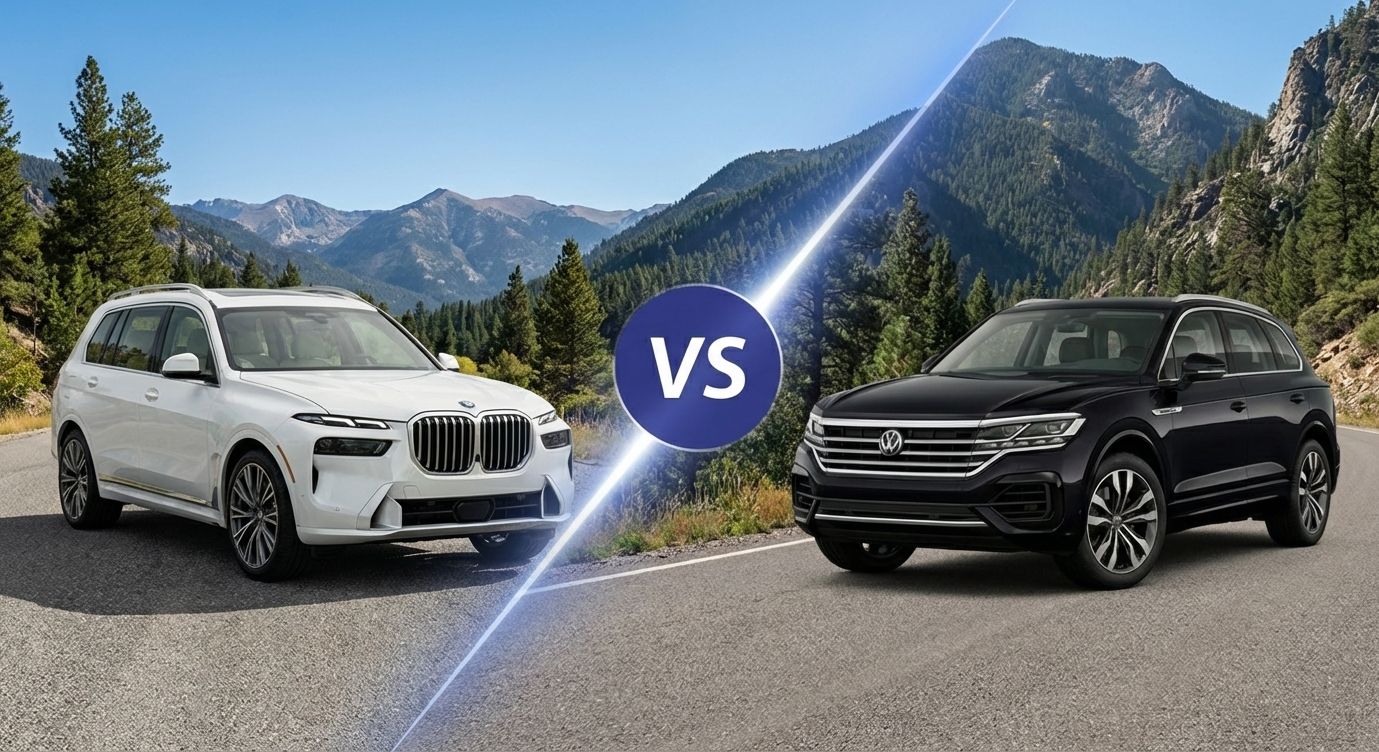
BMW X7 vs. Volkswagen Touareg: Complete comparison 2026
BMW X7 vs. Volkswagen Touareg. Our detailed comparison of design, performance, and practicality will help you choose the right luxury SUV.
Oct 16, 2026
BMW X7 review: real owner experience, common faults, engine picks, running costs and used prices — everything you need before you buy.
November 7, 2026
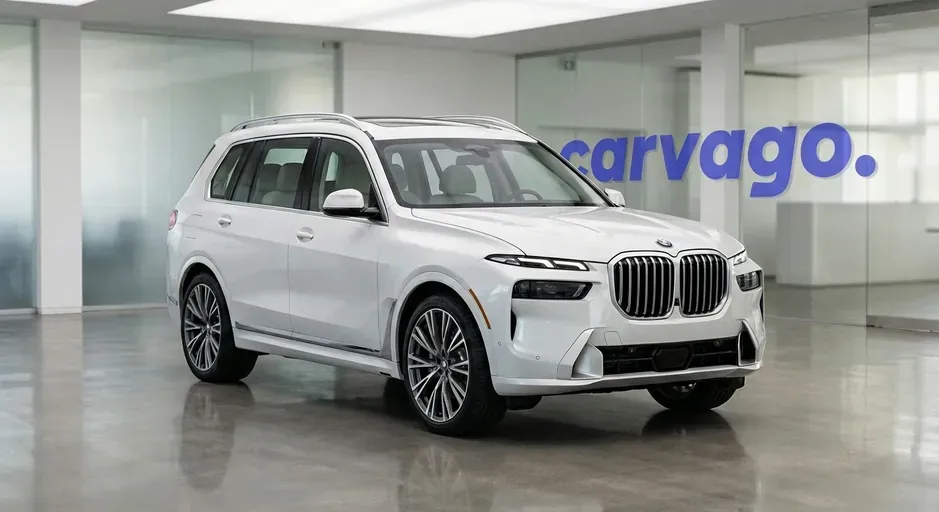
The BMW X7 sits at the top of BMW’s high-riding portfolio, designed to compete directly against three-row luxury models such as the Mercedes-Benz GLS. Assembled at BMW Group Plant Spartanburg in the United States, this first generation (chassis code G07) began European customer deliveries in March 2019 and remains in ongoing series production through 2026.
Following its premiere on 13 April 2022, a major Life Cycle Impulse (LCI) update arrived in European markets in August 2022. The revision introduced a distinctive split-headlight front fascia, a redesigned cockpit layout centred around a curved display panel, and 48-volt mild-hybrid integration across the European engine line-up.
On the pre-owned market, the X7 targets buyers requiring genuine three-row seating alongside substantial towing capability and long-distance travel refinement. This review covers the G07 generation across both its original 2019–2022 execution and the post-facelift era to assess how it performs as a used ownership proposition.
On owner forums and across European workshop networks, the first-generation BMW X7 is generally regarded as mechanically robust in its core six-cylinder engines, but its substantial mass and intricate electronic systems give rise to a distinct set of recurring weaknesses. The most frequently reported mechanical issue involves the all-wheel-drive transfer case. Owners report low-speed juddering or shuddering when making sharp turns, such as during parking manoeuvres or tight U-turns, often surfacing between 40,000 and 80,000 km. This symptom stems from friction breakdown of the transfer case fluid under heavy load. In mild cases, draining and refilling the transfer case with fresh fluid alongside a clutch recalibration rectifies the problem, whereas advanced cases require a full transfer case replacement.
Chassis and body electronics also present known vulnerabilities over time. Owners frequently encounter air suspension leaks, where the rubber air spring bellows—predominantly on the heavily laden front axle—develop micro-perforations between 80,000 and 120,000 km. This causes the car to sag visibly at one corner after being parked overnight. If left unaddressed, the air compressor runs continuously to compensate for the pressure drop, leading to compressor burnout. Above the cabin, sealing degradation around the roof-mounted shark-fin antenna allows water to bypass the roof skin, dripping directly onto the telematics control unit beneath the headliner. Owners report this triggering persistent emergency call malfunction warnings on the dashboard and disabling connected navigation services, which requires resealing the antenna cover and replacing the moisture-damaged module.
The model has also been the subject of several official European safety recalls, notably involving braking systems and starter components. Facelift models produced between June 2022 and January 2024 were included in a worldwide campaign affecting 1,493,890 BMW Group vehicles due to the integrated braking system. Signal disruptions within the electro-hydraulic unit could lead to an unexpected loss of hydraulic brake assistance, requiring higher pedal force and disabling ABS and dynamic stability control, thereby lengthening stopping distances. In addition, an earlier recall on pre-facelift models built between January 2019 and February 2022 involved improperly installed compression springs on the third-row seat backrest latches, which posed an increased injury risk during an accident.
Multiple distinct recall campaigns have targeted starter motor assemblies across both pre-facelift and facelift models. In August 2024, an engine software update was issued for vehicles built from 2018 to 2020 because the overload protection profile could not adequately protect the starter during prolonged starting attempts. In September 2025, a worldwide recall covering early production through September 2021 addressed water ingress into the starter relay housing, which caused corrosion, potential short circuits, and elevated fire risk even while parked. Most recently, in July 2026, a worldwide campaign covering vehicles built between July 2020 and February 2026 addressed mechanical abrasion deposits within the starter relay that could increase contact resistance and present a fire risk. In both instances, manufacturer guidance urged owners to park vehicles outdoors away from buildings until the starter assemblies were replaced.
| Component / Defect (Selected) | Affected Production Window | Scope & Official Remedy |
|---|---|---|
| Integrated Braking System (IBS) | June 2022 – January 2024 | Worldwide. Diagnostic software update; complete replacement of electro-hydraulic brake unit if faults are present. |
| Starter Relay Mechanical Abrasion | 31 July 2020 – 26 February 2026 | Worldwide. Complete replacement of the engine starter motor assembly. |
| Starter Relay Water Ingress | March 2019 – 07 September 2021 | Worldwide. Dealership inspection and free replacement of the starter motor assembly. |
| Third-Row Seat Backrest Latches | 04 January 2019 – 03 February 2022 | Worldwide. Dealer inspection and corrective refitting or replacement of seat locking compression springs. |
| EGR Cooler Glycol Leakage | 2018 – 2022 (diesel variants) | Europe. Dealer inspection and installation of an improved EGR cooler unit. |
Every European BMW X7 is equipped with standard all-wheel drive and an automatic transmission, using turbocharged straight-six engines or twin-turbocharged V8 units. From August 2022 onward, the updated lineup integrates 48V mild-hybrid hardware directly within the transmission casing.
| Engine | Fuel | Power | Gearbox | Model years |
|---|---|---|---|---|
| xDrive30d | Diesel | 195 kW (265 hp) | 8-speed automatic | 2019–2020 |
| xDrive40d | Diesel mild hybrid | 250 kW (340 hp) | 8-speed automatic | 2020–2022 |
| xDrive40d | Diesel mild hybrid | 259 kW (352 hp) | 8-speed automatic | 2022–present |
| M50d | Diesel | 294 kW (400 hp) | 8-speed automatic | 2019–2020 |
| xDrive40i | Petrol | 250 kW (340 hp) | 8-speed automatic | 2019–2020 |
| xDrive40i | Petrol mild hybrid | 245 kW (333 hp) | 8-speed automatic | 2020–2022 |
| xDrive40i | Petrol mild hybrid | 280 kW (380 hp) | 8-speed automatic | 2022–present |
| M50i | Petrol | 390 kW (530 hp) | 8-speed automatic | 2019–2022 |
| M60i xDrive | Petrol mild hybrid | 390 kW (530 hp) | 8-speed automatic | 2022–present |
For suburban commuting and mixed daily driving, the straight-six petrol xDrive40i is the most practical match in the petrol BMW X7 range. It warms up quickly and avoids the particulate filter loading and emissions hardware strain that affect diesel variants driven on recurring short journeys.
Frequent motorway drivers and those needing a vehicle for heavy towing should look instead to the diesel BMW X7. The twin-turbo xDrive40d produces ample low-rev torque to handle substantial trailer loads with confidence while requiring fewer refuelling stops on long cross-country routes. As a used car, the earlier single-turbo xDrive30d serves as an accessible entry point for steady highway cruising, whereas the quad-turbo M50d provides stronger high-speed passing power at the expense of added mechanical complexity.
The twin-turbo V8 petrol models—the pre-facelift M50i on the used market and the newer M60i xDrive—cater strictly to buyers prioritizing rapid straight-line acceleration over running efficiency. Both move the large chassis with sudden urgency, though their heavy urban fuel demand makes them niche options suited mainly to low-mileage leisure driving.
For documented mechanical faults, recall campaigns, and driveline wear patterns across these powertrains, refer to the owner experiences section of this review.
| Model Version | Length (mm) | Width (mm) | Height (mm) | Wheelbase (mm) | Boot Capacity (Seats Up / Folded, l) |
|---|---|---|---|---|---|
| Pre-facelift (2019–2022) | 5,151 | 2,000 | 1,805 | 3,105 | 326 / 2,120 |
| Facelift (2022–present) | 5,181 | 2,000 | 1,835 | 3,105 | 300 / 2,120 |
As a full-size luxury SUV, the BMW X7 SUV provides true three-row accommodation. Unlike many vehicles where the rearmost seats suit only children, the third row here comfortably hosts adults on longer journeys. Access to the back is fully electrified, with the second-row bench sliding and tilting at the touch of a button, though the motorized mechanism operates at a relaxed pace. Buyers can choose between a standard seven-seat layout with a split-folding bench or an optional six-seat arrangement featuring two individual comfort chairs in the middle row. Everyday loading benefits from a standard split two-piece power tailgate, which prevents items from rolling out when opened and provides a practical lower shelf for packing. Folding the second and third rows completely flat creates a flat, step-free cargo floor.
Professional road tests consistently highlight the BMW X7 as a composed long-distance cruiser. Its standard two-axle air suspension absorbs road imperfections effectively, and acoustic isolation keeps engine, tyre, and wind noise well suppressed at motorway speeds. Where fitted, optional active roll stabilisation and rear-wheel steering manage cornering cleanly, helping the chassis remain stable during sudden lane changes. Even so, testers note that undulating asphalt can induce noticeable float and vertical pitching, while optional low-profile wheels transmit sharp vibrations over urban expansion joints. The vehicle's exterior bulk also proves challenging in tight parking structures and along narrow rural roads.
Interior assembly and materials receive favourable marks across all production years, with high-grade leather and sturdy construction throughout all seating rows. However, testers diverge sharply when comparing original and revised models. Earlier BMW X7 SUV versions earned acclaim for intuitive ergonomics that retained physical climate dials and tactile shortcut buttons. The 2022 facelift replaced this layout with a curved display running an updated operating system, which moved ventilation and heating controls into digital submenus. Testers almost unanimously criticise this transition, noting that simple temperature adjustments require multiple screen taps and divert attention away from the road.
All the charts in this section are drawn from Carvago's listings of the whole BMW X7 model family, including other generations represented in the data, not only the reviewed generation, meaning this chart does not establish a separate price level for the reviewed generation alone. In the current market offer, the median asking price sits at €62,000 for 2019 models and €65,000 for 2021 builds. Later model years reflect higher asking levels, stepping from €71,900 for 2022 examples to €96,700 for 2023 cars and reaching €114,200 for 2026 builds.
Between May and October 2026, active BMW X7 advertisements opened at 3,244 and closed at 3,165. The chart below illustrates how monthly listings moved across this six-month period.
Active listings over time
| Month | BMW X7 |
|---|---|
| 2026-05 | 3 244 |
| 2026-06 | 3 272 |
| 2026-07 | 3 289 |
| 2026-08 | 3 160 |
| 2026-09 | 3 289 |
| 2026-10 | 3 165 |
Source Carvago
Buyers have a broad selection of cars to browse, with overall market availability shifting only between 3,160 and 3,289 listings across the months shown.
For BMW X7 listings advertised today, the median asking price of vehicles built in 2019 is €62,000, while the median asking price of cars built in 2026 is €114,200. The chart below displays these median asking prices across the available build years.
Median advertised price by year of manufacture
| Model year | BMW X7 |
|---|---|
| 2019 | 62 000 |
| 2020 | 65 900 |
| 2021 | 65 000 |
| 2022 | 71 900 |
| 2023 | 96 700 |
| 2024 | 107 800 |
| 2025 | 104 900 |
| 2026 | 114 200 |
Source Carvago
Values do not climb consistently with each newer model year, as the median asking price for 2021 models (€65,000) is lower than for 2020 models (€65,900), and 2025 models (€104,900) sit below 2024 models (€107,800). Buyers targeting build years from 2019 to 2022 encounter median asking prices between €62,000 and €71,900, whereas newer vehicles require larger budgets, starting at €96,700 for 2023 and reaching €114,200 for 2026.
This depreciation curve illustrates how the model's residual value falls with vehicle age, with the steepest decline occurring in the first year as it loses roughly 23% of its starting value. By age three, cumulative value loss reaches 34%, as shown in the progression below.
Residual value by vehicle age
| Vehicle age | BMW X7 |
|---|---|
| New | 114 300 |
| 1 yr | 88 400 |
| 2 yrs | 82 100 |
| 3 yrs | 75 200 |
| 4 yrs | 64 000 |
| 5 yrs | 57 200 |
| 6 yrs | 53 200 |
| 7 yrs | 49 500 |
Source Carvago
Over the seven years recorded, the vehicle sheds approximately 57% of its initial residual value, retaining about 43% of that benchmark. The drop tapers off considerably beyond age four, with annual losses moderating to around 7% between ages five and seven.
Between May 2026 and October 2026, advertised listings were dominated by diesel and petrol variants, reaching 1898 diesel and 1257 petrol models in October 2026. The chart below details the monthly count of active listings across each fuel type.
Supply composition by fuel type
Petrol
Diesel
Hybrid
| Month | Petrol | Diesel | Hybrid |
|---|---|---|---|
| 2026-05 | 1 403 | 1 821 | 17 |
| 2026-06 | 1 411 | 1 843 | 16 |
| 2026-07 | 1 464 | 1 811 | 13 |
| 2026-08 | 1 321 | 1 824 | 13 |
| 2026-09 | 1 320 | 1 953 | 14 |
| 2026-10 | 1 257 | 1 898 | 7 |
Source Carvago
Diesel represents the largest share of advertised vehicles on offer, with petrol providing the only other sizable selection, while hybrids accounted for just 7 listings in October 2026. Buyers can expect a broad choice among diesel and petrol engines, but almost no presence for alternative powertrains.
The monthly tracking below shows how the average asking price for the BMW X7 evolved between May 2026 and October 2026, starting at €79,200.
Average price development over time
| Month | BMW X7 |
|---|---|
| 2026-05 | 79 200 |
| 2026-06 | 79 900 |
| 2026-07 | 79 700 |
| 2026-08 | 80 900 |
| 2026-09 | 82 500 |
| 2026-10 | 83 000 |
Source Carvago
Aside from a brief dip to €79,700 in July 2026, the average asking price rose moderately across the recorded span to reach €83,000 by October 2026.
Genuine three-row cabin with adult-sized seating in all rows
Composed, quiet ride on air suspension for long-distance cruising
Broad choice of smooth six-cylinder petrol and diesel engines
Known transfer case shudder and air suspension leak tendencies
Substantial exterior dimensions complicate tight parking manoeuvres
Climate controls moved to touchscreen submenus on facelift models
For mixed commuting and urban trips, the petrol xDrive40i in the BMW X7 is the most suitable choice to avoid emissions hardware strain. Frequent motorway drivers should opt for the diesel BMW X7 xDrive40d for its muscular torque and fewer fuel stops.
Mechanically, the core six-cylinder engines are durable, but the vehicle’s high mass accelerates transfer case wear. Prospective buyers must also verify via VIN that official safety recalls have been completed.
Test for drivetrain judder during tight low-speed turns and ensure the air suspension stays level overnight. It is equally important to confirm that all official safety recalls have been resolved.
Pre-facelift models from 2019 to 2022 command median asking prices starting around €62,000, while newer post-facelift vehicles require substantially larger budgets.
Sources: newsroom.bmwgroup.com, adac.de, autocar.co.uk, autoexpress.co.uk, whatcar.com
This article was prepared using artificial intelligence tools. The section guarantor is Petr Dušek.
BMW X7 vs. Volkswagen Touareg. Our detailed comparison of design, performance, and practicality will help you choose the right luxury SUV.
Oct 16, 2026
Detailed comparison of the Audi Q7 and Volvo XC90. Discover the differences in equipment, fuel consumption, and reliability of used cars. Which luxury SUV is the better choice? Read our verdict.
Apr 17, 2026
Audi Q8 vs Mercedes-Benz GLS: Which premium SUV to choose? Read a detailed comparison of performance, comfort, and reliability to help you choose the right used car.
May 7, 2026