Car battle
BMW X5 vs. BMW X7: Complete comparison 2026
Detailed comparison of the BMW X5 vs. BMW X7. Discover the main differences in space, equipment, and real-world driving characteristics. Read our verdict and make the right choice!
Oct 16, 2026
Articles
Car battle
Detailed comparison of the Audi Q7 and Volvo XC90. Discover the differences in equipment, fuel consumption, and reliability of used cars. Which luxury SUV is the better choice? Read our verdict.
April 17, 2026
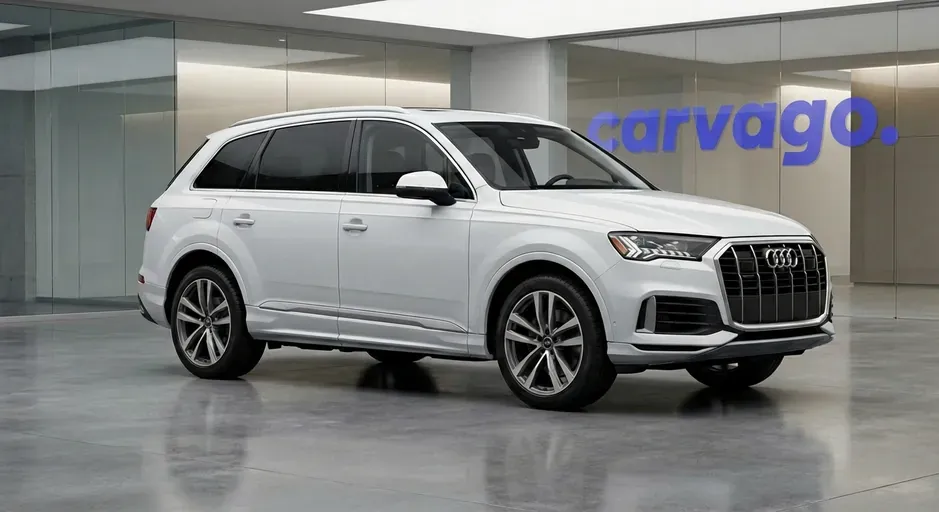
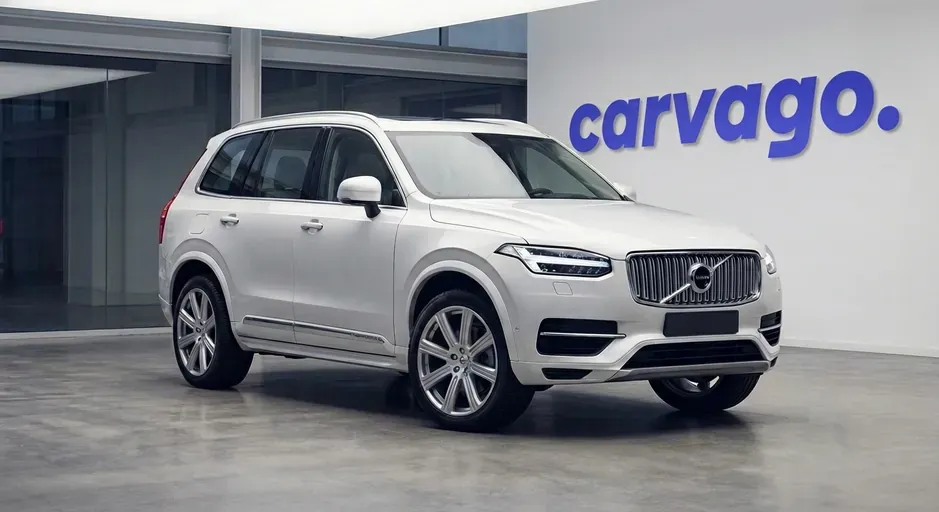
Audi Q7 represents a majestic luxury SUV from Ingolstadt, Germany, which has gained popularity on the market thanks to its exceptionally spacious interior, advanced technologies, and superior driving comfort. Standing against it is the Swedish Volvo XC90, which in its history was also sold under the name Volvo XC Classic in some Asian markets, and which attracts primarily with its elegant Scandinavian design combined with an unrivaled emphasis on the safety of the entire crew. The following comparison will provide a detailed look at the strengths and weaknesses of both these premium used cruisers and help you find out which one will become the ideal choice for your needs.
Both of these premium SUVs are among the largest and most majestic vehicles you can encounter on European roads. If we focus on popular used cars from the market that are roughly four years old, we find that although they appear similarly massive at first glance, each manufacturer approached them slightly differently in terms of exact figures.
The German Audi Q7 from these years measures 5063 mm in length, making it roughly 11 centimeters longer than the Swedish Volvo XC90, whose length ranges from 4950 to 4953 mm. The greater length of the Audi also goes hand in hand with a slightly longer wheelbase, which is 2995 mm compared to 2984 mm for the Volvo. In practice, this means more generous longitudinal space in the interior. If you are looking for a car where adult passengers in the second row (or children in the third) will have enough legroom even on very long journeys, these extra centimeters represent a significant advantage.
On the other hand, the Volvo XC90 scores points with its height and overall boxier body construction. With height values reaching 1771 to 1776 mm, it exceeds the Audi (1741 mm) by more than three centimeters. This gives the driver and passengers an airier feel in the cabin and, above all, a more upright seating position, which enhances the much-desired sense of safety and provides a perfect overview of the surroundings. In terms of width, the Volvo can reach up to 2008 mm (in certain trims and T8 versions), while the Audi maintains a steady 1970 mm.
These exact dimensions thus clearly define the slightly different character of both competitors. Visually, the Audi Q7 appears more like an elongated and slightly hunkered-down highway cruiser, whose main domain is directional stability and longitudinal interior space. The Volvo XC90, on the other hand, bets on the classic, more upright proportions of a traditional SUV. In everyday city life, the nearly five-meter Volvo can be a slight advantage when parking because it is a bit shorter; however, given the overall massiveness and uncompromising width of both vehicles, you must always expect that typical parking spaces at shopping centers will be very tight for them.
| Parameter | Audi Q7 SUV | Volvo XC90 SUV |
|---|---|---|
| Width (mm) | 1970 | 1923 - 2008 |
| Length (mm) | 5063 | 4950 - 4953 |
| Height (mm) | 1741 | 1771 - 1776 |
| Wheelbase (mm) | 2995 | 2984 |
When choosing an approximately four-year-old large premium SUV, luggage capacity often plays a key role in whether the car stands up to daily family use. Both the Audi Q7 and the Volvo XC90 represent true giants on the used car market, capable of accommodating strollers, bulky sports equipment, or complete luggage for a winter holiday without the slightest problem. For buyers with larger families, the vehicle's ability to offer not only comfortable seating but also a generous and easily accessible trunk is absolutely essential, which is why both of these cars are so sought after by customers for their practicality.
In a direct comparison of on-paper figures, the Audi Q7 (in the relevant 4M generation) has a slight edge. In its basic configuration behind the second row of seats, it offers a trunk volume of 780 to 867 liters, depending on whether you choose a five-seater or seven-seater configuration. If you fold down the rear seats, the Ingolstadt SUV turns into a total hauler with a maximum volume of 1,908 to 2,050 liters. In contrast, the Swedish Volvo XC90 (second generation) has a basic capacity of 680 to 721 liters, which increases to 1,868 liters after folding down the rear rows. Both manufacturers also offer increasingly popular plug-in hybrid powertrains in four-year-old used cars (labeled TFSI e at Audi, and T8 Recharge at Volvo). The presence of traction batteries located under the trunk floor takes a slight toll on space here, so the basic volume drops to approximately 650 liters for the Audi and 640 liters for the Volvo.
Although the Audi theoretically offers a few more liters and literally provides space for several extra suitcases, the Volvo easily makes up for this minor paper handicap with its brilliant interior architecture. The XC90 features strictly regular, almost boxy shapes without unnecessary alcoves and edges, which in practice means significantly easier loading of large and bulky items. Furthermore, after completely folding the seats, the Volvo creates a perfectly flat loading floor. In conclusion, the luggage space in both models is perfectly sufficient for weekend shopping as well as longer holidays, and whichever one you choose when buying a used car, the trunk dimensions will certainly not limit you.
| Parameter | Audi Q7 SUV | Volvo XC90 SUV |
|---|---|---|
| Basic volume (liters) | 780 - 867 | 680 - 721 |
| Max. volume after folding seats (liters) | 1908 - 2050 | 1868 |
While the Audi Q7 offers an absolutely larger and deeper luggage volume, the Volvo XC90 easily matches it in daily family practice thanks to its exceptionally clever shaping and perfectly flat loading area.
When choosing a large premium SUV, towing capacity often plays a key role, whether you plan to tow a heavy caravan, a boat, or a horse trailer. While both compared vehicles can handle common family challenges, there is a fundamental difference between them in terms of raw towing power.
The current generation Audi Q7 (4M), which is widely represented in the four-year-old used car market, is an absolute champion in this discipline. For many engines, including the popular 45 TDI and 50 TDI diesel versions or the powerful 55 TFSI petrol six-cylinder, it offers a maximum braked trailer weight of up to an impressive 3500 kg. The standard value for some equipment levels or model years ranges around 2700 to 2800 kg, but with the correct factory towing hitch, the Q7 is a true towing monster. Moreover, surprisingly, some powerful plug-in hybrid variants (e.g., 60 TFSI e) also maintain this giant towing capacity.
The second-generation Volvo XC90, on the other hand, relies on somewhat more modest, though still very decent, figures. More conventional and mild-hybrid engines like the B5 Diesel, B6, or the older D5 diesel can tow a maximum of 2700 kg. However, if you opt for the popular T8 plug-in hybrid version (often also referred to as Twin Engine or Recharge), expect a slightly reduced capacity in the range of 2350 to 2400 kg. The penalty for the additional weight of the batteries and electric motor is more noticeable in the Nordic SUV.
In practice, this means that while the Volvo XC90 is more than sufficient for a standard large family caravan, weekend trips with a smaller boat, or transporting construction materials, the Audi Q7 represents an uncompromising choice for the heaviest trailers. The German SUV handles the space for a heavy two-horse trailer, a large yacht, or a bulky car transporter with much greater ease and a legal margin.
In summary, both cars serve perfectly well for occasional towing of common loads. However, if your primary requirement is to have no limits and the maximum possible towing capacity available in the passenger car segment, the Audi Q7 emerges as the clear winner of this battle.
Note: The value for an unbraked trailer is legally limited to the standard European 750 kg for all these vehicles.
| Model and engine | Braked trailer weight (kg) | Unbraked trailer weight (kg) |
|---|---|---|
| Audi Q7 45 TDI (gen. 4M) | 2700 - 3500 | 750 |
| Audi Q7 50 TDI (gen. 4M) | 2700 - 3500 | 750 |
| Audi Q7 55 TFSI (gen. 4M) | 2700 - 3500 | 750 |
| Audi Q7 60 TFSI e (gen. 4M) | 2800 - 3500 | 750 |
| Volvo XC90 B5 Diesel (2nd gen.) | 2700 | 750 |
| Volvo XC90 D5 (2nd gen.) | 2400 - 2700 | 750 |
| Volvo XC90 B6 (2nd gen.) | 2700 | 750 |
| Volvo XC90 T8 Twin Engine/Recharge (2nd gen.) | 2350 - 2400 | 750 |
When choosing a premium family SUV around four years old, the Audi Q7 and Volvo XC90 represent two completely different technical worlds, which has a direct impact on the driving experience, fuel consumption, and towing capabilities. While the Audi Q7 (in its relevant 4M generation) still relies on large-displacement 3.0-liter V6 engines across all its versions, the Volvo XC90 (2nd generation) opted for a strict downsizing strategy, relying purely on turbocharged 2.0-liter four-cylinder engines from the Drive-E range, which it cleverly supplements with electrification. Standard diesel units, such as the popular Audi Q7 45 TDI (170 kW) and Volvo XC90 B5 Diesel (173 kW), represent the absolute ideal for everyday long-distance driving with an excellent balance of reliability and low operating costs. However, compared to the Audi, Volvo offers only the B5 four-cylinder (184 kW) in its base petrol variant, while the Q7 provides the larger and more powerful 55 TFSI V6 with 250 kW. At the absolute top of both ranges are high-performance and eco-friendly plug-in hybrids (PHEV). Audi deploys the majestic 60 TFSI e with a system output of 335 kW, which the Swedish competitor counters with the aggressive T8 Recharge variant, also boasting a top combined output of up to 335 kW. Furthermore, with both brands, the buyer automatically gets an advanced all-wheel-drive system and a reliable eight-speed automatic transmission. In terms of the ideal use case, a clear rule applies: highway travelers and owners of heavy trailers will 100% appreciate the massive torque and silky-smooth operation of Audi's diesel V6s. Conversely, eco-conscious or family-oriented drivers and those who frequently drive in the city will most appreciate Volvo's highly sophisticated and efficient electrified powertrains with their more economical philosophy.
Under the hood of a roughly four-year-old Audi Q7 (4M generation), you will find exclusively robust and highly refined 3.0-liter V6 engines, which are paired as standard with the proven quattro all-wheel-drive system and an eight-speed tiptronic transmission. Following an extensive update in 2019, the traditional internal combustion versions also received 48V mild-hybrid (MHEV) technology across the board. This allows the car to coast with the engine off, subtly saving fuel and significantly improving the response of the otherwise slightly lethargic start-stop system. The core of the range for long highway journeys is clearly the diesel versions: the 45 TDI (170 kW) and the more sought-after, much more flexible 50 TDI (210 kW). Those interested in petrol can choose the silky-smooth 55 TFSI (250 kW). For the nearly-new used car market, the plug-in hybrid variants 55 TFSI e (280 kW) and 60 TFSI e (335 kW) are also extremely attractive, combining a powerful combustion engine with an electric motor for massive torque and the possibility of pure emission-free driving in city centers. Looking at historical data, it is necessary to mention that the massive 4.2 TDI and V12 diesel V8s from earlier years belong exclusively to the first generation 4L (2005–2015) and, logically, do not appear in the current era of four-year-old MHEV and PHEV used cars.
| Engine Type | Fuel Type | Power (kW) | Torque (Nm) | Transmission |
|---|---|---|---|---|
| 45 TDI | Diesel (MHEV) | 170 | 500 | 8-speed tiptronic |
| 50 TDI | Diesel (MHEV) | 210 | 600 | 8-speed tiptronic |
| 55 TFSI | Petrol (MHEV) | 250 | 500 | 8-speed tiptronic |
| 55 TFSI e | Petrol (PHEV) | 280 | 600 | 8-speed tiptronic |
| 60 TFSI e | Petrol (PHEV) | 335 | 700 | 8-speed tiptronic |
For the second generation of the XC90, Swedish Volvo chose a radically different engineering approach. Following the arrival of updated versions in 2019, the current engine range completely moved away from large engines and bet everything on cleverly turbocharged 2.0-liter diesel or petrol four-cylinder engines, which benefit greatly from advanced electrification. Therefore, in used cars roughly four years old, you will standardly encounter the newer "B" mild-hybrid and "T8" plug-in hybrid designations. Historical diesel and petrol designations like D4, D5, or the older T6 type mostly come from the initial years of second-generation production (approx. 2015 to 2019) and no longer appear in newer models from 2021 onwards. The classic highway benchmark with an emphasis on good fuel economy is the B5 Diesel mild-hybrid with 173 kW and a generous 480 Nm of torque. If you prefer the silence and smoothness of petrol units, there is a choice between the B5 mild-hybrid 2.0-liter (184 kW) or its much more powerful, supercharged and turbocharged B6 variant (220 kW). However, the absolute technological and performance king of the price list is the T8 Recharge PHEV version (succeeding the earlier Twin Engine designation). This combines a high-output combustion engine with a powerful electric motor and, in the latest available used cars, can offer a massive system output of up to 335 kW, giving the large SUV the dynamics of a purebred sports car. Regardless of the chosen engine, you will be supported by a perfectly calibrated eight-speed Geartronic automatic transmission and the safety of stable AWD.
| Engine Type | Fuel Type | Power (kW) | Torque (Nm) | Transmission |
|---|---|---|---|---|
| B5 Diesel | Diesel (MHEV) | 173 | 480 | 8-speed Geartronic |
| B5 | Petrol (MHEV) | 184 | 350 | 8-speed Geartronic |
| B6 | Petrol (MHEV) | 220 | 420 | 8-speed Geartronic |
| T8 Recharge | Petrol (PHEV) | 288 - 335 | 640 - 709 | 8-speed Geartronic |
If your absolute priority is dynamics at highway speeds, substantial torque, and the effortless pull of a full-blooded six-cylinder, then the Audi Q7 practically has no competition. Volvo XC90, on the other hand, offers an exceptionally refined, family-friendly, and efficient alternative with perfectly tuned four-cylinder hybrids that truly excel, especially in urban and suburban traffic.
Choosing the right engine is crucial for long-term satisfaction, and our recommendations are based on overall performance, real-world fuel consumption, owner feedback, and documented mechanical reliability. While Audi remains faithful to the tradition of large-displacement six-cylinder engines with its sophisticated 3.0 TDI units in the Q7, the Volvo XC90 has taken a radical path since 2015, relying exclusively on two-liter four-cylinder Drive-E units. This differing approach means that the Audi offers more substantial low-end pull and the silky-smooth operation of a V6, while the Volvo counters with lower weight over the front axle, more complex turbocharging, and massive integration of mild-hybrid technologies. Both models approach powering a large and heavy SUV differently, but in both cases, with an ideally chosen engine for a roughly four-year-old used car, you can rely on a high level of comfort and surprising efficiency.
This three-liter V6 diesel represents the absolute ideal for the heavy 4M generation Q7. Compared to the weaker 45 TDI version, it offers significantly better flexibility and overall power reserves, while real-world fuel consumption remains practically identical. Technical advantages include a massive 600 Nm of torque available from low revs, which, combined with the smooth eight-speed Tiptronic automatic and a 48V mild-hybrid system, ensures confident dynamics with an average consumption of around 8 to 9 l/100 km. In terms of reliability, it is a robust engine; however, it is necessary to pay attention to the condition of the diesel particulate filter (DPF) and carbon buildup in the intake or EGR valve, which most often occurs during long-term short city trips. You can identify a potential problem during a test drive by an irregular idle, delayed throttle response, or an emissions warning light on the dashboard. To avoid expensive repairs, we recommend checking the DPF soot level using diagnostics before buying a used car and subsequently shortening the oil change interval to a maximum of 15,000 km. This engine is ideal for long-distance drivers, large families traveling with a full trunk, and those who frequently tow heavy trailers.
For the second-generation Volvo XC90, the B5 mild-hybrid four-cylinder diesel is a rational safe bet in terms of both reliability and operating costs. Compared to the complex plug-in hybrids (T8), it offers more balanced driving characteristics without unnecessary excess weight and eliminates the risk of future expensive battery system failures. The main technical strength here is the twin-turbocharging, which extracts a confident 480 Nm of torque from two liters. Additionally, the auxiliary 48V starter-generator perfectly smooths out pull-offs and start-stop system activation, allowing this giant to be driven in practice for an excellent 7.5 to 8 l/100 km. Known risks lie in the more complex sequential turbocharging, which is extremely sensitive to lubrication quality. Neglected service by a previous owner often leads to premature turbocharger wear, which you can detect during a test drive by a clearly audible whistling sound under load. Similarly, purely city driving overloads the DPF filter, the clogging of which is signaled by a noticeable loss of power. After purchase, it is absolutely crucial to switch to an annual oil interval with a maximum mileage of 15,000 km. Before buying, also check the Sensus infotainment – an extremely slow display response after starting indicates a missing software update, which is necessary to prevent it from freezing. The B5 Diesel is best suited for calmer drivers looking for a safe and economical SUV for smooth commutes and highway travel.
Official fuel consumption figures often look very tempting on paper, but for large and heavy premium SUVs like the Audi Q7 and Volvo XC90, the reality on the road is often quite different. While manufacturers boast impressively low numbers in brochures (especially for plug-in hybrid versions), the actual appetite of these vehicles weighing over two tons depends on real-world conditions and driving style. To get an objective picture of operating costs in the used car market, we focused on roughly four-year-old vehicles (primarily generations from 2020 to 2023) and compared official table data with real-world user experiences from the independent community portal Spritmonitor.de.
| Model and engine | Average consumption (l/100 km) |
|---|---|
| Audi Q7 45 TDI (Diesel, 170 kW) | 8.2 |
| Volvo XC90 B5 Diesel (Diesel, 173 kW) | 8.4 |
| Audi Q7 50 TDI (Diesel, 210 kW) | 8.8 |
| Volvo XC90 B5 (Petrol, 184 kW) | 10.2 |
| Volvo XC90 B6 (Petrol, 220 kW) | 10.5 |
| Audi Q7 55 TFSI (Petrol, 250 kW) | 11.5 |
| Volvo XC90 T8 Recharge (PHEV) | 4.0 |
| Audi Q7 55 TFSI e (PHEV) | 4.5 |
When interpreting this data, long-term trends are clearly visible, which used car buyers can benefit from. Despite all modern trends, diesel engines remain the most economical and sought-after choice for these giant SUVs. An interesting and perhaps surprising finding is that although Volvo relies exclusively on a mild-hybrid two-liter four-cylinder for the B5 Diesel version as part of "downsizing," it brings no tangible fuel savings in terms of real consumption compared to the refined three-liter V6 TDI in the Audi. Furthermore, on the highway, the large-displacement V6 in the Q7 demonstrably has less work to do with the heavy vehicle.
For pure petrol engines, the difference compared to diesel is striking. For both brands, you must expect that consumption rarely falls below 10 liters, and with more dynamic driving, it is no problem to exceed 12 liters per hundred kilometers. Plug-in hybrids (T8 for Volvo and TFSI e for Audi) are a chapter of their own. Although official parameters for these models promise consumption in the laughable range of 1.2 to 2.7 l/100 km on paper, community data shows an average closer to 4.0 to 4.5 liters – and that is only assuming consistent daily home charging. If you deplete the battery on a long trip, these cars suddenly behave like extremely heavy petrol SUVs, and consumption at highway speeds quickly exceeds the 8 to 9-liter mark.
From these facts, fairly clear conclusions follow for typical users:
In conclusion, the average fuel consumption of both cars is unlikely to be the factor that clearly decides the choice for one competitor or the other. Both family SUVs show very similar requirements in comparable engine versions. The key will rather be your personal preference – whether you settle for a diesel four-cylinder from Volvo or prefer the smoother operation of the more robust V6 in the case of the Audi Q7, which realistically needs no more fuel on average for its top-tier performance.
When choosing a pre-owned premium family SUV, price often plays a key role. Focusing on vehicles approximately 4 years old (in the current market, these are predominantly 2022 models), the situation in used car dealerships shows interesting differences in both total acquisition costs and the rate of initial depreciation for both competitors.
The Q7 model has long held its value very well on the used car market, which is typical for flagship German SUVs.
From a family budget perspective, the Volvo XC90 represents a significantly more friendly choice. Faster initial depreciation in the first years of operation clearly plays into the hands of potential used car buyers.
| Model (approx. 4 years old) | Typical engine on the market | Estimated price from | Estimated price to |
|---|---|---|---|
| Audi Q7 | 50 TDI (210 kW) | €53,000 | €66,000 |
| Volvo XC90 | B5 AWD (173 kW) | €35,000 | €47,000 |
Market prices may vary depending on the individual service history of the vehicle, verifiable mileage, and the level of optional premium equipment.
While the Volvo XC90 represents a much more affordable path to a spacious premium SUV with an excellent price-to-safety ratio, the Audi Q7 requires a significantly higher initial investment, but rewards it with slower depreciation and more powerful six-cylinder engines under the hood.
Both compared models, the Audi Q7 and Volvo XC90, boast a maximum five-star rating in independent Euro NCAP crash tests. When choosing a used car, however, it is crucial to view this result in a broader context and primarily consider the year the tests were conducted.
Euro NCAP assessment protocols are constantly evolving and becoming stricter over time. Over the years, new frontal crash simulations, more demanding cyclist detection, and advanced tests for assistance systems, including more complex intersection crossings, have been added. For this reason, percentage results from different years cannot be directly compared – a full star rating from an older methodology does not automatically mean the same as five stars from recent years.
The Volvo XC90 underwent testing in 2015 (at the launch of its globally successful second generation) and showed absolutely phenomenal results for that time. From today's perspective, however, certification according to these older standards has already expired. In contrast, the Audi Q7 was re-tested by Euro NCAP in 2019 on the occasion of its significant facelift. The Q7 model thus had to stand up to substantially stricter rules, which brought more demanding tests of autonomous emergency braking (AEB) and comprehensive protection of vulnerable road users.
| Parameter | Audi Q7 | Volvo XC90 |
|---|---|---|
| Year of testing | 2019 | 2015 |
| Adult occupant protection | 92 % | 97 % |
| Child occupant protection | 86 % | 87 % |
| Vulnerable road user protection | 71 % | 72 % |
| Safety assistance systems | 72 % | 100 % |
These results clearly demonstrate the extremely high level of passive and active safety of both vehicles. The Volvo XC90 completely dominated the charts in its time, mainly thanks to its rigid cabin structure and the then-unrivaled City Safety family of assistants, for which it received an exceptional 100%. The Audi Q7's percentages in the assistance category may seem lower at first glance, but they reflect the significantly tougher 2019 methodology. The lower score (72% vs. 100%) is a direct consequence of the deployment of more complex scenarios for assessing active safety, in which it was no longer nearly as easy to achieve a full score.
Despite the age difference in the tests performed, both large family SUVs provide above-standard occupant protection. While the Volvo XC90 benefits from its legendary robustness and excellently tuned passive safety, the Audi Q7, thanks to its full five-star success in newer tests, better demonstrates that its radar sensors and active assistants meet the more modern and stricter technological standards of today's road traffic.
Although Volvo still impresses today with its 100% for assistance systems from 2015, the Audi Q7 from 2019 possesses a more modern and comprehensive safety package tested according to stricter European standards. However, both family SUVs represent the top of the used car market in terms of safety and offer maximum peace of mind on the road.
In addition to standard equipment, each of the models offers several unique features that can be decisive for the customer and show that each brand has its own distinctive approach to luxury and everyday usability.
The German SUV relies on precision engineering, top-tier digitalization, and surprising agility that perfectly masks its actual dimensions.
The Swedish flagship follows the path of minimalist design, unrivaled safety, and thoughtful details that make life easier for large families.
Top-tier driving comfort, especially in versions with optional air suspension
Excellent cabin soundproofing even at high highway speeds
Powerful, refined, and reliable six-cylinder engines (especially the popular TDI versions)
First-class interior craftsmanship using premium materials
Great towing capacity allowing a braked trailer weighing up to 3.5 tons
Significantly more cramped space in the optional third row of seats compared to the Volvo
Controlling the air conditioning and vehicle functions via the lower touchscreen distracts from driving
Higher service and operating costs associated with more complex six-cylinder technology
Relatively high curb weight, which is noticeable in tight corners
The Audi Q7 is the perfect choice for buyers looking for maximum travel comfort, powerful six-cylinder engines, and a quiet cabin for long highway trips. It will primarily appeal to demanding drivers for whom confident driving performance and first-class materials are a priority, while full use of all seven seats is not an absolute necessity for them.
Unrivaled level of safety equipment and robustness of the overall construction
Exceptionally spacious and versatile interior with a realistically usable third row of seats
Elegant, airy, and minimalist Scandinavian cabin design
Very efficient plug-in hybrid powertrains (Recharge/T8) with high performance
Huge, regularly shaped, and easily accessible luggage compartment
Limited engine range consisting exclusively of four-cylinders, which lack the velvety smoothness of six-cylinders
Firmer and less compliant chassis tuning on large wheels (if air suspension is missing)
Noticeably higher internal combustion engine noise during sharp acceleration
The Sensus infotainment system in older model years feels slower and more outdated
The Volvo XC90 will primarily appeal to larger families who place absolute emphasis on safety, practicality, and generous interior space in all three rows. It is an ideal family cruiser with unmistakable Nordic charm, which, while not offering the six-cylinder refinement of the Audi, excels in everyday utility and overall interior thoughtfulness.
Based on long-term user experience, service reports, and data obtained through Comprehensive Car Audits, we have compiled an overview of the most common problems that buyers of roughly four-year-old used Audi Q7 and Volvo XC90 models should watch out for.
The Audi Q7 after its facelift (from 2020) is generally considered a very reliable and well-built luxury SUV; however, given the vast amount of complex technology on board, some specific faults may occur.
Although the Audi Q7 is mechanically very durable, its greatest weakness is the complex electronic systems – especially the 48V mild-hybrid network and the starter-generator, which require thorough diagnostics before purchase.
The Volvo XC90 is immensely popular on the used car market for its safety level and minimalist design, but its concept based exclusively on four-cylinder engines and relatively complex hybrid systems brings some pitfalls.
Volvo pays the price mainly for its high weight, which quickly consumes brakes, and in the popular plug-in hybrid versions, for the more vulnerable rear axle drive system, which can make subsequent service more expensive.
When buying a used car, a physical car inspection is key. Here are several specific points to focus on for these two models. To avoid expensive surprises after the purchase, it is recommended to have an independent technical inspection of the car's condition performed before the final decision, which will reveal hidden defects.
Audi Q7 scores in the five-seat configuration, where it offers a huge capacity of up to 865 liters, while Volvo counters with a volume of 709 liters. However, if you use all seven seats, the Swedish model provides more space behind the third row (314 liters compared to 295 liters for the German competitor). Both vehicles have an easily accessible trunk with a perfectly flat loading surface after folding the seats.
Volvo XC90 is globally known as one of the best-designed seven-seater SUVs, offering enough space in the back even for adult passengers up to 170 cm tall. While the Audi Q7 also has a third row, the legroom there is noticeably more cramped and more suitable for children. However, access to the rear seats is handled very elegantly and easily in both family cars.
Audi with its proven 3.0 TDI diesel six-cylinders (labeled 45 and 50 TDI) is considered a very durable choice with a minimum of chronic problems. Volvo initially had issues with this generation's on-board software and engine complexity, but for used cars after the facelift (from 2019), reliability is already at a very good level. For both premium vehicles, you must expect higher prices for spare parts and more demanding authorized service.
Consumption depends on the engine, with the diesel six-cylinders in the Audi commonly and very efficiently traveling at 7 to 9 liters per 100 km. Volvo relies exclusively on two-liter four-cylinders (mild-hybrids) for conventional powertrains, which in practice achieve similar values around 7.5 to 8.5 liters. Both manufacturers also offer plug-in hybrid versions, which can radically reduce fuel consumption provided the battery is regularly charged from the grid.
The Audi Q7 has long been considered the absolute benchmark in cabin soundproofing and top-tier bump absorption, especially if it has the optional air suspension. In contrast, the Volvo XC90 excels with fantastic, orthopedically shaped seats and an exceptionally calming, minimalist interior. However, the German car feels somewhat more refined and confident on the highway thanks to its powerful six-cylinder engines.
Sources: ADAC, garaz.cz, forbes.cz, autoservis.cz, autotechnik.cz, dopravacek.cz
This article was prepared using artificial intelligence tools. The section guarantor is Petr Dušek.
Detailed comparison of the BMW X5 vs. BMW X7. Discover the main differences in space, equipment, and real-world driving characteristics. Read our verdict and make the right choice!
Oct 16, 2026
Audi Q7 vs. Audi Q8: Which luxury SUV is better for you? A detailed comparison of design, practicality, and driving performance to help you decide.
Oct 23, 2026
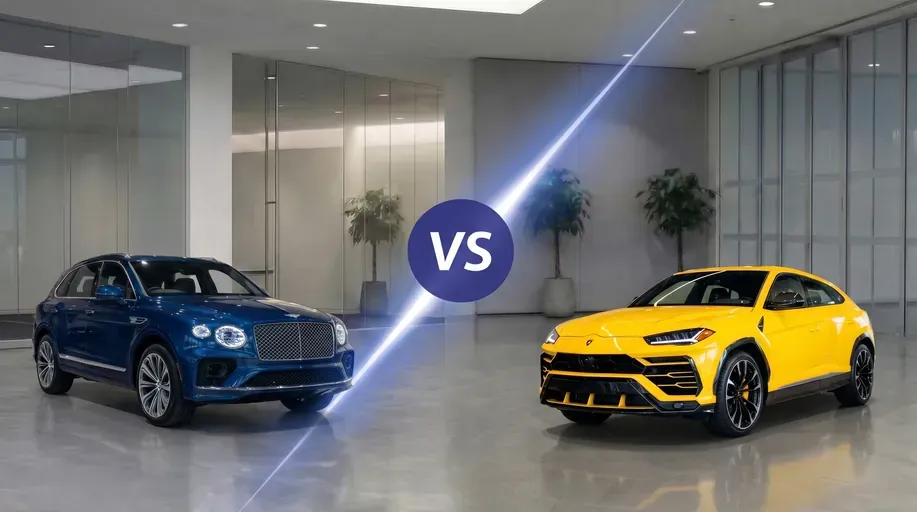
Detailed comparison of luxury SUVs Bentley Bentayga vs. Lamborghini Urus. Discover the real differences in performance, equipment, and comfort, and read our verdict.
Oct 16, 2026