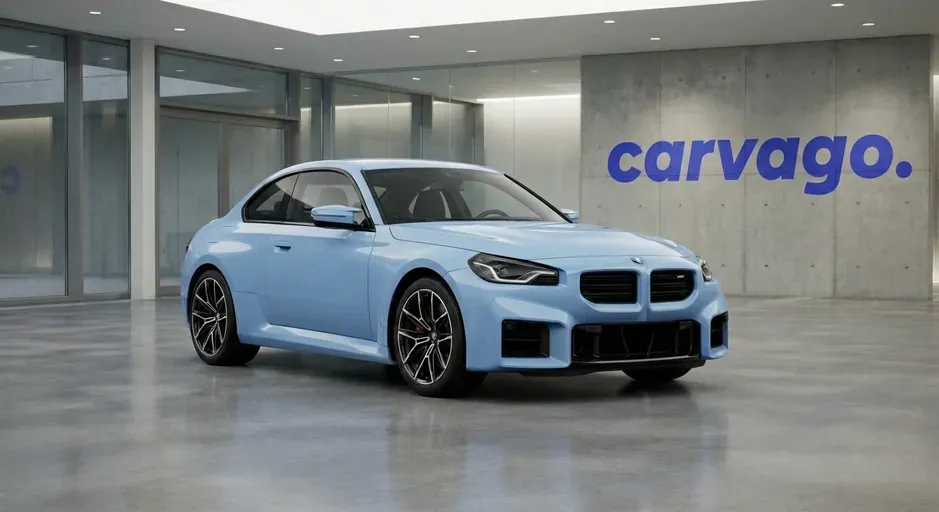
Review BMW M2: What do owners and experts really say?
BMW M2 (G87) review: real owner experiences, running costs, everyday usability, and prices — everything you need to know before you buy.
November 8, 2026
Verdict at a Glance
Who it suits: Drivers wanting a rear-wheel-drive performance coupé who prioritise driver engagement and high-speed composure over low-speed ride comfort.
Recommended engine: The twin-turbo petrol paired with the automatic gearbox for daily usability, or the manual for maximum mechanical involvement.
What to avoid: Cars lacking documented 2,000 km running-in servicing, uncompleted airbag recalls, or stone damage to the exposed oil cooler.
Introduction
The BMW M2 serves as the entry point to BMW’s dedicated high-performance division, occupying a distinct position among premium compact sports cars. Built exclusively as a two-door coupé, it appeals to drivers seeking a traditional front-engine, rear-wheel-drive configuration paired with modern chassis technology.
This review covers the second-generation model. Following its world premiere in October 2022, series production began in late 2022, with the first European customer deliveries taking place in April 2023. A model update was unveiled on 13 June 2024, entering production in August 2024 before reaching European buyers in autumn 2024.
The model range expanded further with the limited-run BMW M2 Coupé CS derivative, premiered on 28 May 2025. Additionally, an all-wheel-drive variant featuring M xDrive was announced on 03 June 2026, with European market deliveries commencing in late summer 2026.
Owner Experiences: Common Faults and Recalls
European customer deliveries of the second-generation BMW M2 began in April 2023, meaning most examples on the road remain relatively fresh. Long-term durability and fatigue patterns across high mileages are not yet fully established. Nevertheless, early real-world usage, workshop bulletins, and technical inspections have already highlighted clear ownership patterns, factory recalls, and specific hardware vulnerabilities that prospective buyers should know.
Verified Safety Recalls
Two statutory safety recalls have been issued across the European market, both concerning passive safety restraint components:
Affected Build Dates
Component & Defect
Corrective Action
24 October 2022 – 17 January 2023
Rear seat side airbag covers: Cover panels may not meet specification and could crack during deployment, impairing airbag inflation and increasing injury risk.
Authorised workshops replace the side support sections and cover panels of the rear seat backrests free of charge.
16 July 2024 – 25 July 2024
Front passenger airbag seam: The module seam may not have been sewn to specification, risking pressure loss and improper inflation during an impact.
Authorised retailers replace the front passenger airbag module with a correctly sewn component free of charge.
Documented Technical Faults and Weak Points
Underbody oil cooler vulnerability: Both professional tests and owners report that the supplemental engine oil cooler is mounted horizontally at the lowest edge of the front apron. Because the factory lower intake grille features wide mesh openings, road gravel or foreign debris can directly impact and puncture the exposed cooling fins. Under high operating pressure, a puncture causes rapid loss of engine oil within seconds. If the car is not shut down immediately upon a warning, severe internal engine failure results. Because stone impacts are classified as external road hazard damage, resulting engine replacements are excluded from factory warranty coverage. Many owners address this risk early by installing reinforced metal aftermarket skid plates or secondary protective mesh screens.
Steering creaks and tie-rod binding: An official manufacturer technical service bulletin addresses a noticeable cracking or creaking noise when turning the steering wheel at low speeds or while manoeuvring after 20 to 30 minutes of driving. The issue stems from excessive breakaway torque within the thrust bearings of the tie-rod ends. The factory remedy requires replacing both inner and outer tie-rod assemblies with revised parts, followed by a complete four-wheel steering alignment.
Headlamp moisture ingress: Tests and owners describe persistent condensation and pooled water droplets inside the front LED headlight housings, extending beyond normal transient fogging. In severe instances, internal moisture penetrates the electronic driver circuits, causing daytime running light failures or persistent adaptive lighting fault warnings on the instrument display. Rectification typically requires replacement of the entire headlight assembly under warranty.
Running-in service compliance: The twin-turbo petrol engine and rear differential require a mandatory break-in inspection around 2,000 km. Whether looking at a standard automatic or a manual BMW M2, missing this initial service or exceeding the mileage window can jeopardise future goodwill claims from the manufacturer. Prospective buyers should check the service history and vehicle condition through CarAudit before purchase.
🔍 What to check before buying
Inspect the central display for documented completion of the mandatory 2,000 km running-in service, including engine and differential fluid renewals.
Check the car's VIN with an authorised dealer to confirm completion of the factory recalls for the rear seat side airbag covers or passenger airbag module.
Examine the underside of the front bumper with a flashlight to verify the horizontal oil cooler fins are free of stone punctures, bent channels, or oil staining.
Turn the steering wheel between locks at low speeds after a thorough warm-up drive to ensure there is no creaking, binding, or ticking from the front tie rods.
Inspect the inside of the front headlamp lenses for pooled water droplets and confirm no adaptive lighting warning messages appear on the dashboard.
Engines: Which One to Choose
The second generation of the BMW M2 is powered exclusively by a twin-turbocharged inline six-cylinder petrol engine. Buyers can choose between rear-wheel drive and all-wheel drive, paired with either a six-speed manual gearbox or an eight-speed automatic.
Engine
Fuel
Power
Gearbox
Drivetrain
Model years
3.0
Petrol
338 kW (460 hp)
6-speed manual
Rear-wheel drive
2023–2024
3.0
Petrol
338 kW (460 hp)
8-speed automatic
Rear-wheel drive
2023–2024
3.0
Petrol
353 kW (480 hp)
6-speed manual
Rear-wheel drive
2024–present
3.0
Petrol
353 kW (480 hp)
8-speed automatic
Rear-wheel drive
2024–present
3.0
Petrol
353 kW (480 hp)
8-speed automatic
All-wheel drive
2026–present
3.0
Petrol
390 kW (530 hp)
8-speed automatic
Rear-wheel drive
2025–present
Which variant to choose
A high-performance petrol engine warms up slowly and is fundamentally ill-suited to repetitive short urban journeys. If daily driving involves dense city congestion, the automatic BMW M2 eliminates clutch pedal work in stop-start traffic, though frequent short trips will prevent fluids and exhaust filters from reaching normal operating temperatures.
For mixed everyday driving and secondary roads, the decision rests on transmission preference. The manual BMW M2 provides direct mechanical interaction and switchable rev-matching, which appeals to buyers prioritising driver involvement over maximum acceleration. In contrast, the eight-speed automatic shifts faster and provides higher torque on post-facelift vehicles.
For regular long-distance motorway journeys, the automatic transmission is the more practical choice. Its taller cruising gear keeps engine speeds low on the motorway. For all-weather touring in regions with frequent rain or snow, the all-wheel-drive BMW M2 adds traction out of wet junctions, though it comes exclusively with the automatic gearbox.
Towing is not possible with this car, as factory homologation rates the vehicle with no permitted trailer capacity and no towbar installation.
For verified service campaigns, mechanical wear points, and owner reports regarding this powertrain, see the owner experiences section.
Space & Practicality
Dimension
Coupé (G87)
Length
4,580 mm
Width (without mirrors)
1,887 mm
Height
1,403 mm
Wheelbase
2,747 mm
Boot volume (seats upright / folded)
390 l / unverified
Dimensions apply to standard rear-wheel-drive models; limited-production and all-wheel-drive derivatives vary slightly in exterior height and length.
As a dedicated two-door performance car, the BMW M2 Coupé is configured strictly as a four-seater. The rear bench is sculpted for two passengers rather than three, but the sloping roofline limits adult headroom, and legroom behind taller front occupants is tight. These rear seats are best suited to children or occasional short journeys. Access to the back requires tilting and sliding the front seats forward, which demands patience in tight parking bays.
Everyday cargo versatility benefits from standard 40:20:40 split-folding rear backrests, which allow longer items to slide through while retaining one or two rear seating positions. Although the boot floor is flat and regularly shaped, accommodating everyday shopping or travel bags, the boot aperture is relatively narrow. Loading bulky, rigid parcels requires deliberate maneuvering past the saloon-style opening, but the compartment remains practical for daily errands and long-distance touring luggage.
What the Tests Say
On broken urban surfaces, the BMW M2 Coupé rides with unyielding firmness. Road tests report an unsettled, fidgety low-speed ride that thumps over sharp ridges and potholes. At higher speeds, however, the chassis settles into composure, delivering disciplined rebound control and unwavering high-speed stability. In corners, it generates substantial lateral grip and an easily adjustable rear-drive balance, though testers note that noticeable mass blunts agility during rapid direction changes. The steering is sharp but lacks natural road texture off-centre, turning artificially heavy in sportier settings. Long-distance refinement pairs hushed wind and engine noise with prominent tyre roar on coarse asphalt.
The cabin features sturdy assembly and crisp digital displays. Standard sports seats deliver supportive long-distance comfort, but optional carbon bucket seats prove uncompromisingly rigid. On the manual BMW M2, the bucket seat's central carbon divider physically interferes with the driver's leg when depressing the clutch pedal, and the gearshift itself feels somewhat rubbery.
Professional testers agree that high-speed composure and throttle adjustability come at the expense of lightweight agility. Opinions divide on the relatively upright seating position, which some consider too high for a pure sports car. With the facelift, an updated infotainment interface arrived alongside a restyled steering wheel, but testers widely criticise the loss of physical buttons, with climate controls relegated entirely to digital menus.
Prices and Market Offer
All market figures and charts in this section reflect Carvago listings across the entire BMW M2 model family, including earlier generations represented in the data rather than the reviewed generation alone. Because the available figures aggregate these overlapping generations, the data does not establish an isolated price level specifically for the newest model. On today's market, the median asking price ranges from €48,800 for 2019 models up to €77,300 for 2026 examples, with 2023 models recording a median asking price of €64,500.
Active BMW M2 listings grew continuously over the six-month period, rising from 1,273 advertised vehicles in May 2026 to 1,552 in October 2026. The chart below tracks this month-by-month count of active listings.
BMW M2 - availability over time
Active listings over time
Month
BMW M2
2026-05
1 273
2026-06
1 312
2026-07
1 321
2026-08
1 351
2026-09
1 425
2026-10
1 552
Source Carvago
With inventory expanding every month and reaching 1,552 listings by October 2026, buyers can expect a substantial and widening selection on the used market.
Among used listings of this model advertised today, the median asking price of cars built in 2019 is €48,800, while the median asking price of cars advertised today built in 2026 is €77,300. The difference across build years is not uniform, as newer model years are not consistently priced higher than earlier ones.
BMW M2 - median price by model year
Median advertised price by year of manufacture
Model year
BMW M2
2019
48 800
2020
52 400
2021
55 000
2022
47 400
2023
64 500
2024
67 400
2025
70 800
2026
77 300
Source Carvago
In terms of budget, the median asking price of cars advertised today built in 2022 is €47,400, which is the lowest across the displayed build years. By comparison, the median asking price of cars advertised today built in 2023 is €64,500, with subsequent model years commanding progressively higher medians.
This depreciation curve illustrates how the BMW M2's residual value declines with age, with the steepest drop occurring in the first year when the car loses 21% of its initial value. By age three, cumulative value loss reaches 34%, as tracked in the chart below.
BMW M2 - value loss by age
Residual value by vehicle age
Vehicle age
BMW M2
New
52 000
1 yr
40 900
2 yrs
37 100
3 yrs
34 100
4 yrs
30 900
5 yrs
29 000
6 yrs
27 800
7 yrs
24 400
Source Carvago
Across the seven years shown, the model sheds 53% of its initial residual value, retaining nearly 47% of that baseline by age seven. Following the sharp first-year drop, annual value loss moderates noticeably, recording its smallest decrease between age five and age six.
Between May and October 2026, advertised listings were overwhelmingly petrol, with counts increasing from 1273 petrol cars in May 2026 to 1550 in October 2026. The monthly distribution across available fuel types is shown below.
BMW M2 - supply by fuel over time
Supply composition by fuel type
Petrol
Hybrid
Month
Petrol
Hybrid
2026-05
1 273
0
2026-06
1 312
0
2026-07
1 321
0
2026-08
1 350
0
2026-09
1 423
1
2026-10
1 550
1
Source Carvago
In October 2026, petrol represented 1550 of the 1551 advertised vehicles, with just 1 hybrid listing recorded. Prospective buyers will realistically find choices limited entirely to petrol power.
Between May 2026 and October 2026, the average asking price for the BMW M2 began at €66,500. The following chart illustrates how advertised values shifted across this six-month span.
BMW M2 - price trend over time
Average price development over time
Month
BMW M2
2026-05
66 500
2026-06
66 000
2026-07
64 400
2026-08
64 900
2026-09
63 800
2026-10
64 100
Source Carvago
Across the period shown, the average asking price moved between €66,500 in May and €64,100 in October 2026, with alternating monthly drops and slight rebounds. These movements were small relative to the overall price level, amounting to a net change of roughly 4 percent.
Disciplined high-speed stability and an adjustable rear-drive balance
Choice of an engaging manual gearbox alongside the automatic
Practical luggage compartment with standard split-folding rear seats
Cons
Fidgety, unyielding ride comfort over sharp urban ridges and potholes
Vulnerable low-mounted oil cooler at risk of damage from road debris
Climate controls moved entirely into touchscreen menus on facelift models
Frequently asked questions
Is the second-generation BMW M2 reliable?
Long-term reliability is not yet established because European deliveries began only in 2023. The main vulnerability is the low-mounted front oil cooler, where road debris punctures can cause sudden oil loss that factory warranties exclude as external damage.
Should you choose the manual or the automatic transmission?
The manual BMW M2 provides mechanical engagement for winding secondary roads, though its shift action feels somewhat rubbery. The automatic BMW M2 shifts faster and is better suited to long-distance commuting.
Can the BMW M2 work as an everyday car?
It functions as a daily driver, but firm low-speed damping and a narrow boot opening compromise everyday practicality. The rear seats also offer limited headroom and legroom for adult passengers.
What should you check before buying a used BMW M2?
Verify on the central display that the mandatory 2,000 km running-in service was completed on time to protect manufacturer goodwill. Additionally, check the car’s VIN for open safety recalls on airbag modules and inspect the low-mounted oil cooler for stone punctures.