Review BMW i4: What do owners and experts really say?
BMW i4 review: real owner experience, reliability, real-world range, running costs and prices — everything you need to know before you buy.
November 3, 2026
Verdict at a Glance
Who it suits: Drivers wanting a low, executive seating position and hatchback practicality without moving to an SUV.
Recommended engine: The rear-wheel-drive i4 eDrive40, which represents the sweet spot for mixed and long-distance driving.
What to avoid: Cars without a documented recall repair—check by VIN.
Introduction
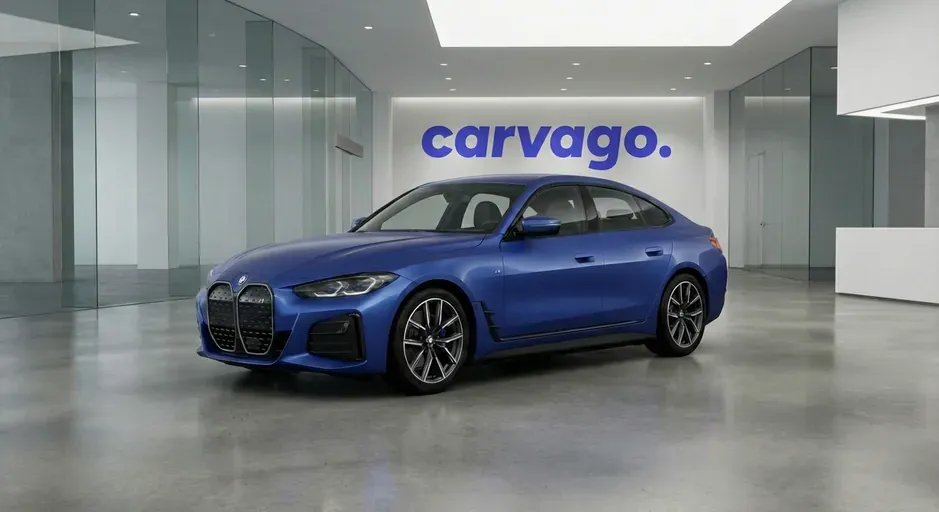
The BMW i4 represents the Bavarian brand’s entry into the all-electric premium mid-size segment. Built on the G26 generation architecture, the model premiered in June 2021, with series production commencing at Plant Munich on 22 October 2021 and European customer deliveries following in November 2021. Sold exclusively as a five-door Gran Coupé, the electric BMW i4 offers a fastback silhouette rather than a taller crossover stance.
The range initially launched with the rear-wheel-drive eDrive40 and dual-motor M50. BMW expanded the catalogue with the entry-level eDrive35 in November 2022 and added the all-wheel-drive xDrive40 in July 2023. An update was unveiled on 24 April 2024, introducing revised exterior lighting signatures and refreshed cockpit controls to production models from July 2024. A further update announced in May 2025 introduced silicon carbide inverters and the M60 xDrive variant from July 2025 production.
Targeted primarily at fleet users, long-distance commuters, and private buyers stepping out of conventional combustion executive cars, the BMW i4 appeals to drivers who want a low seating position, a rear-biased dynamic profile, and hatchback practicality without migrating to an SUV.
Owner Experiences: Common Faults and Recalls
Long-term reliability data for the BMW i4 remains limited, as the oldest cars in this generation are five years old. However, several distinct mechanical traits and verified recall campaigns have emerged across European markets. As an electric Gran Coupé engineered on a shared architecture, the car places unique demands on its chassis and suspension components, while also featuring several high-voltage manufacturing campaigns that prospective buyers must account for.
The vehicle comes equipped with self-levelling rear air suspension as standard equipment across all variants to manage high battery weight. Owners report gradual air leaks developing in the rear rubber bellows or valve blocks, causing the back of the car to sag noticeably when left parked overnight. When this happens, a low vehicle level warning appears on the digital cluster upon start-up. If left unaddressed, the continuous duty cycle required to maintain pressure causes the pneumatic compressor to burn out prematurely. In most cases, replacing the affected air bellows or valve block resolves the issue.
A closely related mechanical wear item involves rear tyre degradation. Due to substantial vehicle mass and factory rear negative camber settings, owners and professional tests describe premature tyre wear concentrated strictly on the innermost shoulder of the rear tread. On cars running larger factory alloy wheel setups, this inner shoulder can wear down to the steel cords in fewer than 25,000 kilometres while the central and outer tread still show several millimetres of legal depth. A four-wheel alignment set to the least aggressive tolerance limit helps mitigate this wear, though regular physical inspections underneath the vehicle are essential.
Occasional electrical faults involve the Combined Charging Unit (CCU) and the curved infotainment display. Owners report unexpected AC charging cutouts at domestic wallboxes, slow charging rates, or an onboard charging error, even while DC rapid charging continues to function normally. Authorised workshops have resolved most communication glitches via software updates, though hardware failures require unit replacement. On the digital front, pre-facelift models with earlier infotainment software can suffer system freezes, blank displays upon start-up, or wireless smartphone connection drops. In most instances, an infotainment reboot via the physical audio volume roller or over-the-air firmware updates rectifies the software lockups.
Several verified European safety recalls affect the electric BMW i4. These campaigns must be verified for completion on any used example by checking its vehicle identification number (VIN).
Defect / Affected Assembly
Production Window
Scope
Workshop Action
Chassis longitudinal beam cracks: Process deviations may have led to growing cracks in the rear left member, impairing crash integrity regarding the high-voltage battery.
07.03.2024 – 14.05.2024
Worldwide
Workshop checks the rear left side member and reworks or repairs it as necessary.
Battery cell module frame defect: Non-compliant module frame manufacturing may fail, potentially leading to high-voltage shutdown or fire.
07.07.2021 – 14.02.2024
Worldwide
Workshop tests the high-voltage battery system and replaces defective cell modules or the complete pack.
Battery cell cathode damage: Supplier manufacturing defect where damaged cathode plates could cause an internal short circuit and elevated fire risk.
05.07.2021 – 08.07.2022
Worldwide
Dealers inspect battery diagnostics and replace affected cell modules free of charge.
Missing battery crash pads: Omission of crash pads during factory assembly, risking battery housing damage, short circuit, and fire in a severe side impact.
15.09.2021 – 30.11.2021
Europe
Workshop inspects the battery housing and retrofits missing crash pads.
Combined Charging Unit (CCU): Supplier production error may cause electrical drive interruption while driving or an inability to charge.
11.2022 – 01.2023
Europe
Complete replacement of the Combined Charging Unit assembly.
Seat belt retractor micro gas generator: Non-conforming gas generator may impair accident restraint and generate sparks, creating risk of injury or fire.
11.01.2022 – 02.03.2022
Worldwide
Inspection and replacement of affected seat belt retractors.
🔍 What to check before buying
Request official dealer documentation or arrange an inspection via CarAudit to confirm every manufacturer recall campaign has been completed for the car's specific VIN, particularly regarding the battery cells and chassis member.
Inspect the innermost shoulder of both rear tyres from underneath the car for exposed cords or severe tread wear that cannot be seen from a standing profile check.
Observe the rear ride height after the vehicle has been parked overnight on level ground to verify the rear air bellows have not sagged.
Test both AC domestic charging and DC rapid charging on a test drive to ensure the Combined Charging Unit does not trip or report a drivetrain charging error.
Check the front and rear brake discs through the wheel spokes for severe surface corrosion or heavy ridges, which can build up if the friction brakes see little use under regenerative braking.
Engines: Which One to Choose
The BMW i4 relies entirely on fifth-generation electrically excited synchronous motors, avoiding permanent magnets and rare-earth materials. The line-up includes rear-wheel-drive single-motor layouts as well as dual-motor all-wheel-drive configurations across standard and performance variants.
Engine
Fuel
Power
Drivetrain
Gearbox
Model Years
i4 eDrive35
Electric
210 kW (286 hp)
Rear-wheel drive
Automatic
2022 – present
i4 eDrive40
Electric
250 kW (340 hp)
Rear-wheel drive
Automatic
2021 – present
i4 xDrive40
Electric
295 kW (401 hp)
All-wheel drive
Automatic
2023 – present
i4 M50
Electric
400 kW (544 hp)
All-wheel drive
Automatic
2021 – 2025
i4 M60
Electric
442 kW (601 hp)
All-wheel drive
Automatic
2025 – present
For daily commuting and urban driving, the entry-level i4 eDrive35 is the most sensible choice. Its lighter battery reduces overall vehicle weight, and the single rear motor delivers prompt response in city traffic.
For mixed driving and frequent long-distance motorway travel, the rear-wheel-drive i4 eDrive40 represents the sweet spot of the range. Combining the larger battery pack with the lower energy consumption of a single motor, it yields the longest touring distance between charging stops while preserving natural steering feel.
Drivers requiring secure traction in winter conditions or planning regular trailer towing should focus on the all-wheel drive BMW i4 in xDrive40 guise. The twin-motor layout provides immediate all-weather stability without the stiffer chassis setup of the performance models.
For maximum acceleration, look to the i4 M50 as a used car or the subsequent i4 M60. Both offer rapid straight-line speed via dual motors, though their substantial kerb weight makes them high-speed grand tourers rather than nimble sports coupés.
Real-world range and charging
Owners report that real-world range varies noticeably by season. Cold winter conditions typically reduce motorway distance between charging stops by roughly a quarter compared to summer, though the standard heat pump prevents excessive cabin-heating losses.
On direct-current rapid chargers, the electric BMW i4 charges quickly up to eighty percent capacity when using preconditioning, after which charging speeds taper off steadily to protect cell integrity. Standard alternating-current home and destination charging operates reliably across domestic wallboxes for complete overnight refills.
Space & Practicality
Parameter
Saloon / Gran Coupé
Length
4,783 mm
Width
1,852 mm
Height
1,448 mm
Wheelbase
2,856 mm
Boot volume (upright / folded)
470 / 1,290 l
Because the electric BMW i4 saloon shares its underlying architecture with combustion models, interior packaging reflects traditional coupé compromises. The wide, top-hinged rear hatch provides an unobstructed cargo opening that simplifies loading bulky items, complemented by a standard 40:20:40 split-folding rear bench with a centre through-loading hatch. There is no dedicated front storage compartment beneath the bonnet, so charging cables must share space in the rear cargo area. In the second row, passenger accommodation is restricted compared to dedicated electric alternatives. The floor is raised to accommodate the battery pack, forcing rear occupants into a slightly raised-knee posture with tight footwell clearance, while the tapering roofline trims headroom for taller passengers. With a fixed rear bench, the back seats are best suited for children or shorter adults on long trips.
What the Tests Say
On the road, the BMW i4 pairs stable body control with precise steering weighting that effectively disguises the car’s high kerb weight. Single-motor models retain classic rear-drive balance, while dual-motor all-wheel drive BMW i4 variants add traction at the expense of front-end agility. Road and wind isolation is strong at motorway speeds. With optional adaptive dampers, the chassis handles undulating tarmac and cobblestones smoothly, though sharp transverse joints and broken city edges punch abruptly through low-profile tyres.
Inside, assembly quality matches executive expectations, offering tactile surfaces and solid switchgear. The driving position is low and driver-focused, though thick rear pillars hamper rearward visibility. Retaining the central rotary dial eases infotainment operation on the move. However, testers consistently criticise the migration of climate functions entirely into display menus, as well as the lack of steering-wheel paddles to modulate regenerative braking manually.
Professional testers agree that the electric BMW i4 delivers a composed, quiet long-distance drive, though they diverge on secondary ride comfort: some consider it well balanced against segment rivals, while others note stiff reactions to sharp road imperfections. The 2024 facelift brought revised cabin trim, new steering wheel designs, and refreshed lighting, while confirming the fully screen-based heating controls.
Prices and Market Offer
All market charts in this section are drawn from Carvago listings for the entire BMW i4 model family, including other generations represented in the data, not only the reviewed generation, and this dataset does not establish a separate price level for the reviewed generation alone. Currently, the median asking price sits at €43,400 for 2022 models, compared to €54,000 for 2024 cars and €62,800 for 2026 examples. These figures reflect an active snapshot of concurrently advertised inventory across build years, where differences between listings reflect varied equipment choices, battery sizes, and factory revisions.
Across the six months from May to October 2026, active BMW i4 listings ranged between a low of 3,023 and a peak of 3,372. Starting from 3,198 listings in May 2026, availability developed as shown in the chart below.
BMW i4 - availability over time
Active listings over time
Month
BMW i4
2026-05
3 198
2026-06
3 152
2026-07
3 339
2026-08
3 352
2026-09
3 372
2026-10
3 023
Source Carvago
Buyers can expect a wide selection of vehicles on the market, with total listings remaining above 3,000 across every month recorded even as supply shifted between 3,023 and 3,372 cars.
The median asking price of BMW i4 cars advertised today, built in 2022, is €43,400, whereas the median asking price of cars advertised today, built in 2026, is €62,800. The chart below shows how asking figures compare across build years, where prices do not follow a strictly upward sequence from oldest to newest.
BMW i4 - median price by model year
Median advertised price by year of manufacture
Model year
BMW i4
2021
49 900
2022
43 400
2023
44 900
2024
54 000
2025
55 500
2026
62 800
Source Carvago
Buyers examining the earlier model years will find the lowest median asking price in 2022 models at €43,400 and 2023 models at €44,900, both of which sit below the €49,900 recorded for 2021 cars. For more recent model years, the median asking price stands at €54,000 for 2024 cars and €62,800 for 2026 examples.
This depreciation curve illustrates how the model's residual value declines with age, showing an initial drop of 19% in the first year and shedding roughly 34% of its original value by age three.
BMW i4 - value loss by age
Residual value by vehicle age
Vehicle age
BMW i4
New
63 500
1 yr
51 400
2 yrs
45 300
3 yrs
42 000
4 yrs
37 600
5 yrs
32 900
6 yrs
31 300
7 yrs
27 100
Source Carvago
Across the seven years shown, the model sheds 57% of its initial value. The sharpest drop occurs in the first year, after which annual losses moderate considerably between ages two and three.
Across the months shown, electric vehicles accounted for every listing, moving from 3198 cars in May 2026 to a peak of 3372 in September 2026. The chart below tracks how these advertised counts developed across all recorded fuel types.
BMW i4 - supply by fuel over time
Supply composition by fuel type
Month
Electric
2026-05
3 198
2026-06
3 152
2026-07
3 339
2026-08
3 352
2026-09
3 372
2026-10
3 023
Source Carvago
In October 2026, electric listings stood at 3023, while petrol, diesel, and hybrid variants each recorded 0. In practice, a buyer searching the market will find an exclusively all-electric selection.
Between May 2026 and October 2026, the average asking price for the BMW i4 moved from €48,200 to €50,100. The chart below tracks how that monthly average evolved across the six-month period.
BMW i4 - price trend over time
Average price development over time
Month
BMW i4
2026-05
48 200
2026-06
49 400
2026-07
49 700
2026-08
49 400
2026-09
49 300
2026-10
50 100
Source Carvago
Across the span, the average fluctuated within a narrow band of roughly 4 percent, rising to €49,700 in July 2026 before easing slightly and finishing at €50,100. Overall, the month-to-month movement remained modest relative to the advertised prices.
Composed long-distance cruising with strong wind and road noise isolation
Practical top-hinged rear hatch with a wide, unobstructed cargo opening
Central rotary dial eases infotainment operation while on the move
Cons
Restricted rear headroom and leg comfort due to the sloping roofline and raised floor
Climate functions migrated entirely into touchscreen menus without physical switches
Rapid wear on inner rear tyre shoulders requiring regular physical inspection
Frequently asked questions
Is the BMW i4 reliable as a used car?
Long-term reliability data for the BMW i4 remains limited, though the electric drive components have proven mechanically sound. However, buyers must check for leaking rear air suspension bellows and confirm that all high-voltage battery recalls have been completed.
Which variant is best for long-distance driving?
The rear-wheel-drive BMW i4 eDrive40 represents the best choice, pairing the larger battery with single-motor efficiency for maximum touring range between charging stops. Drivers requiring dependable winter traction or regular trailer towing should consider the twin-motor all-wheel-drive variant instead.
What should you check before buying a used BMW i4?
Check the inner shoulders of the rear tyres for severe concealed wear and confirm the rear air suspension holds pressure overnight. Most importantly, verify by VIN with an authorised dealer that all manufacturer recall campaigns have been completed.
Is the BMW i4 practical as a family car?
While the wide-opening hatchback tailgate makes loading luggage straightforward, rear-seat accommodation in the BMW i4 is limited by a high floor, narrow footwells, and reduced headroom. It suits families with children, but taller teenagers and adults will find the second row restrictive on long journeys.