Car battle
Toyota RAV4 vs. Volkswagen Tiguan: Complete comparison 2026
Detailed comparison of Toyota RAV4 vs Volkswagen Tiguan. Real data, differences in equipment, fuel consumption, and a clear verdict to help you choose the best SUV.
May 4, 2026
Articles
Review
Audi Q3 review: real owner feedback, best engine picks, boot space and pricing — our definitive verdict on the third-generation SUV.
October 25, 2026
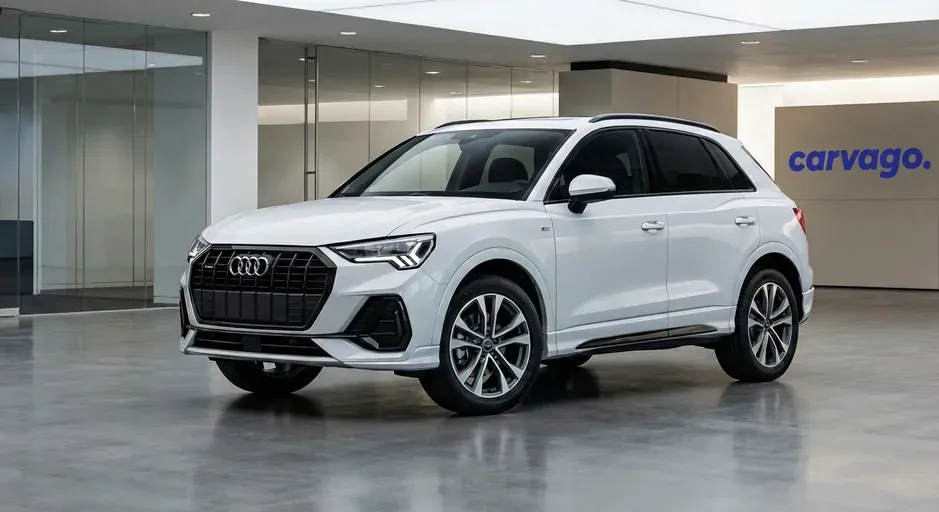
The Audi Q3 sits in the competitive premium compact crossover segment, positioned between the smaller Q2 and the mid-size Q5. This review covers the third generation (Typ FJ), which had its world premiere in June 2025 ahead of series production starting in Győr, Hungary, in summer 2025. As of October 2026, this generation is in its original production cycle, with no facelift introduced yet.
Audi offers the Typ FJ in two distinct body styles: the standard Audi Q3 SUV and the lower-roofline Sportback, which premiered in August 2025. European customer deliveries began in September 2025 for the initial front-wheel-drive petrol and diesel SUV models. The Sportback and plug-in hybrid e-hybrid versions reached European customers in November 2025, followed by the rollout of additional all-wheel-drive variants in July 2026.
The car primarily attracts buyers seeking a manageable urban footprint combined with an elevated seating position. The standard SUV body caters to families wanting upright headroom and modular loading space, while the Sportback targets drivers looking for a coupé-like profile without sacrificing day-to-day usability.
With European customer deliveries of the third-generation Audi Q3 beginning in autumn 2025, the model has been in service for roughly one year. Long-term mechanical reliability and high-mileage durability benchmarks have therefore not yet been established. Early field data shows no systemic mechanical faults across the petrol, diesel, or plug-in hybrid powertrains, and primary running gear has not accumulated the operating hours required to demonstrate persistent wear patterns.
Early reports on this generation centre largely on interior electronics and interface responsiveness. Professional tests describe occasional software latency within the central multimedia interface, including momentary synchronisation delays between the digital instrument cluster and main display. Some owners also report intermittent dropouts with wireless smartphone pairing. In observed cases, authorised dealer diagnostic updates and early software patches resolved the connection stability issues.
Safety monitoring authorities recorded two European recall campaigns during 2026, both concerning the front seat belts across the model range, including the Audi Q3 SUV. The first recall, published in summer 2026, affects vehicles manufactured between 15 October 2025 and 05 June 2026. Official notices stated that a joint on the pyrotechnic gas generator in the front seat belt pretensioners was improperly welded, creating a risk of injury to occupants from detached parts during an accident. Authorised workshops resolve this by replacing the front seat belt assemblies free of charge.
A second recall campaign, announced in August 2026, covers vehicles manufactured between 3 November 2025 and 27 July 2026. The official defect notice identified that the seat belt webbing might not be correctly connected to the vehicle load-bearing structure, potentially preventing proper occupant restraint in an impact. The required workshop remedy involves inspecting the webbing attachment to the vehicle structure and replacing the assembly if it does not conform to specification.
When shopping on the used market, verifying that all official factory updates and safety campaigns were properly registered to the vehicle is essential. Prospective buyers seeking an independent physical assessment of mechanical components, software status, and maintenance records before completing a purchase can also utilise CarAudit.
The third-generation Audi Q3 offers petrol, diesel, and plug-in hybrid options, all paired exclusively with dual-clutch automatic gearboxes and steering-column gear selection.
| Engine | Fuel | Power | Gearbox | Drivetrain | Model years |
|---|---|---|---|---|---|
| 1.5 TFSI | Petrol (MHEV) | 110 kW (150 hp) | 7-speed automatic | Front-wheel drive | 2025–present |
| 2.0 TFSI quattro | Petrol | 150 kW (204 hp) | 7-speed automatic | All-wheel drive | 2026–present |
| 2.0 TFSI quattro | Petrol | 195 kW (265 hp) | 7-speed automatic | All-wheel drive | 2025–present |
| 2.0 TDI | Diesel | 110 kW (150 hp) | 7-speed automatic | Front-wheel drive | 2025–present |
| 2.0 TDI quattro | Diesel | 142 kW (193 hp) | 7-speed automatic | All-wheel drive | 2026–present |
| 1.5 TFSI e-hybrid | Plug-in hybrid | 200 kW (272 hp) | 6-speed automatic | Front-wheel drive | 2025–present |
For drivers with home or workplace charging, the Audi Q3 plug-in hybrid is well matched to short daily commutes because it handles typical daily distances purely on electricity and supports direct-current fast charging. If plugging in regularly is impractical, the entry mild-hybrid petrol Audi Q3 is the sensible urban choice, delivering quiet running and seamless cylinder deactivation without carrying the weight penalty of a high-voltage traction battery.
For general everyday motoring, the front-wheel-drive 1.5 TFSI provides adequate refinement and manageable running costs. Drivers frequently carrying a full passenger load or facing inclement weather will benefit from stepping up to the mid-output 2.0 TFSI with all-wheel drive, which offers more confident mid-range passing reserves. The range-topping 2.0 TFSI delivers brisk acceleration, but its elevated fuel demand makes it a specialised option rather than a pragmatic family cruiser.
Frequent long-distance travellers should opt for the front-wheel-drive diesel Audi Q3. Acoustic glazing and tall motorway gearing keep the cabin hushed at high speeds, while its long operating range between fuel stops minimises interruptions on cross-country journeys.
For pulling heavy loads or driving on steep, snow-covered roads, the Audi Q3 quattro with the high-output 2.0 TDI is well suited. Its blend of low-down pulling power and mechanical all-wheel traction provides dependable stability, whereas the plug-in hybrid model is limited by a lower trailer capacity (which varies depending on build date and factory tow package) and reduced luggage space.
For details on software updates, early service bulletins, and overall component dependability, refer to the owner experiences section.
| Version | Dimensions (L × W × H) | Wheelbase | Boot capacity (seats up / folded) |
|---|---|---|---|
| Audi Q3 SUV (combustion) | 4,531 × 1,859 × 1,601 mm | 2,681 mm | 488 / 1,386 l |
| Audi Q3 Sportback (combustion) | 4,531 × 1,859 × 1,559 mm | 2,681 mm | 488 / 1,289 l |
| Audi Q3 SUV e-hybrid (plug-in hybrid) | 4,531 × 1,859 × 1,608 mm | 2,681 mm | 375 / 1,293 l |
| Audi Q3 Sportback e-hybrid (plug-in hybrid) | 4,531 × 1,859 × 1,566 mm | 2,681 mm | 375 / 1,196 l |
Both the standard Audi Q3 SUV and the coupé-profiled Audi Q3 Sportback feature a 40:20:40 split-folding rear bench with fore-and-aft sliding adjustment and backrest angle tilt as standard. This modularity allows drivers to balance second-row knee room against luggage space according to current needs. Adult occupants fit comfortably in the outer rear positions of the upright SUV body, whereas the descending roof contour of the Sportback slightly restricts rear headroom. Everyday cargo loading is straightforward thanks to a practical loading sill, though the Sportback's angled tailgate glass limits the carriage of taller items when stacking goods behind folded seats. In plug-in hybrid variants, the traction battery housed under the luggage floor eliminates underfloor storage compartments and leaves a smaller primary cargo bay.
On the road, the Audi Q3 prioritises disciplined body control over plush absorption. Standard suspension setups can fidget across motorway expansion joints and thud over sharp pothole edges. Specifying optional adaptive dampers settles the ride, though the chassis remains noticeably taut even in its comfort setting, especially when paired with larger optional wheels. The steering reacts promptly and places the nose accurately through bends with minimal body lean, yet testers consistently describe the helm as detached and uninvolving. With standard eco-orientated tyres fitted, front-end push sets in early during brisk cornering. Cabin isolation keeps wind whistle well suppressed at speed, but tyre roar penetrates over coarse surfaces, the base petrol engine drones under sustained load, and the hybrid Audi Q3 strains audibly once electric reserves deplete.
Inside, the dashboard layout provides an intuitive touchscreen interface and straightforward menus. Driving ergonomics are sound, though thick rear pillars impede over-the-shoulder visibility, standard front seats lack lateral shoulder support, and the redesigned steering-column controls draw criticism for feeling brittle and unnecessarily complex to operate.
Professional road tests largely agree on the car's directional stability, tidy road manners, and relaxed cruising refinement. Opinions diverge on cabin quality: while some assessments welcome the updated digital architecture, others conclude that hollow plastics on the lower door casings and centre console feel less substantial than expected at this price point.
The charts throughout this section draw from Carvago listings across the entire Audi Q3 model family, covering earlier generations alongside the newest version. Because the data combines multiple production cycles, it does not establish a separate price level exclusively for the third-generation vehicle. Across the wider model line, the median asking price starts at €27,900 for 2019 models and reaches €54,900 for 2026 registrations, reflecting newer technology, updated powertrains, and low mileage among the freshest dealer inventory.
Active advertised listings for the Audi Q3 ranged between 20,865 in April 2026 and a peak of 22,416 in July 2026 across the six-month period shown below.
Active listings over time
| Month | Audi Q3 |
|---|---|
| 2026-04 | 20 865 |
| 2026-05 | 21 219 |
| 2026-06 | 21 788 |
| 2026-07 | 22 416 |
| 2026-08 | 21 145 |
| 2026-09 | 21 571 |
Source Carvago
With inventory remaining above 20,000 every month and ending at 21,571 in September 2026, buyers have a consistently broad selection of vehicles on offer.
Among used listings advertised today, the median asking price of cars built in 2019 is €27,900, while cars built in 2026 have a median asking price of €54,900, as shown in the breakdown below.
Median advertised price by year of manufacture
| Model year | Audi Q3 |
|---|---|
| 2019 | 27 900 |
| 2020 | 31 000 |
| 2021 | 32 500 |
| 2022 | 33 000 |
| 2023 | 40 000 |
| 2024 | 43 400 |
| 2025 | 43 700 |
| 2026 | 54 900 |
Source Carvago
Buyers looking at used listings advertised today encounter a median asking price of €31,000 for cars built in 2020 and €33,000 for cars built in 2022, whereas newer examples step up to a median asking price of €40,000 for 2023 models and €54,900 for 2026 models.
This depreciation curve illustrates how the Audi Q3 loses value as it ages, showing an initial drop of 22% in average residual value in the first year and shedding 35% by age three.
Residual value by vehicle age
| Vehicle age | Audi Q3 |
|---|---|
| New | 54 600 |
| 1 yr | 42 700 |
| 2 yrs | 38 800 |
| 3 yrs | 35 300 |
| 4 yrs | 31 600 |
| 5 yrs | 29 500 |
| 6 yrs | 27 700 |
| 7 yrs | 24 000 |
Source Carvago
Across the seven-year span shown, the model loses 56% of its average residual value, with the steepest decline concentrated in the opening year before annual losses moderate.
Between April and September 2026, advertised Audi Q3 listings were led by petrol and diesel engines, starting at 9,917 petrol and 8,335 diesel vehicles in the first month. The chart below tracks active listings across each fuel type over this period.
Supply composition by fuel type
Petrol
Diesel
Hybrid
Electric
| Month | Petrol | Diesel | Hybrid | Electric |
|---|---|---|---|---|
| 2026-04 | 9 917 | 8 335 | 2 550 | 2 |
| 2026-05 | 10 059 | 8 748 | 2 356 | 0 |
| 2026-06 | 10 644 | 8 821 | 2 272 | 0 |
| 2026-07 | 11 077 | 9 003 | 2 277 | 0 |
| 2026-08 | 10 489 | 8 442 | 2 156 | 0 |
| 2026-09 | 10 407 | 8 793 | 2 311 | 0 |
Source Carvago
By September 2026, petrol accounted for 10,407 listings and diesel for 8,793, alongside 2,311 hybrids and 0 electric cars. Anyone shopping for a used Q3 will find the vast majority of inventory in petrol and diesel form, while hybrid availability remains significantly smaller.
From April 2026 to September 2026, the average asking price for the Audi Q3 opened at €36,400 before easing to €35,900 in May, as shown in the monthly figures below.
Average price development over time
| Month | Audi Q3 |
|---|---|
| 2026-04 | 36 400 |
| 2026-05 | 35 900 |
| 2026-06 | 35 900 |
| 2026-07 | 35 600 |
| 2026-08 | 35 500 |
| 2026-09 | 35 500 |
Source Carvago
Overall movement across the period was minimal, with the average asking price shifting from €36,400 down to €35,500, an overall decline of under 3%.
Standard sliding and reclining rear bench for flexible cabin modularity
Relaxed cruising refinement combined with secure, disciplined body control
Broad powertrain choices including efficient diesels and fast-charging plug-in hybrids
Taut low-speed ride that fidgets over sharp expansion joints and potholes
Early front seat belt safety recalls requiring dealer verification by VIN
Hollow lower cabin plastics and occasional latency in the central touchscreen
Long-term reliability is not yet established because the third-generation Audi Q3 has been on European roads for only about a year. Early field data shows no systemic mechanical defects, with complaints mainly involving initial multimedia software latency that dealer updates resolve.
The mild-hybrid 1.5 TFSI petrol suits everyday driving, while high-mileage drivers should opt for the front-wheel-drive diesel Audi Q3. Drivers with charging access can choose the Audi Q3 plug-in hybrid, though it reduces boot capacity.
Confirm with an authorised dealer by the vehicle identification number (VIN) that the front seat belt recalls were completed. On a cold start, ensure the central touchscreen and digital cluster boot cleanly without freezing.
The standard SUV body style is better suited to family life because its upright roofline preserves adult rear headroom and cargo loading height. The Sportback offers a sleeker profile, but its sloping rear window compromises over-the-shoulder visibility and luggage space when loading behind folded seats.
Sources: audi.com, adac.de, autocar.co.uk, autoexpress.co.uk, autozeitung.de
This article was prepared using artificial intelligence tools. The section guarantor is Petr Dušek.
Detailed comparison of Toyota RAV4 vs Volkswagen Tiguan. Real data, differences in equipment, fuel consumption, and a clear verdict to help you choose the best SUV.
May 4, 2026
Detailed comparison of Hyundai Tucson vs. Volkswagen Tiguan. Find out the differences in equipment, fuel consumption, and reliability, and read our verdict. Which SUV to choose?
Apr 25, 2026
Detailed comparison of Peugeot 3008 vs Toyota RAV4. Discover real-world experiences with used cars, a comparison of fuel consumption, reliability, and a verdict that will make your choice easier.
Apr 2, 2026