Car battle
Ford Kuga vs. Peugeot 3008: Complete Comparison 2025
Ford Kuga vs Peugeot 3008: Which family SUV is better? A detailed comparison, real-world insights, and a clear verdict to help you choose.
Apr 13, 2026
Articles
Car battle
Detailed comparison of Hyundai Tucson vs. Volkswagen Tiguan. Find out the differences in equipment, fuel consumption, and reliability, and read our verdict. Which SUV to choose?
April 25, 2026
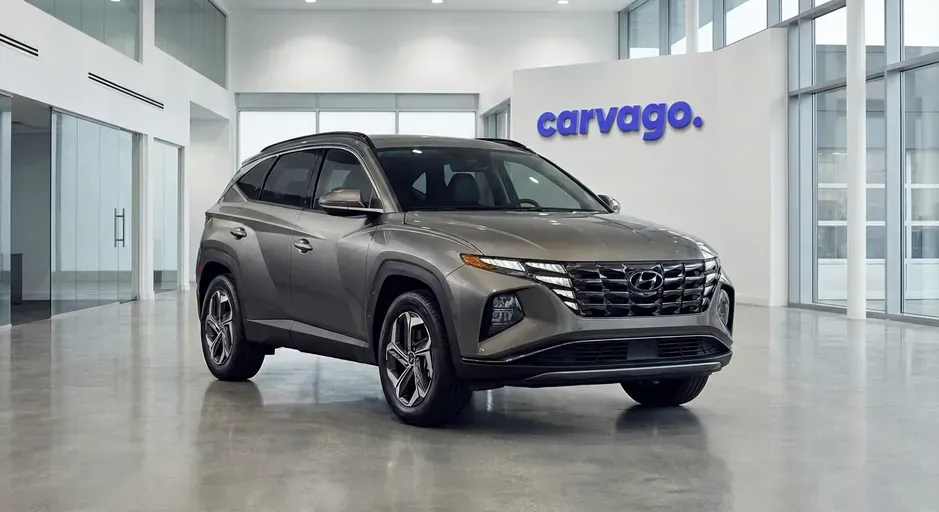
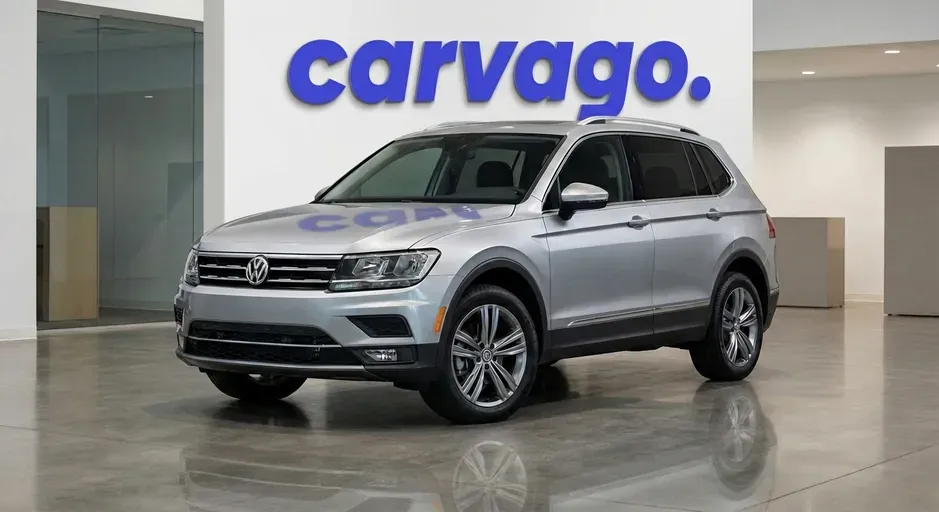
Hyundai Tucson, previously also sold in certain markets under the ix35 designation, represents a boldly designed compact SUV that attracts with its avant-garde design and a wide range of modern technologies. On the other side of the barricade stands the Volkswagen Tiguan, which is also popular in its extended Tiguan Allspace variant and is traditionally considered a recognized benchmark in its class thanks to its precise craftsmanship, excellent ergonomics, and timelessly conservative elegance. Let's take a closer look at which of these two exceptionally popular family cars represents a better and more practical choice for your daily journeys on the nearly-new used car market.
Both models, Hyundai Tucson and Volkswagen Tiguan, are among the most popular family SUVs on the market, which is why their exterior dimensions are a crucial parameter when choosing. If we focus on the generations most relevant to the market for approximately four-year-old used cars, namely the third-generation Tucson and the second-generation Tiguan, we find that they have a very similar overall footprint. These vehicles were designed to offer maximum interior space while maintaining reasonable proportions for daily movement in busy city traffic. From an average driver's perspective, this means that whichever one you choose, you get a similarly sized car where minor millimeter nuances will play a role, which you should adapt to your specific needs and parking options.
Looking closer at width and length, we find that the Hyundai Tucson measures 1865 mm in width, which is slightly more than the Volkswagen Tiguan, whose width ranges from 1839 to 1859 mm depending on the specific version and equipment. This slightly wider build of the Korean model can provide a bit more generous shoulder room for passengers, which you will appreciate especially when the rear seats are fully occupied. On the other hand, the German representative may offer a slight advantage when maneuvering and getting out in narrow underground garages thanks to its slightly narrower body. In terms of length, both cars stay very close to the 4.5-meter mark – the Tucson measures 4500 to 4510 mm, while the Tiguan is roughly 4486 to 4514 mm. This implies that in terms of longitudinal space taken up on the street, neither car offers a significant advantage, and the final choice will depend more on whether you appreciate a greater sense of interior width or slightly easier parking in daily traffic.
An important factor for the overall proportions of the car and the impression of cabin spaciousness is also the height and wheelbase. The Volkswagen Tiguan can offer a slightly taller body structure with a maximum height of up to 1675 mm, while the Hyundai Tucson maintains a slightly more dynamic and lower profile with a height of 1650 mm. In practice, the Tiguan's taller build usually means a slightly airier headroom and overall a slightly better view from the car, which will be appreciated especially by drivers who love a traditional, more upright SUV seating position. However, the wheelbase is de facto identical for both cars – 2680 mm for the Hyundai and 2677 to 2680 mm for the Volkswagen. It can be concluded that longitudinal legroom will be fully comparable for both competitors, and your final preference will likely lean towards the Tiguan if you are looking for a higher ceiling and a more classic silhouette, or towards the Tucson if you prefer an overall more aggressive look with a wider track.
| Parameter | Hyundai Tucson SUV | Volkswagen Tiguan SUV |
|---|---|---|
| Width (mm) | 1865 | 1839 - 1859 |
| Length (mm) | 4500 - 4510 | 4486 - 4514 |
| Height (mm) | 1650 | 1632 - 1675 |
| Wheelbase (mm) | 2680 | 2677 - 2680 |
When choosing a family SUV, the size of the luggage compartment is one of the most important criteria that can determine the overall usability of the car. Both the Hyundai Tucson and the Volkswagen Tiguan are among the leaders in their class, offering generous space that can easily accommodate a stroller, sports equipment, or luggage for a family trip. For those interested in a roughly four-year-old used car, where the popular third-generation Tucson faces off against the second-generation Tiguan, it is a very close battle, in which both models handle their interior layout slightly differently. In real life, these values mean that both cars provide space that is perfectly sufficient for weekend shopping as well as longer vacations.
The third-generation Hyundai Tucson offers an excellent basic trunk capacity of 620 liters in conventional internal combustion versions. If you fold down the rear backrests, you get a flat loading surface and a huge transport capacity of up to 1,799 liters. In contrast, the second-generation Volkswagen Tiguan counters with a basic volume of 615 liters, which it achieves, among other things, thanks to its traditional strong point – practical sliding rear seats. When they are moved as far forward as possible, you get those 615 liters, but after completely folding the seats, the maximum usable space stops at 1,655 liters. The difference of almost 150 liters in the maximum configuration represents space for several extra suitcases in favor of the South Korean representative in practice.
The situation becomes even more pronounced if you opt for electrified versions, which are increasingly common and sought after on the used car market. In the Tucson model, the battery installation limits the trunk only slightly – the full-hybrid (HEV) offers 616 liters and the plug-in hybrid (PHEV) still a very solid 558 liters (slightly less, specifically 546 liters, is offered by specific mild-hybrid diesel engines). The Volkswagen Tiguan is noticeably worse off in terms of interior space reduction with alternative powertrains; its plug-in hybrid version, labeled eHybrid, loses a substantial part of its trunk and provides families with only a compromising 476 liters as a base.
Overall, it can be said that while both models easily meet the demands of an average family, the Hyundai Tucson is a better "hauler" in terms of raw volume. While the Tiguan can cleverly vary the space for passengers and luggage thanks to the sliding bench, the Tucson scores with a larger maximum space and much more efficient integration of battery modules, meaning you don't lose a substantial part of the trunk in hybrids.
| Parameter | Hyundai Tucson SUV | Volkswagen Tiguan SUV |
|---|---|---|
| Basic volume (liters) | 620 | 615 |
| Maximum volume with seats folded (liters) | 1799 | 1655 |
While both models with internal combustion engines provide families with top-tier spaciousness, the Hyundai Tucson stands out with a significantly larger maximum volume after folding the seats and much better-managed space in hybrid variants.
When it comes to towing trailers, the differences between mid-size SUVs can be vast, and for many buyers, this parameter represents a key factor. The second-generation Volkswagen Tiguan (roughly from 2020–2023) is considered an absolute workhorse in its class. Its standard versions with the 1.5 TSI petrol engine or the 1.4 eHybrid plug-in hybrid variant can tow a braked trailer weighing 1,600 to 1,800 kg. However, more powerful models with 2.0 TDI and 2.0 TSI engines, which are often paired with 4Motion all-wheel drive, push the maximum towing capacity up to a respectable 2,500 kg.
In contrast, the third-generation Hyundai Tucson (from 2020) is designed more for everyday family use, and its overall towing capacity is significantly lower. Most internal combustion engine options (1.6 T-GDI and 1.6 CRDi), as well as the standard hybrid, can all handle a maximum of 1,650 kg. For the Plug-in Hybrid version, the capacity is further reduced to 1,350 kg due to the integration of a heavier battery module. In the case of unbraked trailers, the standard legislative maximum of 750 kg applies to both vehicles.
In practice, these differences mean that while the Tucson can easily handle hauling materials on a trailer from a DIY store or towing a smaller caravan sufficient for a long family holiday, the Tiguan offers uncompromising towing power for truly heavy loads. Its more substantial towing capacity is ideal for hitching a heavy twin-axle caravan, a horse trailer, or a large boat.
In conclusion, if regular towing of heavy trailers is a priority for you and you need a power reserve, the Volkswagen Tiguan is the clear winner and a much more robust candidate. However, for common and lighter towing, the specifications of the Tucson model are perfectly sufficient.
| Model and engine | Braked trailer weight (kg) | Unbraked trailer weight (kg) |
|---|---|---|
| VW Tiguan 2.0 TDI / 2.0 TSI (Gen II) | 2000–2500 | 750 |
| VW Tiguan 1.5 TSI / 1.4 eHybrid (Gen II) | 1600–1800 | 750 |
| Hyundai Tucson 1.6 T-GDI / 1.6 CRDi / HEV (Gen 3) | 1650 | 750 |
| Hyundai Tucson 1.6 T-GDI Plug-in-Hybrid (Gen 3) | 1350 | 750 |
When choosing a roughly four-year-old used car in the compact SUV category, the engine lineup plays a crucial role, as it directly affects fuel consumption, reliability, and the overall driving experience. The fourth-generation Hyundai Tucson (from 2020) and the facelifted second-generation Volkswagen Tiguan (production 2020–2023) cover a wide spectrum of powertrains, but both manufacturers approach them quite differently. While the Tiguan sticks to the traditional German school with a comprehensive range of displacements (1.5 TSI and 2.0 TSI four-cylinders, as well as the legendary 2.0 TDI diesel), the Tucson has bet everything on a unified 1.6-litre displacement. It offers this single engine size in the form of pure internal combustion versions, fuel-efficient mild-hybrids, a sophisticated full-hybrid, and a rechargeable plug-in hybrid. At the top of the Volkswagen range stands the high-performance Tiguan R with a brutal output of 235 kW (320 hp), whereas the top-tier Tucson aims more for smooth and eco-friendly dynamics through its PHEV version with a system output of 195 kW. For those who spend a lot of time on the motorway, the solid 2.0-litre diesel from VW will likely be the better partner, while suburban and budget-conscious drivers will get the most out of the efficient full-hybrid system from the Korean manufacturer.
The powertrain of the fourth-generation Hyundai Tucson is built exclusively on modern 1.6-litre four-cylinder engines. At first glance, this simplifies things, but under the hood lie very different technologies. The base consists of the pure internal combustion 1.6 T-GDI petrol engine and the 1.6 CRDi diesel. However, a significant portion of newer used cars are equipped with a 48V mild-hybrid system (MHEV), which slightly smooths out turbo lag and improves coasting efficiency. For example, the basic 1.6 CRDi diesel version without mild-hybrid assistance was only produced from December 2020 to February 2022 – it gave way to the more modern and more widely available MHEV derivatives quite early on the used car market. The technological pinnacle for the Tucson are the full-hybrid (HEV) and plug-in hybrid (PHEV) variants, both fitted with a traditional six-speed torque-converter automatic, while the rest of the range uses manual transmissions with an electronic clutch (iMT) or a seven-speed dual-clutch (DCT).
| Engine Type | Fuel | Power (kW) | Torque (Nm) | Transmission |
|---|---|---|---|---|
| 1.6 T-GDI | Petrol | 110 | 250 | 6MT |
| 1.6 T-GDI 48V | Petrol (Mild-hybrid) | 110 / 132 | 250 / 265 | 6iMT / 7DCT |
| 1.6 CRDi | Diesel | 85 | 280 | 6MT |
| 1.6 CRDi 48V | Diesel (Mild-hybrid) | 100 | 320 | 7DCT |
| 1.6 T-GDI HEV | Petrol (Full-hybrid) | 169 | 350 | 6AT |
| 1.6 T-GDI PHEV | Petrol (Plug-in hybrid) | 195 | 350 | 6AT |
Following its 2020 facelift, the Volkswagen Tiguan retains a proven and much more diverse range of displacements. Among four-year-old used cars, there is huge interest in the reliable and perfectly adequate 1.5 TSI variant with cylinder deactivation technology (ACT). Drivers looking for power and 4MOTION all-wheel drive will go for the 2.0 TSI petrol engine with its generous power reserve. Diesel engines are represented by the robust 2.0 TDI SCR unit, which was improved for this generation with "Twin Dosing" technology (double urea injection), making it one of the cleanest diesels ever. It is available in a wide power range from 90 kW to a powerful 147 kW. In addition to the 1.4 eHybrid petrol plug-in hybrid, the absolute top of the range is the purist and aggressive Tiguan R (2.0 TSI), featuring a torque vectoring system.
| Engine Type | Fuel | Power (kW) | Torque (Nm) | Transmission |
|---|---|---|---|---|
| 1.5 TSI OPF | Petrol | 96 / 110 | 220 / 250 | 6MT / 7DSG |
| 2.0 TSI OPF | Petrol | 140 / 180 / 235 | 320 / 370 / 420 | 7DSG |
| 2.0 TDI SCR | Diesel | 90 / 110 / 147 | 320 / 360 / 400 | 6MT / 7DSG |
| 1.4 eHybrid OPF | Petrol (Plug-in hybrid) | 180 | 400 | 6DSG |
If you mostly drive long distances on motorways, the reliable 2.0-litre diesel from the Tiguan is still the king of efficiency, while for mixed suburban driving with frequent stop-and-go traffic, the Tucson's advanced full-hybrid system offers a much more modern and relaxed alternative.
Choosing the right engine is a key factor for long-term satisfaction, as it affects not only dynamics and fuel consumption but, above all, mechanical reliability and future service costs. From a historical and engineering perspective, it is interesting to observe the different approaches of both manufacturers for approximately four-year-old used cars: while Volkswagen relies on the time-tested and perfected evolution of its classic diesel engines (with emission reduction technology) for the Tiguan, Hyundai took a radical step with the third-generation Tucson and bet heavily on highly sophisticated and efficient hybrid systems. The choice of the right powertrain will therefore depend primarily on your typical driving profile.
This full hybrid system represents the absolute peak in the third-generation Tucson range in terms of user comfort and overall reliability. It combines a turbocharged 1.6-liter petrol engine, a powerful electric motor, and – crucially – a classic six-speed automatic with a hydrodynamic torque converter. The presence of a traditional automatic eliminates the risk of jerking or clutch wear during stop-and-go traffic, which sometimes plagues dual-clutch transmissions in standard internal combustion versions. Furthermore, the electric motor brilliantly covers the turbocharger's "dead" spots; thanks to it, the car responds to the accelerator pedal with absolute immediacy and often glides purely on electricity in urban or suburban traffic. Real-world combined fuel consumption remains at an excellent 5,5 to 6,5 l/100 km, even for an SUV of this size.
For the second-generation Tiguan after the facelift, the two-liter diesel from the EA288 evo family is a clear and sensible safe bet. Compared to petrol engines, this motorization best suits the character of a stiffer and heavier SUV. With 360 Nm of torque, the car easily handles a full load and a packed trunk without losing breath on hills. On the highway, it pleases with exemplary fuel consumption, which commonly falls below the 6 l/100 km mark. Furthermore, the "evo" engine generation uses so-called Twin Dosing technology (double AdBlue injection), which significantly refined the engine's operation and reduced emissions to an absolute minimum. In conjunction with the reliable seven-speed dual-clutch DSG transmission, it forms a well-tuned and comfortable package.
As is often the case in the automotive world, official fuel consumption figures provided by manufacturers in promotional materials often differ significantly from what you actually experience in real-world driving. To get a truly accurate picture of running costs, it is therefore always best to turn to crowdsourced data from drivers themselves. For the purposes of this comparison, we analysed real-world records from the popular motoring portal Spritmonitor.de, focusing on roughly four-year-old used cars (specifically the modern 3rd generation Hyundai Tucson and the 2nd generation Volkswagen Tiguan after its facelift), which represent a logical choice on the secondary market today.
| Model and Engine | Average Consumption (l/100 km) |
|---|---|
| Hyundai Tucson 1.6 CRDi 48V Mild-hybrid (diesel) | 5.6 |
| VW Tiguan 2.0 TDI SCR (diesel) | 5.8 |
| VW Tiguan 1.5 TSI OPF (petrol) | 6.5 |
| Hyundai Tucson 1.6 T-GDI 48V Mild-hybrid (petrol) | 6.6 |
| Hyundai Tucson 1.6 T-GDI (petrol) | 6.8 |
| VW Tiguan 2.0 TSI OPF (petrol) | 8.3 |
| Hyundai Tucson 1.6 T-GDI Hybrid (HEV) | 5.9 |
| Hyundai Tucson 1.6 T-GDI Plug-in Hybrid (PHEV) | 1.4 |
| VW Tiguan 1.4 eHybrid OPF (PHEV) | 1.6 |
A closer look at the real-world data reveals several very interesting trends. Traditional diesel engines, such as Volkswagen's robust 2.0 TDI or the smaller-displacement 1.6 CRDi with mild-hybrid assistance in the Tucson, remain the unsurpassed benchmark for highway efficiency, staying below the six-litre mark on average without much trouble. In the petrol spectrum, on the other hand, it may surprise some that the smaller turbocharged engines (1.5 TSI in the VW and 1.6 T-GDI in the Hyundai) do not bring such drastic fuel savings as originally expected from the era of downsizing – in heavy SUVs, they realistically consume between 6.5 and 6.8 litres. While mild-hybrid systems partially smooth out consumption peaks during city starts, they cannot cheat physics. However, a completely different situation prevails with the Tucson's sophisticated full hybrid (HEV) powertrain, which, despite its higher combined output, manages to drive at an excellent average of 5.9 l/100 km. A special case are the niche plug-in hybrids (PHEV), where the brochure and real-world consumption oscillating below the two-litre mark only apply on the condition of extremely diligent daily charging from a socket.
What do these findings mean for you as a buyer of a four-year-old used car? If you are one of those drivers who regularly spend long hours on motorways or commute longer distances, a modern diesel – and especially the perfectly tuned 2.0 TDI engine in the Tiguan – is still the most sensible choice for your wallet. For families and drivers who prefer daily city or suburban commuting, the Tucson in its HEV version makes a huge amount of sense, as it benefits from efficient recuperation in the city and can significantly reduce monthly fuel expenditure. The basic petrol engines (1.5 TSI and 1.6 T-GDI) represent the ideal middle ground for average drivers with lower annual mileage, who would risk DPF filter clogging issues with diesel variants. For the more powerful version of the Tiguan with the 2.0 TSI engine (often paired with all-wheel drive), the budget must account for consumption safely exceeding the eight-litre mark.
Ultimately, fuel consumption can be a very strong deciding factor for this particular pair. It's not that one car is disproportionately "thirsty", but rather a different technological approach from about four years ago. While Volkswagen clearly dominates with its range of refined diesel engines for long hauls, the Hyundai comes away from this comparison as the overall winner for those users who want a top-performing and economical full hybrid drive for modern suburban traffic.
When looking at the market for roughly four-year-old used cars (2021 and 2022 models), an interesting contrast emerges between the two rivals. On one side stands the Hyundai Tucson in its fourth generation (NX4), which brought a revolutionary design to the segment. On the other side is the established Volkswagen Tiguan after its significant second-generation facelift. Both SUVs are exceptionally popular in used car markets, but their price tags and rates of depreciation differ fundamentally.
In the used car market, the Tucson is considered a rational and very advantageous choice. Compared to its German competitor, it offers more favorable entry prices, which in practice means that with the same budget, you can get a newer model year, richer equipment, or a more advanced hybrid powertrain.
The Volkswagen Tiguan traditionally holds its value exceptionally well, even as a four-year-old used car. This is reflected not only in the noticeably higher entry prices at dealerships but also in the fact that premium and high-performance versions defend their original price very stubbornly.
While the Volkswagen Tiguan benefits from its reputation as an above-averagely desirable family SUV and loses its value only very gradually, the Hyundai Tucson has a somewhat steeper depreciation in its first few years. For a used car buyer, however, this represents a major advantage. For the amount you would pay for a Tiguan with basic equipment and higher mileage, you can drive away from a dealership with a nearly new Tucson offering top-tier assistance systems, a modern interior, and often an efficient hybrid powertrain.
The Volkswagen Tiguan pleases with excellent value retention and social prestige, for which you will pay extra at the time of purchase. The Hyundai Tucson, on the other hand, scores with an unbeatable price-to-age ratio, so for the same money, you get a car that is a class better equipped.
Both vehicles achieved a full five-star rating in the prestigious Euro NCAP tests; however, it is essential to place these excellent results in the correct temporal context. The methodology and testing protocols of the independent Euro NCAP organization are constantly evolving and becoming radically stricter over the years. For this reason, percentage ratings from different years cannot be directly and simply compared. Newer tests place much greater emphasis on active accident prevention, advanced frontal impact simulation, or comprehensive detection of cyclists and pedestrians at intersections.
The fourth generation of the Hyundai Tucson (NX4), which currently forms the core of the roughly four-year-old used car market, underwent Euro NCAP tests in 2021, i.e., according to relatively strict and very modern protocols. The car took home a full five stars with balanced results. Adult protection reached 86% and child protection a great 87%, significantly aided by, for example, the center airbag between the front seats preventing head collisions in a side impact. Protection of vulnerable road users (66%) and the overall rating of safety assistants (70%) were average for the class, yet these values confirmed a high safety standard corresponding to that time.
If you are considering buying a roughly four-year-old Volkswagen Tiguan, you will most likely be choosing from the second generation (or its facelifted version). The safety rating for this generation is based on the 2016 Euro NCAP test. At that time, the car dominated the tables with phenomenal adult occupant protection at 96% and child protection at 84%. In terms of passive structural rigidity and crumple zones, it was at the absolute top. However, it is necessary to remember that the certification for this model officially expired in 2023, and the 68% score for assistance systems logically reflects older technological standards. For completeness, let's add that if you were looking for a completely new car, the latest third-generation Tiguan underwent tests in 2024 and again received a full 5 stars with adult protection of 83% and child protection of 88%.
| Parameter | Hyundai Tucson | Volkswagen Tiguan |
|---|---|---|
| Year of testing | 2021 | 2016 |
| Adult occupant protection | 86 % | 96 % |
| Child occupant protection | 87 % | 84 % |
| Vulnerable road users protection | 66 % | 72 % |
| Safety assist systems | 70 % | 68 % |
When choosing a four-year-old used car, both models offer an excellent level of safety and will reliably protect your entire family. However, the Hyundai Tucson significantly benefits from its more recent development and 2021 certification. This means that its structure and assistance systems were calibrated to more modern crash standards from the start, including the latest airbag solutions. The second-generation Volkswagen Tiguan, on the other hand, remains an extremely solid choice with fantastic passive adult protection, but its assistance systems naturally correspond to the time of its primary development. From today's perspective, the Hyundai thus offers a slightly more comprehensive and modern safety package.
Although both cars are exceptionally safe, a roughly four-year-old Hyundai Tucson, thanks to the 2021 tests, provides a more modern level of active assistants than the older-designed, though structurally very massive, second-generation Volkswagen Tiguan.
In addition to standard equipment, each model offers several unique features that provide added value and clearly define the different approaches of both automakers to modern travel and user experience.
Bold and modern design that stands out on the road
Rich standard equipment even in basic versions
Long factory warranty (5 years with unlimited mileage)
Efficient and powerful hybrid and plug-in hybrid powertrains
Generous interior space with plenty of room in the rear seats
More complex climate control and infotainment operation due to an excess of touch surfaces
Stiffer chassis tuning in heavier hybrid variants
Less communicative steering that isn't as engaging
Specific exterior appearance may not suit every buyer
The fourth-generation Hyundai Tucson is an ideal choice for those looking for a distinctive family SUV packed with modern technology and great equipment. Thanks to a generous five-year factory warranty and very successful electrified powertrains, it represents an exceptionally rational choice with low risk on the used car market.
Top-notch ergonomics and high-quality interior craftsmanship
Excellent practicality and versatility thanks to the sliding rear bench
High acoustic comfort and a smooth ride on long journeys
Great value retention and easy resale on the used car market
Proven and economical range of 2.0 TDI diesel engines
Higher purchase price of used cars compared to Asian competitors
Extremely conservative exterior design that quickly blends into the crowd
Poorer standard equipment in basic and mid-level trims
Shorter standard manufacturer warranty compared to Hyundai
The Volkswagen Tiguan will best appeal to more conservative drivers who demand maximum utility, perfect ergonomics, and flawless highway comfort from their SUV. Its strength remains its robust residual value and a wide range of proven conventional engines that can handle high mileages.
Based on data from our CarAudit service, through which every detailed inspection of a used car takes place before its purchase, as well as from breakdown statistics, recall campaigns, and reports from professional service centers, we have compiled an overview of the most common problems for approximately four-year-old models of both cars.
The fourth-generation Hyundai Tucson (NX4) is generally considered a reliable SUV; however, several typical defects appeared in the early model years, primarily related to software and the powertrain.
The fourth-generation Hyundai Tucson suffers mainly from software ailments and occasional transmission jerking, which can often be prevented by service updates and a proper driving profile. Mechanically, it is otherwise a robust and reliable car.
The updated second-generation Volkswagen Tiguan brought a number of technological innovations after its facelift, which, however, became the source of the most frequent owner complaints in practice, supplemented by well-known Group-wide issues.
The facelifted version of the Tiguan paid the price for problematic infotainment and touch controls, while mechanically it features proven technology requiring timely DSG servicing and careful monitoring of the cooling system in diesels.
When buying a used car, a thorough inspection is key. Both popular SUVs have their technical specifics and weak points that need to be focused on before signing the contract. To be completely sure about the condition of the vehicle you are buying, the best step is always an independent comprehensive car inspection.
The 4th generation Tucson offers a spacious trunk with a capacity of up to 620 liters in its base configuration, which is top of its class. The Tiguan lags only slightly behind with a volume of 615 liters, but it features highly practical sliding rear seats. In terms of everyday transport capacity and space usability, both cars are very evenly matched.
The South Korean model usually attracts with a five-year factory warranty without mileage limits, meaning that for four-year-old used cars, part of the original coverage may still apply. Volkswagen, on the other hand, benefits from an exceptionally wide network of available independent service centers and easily obtainable aftermarket spare parts. Both models are long-term rated as reliable; however, always check the hybrid system battery condition for the Tucson and the DSG gearbox oil change history for the Tiguan.
The Tucson is an excellent choice for city and suburban traffic thanks to its sophisticated full-hybrid and plug-in hybrid powertrains, which can significantly reduce gasoline consumption. The Tiguan, by contrast, excels on long highway routes thanks to its proven and highly efficient TDI diesel engines. The choice of the most economical variant thus depends purely on the environment and distances you will most often use the car for.
The German representative stands out with a more confident and overall more stable chassis, especially when equipped with the optional DCC adaptive dampers. The South Korean competitor is generally tuned more towards softness and dampens small city bumps slightly more effectively, but it may lean more during sharper cornering. For more dynamic drivers and a safe feeling during fast highway travel, the Tiguan is a slightly better choice.
The Tucson's interior bets on a significantly modern layout with large displays and an almost complete absence of classic physical buttons, which requires some getting used to at first contact. The Tiguan, after the 2020 facelift, combines modern touch surfaces with classic and logical ergonomics that do not distract from driving. If you prefer a futuristic and tech-heavy look, the Hyundai will appeal to you, while more conservative drivers will appreciate the clarity of the Volkswagen.
Sources: ADAC, aktualne.cz, svetmotoru.cz, elektromobil.cz, autoservis.cz, autickari.cz
This article was prepared using artificial intelligence tools. The section guarantor is Petr Dušek.
Ford Kuga vs Peugeot 3008: Which family SUV is better? A detailed comparison, real-world insights, and a clear verdict to help you choose.
Apr 13, 2026
Detailed comparison of Ford Puma vs. Škoda Kamiq. Discover real-world experiences, differences in space, equipment, and engines, and choose the best city SUV!
Apr 23, 2026
Ford Puma vs Opel Mokka: City SUV comparison. Read a detailed evaluation of engines, space, and driving characteristics and choose your ideal used car.
Apr 14, 2026