Car battle
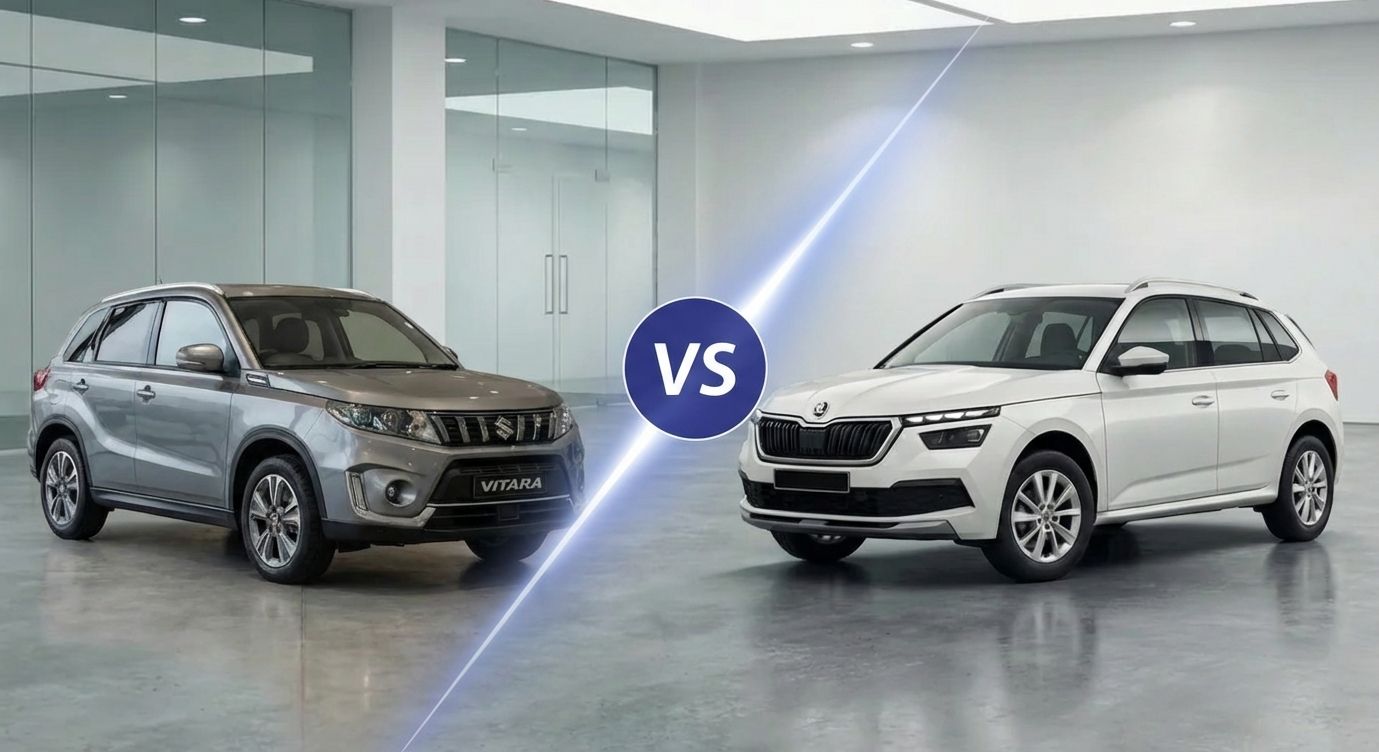
Suzuki Vitara vs. Škoda Kamiq: Complete comparison 2026
Suzuki Vitara or Škoda Kamiq? A detailed comparison of engines, equipment, and prices. Find out which of these popular small SUVs is the better choice for you.
Apr 13, 2026
Articles
Car battle
Detailed comparison of Seat Arona vs Volkswagen T-Cross. Discover the differences in equipment, reliability, and used car prices and choose your ideal city SUV.
April 28, 2026
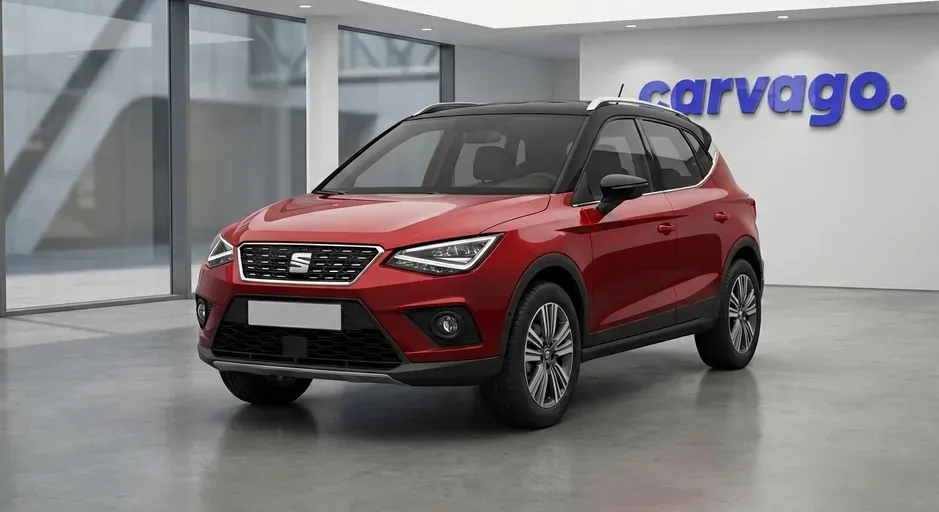
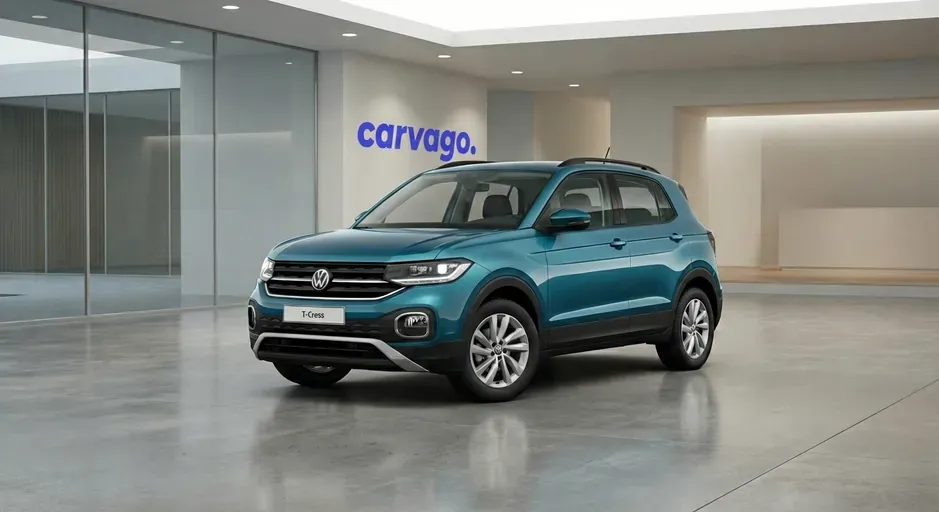
Seat Arona is a dynamically tuned city SUV that has gained popularity since its launch primarily due to its sportier design and agile driving characteristics. Standing against it is its technically closely related group sibling, the Volkswagen T-Cross, also known in some global markets as the Volkswagen Tacqua or Volkswagen Taigun, which instead appeals to buyers with a more conservative look and an emphasis on maximum interior space and practicality. In the following paragraphs, we will analyze both of these cars in detail in a direct comparison so that you can easily judge which of them will be the right choice for you on the used car market.
Although both models share the group's MQB-A0 chassis platform designed for compact cars, their exterior proportions differ quite significantly, giving each car a different character. Looking at used cars roughly four years old, we find that the Seat Arona bets on a more dynamic and sleeker look and, at 4153 mm, is 45 mm longer than the boxier Volkswagen T-Cross (4108 mm). As a result, the Arona presents itself more as an extended, slightly raised hatchback, which will appeal to drivers who prefer a more elegant silhouette and a bit more longitudinal space.
In addition to the overall length, the Spanish model also benefits from a 15 mm longer wheelbase (2566 mm compared to 2551 mm for the Volkswagen). The T-Cross, on the other hand, clearly dominates in body height, measuring 1584 mm compared to 1537 to 1552 mm for the Arona (depending on the specific version and engine). This height difference of more than 30 mm means in practice that the Volkswagen T-Cross offers a more upright seating position, a better view out of the car, and overall more comfortable entry. This proportion makes it a more suitable choice for those buyers who require the practical features and sense of security typical of full-fledged SUVs.
In terms of width, both models are practically the same, as the Arona measures 1780 mm and the T-Cross 1782 mm. In practice, the driver will not notice the minimal two-millimetre difference at all. This favourable and highly compact width for both cars ensures that parking at shopping centres and daily weaving through narrow city streets will be as easy and stress-free as possible, regardless of which of these two group siblings you park in your garage.
| Parameter | Seat Arona SUV | Volkswagen T-Cross SUV |
|---|---|---|
| Length (mm) | 4153 | 4108 |
| Width (mm) | 1780 | 1782 |
| Height (mm) | 1537 - 1552 | 1584 |
| Wheelbase (mm) | 2566 | 2551 |
Trunk capacity often plays a key role in the final choice of small urban crossovers such as the Seat Arona and Volkswagen T-Cross. These cars are often purchased by young families or active individuals who need enough space not only for daily shopping but also for a folded stroller, sports equipment, or weekend luggage. Although both models share the same technical platform and are among the most popular choices on the used car market, their approach to interior space utilization differs slightly, which has a direct impact on everyday practicality.
In its standard configuration, the Seat Arona offers a very decent fixed trunk volume of 400 liters, which is a very good value in its class. In contrast, the Volkswagen T-Cross scores with maximum variability, provided by the standard sliding rear seats with a range of 14 centimeters. Thanks to these, its base volume ranges from 385 liters, when you have maximum legroom in the rear seats, up to an excellent 455 liters. This difference also means space for several bags and suitcases, easily sufficing even for a longer vacation. It is also important to note that if you are considering a Seat Arona 1.0 TGI powered by compressed natural gas (CNG) on the used car market, expect a significant reduction in trunk capacity to just 282 liters due to the installation of pressure tanks under the floor.
After folding down the rear backrests, the situation for both cars is almost equal. The Seat Arona can offer a total cargo space of 1280 liters, while the Volkswagen T-Cross provides a practically identical 1281 liters. Both cars can thus easily handle the transport of larger items or smaller pieces of furniture. However, depending on the trim level, the T-Cross has the added advantage of being able to fully fold down the front passenger seat backrest, which significantly facilitates the transport of extra-long items such as skis or shelves. Overall, the Volkswagen comes across as a slightly more practical companion, although the Seat Arona reliably pleases with its generous and simply shaped base space.
| Parameter | Seat Arona SUV | Volkswagen T-Cross SUV |
|---|---|---|
| Base volume (liters) | 400 (282 for the TGI version) | 385 - 455 |
| Max volume with seats folded down (liters) | 1280 | 1281 |
While the Seat Arona scores with a well-accessible and large fixed trunk, the Volkswagen T-Cross wins thanks to its sliding rear bench, which gives it invaluable everyday flexibility on the used car market.
When choosing a compact city crossover, towing capacity can play a surprisingly important role, especially if you plan to transport bulkier cargo or want to take a small caravan on holiday. If we focus on models from the used car market around four years old, we find that both the Seat Arona and Volkswagen T-Cross offer very similar and surprisingly solid values for their class. The standard towing capacity for the base 1.0 TSI engine with 70 kW is 1000 kg for a braked trailer for both cars. If you opt for the more powerful one-litre units (81 or 85 kW), the value increases to 1100 kg. The maximum possible braked trailer weight is then provided by the top-of-the-range 1.5 TSI four-cylinder, with which both cars can pull up to 1200 kg. However, differences can be found in the unbraked trailer weight, where the Volkswagen T-Cross has a slight edge over the Seat Arona with limits of 620 to 660 kg, compared to the Arona's maximum range of 590 to 630 kg.
It is also important to monitor the chosen engine version, as there are variants that differ significantly from the standard. An example is the eco-friendly Seat Arona 1.0 TGI variant powered by natural gas (CNG), for which the manufacturer does not allow a towing hitch at all for structural reasons, resulting in zero towing capacity in the vehicle registration document. In everyday practice, however, these weight limits for combustion engine versions mean that hitching a smaller trailer to either car easily creates space for several extra suitcases, a solution perfectly adequate for weekend shopping or longer holidays. Although they are small city SUVs, both cars handle basic towing tasks with credit, with the Volkswagen providing slightly more versatility when towing somewhat heavier unbraked trailers.
| Model and engine | Braked trailer weight (kg) | Unbraked trailer weight (kg) |
|---|---|---|
| Seat Arona 1.0 TSI (70 kW) | 1000 | 590 |
| Seat Arona 1.0 TSI (81 / 85 kW) | 1100 | 600 - 610 |
| Seat Arona 1.5 TSI (110 kW) | 1200 | 630 |
| Seat Arona 1.6 TDI (70 / 85 kW) | 1100 - 1200 | 630 |
| Volkswagen T-Cross 1.0 TSI (70 kW) | 1000 | 620 - 630 |
| Volkswagen T-Cross 1.0 TSI (81 / 85 kW) | 1100 | 640 - 650 |
| Volkswagen T-Cross 1.5 TSI (110 kW) | 1200 | 660 |
| Volkswagen T-Cross 1.6 TDI (70 kW) | 1100 | 650 |
Both models, the SEAT Arona and the Volkswagen T-Cross, share the same MQB A0 group platform, which is directly reflected in their nearly identical range of engines. Those looking for roughly four-year-old used cars will mostly be choosing between efficient turbocharged three-cylinder engines and a more powerful four-cylinder. The 1.0 TSI and 1.5 TSI petrol units dominate both offerings and represent the optimal balance of fuel economy, reliability, and performance for the vast majority of drivers. A fundamental difference in terms of technology is the approach to alternative fuels – while SEAT previously offered a factory conversion to compressed natural gas (CNG), Volkswagen relied strictly on proven petrol units. An interesting point for searching drivers is also the fate of the diesel versions; the popular 1.6 TDI diesels definitively disappeared from the price lists of both cars in 2020. For a sensible purchase of a used car around the 2022 model year, diesel no longer plays a role and has been fully replaced by highly efficient petrol engines.
The range of engines for the SEAT Arona is very versatile and aimed at both daily commuting and maximum fuel efficiency. The foundation of four-year-old used cars is the extremely popular 1.0 TSI petrol three-cylinder, available in power versions of 70 kW and the stronger 81–85 kW. For drivers who often travel with a fully loaded car or prefer a more spirited drive, the 110 kW 1.5 TSI four-cylinder is ideal. It is characterized by refined operation and, in combination with the 7DSG dual-clutch automatic, provides excellent dynamics. A unique feature of the Arona was the eco-friendly 1.0 TGI (66 kW) engine burning natural gas, which will please drivers with high annual mileage, although its production ended in early 2023. Historically, an economical 1.6 TDI diesel was also available, but it is no longer relevant for those interested in a newer used car from 2022.
| Engine Type | Fuel | Power (kW) | Torque (Nm) | Transmission |
|---|---|---|---|---|
| 1.0 TSI / EcoTSI | Petrol | 70 / 81–85 | 175 / 200 | 5MT / 6MT / 7DSG |
| 1.0 TGI | CNG / Petrol | 66 | 160 | 6MT |
| 1.5 TSI (Evo) | Petrol | 110 | 250 | 6MT / 7DSG |
| 1.6 TDI* | Diesel | 70 / 85 | 250 | 5MT / 6MT / 7DSG |
*Note: 1.6 TDI diesel engines were only on sale between 2017–2020 and are not found on the four-year-old used car market. The 1.0 TGI version was discontinued in early 2023.
The Volkswagen T-Cross maintains a somewhat more straightforward and purely conventional engine lineup, which perfectly matches the nature of a city and suburban crossover. The most widespread power unit is the 1.0 TSI OPF (available with 70 kW and 81–85 kW), which offers excellent flexibility in combination with both a manual gearbox and a dual-clutch automatic. For more demanding drivers, the agile 1.5 TSI ACT OPF (110 kW) engine is reserved, which also features the innovative active cylinder management (ACT) function – it automatically deactivates two cylinders during steady driving, thus reducing real-world fuel consumption. Just like its sister Arona, the Volkswagen T-Cross also completely abandoned the 1.6 TDI SCR diesel unit during 2020. Therefore, if you are looking for a modern nearly new car with low mileage (model years 2021 and up), you will be choosing exclusively from reliable turbocharged petrol engines.
| Engine Type | Fuel | Power (kW) | Torque (Nm) | Transmission |
|---|---|---|---|---|
| 1.0 TSI OPF | Petrol | 70 / 81–85 | 175 / 200 | 5MT / 6MT / 7DSG |
| 1.5 TSI ACT OPF | Petrol | 110 | 250 | 7DSG |
| 1.6 TDI SCR* | Diesel | 70 | 250 | 5MT / 7DSG |
*Note: The 1.6 TDI SCR diesel engine was only offered in the early years of production (2019–2020) and is unavailable for nearly new four-year-old used cars.
In the four-year-old used car market, both models are absolutely dominated by the efficient 1.0 TSI and 1.5 TSI petrol engines, as diesel units were definitively phased out back in 2020. However, compared to the T-Cross, the SEAT Arona offers an interesting bonus in the form of the rare 1.0 TGI version running on compressed natural gas, which will please drivers looking for the lowest possible fuel operating costs.
Choosing the right engine is a key factor for long-term satisfaction with a car, and our recommendations are based on real owner experiences, measured fuel consumption, and mechanical reliability. Since both the Seat Arona and Volkswagen T-Cross share the same corporate MQB A0 platform, their engine ranges are practically identical and offer an interesting insight into market development. For example, if you are looking for a roughly four-year-old used car (2021–2022 models), you won't find 1.6 TDI diesel engines in the lineup at all – the group completely phased them out for these models during 2020. The market is thus dominated by modern TSI petrol units, which have proven in practice to be exceptionally reliable, efficient, and represent the most sensible choice for this category of small urban crossovers.
This turbocharged one-liter three-cylinder from the proven EA211 family is an absolutely ideal compromise between purchase price, dynamics, and operating costs for the lightweight and slightly more agile Arona. Furthermore, the more powerful 81 kW variant is paired with a precise six-speed manual gearbox, unlike the basic 70 kW version, which has to make do with only five gears.
Although the more powerful 1.5 TSI (110 kW) four-cylinder might seem like a great fit on paper for the slightly boxier and more robust-feeling Volkswagen T-Cross, the more powerful one-liter three-cylinder clearly wins again in terms of total costs, availability, and reliability on the used car market. The T-Cross is sufficiently brisk with it, cheap to insure, and maintains its famously stable residual value.
Official fuel economy figures provided by car manufacturers often look very tempting, but real-world driving conditions differ significantly from laboratory measurements. Especially in the popular small crossover category, where overall aerodynamics and highway speeds play a crucial role, real-world figures are key for the buyer's wallet. To get the most accurate picture of the actual running costs of cars approximately four years old (the most popular age on today's used car market), we have used aggregated data from the independent driver community on Spritmonitor.
| Model and engine | Average consumption (l/100 km) |
|---|---|
| Seat Arona 1.0 TSI 81 kW | 5.9 |
| Volkswagen T-Cross 1.0 TSI 81 kW | 6.0 |
| Seat Arona 1.5 TSI 110 kW | 6.1 |
| Volkswagen T-Cross 1.5 TSI 110 kW | 6.0 |
| Seat Arona 1.6 TDI 70 kW | 5.1 |
| Volkswagen T-Cross 1.6 TDI 70 kW | 5.3 |
A closer look at the collected data reveals several very interesting trends. Although the smaller 1.0-litre three-cylinder engines are logically perceived as the most economical choice, in real-world driving, their average appetite is very close to that of the more powerful four-cylinder engines. The 1.5 TSI engine benefits from advanced Active Cylinder Technology (ACT) during steady driving and overall more effortless performance. While the small three-cylinder has to work much harder on highway inclines, for example, the larger unit handles the situation with ease and without a significant increase in consumption. The 1.6 TDI diesel versions are a chapter of their own; they logically lead the efficiency charts, but production for both models ended in 2020, and they are very rare among typical four-year-old used cars.
For the average motorist, this leads to a clear recommendation based on how the car will be used. For drivers on a tighter budget who spend most of their time in city traffic or on shorter suburban commutes, the 1.0 TSI three-cylinder is an ideal and perfectly adequate companion. However, if you are looking for a car for frequent long-distance travel and regular motorway trips, the more powerful 1.5 TSI offers not only incomparably better dynamics and driving comfort but also fuel consumption that certainly won't break the bank compared to the three-cylinder. Thrifty individuals looking for minimal costs on long journeys can try to track down older diesel models, though these are extremely scarce on the market.
In conclusion, since the Seat Arona and Volkswagen T-Cross share identical Volkswagen Group technology and are very similar in weight, the differences in their real-world fuel consumption are marginal. The difference is only a few tenths of a litre, so fuel consumption should not be the primary deciding factor in this comparison. You can choose your car with confidence based on your design preference, desired equipment, and the current selection on the used car market.
When choosing a roughly four-year-old compact crossover (model years 2021 and 2022), it turns out that although both the Seat Arona and the Volkswagen T-Cross share the same MQB A0 platform and most of their technology, their prices on the used car market differ significantly. The group hierarchy is evident here not only in the purchase prices of new cars but also in how well both models manage to retain their value over time.
The Spanish representative is usually the more affordable choice on the used car market. It offers a more attractive and sportier design that appeals to younger drivers or couples, but its residual value drops slightly faster than that of its German sibling.
From the perspective of used car buyers, the Volkswagen T-Cross is seen as a more rational and practical investment. It benefits from the strong image of the Volkswagen brand, which in practice means it holds its value excellently on the secondary market. Long-term demand is also helped by the cleverly designed interior, led by the sliding rear bench.
| Parameter | Seat Arona (2021–2022) | Volkswagen T-Cross (2021–2022) |
|---|---|---|
| Typical price | €14,000 – €18,000 | €16,000 – €21,000+ |
| Depreciation | Average | Very low |
| Offer character | High share of FR sporty trim | Focus on comfort and Style/R-Line trim lines |
| Prevailing engine | 1.0 TSI | 1.0 TSI |
From a buyer's perspective, the decision-making process is quite straightforward. If you are looking for the best ratio of price, age, and modern equipment at a used car dealership, the Seat Arona will often offer slightly lower mileage for the same budget. Conversely, the Volkswagen T-Cross requires a slightly higher initial investment, but it compensates for this with greater rear seat variability and the assurance of slower depreciation when you eventually decide to sell it.
While the Seat Arona wins in terms of the ratio of price to attractive equipment on the used market, the slightly more expensive Volkswagen T-Cross confidently justifies its higher purchase value with slower depreciation and unrivaled interior variability.
Both of these popular city crossovers boasted a maximum five-star rating from the independent Euro NCAP organization upon their initial market launch. However, for a used car buyer, it is crucial to understand the context and the specific year of testing. The Euro NCAP methodology is constantly evolving and becoming stricter – for example, new frontal impact simulations with a mobile barrier, stricter evaluations of cyclist detection, or the response of assistance systems at intersections are being introduced. For this reason, percentage results from older years are not directly comparable with newer ones. However, both automakers recently had models belonging to the same generations as those found in used car dealerships today as nearly-new cars retested. This gives us a great picture of how their safety equipment ages.
Seat Arona underwent its original test in 2017, but in 2022 it was subjected to a much stricter test according to the new methodology. Prior to this test, the automaker made structural improvements to the Arona for better absorption of frontal and side impacts and optimized the radar software for more reliable detection of pedestrians and cyclists. Thanks to these steps, the Arona comfortably maintained its full five stars even in 2022. The car offers balanced and high protection for both adult (83%) and child passengers (83%), while its active safety systems met modern standards with a solid score of 70%.
Volkswagen T-Cross excelled with its five stars at its launch in 2019. However, at the end of 2025, Euro NCAP retested this model according to even stricter and more modern criteria. In this latest evaluation, the car dropped to three stars. This drop was not primarily caused by poor structural resilience of the car – physical protection for adults and children remains at a very good level. However, aging active safety assistants proved to be a major problem. The Autonomous Emergency Braking (AEB) system showed only average results in detecting vulnerable road users according to the new standards, which dragged the overall rating of assistance systems down to a below-average 57%.
In terms of passive safety (physical protection of the occupants during the impact itself), both cars are a very reliable choice that provides peace of mind. However, if you also look at modern active features and accident prevention according to the latest standards, the Seat Arona is clearly the safer choice. Thanks to recent technical innovations and its defended five-star rating, it proves that its overall safety package remains highly competitive even in the context of current benchmarks.
| Parameter | Seat Arona | Volkswagen T-Cross |
|---|---|---|
| Year of testing | 2022 | 2025 |
| Adult protection | 83 % | 74 % |
| Child protection | 83 % | 81 % |
| Vulnerable road user protection | 65 % | 60 % |
| Safety assistance systems | 70 % | 57 % |
While the structural safety of both cars is at a reliable level, the Seat Arona, thanks to its modernized assistants, performed better in stricter tests, making it a more advanced choice for families in terms of accident prevention.
In addition to standard equipment, each of the models offers several unique features that can be decisive for the customer, as each manufacturer approaches added value and user experience in their own way.
Sportier and more attractive exterior design
More agile handling and more confident behavior in corners
Significantly lower purchase price on the used car market
Reliable and intuitive controls with physical buttons (especially in pre-facelift models)
Cheaper-feeling hard plastics in the interior (in older model years)
Fixed rear bench seat limiting luggage compartment flexibility
Poorer cabin soundproofing at highway speeds
The Seat Arona is an ideal choice for drivers looking for a stylish and affordable urban crossover with a more fun driving experience. It offers a great price-to-value ratio, but requires minor compromises in overall practicality and the premium feel of the interior.
Practical sliding rear bench seat as standard (adjusts the ratio of legroom to trunk volume)
Higher driving position ensuring a better view out
Overall better soundproofing and higher suspension comfort
More stable residual value for potential resale
Significantly higher purchase price compared to its group siblings
Very conservative and less emotive exterior design
Relatively austere interior in lower trim levels
The Volkswagen T-Cross targets rational buyers and small families who appreciate maximum interior flexibility and overall travel comfort. Thanks to clever solutions and excellent soundproofing, it feels much more mature, but you have to pay extra for the VW pedigree and badge on the used car market.
Based on the long-term experience of owners, service reports, and defect statistics from our own CarAudit inspections, we have compiled an overview of the most common problems that used car buyers should watch out for after roughly four years of operation. A thorough inspection of a used car is therefore an absolutely essential step before purchasing either model.
Although the Seat Arona from 2019–2022 is considered a relatively reliable city crossover, sharing group technology brings several specific and recurring defects that begin to manifest as mileage increases.
Overall, the Seat Arona is a reliable car, but its technical condition and longevity depend heavily on careful DSG transmission service and preventive electronics updates.
The Volkswagen T-Cross is built on the same mechanical basis and suffers from very similar ailments as its Spanish sibling, but according to service practices, it also adds several specific problems regarding electronic assistants and the chassis.
Although it is a well-made and sturdily built SUV, potential buyers should thoroughly check the condition of the chassis, the state of the transmission, and the flawless functioning of the assistance systems.
When buying a used car, a thorough inspection is crucial, and this is especially true for modern crossovers. Although both models share many technical components, they have their specific areas you should focus on before purchasing. Before you decide on a specific car, an independent technical inspection of the car is always worthwhile, as it can reveal any hidden defects.
The Volkswagen T-Cross is more practical thanks to its sliding rear bench, which allows the luggage compartment to be expanded from a base of 385 liters up to 455 liters. The Seat Arona, on the other hand, offers a fixed trunk capacity of a very respectable 400 liters. So, if you frequently change the ratio between rear passenger space and cargo room, the T-Cross is a much more flexible choice.
The Seat Arona features a slightly stiffer chassis, which provides a sportier and more agile driving feel on country roads. The Volkswagen T-Cross, conversely, is tuned more for comfort and filters out small bumps in the city slightly better. The choice thus depends entirely on whether you prefer a relaxed and comfortable ride or a more dynamic steering response in daily traffic.
Since both cars share the same MQB A0 group platform, their engine range is almost identical and is dominated by the reliable 1.0 TSI three-cylinder. A more powerful 1.5 TSI four-cylinder is also available for both, with all units characterized by reasonable fuel consumption of around 5.5 to 6 liters per 100 km. In terms of mechanical reliability for used cars, both models are completely comparable and do not suffer from any major systemic defects.
The Volkswagen's cabin has an overall more conservative feel and benefits from a higher seating position, which ensures a better view out of the vehicle. The Seat Arona opts for a more youthful and emotional design, and after its 2021 facelift, it received a significantly improved dashboard with soft-touch materials. Head and shoulder room is similar in both cars; however, the T-Cross allows passengers to create more legroom thanks to its sliding rear seats.
The Volkswagen T-Cross has a slight edge for family use thanks to its excellent interior variability and, in some trim levels, the ability to fully fold down the front passenger seat backrest. While the Seat Arona is generally slightly more affordable on the used car market, it lacks smart solutions like sliding seats. For easier transport of strollers and handling of child car seats, the T-Cross is therefore a slightly more practical and well-thought-out alternative.
Although the Seat Arona and Volkswagen T-Cross share the same group technology and reliable engines, they appeal to completely different types of drivers on the nearly-new used car market. The Seat Arona represents an ideal choice for those looking for a more affordable, design-attractive, and more fun-to-drive city crossover with confident driving characteristics and consistently high safety ratings. In contrast, the slightly more expensive Volkswagen T-Cross perfectly suits rational buyers and small families, offering excellent travel comfort, slower depreciation, and unrivaled everyday practicality, led by its sliding rear bench seat, for a higher purchase price. The final decision thus depends primarily on whether you prefer a sportier flair and financial savings when purchasing, or instead bet on maximum interior variability and the popular higher seating position behind the wheel.
Sources: ADAC, novinky.cz, garaz.cz, chytreauto.cz, elektromobil.cz, autosvet.cz
This article was prepared using artificial intelligence tools. The section guarantor is Petr Dušek.
Suzuki Vitara or Škoda Kamiq? A detailed comparison of engines, equipment, and prices. Find out which of these popular small SUVs is the better choice for you.
Apr 13, 2026
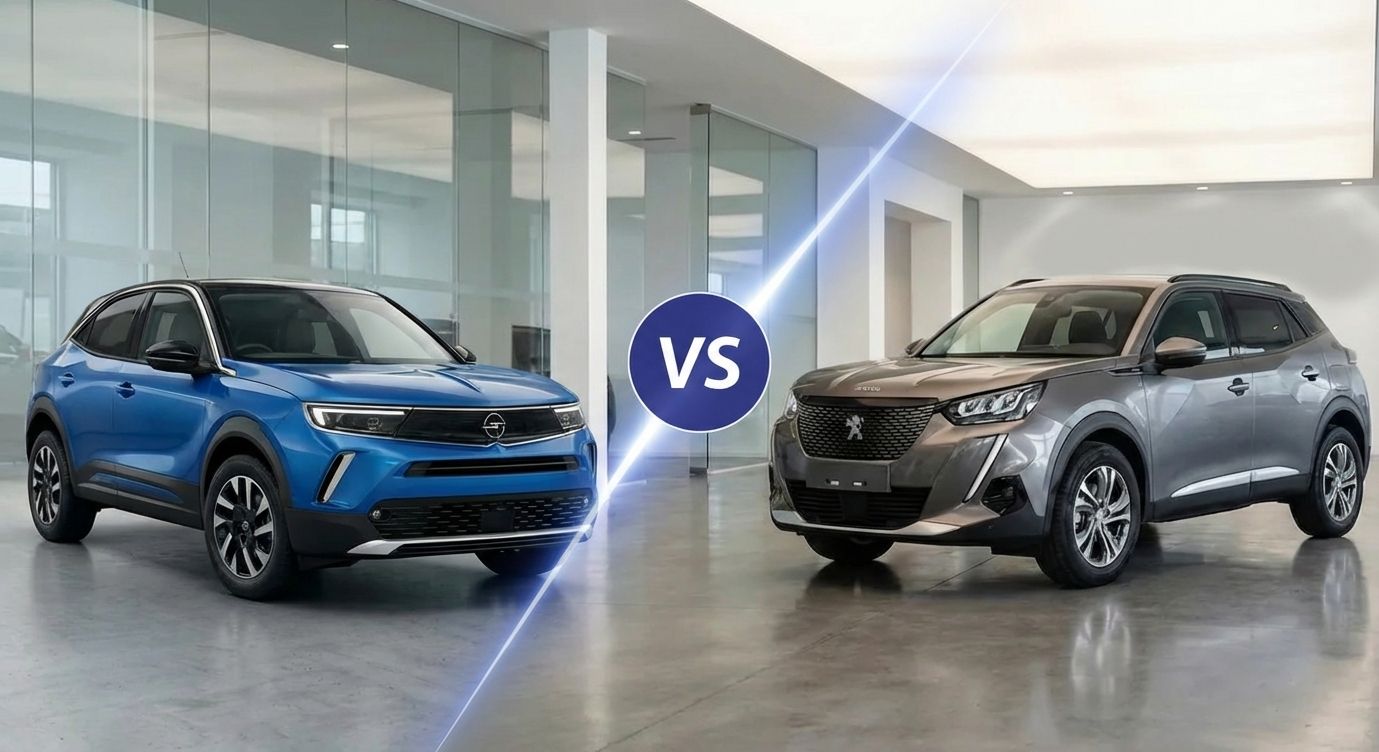
Opel Mokka vs Peugeot 2008. A detailed comparison of engines, design, and practicality. Find out which stylish SUV is the best choice for you.
Apr 14, 2026
Mercedes-Benz GLB vs Volkswagen T-Roc: A detailed comparison of engines, features, and interior space. Read our verdict and find out which SUV is the better choice.
Apr 30, 2026