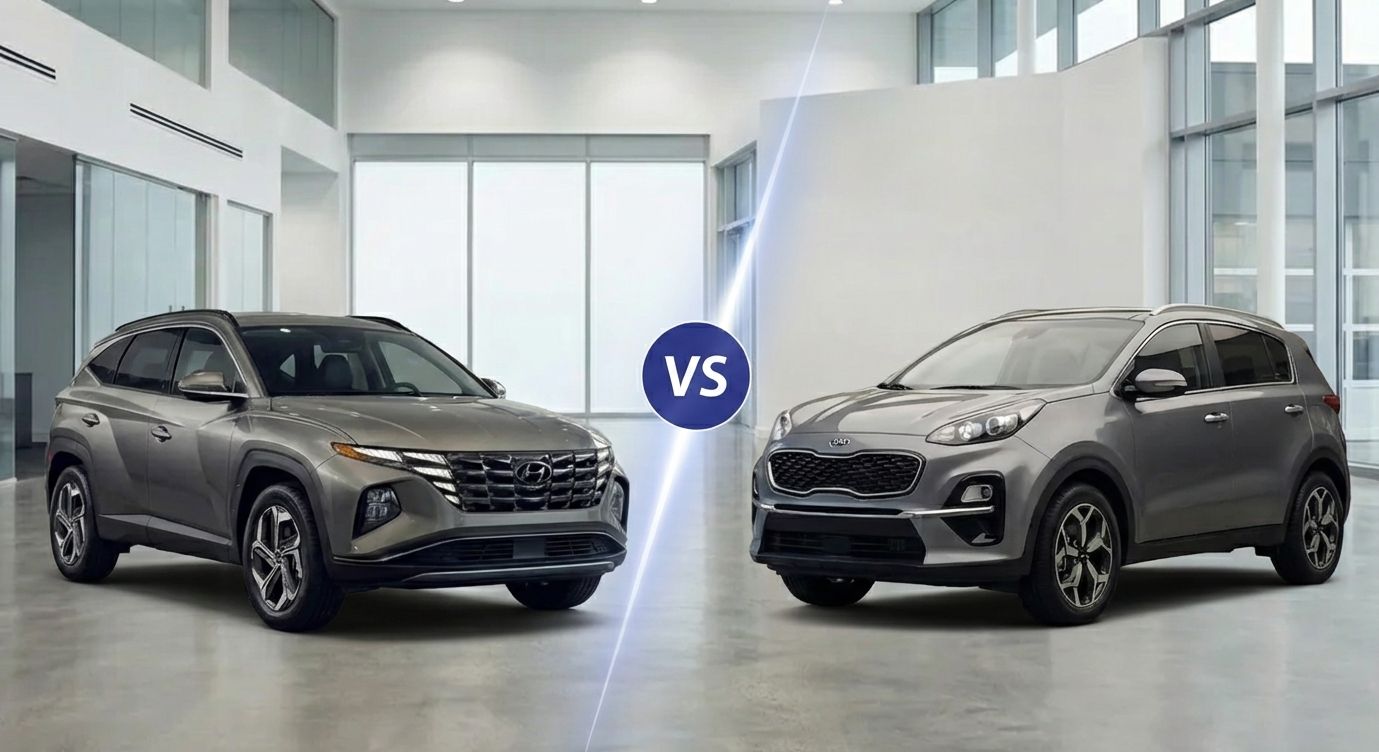
Car battle
Hyundai Tucson vs. Kia Sportage: A Complete 2025 Comparison
Hyundai Tucson vs. Kia Sportage: A detailed comparison of design, engines, and practicality to help you choose. Read our final verdict.
Apr 13, 2026
Articles
Car battle
Detailed comparison: Renault Captur vs. Škoda Kamiq. Discover the differences in space, engines, and equipment. Read our verdict before buying a used SUV!
April 25, 2026
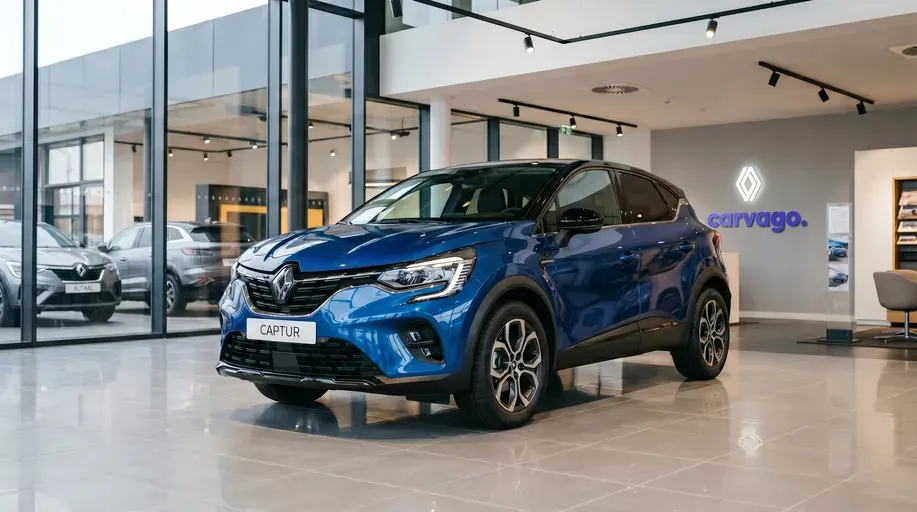
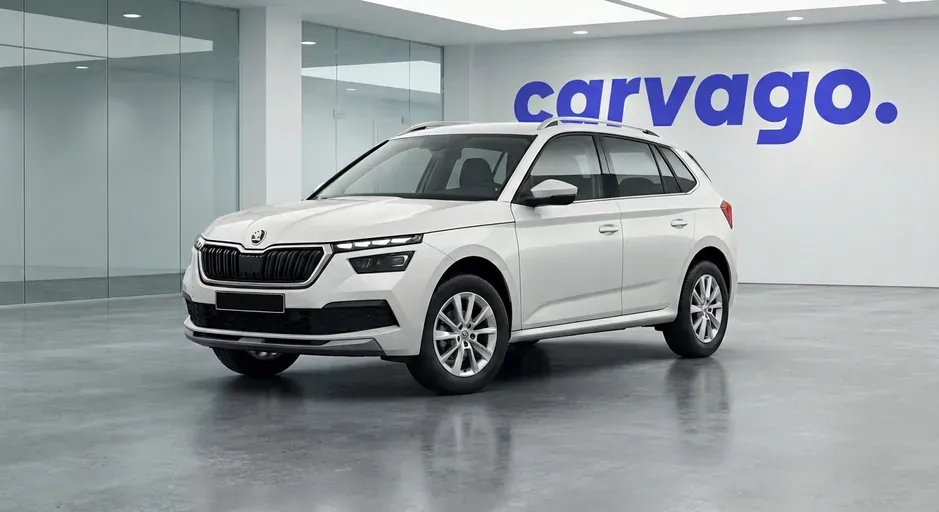
The Renault Captur, which also appears in some markets under the modified name Renault Kaptur or is known as the sister Mitsubishi ASX within the alliance cooperation, represents a stylish French crossover attracting with its attractive design and comfortable interior. Its challenger today is the Škoda Kamiq, an exceptionally practical representative of the Mladá Boleslav-based carmaker, which stands out in the city SUV class with its generous interior space, great ergonomics, and thoughtful solutions for every day. In the following comparison, we will focus in detail on the most important differences between the two models to help you decide which of these two popular cars represents a better choice on the used car market.
When choosing a compact city crossover on the used car market – typically models around four years old, such as the second-generation Renault Captur and the Škoda Kamiq – exterior dimensions play a crucial role. They affect not only the generosity of the interior space but also daily agility and the ability to park in tight streets. Although both models fall into the same B-SUV segment, their approach to body proportions differs significantly. For this reason, each car appeals to a slightly different target group of customers depending on what they primarily expect from their vehicle.
Škoda Kamiq is characterized at first glance by a slightly longer build. With a total length of 4241 mm, it surpasses its French rival by 14 millimeters (the pre-facelift Captur measures 4227 mm). However, the difference in wheelbase is much more important, as it is a key factor for the longitudinal spaciousness of the cabin. The Kamiq offers 2651 mm here, which is 12 mm more than the Captur (2639 mm). In real life, this difference brings slightly more generous knee room in the rear seats. The longer build and more generous wheelbase thus make the Kamiq a better choice for those who plan to carry adult passengers in the back more often and require maximum travel comfort for them.
The Renault Captur, on the other hand, plays the card of a more robust and mature classic SUV look. This is most evident in its height of 1576 mm, which makes the car a full 49 mm taller than the standard versions of the Kamiq from the first years of production (1527 mm). At the same time, the French crossover is also a symbolic 4 mm wider (1797 mm compared to 1793 mm). In practice, these dimensions provide more generous headroom and, above all, a higher seating position, which makes entry easier and improves overall visibility from the vehicle. While the lower and narrower Kamiq is more reminiscent of a practical raised hatchback focused on driving stability, the Captur, thanks to its height and width, will suit drivers who prefer a confident sense of security and the typical advantages of traditional taller SUVs.
| Parameter | Renault Captur SUV | Škoda Kamiq SUV |
|---|---|---|
| Width (mm) | 1797 | 1793 |
| Length (mm) | 4227 - 4239 | 4241 |
| Height (mm) | 1575 - 1576 | 1527 - 1562 |
| Wheelbase (mm) | 2639 | 2651 |
Luggage space is a key factor for many buyers, especially if the vehicle serves as the main family car for daily shopping, weekend trips, and longer vacations. In the category of compact city crossovers, every extra liter makes a noticeable difference in daily practicality. Although both the Renault Captur and Škoda Kamiq are very popular choices on the used car market, their approach to interior space utilization differs slightly, which can fundamentally influence your final decision.
The second-generation Renault Captur offers a very decent basic trunk volume of 422 liters in standard internal combustion versions. However, its huge advantage is the sliding rear bench, which allows the loading area to be variably increased up to an above-standard 536 liters – a value that easily swallows luggage even for a longer family vacation. After fully folding the seats, you get a maximum transport capacity of 1275 liters. It is important to mention, however, that if you opt for the more economical hybrid versions (e.g., E-Tech Plug-in), the basic trunk capacity drops significantly to a more modest 261 liters due to battery storage.
The Škoda Kamiq, on the other hand, relies on a stable and perfectly shaped loading area without sliding seats. It offers exactly 400 liters as standard, which is fully sufficient for weekend shopping and transporting a folded stroller. Its greatest strength, however, is revealed when you need to carry a larger load – the maximum volume after folding the rear seats is an excellent 1395 liters.
In practice, this means that the Renault Captur is ideal for families who need to flexibly change the space for a few extra suitcases at the expense of legroom for rear passengers. The Škoda Kamiq, on the other hand, scores with an overall airier space for rear passengers and clearly wins when you need to turn the car into a small van for moving larger items after folding the backrests.
| Parameter | Renault Captur SUV | Škoda Kamiq SUV |
|---|---|---|
| Basic volume (liters) | 422 l | 400 l |
| Max. volume with seats folded (liters) | 1275 l | 1395 l |
Renault Captur excels in trunk variability thanks to sliding rear seats, while Škoda Kamiq offers more stable shaping and an overall larger maximum transport capacity after folding the rear row.
The ability to tow a trailer plays an important role for compact SUVs, whether you are planning summer trips with a caravan or just need to occasionally transport bulkier cargo. Although both popular SUVs fall into the same size category, there are interesting differences in trailer weight parameters that buyers of approximately four-year-old used cars should pay close attention to.
The first-generation Škoda Kamiq can handle 1,150 kg on the tow bar as standard with the base 1.0 TSI engine, while more powerful variants like the 1.5 TSI four-cylinder or the older 1.6 TDI diesel can pull up to a solid 1,250 kg braked trailer. In contrast, the second-generation Renault Captur offers a uniform maximum capacity of 1,200 kg for all conventional internal combustion and mild-hybrid engines. However, a major pitfall comes when choosing fully electrified versions. For the popular Captur E-Tech Hybrid and Plug-in Hybrid models, the towing capacity is radically limited for technical reasons, and the braked trailer capacity drops to just 750 kg.
Regarding unbraked trailers, both cars fall within the normal standards of their class. The Kamiq safely tows roughly 610 to 650 kg (depending on the car's weight and version), while the Captur with a conventional powertrain can handle approximately 660 kg (up to 750 kg for the hybrid due to its higher curb weight).
From a practical standpoint, this means that with conventional internal combustion engines, you can easily transport medium-heavy loads with both vehicles. This value is sufficient for a weekend trip to a hardware store or a longer holiday with a caravan; alternatively, it easily solves the need for extra space for several suitcases if you get a cargo trailer for the car. However, if you choose a fully hybrid Captur, your towing options shrink de facto to just transporting light waste, a small trailer for a lawnmower, or mounting a heavier bike rack.
In conclusion, if you know you will use the tow bar frequently and for heavier loads, the Škoda Kamiq is a much more predictable and overall more robust choice across its entire engine range. The Renault Captur does a similar job very well and perfectly adequately for many users, but only on the crucial condition that you avoid the aforementioned fully hybrid powertrains for these purposes.
| Model and motorization | Braked weight of trailer (kg) | Unbraked weight of trailer (kg) |
|---|---|---|
| Škoda Kamiq 1.0 TSI (70 kW) | 1150 | 610 |
| Škoda Kamiq 1.0 TSI (81 / 85 kW) | 1200 | 620 |
| Škoda Kamiq 1.5 TSI ACT (110 kW) | 1250 | 650 |
| Renault Captur TCe / Mild Hybrid | 1200 | 660 |
| Renault Captur E-Tech (Plug-in) Hybrid | 750 | 750 |
When choosing a roughly four-year-old used car, you will encounter completely different approaches to engines in these two city crossovers. While the Škoda Kamiq relies on proven and traditional Group technology without any electrification, the second-generation Renault Captur offers one of the most diverse ranges of powertrains in its class. Captur buyers can choose from classic internal combustion engines, factory LPG conversions, mild-hybrids, full-hybrids (E-Tech), and plug-in hybrids. In contrast, Škoda counters with reliable TSI petrol engines and a cylinder deactivation system in the more powerful four-cylinder, which will be appreciated by drivers looking for straightforward and less maintenance-intensive technology. In both cases, diesel engines disappeared from the range very quickly, so they play a completely marginal role in the four-year-old used car market.
The second generation of the Renault Captur (produced since 2020) is very flexible in terms of engines. The standard on the used car market is the economical 1.0-litre three-cylinder TCe 90, but a big hit is its TCe 100 version with factory LPG, which represents a great choice for drivers focused on low operating costs. For more demanding drivers, a 1.3-litre four-cylinder is available (outputs of 103 kW and 116 kW), which after 2021 was sold exclusively with mild-hybrid technology to reduce consumption. A separate chapter is the E-Tech versions – the full hybrid variant (145) and the plug-in hybrid (160), both equipped with a unique multi-mode automatic transmission. If you are looking for a diesel engine, you will only come across it in the oldest years of this generation – the popular 1.5 Blue dCi (85 kW) engine was only offered during 2020 and then definitively disappeared from the price lists.
| Engine Type | Fuel | Power (kW) | Torque (Nm) | Gearbox |
|---|---|---|---|---|
| 1.0 TCe 90 | Petrol | 66 | 160 | 6-speed manual |
| 1.0 TCe 100 LPG | Petrol / LPG | 74 | 170 | 6-speed manual |
| 1.3 Mild Hybrid 140 | Petrol (MHEV) | 103 | 260 | 6-speed man. / 7-speed EDC |
| 1.3 Mild Hybrid 160 | Petrol (MHEV) | 116 | 270 | 7-speed EDC |
| 1.6 E-Tech 145 | Petrol (HEV) | 105 | 148 + 205 (electric) | Multi-mode auto. |
| 1.6 E-Tech Plug-in 160 | Petrol (PHEV) | 118 | 144 + 205 (electric) | Multi-mode auto. |
| 1.5 Blue dCi 115* | Diesel | 85 | 260 | 6-speed man. / 7-speed EDC |
*Note: The Blue dCi 115 diesel engine was only available until the end of 2020.
Under the hood of the first-generation Škoda Kamiq (since 2019), you will find exclusively technology shared with models like the Fabia or Scala. The range of four-year-old used cars is mainly based on the 1.0 TSI three-cylinder in two power versions (70 kW and 81 kW, or 85 kW in newer models). These engines are surprisingly refined and perfectly sufficient for everyday driving. At the top of the range sits the excellent 1.5 TSI four-cylinder with 110 kW, equipped with ACT (Active Cylinder Technology), which can deactivate two cylinders under low load to save fuel. It is the best choice for frequent motorway trips. Similar to the Captur, the Kamiq also said goodbye to diesel very early – the 1.6 TDI (85 kW) diesel engine ended its journey at the end of 2020. If you are looking for an alternative fuel, Škoda offered the 1.0 TGI G-TEC version burning compressed natural gas (CNG), but its production definitively ended in mid-2022.
| Engine Type | Fuel | Power (kW) | Torque (Nm) | Gearbox |
|---|---|---|---|---|
| 1.0 TSI (70 kW) | Petrol | 70 | 175 | 5-speed manual |
| 1.0 TSI (81 kW) | Petrol | 81 | 200 | 6-speed man. / 7-speed DSG |
| 1.5 TSI ACT | Petrol | 110 | 250 | 6-speed man. / 7-speed DSG |
| 1.0 TGI G-TEC* | Petrol / CNG | 66 | 160 | 6-speed manual |
| 1.6 TDI SCR* | Diesel | 85 | 250 | 6-speed man. / 7-speed DSG |
*Note: The 1.6 TDI engine was discontinued in 2020, the 1.0 TGI CNG version was discontinued in 2022.
Summary and Recommendation:
For purely city driving and modern "gadgets", the winner is the Renault Captur with E-Tech versions. If you are looking for the absolute minimum fuel costs and don't have the option to charge at home, the factory LPG in the Captur makes a lot of sense. Conversely, more conservatively minded drivers, families, and those who often travel longer distances will most appreciate the Škoda Kamiq with the perfectly tuned 1.5 TSI engine and DSG automatic transmission, which offers an unrivaled ratio of dynamics and fuel consumption on the motorway.
While the Captur attracts with advanced hybrids and low-cost LPG operation, the Kamiq counters with robust and agile TSI engines, led by the excellent 1.5 TSI four-cylinder.
Choosing the right engine is key to long-term satisfaction, and our recommendations are based on balanced performance, real-world fuel consumption, owner feedback, and documented mechanical reliability. Looking at the overall range of both manufacturers, we encounter an interesting contrast. For the second-generation Captur, Renault offers a very diverse range of powertrains, including factory LPG, sophisticated mild-hybrids, full hybrids, and heavy plug-in hybrids. The Škoda Kamiq, on the other hand, takes a much more traditional route, relying almost exclusively on the proven TSI petrol units. An important fact for those interested in a roughly four-year-old used car (around the 2022 model year) is that by this time, the era of diesel engines had definitively come to an end for both models. The 1.5 Blue dCi units at Renault and the 1.6 TDI at Škoda were discontinued during 2020 and are practically non-existent on the market for younger used cars.
The four-cylinder 1.3 TCe engine, developed in close cooperation with Mercedes-Benz (often found in listings under the designation TCe 140 GPF or more recently Mild Hybrid 140 from 2021–2024), represents the absolute ideal for daily life with this French crossover. Compared to the weaker one-liter three-cylinder, it offers significantly more refined operation and a generous power reserve, while its real-world fuel consumption stays surprisingly low with a light foot, usually around 6 to 6.5 liters per 100 km.
Although the smaller one-liter three-cylinder is a popular and, it must be said, reliable choice, for maximum user satisfaction and versatility, we recommend going for the top-of-the-line four-cylinder 1.5 TSI ACT (this engine has been consistently offered across all model years since 2019). This unit from the modern EA211 evo family stands out for its phenomenal combination of strong dynamics and operating efficiency, thanks to which it doesn't feel sluggish even when fully loaded.
Experienced motorists know well that official fuel consumption figures provided by manufacturers often differ from real-world driving, sometimes by more than a litre per hundred kilometres. It is therefore always advisable to take the paper data with a grain of salt and rather rely on the experience of the drivers themselves. For the purposes of this comparison, which focuses on roughly four-year-old used cars (models from 2020 to 2022), we have used independent data from the popular crowdsourcing platform Spritmonitor.de. Here, owners of both cars carefully record every refuelling, creating a very accurate picture of the real appetite of both crossovers.
As statistics and editorial reports indicate, real-world data clearly shows how individual engines perform. The following table is logically sorted by drive type.
| Model and engine | Average consumption (l/100 km) |
|---|---|
| Škoda Kamiq 1.0 TSI 81 kW (Petrol) | 5.9 |
| Renault Captur 1.0 TCe 90 66 kW (Petrol) | 6.3 |
| Škoda Kamiq 1.5 TSI 110 kW (Petrol) | 6.4 |
| Renault Captur 1.3 TCe 140 103 kW (Petrol) | 6.6 |
| Renault Captur 1.5 Blue dCi 115 85 kW (Diesel) | 5.0 |
| Škoda Kamiq 1.6 TDI 85 kW (Diesel) | 5.1 |
| Renault Captur E-Tech Hybrid 145 105 kW (Hybrid) | 5.1 |
| Renault Captur E-Tech Plug-in 160 118 kW (PHEV) | 3.5 |
A look at the numbers reveals several interesting trends. A surprising, yet very common finding in practice, is that the smallest turbocharged three-cylinder engines do not bring such a drastic fuel saving in real operation as it might seem from the manufacturers' tables. Especially with the more robust Renault Captur, it turns out that the basic 1.0 TCe engine struggles more on the motorway or in the hills. Its consumption thus easily rises above 6 litres, coming dangerously close to the more dynamic 1.3 TCe 140 four-cylinder equipped with mild-hybrid assistance. In the Škoda Kamiq, on the other hand, the 1.0 TSI unit works slightly more efficiently, and values just below the six-litre mark make it one of the most economical petrol engines in its class. Diesel units for both brands maintain a very low and stable consumption of around five litres, although they are already a rarity on the four-year-old used car market today. A separate chapter is the full-hybrid Captur E-Tech 145, which manages to drive with comparable consumption to a diesel, but with much greater quietness and refinement in traffic jams.
For the typical user, this data provides clear recommendations. If you drive mainly in the city and the surrounding area, the 1.0 TSI in the Kamiq will be a great and economical choice, or the advanced hybrid Captur, where the power of recuperation will manifest itself fully in the city. For frequent motorway journeys and longer trips with a fully loaded car, on the other hand, the larger-displacement petrol four-cylinder engines (1.5 TSI for Škoda or 1.3 TCe for Renault) are much more worthwhile. They have a significantly larger power reserve and their consumption does not increase as dramatically at motorway speeds as with weaker engines. For long-distance drivers, the aforementioned rarer diesels can still make economic sense.
In conclusion, it can be stated that fuel consumption itself is unlikely to be the absolute deciding factor for choosing between these two crossovers. The differences for comparable engines are only in the order of tenths of a litre. The Škoda Kamiq emerges from this comparison as a slightly more economical choice in the case of classic petrol engines, while the Renault Captur excels thanks to its range of advanced hybrid powertrains, which the Mladá Boleslav model completely lacks on the nearly new used car market.
When looking for a used car around four years old (model years 2021 and 2022), both models fall into the highly sought-after category of city crossovers. Due to the local popularity of the Škoda brand, the Kamiq (1st generation) holds a specific position on the Czech market, which is directly reflected in its residual value. The Renault Captur (2nd generation), on the other hand, attracts buyers with a better price-to-equipment ratio.
As a very popular model from domestic production, the Škoda Kamiq maintains its value exceptionally well. For four-year-old vehicles, the price range in dealerships most often falls within the following brackets:
The second generation of the Renault Captur represents an excellent choice on the used car market for those looking for style, modern technology, and wanting to save a bit on the purchase. Captur prices drop slightly faster than those of the domestic Škoda:
| Car Category | Renault Captur (2nd generation) | Škoda Kamiq (1st generation) |
|---|---|---|
| Base versions (1.0L engine, lower trim) | €13,000 – €15,000 | €14,000 – €16,000 |
| Recommended middle (stronger engine, better trim) | €16,000 – €18,000 | €17,000 – €20,000 |
| Top and special versions | €18,000 – €23,000 | €21,000 – €25,000+ |
Note: Prices are based on current market offers for used vehicles and may vary slightly depending on specific mileage, documented service history, and the overall technical condition of the specific car.
While the Škoda Kamiq represents a safe bet with minimal depreciation and a huge selection on the domestic market, the Renault Captur is a rational choice for those who want richer equipment and a more powerful engine at a more affordable price.
Both compared models, the Renault Captur and the Škoda Kamiq, earned the maximum five-star rating in safety tests by the independent organization Euro NCAP. When evaluating the safety of used cars, however, it is essential to consider not only the number of stars themselves but also the broader context and the specific year the tests took place. Euro NCAP protocols are constantly evolving and becoming stricter; new scenarios, such as collisions at intersections or more sophisticated detection of cyclists and pedestrians, are gradually being incorporated into the testing. For this reason, percentage results from different years cannot be directly compared. In this case, however, both cars were tested in the same year, which allows us to make a direct and fair comparison in terms of both then-current and current standards.
The Renault Captur underwent demanding crash tests in 2019 according to the then-updated and stricter rules. The car demonstrated high structural strength and safety, reflected in an excellent score of 96% for adult occupant protection. It also performed very well in child protection with a result of 83%. Naturally, the presence of advanced active systems was an integral part of the evaluation, where the Captur earned a solid 74%. This was mainly due to the standard autonomous emergency braking (AEB) system with pedestrian and cyclist detection and lane-keeping assist, which at the time represented a significant technological leap forward for the French brand in the small SUV segment.
The Škoda Kamiq underwent Euro NCAP testing in the same year (2019) and technically benefits from its relationship with the Scala model, with which it shares a large part of its structure and safety technologies. The Kamiq also excelled in the tests, recording an identical and top-tier result of 96% in the key category of adult occupant protection. However, in the other evaluated disciplines, it managed to slightly outperform its French rival. It was rated somewhat better in child occupant protection (85%) and recorded a more significant lead in the safety of vulnerable road users (80%). It also took home a higher percentage for safety assistance systems (76%), where evaluators highlighted, in particular, the excellent reliability of the camera sensors and the precise intervention of automatic braking in critical situations.
In the overall assessment, it can be stated that both vehicles offer an above-standard, comprehensive, and very modern safety equipment package on the market for roughly four-year-old used cars, meeting high demands for everyday family travel. Although both cars are exceptionally safe and provide the same level of top-tier protection for adults in the front seats, the Škoda Kamiq emerges as the slight winner of this duel thanks to marginally better percentage results in child and pedestrian protection, as well as assistance systems.
| Parameter | Renault Captur | Škoda Kamiq |
|---|---|---|
| Year of testing | 2019 | 2019 |
| Adult protection | 96 % | 96 % |
| Child protection | 83 % | 85 % |
| Vulnerable road user protection | 75 % | 80 % |
| Safety assistance systems | 74 % | 76 % |
Although both compact SUVs protect adult occupants excellently, the Škoda Kamiq offers a slightly more comprehensive safety shield for children in the rear seats and pedestrians.
In addition to the standard equipment, each of the models offers several unique features and technical solutions that can be decisive for the customer during the final selection. Each automaker applies its own approach here to make daily use more pleasant and offer added value.
In the second generation of the Captur model, Renault places great emphasis on interior flexibility, innovative design, and a technological lead in the field of powertrains.
The Škoda Kamiq benefits from a very long wheelbase and sticks to the brand's proven philosophy, which bets on maximum interior space, practicality for families, and well-thought-out everyday details.
Practical sliding rear bench allows for flexible trunk volume adjustment (up to 536 liters)
High-quality interior craftsmanship and attractive French design
Wide range of powertrains including an efficient plug-in hybrid (E-Tech)
Higher driving position provides a sense of safety and ensures better visibility
Favorable price-to-equipment ratio on the used car market
Firmer suspension tuning, which reduces comfort, especially in combination with larger 18-inch wheels
Response and user interface of the Easy Link infotainment system occasionally lag in older model years
When the rear bench is slid fully forward, there is minimal legroom left in the back
Basic three-cylinder engines can feel breathless at highway speeds
The Renault Captur is an ideal choice for those looking for a stylish and visually attractive city crossover with clever interior variability. Thanks to the sliding rear bench and the range of hybrid powertrains, it suits families and couples who spend most of their time in city traffic and appreciate the ability to adapt the vehicle to their current transport needs.
Top-tier cabin spaciousness, comparable to cars a class above (especially rear legroom)
Very comfortable and mature chassis performance, which filters broken roads excellently
Ergonomically well-thought-out interior with traditional "Simply Clever" features (e.g., an umbrella in the door)
Excellently tuned and reliable TSI gasoline engines (especially 1.0 TSI and 1.5 TSI)
Great value retention and trouble-free resale on the used car market
More conservative and understated appearance, which may not appeal to those looking for a more striking SUV
Complete absence of hybrid powertrains and all-wheel drive
Lacks trunk variability in the form of sliding rear seats
Adjusting ventilation intensity in older models must be done tediously via the touchscreen
The Škoda Kamiq will appeal to rationally minded buyers for whom maximum interior space, ride comfort, and reliable technology are priorities. This model is perfect for drivers who require a practical and comfortable car for daily use and are happy to forgo extravagant design or electrified powertrains.
Based on data from our own CarAudit inspections, long-term reliability tests, and the experience of service technicians, we have compiled an overview of the most common problems you should watch out for when choosing these approximately four-year-old used cars.
The second-generation Renault Captur (produced since 2019) is overall much more reliable than its predecessor, yet it still exhibits typical ailments that a physical inspection of a used car is recommended to check thoroughly before purchase.
When choosing a Renault Captur, you get a mechanically solid car, especially if you opt for the excellent 1.3 TCe petrol four-cylinder. The main risks remain primarily the quirks of the onboard software and potential jerking of the dual-clutch automatic transmission in city traffic jams.
The Škoda Kamiq (on sale since 2019) benefits from proven Group technology, but even it has not entirely escaped some teething problems, making an independent technical inspection before purchase a great advantage.
The Škoda Kamiq scores points for its overall solidity, excellent spaciousness, and the reliable mechanics of most engines. The biggest bogeyman on the used car market thus remains the shorter lifespan of the dry clutches in the DSG automatic and occasional strikes by the onboard electronics.
When buying a used car, a thorough inspection is key. Here are some specific points to focus on for these two models, while before the purchase itself, it is always worth investing in the CarAudit service to have a detailed inspection of the used car carried out by an experienced mechanic.
Renault Captur benefits from a sliding rear bench, which allows the boot volume to be flexibly increased from 422 to an impressive 536 litres. The Škoda Kamiq has fixed rear seats and offers a smaller base volume of 400 litres, but excels in great usability thanks to practical and clever fastening elements. If you need maximum spatial variability for luggage, the French car is the better solution.
The Škoda Kamiq is the absolute champion in its class for longitudinal legroom for rear passengers, which approaches cars from a class above. The Renault Captur offers the aforementioned sliding bench, but when it is moved all the way forward, an adult simply won't fit comfortably in the back. For frequent transport of adults or older children in the rear, the Czech model is therefore significantly more suitable.
The Renault Captur offers a wider range of electrified powertrains, including efficient E-Tech hybrid versions that excel particularly in heavy city traffic. In contrast, the Škoda Kamiq relies exclusively on proven TSI petrol engines without hybrid assistance, which instead excel with great fuel consumption during motorway journeys. The choice thus primarily depends on whether you prefer modern hybrid technology or traditional internal combustion engines in a used car.
Both models are among the above-average reliable representatives of their segment within roughly four-year-old used cars, without frequent serious failures. For petrol engines in Škoda Kamiq cars, it is crucial to ensure regular and timely oil changes, while in the Renault Captur, minor infotainment software bugs may occasionally appear. The cost of routine maintenance and the availability of spare parts are very comparable for both cars.
The Škoda Kamiq feels more like a slightly raised hatchback behind the wheel, which gives it a more confident and dynamic performance when cornering. The Renault Captur provides a more typical SUV driving feel with a higher seating position, and its chassis is tuned more towards comfort. For drivers looking for confidence and agility, the Czech car is the better choice, while those interested in a smoother and more relaxed ride will appreciate the French model.
Sources: ADAC, denik.cz, lidovky.cz, autoservis.cz, chytreauto.cz, autoemotion.cz
This article was prepared using artificial intelligence tools. The section guarantor is Petr Dušek.
Hyundai Tucson vs. Kia Sportage: A detailed comparison of design, engines, and practicality to help you choose. Read our final verdict.
Apr 13, 2026
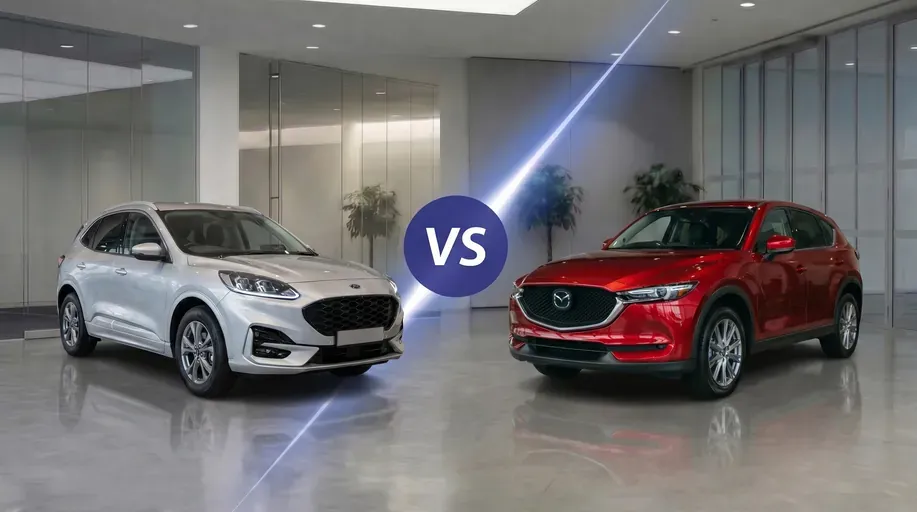
Detailed comparison of Ford Kuga vs. Mazda CX-5. Discover real-world experiences, differences in engines and equipment, and read a clear verdict before choosing a used SUV.
Apr 17, 2026
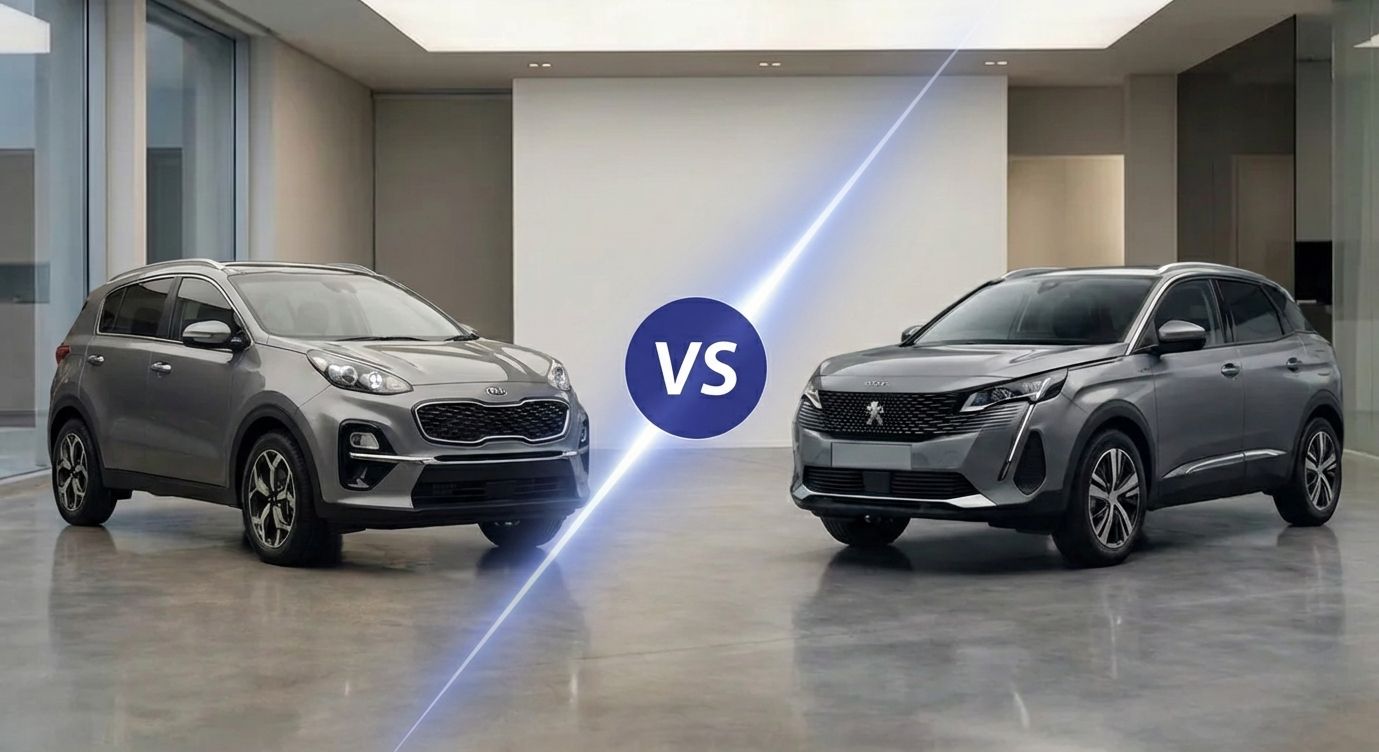
Comparison of the Kia Sportage and Peugeot 3008. Find out which SUV offers better equipment, performance, and value for money in our detailed test and verdict.
Apr 2, 2026