Car battle
Kia Ceed vs. Mazda 3: Complete comparison 2026
Detailed comparison: Kia Ceed vs. Mazda 3. We compared the engines, equipment, and driving characteristics. Read our verdict and find out which hatchback to choose.
Nov 12, 2026
Comparison: Opel Astra vs. Seat Leon. Which compact hatchback offers better engines, equipment, and reliability among used cars? Read our detailed verdict!
October 16, 2026
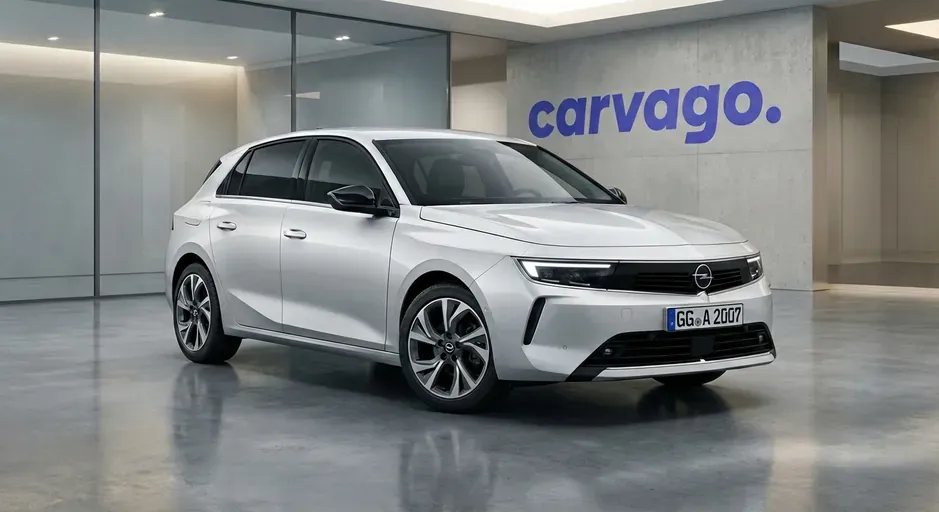
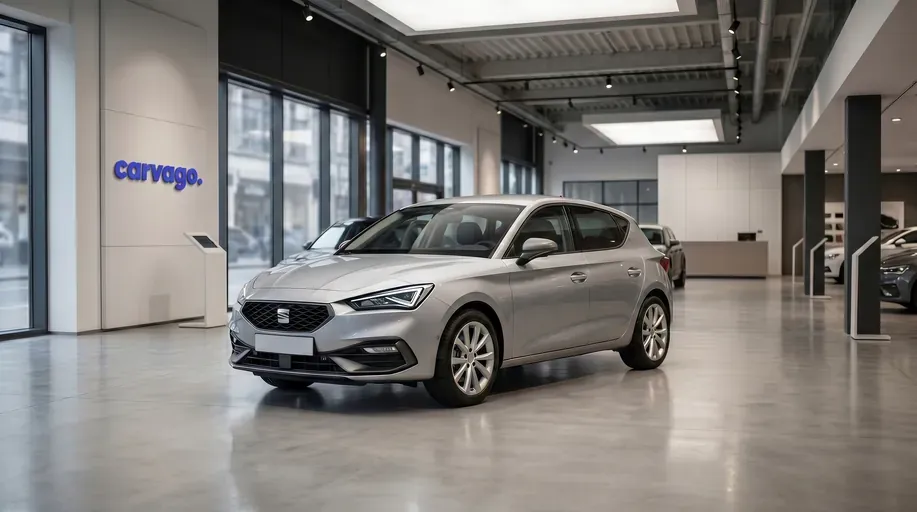
Opel Astra, also known and sold as the Vauxhall Astra in some markets, is a proven mainstay of the compact class that has long appealed to drivers with its combination of traditional German practicality and modern technology. Standing against it is the Seat Leon, which, while sharing proven group technology with its Volkswagen siblings, brings a much more aggressive Spanish design and sportier driving characteristics to the same segment. In the following detailed comparison, we will take a close look at both of these popular European models to find out which one currently represents the better choice for your daily travels.
When choosing a used compact car around four years old, you will most often encounter generational shifts – for the Opel Astra, it is the outgoing K generation and the incoming L generation, while for the Seat Leon, you will come across the ending 5F generation and the modern fourth generation (KL). In terms of the basic hatchback footprint, both cars are very similar, but the Astra is characterized by a slightly bulkier build. While the Leon (KL) measures 4368 mm in length, the Astra ranges from 4370 to 4374 mm. A more noticeable difference is found in width, where the newer Astra L has grown to a generous 1860 mm. The Leon, at 1799 mm, is narrower, which on one hand gives it a slight advantage when maneuvering in tight city streets and parking garages, but on the other hand, the Astra offers a slightly better sense of airiness in the shoulder area.
The wheelbase is a key indicator of interior space, especially legroom for rear passengers. The fourth-generation Seat Leon (KL) excels slightly here with its 2686 mm, surpassing both the older Astra K (2662 mm) and the newer Astra L (2675 mm). In practice, this difference means that the Leon's rear seats provide a few precious millimeters more comfort for taller passengers. On the other hand, Opel Astra models can compensate for this handicap with a slightly higher roofline in older versions, making entry easier and ensuring plenty of headroom. While the differences in wheelbase are not vast, for families with older children, the Leon hatchback might be a slightly more rational choice.
However, the tables turn when we look at the extremely popular estate versions (Sports Tourer for the Astra and Sportstourer/ST for the Leon). The older Opel Astra K Sports Tourer was a true giant of its class at 4702 mm long, clearly outgrowing the Leon ST (up to 4642 mm) by a full 60 mm. Although the new Astra L generation has matched the Leon's length at an identical 4642 mm, Opel has significantly extended the wheelbase to a staggering 2732 mm. The Leon, with its 2686 mm wheelbase, thus loses out compared to the latest Astra estate. This gives the Opel a major advantage not only in terms of interior longitudinal space but also overall directional stability during long highway journeys. If your primary goal is finding maximum space and composure in a family estate, the modern Astra emerges as the slight favorite on paper from this duel.
Below you will find a clear comparison of dimensions taking into account the generations of both cars typical for the current used car market (Astra K and L; Leon 5F and KL).
| Parameter | Opel Astra Hatchback | Seat Leon Hatchback | Opel Astra Estate | Seat Leon Estate |
|---|---|---|---|---|
| Length (mm) | 4370 - 4374 | 4281 - 4368 | 4642 - 4702 | 4548 - 4642 |
| Width (mm) | 1809 - 1860 | 1799 - 1816 | 1809 - 1860 | 1799 - 1816 |
| Height (mm) | 1441 - 1488 | 1435 - 1460 | 1443 - 1510 | 1431 - 1456 |
| Wheelbase (mm) | 2662 - 2675 | 2631 - 2686 | 2662 - 2732 | 2631 - 2686 |
When choosing a compact family car, the luggage compartment volume often plays a decisive role. For many buyers of used cars around four years old, it is crucial whether the car can handle not only the regular weekend shopping but also packing for a family holiday. Both manufacturers have used the available space very efficiently in their modern representatives, the Opel Astra (generation L, arriving in 2022) and the Seat Leon (generation KL, from 2020). While one model shows a noticeable advantage in the hatchback body style, the other scores better with the more practical family estate.
Looking at five-door hatchbacks in the four-year-old used car category, the Opel Astra offers a solid 422 liters of luggage space in its standard configuration. This significantly beats the rival Seat Leon with its 380 liters. In practice, this difference of over 40 liters means exactly that desired space for one smaller suitcase or several extra shopping bags, making the Astra more suitable for daily transport of bulkier items without any compromises. After fully folding the rear seats, the Astra's maximum capacity climbs to 1339 liters, while the Leon provides 1301 liters. A major difference exists in the increasingly popular plug-in hybrid versions, where traction batteries inevitably take up valuable space. While the electrified Astra hatchback maintains a still above-average 352 liters of base volume, the Leon e-HYBRID's trunk capacity drops to just 270 liters, which is quite limiting for longer family trips.
However, the tables turn slightly when comparing the more traditional estate versions (Astra Sports Tourer vs. Leon Sportstourer). The Seat Leon estate variant boasts an excellent base value of 620 liters, beating the Astra with its 597 liters. The Spanish car's advantage is fully evident when trying to fit a deep stroller along with weekend luggage into the trunk, where every extra liter is welcome. Nevertheless, after folding the rear seatbacks, the German model slightly wins again, offering a maximum load area of 1634 liters compared to 1600 liters for the Seat. As with the hatchbacks, close attention must be paid to the choice of engine – the hybrid Astra Sports Tourer provides a very respectable 516 liters, while the hybrid Leon drops to a more modest 470 liters (similar to the TGI gas version with 480 liters).
| Parameter | Opel Astra Hatchback | Seat Leon Hatchback | Opel Astra Estate | Seat Leon Estate |
|---|---|---|---|---|
| Base volume (liters) | 422 | 380 | 597 | 620 |
| Max. volume with seats folded (liters) | 1339 | 1301 | 1634 | 1600 |
While the Opel Astra is the clear choice for those interested in a more spacious hatchback and offers significantly better capacity in hybrid versions, the Seat Leon represents a better choice for those looking for a classic estate with the largest possible base trunk volume for everyday family use.
Trailer weight, or towing capacity, plays a crucial role for many used car buyers, whether they plan to transport building materials, bicycles, or even a family caravan. When comparing models approximately four years old, specifically the Opel Astra (generations K and L) and Seat Leon (KL), we find that both cars offer very good values for everyday needs, but differ significantly in their maximums. Standard petrol versions, such as the Seat Leon 1.0 TSI or Opel Astra 1.2 Turbo, can usually handle a braked trailer weighing between 1,100 and 1,400 kg.
However, if you are looking for maximum towing power, the Seat Leon with the 2.0 TDI diesel engine (especially in the Sportstourer estate version) can tow up to an impressive 2,000 kg. In contrast, the Opel Astra 1.5 Diesel reaches a maximum of around 1,500 to 1,550 kg in newer models (the older generation K with the 1.6 BiTurbo engine could handle 1,700 kg). Significant differences can also be found in popular electrified variants, where technology affects the limits: while the Astra 1.6 Turbo Hybrid offers a towing capacity of 1,380 to 1,450 kg, the Leon 1.4 and 1.5 e-HYBRID can handle 1,500 to 1,700 kg.
In practice, these differences mean that the Leon's higher capacity is fully sufficient for a long holiday with a heavier family caravan, while the Astra is more likely to satisfy standard needs and offer ideal space for attaching a carrier for several bikes or a weekend purchase of bulkier materials in a smaller trailer. It is important to note that technical data for unbraked trailers are not explicitly listed in our database for these models; however, legally and technically, a maximum of up to 750 kg usually applies to this class. Overall, if your primary goal is to tow heavy trailers, the Seat Leon with a diesel or powerful hybrid engine will be a significantly more flexible choice.
| Model and engine | Braked trailer (kg) | Unbraked trailer (kg) |
|---|---|---|
| Opel Astra 1.2 Turbo (L) | 1200 - 1400 | - |
| Opel Astra 1.5 Diesel (L) | 1500 - 1550 | - |
| Opel Astra 1.6 Turbo Hybrid (L) | 1380 - 1450 | - |
| Seat Leon 1.0 TSI (KL) | 1100 - 1300 | - |
| Seat Leon 1.5 TSI (KL) | 1300 - 1500 | - |
| Seat Leon 2.0 TDI (KL) | 1500 - 2000 | - |
| Seat Leon 1.5 e-HYBRID (KL) | 1700 | - |
When choosing a roughly four-year-old used car (comparing the current generations of Opel Astra L and Seat Leon KL), you will encounter two different approaches to engine lineups that fundamentally influence driving characteristics, dynamics, and maintenance costs. The Seat Leon benefits from the Volkswagen Group's extensive arsenal and offers a very wide range including 1.0 TSI and 1.5 TSI petrol units, robust 2.0 TDI diesel engines, as well as advanced mild-hybrids (eTSI) and a powerful 1.4 e-HYBRID plug-in hybrid version. The "golden mean" for the Leon remains the refined 1.5 TSI four-cylinder petrol engine, which is a key advantage for many drivers in the used car market.
The Opel Astra L, utilizing the modern Stellantis Group platform, relies exclusively on turbocharged 1.2 Turbo three-cylinder engines (commercially known in sister models as PureTech) in the purely petrol spectrum. More powerful and efficient variants in the Astra lineup are represented by mature 1.6 Turbo Hybrid plug-in hybrids with a combined output of up to 165 kW in the top-of-the-line, sport-tuned GSe version. A significant difference is also the choice of automatic transmission – while Seat bets on dual-clutch DSG gearboxes with lightning-fast shifts and a more pronounced mechanical feel, Opel offers a classic eight-speed torque converter, which excels primarily in smoothness when crawling in traffic jams.
Each offering has its strengths and weaknesses. From the perspective of an average motorist, the Seat offers a more diverse choice of quiet four-cylinder engines without the need to pay extra for heavy batteries. The Opel Astra, on the other hand, counters with the undeniable smoothness of a traditional automatic and the massive power of its heavier but technologically advanced hybrids. If you are a driver with high annual motorway mileage, we definitely recommend going for the robust 2.0 TDI in the Leon or the torquey 1.5 Diesel in the Astra. For drivers on a tighter budget who mostly drive in and around the city, the nimble 1.0 TSI in the Seat or the base 1.2 Turbo in the Opel will serve perfectly. Those seeking maximum dynamics should aim for the plug-in hybrid Astra GSe or the top-tier Leon with the 2.0 TSI engine.
The range of power units for the Opel Astra generation L (produced since the turn of 2021 and 2022) is rationally structured and strongly focused on the transition to electrification. The foundation for used cars consists of 1.2 Turbo petrol three-cylinder engines. The weakest version with 81 kW was available mainly in the early stages of production and gradually disappeared from the range, so you will much more often come across the more powerful and desirable 96 kW variant in advertisements. This can also be combined with either a precise six-speed manual or a very comfortable eight-speed automatic.
For more conservative drivers, a motorway specialist remained in the range in the form of the 1.5 Diesel four-cylinder, featuring the same 96 kW output and a generous 300 Nm of torque. Since the launch of this generation, Opel had high hopes for the 1.6 Turbo Hybrid variants, where a 1.6-litre petrol engine is combined with an electric motor. Furthermore, with the transition from the previous Astra K generation to the modern "L", older and less popular designs like the 1.4 DI Turbo or CDTI engines have been completely phased out, making it much easier for today's buyers to navigate the market.
| Engine Type | Fuel | Power (kW) | Torque (Nm) | Transmission |
|---|---|---|---|---|
| 1.2 Turbo | Petrol | 81 | 205 | 6MT |
| 1.2 Turbo | Petrol | 96 | 230 | 6MT / 8AT |
| 1.5 Diesel | Diesel | 96 | 300 | 6MT / 8AT |
| 1.6 Turbo Hybrid | Plug-in Hybrid | 132 | 360 | 8AT |
| 1.6 Turbo Hybrid GSe | Plug-in Hybrid | 165 | 360 | 8AT |
| Astra Electric | Electric | 115 | 270 | 1AT |
The fourth generation of the Seat Leon (KL generation) arrived in 2020 with a bet on enormous powertrain variability. If you are looking for a reliable used car for a regular commute to work, even the basic 1.0 TSI turbocharged three-cylinders (or their modern mild-hybrid equivalent, the 1.0 eTSI, always paired with an automatic) will serve you well. However, most buyers rightly aim for the exceptionally popular 1.5 TSI four-cylinder with 96 kW or 110 kW, which stands out for its exemplary refinement and intelligent Active Cylinder Technology (ACT) system, ensuring real-world fuel savings.
Looking at historical tables and advertisements, an interesting point can be noted: between 2020 and early 2023, the 1.5 TGI version designed for compressed natural gas (CNG) was sold in relatively large numbers. However, it has disappeared from the market for newer used cars due to declining demand. Fans of diesel will find the iconic and thoroughly improved 2.0 TDI engine under the hood. Its more powerful version boasts a substantial 360 Nm of torque. Those interested in quiet morning starts and home charging have the 1.4 e-HYBRID model within reach.
| Engine Type | Fuel | Power (kW) | Torque (Nm) | Transmission |
|---|---|---|---|---|
| 1.0 TSI / eTSI | Petrol / MHEV | 66 / 81 | 175 / 200 | 6MT / 7DSG |
| 1.5 TSI / eTSI | Petrol / MHEV | 96 / 110 | 200 / 250 | 6MT / 7DSG |
| 1.5 TGI | CNG | 96 | 200 | 6MT / 7DSG |
| 2.0 TSI | Petrol | 140 | 320 | 7DSG |
| 2.0 TDI | Diesel | 85 / 110 | 300 / 360 | 6MT / 7DSG |
| 1.4 e-HYBRID | Plug-in Hybrid | 150 | 350 | 6DSG |
While the Seat Leon attracts with its unrivaled breadth of choice and the availability of reliable purely petrol four-cylinder engines, the Opel Astra impresses with its smooth eight-speed automatic and the uncompromising dynamics of its advanced plug-in hybrid versions.
Choosing the right engine is absolutely crucial for your long-term satisfaction with the car, its reliability, and keeping operating costs under control. The following recommendations are based on real-world experience, proven mechanical durability, actual fuel consumption, and overall owner feedback. We focused on the generations of both models currently found on the four-year-old used car market – namely the Opel Astra generation L (from 2022) and the Seat Leon fourth generation KL (from 2020), where we find the most interesting and modern technologies.
This petrol three-cylinder power unit forms the backbone of the range for the current generation Astra and is the one you will encounter most often on the nearly-new used car market.
For the fourth-generation Leon, customers most often reach for the four-cylinder petrol engine from the EA211 Evo family, and we can only agree with them. Especially the more powerful 150 hp version is almost unbeatable in terms of price-to-value ratio.
When choosing a used car, one of the key questions is real-world fuel consumption, which often differs significantly from the official figures provided by the manufacturer. To provide the most accurate picture possible, we used data directly from drivers themselves on the popular community portal Spritmonitor.de, where owners meticulously record every refuelling. We focused on the generations of both models that are currently most in demand on the used car market, i.e., cars approximately four years old – specifically the transition of the popular Opel Astra K/L generation and the fourth-generation Seat Leon (KL).
Real-world consumption data exclusively for:
| Model and engine | Average consumption (l/100 km) |
|---|---|
| Opel Astra 1.2 Turbo 96 kW | 5.8 |
| Seat Leon 1.0 TSI 81 kW | 5.5 |
| Seat Leon 1.5 TSI 110 kW | 6.0 |
| Seat Leon 2.0 TDI 110 kW | 4.7 |
| Opel Astra 1.5 Diesel 90 kW | 4.8 |
Looking at the hard data, several interesting trends emerge. First and foremost, the established rule about small turbocharged petrol engines is confirmed. While the theoretically revolutionary one-litre and 1.2-litre three-cylinder engines can be very efficient, in real-world traffic their consumption fluctuates only slightly below the values of the significantly more powerful four-cylinder 1.5-litre (in the case of the Leon 1.5 TSI). However, a major surprise comes from the comparison of diesel engines. The larger 2.0-litre TDI under the hood of the Spanish representative can, in practice, run on essentially identical, if not slightly lower, fuel amounts than the smaller 1.5-litre from Opel, all while offering noticeably better overall dynamics.
What does this mean for the average user? If you are looking for a car primarily for city and suburban driving, it makes a lot of sense to go for the petrol three-cylinder engines. They warm up faster and reward drivers with a light foot with very favourable efficiency in the city. For motorway mile-munchers and business travellers, however, the diesel engine remains the unsurpassed ideal. In particular, the 2.0-litre TDI in the Seat Leon represents a fantastic compromise between a comfortable power reserve and almost laughably low operating costs on long journeys.
In the end, however, fuel consumption alone is unlikely to be the main deciding factor that tips the scales strictly in favour of one model or the other. Both cars prove in the real world that they are exceptionally efficient representatives of the compact class. Your choice should therefore be guided more by your preference for design, interior space requirements, and suspension tuning, because neither the Opel nor the Seat will certainly ruin you at the petrol station.
When choosing a roughly four-year-old used car, both manufacturers find themselves in a very interesting price and generational position. The market for 2021 and 2022 models shows that each manufacturer approaches depreciation and generational change differently.
The German representative offers a very specific situation in these model years. 2021 and 2022 represent a turning point on the used car market between the outgoing fifth generation (Astra K facelift) and the more radically designed sixth generation (Astra L).
The Seat Leon moved to its fourth generation (KL) back in 2020, meaning all roughly four-year-old models on the market already fully benefit from modern group technology shared with the Volkswagen Golf VIII. Used Leon prices steadily reflect its attractive dynamic design and richer standard equipment.
| Parameter | Opel Astra (~2021–2022) | Seat Leon (~2021–2022) |
|---|---|---|
| Base price (used) | From approx. €7,000 (Astra K) | From approx. €11,000 |
| Price for top versions / new gen. | €14,000 – €22,000 (Astra L) | €16,000 – €24,000 (FR/DSG) |
| Generational situation (~4 years old) | Transition between 5th and 6th gen | Purely 4th generation |
| Typical vehicle profile in ads | Economic workhorse and modern style | Sporty-styled hatchback or estate |
Conclusion on finances
From a pure savings perspective, the Opel Astra (if you go for the run-out versions of the K generation) is the absolute winner for buyers on a tighter budget. It offers proven and fully sufficient technology at an exceptionally attractive price. The Seat Leon requires a larger initial investment on the used market and targets drivers who demand modern infotainment, driving dynamics, and a more emotive look. However, the price difference quickly disappears when you pit the current (sixth) generation Astra against the Leon – there, both cars compete very fiercely on price.
While the older generation Opel Astra targets wallets with exceptionally favorable prices, the Seat Leon holds its value firmly even as a used car thanks to modern group technology and sought-after FR sport versions.
Both vehicles have long boasted a reputation for being very safe cars, and when searching for information, you will often encounter mentions of both model series achieving the maximum five-star Euro NCAP rating. However, it is absolutely crucial to put these claims into the correct context and take the specific year of testing into account. The testing protocols of the independent Euro NCAP organization are constantly evolving and become significantly stricter every two years. Percentage results from different years cannot be directly compared, as the requirements for active assistance systems and passive occupant protection are dramatically higher and more complex today than in the past.
The fourth-generation Seat Leon underwent crash tests in 2020 and took home the maximum five-star rating. This year introduced new, very demanding protocols to the testing – for the first time, a moving deformable barrier was introduced for frontal impact simulation, and far-side impact protection began to be evaluated much more strictly. The Seat Leon passed this test with flying colors, also thanks to the installation of an innovative center airbag, which effectively protects the heads of the driver and front passenger from colliding with each other. The resulting 92% for adult occupant protection and 88% for child protection testify to an exceptionally robust body structure. A score of 80% in the safety assist evaluation then confirms that the Leon already offered top-tier detection systems and reliable autonomous braking in 2020.
The Opel Astra generation L faced Euro NCAP laboratory tests a bit later, specifically in 2022. At that time, even tougher rules were already in place, focusing, among other things, on emergency situations at intersections and advanced detection of vulnerable road users. Although previous generations of the Astra are perceived as full five-star cars, the new model earned a solid but "only" four-star score under these strict conditions. A gain of 80% in adult protection and 82% in child protection is a very good result; however, slightly weaker chest protection in a frontal impact and stricter penalties in the safety assist evaluation (66%) cost the car its fifth star. This certainly does not mean that the modern Astra is an unsafe vehicle; rather, it demonstrates in practice the rapid pace at which safety methodology requirements are increasing.
From the perspective of today's standards for the nearly-new used car market, both models represent very safe choices. In conclusion, however, it can be said that the Seat Leon offers a slightly more convincing and overall more robust safety package. Its top-tier adult protection results from the demanding year of 2020 and the standard presence of a center airbag give it a slight advantage in a direct comparison, making it a somewhat more certain choice in terms of passive safety for those interested in a car around four years old.
| Parameter | Opel Astra | Seat Leon |
|---|---|---|
| Year of testing | 2022 | 2020 |
| Adult occupant protection | 80 % | 92 % |
| Child protection | 82 % | 88 % |
| Vulnerable road user protection | 67 % | 71 % |
| Safety assist systems | 66 % | 80 % |
Although both cars feature modern technologies, the Seat Leon offers a more convincing overall sense of safety for a used car buyer thanks to its excellent structural strength and five-star rating from demanding tests.
In addition to standard equipment, each of the models offers several unique features and well-thought-out solutions that define their character and can be decisive for the customer during the final selection. While one bets on top-notch ergonomics and advanced headlight technologies, the other scores with sporty flair and an innovative approach to ambient lighting.
Attractive and distinctive design with the characteristic Opel Vizor grille
Top-tier ergonomic front seats with AGR certification
More intuitive controls thanks to the retention of selected physical buttons (e.g., for air conditioning)
Excellent cabin soundproofing and a stable chassis on the highway
Wide and efficient range of plug-in hybrid powertrains
Slightly less space for rear-seat passengers
Smaller base luggage compartment volume compared to group rivals
Higher curb weight, which slightly dulls driving agility
The infotainment system occasionally suffers from slower responses
The Opel Astra is a mature and comfortable hatchback (or estate) aimed at drivers who desire bold style without sacrificing user-friendliness. Thanks to its excellent ergonomic seats and quiet interior, it is a great companion for long highway journeys.
Precise and agile driving characteristics with an emphasis on sportier performance
Highly above-average interior space, especially in the exceptionally practical Sportstourer (estate) version
Proven and very efficient range of group TSI and TDI engines
Advanced assistance systems and effective LED headlights even in the base trim
Complicated ergonomics and almost exclusive touch control for air conditioning without backlighting
Stiffer chassis tuning in the FR trim can reduce comfort on broken roads
Noticeable cost-cutting on materials in the lower parts of the dashboard and door panels
Excessive reliance on the infotainment system makes it difficult to control basic functions while driving
The Seat Leon is an ideal choice for those looking for a dynamically styled car with excellent driving characteristics and above-standard space for the family. It will primarily appeal to drivers who want a more emotional alternative to the Volkswagen Golf or Škoda Octavia and are willing to tolerate its more specific touch controls.
Based on long-term user ratings, service bulletins, and findings from independent comprehensive car inspections, we have compiled an overview of the most common problems with approximately four-year-old used cars of both these models.
In Opel Astra cars from 2021 and 2022, you will find the last units of the previous generation (Astra K) as well as the first models of the completely new platform (Astra L) in used car dealerships. Each variant brings slightly different pitfalls.
The Opel Astra can be a durable companion, but for the 1.2 PureTech petrol engines from generation L, it is absolutely critical to pay attention to a perfect service history and check the condition of the timing belt.
The fourth generation of the Seat Leon (designated KL), which arrived on the market in 2020, made a huge technological leap, which unfortunately brought a fairly significant amount of electronic faults in approximately four-year-old cars from the first years of production.
The mechanics and engines of the Leon work very convincingly, but when buying the first model years, you cannot do without a thorough verification of whether the car has already undergone the necessary software updates and a possible replacement of a faulty steering wheel.
When buying a used car, a thorough inspection is key. Here are a few specific points to focus on for these two models to minimize the risk of future investments. Always keep in mind that absolute certainty is only provided by a professional car technical inspection. An independent service like CarAudit can reveal defects that a layperson might simply not notice during a test drive, thanks to comprehensive diagnostics and a detailed inspection.
The latest generation Opel Astra offers a boot capacity of 422 litres in its basic hatchback version, surpassing the Seat Leon with its 380 litres. For the more practical estate variants (Astra Sports Tourer and Leon Sportstourer), the figures are very similar, with both models reaching around 600 to 620 litres. However, the Seat Leon compensates for this slight disadvantage in the hatchback with more generous space for rear-seat passengers.
The Seat Leon, sharing a platform with cars like the VW Golf, is traditionally tuned for a sportier feel, offering more precise steering and more agile cornering. The Opel Astra, on the other hand, places greater emphasis on excellent directional stability, high-quality sound insulation, and overall suspension comfort. If you prefer driving fun, the Leon will be the better choice, while the Astra excels at relaxed long-distance motorway cruising.
As roughly four-year-old used cars, both vehicles represent a solid choice, but it always depends on a meticulous service history. With the fourth-generation Seat Leon, watch out for freezing infotainment systems from the early years of production, which fortunately has been resolved with software updates in most cars. For the Opel Astra, check that the oil change service intervals have been followed on the 1.2 petrol three-cylinder engines to prevent premature wear of the timing belt.
The Seat Leon uses the very popular VW Group 2.0 TDI engines, which are renowned for their excellent dynamics, great reliability, and real-world fuel consumption often below 5 litres per 100 km. The Opel Astra relies on French 1.5 BlueHDi diesel units, which are exceptionally quiet and refined but lag slightly behind the Seat's 2.0-litre engine in terms of performance. For frequent motorway travel with high annual mileage, a used Seat Leon with a TDI engine is therefore a slightly more suitable candidate.
The modern Seat Leon has moved to a fully digital interior concept, where the vast majority of functions, including climate control settings, are operated via a central touchscreen. While the Opel Astra also has a modern digital dashboard layout, it has prudently retained a number of physical buttons for basic operations like temperature or seat heating. For drivers who dislike taking their eyes off the road and require more intuitive controls, the Astra is significantly more user-friendly.
Sources: ADAC, idnes.cz, garaz.cz, smartmania.cz, emobility.cz, autoskola-testy.cz
This article was prepared using artificial intelligence tools. The section guarantor is Petr Dušek.
Detailed comparison: Kia Ceed vs. Mazda 3. We compared the engines, equipment, and driving characteristics. Read our verdict and find out which hatchback to choose.
Nov 12, 2026
Detailed comparison of Citroën C4 vs. Hyundai i30. Find out which car offers better real-world fuel consumption, equipment, and value for money. Read our final verdict!
Oct 16, 2026
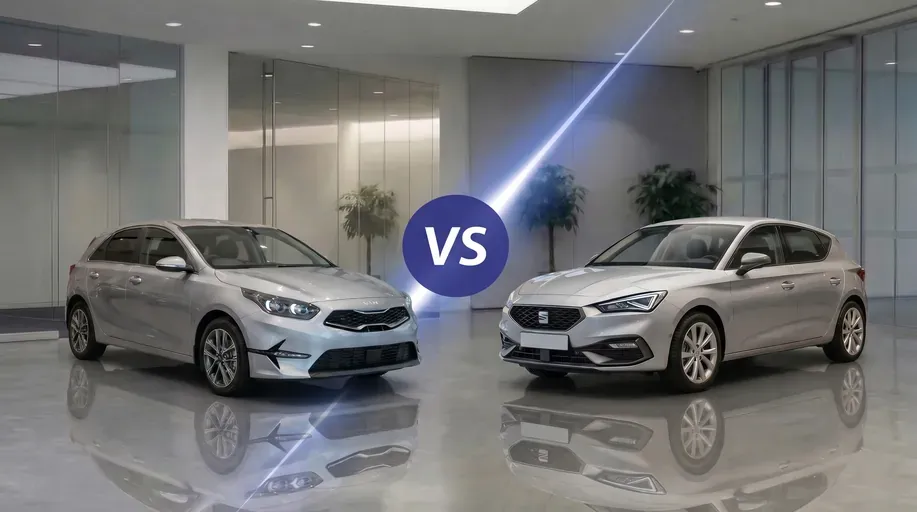
Detailed comparison of Kia Ceed vs SEAT Leon. Discover real-world experiences, differences in equipment, engine reliability, and read our verdict before buying a used car.
Nov 12, 2026