Car battle
Ford Kuga vs. Toyota RAV4: Complete comparison 2026
Detailed comparison of Ford Kuga vs. Toyota RAV4. We compared the fuel consumption, reliability, and driving characteristics of both SUVs. Read our test and final verdict.
Apr 2, 2026
Articles
Car battle
Detailed comparison: Nissan Juke vs. Suzuki Vitara. Discover the real differences in specifications, fuel consumption, and features. Our verdict will help you choose the right SUV.
May 2, 2026
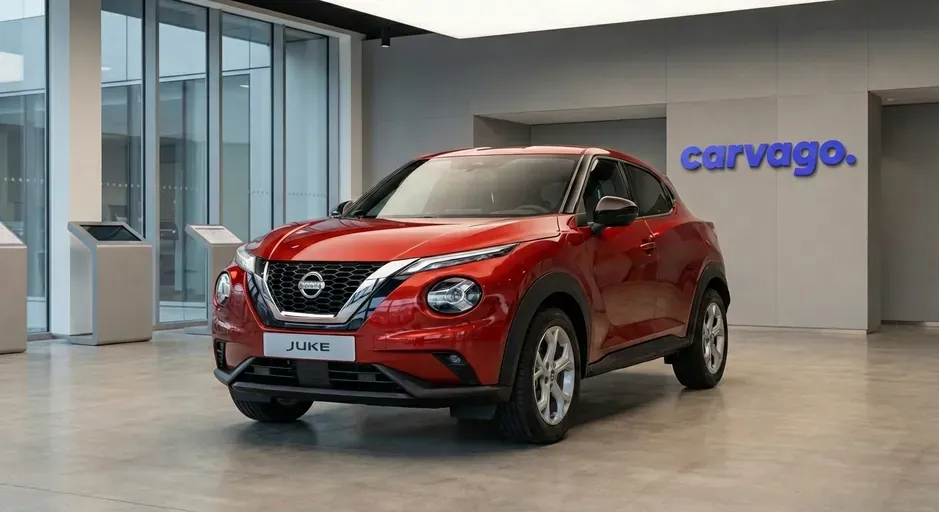
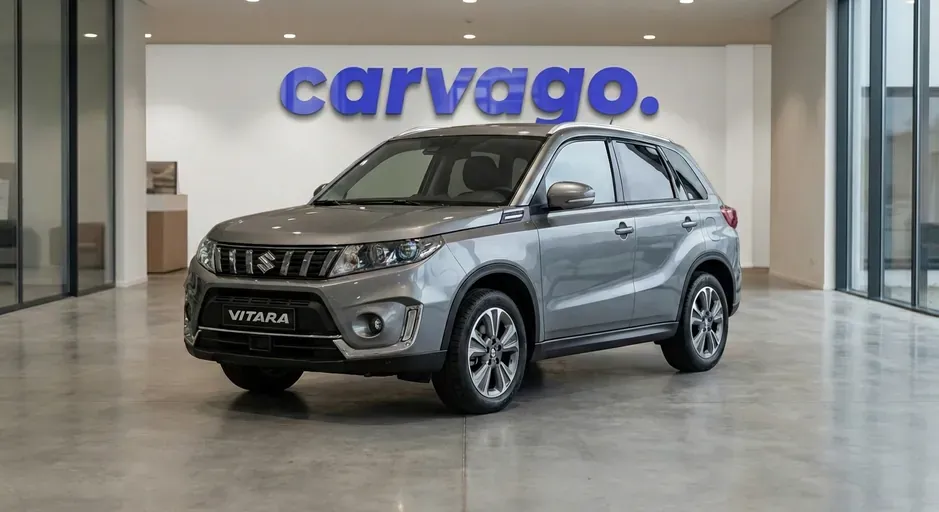
The Nissan Juke, a pioneer of the small urban crossover segment, retains its typical, extravagant, and unmistakable design even in its current generation, aiming primarily at emotions and style. Standing against it is the Suzuki Vitara, also known as the Suzuki Escudo in some Asian markets, which instead bets on a more practical body concept and benefits from the brand's long tradition of producing reliable cars with proven all-wheel drive. Let's take a detailed look at how a direct comparison of these two different philosophies turns out and which of these popular cars makes more sense for your needs on the used car market.
When we place the Nissan Juke and Suzuki Vitara side by side, you'll notice a completely different approach to design and body proportions at first glance. While the Vitara bets on more traditional, slightly boxy shapes of a classic SUV, the Juke is a typical representative of dynamic city crossovers. If we focus on models available on the market as roughly four-year-old used cars, i.e., the current F16 generation Nissan Juke and the second-generation Suzuki Vitara after its facelift, the numbers speak clearly. With a length of 4210 mm, the Juke is 35 to 40 mm longer than the Vitara and 25 mm wider at the same time. On one hand, this difference means you'll have to be a bit more careful with the Nissan when parking in narrow garages, but in return, you get a more aggressive and stable stance on the road, giving the car a visually more mature character.
However, the most significant difference between these competitors can be found when looking at the wheelbase. The Nissan Juke offers a wheelbase of 2636 mm, which is a staggering 136 mm more than the Suzuki Vitara, which relies on a more modest value of 2500 mm. In practice, this means the Juke can offer better longitudinal space for passengers and an overall smoother, more settled ride over bumps, as its wheels are pushed further to the corners of the body. On the other hand, the significantly shorter wheelbase of the Vitara brings better maneuverability in tight spaces and a smaller turning radius. This makes the Suzuki Vitara an extremely agile and undemanding companion for daily weaving through a busy city, while the Juke better masks its small-car origins on open roads and highways.
The Nissan Juke measures roughly 1595 mm in height, while the Vitara ranges between 1595 and 1610 mm depending on the specific version and equipment. Both models thus provide the much-desired elevated driving position and a satisfactory view of what's happening in front of the car. However, the Vitara's taller build relative to its slightly shorter overall length contributes to a feel of a more airy and practical interior, with valuable centimeters of headroom, especially for rear-seat passengers. When deciding, it primarily depends on what you prefer in your car: the Juke is the clear choice for those interested in style and better longitudinal comfort, while the Vitara will appeal to those looking for maximum agility and pragmatic use of interior space.
| Parameter | Nissan Juke SUV | Suzuki Vitara SUV |
|---|---|---|
| Width (mm) | 1800 | 1775 |
| Length (mm) | 4210 | 4170-4175 |
| Height (mm) | 1593-1595 | 1595-1610 |
| Wheelbase (mm) | 2636 | 2500 |
When choosing a compact city crossover, the trunk volume often plays a decisive role, especially if the car is to serve as the main family vehicle. Although the Nissan Juke and Suzuki Vitara target a similar audience and their domain is primarily cities or suburban areas, their approach to interior layout differs quite significantly. The shape and volume of the trunk itself determine whether the car can easily accommodate just a weekend shopping trip or if it can satisfy the needs of packing for a longer family holiday.
If we compare the standard internal combustion and mild-hybrid versions of both models typical for the market of roughly four-year-old used cars, the Nissan representative (F16 generation) offers surprisingly more competitive parameters. The basic trunk volume of the Juke model is a solid 422 liters, which in practice means space for several extra suitcases and much less stress when folding a stroller. After folding the rear seats, the usable space increases to a generous 1305 liters. In contrast, the Suzuki Vitara (second generation) offers a slightly more modest 375 liters in the standard version, and its maximum transport capacity ends at 1120 liters.
Buyers should be very careful when choosing full hybrid variants, where batteries usually take a toll on interior space. In the Nissan Juke (1.6 Hybrid), the trunk volume drops to 354 liters (with a maximum of 1237 liters), a reduction that is still relatively easy to accept in everyday use. However, the Suzuki Vitara (1.5 Dualjet Hybrid) suffers much more from the presence of larger traction batteries – its basic trunk space shrinks to a below-average 289 liters (1046 liters after folding), which can already be a significantly limiting factor for family use and weekend travel.
| Parameter | Nissan Juke SUV | Suzuki Vitara SUV | Nissan Juke Hybrid SUV | Suzuki Vitara Hybrid SUV |
|---|---|---|---|---|
| Basic volume (liters) | 422 | 375 | 354 | 289 |
| Max. volume after folding seats (liters) | 1305 | 1120 | 1237 | 1046 |
The Nissan Juke is a more practical choice thanks to its larger trunk space; conversely, with the Suzuki Vitara, you should carefully consider before buying whether you will miss the critical trunk volume in the full hybrid version.
If you plan to regularly tow a trailer behind your car, you will find quite significant differences among roughly four-year-old representatives of both models on the used car market. The Suzuki Vitara (2nd generation) is noticeably more capable in this regard and offers better usability for heavier loads, while the Nissan Juke (F16 generation) is more suitable for lighter tasks. The standard and also maximum value for the petrol Nissan Juke in the 1.0 DIG-T version is 1250 kg for a braked trailer. In contrast, while the Suzuki Vitara offers 1200 kg as its base for the 1.5 Dualjet Hybrid variant, its maximum towing capacity reaches a generous 1500 kg in the 1.4 Boosterjet Hybrid version. Full hybrid models deserve special attention, as their towing capacity is often reduced for technical reasons. While for the aforementioned Vitara it drops to a still very respectable 1200 kg, the Nissan Juke 1.6 Hybrid can tow a braked trailer with a maximum weight of 750 kg. In practice, this means that with the Suzuki Vitara, you can head off on holiday without worry, as it offers ideal towing power for a smaller caravan or a heavier utility trailer with wood. In contrast, the Juke in its hybrid version will serve at most for a small trailer – while this is perfectly sufficient for a weekend trip to a DIY store or hauling garden waste, you will quickly reach its limits for more demanding use. If a tow bar and working with a trailer are important to you, the Suzuki Vitara serves as a much more versatile and logical choice.
| Model and engine | Braked trailer weight (kg) | Unbraked trailer weight (kg) |
|---|---|---|
| Nissan Juke 1.0 DIG-T (84 kW) | 1250 | 600 - 648 |
| Nissan Juke 1.6 Hybrid (69 kW) | 750 | 500 |
| Suzuki Vitara 1.4 Boosterjet Hybrid (95 kW) | 1500 | 600 |
| Suzuki Vitara 1.5 Dualjet Hybrid (75 kW) | 1200 | 400 - 600 |
The engine range of both cars shows a different approach by Japanese automakers, which plays a crucial role when choosing a used car. The Nissan Juke bets on a simplified range, where the vast majority of the market is covered by an agile one-liter three-cylinder turbo engine, later joined by a sophisticated full hybrid system. Its disadvantage for the SUV category, however, is the absence of all-wheel drive. Conversely, the Suzuki Vitara is renowned for its robustness and practicality, as evidenced by its excellent 4x4 system (AllGrip), which is an increasing rarity in this B-SUV segment. While older pure petrol and diesel versions of the Suzuki are no longer found on the market for roughly four-year-old used cars, they have been replaced by very successful mild-hybrid and full-hybrid four-cylinders. These excel in reliability and real-world fuel savings. For budget-oriented drivers with a predominance of city driving, the Juke with its three-cylinder has strong arguments, but for more versatile use and poor traction, the engine range of the Vitara is clearly superior.
Under the hood of the current generation Nissan Juke, you will find a 1.0 DIG-T turbocharged petrol three-cylinder in the vast majority of cases among approximately four-year-old used cars. At the start of production (until the end of 2020), this unit was tuned to 86 kW (117 hp), but in newer cars, it settled at 84 kW (114 hp) with a peak torque of 200 Nm due to emission standards. It is available with either a precise six-speed manual gearbox or a seven-speed dual-clutch automatic (DCT). For drivers requiring the lowest possible fuel consumption in city traffic, Nissan introduced the 1.6 Hybrid full hybrid powertrain in 2022. This system combines a naturally aspirated four-cylinder with an electric motor, with a total system output of a solid 105 kW (143 hp). Power is transmitted to the front wheels here via a specific multi-mode automatic transmission with four gears for the internal combustion engine and two for the electric motor.
| Engine type | Fuel | Power (kW) | Torque (Nm) | Transmission |
|---|---|---|---|---|
| 1.0 DIG-T | Petrol | 84 / 86 | 200 | 6MT / 7DCT |
| 1.6 Hybrid | Petrol / Electric | 105 | 148 / 205 | 4AMT |
The Suzuki Vitara underwent a major technological transformation at the beginning of 2020, completely abandoning pure internal combustion engines (including the earlier 1.0 Boosterjet engine) and the 1.6 DDiS diesel unit. Thus, electrification exclusively rules the market for roughly four-year-old used cars. The most widespread and also the most recommended safe bet is the successful 1.4 Boosterjet Hybrid turbocharged four-cylinder with 48V mild-hybrid technology. It has an output of 95 kW (129 hp), offers a great torque of 235 Nm, and drivers praise it for its linear pull and high reliability. In the spring of 2022, the 1.5 Dualjet Hybrid full hybrid with a combined output of 85 kW (115 hp), focused on maximum savings, enriched the range. However, it is paired exclusively with an AGS automated manual transmission, which does not shift as smoothly compared to conventional automatics. A huge and indisputable advantage of both modern Suzuki powertrains is the option of the advanced AllGrip all-wheel drive.
| Engine type | Fuel | Power (kW) | Torque (Nm) | Transmission |
|---|---|---|---|---|
| 1.4 Boosterjet Hybrid | Petrol (Mild-hybrid) | 95 | 235 | 6MT / 6AT |
| 1.5 Dualjet Hybrid | Petrol (Full-hybrid) | 85 | 138 | 6AGS |
While the Nissan Juke scores with its lively three-cylinder and smooth operation in urban environments, the Suzuki Vitara wins thanks to its refined mild-hybrid four-cylinder and unrivaled AllGrip all-wheel drive, making it an incomparably more versatile car.
Choosing the right engine is absolutely crucial for long-term satisfaction with the car, which is why the following recommendations are based on real performance, actual fuel consumption, owner feedback, and long-term mechanical reliability. Looking at roughly four-year-old used cars, both manufacturers take a completely different approach. While the Nissan Juke makes do with a minimalist range dominated by a small-displacement three-cylinder engine ideal for city traffic, the Suzuki Vitara holds a strong trump card in the form of a mature four-cylinder. An interesting historical fact about these generations is that while the Juke relies exclusively on front-wheel drive and a stylish body, the Vitara has retained an honest ALLGRIP all-wheel drive system even today, which is becoming increasingly rare in the compact city crossover segment.
This turbocharged one-litre three-cylinder (specifically the 84 kW version, which replaced the original 86 kW variant at the end of 2020) represents the best and most sensible choice for the current generation Juke (F16), and it overwhelmingly dominates the market for roughly four-year-old used cars. Its main technical advantage is a very decent torque curve set up to make the car feel as lively as possible in city and suburban traffic, with real combined fuel consumption around a solid 6 litres per 100 km during normal driving. Among the known risks to consider when buying a used car is the susceptibility to carbon deposit build-up on the intake valves – a typical ailment of small direct-injection engines if used exclusively for short, cold trips. This problem can be easily and effectively prevented by regularly filling up with premium petrol containing cleaning additives and occasionally warming up the car on a longer motorway route. In terms of overall longevity, the six-speed manual transmission is a safe bet; the DCT dual-clutch automatic may require more expensive servicing at higher mileages. The engine is best suited for daily commuting, city users, and drivers with a normal driving style who don't need to regularly load the car to the roof for long motorway holidays.
The 1.4 Boosterjet four-cylinder unit, complemented by a 48V mild-hybrid system available since early 2020, is an absolute gem and one of the most reliable engines on the market. The main technical strength of this engine is its exemplary flexibility at low revs – the small electric motor effectively fills the "turbo lag" before the turbocharger kicks in, so the car feels very dynamic, with real fuel consumption that commonly falls below the 6 l/100 km mark. Unlike the newer and more expensive full-hybrid (1.5 Dualjet), which is paired with the often-criticised and jerky AGS automated manual transmission, the 1.4 Boosterjet remains faithful to a precise manual or a classic torque-converter automatic and can be had with the excellent ALLGRIP four-wheel drive. Possible weak points for this mechanically robust engine essentially do not exist, but it is absolutely necessary to check the service history – look for units where the owner changed the oil at most every 15,000 km or once a year. Extending intervals leads to premature wear of the timing chain and turbocharger. The engine is the ideal choice for versatile drivers, families looking for absolute peace of mind, and those who occasionally head to the mountains or light terrain where they can fully exploit the benefits of four-wheel drive.
When choosing a used car, it is important to realize that official fuel consumption figures provided by manufacturers often differ significantly from everyday reality. To get the most accurate picture of the operating costs of both cars, we rely on real-world data directly from owners. For this, we used the well-known community portal Spritmonitor.de, which collects long-term records from thousands of motorists. To make the comparison perfectly relevant for the used car market, we focused exclusively on generations and engine versions that correspond to cars roughly four years old. For the Nissan Juke, we are talking about the current generation (F16), while for the Suzuki Vitara, it is the second generation after the facelift, with both models in these years already focusing exclusively on gasoline and hybrid units.
| Model and engine | Average consumption (l/100 km) | Source |
|---|---|---|
| Nissan Juke 1.6 Hybrid (105 kW) | 5.2 | Spritmonitor.de |
| Suzuki Vitara 1.5 Dualjet Hybrid (85 kW) | 5.5 | Spritmonitor.de |
| Nissan Juke 1.0 DIG-T (84 kW) | 6.0 | Spritmonitor.de |
| Suzuki Vitara 1.4 Boosterjet Hybrid (95 kW) | 6.3 | Spritmonitor.de |
When interpreting the table, one major shift is obvious at first glance: you won't find classic, albeit very economical, diesel engines (like the 1.5 dCi in earlier Nissans or the 1.6 DDiS in older Vitaras) in cars roughly four years old. Electrification has definitively taken over their role. A direct comparison of full hybrid versions shows that Japanese carmakers tune these systems very effectively – the more complex 1.6 Hybrid system in the Nissan actually achieves an average of 5.2 liters per 100 kilometers, slightly beating the 1.5 Dualjet Hybrid from Suzuki. If we look at the base engines, we find that the small turbocharged three-cylinder 1.0 DIG-T in the Nissan does not save as much as might be expected. The result of 6.0 l/100 km is solid, but the larger-displacement and more powerful four-cylinder with mild-hybrid technology, the 1.4 Boosterjet in the Vitara, consumes only less than three deciliters more fuel, for which drivers are rewarded with significantly better refinement and overall dynamics.
For the average user, these data lead to fairly clear recommendations. If you spend most of your time in city traffic or suburban traffic jams, the full hybrid versions of both models will bring you the greatest savings. The system in the Juke can operate very efficiently on pure electricity at low speeds and saves your wallet best in the city. Conversely, for drivers who often commute on country roads or drive longer distances, the more conventional internal combustion versions make more sense. The Suzuki Vitara with the 1.4 Boosterjet engine excels in this role – the four-cylinder unit does not struggle as much at higher speeds, and its consumption on the highway does not rise as steeply as that of the one-liter three-cylinder in the Nissan.
In conclusion, although fuel consumption is important for many buyers, it should not be the only determining factor in this direct duel. The differences between comparable engine versions of both models are in the range of just tenths of a liter. This does not play such a dramatic role in monthly fuel expenses. The decision should be based more on your driving profile and personal preferences between a three-cylinder and a four-cylinder, or perhaps a preference for the behavior of specific hybrid transmissions. Both carmakers have done a great deal of work in reducing fuel consumption between generations and offer very competitive values within four-year-old used cars.
When looking at the market for roughly four-year-old used cars (2021 and 2022 models), you will find a very diverse range for both models. Both Japanese SUVs hold their residual value surprisingly well; however, pricing in dealerships is influenced by slightly different factors. For the Nissan, customers pay extra for style and modern technology, while for the Suzuki, the main argument and price driver is proven technology and the availability of all-wheel drive.
The price range for the second-generation Nissan Juke from 2021 to 2022 currently ranges from approximately €14,000 to €20,000. The used car market is clearly dominated by the 1.0 DIG-T three-cylinder engine. If you are looking for an attractive and well-maintained piece with a mileage of up to 40,000 km and decent equipment (often the mid-level Acenta or N-Connecta trims), expect an amount oscillating around €16,000.
Occasionally, cheaper cars under €14,000 appear on the market, but the lower price is usually offset by significantly higher mileage or just poorer basic equipment. Conversely, top models in the N-Design edition with striking two-tone paint or the richest Tekna equipment reliably attack the upper price limit.
The Suzuki Vitara is one of the most sought-after family crossovers in the Czech Republic, and you certainly won't find it in the bargain basement of used car lots. Used cars from 2021 and 2022, relying mainly on the reliable 1.4 BoosterJet turbocharged four-cylinder (very often already in combination with mild-hybrid technology), are generally offered on the market in the range of €14,000 to €19,000.
A key price factor for the Vitara is the presence of the AllGrip all-wheel-drive system. While well-maintained front-wheel-drive models start at around €14,000, the highly desirable 4x4 versions stay much higher. In combination with the Elegance or Premium trim levels, expect that all-wheel-drive models usually start safely above the €16,000 mark and maintain their price on the secondary market with only a very gradual decline.
| Model | Starting Price (from) | Common Price for a Well-Maintained Unit | Top Condition and Equipment (up to) |
|---|---|---|---|
| Nissan Juke | €14,000 | €16,000 | €20,000 |
| Suzuki Vitara | €14,000 | €17,000 | €19,000 |
Both models represent a rational choice with a slow decline in value; however, for a used Vitara, you will pay significantly more for the highly sought-after all-wheel drive, while for the Juke, the price difference is driven more by its premium design and richer technological features.
Both models boast a maximum five-star rating in Euro NCAP crash tests, which is great news for used car buyers. However, it is essential to consider the context and the year the tests were conducted. Euro NCAP methodology and protocols evolve and tighten over time, meaning percentage scores from different years cannot be directly compared. A five-star result from earlier years thus does not carry quite the same weight as certification according to newer and more demanding standards.
The second-generation Nissan Juke underwent Euro NCAP tests in 2019 and achieved a full five stars under much stricter criteria. At that time, these already included, for example, cyclist detection testing and advanced automatic emergency braking tests. The car demonstrated exceptional structural strength with an excellent score of 94% for adult protection and 85% for child protection. The 73% score in the safety assist category reflects the presence of modern active safety features that help actively prevent collisions.
The Suzuki Vitara earned its five-star rating back in 2015. At the time, it was a pioneer in its segment, demonstrating an excellent level of occupant protection with a result of 89% for adults and an identical 85% for children. Its score of 75% for assistance systems was admirable for the time; however, it must be kept in mind that the 2015 test scenarios were nowhere near as demanding regarding complex assistant reactions at intersections or towards vulnerable road users as the newer ones. Furthermore, given the age of the original test, the formal validity of the Euro NCAP certification for the Vitara has now expired, although it naturally remains a structurally very safe car.
| Parameter | Nissan Juke | Suzuki Vitara |
|---|---|---|
| Year of testing | 2019 | 2015 |
| Adult protection | 94 % | 89 % |
| Child protection | 85 % | 85 % |
| Vulnerable road user protection | 81 % | 76 % |
| Safety assist systems | 73 % | 75 % |
Overall, both models offer a very safe environment for travel. However, the Nissan Juke represents a significantly more modern safety package. Its results were achieved according to the much tougher 2019 standards, meaning that both its passive strength and its range of modern active assistants simply correspond much better to current road safety requirements.
Although both cars offer reliable protection, the Nissan Juke benefits from a newer design, and its five-star rating from 2019 meets much stricter standards than that of the Vitara tested in 2015.
In addition to standard equipment, each model offers several unique features that can be decisive for the customer, with both cars approaching added value and technological innovation in a very distinctive way. While Nissan focuses on style and digitalization, Suzuki bets on honest mechanics and off-road capabilities.
Distinctive and attractive exterior design that stands out from the crowd
High-quality interior with a modern and sporty feel
Fun agility and confident handling in corners
Rich safety equipment and assistance systems even in base versions
Significantly increased luggage space compared to the first generation (422 liters)
Limited range of powertrains on the used car market (mostly the 1.0 DIG-T three-cylinder)
Poor rear-quarter visibility due to the sloping roofline and massive pillars
Stiffer chassis tuning reduces comfort on poor roads, especially with 19" wheels
Absence of all-wheel drive in this generation
The second-generation Nissan Juke is ideal for drivers looking for a stylish city crossover with an emotive design and confident handling. It targets primarily couples or small families who don't mind the limited engine range but will appreciate the high-quality, modern interior and agility in city traffic.
Availability of the very capable and reliable AllGrip all-wheel drive
Excellent reputation for overall mechanical durability and reliability
Efficient petrol engines (often with mild-hybrid technology) with low fuel consumption
Great value for money, utility, and equipment on the used car market
Practical ergonomics with traditional physical buttons for climate control
More dated interior design with a higher proportion of hard and cheaper plastics
Slower and graphically outdated multimedia system
Noticeably worse cabin soundproofing at highway speeds
Smaller base luggage capacity (375 liters)
The Suzuki Vitara is considered an exceptionally practical and indestructible workhorse that appeals to pragmatic buyers or cottage owners who will fully utilize the optional 4x4 drive. Although it doesn't dazzle inside with luxury materials or the latest displays, it scores uncompromisingly with low operating costs, robust technology, and great reliability.
Based on our own CarAudit inspections, long-term reliability statistics, and owners' service experiences, we have compiled a detailed overview of the most common problems that used car buyers should watch out for.
The second generation of the Nissan Juke is a significantly more mature and reliable car compared to its predecessor. However, in roughly four-year-old used cars, several specific ailments recur that are worth checking before purchase.
The mechanical foundation of the second-generation Juke is very solid, but you have to count on occasional quirks of the on-board electronics and less comfortable operation of the dual-clutch automatic transmission.
The Suzuki Vitara is among the most reliable cars in its category, yet like any car, it has several factory weaknesses and compromises that often only a thorough physical inspection of a used car will reveal.
While the Vitara is an almost indestructible workhorse in terms of engine and mechanics, its compromises are weaker soundproofing, cheaper materials in the interior, and more sensitive paint.
When buying a used car, a thorough inspection is key. Even though both models are among the most sought-after city SUVs, they have their own specifics and weak points that are worth focusing on during an inspection. Any thorough independent technical inspection of the car's condition should reliably reveal these ailments, but you can test many things yourself during the first drive.
The second-generation Nissan Juke offers a slightly larger boot space with a volume of 422 liters. The Suzuki Vitara has a slightly smaller boot with a capacity of 362 liters due to the installation of mild-hybrid technology. The Juke is thus a slightly more practical choice for transporting common family loads.
The Suzuki Vitara is one of the few small SUVs that offers a very capable optional all-wheel drive system called AllGrip. The Nissan Juke, on the other hand, is sold exclusively with front-wheel drive. If you plan frequent trips to the mountains or drive in poor conditions, the Vitara is the clear winner.
The Suzuki Vitara is considered a mechanically very durable car, which has long been highly rated for its robustness and engine reliability. The second-generation Nissan Juke also has a good level of overall reliability and does not suffer from serious chronic defects. However, the Vitara has a slight advantage in the used car market thanks to its simpler and time-tested technology.
The Suzuki Vitara benefits from its more traditional boxy body, which ensures plenty of space and headroom even for rear-seat passengers. The Nissan Juke offers a more modern design and higher-quality materials in the front, but due to the dynamically sloping roof, it is noticeably more cramped in the back. For comfortable travel of adult passengers in the second row, the Vitara is therefore more suitable.
Both vehicles are economical, and their average real-world fuel consumption in normal use is around 6 liters per 100 kilometers. The Vitara relies primarily on efficient mild-hybrid units with excellent dynamics. The Nissan Juke, on the other hand, also offers a full hybrid powertrain, which gives it a noticeable advantage of lower consumption in heavy city traffic.
Sources: ADAC, novinky.cz, lidovky.cz, auto-mania.cz, autoexpress.cz, racinglife.cz
This article was prepared using artificial intelligence tools. The section guarantor is Petr Dušek.
Detailed comparison of Ford Kuga vs. Toyota RAV4. We compared the fuel consumption, reliability, and driving characteristics of both SUVs. Read our test and final verdict.
Apr 2, 2026
Detailed comparison of used SUVs: Ford Kuga vs. Volkswagen Tiguan. We evaluated reliability, engines, practicality, and real-world driving characteristics. Which one to choose?
Apr 19, 2026
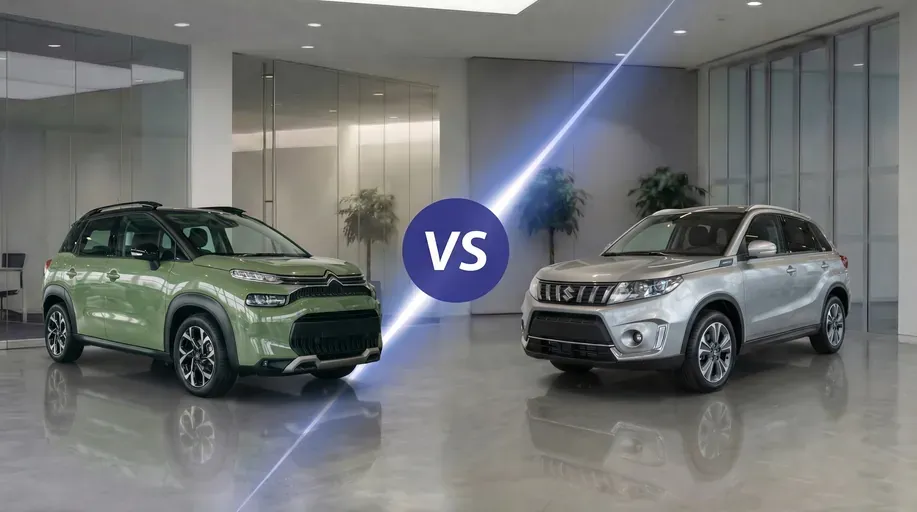
Detailed comparison of used SUVs Citroën C3 Aircross and Suzuki Vitara. Find out the differences in engines, equipment, or reliability and read our final verdict.
Apr 13, 2026