Articles

Car battle

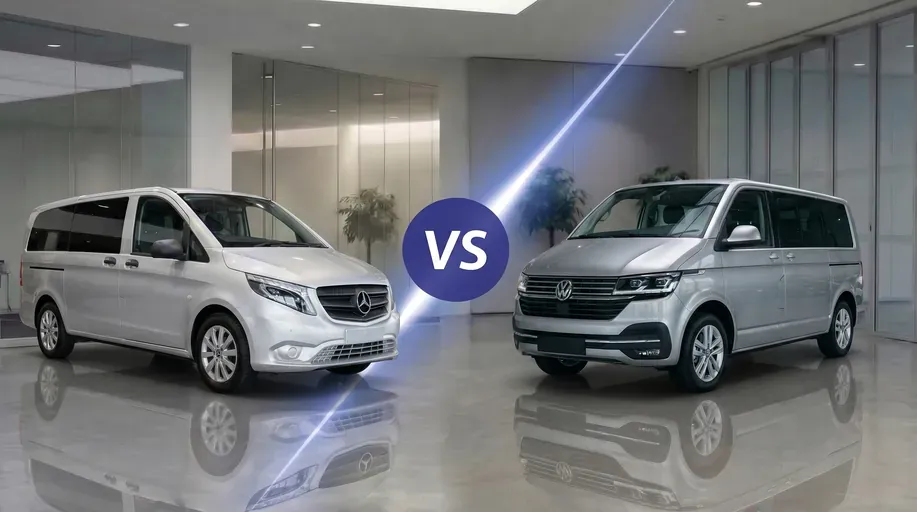
Mercedes-Benz Vito Tourer vs. Volkswagen Multivan: Complete comparison 2026

Comparison: Mercedes-Benz Vito Tourer vs. Volkswagen Multivan. Discover real-world experiences, equipment details, and the final verdict that will make choosing a van easier.

April 20, 2026

VS
Mercedes-Benz Vito Tourer

Mercedes-Benz Vito Tourer

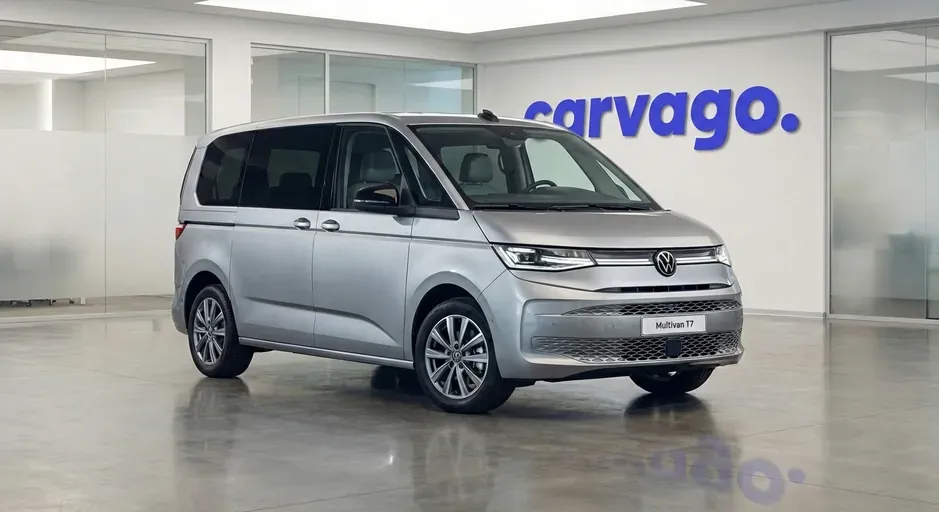
Volkswagen Multivan

Volkswagen Multivan

Introduction

Mercedes-Benz Vito Tourer, also known as the Metris or V-Class in some overseas markets and in its more luxurious specifications, represents an exceptionally practical and versatile passenger variant of the popular commercial vehicle from Stuttgart. Its challenger today is the Volkswagen Multivan, a more premium-oriented passenger version of the iconic Transporter model, which, in its other passenger and family derivatives, also bears the name Caravelle or its historical and popular nickname Bulli. Let's take a detailed look together at how these two popular large-capacity rivals stand in a head-to-head battle and which of them offers a better solution for your needs on the used car market.

Comparison of External Dimensions

When looking at models approximately four years old, which are typical representatives of the used car market (production year around 2022), we encounter a very interesting generational and conceptual clash. The Mercedes-Benz Vito Tourer is offered in the proven W447 generation after its facelift, while the Volkswagen Multivan represents the newer T7 generation, which for the first time in history switched to the MQB passenger car platform. Although both vehicles can be parked without problems in standard underground garages thanks to a height safely below the two-meter limit, their overall approach to external dimensions differs fundamentally in several respects.

The biggest difference lies in the overall length and wheelbase. Mercedes-Benz offers the Vito Tourer in three body lengths (compact, long, and extra-long), with the longest measuring an impressive 5370 mm with a massive wheelbase of 3430 mm. The competing Volkswagen Multivan T7 is available in only two length variants (standard 4973 mm and extended 5173 mm, both sharing the same wheelbase). The longest Vito is thus 197 mm longer than the longest Multivan and offers a 306 mm longer wheelbase. For practical use, this means that the Mercedes can offer unrivaled legroom for passengers and a more voluminous luggage compartment even when all seats are occupied.

On the other hand, the Volkswagen Multivan has a slight advantage in overall body width, where at 1941 mm it surpasses its Stuttgart competitor by 13 mm. This gives passengers a slightly airier feel in the interior, especially in the shoulder area. The noticeably shorter wheelbase of the Multivan (3124 mm) together with the modern automotive platform guarantees better agility and a smaller turning radius. As a driver, you will appreciate this feature especially when weaving through narrow city streets, in cramped shopping centers, or during parallel parking.

ParameterMercedes-Benz Vito Tourer VanVolkswagen Multivan Van
Width (mm)19281941
Length (mm)4895 - 53704973 - 5173
Height (mm)1890 - 19181903 - 1909
Wheelbase (mm)3200 - 34303124

In conclusion, the choice between these two large-capacity vehicles based on external dimensions depends entirely on your daily needs. If maximum transport capacity is your absolute priority, you often need to transport a large family along with a pile of luggage, and you don't mind the more challenging parking of a long body, the Mercedes-Benz Vito Tourer (especially in the extra-long version) is the clear favorite. If, on the other hand, you are looking for a more agile and driver-friendly family car that is much closer to a classic passenger car in its proportions and maneuverability, the Volkswagen Multivan will be a significantly more pleasant choice for everyday city traffic.

Trunk Volume

Luggage space is often the most important argument for buying a large family van, as it directly determines whether the vehicle can comfortably transport not only a large family but also their complete equipment for longer trips. The Mercedes-Benz Vito Tourer (W447 generation) and the Volkswagen Multivan (in the modern T7 generation, which is currently very popular as a roughly four-year-old used car) approach the question of interior space with a slightly different philosophy. While Mercedes bets on raw volume supported by a choice of three different body lengths, Volkswagen focuses more on maximum interior variability with an innovative rail system of lightweight individual seats.

Looking at the specific numbers, Mercedes-Benz Vito Tourer offers a base volume behind the third row of seats starting from approximately 580 liters for the shortest Compact version, through 1 030 liters for the medium Long variant, up to a generous 1 410 liters for the longest Extra-long version. This makes it a confident and spacious workhorse that easily offers room for several extra suitcases even when fully occupied. In contrast, the Volkswagen Multivan T7 generation, which has fully transitioned to a passenger car platform, offers a base trunk volume of 469 liters in the standard length and 763 liters in the extended Long version. While the Multivan lags slightly behind the fully occupied Vito in absolute numbers, its huge advantage is the flexibility of the layout.

When the rear seats are folded or completely removed, both vehicles literally become moving vans, with maximum transport capacity reaching absolutely staggering values. The Vito Tourer in its longest specification swallows up to 4 030 liters (and over 3 200 liters for the shortest version). The Multivan T7 is no worse – after folding or removing the seats behind the first row, it offers 3 672 liters for the standard and 4 053 liters for the extended variant. An important factor for used car buyers is that electrified versions exist for both models (plug-in hybrid for VW and the fully electric eVito Tourer for Mercedes). In these modern variants, the batteries are cleverly integrated directly into the floor, so the internal volume is preserved and the space remains perfectly sufficient for weekend shopping or bulky camping gear. Trunk volume is thus a matter of preference when deciding: Mercedes serves those who need a large base space at all times, while Volkswagen is for those who like to change the car's configuration according to the current situation.

ParameterMercedes-Benz Vito Tourer VanVolkswagen Multivan Van
Base volume (liters)580 - 1410469 - 763
Max volume with seats folded down (liters)3200 - 40303672 - 4053

Personal space vs. utility volume 🚐

The Mercedes-Benz Vito Tourer offers a massive base volume for luggage without the need to manipulate the seats, while the Volkswagen Multivan scores with unrivaled variability and easy adaptation of the interior space to current family needs.

Discover the true condition of the car thanks to an independent inspection

Order CarAudit™

Trailer Weights

Towing capacity is a crucial parameter for those interested in large vans, as it fundamentally affects the overall practicality of the vehicle – whether it's for transporting construction materials or towing large family caravans. Both compared vehicles offer somewhat different options in this regard, depending on the chosen powertrain and the specific generation available on the four-year-old used car market.

In the Mercedes-Benz Vito Tourer (W447 generation), the maximum and standard braked trailer weight is most often 2000 kg. You get this towing power with the popular 114 CDI, 116 CDI, 119 CDI, and the top-of-the-line 124 CDI diesel engines. However, if you opt for the weaker base 110 CDI version, the maximum towing capacity drops to 1000 kg. In contrast, the Volkswagen Multivan offers an extraordinary maximum capacity of up to 2500 kg within the highly sought-after previous T6.1 generation. With the arrival of the latest T7 generation, built on a platform shared with passenger cars, the standard and maximum value for regular combustion versions has settled at exactly 2000 kg.

Significant differences are mainly represented by models with alternative powertrains. The electric Mercedes-Benz eVito Tourer has no towing capacity for a braked trailer at all for structural reasons, and the plug-in hybrid Volkswagen Multivan T7 eHybrid offers a reduced capacity limited to 1600 kg.

In everyday life, these values have clear practical consequences. Even the reduced capacity of hybrid and base versions provides space for a few extra suitcases when using a light trailer, which is perfectly sufficient for weekend shopping or a longer holiday. Conversely, powerful diesel variants with a capacity of around two tons will pull a large family boat or a heavy twin-axle caravan without hesitation.

Final summaryIf towing truly heavy loads daily is your top priority, traditional powerful diesel engines (such as the 119 CDI for the Vito or the 2.0 TDI for the previous Multivan T6.1) are a safe bet. If, on the other hand, you are looking more for a large family transporter and will only use the tow bar for mounting a bike rack or towing small garden waste, you will easily get by with the newer hybrid versions with limited capacity.

Since the database did not provide tabular values for the Volkswagen Multivan model, the overview below summarizes the capacities purely for the Mercedes-Benz Vito Tourer in the generation currently in demand on the used car market.
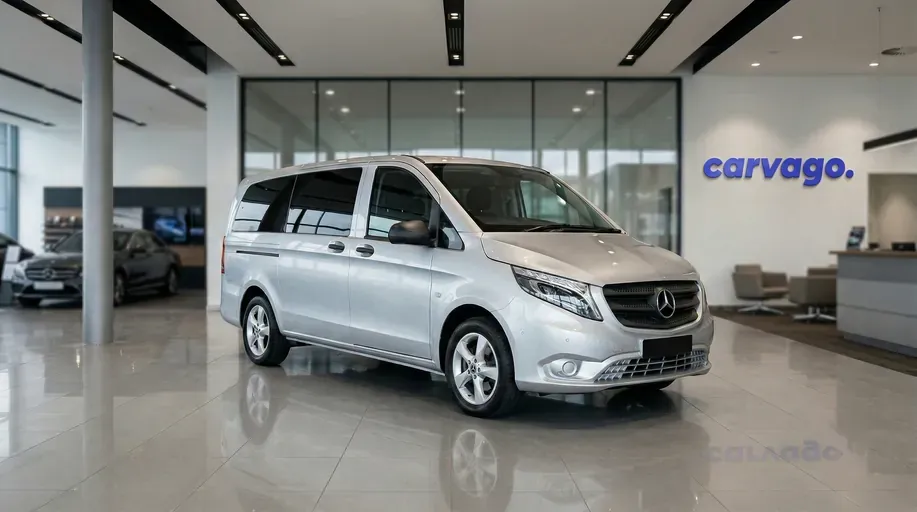
Model and motorizationBraked weight of trailer (kg)Unbraked weight of trailer (kg)
Mercedes-Benz Vito Tourer 110 CDI (75 kW)1000750
Mercedes-Benz Vito Tourer 114 CDI (100 kW)1800 - 2000750
Mercedes-Benz Vito Tourer 116 CDI (120 kW)2000750
Mercedes-Benz Vito Tourer 119 CDI (140 kW)2000750
Mercedes-Benz Vito Tourer 124 CDI (174 kW)2000750
Mercedes-Benz eVito Tourer (60-90 kWh)Not specifiedNot specified

Overview of Most Common Motorizations

Engine Comparison: Diesel Diversity vs. Hybrid Innovation

When choosing a roughly four-year-old used car in terms of engine options, both models represent different philosophies reflecting their origins. The Mercedes-Benz Vito Tourer (W447 generation) leans heavily on its commercial roots, offering an exceptionally wide range of diesel engines that satisfy both fleet customers looking for maximum savings with front-wheel drive and demanding drivers requiring strong torque and all-wheel drive. On the other hand, the Volkswagen Multivan in its revolutionary T7 generation (introduced at the turn of 2021 and 2022) switches to the MQB passenger car platform and, alongside the traditional four-cylinder diesel, places great emphasis on petrol units and modern plug-in hybrid technology. While the Mercedes-Benz excels on long highway routes or when towing heavy trailers, the Volkswagen scores with refinement, lightning-fast dual-clutch transmissions, and the possibility of emission-free city driving thanks to the eHybrid version.

Mercedes-Benz Vito Tourer (W447 generation)

The range of power units for the Vito Tourer has historically been very extensive; however, for used cars around four years old, the market focuses on the most modern evolution of diesel four-cylinders, mostly paired with the excellent nine-speed 9G-TRONIC automatic transmission (or the older 7G-TRONIC PLUS) and optional all-wheel drive. As manufacturer data shows, the basic weaker 109 CDI and 111 CDI engines from the first years of production (discontinued in 2018) are no longer offered in this modern four-year-old vehicle segment, nor is the earlier 110 CDI variant, whose sales within the W447 generation ended around 2020. The core of the market today consists of the reliable 114 CDI and 116 CDI units, complemented by the very dynamic 119 CDI version and the top-of-the-line 124 CDI model, which offers up to 174 kW of power. In addition to conventional internal combustion engines, the fully electric eVito Tourer model with a 150 kW electric motor and 60 or 90 kWh batteries has also firmly established itself in the lineup.

Engine typeFuelPower (kW)Torque (Nm)Transmission
114 CDIDiesel1003306MT / 7G-TRONIC / 9G-TRONIC
116 CDIDiesel1203807G-TRONIC / 9G-TRONIC
119 CDIDiesel1404407G-TRONIC / 9G-TRONIC
124 CDIDiesel1745009G-TRONIC
eVito Tourer (60/90 kWh)Electricity1503621-speed automatic

Volkswagen Multivan (T7 generation)

The seventh generation of the Multivan (T7), which makes up the majority of currently roughly four-year-old used cars, brought a revolution under the hood of this iconic vehicle. The use of a passenger car platform meant the definitive end of manual transmissions and heavy commercial engines – all versions are now exclusively paired with fast DSG dual-clutch automatics and drive the front wheels as standard. Furthermore, the focus of the range has shifted. Although the economical 2.0 TDI diesel unit is still present and sought after, customers can also choose from very quiet and flexible 1.5 TSI and 2.0 TSI petrol engines. However, the biggest innovation and an interesting choice for modern buyers has become the 1.4 eHybrid version. This plug-in hybrid combines a turbocharged 1.4-litre petrol engine with a powerful electric motor, with the system output reaching an impressive 160 kW.

Engine typeFuelPower (kW)Torque (Nm)Transmission
1.5 TSIPetrol1002207DSG
2.0 TSIPetrol1503207DSG
2.0 TDIDiesel1103607DSG
1.4 eHybridPlug-in Hybrid1603506DSG

Reason vs. Innovation 💡

While the Mercedes-Benz Vito Tourer wins with drivers covering huge highway distances thanks to its robust and powerful diesel engines, the Volkswagen Multivan T7 is the ideal choice for those who appreciate passenger car agility and the possibility of an emission-free daily routine thanks to its successful plug-in hybrid.

Choosing the right engine is absolutely crucial for your long-term satisfaction with the vehicle, which is why our recommendations are based on a combination of real-world performance, actual fuel consumption, long-term owner feedback, and proven mechanical reliability. When looking at roughly four-year-old used cars from both brands, you will encounter different technical philosophies. While Volkswagen has carefully refined the years-proven technology of the EA288 engine series for its T6.1 generation Multivan, Mercedes-Benz took a somewhat more revolutionary approach with the Vito Tourer. Since 2019, it has gradually introduced a brand-new generation of all-aluminum two-liter diesels (OM654), focusing on significant weight reduction, improved refinement, and increased efficiency.

ModelRecommended enginePowerTorqueReal consumption
Mercedes-Benz Vito Tourer116 CDI (OM654)120 kW (163 hp)380 Nm7.0 – 8.0 l/100 km
Volkswagen Multivan (T6.1)2.0 TDI (EA288)110 kW (150 hp)340 Nm7.5 – 8.5 l/100 km

If you look closely at the database records and the years of availability for individual versions (AVAILABLE_YEARS), you will discover an interesting development. Older versions of the Mercedes 116 CDI, which used the older 7G-TRONIC PLUS automatic transmission (available mainly between 2015 and 2019), are no longer found in the latest configurations on the nearly-new used car market. This technology was completely and very successfully replaced by the improved nine-speed 9G-TRONIC PLUS automatic (available in models from 2019–2024), which we definitely recommend focusing on for an ideally four-year-old used car.

For the Mercedes-Benz Vito Tourer, we recommend: 116 CDI, 120 kW

This modern 2.0-liter diesel engine is the absolute ideal in the Vito Tourer family (W447 generation). It offers clearly the best compromise between purchase costs, everyday dynamics, and real-world operating expenses.

  • Technical advantages: Compared to its long-standing predecessor (2.1 l OM651), the new OM654 engine is noticeably quieter and free of typical diesel clatter. You have 120 kW of power and a substantial 380 Nm of torque ready under your right foot from an excellent 1,350 rpm. In combination with the cleverly geared nine-speed 9G-TRONIC transmission, the engine maintains very low revs on the highway, keeping real-world consumption at fantastic values between 7 and 8 liters.
  • Potential risks and their solutions: Pay increased attention to the emission system. How to detect a potential problem: Before purchasing, use auto-diagnostics to read errors in the control unit and determine the soot level of the diesel particulate filter (DPF). If you only use the vehicle for short city trips, the filter will fill up quickly, and related NOx sensors may also fail, resulting in a costly limp mode. The remedy, from an experienced mechanic's perspective, is to take a longer highway trip at least twice a month to allow for natural and safe DPF regeneration.
  • Who it's for: It is a perfect choice for long-distance travelers, demanding families with lots of children and luggage, or for companies providing professional shuttle services. It simply excels at swallowing highway kilometers.

For the Volkswagen Multivan, we recommend: 2.0 TDI, 110 kW

When looking for a reliable, roughly four-year-old Multivan of the very popular T6.1 generation, we strongly advise aiming directly for the "golden middle ground" – the proven single-turbo 2.0 TDI diesel engine with 110 kW. In the service world, this version is considered by far the most durable.

  • Technical advantages: This mass-produced engine (EA288 series) represents a solid workhorse. It has 340 Nm of torque, which is perfectly sufficient for normal and comfortable travel. The main advantage lies in its simplicity – it lacks the second turbo from the more powerful but more problematic BiTurbo version (which in the past troubled owners with cracking EGR coolers and enormous oil consumption). Pairing it with the seven-speed dual-clutch DSG gearbox makes sense and rewards you with reasonable consumption of around 7.5 to 8.5 liters during normal driving.
  • Potential risks and their solutions: Even the legendary "T-series" is not indestructible. What to watch out for: Primarily look for a clearly documented service history. If the previous owner shortened the oil change intervals from the recommended 30,000 km to half, you've won. Also, verify the timing belt replacement interval. Just like with the Vito, there is a risk of DPF clogging from short urban trips. If the exhaust tip is heavily coated in black soot, the filter itself has likely failed, and a high investment is on the horizon.
  • Who it's for: A Multivan with this heart is the ideal partner for practically-minded drivers who love active weekends in the mountains or on bikes, but the vehicle will also serve well if you head out for the usual round of after-school clubs and schools in the city during the week.

Real Fuel Consumption

Official fuel consumption figures provided by manufacturers often differ significantly from real-world driving, especially for large and heavy vehicles such as passenger vans and minibuses. If you are looking for reliable data, it is best to look at real-world driving data. For this comparison, we have therefore used real values from the crowdsourced platform Spritmonitor.de, which reflect the daily experiences of drivers with model generations typical for the nearly-new used car market, approximately four years old (Mercedes-Benz Vito Tourer W447 and Volkswagen Multivan T7).

Source: Spritmonitor.de

Model and engineAverage consumption (l/100 km)
Mercedes-Benz Vito Tourer 114 CDI (100 kW)7.3
Mercedes-Benz Vito Tourer 116 CDI (120 kW)7.4
Volkswagen Multivan 2.0 TDI (110 kW)7.5
Mercedes-Benz Vito Tourer 119 CDI (140 kW)7.8
Volkswagen Multivan 1.5 TSI (100 kW)8.2
Volkswagen Multivan 1.4 eHybrid (160 kW)5.5

Looking at the collected data, it is clear that the diesel engines of both brands offer very similar and balanced efficiency. CDI diesel engines in the Mercedes prove to be admirably economical thanks to sophisticated aerodynamics and an efficient nine-speed automatic transmission, with even the powerful 119 CDI version showing no drastic increase in appetite. In contrast, for the Volkswagen Multivan, the base 1.5 TSI petrol engine is a surprise, as it has quite a lot of work to do with the vehicle's weight, which is reflected in consumption safely exceeding the eight-liter mark – the widespread trend of engine downsizing simply hits the laws of physics here. A very interesting alternative is the 1.4 eHybrid plug-in hybrid version of the Multivan. While it promises exceptionally low consumption, the real long-term average of 5.5 l/100 km assumes strict discipline and honest daily battery charging. If you drive with a discharged battery, consumption quickly rises to the levels of classic petrol engines.

For regular users, these trends mean only one thing: the choice of the ideal engine should primarily depend on your driving profile. If you are looking for a highway cruiser for long family vacations or regular business trips, the diesel variants of both models (the sweet spot in the form of the 116 CDI and 2.0 TDI) represent an absolute safe bet with consistent and predictable consumption even when fully loaded. Petrol versions of the Volkswagen only make sense to consider for lower annual mileage, while the plug-in hybrid is a great solution for suburban travel, where during the week you use the pure electric range for commuting to work or taking children to after-school activities.

In terms of fuel consumption, it is impossible to determine a clear winner. Both the Mercedes-Benz Vito Tourer and the Volkswagen Multivan offer highly competitive and practically identical values in their key diesel specifications. Therefore, consumption itself will likely not be the main deciding factor. A much larger role will be played by the preferred way of use, interior variability, or the option of choosing an advanced plug-in hybrid drive, which in this generation is offered exclusively by Volkswagen out of this pair.

Price Range and Used Car Offerings

Used Car Price Range: Mercedes-Benz Vito Tourer vs. Volkswagen Multivan

Looking at the used car market for vehicles around four years old (approximately 2021 to 2022 models), we find that both models are excellent value retainers, but their price dynamics differ significantly. While the Mercedes-Benz Vito Tourer (W447 generation after the facelift) is considered a more pragmatic and affordable alternative to the luxury V-Class, the Volkswagen Multivan (especially the popular T6.1 generation and early T7 versions) is a true market phenomenon with abnormally low depreciation.

Parameter (models ~4 years old)Mercedes-Benz Vito Tourer (W447)Volkswagen Multivan (T6.1 / T7)
Estimated starting pricefrom approx. €33,000from approx. €41,000
Average price for a well-equipped unit€39,000 – €47,000€49,000 – €60,000
Top-tier versions (4x4, premium equipment)around €54,000€62,000 and more
Value drop (depreciation)Stable and predictableExtremely low (almost zero for T6.1)

What influences the price of the Mercedes-Benz Vito Tourer?

  • Rational choice: In the used car market, the Vito Tourer scores primarily with its utility value and reliability. It lacks the premium "glitz" of its V-Class sibling, which in practice means that as a four-year-old used car, it offers a much more attractive ratio between the purchase price and the interior space provided.
  • Valued engines: Used cars labeled 119 CDI and 124 CDI (often paired with 4MATIC all-wheel drive and the 9G-TRONIC nine-speed automatic) hold their value by far the best on the secondary market. Basic versions with single-axle drive depreciate significantly faster.
  • Configuration impact: There is greater interest in nine-seater versions or the Extra Long variant (the longest body), which are sought after by large families and shuttle service operators.

What influences the price of the Volkswagen Multivan?

  • The T6.1 Cult: The years 2021 and 2022 represent a turning point for Volkswagen. A huge portion of buyers in the used market specifically seek out the "last true Multivan," the T6.1 generation based on a commercial vehicle platform, as the subsequent T7 moved to the MQB modular passenger car platform. This sentiment pushes the prices of well-maintained T6.1 used cars to astronomical heights.
  • Unrivaled variability: The iconic floor rail system is a huge draw in the used car market. The ability to smoothly slide and rotate seats or manipulate the folding table is an argument for which customers are very happy to pay thousands of euros extra.
  • Premium editions: Rarer models with characteristic two-tone paintwork and top-tier equipment (e.g., Generation Six or Highline with 4Motion drive) disappear from listing sites in a flash, even when their price tags approach or even exceed the €62,000 mark.

From a used market perspective, the Vito Tourer is an economically more accessible and pragmatically more sensible option for those primarily looking for robust space. The Multivan, on the other hand, is an investment in a specific lifestyle – while it requires a significantly higher initial sum, it guarantees that if you sell it again in a few years, you will get a substantial part of your money back.

Reason vs. Cult Icon 🚐

While the Mercedes-Benz Vito Tourer offers an excellent price-to-interior-space ratio with a more rational price tag as a used car, the Volkswagen Multivan requires a significantly higher initial investment, which it compensates for with unrivaled value retention and a legendary interior.

Safety and Euro NCAP Rating

Both vehicles boast a maximum five-star rating in Euro NCAP safety tests, but it is crucial to put these results into the context of when they were actually tested. Euro NCAP methodology and testing protocols are constantly evolving and becoming significantly stricter over the years. While a good passive crash protection and basic electronic stability control used to be enough to earn full stars in the past, today's standards place extreme emphasis on advanced assistance systems, such as automatic braking with cyclist recognition or vehicle behavior at intersections. For this reason, percentage scores from different years cannot be directly compared – a car awarded five stars ten years ago would most likely not pass today's screening with the same equipment.

Passenger variants of the Mercedes-Benz Vito model range (which includes the more luxurious V-Class, whose Euro NCAP results are fully applied to the Vito Tourer) underwent comprehensive safety tests in 2014. Although the vehicle achieved a great five stars at the time and took home an impressive 93% for adult passenger protection, the certification is based on a long-obsolete methodology. From today's perspective, the validity of this passenger test has expired. Testing procedures at the time did not include modern simulations of side pole impacts at sharp angles or complex detection of pedestrians crossing from behind stationary vehicles. Although the manufacturer has continuously improved the Vito's assistance systems (the model recently performed excellently in separate tests of purely commercial vans), the basic structure of the vehicle and the percentage ratings from passenger tests do not meet the strictest standards of the current decade.

The Volkswagen Multivan (T7 generation), which is a direct competitor to the Vito Tourer in the market for roughly four-year-old used cars, by contrast, underwent Euro NCAP testing much more recently, in 2022. Its five-star rating was subject to relentless modern protocols. The Multivan thus had to prove its safety in demanding scenarios involving emergency braking system reactions to oncoming vehicles, saving cyclists when turning, or the presence of an advanced center airbag preventing collisions between occupants' bodies. The results brought top-tier adult protection (90%) and a very confident 89% for child protection. The score for vulnerable road users (69%) is standard for such bulky vehicles due to harder front sections, but in the area of safety assistants, the Volkswagen earned a modern and fully valid 87%.

In overall comparison, therefore, while both family vans offer a huge and robust living space, which is in itself a guarantee of great safety, the Volkswagen Multivan provides much more comprehensive and modern protection. Its technology and the body architecture itself keep pace with the strictest current requirements.

ParameterMercedes-Benz Vito TourerVolkswagen Multivan
Year of testing20142022
Adult occupant protection93 %90 %
Child occupant protection87 %89 %
Vulnerable road user protection67 %69 %
Safety assistance systems85 %87 %

Modern times decide 🛡️

Even though the Mercedes-Benz Vito Tourer still benefits from its massive and sturdy construction today, the Volkswagen Multivan, thanks to the 2022 tests, represents an unquestionably more advanced choice for the family buyer with fully modern protective features.

Comparison of Interesting Equipment Features

In addition to standard equipment, each of the models offers several unique features that can be decisive for the customer, as they approach added value and everyday usability quite differently.

Mercedes-Benz Vito Tourer: Practical Versatility and Star Comfort

  • Variability and passenger space: The Vito Tourer excels in its immense interior flexibility. Thanks to floor-mounted guide rails with a quick-release system, the interior can be easily configured for up to 9 passengers. Furthermore, the used car market offers a choice of three body lengths (compact, long, and extra-long), allowing the ratio of passenger space to luggage capacity to be precisely tailored.
  • Chassis and comfort: Unlike common competitors in the commercial segment, the Vito Tourer offers the option of AIRMATIC air suspension. This system can adapt the damping to the current road conditions and load, significantly increasing driving comfort and stability, especially when fully occupied on long motorway journeys.
  • Driver Assistance Systems (ADAS): The safety equipment benefits heavily from the know-how of the Mercedes-Benz passenger car division. Available features include DISTRONIC adaptive cruise control, Active Brake Assist, and the practically very useful Crosswind Assist, which is invaluable for a vehicle with such a large side surface at motorway speeds. A clever detail is also the digital interior rearview mirror, which ensures a perfect view to the rear even when the vehicle is loaded to the roof.
  • Infotainment and on-board systems: Facelifted models (from 2020 onwards) feature improved Audio 30 or Audio 40 systems with a 7-inch touchscreen, bringing essential Apple CarPlay and Android Auto integration to a cabin primarily oriented towards long-term durability.
  • Electric alternative: A major specialty of the model is the eVito Tourer version. Among roughly four-year-old used cars, you can already find versions with a large battery (usable capacity of 90 kWh), which offer a specified range of over 400 km and fast charging. In this class, this is a strong argument for urban shuttle services or emission-free hotel transfers.

Volkswagen Multivan: Digital Revolution and Smart Modular Interior

  • Platform and driving characteristics: The introduction of the T7 generation at the end of 2021 completely changed the rules of the game by switching to the MQB Evo platform, which it shares with classic passenger cars (such as the Golf). The result is a level of soundproofing, driving stability, and overall comfort that is much closer to a passenger car than a traditional van.
  • Modular seats and smart table: The heavy rear bench from previous generations is a thing of the past in the T7. The Multivan relies on individual rear seats that are 25% lighter, easy to remove, slide along long rails, or rotate 180 degrees into the popular conference configuration. An absolutely ingenious feature is the multifunctional table, which can be smoothly moved along the rails throughout the entire vehicle – from the third row all the way between the front seats, where it can fold into an elegant center console at the touch of a button.
  • Modern powertrains led by eHybrid: A significant specific feature is the availability of the eHybrid plug-in hybrid version (a combination of a 1.4 TSI engine and an electric motor). In real life, this allows for emission-free commuting within the city (electric range is roughly 45–50 km), while relying on a conventional internal combustion engine and a smooth-shifting DSG transmission for long motorway and weekend trips.
  • Cabin digitalization: The driver's cockpit says goodbye to classic buttons and feels exceptionally clean. A 10.25-inch Digital Cockpit and touchscreen infotainment with wireless smartphone connectivity (App-Connect) are standard.
  • Family luxury and technology: For everyday life with a family, a major advantage is the optional touchless opening of the side sliding doors and the tailgate with a simple wave of the foot under the bumper (Easy Open). Furthermore, in this generation, the Multivan T7 offers the option of a huge panoramic sunroof for the first time, which visually opens up the entire interior and offers a great view.

Key Advantages and Disadvantages

Mercedes-Benz Vito Tourer

Pros

Available in three body lengths with immense interior and luggage space

Reliable and fuel-efficient diesel engines paired with the smooth 9G-TRONIC nine-speed transmission

More durable and easier-to-maintain interior materials, ideal for demanding business or family use

Choice of rear-wheel or all-wheel drive (AWD) for confident traction

Usually a lower purchase price on the used car market compared to the more luxurious V-Class or Multivan

Cons

More outdated infotainment and generally sparser standard equipment

Poorer cabin soundproofing at highway speeds due to its closer relationship with commercial models

Less versatile rear seat system (often heavy and difficult-to-handle bench seats)

The Mercedes-Benz Vito Tourer represents a pragmatic choice for large families, hotels, or companies looking for a robust and exceptionally spacious vehicle without unnecessary luxury frills. While its commercial roots mean a simpler interior and weaker soundproofing, it fully compensates with reliable technology, vast space, and a more favorable price-to-value ratio.

Volkswagen Multivan

Pros

Unrivaled interior versatility with sliding and swiveling seats on rails (including a folding table)

Driving characteristics and comfort approaching those of passenger cars (especially in the T7 generation on the MQB platform)

Modern technology, a more intuitive digital instrument cluster, and advanced assistance systems

Extremely strong residual value and sustained interest in the used car market

Availability of the eHybrid plug-in hybrid powertrain in newer models (T7) for locally emission-free operation

Cons

Significantly higher purchase price on the used car market

Smaller maximum luggage capacity compared to the longest versions of the Vito Tourer

Occasional software glitches in the infotainment system during the first production years of the T7 generation

The DSG dual-clutch transmission can jerk slightly during very slow crawling or parking

The Volkswagen Multivan is an iconic benchmark in its class, perfectly combining the everyday drivability of a passenger car with maximum interior flexibility. It primarily appeals to active families and travelers who require a smart modular interior, modern technology, and excellent comfort, and are willing to pay extra for prestige and excellent value retention.

Common Problems and Owner Complaints

Based on our own statistics, service reports, recall actions, and user feedback, we have compiled an overview of the most common problems that buyers of roughly four-year-old used cars should watch out for.

The Mercedes-Benz Vito Tourer W447 generation (post-facelift) is considered a robust and reliable workhorse as well as a family car, yet certain typical faults can occasionally occur.

  • Engines and emission systems: With the popular diesel engines (especially the more modern OM654 family), problems with the SCR system (AdBlue injection) and faulty NOx sensors appear. If the warning light comes on, sensor replacement or a software update is often necessary.
  • Chassis and suspension: Versions equipped with the optional Airmatic air suspension offer great comfort, but as mileage increases, air leaks from the bellows or compressor wear can occur. Therefore, we always recommend a comprehensive car inspection before purchase.
  • Electronics and infotainment: Users occasionally report freezing of the onboard system's touchscreen and connection drops with mobile phones (Apple CarPlay / Android Auto). This problem is often resolved by a software update at an authorized service center.
  • Interior and build quality: Given the Vito's more utilitarian origins, noises from the side sliding doors or creaking of harder plastics on the dashboard may appear in the cabin a bit sooner.

Mercedes-Benz Vito Tourer: Robust foundation, but watch out for AdBlue

The Vito Tourer benefits from reliable mechanics and durable engines, so the most common concerns for owners are more likely to be emission system sensors and occasional interior creaking. The optional air suspension requires careful inspection before purchase.

The Volkswagen Multivan (especially in the very popular T6.1 generation) offers premium travel and versatility; however, given its significant weight and technical complexity, attention must be paid to several risk areas.

  • Engines and DPF: The most powerful diesel versions with twin-turbocharging (Bi-TDI) require exceptionally careful servicing and suffer from faster clogging of the diesel particulate filter (DPF) during frequent short trips. Problems with a clogged EGR valve occasionally appear across all TDI engines.
  • DSG Gearbox: The seven-speed dual-clutch transmission works perfectly only if strict adherence to oil changes every 60,000 km is maintained. Neglected maintenance leads to expensive mechatronics failures. It is always a good idea to request an Independent technical inspection of the car to verify its complete service history.
  • Chassis and brakes: The Multivan's high kerb weight puts heavy strain on the chassis. Very rapid wear of brake discs and pads is a common occurrence, as is wear on ball joints, bushings, and control arm mounts on the front axle.
  • Electronics and bodywork: A known pain point of the T6.1 generation is the modern MIB3 infotainment, which suffers from freezing, long loading times, and connectivity outages. Among physical ailments, owners often deal with leaking sliding windows in the rear of the vehicle, through which water can leak into the interior.

Volkswagen Multivan: Luxury redeemed by more demanding service

The Multivan is a top-tier family cruiser, but it requires careful maintenance of the DSG gearbox and, for the most powerful engines, increased attention to emission systems. The service bill can also be inflated by a faster-wearing chassis or malfunctioning onboard electronics.

Tips for Buying a Used Car

When buying a used car, a thorough inspection is key. Both models have their specifics and weak points that need to be watched out for. A professional Physical inspection of a used car can help in this regard, revealing any hidden defects before you invest in the car.

When choosing a Mercedes-Benz Vito Tourer:

  • Check the condition and smoothness of the automatic transmission: Most four-year-old models on the market are equipped with the 9G-Tronic nine-speed automatic. During the test drive, watch closely for any jerking when pulling away slowly or when downshifting. Also, insist on documentation of the transmission oil change history.
  • Check the air suspension (Airmatic): If the car is equipped with the optional air suspension, focus on its functionality. During the inspection, try changing the vehicle's ride height and listen for any excessive or rattling noise from the compressor. The car must also not sag to one side after standing for a longer period.
  • Functioning of sliding doors and rails: For heavy side doors (especially those with electric drive), check the cleanliness of the rails and the condition of the guide bearings. The doors must open and close smoothly, without rubbing or unusual sounds that would indicate expensive wear on the mechanism.
  • Condition of the DPF filter and AdBlue in OM 654 engines: These modern diesel engines are very reliable, but if the car has been driven mainly on short city routes (which is often the case with hotel transfers), the particulate filter can become clogged and NOx sensor faults can occur. Always request a diagnostic fault memory readout.
  • Interior wear and usage history: The Vito Tourer very often serves as a company "shuttle" or taxi. An independent technical inspection should include a careful assessment of the wear on seat bolsters, the steering wheel, and pedals to rule out any suspicion of a clocked odometer on imported cars.

When choosing a Volkswagen Multivan:

  • Functionality and behavior of the DSG transmission: The seven-speed dual-clutch DSG transmission (especially type DQ500) requires regular maintenance with an oil change every 60,000 km. During the test drive, stop on a hill and pull away smoothly – the car should not hesitate or jerk. Jerking, shocks, or delays when shifting indicate worn clutches or mechatronics.
  • Software and infotainment behavior (MIB3): In the T6.1 generation (and early T7 versions), owners often complained about infotainment freezing and connectivity dropouts. During the inspection, test all display functions, connect the system to your phone, and verify if the latest software update is installed in the car.
  • Condition of 2.0 TDI engines and cold starts: For two-liter diesels, listen carefully to the engine running when cold. Fluctuating idle speed, delayed throttle response, or smoke from the exhaust after starting can point to emerging problems with the EGR valve or injectors.
  • Verification of the all-wheel drive system (4Motion): If you are looking at a version with all-wheel drive, focus on sounds from the rear axle during full steering lock at low speed during the drive. A faulty Haldex clutch pump or neglected oil changes in the system often manifest as humming or slight vibrations.
  • Corrosion and bodywork wear: Although it is a relatively expensive vehicle, the Multivan T6.1 can suffer from paint damage and surface corrosion around door handles, under sliding door seals, or at the edge of the tailgate. A thorough comprehensive pre-purchase inspection should focus on these bodywork details.

FAQ: Most Frequently Asked Questions

In newer generations, the Volkswagen Multivan uses an advanced system of lightweight individual seats on rails, which allows for very easy reconfiguration or complete removal. The Mercedes-Benz Vito Tourer also offers a rail system, but its seats and benches are heavier and harder to handle during reconfiguration. Therefore, the Multivan is a more practical and user-friendly choice for frequent interior changes.

The newer Volkswagen Multivan (especially the T7 generation) is built on a passenger car platform, providing a smoother and more comfortable ride that is more similar to a classic estate car. While the Vito Tourer has an excellently tuned chassis, its commercial vehicle origins are slightly more noticeable over larger bumps. For regular family travel and city maneuvering, the Multivan is a bit more refined.

For the Vito Tourer, Mercedes-Benz relies primarily on exceptionally reliable and economical diesel engines that easily handle high motorway mileages. In contrast, the Volkswagen Multivan offers efficient diesels as well as a popular plug-in hybrid version (eHybrid), which is ideal for daily emission-free city driving. The choice therefore depends on whether you prefer purely long-distance travel or are looking for a compromise for suburban use with the option of home charging.

The Mercedes-Benz Vito Tourer is available on the used car market in three different body lengths, with the longest version (Extra Long) offering absolutely unrivaled luggage space even when fully occupied. The Multivan is mostly available in two lengths, but its total maximum volume lags behind the longest version from Mercedes. If you regularly transport bulky sports equipment for 8 to 9 passengers, the Vito Tourer is the clear winner.

The Mercedes-Benz Vito Tourer with a powerful diesel engine and rear- or all-wheel drive can tow a braked trailer weighing up to 2,500 kg. The Volkswagen Multivan, built on a more modern passenger platform, has a towing capacity limited to a maximum of 2,000 kg for structural reasons, depending on the chosen engine. For owners of heavy caravans, horse trailers, or large boats, the Mercedes-Benz is a significantly more suitable towing vehicle.

Conclusion: Which Model to Choose?

Our Verdict

The duel between these two popular large-capacity vehicles has no clear winner, as each appeals to a completely different group of customers with different priorities on the nearly-new used car market. Mercedes-Benz Vito Tourer represents a rational, exceptionally spacious, and robust workhorse that, thanks to its huge transport capacity and economical diesel engines, perfectly serves the largest families, highway travelers, or shuttle service operators. On the other hand, the Volkswagen Multivan scores with unrivaled interior variability with sliding seats, modern technologies, and comfortable driving characteristics approaching those of a classic passenger car, making it an ideal companion for active families and daily suburban commuting. While the Vito Tourer thus attracts with a significantly better ratio of purchase price to total usable volume, the Multivan reliably justifies its higher price tag with a more agile platform, the availability of a plug-in hybrid powertrain, and an extremely low depreciation of residual value.

Find your ideal car

Sources: ADAC, auto.cz, garaz.cz, chytreauto.cz, autozive.cz, classiccars.cz

This article was prepared using artificial intelligence tools. The section guarantor is Petr Dušek.

Related articles

Car battle

Renault Trafic SpaceClass vs. Volkswagen Multivan: Complete comparison 2026

Detailed comparison of Renault Trafic SpaceClass vs. Volkswagen Multivan. Discover the real differences in space, equipment, and driving characteristics to make the right choice.

May 4, 2026

Car battle

Citroën SpaceTourer vs. Opel Zafira Life: Complete comparison 2026

Detailed comparison of Citroën SpaceTourer and Opel Zafira Life. Find out which family MPV offers better engines, equipment, and space. Read our verdict!

Apr 14, 2026

Car battle

Mercedes-Benz Vito Tourer vs. Volkswagen Caravelle: Complete comparison 2026

Mercedes-Benz Vito Tourer vs Volkswagen Caravelle comparison. Discover the differences in space, equipment, and reliability and read our clear final verdict!

Apr 19, 2026

We accept online card payments as well as wire transfers.

visa payment provider logovisa-electron payment provider logomastercard payment provider logomaestro payment provider logodiners-club payment provider logodiscover payment provider logo