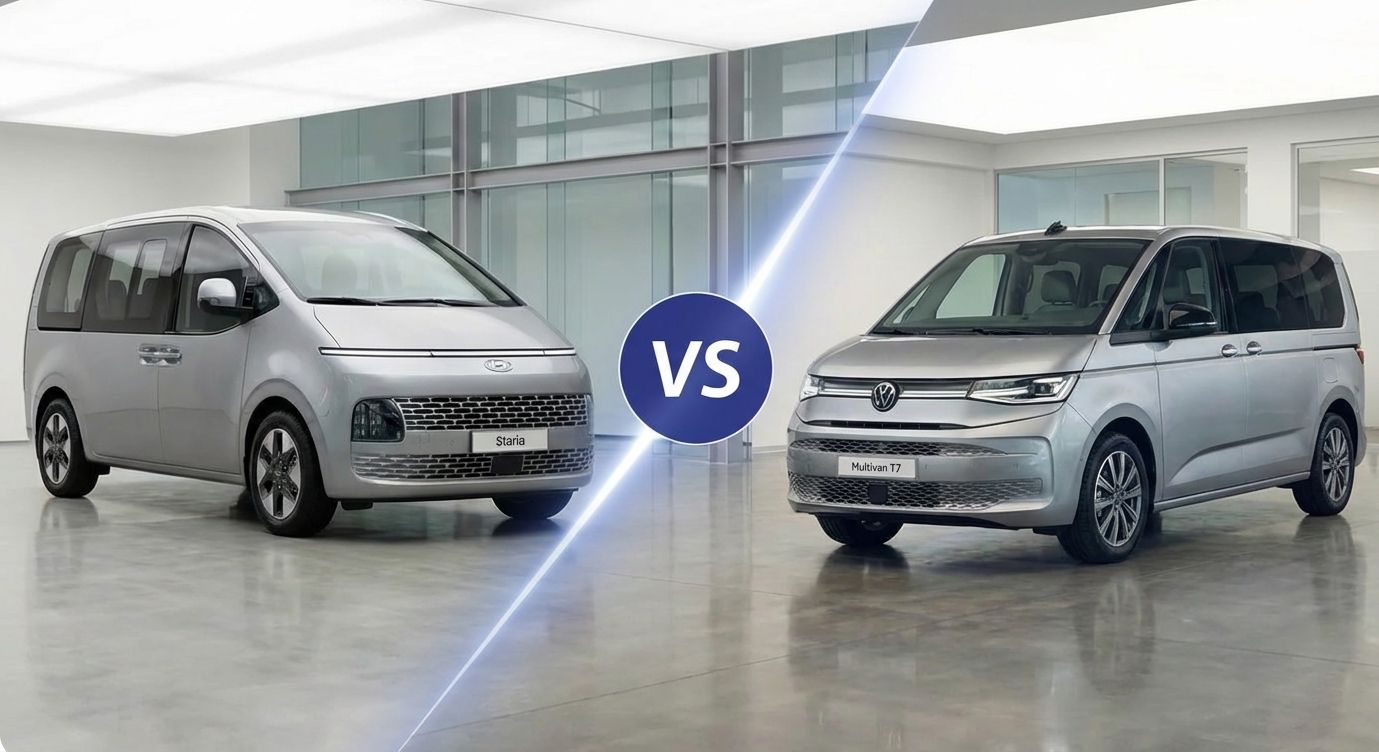
Car battle
Hyundai Staria vs Volkswagen Multivan: Complete Comparison 2025
Hyundai Staria vs. Volkswagen Multivan. Detailed comparison of design, practicality and price. Find out which large MPV is the better choice for you.
Apr 13, 2026
Articles
Car battle
Detailed comparison of Renault Trafic SpaceClass vs. Volkswagen Multivan. Discover the real differences in space, equipment, and driving characteristics to make the right choice.
May 4, 2026
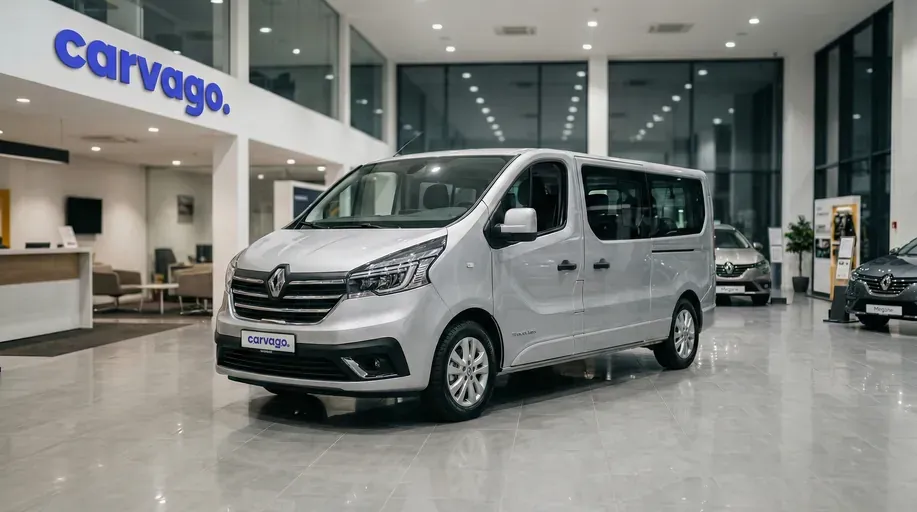
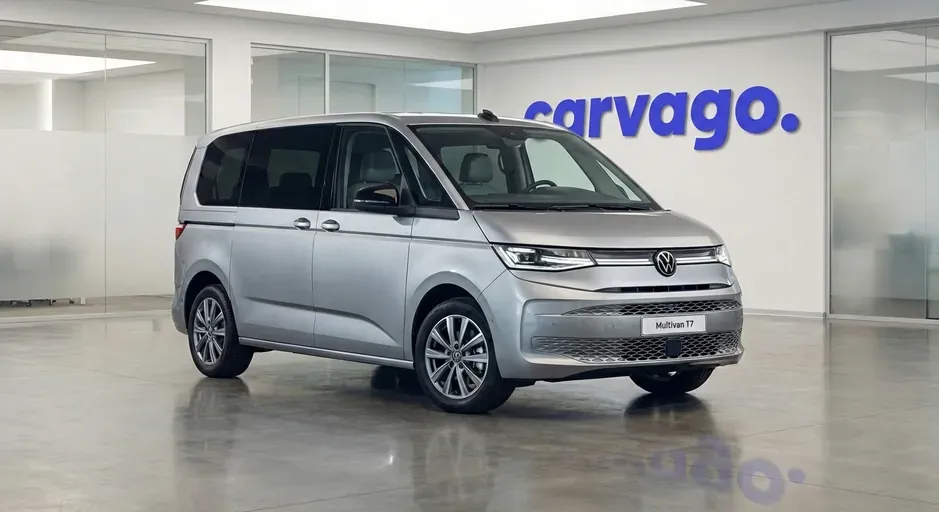
Renault Trafic SpaceClass, a premium-oriented passenger version of the French van that also appears on the market under the sister names Nissan NV300, Fiat Talento, or Opel Vivaro, represents an exceptionally spacious choice for the comfortable transport of a larger number of passengers. Its challenger is the benchmark of this class, the Volkswagen Multivan, closely related to the more utilitarian Transporter and Caravelle models (often referred to by generation codes T6.1 or T7 and also known by the popular nickname Bulli), which has long set the standards for luxury family and business MPVs. The following comparison will explore in detail the strengths and weaknesses of both rivals and help you decide which one better suits your daily and travel needs.
When looking at the external dimensions of both popular passenger vans, which represent the current T7 generation for Volkswagen and the facelifted third generation for Renault on the used car market with an approximate age of four years (around 2022), we encounter fundamental differences. The Renault Trafic SpaceClass appears at first glance as a much more robust and overall larger vehicle. Even in the basic L1 variant, it measures 5080 mm in length, which is 107 mm more than the short Volkswagen Multivan T7 generation, which has 4973 mm. For the extended versions, the gap widens even more significantly – the Trafic L2 boasts a total length of 5480 mm, while the Multivan T7 in the Long variant ends at 5173 mm (representing a massive difference of 307 mm). The French representative is also 15 mm wider than its German competitor at 1956 mm. This dominance in external dimensions gives the Renault an unquestionable advantage in longitudinal cabin space and absolute luggage volume, while Volkswagen earns valuable points thanks to shorter overhangs and overall better agility. You will appreciate the more compact footprint of the Volkswagen in practice, especially during frequent maneuvering or difficult parking in dense urban areas.
Another closely watched parameter of large family and business "shuttles" is the vehicle height and the closely related wheelbase. While the Trafic SpaceClass measures approximately 1973 mm in height, the Multivan T7 has dropped to a very favorable 1907 mm thanks to the use of the new passenger car platform (MQB). This seemingly inconspicuous lower build brings Volkswagen drivers great peace of mind when entering underground garages or shopping centers, where a strict height limit of 1.9 meters is absolutely common, while also significantly helping to reduce aerodynamic noise and fuel consumption on the highway. Renault, on the other hand, benefits from the taller body with better space for passengers' heads and shoulders. Both manufacturers chose a specific approach to the wheelbase solution. Renault sticks to the honest van school and offers two versions – 3098 mm for the short body and an impressive 3498 mm for the long L2 variant. This clearly results in unmatched directional stability and highway smoothness for the longer version. In contrast, for the latest generation, Volkswagen unified the wheelbase of both lengths at the same 3124 mm, achieving the longer version exclusively by extending the rear overhang. The result of this engineering step is a noticeably smaller turning radius, but the driver of the extended Multivan must account for a more noticeable swing of the long rear to the sides during sharp maneuvers.
The Renault Trafic SpaceClass makes no effort to hide its commercial vehicle roots, and its above-standard external dimensions are fully dedicated to maximizing internal volume. This makes it a fantastic long-distance transporter that can accommodate a full crew without compromise, including complete equipment for winter mountains or the seaside. In contrast, the Volkswagen Multivan with its unique concept is much closer to classic passenger cars of the MPV category. Its more restrained length and overall lower build may take a few valuable centimeters of living space from passengers in the interior, but behind the wheel, the Multivan will always reward you with an incomparably more relaxed, driver-friendly, and confident behavior in any type of daily urban and highway traffic.
| Parameter | Renault Trafic SpaceClass Van | Volkswagen Multivan Van |
|---|---|---|
| Width (mm) | 1956 | 1904 - 1941 |
| Length (mm) | 4999 - 5480 | 4904 - 5304 |
| Height (mm) | 1971 - 1974 | 1887 - 1990 |
| Wheelbase (mm) | 3098 - 3498 | 3000 - 3400 |
Luggage space is often a decisive factor for passenger vans, whether you're planning weekend trips with the family or need to transport bulky sports equipment. In this regard, the Renault Trafic SpaceClass and Volkswagen Multivan represent two completely different philosophies on the used car market. While the French representative bets on raw volume and a boxier body shape guaranteeing uncompromising space, its German competitor, especially in its modern T7 generation (typical for cars approximately four years old), prioritizes a passenger-car-like approach, agility, and clever variability with a modular rail system.
Looking at the specific numbers, the differences become fully apparent. The Renault Trafic SpaceClass offers a respectable 1,000 liters of basic trunk volume behind the third row of seats in its standard length (L1), and if you opt for the extended version (L2), you even get a massive 1,800 liters. In contrast, the Volkswagen Multivan starts at a more modest 469 liters for the short version, or 763 liters for the extended version. The situation changes when you need maximum transport capacity. After removing or folding the seats, the Renault transforms into a moving van with a volume of 3,200 liters (up to 4,100 liters for the L2 version), while the Multivan can conjure up a maximum of 3,672 liters, or 4,053 liters for the longer version. It is also worth mentioning that the popular plug-in hybrid versions of the Multivan (eHybrid) have batteries cleverly integrated into the floor, so fortunately there is no reduction in capacity or loss of precious liters.
In practice, these differences mean that the Renault Trafic SpaceClass easily swallows space for several extra suitcases without the need to manipulate the seats in any way. This is ideal and perfectly sufficient for weekend shopping as well as longer holidays for a large family. On the other hand, the Volkswagen Multivan scores with its everyday flexibility. Its lightweight independent rear seats can be easily moved or removed, allowing you to quickly adapt the interior – whether you need to load bicycles or create a mobile living room.
| Parameter | Renault Trafic SpaceClass Van | Volkswagen Multivan Van |
|---|---|---|
| Base volume (liters) | 1000 - 1800 | 469 - 763 |
| Max volume with seats folded down (liters) | 3200 - 4100 | 3672 - 4053 |
Renault Trafic SpaceClass impresses with its absolute luggage volume ideal for long trips without compromise, while the Volkswagen Multivan appeals with its clever variability and easier seat manipulation for everyday family needs.
Towing capacity is a crucial parameter for both families and entrepreneurs who expect maximum practicality and the ability to tow heavy loads from their large-capacity vehicle. The option to hitch a trailer provides not only space for a few extra suitcases but also enough flexibility for weekend shopping or longer holidays with a large family caravan or boat. The third-generation Renault Trafic (in versions commonly available as roughly four-year-old used cars from 2021 to 2024) offers values from 1,630 to 2,000 kg for its Blue dCi diesel engines in standard versions, while the most powerful variants (such as the Blue dCi 150 and 170) push the maximum for a braked trailer up to an impressive 2,500 kg. However, a noticeable difference is seen in the fully electric E-Tech versions, where the maximum permitted braked trailer weight is reduced to 920 kg due to technical limits and battery protection.
For the competing Volkswagen Multivan (the current T7 generation, which entered the market around the same time as the updated Trafic), although exact tabular values are not available in our database, the manufacturer's technical specifications indicate that pure diesel models (e.g., 2.0 TDI) typically handle a braked trailer towing capacity of 2,000 kg. Similar to the electric Renault, concessions must be expected with electrified versions here as well – the popular plug-in hybrid variant, the Multivan eHybrid, can tow a maximum of 1,600 kg. The unbraked trailer weight for all such large vehicles is typically limited by European legislative standards to a maximum of 750 kg.
Overall, the comparison shows that if your main priority is towing the heaviest loads, diesel versions of the Renault Trafic will provide a significant advantage thanks to a reserve of up to 2,500 kg. In contrast, the Volkswagen Multivan, with a maximum of up to 2,000 kg and slightly reduced capacity for hybrids, focuses primarily on comfort and modern powertrains at the cost of a slight compromise in maximum towing power.
| Model and motorization | Braked weight of trailer (kg) | Unbraked weight of trailer (kg) |
|---|---|---|
| Renault Trafic Combi Blue dCi 110 (Gen III) | 2000 | 750 |
| Renault Trafic Combi Blue dCi 150 (Gen III) | 1630 - 2500 | 750 |
| Renault Trafic Combi Blue dCi 170 (Gen III) | 1630 - 2500 | 750 |
| Renault Trafic E-Tech Electric (Gen III) | 920 | 750 |
When it comes to choosing the engine for these two popular passenger vans, both manufacturers have taken completely different paths. While the Renault Trafic SpaceClass relies on a proven and traditional classic in the form of powerful diesel engines, the Volkswagen Multivan in its current T7 generation (which arrived on the market at the turn of 2021 and 2022) brought a radical change – under the hood, it deployed a wide range of petrol units and a modern plug-in hybrid alongside a single diesel. For a buyer of a used car approximately four years old, this represents a fundamental difference. If you are looking for a tireless cruiser with a long range and high torque for family holiday trips with a fully loaded vehicle, Renault's classic diesel approach will make more sense. Conversely, the Multivan with TSI or eHybrid engines primarily targets users who drive shorter distances more often, spend time in suburban traffic, or want to take advantage of an electrified powertrain. Both manufacturers ensure maximum comfort for more powerful variants and supply fast dual-clutch automatic transmissions as standard (EDC for Renault, DSG for Volkswagen).
The engine range for the Renault Trafic SpaceClass is straightforward and revolves exclusively around the robust 2.0-litre diesel. For models produced until roughly spring 2021, versions designated as 2.0 ENERGY dCi appeared under the hood. These older power units (phased out in spring 2021 due to emission standards) had an output of 107 kW (145 hp) or 125 kW (170 hp) and were subsequently replaced by more modern, efficient, and cleaner 2.0 Blue dCi units, which you will encounter most often in the four-year-old used car category. The basic but very dynamic variant is the Blue dCi 150 with an output of 110 kW (150 hp) and 350 Nm of torque, which can be purchased with either a six-speed manual transmission or a dual-clutch EDC automatic. Customers desiring higher dynamics can then opt for the top-of-the-line Blue dCi 170 engine. This offers a generous 125 kW (170 hp) with a massive 380 Nm of torque and, in the SpaceClass version, is always exclusively paired with the EDC automatic transmission. These engines stand out for their refined operation, strong pull from low revs, and exemplary fuel consumption during long motorway journeys. However, a weakness may be the absolute absence of petrol alternatives, which may discourage drivers who use the van mainly for short hops on city routes.
| Engine type | Fuel | Power (kW) | Torque (Nm) | Transmission |
|---|---|---|---|---|
| 2.0 Blue dCi 150 | Diesel | 110 | 350 | 6MT / 6EDC |
| 2.0 Blue dCi 170 | Diesel | 125 | 380 | 6EDC |
| 2.0 ENERGY dCi 145* | Diesel | 107 | 340 | 6MT / 6EDC |
| 2.0 ENERGY dCi 170* | Diesel | 125 | 380 | 6EDC |
\ENERGY dCi series engines were only available for older vehicles until April 2021; in newer models, they were fully replaced by the modernised Blue dCi generation.*
The Volkswagen Multivan, on the other hand, underwent a minor revolution with the arrival of the T7 generation. Thanks to the transition to a modular platform from passenger cars, it also adopted their engine range, from which the previously dominant manual transmission completely disappeared – all variants today rely on precise and fast DSG automatics. Surprisingly, the base of the range is the 1.5 TSI petrol four-cylinder with an output of 100 kW (136 hp) and 220 Nm of torque, which is more suitable for undemanding suburban traffic. Significantly more confident dynamics are provided by the more powerful 2.0 TSI engine with a respectable 150 kW (204 hp) and 320 Nm. A major weapon of the Multivan is the 1.4 eHybrid plug-in hybrid version, combining a petrol unit with an electric motor, thanks to which it provides an interesting system output of 160 kW (218 hp) and 350 Nm of torque. Thanks to a 13kWh battery, this version promises the possibility of commuting distances of around 50 km purely on electricity. For traditional old-school supporters, only a single representative of the diesel world remains in the range, namely the 2.0 TDI with an output of 110 kW (150 hp) and 360 Nm of torque – unfortunately, you have to forget about the powerful twin-turbocharged BiTDI diesels from previous years with the T7. The hybrid unit is paired with a six-speed DSG, while all other internal combustion variants use a seven-speed dual-clutch gearbox.
| Engine type | Fuel | Power (kW) | Torque (Nm) | Transmission |
|---|---|---|---|---|
| 1.5 TSI | Petrol | 100 | 220 | 7DSG |
| 2.0 TSI | Petrol | 150 | 320 | 7DSG |
| 1.4 eHybrid | Plug-in Hybrid | 160 | 350 | 6DSG |
| 2.0 TDI | Diesel | 110 | 360 | 7DSG |
From an engine perspective, each car has a clearly defined target group. Thanks to its large-capacity 2.0-litre diesels, the Renault Trafic SpaceClass is an ideal choice for drivers who buy a van with heavy loads or regular trips across Europe in mind. Its Blue dCi units handle luggage easily, offer good range, and overall low maintenance requirements in a classic diesel sense. The Volkswagen Multivan, on the other hand, benefits from high technological advancement and concessions towards passenger cars. Its petrol TSI engines and innovative eHybrid version make it a perfect companion for active families who care about quiet operation during daily commuting, while the 2.0 TDI reliably holds its own if you set off on holiday trips with the vehicle. Although the Multivan lost its most powerful diesels, it brilliantly masks this with a modern and more flexible range.
While the Renault Trafic SpaceClass scores with classic and torque-packed diesels perfect for long motorway hauls, the Volkswagen Multivan brings modern plug-in hybrid and petrol alternatives great for refined driving in suburban traffic.
Choosing the right powertrain is absolutely essential for long-term satisfaction, reliability, and maintaining favorable operating costs. Our recommendations are based on real-world owner experiences, long-term fuel consumption monitoring, and the mechanical durability of used cars around four years old. Interestingly, while Renault uses its exceptionally robust 2.0 Blue dCi engine in the Trafic SpaceClass—whose genes and cast-iron block originate from purely commercial vans—Volkswagen relies on the iconic 2.0 TDI passenger car platform for the highly successful Multivan T6.1 generation, which excels in top-tier soundproofing and refinement. However, the same rule applies to both competitors: for the best mix of reliability and price, choose neither the weakest base engine nor the over-engineered top-of-the-line option.
This mid-range power version of the updated two-liter engine (mostly fitted since the 2021 facelift) is the absolute best compromise on the used car market. The M9T engine series has an excellent reputation thanks to its commercial origins, which guarantees huge potential for high mileage without fatal failures. It offers a very decent torque of 350 Nm, which easily handles a fully loaded car with eight or nine passengers on board.
Technical advantages and fuel consumption:
Power delivery is very smooth from low RPMs, and during steady highway travel, real-world consumption typically ranges between 7.5 and 8 l/100 km, which is an excellent value given the vehicle's massive proportions. We particularly recommend looking for versions with the EDC dual-clutch automatic. This transmission is exceptionally comfortable, shifts logically, doesn't jerk, and perfectly masks the slight turbo lag when pulling away at intersections.
Risks and what to watch out for:
The biggest enemy of this diesel engine is purely urban driving with frequent shut-offs of an engine that hasn't reached operating temperature. In such use, the diesel particulate filter (DPF) quickly becomes clogged with soot, which can result in the car going into limp mode.
Who it is ideal for:
This engine is perfect for highway cruisers, large families, or companies focused on airport transfers. It will be appreciated by any driver looking for an indestructible workhorse with reasonable operating costs who isn't afraid of long distances.
If you are looking for a Multivan with a production date roughly between 2020 and 2023 (this is the extremely sought-after and mature T6.1 generation), you should definitely aim for the 110 kW 2.0 TDI engine. In the mechanical and service world, this single-turbocharger version is considered the benchmark for reliability, and unlike the much more prone top-tier Bi-Turbo versions (146 and 150 kW), it does not suffer from excessive oil consumption.
Technical advantages and fuel consumption:
With 340 Nm of torque, this engine won't dazzle you with blistering acceleration, but its soundproofing, linear pull, and overall refinement fully match much more expensive passenger cars. Real-world combined consumption settles between 7.5 and 8.5 l/100 km. Combined with the excellent seven-speed DSG dual-clutch transmission (the robust DQ500 series), it is an incredibly pleasant car for daily life, which also has the bonus of easily towing a braked trailer weighing up to 2,500 kg.
Risks and what to watch out for:
The Multivan T6.1 is a very heavy car, which places enormous demands on transmission lubrication and the cleanliness of the emission system (EGR and AdBlue).
Who it is ideal for:
This is the best possible choice for active families, caravanners, or people looking for a prestigious and maximally comfortable vehicle with a passenger-car character that will reliably serve for hundreds of thousands of kilometers—provided, however, that you do not skimp on quality servicing.
For large family and passenger vans, the difference between official laboratory data and reality is often very noticeable. While manufacturers' paper values promise an average consumption of around 6.5 to 7 liters per 100 km for these two-ton vehicles, physics in the form of a massive frontal area and high curb weight cannot be cheated. For an objective comparison, we therefore rely on the real-world experiences of owners recorded in the database of the independent portal Spritmonitor.de. We are comparing models roughly four years old, which corresponds to the third-generation Renault Trafic after its facelift and Volkswagen Multivan vehicles from the popular T6.1 generation as well as the succeeding T7 version.
The following table, which we often emphasize on our website when buying a used car, shows the actual combined fuel consumption for the most common engines of both rivals:
| Model and engine | Average consumption (l/100 km) |
|---|---|
| Renault Trafic SpaceClass 2.0 Blue dCi 110 (81 kW) | 7.6 |
| Renault Trafic SpaceClass 2.0 Blue dCi 150 (110 kW) | 8.0 |
| Renault Trafic SpaceClass 2.0 Blue dCi 170 (125 kW) | 8.4 |
| Volkswagen Multivan 2.0 TDI (110 kW) | 8.1 |
| Volkswagen Multivan 2.0 TDI BiTurbo (150 kW) | 8.5 |
| Volkswagen Multivan 1.5 TSI (100 kW) | 9.5 |
| Volkswagen Multivan 2.0 TSI (150 kW) | 10.2 |
Several very interesting trends and specifics in both model families emerge from the hard data:
If you plan to swallow long highway kilometers, head out on holiday with a full load of passengers, or regularly tow a heavy trailer, a diesel engine is an absolute necessity. The best solution from the perspective of a reasonable burden on the family budget appears to be the Blue dCi 150 version in the case of Renault or the proven classic 2.0 TDI (110 kW) for Volkswagen. Conversely, you would only prefer petrol engines from the VW range for very specific requirements – primarily if the car serves more as a school bus for short city hops and would face permanent problems with the diesel particulate filter (DPF) clogging. You simply pay for this maintenance-free peace of mind at the gas station.
In the final verdict, we can state that fuel consumption itself will most likely not be the main distinguishing factor for the buyer. In their most in-demand and best-positioned diesel engines, both vans run at practically identical costs, with the French Trafic being an insignificant tenth more economical under average load. When choosing, it will therefore be much wiser to focus on the overall technical condition of the used vehicle, the desired seat comfort, and the level of interior equipment.
If you are looking for a spacious passenger van around four years old, you will encounter two different worlds. Renault offers a highly attractive price-to-utility ratio on the secondary market, while Volkswagen is considered an unshakeable icon with an extremely slow decline in value.
The Trafic, in its more luxuriously designed SpaceClass passenger version, represents a rational and financially friendly choice as a used car. Four-year-old examples with the popular 2.0 Blue dCi engine and automatic transmission can be purchased very advantageously on the market.
Depreciation for Renault is steeper in the first few years than for its German competitor. This plays into the hands of used car buyers who want a spacious family or executive car for reasonable money.
In contrast, the Volkswagen Multivan holds its price almost exemplary. When searching for roughly four-year-old vehicles from 2021 and 2022, you will come across an interesting transition – the highly sought-after outgoing T6.1 generation meets the incoming, more technological T7 on the market.
| Model (production year 2021–2022) | Starting price (high mileage) | Average price (well-maintained condition) | Premium versions (4x4, top equipment) |
|---|---|---|---|
| Renault Trafic SpaceClass | from €31,000 | €35,000 – €39,000 | around €43,000 |
| VW Multivan (T6.1 / T7) | from €35,000 | €45,000 – €53,000 | €57,000 and more |
Note: Prices are indicative and based on average offers on the Czech market for vehicles with a documented history.
While the Volkswagen Multivan represents a safe bet for buyers with minimal residual value drop, the Renault Trafic SpaceClass scores on the used car market with an unbeatable ratio of purchase price to offered space.
At first glance, it might seem that both models boast a five-star safety rating from the independent organization Euro NCAP. However, for those interested in a safe second-hand family car, it is extremely important to put this fact into the correct context and consider both the year and type of testing, as completely different stories are hidden behind these ratings.
It is crucial to realize that Euro NCAP testing protocols are constantly evolving and tightening dramatically over the years. Percentage scores from different years are therefore absolutely not directly comparable. While in the past a rigid body was enough to achieve a high rating, modern tests include entirely new simulations of frontal impacts into a moving barrier, strict requirements for the detection of vulnerable road users, and complex automatic braking scenarios at intersections, which did not feature in older vehicles at all.
With the Renault Trafic SpaceClass, we must distinguish carefully. This architecture last underwent a full crash test for passenger cars in 2015, when it received only three stars. Naturally, the construction from that time does not meet today's standards, which is most reflected in the protection of adults and pedestrians at the time. Although Renault has innovated the vehicle over the years and recently received five stars (or a gold medal) in the Commercial Van Safety rating, this award reflects exclusively the additional presence of active safety assistants, not the reinforcement of the structure itself. To compare personal protection in an impact, we must therefore rely on older data from 2015, whose certification has de facto already expired by today's standards.
The Volkswagen Multivan (T7 generation), which forms the centerpiece of the market for roughly four-year-old used cars, was by contrast tested in 2022 according to extremely strict and modern protocols for passenger cars. Without any hesitation, it achieved a full five stars. The Multivan excels thanks to the modern MQB platform and innovations such as a center airbag preventing the heads of the driver and front passenger from colliding. It achieved excellent results thanks to an extensive package of more than 25 assistance systems that react very precisely to cyclists, pedestrians, and emergency situations at intersections.
In terms of overall protection, the Volkswagen Multivan clearly offers a more modern and comprehensive safety package. While the Renault Trafic is fundamentally a structurally older vehicle trying to compensate for its safety deficit with software updates and electronic assistants, the Multivan was designed from the start to provide uncompromising passive and active protection for the crew according to the highest current standards.
| Parameter | Renault Trafic SpaceClass | Volkswagen Multivan |
|---|---|---|
| Year of testing | 2015 | 2022 |
| Adult occupant protection | 52 % | 90 % |
| Child occupant protection | 91 % | 89 % |
| Vulnerable road user protection | 53 % | 69 % |
| Safety assistance systems | 57 % | 87 % |
Although the Renault Trafic tries to keep pace with improved assistants, the Volkswagen Multivan (T7) offers a much higher level of protection for the whole family thanks to its incomparably more modern platform and excellent results from 2022.
In addition to standard equipment, each of the models offers several unique features that can be decisive for the customer and show a completely different approach to added value and the very concept of a large-capacity vehicle.
The luxuriously conceived passenger version of the Trafic bets on a proven concept and maximum comfort for passengers on long routes. Features and equipment aim primarily at using the vehicle as a mobile office or VIP shuttle service.
The Multivan generation from around 2022 (designated as T7) brought an absolute revolution. The transition to the group's MQB platform turned this van into more of a large-capacity passenger car (MPV) in terms of driving characteristics and technology.
Significantly lower purchase price on the used car market compared to German competitors
Economical and mechanically reliable 2.0 Blue dCi diesel engines
Huge interior space providing excellent comfort even in the third row of seats
Pleasantly tuned chassis that excels at absorbing bumps during long highway journeys
More noticeable commercial origin with a higher proportion of hard plastics in the interior
Outdated graphics and slower response of the multimedia system
Poorer aerodynamic soundproofing of the cabin at highway speeds
Faster depreciation compared to Volkswagen
The Renault Trafic SpaceClass represents a rational and affordable choice for large families or companies looking for a reliable passenger shuttle. It scores primarily with its excellent price-to-value ratio, making it ideal for long journeys, although you will have to accept a less premium finish.
Premium interior finish comparable to luxury passenger cars
Unrivaled floor rail system for easy sliding, rotating, or removing of seats
Wide range of advanced safety and assistance systems
More confident and agile driving characteristics with excellent steering feedback
Top residual value and huge interest on the used car market
Significantly higher purchase price and overall higher costs for regular servicing
In the newer generation (T7), slightly smaller total interior and luggage volume compared to its predecessor (T6.1) and the Trafic
High attractiveness to thieves, which often requires investment in additional security
The Volkswagen Multivan has long been the benchmark in the luxury passenger van class, targeting more demanding customers who prefer maximum comfort, modern technology, and a representative appearance. While its higher purchase price is a disadvantage at the start, it rewards owners with slower depreciation and top-tier interior flexibility.
Based on long-term user experience, service reports, recalls, and insights from our comprehensive CarAudit, we have compiled an overview of the most common problems that buyers of these family vans around four years old should pay the most attention to.
The current generation Renault Trafic SpaceClass excels with the very robust mechanics of its diesel engines, but it struggles with occasional electronic glitches and increased maintenance requirements for its emission systems.
The Trafic SpaceClass maintains its reputation as a reliable vehicle thanks to the robust 2.0 dCi engine, but you must expect minor shortcomings in the form of slower infotainment and the sensitivity of emission systems to short trips.
For the Volkswagen Multivan (whether it's the updated T6.1 generation or the T7 generation built on an innovative platform), the biggest challenges are the modern onboard software and the more demanding maintenance of the complex technology under the hood.
The Multivan attracts with great driving characteristics and state-of-the-art technology, but the price in the form of software "gremlins" and more delicate DSG transmissions makes it a vehicle where a documented service history and careful inspection are a necessity.
When buying a used car, a thorough inspection is key. Here are some specific points to focus on for these two models to avoid unexpected expenses. Before the final decision, however, a thorough and professional independent technical inspection of the car should always take place to reveal even hidden defects.
The Renault Trafic SpaceClass in its long version offers significantly more luggage space even when fully occupied by all passengers. The Volkswagen Multivan is more compact overall, which makes daily city parking easier, but at the expense of absolute luggage volume. For families with a huge amount of gear, the Renault is more advantageous in terms of pure space.
The Volkswagen Multivan has historically excelled with its precise rail system and lightweight individual seats that are very easy to slide, rotate, and remove from the vehicle. The Renault Trafic SpaceClass also features sliding rails, but the rear seats and especially the benches are quite heavy. Frequent removal of the seats in the Renault therefore requires more physical strength and ideally the assistance of a second person.
The Volkswagen Multivan feels more like a premium passenger car while driving, offering excellent cabin soundproofing and a wider range of modern assistance systems. The Trafic SpaceClass is exceptionally comfortable and offers a great price-to-value ratio, but its origins from a commercial vehicle platform are slightly more noticeable in the details. If you are looking for absolute comfort and prestige, the Multivan has a slight edge in this regard.
The Volkswagen Multivan has an absolutely exceptional position in the used car market, and its residual value drops very slowly. The Renault Trafic SpaceClass loses value faster than its German competitor. On the other hand, this characteristic makes it a very attractive choice when buying from a used car dealership, where you can often get a newer and better-equipped vehicle for the same money.
The clear choice in this case is the Volkswagen Multivan, where the 4Motion all-wheel drive is a very popular and frequent option in listings. The Renault Trafic SpaceClass is not offered with all-wheel drive from the factory. Therefore, if you require maximum traction in winter mountain resorts, the German representative is the only functional option.
Choosing between these two popular vehicles depends primarily on whether you prioritize maximum interior space or the latest technology and driving comfort. Renault Trafic SpaceClass represents a more affordable and rational choice for large families or long-distance travelers who will fully utilize its huge trunk, robust diesel engines, and superior towing capacity. Conversely, the Volkswagen Multivan perfectly suits more demanding customers looking for a premium vehicle for everyday use, boasting top-tier safety, passenger-car-like agility, and a highly variable interior with lightweight seats. While the French representative scores on the used car market with an unrivaled price-to-utility ratio, the German benchmark justifies its higher purchase price with an extremely slow depreciation and an overall more luxurious concept.
Sources: ADAC, auto.cz, denik.cz, auto-mania.cz, fdrive.cz, autospecial.cz
This article was prepared using artificial intelligence tools. The section guarantor is Petr Dušek.
Hyundai Staria vs. Volkswagen Multivan. Detailed comparison of design, practicality and price. Find out which large MPV is the better choice for you.
Apr 13, 2026
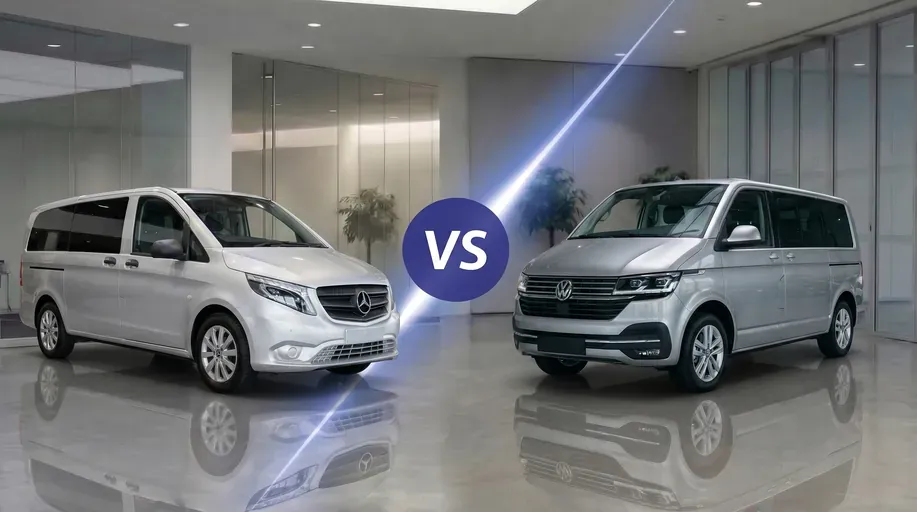
Mercedes-Benz Vito Tourer vs Volkswagen Caravelle comparison. Discover the differences in space, equipment, and reliability and read our clear final verdict!
Apr 19, 2026
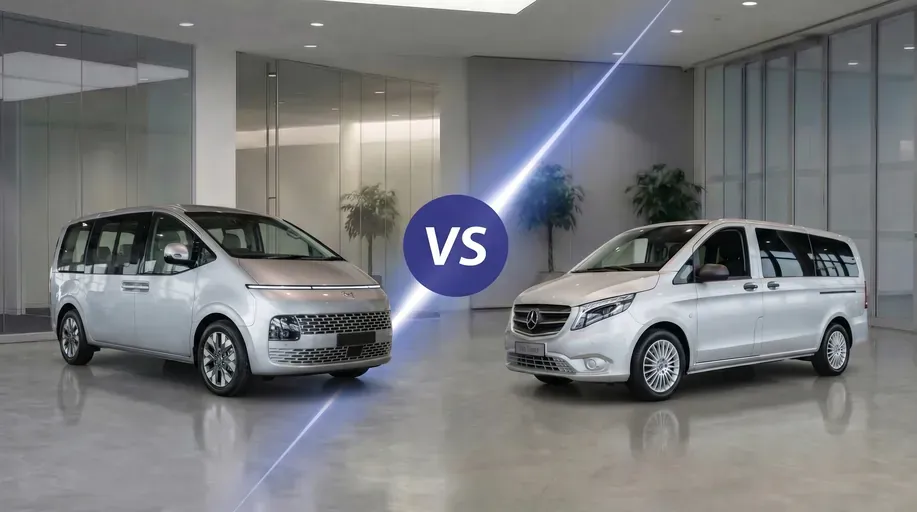
Detailed comparison of Hyundai Staria vs Mercedes-Benz Vito Tourer. Read our verdict and find out which van offers better space, equipment, and reliability.
Apr 30, 2026