Car battle
Citroën SpaceTourer vs. Opel Zafira Life: Complete comparison 2026
Detailed comparison of Citroën SpaceTourer and Opel Zafira Life. Find out which family MPV offers better engines, equipment, and space. Read our verdict!
Apr 14, 2026
Articles
Car battle
Hyundai Staria vs. Volkswagen Multivan. Detailed comparison of design, practicality and price. Find out which large MPV is the better choice for you.
April 13, 2026
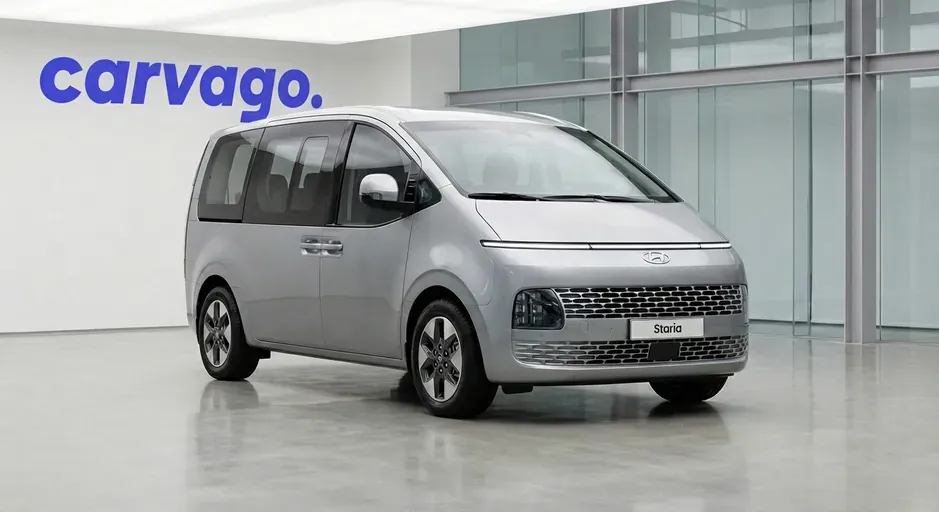
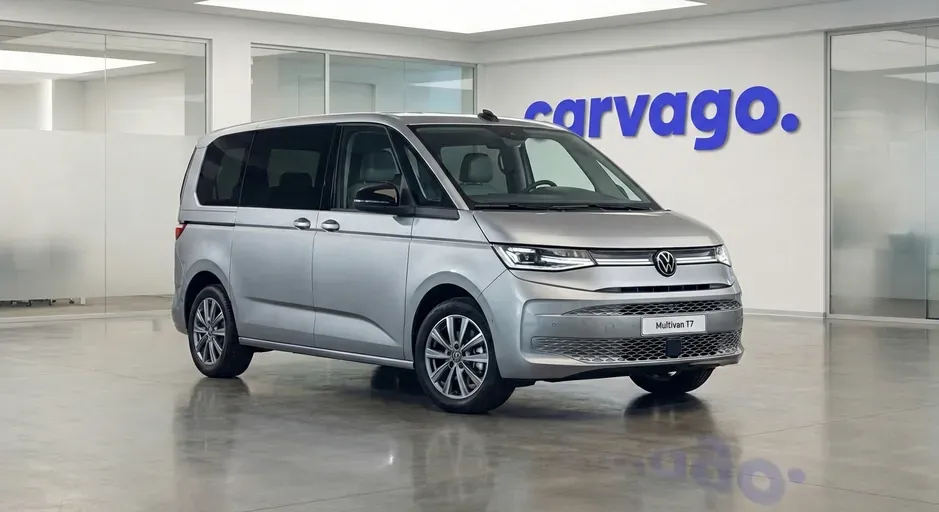
The Hyundai Staria brings a breath of fresh air to the large MPV segment with a bold, futuristic design and a spacious interior focused on family comfort. It stands against the Volkswagen Multivan, a long-standing icon and benchmark of the class, which builds on its reputation as a practical, versatile, and well-crafted vehicle for both family and business. Let's take a detailed look at how these two different approaches to family transport stack up in a head-to-head comparison.
At first glance at the Hyundai Staria and the Volkswagen Multivan, it's clear that both vehicles aim for maximum space. However, they each take a slightly different path in terms of dimensions. While the Hyundai Staria comes in a single, truly generous size that commands respect on the road, the Volkswagen Multivan offers customers a choice between a standard and a long version, thereby trying to better adapt to different needs.
With a length of 5,253 mm, the Hyundai Staria is a full 28 cm longer than the standard Multivan and even surpasses its long version by 8 cm. This translates into an exceptionally spacious interior, but it also means a greater challenge when parking and maneuvering in narrow city streets. At 4,973 mm (or 5,173 mm in the long version), the Multivan is a slightly more agile vehicle, which you'll appreciate in daily use. The difference is also noticeable in width and height – the Staria is a significant 6 cm wider and almost 9 cm taller, which adds to its majestic presence but may also limit entry into some underground garages.
A key figure for interior space and driving comfort is the wheelbase. Here too, the Staria dominates with a value of 3,273 mm, which is 15 cm more than the Multivan. The extremely long wheelbase contributes to a smooth ride and enormous legroom for passengers in all rows. With its still generous wheelbase of 3,124 mm, the Multivan represents a more balanced compromise between interior space and the agility needed for easier handling. The choice thus depends on priorities – whether you prefer the absolute maximum space offered by the Staria, or the flexibility and slightly more compact dimensions of the Multivan.
| Parameter | Hyundai Staria | Volkswagen Multivan (T7) | Volkswagen Multivan (T7) Long |
|---|---|---|---|
| Length (mm) | 5,253 | 4,973 | 5,173 |
| Width (mm) | 1,997 | 1,941 | 1,941 |
| Height (mm) | 1,990 | 1,907 | 1,907 |
| Wheelbase (mm) | 3,273 | 3,124 | 3,124 |
In the large family vehicle category, luggage compartment volume is a key parameter. This is often the deciding factor in whether a car can handle a big family vacation or is only suitable for weekend trips. The Hyundai Staria and the Volkswagen Multivan approach interior space with slightly different philosophies, which is reflected in the numbers and versatility.
The Hyundai Staria, with its generous exterior dimensions, offers a huge interior space. In the basic nine-seater configuration, with all three rows of seats in use, the trunk volume ranges from 831 liters. This is a value that in itself surpasses most conventional station wagons and SUVs. However, if you decide to remove the third row of seats, the space grows to a gigantic 1,303 liters. And we are still talking about a configuration where five to six people can travel comfortably. After removing all the rear seats, the Staria becomes a full-fledged van with a volume approaching 5,000 liters.
The Volkswagen Multivan T7 takes a smarter approach, focusing on maximum versatility. Thanks to a rail system, the individual seats in the rear of the vehicle can be freely moved or completely removed. In the basic configuration behind the third row of seats, the standard version of the Multivan offers 469 liters. After folding or removing the third row, the space increases to 1,844 liters. In the long version, these numbers are even more impressive: the basic volume is 763 liters, and the maximum volume up to the roof reaches 4,053 liters. The flexibility of the rail system allows for finding the perfect compromise between space for passengers and luggage.
As a result, both vehicles offer above-average capacity, but each in its own way. The Staria excels in absolute volume, especially in its basic configuration. The Multivan counters with an ingenious system of versatility that allows the space to be precisely adapted to current needs, even though it offers slightly less space behind the third row of seats in its basic configuration than its Korean rival.
| Parameter | Hyundai Staria Van | Volkswagen Multivan Van | Volkswagen Multivan Long Van |
|---|---|---|---|
| Basic volume (liters) | 831 | 469 | 763 |
| Max. volume with seats folded/removed (liters) | ~ 5,000 | 3,672 | 4,053 |
The ability to tow a trailer can be a key factor for many potential buyers of a large-capacity vehicle. And it is in this discipline that the two competitors differ significantly. The Volkswagen Multivan confirms its reputation as a versatile workhorse and offers significantly higher limits for a braked trailer, reaching up to 2000 kg. This makes it an ideal partner for towing medium-sized caravans, boats, or trailers with materials.
On the other hand, the Hyundai Staria, despite its impressive interior space, is much more modest in its towing capacity. With the 2.2 CRDi diesel engine, it can handle a braked trailer with a maximum weight of 1500 kg. While this limit is sufficient for smaller unbraked trailers or very light caravans, it can be a major limitation for owners of larger trailers. For the hybrid variants of both models, a further reduction in this value must be expected.
As a result, if regularly towing heavier loads is a priority for you, the Volkswagen Multivan is clearly the more capable choice. For those who only need a tow hitch occasionally and for lighter loads, the Hyundai Staria's capacity will be sufficient.
| Model and engine | Braked trailer weight (kg) | Unbraked trailer weight (kg) |
|---|---|---|
| Volkswagen Multivan T7 2.0 TDI (110 kW) | 2000 | 750 |
| Volkswagen Multivan T7 1.5 TSI (100 kW) | 1600 | 750 |
| Volkswagen Multivan T7 1.4 eHybrid (160 kW) | 1600 | 750 |
| Hyundai Staria 2.2 CRDi (130 kW) | 1500 | 750 |
The Hyundai Staria and Volkswagen Multivan choose completely different strategies when it comes to power units, which is a key factor for buyers. While the Staria initially relied exclusively on a proven and powerful diesel engine, available with both front-wheel and all-wheel drive, Volkswagen offered a wider range from the start. The Multivan T7 entered the market with petrol engines and, most notably, a plug-in hybrid variant. The diesel unit was added to the Multivan's lineup later and, unlike the Staria, is not available with 4x4 drive. For those interested in a used car, the decision comes down to whether they prefer the simplicity and torque of a diesel (Staria) or want to choose from multiple drive types, including an electrified version (Multivan).
Hyundai took a very straightforward approach to the Staria's engine lineup. Throughout its production run relevant to the used car market, only one engine was offered. This is the four-cylinder 2.2 CRDi turbodiesel. This unit is known for its reliability and sufficient torque to power a large and heavy vehicle. It is standardly paired with an eight-speed automatic transmission and front-wheel drive. For more demanding conditions or for customers requiring maximum traction, an all-wheel-drive version was also available. It is important to mention that from the end of 2024, this diesel engine in new cars was replaced by a 1.6 T-GDI HEV hybrid unit, but on the used car market, you will exclusively encounter the diesel variant.
| Engine type | Fuel | Power (kW) | Torque (Nm) | Transmission |
|---|---|---|---|---|
| 2.2 CRDi | Diesel | 130 | 430 | 8AT |
| 2.2 CRDi 4x4 | Diesel | 130 | 430 | 8AT |
The Volkswagen Multivan T7, built on the modern MQB platform, offers a much more diverse selection of engines. Customers can choose between TSI petrol engines, an economical TDI turbodiesel, and a plug-in hybrid eHybrid variant. All engines are standardly paired with a DSG automatic transmission. The base is the 1.5 TSI petrol engine, with the 2.0 TSI as a more powerful alternative. For those who drive a lot of kilometers, the 2.0 TDI engine is intended. The biggest attraction, however, is the 1.4 eHybrid plug-in hybrid, which combines a petrol engine with an electric motor and allows for purely electric driving over shorter distances. Unlike the Staria, however, the Multivan in this generation does not offer 4MOTION all-wheel drive with the diesel engine; this is reserved for newer hybrid versions.
| Engine type | Fuel | Power (kW) | Torque (Nm) | Transmission |
|---|---|---|---|---|
| 1.5 TSI | Petrol | 100 | 250 | 7DSG |
| 2.0 TSI | Petrol | 150 | 320 | 7DSG |
| 2.0 TDI | Diesel | 110 | 360 | 7DSG |
| 1.4 eHybrid | Plug-in hybrid | 160 | 350 | 6DSG |
Choosing the right engine is key to long-term satisfaction with a large-capacity vehicle. Our recommendations are based on a combination of performance, real-world fuel consumption, owner feedback, and mechanical reliability. While the Hyundai Staria relies on a single, proven diesel engine, the Volkswagen Multivan T7 offers a more diverse range including petrol, diesel, and plug-in hybrid variants, giving buyers a wider choice according to their preferences.
The only engine available for the Staria from 2021-2024 is also the best and most logical choice. The 2.2 CRDi four-cylinder diesel engine with 130 kW (177 hp) and 430 Nm of torque is an ideal partner for such a large and heavy car. The engine belongs to the proven "R" series, known for its robustness and reliability. It offers solid pull from low revs, which is invaluable when fully loaded and on long journeys. The engine's power is transmitted to the wheels via a smooth-shifting eight-speed automatic transmission.
Although the Multivan T7 has switched to a passenger car platform (MQB) and also offers petrol and hybrid versions, the 2.0 TDI diesel engine with 110 kW (150 hp) and 360 Nm of torque remains the most sensible choice for family and work use. It is a proven and refined unit that provides the best balance between performance and fuel consumption.
The paper values for fuel consumption stated by manufacturers are one thing, but real-world operation and the experiences of hundreds of drivers are another. That's why we looked at data from the German portal Spritmonitor.de, which collects data on actual consumption from the car owners themselves. This gives us a much more accurate picture of what running costs to expect from both MPVs. So how does the Staria's single, yet economical engine option stack up against the diverse range of the Multivan?
Given that the Hyundai Staria is primarily found on the used car market with a single engine, the comparison is more straightforward. We are pitting it against the Volkswagen Multivan T7 generation (produced from 2021), which is relevant for roughly four-year-old used cars and offers petrol, diesel, and plug-in hybrid variants.
| Model and Engine | Average Real-world Consumption (l/100 km) |
|---|---|
| Hyundai Staria 2.2 CRDi (130 kW) | 9.35 |
| Volkswagen Multivan T7 1.5 TSI (100 kW) | 8.86 |
| Volkswagen Multivan T7 2.0 TDI (110 kW) | 7.49 |
| Volkswagen Multivan T7 1.4 eHybrid (160 kW) | 6.05 (+ electricity) |
The table shows that the Hyundai Staria, with its single 2.2 CRDi diesel engine, is noticeably thirstier than its direct competitor, the Multivan 2.0 TDI. The difference in real-world driving is around 1.5 to 2 litres per 100 km to the detriment of the Korean vehicle. While drivers of the Multivan TDI can easily achieve consumption figures around 7.5 l/100 km, Staria owners must expect an average exceeding 9 litres.
The comparison with the petrol version of the Multivan is interesting. The base 1.5 TSI engine is, in reality, about half a litre more economical than the diesel Staria. For drivers with lower annual mileage who are wary of the complexity of modern diesels, this could make sense. The plug-in hybrid Multivan T7 eHybrid is in a category of its own. Its average petrol consumption is around 6 l/100 km, but the consumption of electrical energy must be added to this. For users who have the option to charge regularly and often drive short routes in the city, this powertrain represents an unbeatable economical choice.
For the typical user looking for a large family car for long trips and holidays, the difference in consumption between the diesel versions is quite significant. The saving of almost two litres per hundred kilometres with the Multivan will quickly be reflected in the family budget with higher mileage. Conversely, for those who primarily drive in and around the city and have a place to charge, the Multivan with its plug-in hybrid drive opens the door to very cheap operation. Therefore, fuel consumption is definitely one of the key factors that speaks in favour of the Volkswagen Multivan.
When looking at the prices of used cars, one of the fundamental differences between the two competitors becomes apparent. While the Volkswagen Multivan has a long history and a wide range of offerings across generations, the Hyundai Staria is a relatively new player, which is reflected in its prices and availability.
Since the Staria only went on sale in 2021, you will find exclusively newer cars on the used market. Prices differ mainly according to equipment and 4x4 drive.
The advantage is that even with the oldest models, you get a modern car that is often still under the factory warranty.
Thanks to the long history of the Multivan model, the selection on the used car market is significantly more varied. For a direct comparison with the Staria, the latest T7 generation (from 2022) and its predecessor, the T6.1 (2019–2024), are particularly relevant.
As a result, the Multivan offers a wider price range. While the Staria is a safe bet in the form of an almost new car, the Multivan allows you to choose between the latest generation and older, but still very capable and more affordable variants.
Although both vehicles boast a five-star safety rating, it is crucial to look at the context of these results. Euro NCAP's testing protocols are constantly evolving and becoming stricter, which means that a direct comparison of percentage results from different years can be misleading. Newer tests place greater emphasis on advanced assistance systems and the protection of vulnerable road users, such as pedestrians and cyclists.
While the Hyundai Staria has not been directly tested by the European Euro NCAP program, it received five stars in 2021 in the sister, very similar ANCAP (Australasian New Car Assessment Program) tests. Since 2018, the protocols of both organizations have been very close, and therefore the results are highly relevant. The Staria achieved excellent scores in adult and child occupant protection. Its standard equipment includes front, side, and curtain airbags, as well as a center airbag between the front seats, which prevents mutual injury to passengers in a side impact. However, due to the year of testing, its assistance systems were not evaluated according to the latest, stricter criteria, which better test, for example, reactions at intersections or driver monitoring.
The new Volkswagen Multivan T7 underwent Euro NCAP crash tests in 2022 and took home a full five stars. Thanks to the more recent testing date, its systems were tested to more demanding standards than the Staria. The Multivan excelled in adult and child protection, where it scored a high 90% and 89% respectively. The tests praised the robust body structure and the rich set of airbags, including curtain airbags for all three rows of seats. The Multivan achieved an exceptionally good result in the safety assist systems category (87%), which attests to their modern and advanced functioning in a wide range of crisis situations.
Both models offer a top level of passive safety, as evidenced by their five-star ratings. However, the Volkswagen Multivan has a slight edge because it was tested a year later according to stricter Euro NCAP criteria. This is mainly reflected in the higher score for assistance systems, which are key to accident prevention. Its more modern and comprehensive safety package thus emerges as the winner of this comparison.
| Parameter | Hyundai Staria | Volkswagen Multivan |
|---|---|---|
| Year of Testing | 2021 (ANCAP) | 2022 (Euro NCAP) |
| Adult Occupant Protection | 85% | 90% |
| Child Occupant Protection | 86% | 89% |
| Vulnerable Road User Protection | 65% | 69% |
| Safety Assist | 74% | 87% |
In addition to standard equipment, each model offers several unique features that may be decisive for the customer. While one bets on futuristic design and a sense of airy space, the other counters with German precision and maximum modularity.
Since its arrival in 2021, the Hyundai Staria has been breaking down preconceived notions about the design of large-capacity vehicles. Its appearance is not an end in itself – it is also reflected in the unique properties of the interior and the overall concept of the car.
With the T7 generation, introduced at the end of 2021, the Volkswagen Multivan abandoned the original platform from the commercial Transporter and switched to the modular MQB Evo platform, known from passenger cars like the Golf or Passat. This brought revolutionary changes in both driving characteristics and interior layout.
Advantages:
Disadvantages:
Advantages:
Disadvantages:
Based on our own CarAudit inspections, breakdown statistics, and owner feedback, we have compiled an overview of the most common problems that used car buyers should be aware of. Although both vehicles are relatively new, some typical issues have already emerged.
The Hyundai Staria is building a reputation as a reliable vehicle, but like any new model, it faces a few teething problems, mostly of an electronic and less serious nature.
Summary for the Staria: The issues are more about minor inconveniences and electronics that do not prevent the vehicle from operating. A thorough technical inspection of the car before purchase should reveal any potential shortcomings and ensure peace of mind.
The Volkswagen Multivan has a long history and, with it, well-documented strengths and weaknesses. The T6.1 generation is an evolution of proven technology, while the T7 brings a completely new platform and technologies.
Volkswagen Multivan T6.1:
Volkswagen Multivan T7:
Summary for the Multivan: For the T6.1 generation, it is necessary to focus on a verified maintenance history for the engine and transmission. For the newer T7, it's mainly about software refinement and potential minor flaws associated with the new design. A comprehensive vehicle inspection is key for both generations to uncover potentially expensive repairs.
When buying a used car, a thorough inspection is key, and you shouldn't underestimate it, even with these two large-capacity vehicles. Here are a few specific points to focus on.
The Volkswagen Multivan has the upper hand thanks to its greater variability. All the rear seats are individual, lightweight, and can be easily moved on rails and removed, allowing for flexible space configuration. The Hyundai Staria also has sliding benches, but removing them is more complicated and requires tools.
Thanks to its softer suspension and excellent soundproofing, the Hyundai Staria is exceptionally comfortable, making it a great companion for long motorway journeys. The Multivan T7's driving characteristics are more like a passenger car, offering more precise steering, but its suspension can be a bit stiffer. Both cars are well-suited for long trips, but the Staria places a greater emphasis on smooth comfort.
The Hyundai Staria has been on the market for a shorter time, but so far it appears to be a reliable vehicle without systematic problems; owners particularly praise the robust diesel engine. With the Volkswagen Multivan T7, as with other VW Group models from the first years of production, minor issues with the infotainment software may occur. Overall, however, both models are considered reliable.
For families, variability and easy handling of the seats are key, and this is where the Multivan wins. It offers a more flexible layout and easier seat removal, which makes it easier, for example, to create an aisle between the seats. The Staria may be limiting for some families due to fewer ISOFIX anchor points and more complicated seat removal when maximum cargo space is needed.
In its first years, the Hyundai Staria was offered exclusively with a reliable and economical 2.2 CRDi diesel engine, with a real-world fuel consumption of around 9 l/100 km. The Volkswagen Multivan has a wider range of options, including TSI petrol engines, TDI diesel engines, and a plug-in hybrid eHybrid version. The diesel Multivan 2.0 TDI has a slightly lower average consumption, ranging from about 6.5-7.5 l/100 km.
Sources: ADAC, garaz.cz, auto.cz, autorevue.cz, autozive.cz, roadblog.cz
This article was prepared using artificial intelligence tools. The section guarantor is Petr Dušek.
Detailed comparison of Citroën SpaceTourer and Opel Zafira Life. Find out which family MPV offers better engines, equipment, and space. Read our verdict!
Apr 14, 2026
Comparison: Mercedes-Benz Vito Tourer vs. Volkswagen Multivan. Discover real-world experiences, equipment details, and the final verdict that will make choosing a van easier.
Apr 20, 2026