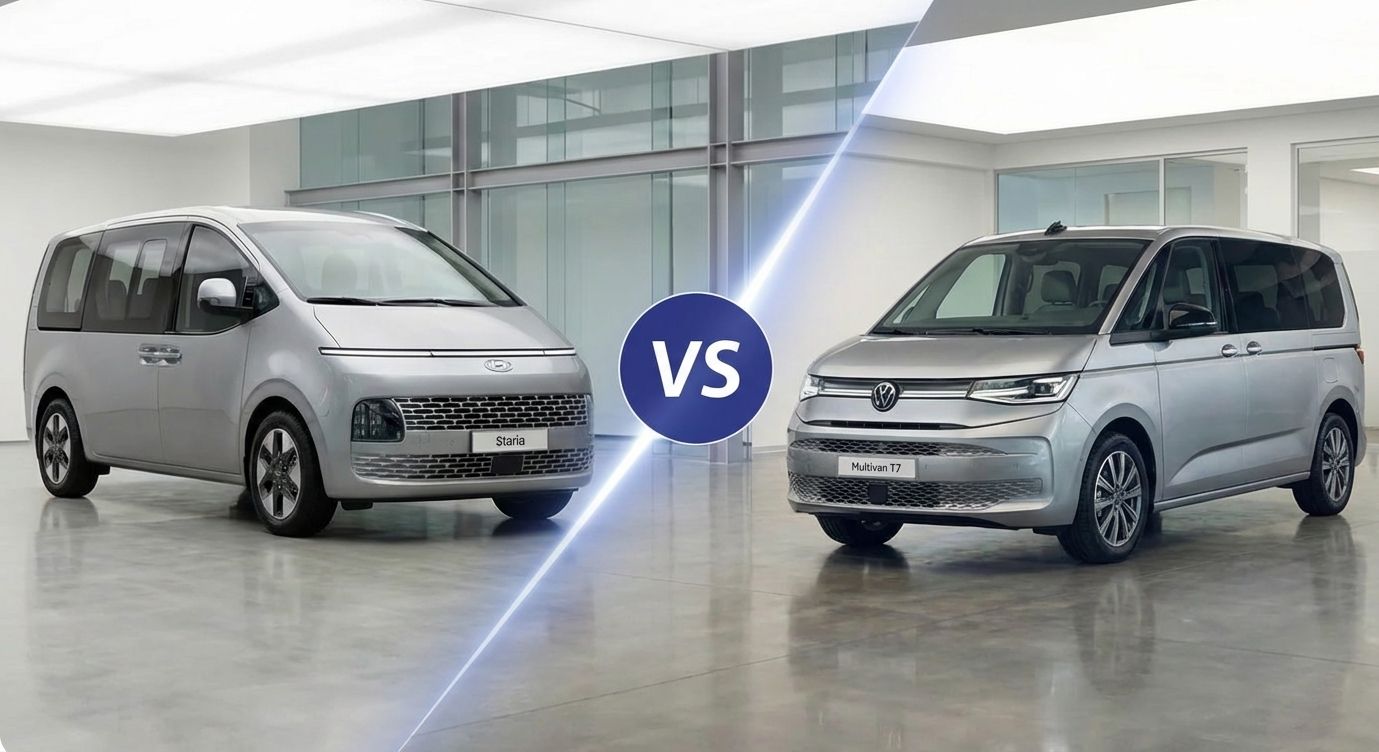
Car battle
Hyundai Staria vs Volkswagen Multivan: Complete Comparison 2025
Hyundai Staria vs. Volkswagen Multivan. Detailed comparison of design, practicality and price. Find out which large MPV is the better choice for you.
Apr 13, 2026
Articles
Car battle
Detailed comparison of Citroën SpaceTourer and Opel Zafira Life. Find out which family MPV offers better engines, equipment, and space. Read our verdict!
April 14, 2026
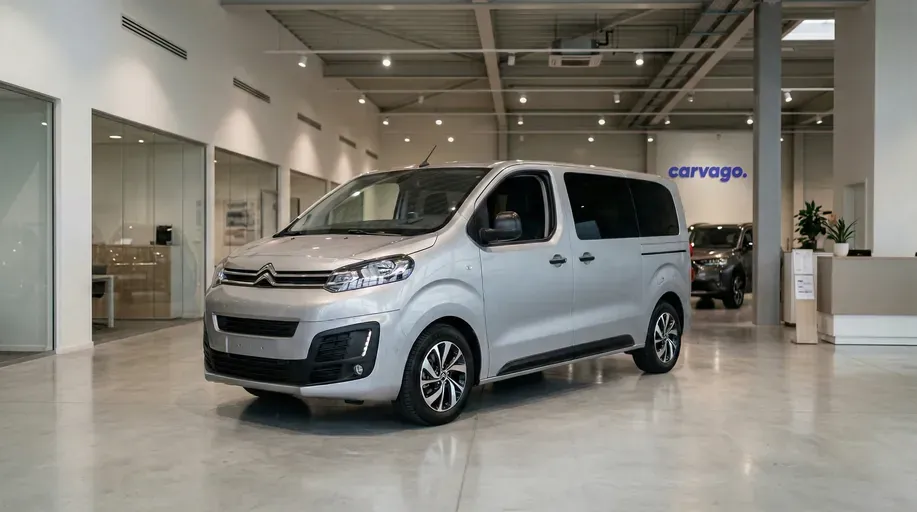
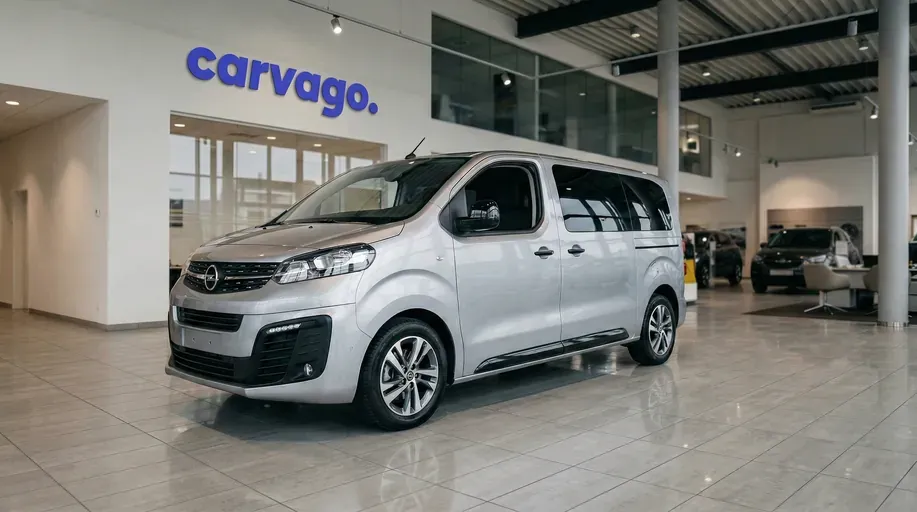
Citroën SpaceTourer, which is also known as the ë-SpaceTourer in its fully electric version, represents an exceptionally spacious and flexible family van that places great emphasis on smooth ride comfort and elegant French style. Its direct competitor and technical sibling is the Opel Zafira Life, sold on the British market as the Vauxhall Zafira Life and in its zero-emission variant as the Zafira-e Life, which appeals more to customers who prefer a more understated German design combined with exemplary interior variability. Let's now take a detailed look at how these two popular representatives of large-capacity vehicles fare in a direct comparison and which one will better suit your daily needs.
When comparing the external dimensions of these two popular family cars, we encounter interesting differences that directly affect their daily usability. From the available data on the generations currently most relevant to the market for roughly four-year-old used cars, it is clear that the Opel Zafira Life (in the specification based on generation C) is overall a more robust and larger vehicle. With a body length ranging from 4658 to 4666 mm, it is 220 to 228 mm longer than the Citroën SpaceTourer (here in the version corresponding to the C4 SpaceTourer model), whose length is a more compact 4438 mm. This noticeable difference means more space for the rear overhang and potential cargo in the German representative, while the shorter French model scores with significantly better agility and easier maneuvering in tight city streets.
The biggest surprise, however, comes when looking at the wheelbase. Although the Citroën is substantially shorter on the outside, it has a wheelbase of 2785 mm, which is 25 mm more than the longer Opel (2760 mm). French engineers thus managed to place the wheels further into the corners of the body and extract the absolute maximum passenger legroom from the more compact footprint. Opel, however, counters with an overall more massive build – it is 58 mm wider (1884 mm compared to 1826 mm for the Citroën) and has a taller body (up to 1685 mm compared to 1610 mm). Passengers in the Opel can thus count on an airier feel in the shoulder area and more generous headroom.
This different construction philosophy gives buyers in the used car market a clear choice. The shorter Citroën with its excellent wheelbase is an ideal choice for those who primarily transport passengers, move in urban environments, and appreciate easier parking. Opel, on the other hand, will appeal to drivers who don't mind slightly worse maneuverability in tight spaces but need to maximize the total internal volume for luggage and prefer the car's more mature, wider stance.
| Parameter | Citroën SpaceTourer Van | Opel Zafira Life Van |
|---|---|---|
| Width (mm) | 1826 | 1884 |
| Length (mm) | 4438 | 4658-4666 |
| Height (mm) | 1610 | 1660-1685 |
| Wheelbase (mm) | 2785 | 2760 |
The luggage compartment is often the main selling point for multi-purpose vehicles, whether you are looking for a car for a large family or need to regularly transport bulky sports equipment. In the case of the Citroën SpaceTourer and Opel Zafira Life models, both of which fall into the category of large passenger vans and share the same Stellantis Group platform (ideal representatives of the roughly four-year-old used car market), the values are practically identical. For buyers, this means a huge advantage – with both vehicles, you get maximum variability and an astounding transport capacity that easily handles even the most demanding tasks.
Both models are most commonly found on the used car market in the medium body length (M) or the extended version (L/XL). In the medium variant, the standard boot volume behind the third row of seats is a solid 640 liters, while the extended version increases this space to an impressive 1060 liters. If you fold down or completely remove the rear seats, both vehicles transform into full-fledged vans with a maximum volume of up to 3600 liters for the medium version and a massive 4900 liters for the longest one. An important fact for those interested in more eco-friendly operation is that the fully electric variants (ë-SpaceTourer and Zafira-e Life), which are increasingly common among four-year-old used cars, have their batteries cleverly hidden in the floor, so their enormous internal capacity is not reduced at all compared to the internal combustion versions.
In practice, these values mean that even when fully occupied by eight or nine passengers, there is still safe space for several extra suitcases, which you will appreciate especially during airport transfers or winter trips to the mountains. By removing one row of seats, you gain space more than sufficient for weekend shopping or a longer holiday, with non-disassembled bicycles, bulky strollers, or even larger building materials fitting inside without any problems.
Given that both cars are completely identical in terms of practicality and luggage volume, the size of the boot will not be the deciding factor in your choice. The final choice of a used car will depend primarily on brand preference, the preferred front grille design, or the specific equipment and technical condition of the particular unit on the market.
| Parameter | Citroën SpaceTourer Van | Opel Zafira Life Van |
|---|---|---|
| Base volume (liters) | 640 - 1060 | 640 - 1060 |
| Max volume with seats folded down (liters) | 3600 - 4900 | 3600 - 4900 |
Since both the Citroën SpaceTourer and Opel Zafira Life share the same platform and offer an identical and massive luggage compartment, you can safely let your personal taste and the value of a specific offer guide your choice of a used car.
Towing capacity is a key parameter for families and active drivers considering towing caravans or heavier loads. Since the full-size passenger vans Citroën SpaceTourer and Opel Zafira Life (from around 2020–2022) share the same platform, their overall towing capacity is almost identical. These robust vans can tow a braked trailer weighing up to 1,900–2,300 kg at most. However, in the data from the market for roughly four-year-old used cars, their popular smaller MPV predecessors and namesakes, the Citroën C4 SpaceTourer and Opel Zafira (Generation C, 2018–2020), also appear very frequently. For these more compact family models, the standard braked trailer weight for petrol versions ranges from around 1,300 to 1,500 kg, while the maximum towing capacity for more powerful diesels reliably reaches 1,700 kg for the Citroën and 1,650 kg for the Opel Zafira.
For the vast majority of variants, the unbraked trailer weight safely reaches the legislative maximum of 750 kg. In practice, this means ideal space for a few extra suitcases in a smaller trailer, a capacity that is perfectly sufficient for weekend shopping or a longer family holiday. However, special attention must be paid to the modern fully electric versions (ë-SpaceTourer and Zafira-e Life), where the maximum braked trailer capacity drops significantly to just 1,000 kg.
In conclusion, both vehicles offer excellent utility in terms of trailer towing. Whether you choose the French or German model plays essentially no role in towing capacity – the deciding factor for selection on the used car market will rather be whether you go for a standard version with a more economical petrol engine, a fully electric variant with limited capacity, or bet on the maximum towing power of a strong diesel engine.
| Model and motorization | Braked weight of trailer (kg) | Unbraked weight of trailer (kg) |
|---|---|---|
| Citroën C4 Spacetourer PureTech 130 (96 kW) | 1300–1500 | 750 |
| Citroën C4 Spacetourer BlueHDi 130 (96 kW) | 1600–1700 | 750 |
| Citroën C4 Spacetourer BlueHDi 160 (120 kW) | 1700 | 750 |
| Opel Zafira 1.4 Turbo (103 kW) | 1500–1650 | 750 |
| Opel Zafira 1.6 Diesel (99 kW) | 1600–1650 | 750 |
| Opel Zafira 2.0 Diesel (125 kW) | 1550–1650 | 750 |
Comparing the engine options of the Citroën SpaceTourer and Opel Zafira Life offers a very interesting look at how cutting-edge technology sharing works within the current Stellantis group. Both of these vehicles are built on the identical EMP2 platform and hide a completely identical range of power units under the hood. Choosing between them is therefore more a matter of design preference and brand loyalty than a pursuit of different dynamics. An interesting fact is that with the transition of both models from a classic MPV layout to bodies derived from large vans, the engine range has been drastically simplified. Standard passenger versions have completely abandoned petrol engines in favor of powerful and economical diesels. The cornerstone of both vehicles is an economical 1.5-liter four-cylinder diesel, which is ideal for lighter loads and budget-conscious drivers. The highlight and most sought-after choice is the robust 2.0-liter diesel, available in a top-tier 130 kW tune. This variant, paired with an exceptionally smooth eight-speed automatic, will especially please those who frequently cross Europe with a full car and a loaded trunk. Modern electric variants aimed at locally emission-free urban shuttle transport are also available.
The engine range of the Citroën SpaceTourer is based on reliable diesel units labeled BlueHDi, which stand out for their very refined operation and low fuel consumption. The base is the 1.5 BlueHDi (88 kW) engine; however, for a large and often fully occupied van, it is incomparably more optimal to choose the more powerful 2.0 BlueHDi unit (available in versions from 106 to 130 kW). The most powerful 2.0-liter is complemented by a smooth and very reliable EAT8 eight-speed automatic transmission. Eco-conscious families or hotel shuttle operators will be attracted to the all-electric ë-SpaceTourer with 100 kW of power. Looking at historical data for the earlier compact MPV Citroën C4 SpaceTourer (production of which ended in 2020), we see a huge generational leap. This older passenger model commonly offered petrol engines like the popular 1.2 PureTech 130 or the turbocharged 1.6 THP 165 four-cylinder. However, these petrol versions were never developed for the current SpaceTourer, and petrol is thus completely absent from today's used car market years.
| Engine type | Fuel | Power (kW) | Torque (Nm) | Transmission |
|---|---|---|---|---|
| 1.5 BlueHDi | Diesel | 88 | 300 | 6MT |
| 2.0 BlueHDi | Diesel | 106 - 110 | 370 | 6MT / 8AT |
| 2.0 BlueHDi | Diesel | 130 | 400 | 8AT |
| Electric motor (50/75 kWh) | Electricity | 100 | 260 | 1AT |
In terms of the powertrain, the Opel Zafira Life is an absolute mechanical twin of the Citroën. To maintain its own identity, however, Opel has for years labeled its engines with the established CDTI acronym. The base is the compact 1.5 CDTI (starting at an economical 75 kW), but for a comfortable ride, the more powerful 2.0 CDTI units are essential. The most powerful 2.0-liter provides a generous 400 Nm of torque and, in combination with a classic eight-speed automatic, guarantees tireless highway pull without unnecessary downshifting. The emission-free future is represented by the battery-powered Zafira-e Life. You will feel the generational conceptual shift most strongly if you compare the modern Life version with the classic Opel Zafira Tourer (Generation C), which gradually disappeared from the new car market by 2019. In the original Zafira C, interesting petrol engines (such as the 1.4 Turbo) and even an exceptionally diverse range of gas versions in the form of the 1.6 CNG ecoFlex burning compressed natural gas or the 1.8 LPG ecoFlex variant made up a significant part of the offering. All these petrol and alternative derivatives disappeared with the arrival of the Zafira Life era. The market for four-year-old used cars for this model has been strictly limited to powerful diesel classics and niche electric versions.
| Engine type | Fuel | Power (kW) | Torque (Nm) | Transmission |
|---|---|---|---|---|
| 1.5 CDTI | Diesel | 75 - 88 | 270 - 300 | 6MT |
| 2.0 CDTI | Diesel | 106 - 110 | 370 | 6MT / 8AT |
| 2.0 CDTI | Diesel | 130 | 400 | 8AT |
| Electric motor (50/75 kWh) | Electricity | 100 | 260 | 1AT |
Both vehicles share an absolutely identical range of economical diesel engines and electric drives, so when choosing the ideal used car, focus primarily on your preferred equipment and definitely favor the more powerful 2.0-liter diesel for long family trips.
Choosing the right engine is absolutely crucial for long-term satisfaction with the vehicle, and our recommendations are based on real mechanical experience, actual fuel consumption, and feedback from owners themselves. Citroën SpaceTourer and Opel Zafira Life are technically identical siblings (built on the same Stellantis platform) and together they replaced traditional compact family MPVs on the market. Looking at the model availability parameter (AVAILABLE_YEARS) in the database, we find an interesting fact: previous popular family cars like the Citroën C4 SpaceTourer ended with engines available until 2020, and the Opel Zafira C / Zafira Tourer left the market as early as 2019. Naturally, you won't find these older generations with the smaller and then-popular 1.6 BlueHDi or 1.6 CDTI engines on the market for roughly four-year-old used cars. Today, the market is fully dominated by these larger, van-based vehicles, for which we strongly recommend avoiding the underpowered 1.5-liter diesels and early electric versions (which barely cover 220 km in reality) and instead betting on the proven 2.0-liter diesels.
| Model | Recommended engine | Power |
|---|---|---|
| Citroën SpaceTourer | 2.0 BlueHDi 180 EAT8 | 130 kW (177 hp) |
| Opel Zafira Life | 2.0 Diesel 150 | 110 kW (150 hp) |
Note on available model years: Smaller power units from previous years are either no longer offered for these four-year-old used cars with heavier body construction, or they are dynamically inadequate.
This top-of-the-line 2.0-liter diesel engine is clearly the best choice in the SpaceTourer range in terms of overall balance. Given the vehicle's large dimensions and weight, it provides a confident 400 Nm of torque available from as low as 2000 rpm, which is absolutely crucial for a fully loaded eight-seater van. Its main technical advantage is excellent flexibility, safe and brisk highway overtaking, and great synergy with the smooth-shifting eight-speed Japanese Aisin automatic (EAT8). Real-world fuel consumption can be kept between 7 and 8 liters per 100 km in the long term, even with a heavy foot. The main known risk, as with the vast majority of modern PSA diesels, is the sensitive emission system. The diesel particulate filter (DPF) tends to clog during frequent short city trips, and the AdBlue emission system is often plagued by tank deformation or urea crystallization on the injector, which can even result in the engine failing to start. To mitigate these issues, experienced mechanics recommend regularly using effective anti-crystallization additives for AdBlue and taking the car on longer trips frequently to perform a complete DPF regeneration. By its characteristics, this engine is absolutely ideal for long-distance travelers, large families, and professional shuttle services that spend a lot of time on the highway.
For the sister Opel Zafira Life, the mid-range power variant of the same block, producing 110 kW (or 106 kW / 145 hp in newer emission calibrations), is an excellent, more rational, and simpler choice in terms of subsequent maintenance. If you are looking for an indestructible "workhorse" at a slightly lower purchase price, we recommend it in combination with a manual transmission. This robust engine scores points for being perfectly adequate for brisk daily operation thanks to 370 Nm of torque and, above all, significantly lower fuel consumption. Compared to the automatic gearbox, with the manual you can reach a fantastic limit of 6.5 l/100 km and completely eliminate the occasional rough jerking of the EAT8 automatic when cold. The risks associated with the AdBlue system remain the same for both models, so always have the error message history checked via diagnostics before buying a used car. During the test drive of a manual, pay special attention to the smooth operation of the clutch and the noiseless running of the dual-mass flywheel – if the vehicle served as a company car and frequently towed trailers, these components may be at the end of their life. The manual engine version is perfectly tailored for more deliberate drivers with a tighter budget who cover a diverse mix of roads daily, don't mind shifting, and want to save on both fuel and transmission maintenance in the long run.
The difference between the official fuel consumption figures stated by the manufacturer and real-world practice is often vast for large family vehicles. If we look at historical factory data for older generations of compact MPVs (such as the Citroën C4 Spacetourer or Opel Zafira Tourer from the mentioned databases), we find highly optimistic consumption values, some starting well below 5.0 l/100 km. For today's market of roughly four-year-old used cars (model years around 2022), much larger models are relevant – full-size passenger vans like the Citroën SpaceTourer and Opel Zafira Life. To get a truly objective picture of their real-world consumption, we must turn to the crowdsourcing portal Spritmonitor.de, which collects long-term records directly from drivers. The data clearly shows that modern large-capacity vehicles, due to their weight and frontal area, require more fuel in practice than the unrealistic laboratory tests of their smaller predecessors promised.
| Model and engine | Average consumption (l/100 km) |
|---|---|
| Citroën SpaceTourer 1.5 BlueHDi 88 kW | 6.5 |
| Opel Zafira Life 1.5 Diesel 88 kW | 6.5 |
| Citroën SpaceTourer 2.0 BlueHDi 110 kW | 7.1 |
| Opel Zafira Life 2.0 Diesel 110 kW | 7.1 |
| Citroën SpaceTourer 2.0 BlueHDi 130 kW (automatic) | 8.0 |
| Opel Zafira Life 2.0 Diesel 130 kW (automatic) | 8.0 |
| Citroën C4 Spacetourer 1.5 BlueHDi 96 kW (older MPV) | 5.5 |
| Opel Zafira Tourer 2.0 CDTI 125 kW (older MPV) | 6.5 |
From a trend perspective, these figures bring several important findings. Petrol engines practically make no sense in these heavy vehicles; on the contrary, diesel units completely dominate the market. A very surprising fact is that the smaller 1.5-liter turbodiesel does not bring such a noticeable fuel saving in practice as one might expect. The smaller engine has to struggle with the massive, over two-ton body at higher revs, which significantly increases its overall consumption. In contrast, the more powerful two-liter units (110 kW and 130 kW) offer drivers a much more relaxed performance, and their consumption does not rise as steeply even at highway speeds.
For a typical user, this represents a fairly clear recommendation. If you spend most of your time on highways or often carry a full load of people or cargo over longer distances, the larger two-liter engine with values just above the seven-liter mark is an optimal and surprisingly economical option. In the city and in traffic jams, the heavier and more powerful engine will unabashedly ask for as much as nine liters, but overall, this highway cruiser is more considerate of its passengers. Budget-conscious drivers who use these vehicles for shorter suburban commutes with a half-empty interior may appreciate the smaller 1.5-liter engine a bit more, although the real difference in consumption is less than a liter.
In conclusion, it can be clearly stated that fuel consumption will not be the main deciding factor for those hesitating between these two vehicles. Since both the Citroën SpaceTourer and Opel Zafira Life share identical Stellantis Group technology following the merger – from chassis platforms and boxy aerodynamics to the engines and transmissions themselves – their average operating fuel costs are identical. The final choice of a vehicle on the used car market should therefore depend solely on brand preference, seating arrangement, and the overall technical condition of the specific unit.
Since the Citroën SpaceTourer and Opel Zafira Life share the same platform (EMP2) from the Stellantis Group, their prices on the used car market are at very similar levels. When looking for cars approximately four years old (2021 and 2022 models), you will encounter quite confident pricing on the market. Demand for large and practical family vans with fuel-efficient diesel engines has long exceeded supply, leading to very good value retention.
For four-year-old SpaceTourer models, prices on the used car market most often range between €27,000 and €35,000. These models hold their value excellently, especially when equipped with the reliable 2.0 BlueHDi engine and the proven eight-speed automatic transmission. Versions with the longest wheelbase (often designated as L3 or XL) or premium business versions with leather VIP seats can approach the €37,000 mark.
Used Zafira Life models from the same production years stay in a practically identical, sometimes only slightly lower price range, roughly from €25,000 to €33,000. A slightly more favorable starting price for some units may be due to a different structure of trim levels during initial sale, as the Opel was more often sold in more modestly equipped fleet versions. However, the technology under the hood in the form of the two-liter diesel four-cylinder is mechanically identical to its French sibling.
| Model (2021–2022 models) | Estimated price (€) | Typical mileage (km) | Most common engines |
|---|---|---|---|
| Citroën SpaceTourer | €27,000 – €35,000 | 50,000 – 100,000 | 2.0 BlueHDi (106 kW / 130 kW) |
| Opel Zafira Life | €25,000 – €33,000 | 60,000 – 110,000 | 2.0 CDTi / Diesel (106 kW / 130 kW) |
Prices may vary significantly depending on the specific condition of the vehicle, body length, and documented service history.
What affects the price of these models the most?
Given the complete technical kinship of both vehicles, you don't have to limit yourself to a specific brand when choosing a four-year-old used car. By far the most sensible approach is to focus on which specific unit offers you a more transparent history, more careful maintenance, and an interior layout that suits your family needs for the given price.
Both compared models often boast a maximum five-star rating in Euro NCAP safety tests. However, when choosing a used car, it is absolutely crucial to know the context and the exact year of this rating. The testing protocols of the independent Euro NCAP organization are constantly evolving and becoming significantly stricter. For this reason, percentage results from different years cannot be directly compared – what was enough for five stars in the past would fall far short of modern requirements for advanced frontal crash simulations, emergency braking at intersections, or cyclist detection.
The Citroën SpaceTourer underwent these crash tests in 2015 according to the protocol then in place for heavier vehicles. Although the Opel Zafira Life entered the market as a new model several years later (2019), it is technically a completely identical vehicle built on the same EMP2 platform. Due to this identical construction, the Opel inherited its five-star rating directly from the historical test of the Citroën and its shared sibling, the Peugeot Traveller. In 2019, Euro NCAP intentionally refrained from new testing of the Zafira Life, noting that the older architecture from 2015 would no longer meet the significantly stricter standards then in force to achieve a full five-star rating.
| Parameter | Citroën SpaceTourer | Opel Zafira Life |
|---|---|---|
| Year of testing | 2015 | 2015 (derived result) |
| Adult occupant protection | 87 % | 87 % |
| Child occupant protection | 91 % | 91 % |
| Vulnerable road user protection | 64 % | 64 % |
| Safety assist systems | 78 % | 78 % |
In terms of passive safety, both vans offer a very solid level of protection even by today's used car market standards. The excellent score of 91% for child protection and a very good 87% for adult occupants clearly proves that the body construction is sufficiently rigid and can safely protect the crew in a physical impact. Conversely, the expected weakness of both vehicles is pedestrian protection and the level of active assistance systems. While both cars in higher trim levels tend to be equipped with blind spot monitoring, lane departure warning, or basic emergency braking, these features fall far short of the complexity and speed of today's intelligent systems. Furthermore, from the perspective of current standards, the validity of the original 2015 five-star certificate for both vehicles has already formally expired.
In conclusion, neither car has any real advantage in terms of safety, as they are completely identical cars with the exact same safety architecture hidden beneath their exterior design. Both models represent robust and safe family transporters providing great passive protection; however, as a buyer, you must take into account that their suite of active safety features logically corresponds to the technological standards of the previous decade.
Since these are technically identical vehicles tested according to the more lenient 2015 standards, both offer a very rigid body and excellent occupant protection, but they lack the very latest active assistants of today.
In addition to standard equipment, each of the models offers several unique features that can be decisive for the customer and clearly show that even large-capacity vehicles can offer a high level of added value. Although both vehicles share the common technical basis of the EMP2 platform, each brand has adapted details and equipment lines to its typical character.
The French carmaker traditionally bets on maximum travel comfort, softer settings, and practical solutions for everyday family life for its representative.
Even with a large passenger van, Opel continues the tradition of its legendary MPV. The Zafira Life is therefore more profiled as a luxury "lounge" on wheels or a mobile office for corporate clients.
Excellent chassis comfort and softer suspension typical of Citroën vehicles
Huge and variable interior space with the option of up to 9 seats
Often a slightly more affordable price tag on the used car market compared to sibling models
Proven and economical 2.0 BlueHDi diesel engines (especially for 2021 and older models)
Practical sliding side doors making it easier to handle child car seats
Outdated and slower multimedia system with cumbersome touch controls
Cheaper-looking hard plastics in lower trim levels
For newer models (from 2022), the range is mostly limited to electric versions with a shorter range
The Citroën SpaceTourer is an ideal choice for large families or shuttle operators who prioritize maximum driving comfort and an excellent price-to-utility ratio. Its softer suspension filters out bumps perfectly, making it the perfect companion for long highway journeys with a fully loaded vehicle.
Elegant and more conservative front grille design, which looks more like a large passenger car
Wide interior variability including the popular luxury "Lounge" seat arrangement (facing each other)
Shared and reliable technology from the Stellantis group, ensuring trouble-free availability of spare parts
Choice of three body lengths for perfect adaptation to the buyer's spatial needs
Higher trim levels give a more premium and representative impression
The interior lacks unique Opel brand elements; the dashboard is identical to its French siblings
Shares the same drawback of an outdated and slower infotainment system
Just like with the Citroën, finding a younger used diesel (from 2022) is very difficult due to the transition to purely electric drive
The Opel Zafira Life targets customers who appreciate a sleeker look or are looking for a representative multi-seater for corporate or VIP purposes. Although it hides purely French technology under the body, its subtle exterior design and rich rear seat configuration options make it an exceptionally versatile and dignified minibus.
Based on long-term owner feedback, service reports, and data outputs provided by CarAudit – our thorough physical vehicle inspection – we have compiled an overview of the most common problems to watch out for when buying a roughly four-year-old used car.
The Citroën SpaceTourer is a very spacious and practical model, but due to its van origins and high weight, it suffers from several specific ailments.
Mechanically, the engines are durable, but the main bogeyman for used car buyers is the delicate AdBlue injection system and faster chassis wear. A thorough diagnosis of the emission systems and a check of the sliding door tracks is essential before purchase.
Since the Opel Zafira Life shares the same EMP2 platform and group technology with its French sibling, it faces practically identical problems in approximately four-year-old used cars.
The reliability of the Zafira Life is a mirror image of the SpaceTourer, and therefore an independent comprehensive car inspection here should also uncompromisingly focus on detecting expensive SCR system faults and real mechanical wear of the chassis.
When buying a used car, a thorough inspection is crucial, and both of these technically related vans have their specific points to watch out for. Since they share a platform and powertrains, many issues are common, but depending on previous use (family car vs. corporate shuttle), different types of wear may appear. To avoid being surprised by expensive repairs after purchase, a professional physical car inspection is an ideal step to map out the car's true condition in detail.
Both vehicles are technological twins from the Stellantis group and are based on the identical EMP2 chassis platform. The main differences lie only in the front grille design, the logo on the steering wheel, and slightly different trim level configurations. Driving characteristics, spaciousness, and the technology under the hood are absolutely identical for both vans.
The interior space is exactly the same for both vehicles, as they share an identical body and wheelbase. Both models were sold as new in two to three different lengths, so the trunk volume and passenger space depend purely on the specific version chosen. In the longest variants of both vehicles, you can easily accommodate up to nine passengers or, after removing the seats, transport a huge amount of cargo.
On the market for four-year-old used cars, the most sought-after and reliable choice is the 2.0 BlueHDi diesel engine, which has enough power even for a fully loaded car. The weaker 1.5 BlueHDi diesel versions are more suitable for shorter routes and calmer driving. Gasoline engines were not supplied for these vehicles, so you will mostly be choosing from diesel variants, often paired with a reliable eight-speed automatic transmission.
Yes, both models have been offered for several years as pure electric vehicles under the names Citroën ë-SpaceTourer and Opel Zafira-e Life. They are available on the market with two battery capacities (50 kWh or 75 kWh), providing a real-world range of approximately 200 to 300 kilometers per charge. Since 2022, the manufacturer has even discontinued diesel engines for new passenger versions in many European markets, so the number of used electric vehicles will gradually increase.
Given their shared origin, both cars offer a completely comparable level of practicality, storage space, and safety equipment. The choice should therefore be guided more by the overall condition of the specific used car and its actual equipment rather than the car brand itself. However, the Opel can sometimes give a slightly more understated impression, while Citroën traditionally profiles itself as a softer and more playful family car.
Sources: ADAC, forbes.cz, novinky.cz, mobilmania.cz, autorevue.cz, roadblog.cz
This article was prepared using artificial intelligence tools. The section guarantor is Petr Dušek.
Hyundai Staria vs. Volkswagen Multivan. Detailed comparison of design, practicality and price. Find out which large MPV is the better choice for you.
Apr 13, 2026
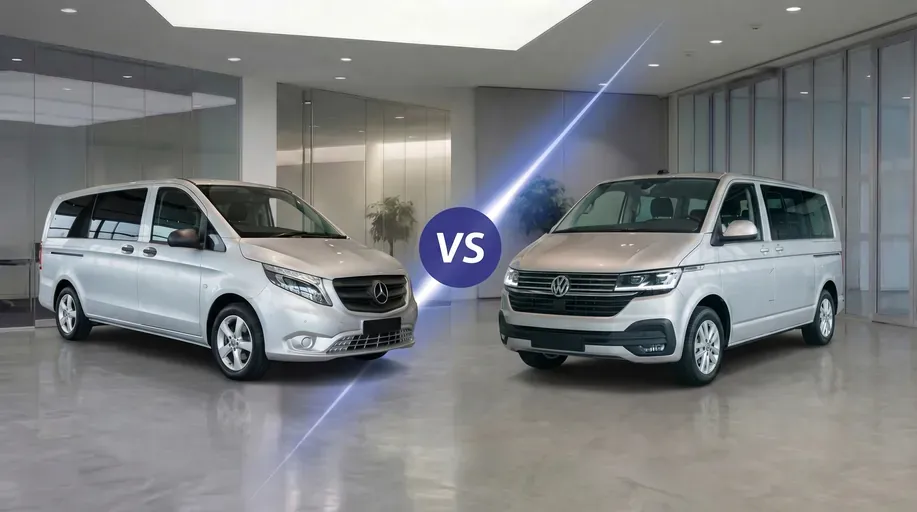
Comparison: Mercedes-Benz Vito Tourer vs. Volkswagen Multivan. Discover real-world experiences, equipment details, and the final verdict that will make choosing a van easier.
Apr 20, 2026