Articles

Car battle

Lexus ES vs. Volvo S90: Complete comparison 2026

Detailed comparison of Lexus ES vs. Volvo S90. Looking for a premium sedan? Discover real-world experiences, differences in equipment, and our verdict before buying a used car.

April 16, 2026

VS
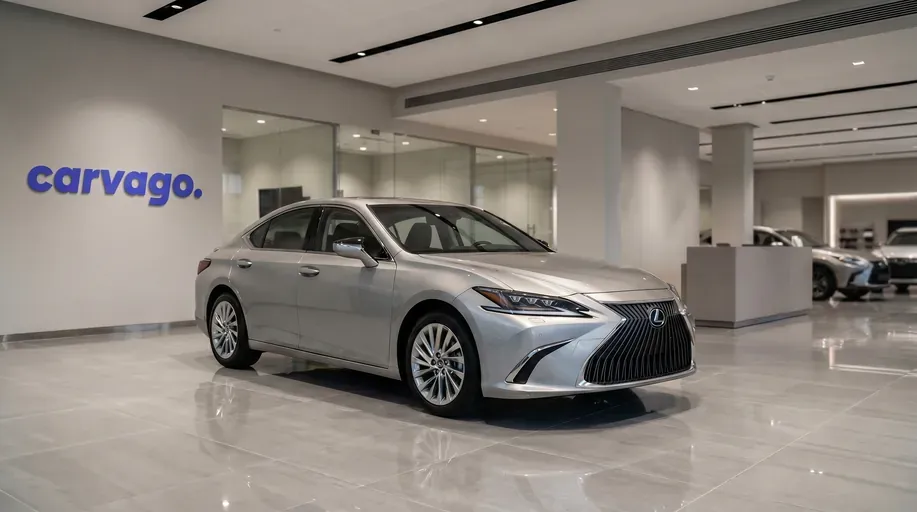
Lexus ES

Lexus ES

Volvo S90

Volvo S90

Introduction

The seventh-generation Lexus ES is a refined premium sedan that attracts buyers on the used car market primarily with its legendary Japanese reliability, exemplary sound-insulated interior, and exceptionally efficient hybrid powertrains. Standing against it is the Volvo S90, also available in selected markets in the extended S90L version, which, as the Swedish flagship, scores with minimalist Scandinavian luxury, uncompromising safety equipment, and generous interior space. Let's take a detailed look at which of these two distinctive representatives of the upper-middle class represents a smarter choice for purchasing on the market for roughly four-year-old nearly new cars.

Comparison of External Dimensions

When choosing a luxury executive sedan, exterior dimensions play a key role, not only for interior space but also for everyday usability. Both the Lexus ES and the Volvo S90 are majestic vehicles whose length safely approaches the five-meter mark. With a total length of 4975 mm, the Lexus ES is a negligible 6 mm longer than the Volvo S90 (4969 mm). When maneuvering in tight urban spaces or underground garages, both models require more caution and reliance on parking sensors. Neither car offers a significant advantage when it comes to easier parking.

However, the biggest and most crucial difference for passengers can be found in the wheelbase. The Swedish representative has a wheelbase of 2941 mm, which is a significant 71 mm more than its Japanese competitor (2870 mm). In practice, this means that the Volvo S90 can provide slightly more generous legroom for rear-seat passengers. Furthermore, the Volvo is 14 mm wider, which not only improves shoulder room inside the cabin but also gives the car a more stable and planted stance on the road. For buyers who plan to use the rear seats frequently for adult passengers, this figure presents a clear argument for the Volvo.

The Lexus ES slightly exceeds the Volvo in body height (1445 mm compared to 1440 mm). However, the Japanese sedan is characterized by a more pronounced sloping roofline and aggressive, fluid curves that combine elegance with perfect aerodynamics. While Volvo cleverly uses its longer wheelbase and more classic shapes to maximize internal volume and conservative majesty, Lexus prioritizes sportier and visually more dynamic proportions. Thus, Volvo wins in terms of pure space, while Lexus scores with its sophisticated aerodynamic silhouette.

ParameterLexus ES SedanVolvo S90 Sedan
Width (mm)18651879
Length (mm)49754969
Height (mm)14451440
Wheelbase (mm)28702941

Trunk Volume

Luggage space in premium executive sedans is often a discipline full of compromises, yet it plays a key role for many buyers, whether for family use, weekend shopping, or packing for a longer holiday. Both the Lexus ES (XV70 generation, focusing on models around 4 years old) and the Volvo S90 (2nd generation) offer completely different approaches in this regard. While the Swedish representative tries to combine elegance with traditional Nordic practicality, the Japanese sedan prioritizes absolute body rigidity and maximum driving comfort, even at the cost of certain concessions in transport capacity.

Looking at the exact figures, the Volvo S90 in its standard engine configurations offers a very decent base volume of 500 liters, which is more than enough to accommodate several large suitcases for a long vacation. In the plug-in hybrid variants (T8 Recharge), however, the placement of high-voltage batteries has taken a slight toll on space, and the trunk volume drops to 461 liters. On the other hand, the Lexus ES, primarily available on the used car market as the fuel-efficient 300h full-hybrid, offers a fixed 454 liters in its luggage compartment. Both cars have solid trunk depth; however, the classic smaller loading opening typical of sedan bodies naturally limits the transport of bulky and overly tall items.

A fundamental and very important difference for everyday usability lies in the possibilities for expanding the luggage compartment. The Volvo S90 is equipped as standard with asymmetrically split and fully folding rear backrests, allowing the transport capacity for long items to be significantly expanded (although the manufacturer does not specify the exact maximum volume in liters for the sedan). In the Lexus ES, however, engineers chose a completely different path – to achieve top-tier torsional body rigidity and unrivaled reduction of vibration and noise, they used a thick V-shaped steel brace located directly behind the rear seats. In practice, this means that the rear backrests in the Lexus cannot be folded at all, and only a narrow ski hatch behind the center armrest is available. This fact can significantly limit practicality for drivers who occasionally need to transport a longer piece of furniture or several pairs of skis without using a roof rack.

ParameterLexus ES SedanVolvo S90 Sedan
Base volume (liters)454500
Max. volume after folding seats (liters)454Not officially stated

🇸🇪 Swedish flexibility wins

If you plan to transport bulkier or longer items at least occasionally, the Volvo S90 is a much more practical and versatile choice than the structurally purist Lexus ES, thanks to its larger base trunk and fully folding seats.

Discover the true condition of the car thanks to an independent inspection

Order CarAudit™

Trailer Weights

When comparing towing capacity, there is a vast difference between the Lexus ES and Volvo S90, which can be a decisive factor for many buyers choosing a roughly four-year-old used car. While the Swedish representative proves to be a very capable hauler, the Japanese luxury sedan is significantly limited in this regard by its technical design.

Fundamental differences in numbers

The second-generation Volvo S90 (focusing on popular models from 2020–2022) offers excellent utility. For base engines like the D3 or the petrol T5, it can tow a standard braked trailer weighing 1,800 kg. If you opt for the more powerful B5, D5, or T6 variants, the maximum value climbs to a confident 2,200 kg. Even the plug-in hybrid T8 Twin Engine (Recharge) version maintains great capacity, handling 2,100 kg.

In contrast, the Lexus ES 300h (XV70 generation), which relies exclusively on an advanced hybrid powertrain with lower transmission system load, is not homologated for towing a trailer in Europe at all. Its permitted weight for both braked and unbraked trailers is therefore exactly 0 kg. You won't find any towing capacity listed in the registration certificate, and you cannot legally tow anything with this vehicle.

Practical use in everyday life

In practice, this means the Volvo S90 is a fully-fledged versatile vehicle. Its towing capacity is perfectly sufficient for a long holiday with a family caravan, towing a horse trailer, or a heavier boat to the sea. The hybrid S90 T8, in particular, offers the advantage of massive torque from zero RPM thanks to the electric motor, which you will greatly appreciate during smooth starts with a heavy load.

The Lexus ES, on the other hand, represents a purely representative sedan focused on quiet and smooth passenger transport. If you need to transport heavier materials for a weekend construction project, attach a trailer for garden waste, or hit the road with a caravan, you simply won't succeed with this model. While it is possible to mount a special hitch on the Lexus, it serves exclusively for attaching a bicycle rack, not for towing.

Final verdict

If a tow bar and the possibility of occasional or regular trailer attachment are a necessity for you, the choice narrows down to a single option. The Volvo S90 offers great practicality and enough power for demanding tasks, while the Lexus ES 300h completely steps out of this specific competition due to its zero towing capacity.
Model and engineBraked trailer (kg)Unbraked trailer (kg)
Lexus ES 300h (XV70)00
Volvo S90 D3 / T4 / T5 (2nd generation)1800 - 1900750
Volvo S90 T8 Twin Engine (2nd generation)2100750
Volvo S90 B5 / D5 / T6 (2nd generation)2200750

Overview of Most Common Motorizations

When comparing the powertrains of these two premium sedans, we encounter completely different technical philosophies, which has a fundamental impact on fuel consumption, dynamics, and long-term reliability for a buyer of a four-year-old used car. Lexus relies exclusively on a full hybrid system focused on ultimate efficiency and a smooth ride, while Volvo has gradually expanded its modular family of two-liter four-cylinder engines into an extraordinary range. In the Japanese car, you will find only one available powertrain, the 300h with 160 kW, which represents the most economical choice without the need for plugging in. Volvo, on the other hand, caters to a much wider spectrum of drivers – its standards are economical but very flexible mild-hybrid diesels and petrol versions (such as the B5 with 173 kW), but for the most demanding, it also offers the extremely powerful T8 plug-in hybrid, which sends a brutal 335 kW to all four wheels.

Lexus ES Powertrains

The range of power units for the Lexus ES (within the XV70 generation, available since 2019) is as simplified and clear as possible. Only a single version designated ES 300h is available. It relies on a naturally aspirated 2.5-liter petrol four-cylinder engine operating on the efficient Atkinson cycle, which is precisely linked with an electric motor into a full hybrid system (FHEV). The system output is 160 kW, and the driving force is directed exclusively to the front axle through an electronically controlled planetary continuously variable transmission (e-CVT) (all-wheel drive is not available here in Europe). Although the engine's performance may not thrill sports driving enthusiasts, its robust technological maturity guarantees phenomenal reliability. In normal traffic, it can seamlessly switch to electric mode and achieve real-world fuel consumption below 5 liters per 100 km, making it one of the most economical representatives of the executive class ever.

Engine TypeFuel TypePower (kW)Torque (Nm)Transmission
2.5 Hybrid (ES 300h)Petrol/Electric (FHEV)160221 (internal combustion engine)e-CVT

Volvo S90 Powertrains

Unlike its Asian competitor, the Volvo S90 (2nd generation) is much more flexible, although you will find exclusively two-liter four-cylinder units under the hood. If you are choosing a roughly four-year-old used car, it is essential to point out the major generational change between 2019 and 2020. During this period, purely internal combustion variants, such as the D3 and D4 diesels (110–140 kW) or the T4, T5, and T6 petrols, definitively disappeared from the range. The era of more sophisticated mild-hybrids (MHEV) arrived, hidden under the new B5 and B6 designations. These use a 48V system to support acceleration and smooth out the interventions of the start-stop system. The diesel Volvo B5 AWD with 173 kW and a massive 480 Nm is particularly versatile and popular. The T8 Recharge (PHEV) version then serves as the technological and performance flagship. This plug-in hybrid can travel dozens of kilometers purely on electricity and, after combining the power of the combustion and electric motors, offers a staggering 288 kW, or up to 335 kW in updated versions. The vast majority of used S90s feature an excellent eight-speed automatic and the popular AWD all-wheel drive.

Engine TypeFuel TypePower (kW)Torque (Nm)Transmission
2.0 D3 / D4 (until 2019)Diesel110 / 140320 / 4006MT / 8AT
2.0 D5 / B5 (from 2020)Diesel / MHEV1734808AT
2.0 T4 / T5 (until 2020)Petrol140 / 184300 / 3508AT
2.0 T6 / B6 (from 2020)Petrol / MHEV228 / 220400 / 4208AT
2.0 T8 RechargePetrol/Electric (PHEV)288 - 335640 - 7098AT

Evaluation and Recommendation

When comparing strengths and weaknesses, the direction of both cars is very clear. The main advantage of the Lexus ES is its legendary reliability and efficiency – you won't have to deal with charging cables, yet you'll still drive with a smile at the petrol pump. A disadvantage for some may be the slightly "rubbery" feel of the e-CVT transmission under full acceleration and the complete absence of AWD or more powerful engines. Volvo, on the other hand, scores with the confidence of its dynamic versions, perfect traction on snow thanks to AWD, and the possibility of emission-free travel with the T8 model. However, the price for Swedish performance is understandably higher complexity (superchargers, turbos, and plug-in technology), which can increase the risk of more expensive maintenance in older used cars.

For budget-conscious drivers and calm travelers who spend most of their kilometers in the city or on suburban roads, the Lexus makes huge sense. Drivers requiring fast and confident coverage of hundreds of highway kilometers per week, or residents of mountainous areas, should clearly focus their attention on the Volvo S90 in the B5 or T8 version.

Reason vs. Choice ⚖️

While Lexus scores absolutely with the bulletproof reliability and efficiency of its single hybrid powertrain, Volvo will thrill you with a richer palette including confident mild-hybrid diesels and devastatingly fast plug-in hybrids with all-wheel drive.

Choosing the right engine is key to long-term satisfaction. While Lexus has bet everything on a single card in the European market, offering the ES model exclusively with its legendary and time-tested naturally aspirated hybrid technology, Volvo followed a more complex development path with the S90. The Swedish automaker transitioned from classic pure diesel engines (D4, D5, which ended sales around 2020) to mild-hybrid (B4, B5) and powerful but technically very complex plug-in hybrid (T8) four-cylinder engines. Our recommendation is based on real-world experience, dynamics, actual fuel consumption, and mechanical reliability in the market for approximately four-year-old used cars.

For the Lexus ES, we recommend: 300h (2.5 Hybrid, 160 kW / 218 hp)

  • Why it's the best choice: For the European customer, the 300h version is essentially the only option on the nearly-new used car market; however, it is an absolutely phenomenal choice. The fourth generation of Toyota/Lexus hybrid drive represents the benchmark for reliability and worry-free operation in the used luxury sedan market.
  • Technical advantages: The combination of a massive naturally aspirated 2.5-liter four-cylinder engine operating in the efficient Atkinson cycle and an electric motor forms an exceptionally durable unit. Real fuel consumption for this nearly five-meter sedan typically ranges between 5.5 and 6 liters per 100 km, which is impressive for its class. Furthermore, the e-CVT planetary gearbox contains no traditional friction clutches, eliminating the expensive servicing known from dual-clutch automatics.
  • Known risks and weaknesses: Mechanically, the system is almost bulletproof. However, it is crucial to check the traction battery cooling filter (the intake grille is located near the rear seats). Why it matters: If the filter becomes clogged with dust or pet hair, the battery cannot cool itself, overheats, and degrades rapidly. How to identify the problem: A clogged filter is often revealed by unusually noisy fan operation in the rear of the cabin and, in later stages, a warning message on the dashboard. In terms of driving comfort, one must account for the acoustic behavior of the e-CVT gearbox – under full throttle, the revs jump to maximum and the engine drones monotonically until the vehicle reaches the desired speed.
  • Who it's for: A perfect choice for calm drivers, frequent stop-and-go city traffic (where the hybrid shines most), and smooth highway travel within speed limits.

For the Volvo S90, we recommend: B5 Diesel AWD (2.0 Mild-Hybrid, 173 kW / 235 hp)

  • Why it's the best choice: If you are looking for a roughly four-year-old Volvo S90, the B5 mild-hybrid diesel two-liter, which replaced the older D5 unit in the lineup from 2020, makes the most sense. It offers a great compromise between strong pull, operating economy, and reasonable complexity. It is much more affordable and less risky to service than the complex T8 plug-in hybrid.
  • Technical advantages: Excellent torque of 480 Nm ensures confident and effortless flexibility for this very heavy vehicle. The presence of a 48V network and an integrated starter-generator (ISG) is a huge benefit – the system starts the engine completely imperceptibly and smoothly, smoothing out the otherwise annoying start-stop system. Consumption on long trips consistently stays around 6.5 l/100 km, and the Aisin eight-speed automatic shifts logically and gently.
  • Known risks and weaknesses: For this specification (and older D5s), it is key to check the PowerPulse system. This technology uses a compressed air tank to spin the turbo at low revs. Why it matters: The system's rubber pressure hoses are prone to cracking, leading to a noticeable reduction in low-end dynamics. How to identify the problem: The fault manifests as an audible hissing from the engine compartment and a significant delay in power delivery (turbo lag) when accelerating quickly from a junction. Furthermore, there are common ailments of modern diesels – rapid clogging of the DPF filter and EGR valve if the car only drives short distances. We definitely recommend shortening the oil change interval to a maximum of 15,000 km, instead of the nonsensically long intervals specified by the manufacturer.
  • Who it's for: An ideal partner for highway cruisers, managers, and families regularly traveling long distances who appreciate the thick pull of a diesel engine, the traction of all-wheel drive, and a long range on a single tank.

Real Fuel Consumption

The difference between the official fuel consumption figures provided by manufacturers and the harsh reality of daily operation is often vast, especially for large executive sedans and plug-in hybrid systems. Since we primarily focus on cars available on the four-year-old used car market (model years approximately 2020 to 2022), we are comparing the relevant generations for these years: the Lexus ES (XV70) and the Volvo S90 (2nd generation). To achieve the most objective judgment, we analyzed user data from thousands of drivers on the independent European community portal Spritmonitor.de, where owners meticulously record their real-world refueling across various driving modes.

Model and EngineAverage Consumption (l/100 km)
Volvo S90 T8 Recharge PHEV (288 kW)4.8
Lexus ES 300h (160 kW)5.9
Volvo S90 B4 / D4 Diesel (140 kW)6.6
Volvo S90 B5 / D5 Diesel (173 kW)7.1
Volvo S90 B5 / T5 Petrol (184 kW)7.5

When interpreting real-world data, extremely interesting trends emerge. At the very top of efficiency is the plug-in hybrid Volvo S90 T8 with a staggering 288 kW of power and an average of just 4.8 l/100 km. However, a word of caution is necessary here: such low consumption is exclusively the result of conscientious drivers who constantly plug their vehicle into the grid and complete city commutes purely on electricity. Right behind it is the Lexus ES 300h with an excellent real-world average of under six liters. The Japanese full-hybrid is not dependent on charging cables at all and can effectively benefit from recuperation even in stop-and-go traffic, while elegantly offsetting the drawbacks of a heavy plug-in hybrid on highways with its sophisticated aerodynamics. Volvo's diesel versions (especially the mild-hybrid B series) bring no big surprises – real-world consumption between 6.6 and 7.1 l/100 km is a very pleasant and completely expected standard for a heavy two-ton premium AWD vehicle. Classic petrol four-cylinders round out the range with an appetite just above seven liters.

For the typical user, this generates clearly defined recommendations. Drivers living in the city or those who commute daily on congested suburban arteries and lack the certainty of daily charging will find the Lexus ES 300h to be a literal oasis of low-maintenance operation. With this car, you drive efficiently completely without effort or monitoring electric range. Managers and families covering tens of thousands of kilometers annually on long highway routes should head straight for nearly new Volvo diesels (B4/B5 Diesel) at the used car dealership, as their range and dynamics in one go make by far the most sense on the highway.

In conclusion, it can be stated with certainty that the aspect of fuel consumption and powertrain choice will likely be the main deciding factor between these models. While Lexus bets everything on one highly refined, carefree hybrid card with excellent real-world economy, Volvo forces more self-reflection: either the diesel reliability for highway cruising fits you perfectly, or you must have a wallbox ready to truly exploit the theoretical potential of its top-tier plug-in hybrid.

Price Range and Used Car Offerings

When choosing a premium sedan on the used car market at around four years of age (2021 and 2022 models), you will encounter very different price curves. While both cars started at similar prices when new, their depreciation and situation on the secondary market differ significantly.

Volvo S90: Attractive Price-to-Luxury Ratio

The Volvo S90 experiences a slightly faster drop in value in its early years, making it an exceptionally tempting purchase from the perspective of a used car buyer.

  • Base versions: Reliable mild-hybrid petrol and diesel versions (labeled B4 or B5) with an average mileage of around 100,000 km can be purchased for prices starting from €23,000.
  • Top-tier versions: More powerful T8 Recharge plug-in hybrid models, often in the luxury Inscription or sporty R-Design trim, range between €29,000 and €35,000.

Lexus ES: Master of Value Retention

The Lexus ES, on the other hand, is a phenomenon in terms of residual value retention. In Europe, the model is primarily available as the ES 300h with its renowned naturally aspirated full-hybrid system, famous for its long-term durability and low operating costs.

  • Standard market: Four-year-old examples with typical mileage usually start at around €29,000.
  • High-spec equipment: If you are looking for the popular F Sport or the top-of-the-line Luxury trim levels with lower mileage, market prices commonly stay between €35,000 and €41,000. Discounted units below the €27,000 mark appear only rarely and almost always show mileage approaching 200,000 km.

Clear Price Guide (cars approx. 4 years old)

ModelStarting Market PriceAverage Used PriceDepreciation
Volvo S90from €23,000€25,000 – €31,000Higher (great second-hand buy)
Lexus ESfrom €29,000€33,000 – €39,000Low (excellent investment stability)

Key Factors Affecting the Price

  • Market Diversity: Volvo's price range is much wider because the market offers various types of powertrains (from diesel to plug-in hybrid). Lexus essentially offers only one unrivaled, proven hybrid drive.
  • Reputation: With Lexus, you pay for peace of mind. Japanese engineers created a car where expensive service interventions are not expected even with higher mileage, which directly drives up its second-hand value.
  • Equipment Features: Volvo gives customers more freedom in choosing optional extras when specifying a new car, so on the used market, it is wise to carefully check if a specific unit has, for example, the popular premium audio system or air suspension. The Lexus ES already includes most features as standard in its base and mid-range trims.

A decision for your wallet 💰

While the Volvo S90 represents amazing value and a huge dose of Scandinavian luxury at a great price for a used car buyer, the Lexus ES will cost you more to acquire but will reward you with a more stable value upon resale.

Safety and Euro NCAP Rating

When evaluating safety by the independent organization Euro NCAP, it is crucial to realize that earning the maximum five stars for two different models does not always mean the same level of protection. Testing protocols evolve every year and are constantly becoming stricter. Percentage results from different years cannot be simply and directly compared. Newer methodologies always subject vehicles to much more demanding tests, whether it's more complex frontal crash simulations, advanced cyclist detection, or more detailed monitoring of safety assistants' behavior at intersections.

Lexus ES underwent Euro NCAP tests in 2018, when a significantly stricter rating system came into effect. This luxury Japanese sedan earned a full five-star rating and was also named the safest car in its class ("Best in Class"). It earned the award thanks to the advanced standard Lexus Safety System+ package, which was then tested in detail for the first time for its ability to detect cyclists in daylight and improved pedestrian recognition at night. Thanks to this, the car recorded an exceptionally high score of 90% in the category of vulnerable road user protection.

The Volvo S90 underwent safety tests a year earlier, in 2017. This Swedish model traditionally took home a full five stars and represented the absolute technological peak at the time – it became the first car ever to receive full points for the autonomous emergency braking (AEB) system for pedestrian protection. Volvo excelled in adult occupant protection with a score of 95% and also scored well with its assistance systems (93%). From today's perspective, however, it is necessary to take into account that the official five-star certificate from 2017 has formally expired according to current Euro NCAP rules (their validity is standardly approximately seven years). For used cars around four years old, this fact naturally does not reduce the real strength of the bodywork, but it demonstrates the generational shift in testing methodology.

ParameterLexus ESVolvo S90
Year of testing20182017
Adult occupant protection91 %95 %
Child occupant protection87 %80 %
Vulnerable road user protection90 %76 %
Safety assistance systems77 %93 %

In conclusion, it can be stated that both models represent extremely safe and reliable choices in the luxury used car segment, equipped with a high-strength construction and a host of advanced driver support features. While the Volvo S90 impresses on paper with a better percentage score in occupant protection and safety system performance according to the older 2017 methodology, the Lexus ES is certified according to the stricter 2018 standards. The Japanese representative thus overall offers a more comprehensive and modern approach to active safety, which, with its greater emphasis on pedestrian and cyclist protection, corresponds slightly better to the latest standards in traffic.

🛡️ Uncompromising safety with a minor generational difference

The Volvo S90 remains a clear symbol of excellent passive safety with perfect occupant protection, but the Lexus ES, thanks to certification according to stricter tests, represents a slightly more modern and comprehensive package of active assistants.

Comparison of Interesting Equipment Features

In addition to standard equipment, each of the models offers several unique features that help define its character and can be decisive for the customer during the final selection. While the Japanese representative relies on traditional craftsmanship and exceptionally efficient hybrid technology, the Swedish one brings Scandinavian elegance, top-tier safety, and advanced digital innovations.

Lexus ES: Master Craftsmanship and Uncompromising Reliability

  • Hybrid powertrain (ES 300h): Unlike many competitors, Lexus focuses primarily on the so-called full-hybrid (self-charging hybrid). The fourth generation of this system with an electronically controlled e-CVT transmission offers a smooth ride, excellent acoustic comfort, and real-world fuel consumption that crushes even diesel engines in the city, all without the need to look for charging cables.
  • Takumi craftsmanship: The ES interior stands out for its meticulousness, which is the result of the work of "Takumi" masters. This is reflected in the perfect fit and finish of materials, hand-stitched seats, and the unique texture of wood or aluminum decors, which give the car a touch of deep luxury and durability.
  • Air conditioning with Nanoe-X technology: The improved air purification system releases fine nano-ions into the cabin. These not only effectively suppress viruses, bacteria, and allergens but also neutralize unpleasant odors and are proven to help moisturize the skin and hair of passengers.
  • Mark Levinson premium audio: The optional 17-speaker audio system with PurePlay technology is designed to provide one of the best musical experiences in the premium segment. Each speaker is strategically placed to achieve perfect symmetrical acoustics.
  • F Sport version: For drivers looking for a sharper performance, Lexus offers the F Sport trim line. In addition to more aggressive bumpers and a grille, it adds great sports seats with better lateral support and, above all, Adaptive Variable Suspension (AVS), which significantly improves the car's dynamics in corners.

Volvo S90: Scandinavian Zen and Digital Revolution

  • Powertrain variety and T8 Recharge: Volvo offers a wider range of power units. The base consists of mild-hybrid engines (B4, B5), which ensure smooth starts and efficiency. However, a key advantage for a specific clientele is the availability of the T8 Recharge version – a very powerful plug-in hybrid that allows for daily commuting purely on electricity and offers total power approaching that of sports cars.
  • Google-based infotainment: For model years from approximately 2021, Volvo switched to the Android Automotive operating system. This step means direct and lightning-fast integration of apps like Google Maps, Google Assistant, and Spotify directly into the car without the need to connect a phone. The system also supports over-the-air (OTA) software updates.
  • Bowers & Wilkins audio: One of Volvo's greatest prides is the optional Bowers & Wilkins system (up to 1400 W). Its visual signature is the iconic tweeter on the dashboard. Sonically, it impresses with modes that faithfully simulate the acoustics of the famous Gothenburg Concert Hall or an intimate jazz club.
  • Crystal details and ergonomics: Minimalist Swedish interior design uses high-quality natural materials such as open-pore wood. A unique feature of the higher Inscription (or Ultimate) trims is the gear selector made from a solid piece of hand-cut crystal from the Swedish glassworks Orrefors.
  • Pilot Assist and air quality: The brand's safety pedigree is represented by the Pilot Assist system, one of the best-tuned assistants for semi-autonomous driving, which combines adaptive cruise control with precise lane keeping. Travel comfort is also significantly enhanced by the Advanced Air Cleaner system, which can detect and filter out up to 95% of fine PM 2.5 dust particles, with air quality monitorable directly on the display.

Key Advantages and Disadvantages

Lexus ES

Pros

Extreme reliability thanks to years of proven and refined hybrid technology

Very low fuel consumption, especially in urban and suburban traffic (ES 300h version)

Exemplarily quiet and smooth chassis focused on maximum acoustic comfort

Premium interior craftsmanship with a high emphasis on the quality of materials used

Very good residual value on the used car market

Cons

Outdated infotainment and its poorer control (especially in versions with a touchpad before the arrival of touchscreens)

Rear seats cannot be folded down due to body reinforcement, which significantly limits the transport of longer items

Less dynamic driving performance and the typical "vacuum-like" noise of the e-CVT transmission during sharp acceleration

Lexus ES is an ideal choice for drivers looking for uncompromising reliability, low operating costs, and perfect acoustic comfort on board. It will perfectly suit calmer drivers who appreciate luxury craftsmanship and will easily forgive its less sporty ambitions or limited trunk practicality.

Volvo S90

Pros

Top-tier level of passive and active safety, including the sophisticated Pilot Assist system

Beautiful and minimalist Scandinavian interior design

Extremely comfortable and ergonomically shaped seats that excel even on very long journeys

Availability of all-wheel drive (AWD) and powerful plug-in hybrid powertrains (Recharge)

Greater overall trunk practicality thanks to the ability to fully fold down the rear backrests

Cons

Control of air conditioning and most key functions exclusively via the central display can distract from driving

Faster depreciation on the used car market compared to its Japanese competitor

Stiffer chassis tuning, which filters sharp transverse bumps less effectively on larger wheels

Higher potential service costs for more complex plug-in hybrid variants

The Volvo S90 will appeal to buyers whose main priority is absolute family safety, timeless Nordic style, and unrivaled front-seat comfort. Thanks to a wider range of engines and the option of all-wheel drive, it is a more versatile executive sedan for year-round use, although one must expect a slightly higher loss of value.

Common Problems and Owner Complaints

Based on our own CarAudit inspections, breakdown statistics, service reports, and long-term owner experiences, we have compiled an overview of the most common problems that used car buyers should watch out for.

Lexus ES

The Lexus ES (especially the XV70 generation) maintains a top-tier reputation for reliability; however, even it occasionally experiences specific faults that are worth focusing on before buying a used car.

  • Engine and fuel system: For 2019–2020 models, there was a widespread recall due to a faulty low-pressure fuel pump, which could fail while driving and cause the engine to stall. Additionally, the 2020 ES 300h hybrid version occasionally suffered from engine block porosity (in 2.5l four-cylinder engines), leading to coolant leaks.
  • Electronics and safety: 2020–2021 models may show a fault in the OCS (Occupant Classification System) sensor. A short circuit in this sensor can prevent the front airbag from deploying in the event of an accident. The manufacturer addressed the issue with a free replacement of the faulty part.
  • Chassis: Mechanically, the chassis is very robust; however, on cars with higher mileage, the lower control arm bushings on the front axle may wear out sooner, manifesting as light knocking over bumps and reduced steering stability.
  • Infotainment: This is not a mechanical failure, but on older versions before the facelift, users often complain about the cumbersome and slow operation of the onboard system via the central touchpad. The manufacturer only addressed this complaint in later model years by switching to a standard touchscreen.

Lexus ES: A Model of Japanese Reliability

The Lexus ES has long been among the most reliable premium cars on the market, where most potential problems were resolved in time by recall actions, and owners of 4-year-old used cars usually only deal with prescribed maintenance.

Volvo S90

The Volvo S90 scores with minimalist design and sophisticated safety, but from a long-term reliability perspective, it requires a more careful approach, and several more delicate areas must be checked during every independent technical inspection.

  • Infotainment and software: On models from 2022 equipped with the new Android Automotive-based system, a large number of software bugs initially occurred, including screen freezing, audio dropouts, and missing basic functions (e.g., missing drive mode selector). Most of these issues are being resolved through additional and regular over-the-air (OTA) software updates.
  • Air conditioning: A relatively common ailment across model years is refrigerant leakage from the AC evaporator or freezing of the pipes, leading to a complete failure of cabin cooling. The repair requires extensive disassembly of parts of the dashboard and is both financially and time-consuming.
  • Engine and electronics: Service statistics often point to failures of the coolant temperature sensor or the gear selector position sensor. Both of these faults usually trigger a warning engine light and, in some cases, block the possibility of starting the car. On plug-in hybrid versions, owners occasionally complain about parasitic drain and rapid discharge of the 12V battery.
  • Chassis and brakes: A significant and recurring weakness is vibration from the rear brake discs during braking. In addition, on heavier engine versions, wear of the front control arm bushings and stabilizer links is common, causing audible knocking from the front axle when driving over bumps.

Volvo S90: Comfort with the Risk of More Expensive Service

The Volvo S90 offers a first-class and quiet ride, but as a used car, it more frequently faces software bugs, AC leaks, and faster wear of chassis components.

Tips for Buying a Used Car

When buying a used car, a thorough inspection is key. Here are some specific points to focus on for these two premium models. For such sophisticated vehicles full of electronics, a thorough Physical inspection of a used car should always take place to reveal potential hidden defects, poor battery condition, or accident history.

When choosing a Lexus ES:

  • Hybrid system smoothness: Although the Toyota powertrain (most commonly the 300h version in Europe) is extremely reliable, it is necessary to check the correct interaction between the combustion engine and the electric motor. During the test drive, alternate between slow city crawling and sharper acceleration. Watch whether the transition from EV mode is smooth and there is no jerking or irregular fluctuation in the e-CVT transmission's RPM.
  • 12V battery condition and capacity: In hybrids used mainly for very short trips or those that have sat at a dealer for a long time, the classic 12V battery often weakens, which can lead to a perceived "collapse" of the electronics. Check if the car immediately enters "READY" state after pressing the button and the system does not report any warning messages on the display.
  • Touchpad sensitivity and functionality: Pre-facelift cars rely on a central "Remote Touchpad" to control the infotainment. Over time, the touch surface can become dirty or lose sensitivity. Click through the menu to various corners of the screen and make sure the cursor responds accurately and does not get stuck.
  • Wear of fine leather in the interior: Lexus is known for premium craftsmanship; however, the fine (often semi-aniline) leather on the seats requires care and is more prone to mechanical damage. Carefully inspect especially the left bolsters of the driver's seat for cracks, and in light interiors, look for discoloration from clothing.
  • Condition of front axle bushings: The ES model excels in top-tier cabin soundproofing. Even the slightest play in the chassis will immediately stand out during the drive. On a broken road or when driving over speed bumps, listen for dull thuds from the front axle indicating worn bushings.

When choosing a Volvo S90:

  • Sensus / Android system response and stability: The vertical infotainment in Volvos integrates practically all vehicle controls, including the air conditioning. Especially in older versions, the system can suffer from significant lag. Immediately after starting, try changing the temperature or entering a destination into the navigation – if the system freezes for long seconds or restarts, it may indicate a need for a software update or a faulty module.
  • Plug-in hybrid battery health (Recharge T8): If you are choosing a PHEV version, traction battery degradation fundamentally affects the pure electric range. Check the range prediction on the trip computer when fully charged and test the car in pure electric mode to see if the battery drops abnormally fast or if the car arbitrarily switches to the gasoline engine even under low load.
  • Air suspension functionality: S90 cars can be equipped with active rear air suspension. With increasing age, pressure leaks can occur. Visually check if the car "sits" on the rear axle or is tilted to one side after standing for a long time. During the drive, listen to whether the compressor runs continuously.
  • PowerPulse issues on diesel versions (D5): In D5 diesel engines, the system uses a compressed air tank (PowerPulse) to suppress "turbo lag." A common fault is the loosening or cracking of pressure hoses. During the test drive, accelerate sharply from low RPM – if the engine hesitates noticeably, lacks power, and a distinct hissing is heard in the cabin, the hose has likely burst.
  • Brake system vibrations: The S90 is a large and heavy sedan, which places increased demands on the braking system. Perform both smooth and sharper braking from speeds around 80–100 km/h. Any pulsing in the brake pedal or vibrations in the steering wheel are typical signs of overheated and warped brake discs.

FAQ: Most Frequently Asked Questions

The Lexus in the 300h version uses a highly efficient full hybrid system that achieves a fuel consumption of around 5.5 l/100 km in real-world driving without the need for recharging. The Swedish competitor, on the other hand, scores with its Recharge plug-in hybrid powertrains, which allow for a purely electric range of around 60 km but require regular charging from the grid. The choice thus primarily depends on your home charging options and the nature of your daily routes.

The Japanese manufacturer has long dominated reliability rankings, and its naturally aspirated engines with hybrid systems are among the most durable on the market. Volvo is a robust and very safe car, but more complex plug-in hybrid systems and onboard electronics may require more expensive maintenance over time. If you are looking for maximum peace of mind with approximately four-year-old used cars, the Asian representative is a safe bet.

The Volvo S90 offers a trunk with a volume of 461 liters, while the Lexus has a slightly smaller trunk with a capacity of 454 liters. Both cars have a sedan body style, which means a smaller loading opening, with the Nordic model adding more practical rear seat folding options for transporting longer items. In terms of interior passenger space, both cars offer regal room, but the Swedish car has slightly more rear legroom.

Both models are tuned primarily for maximum comfort and quietness on board, which significantly distinguishes them from their sportier German competitors. The Lexus excels with the incredibly smooth operation of its hybrid system and overall chassis suppleness even without the use of air suspension. Volvo benefits from excellent orthopedic seats and offers slightly more confident highway stability, especially if equipped with the optional air suspension.

If all-wheel drive (AWD) is a priority for you, Volvo will be the clear winner, as it offers a 4x4 system on most of its more powerful engines, including plug-in hybrids. The Lexus ES is designed exclusively as a front-wheel-drive sedan for the European market. For frequent trips to the mountains or in poor traction conditions, the Swedish model is therefore a significantly more suitable choice.

Conclusion: Which Model to Choose?

Our Verdict

The decision between these two distinctive premium sedans depends primarily on your priorities regarding everyday practicality and expected running costs. Thanks to the availability of all-wheel drive, great towing capacity, folding seats, and a more favorable purchase price on the secondary market, the Volvo S90 represents an ideal choice for managers and families looking for safe Scandinavian luxury with maximum versatility. On the other hand, the Lexus ES 300h absolutely excels with bulletproof Japanese reliability, an exemplary sound-insulated interior, and an exceptionally efficient full-hybrid powertrain without the need for external charging. If a stable residual value and absolutely carefree, smooth operation, especially in suburban areas, are key for you, the Lexus will be your clear favorite, while the Volvo makes the most sense for those who require confident traction in all weather conditions, spatial flexibility, and a wide range of powerful engines.

Find your ideal car

Sources: ADAC, forbes.cz, denik.cz, autosalon.tv, mobilmania.cz, autoguru.cz

This article was prepared using artificial intelligence tools. The section guarantor is Petr Dušek.

Related articles

Car battle

Bentley Continental GT vs. Bentley Flying Spur: Complete comparison 2026

Detailed comparison of Bentley Continental GT vs Bentley Flying Spur. Discover the differences in performance, comfort, and equipment and choose the right luxury car for you.

Apr 13, 2026

Car battle

Bentley Continental GT vs. Rolls-Royce Ghost: Complete comparison 2026

Bentley Continental GT vs Rolls-Royce Ghost. A detailed comparison of British luxury. Discover the differences in comfort, equipment, driving characteristics, and our verdict.

Apr 14, 2026

Car battle

BMW řady 7 vs. Lexus LS: Complete comparison 2026

Comparison of used BMW 7 Series vs Lexus LS luxury sedans. Discover key differences in comfort, equipment, and reliability. Read our clear verdict before you buy!

Apr 14, 2026

We accept online card payments as well as wire transfers.

visa payment provider logovisa-electron payment provider logomastercard payment provider logomaestro payment provider logodiners-club payment provider logodiscover payment provider logo