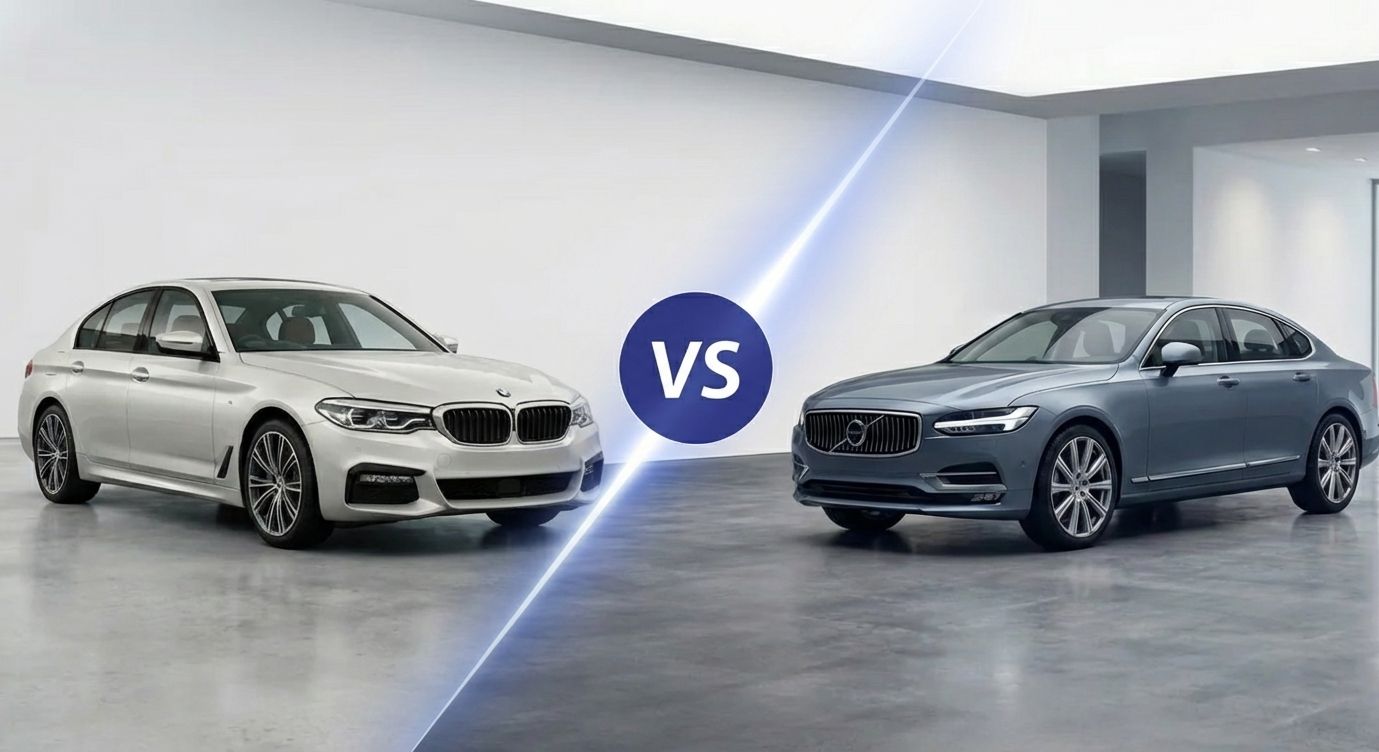
BMW řady 5 vs. Volvo S90: Complete comparison 2026
Detailed comparison of the BMW 5 Series and Volvo S90. Discover the differences in comfort, performance, and reliability of used cars. Read our verdict and choose the best sedan.
Apr 14, 2026
Articles
Car battle
Comparison of used BMW 7 Series vs Lexus LS luxury sedans. Discover key differences in comfort, equipment, and reliability. Read our clear verdict before you buy!
April 14, 2026


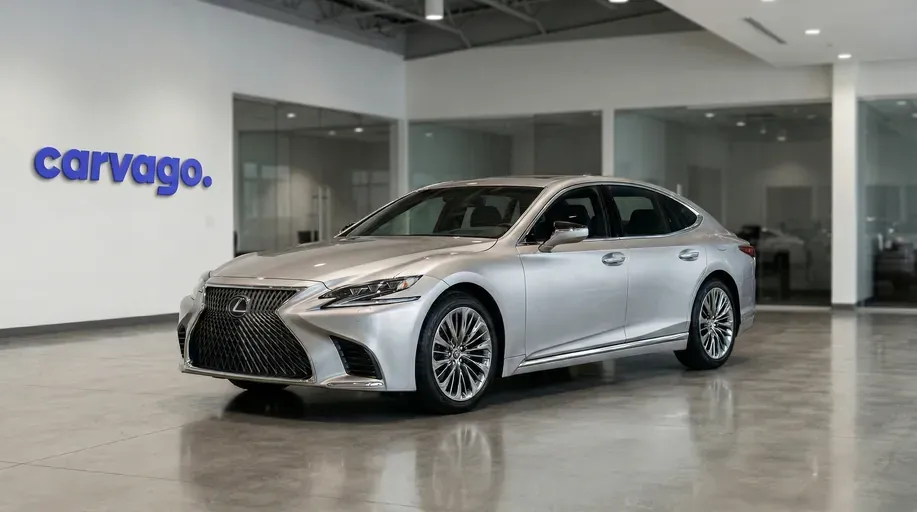
BMW 7 Series represents the technological and luxury pinnacle of the Munich-based automaker, which, as a roughly four-year-old used car, perfectly combines representative comfort with traditionally excellent driving characteristics. Standing against it is the majestic Lexus LS, also known in the past on its home market as the Toyota Celsior, which attracts primarily with its legendary Japanese reliability, efficient hybrid powertrain, and masterly attention to detail. In the following comparison, we will analyze in detail the strengths and weaknesses of both these limousines to find out which of the different philosophies makes more sense on the luxury used car market.
When it comes to exterior dimensions, both of these luxury limousines command immense respect on the road. For comparison, we focused on the generations that are currently most relevant on the used car market (roughly four-year-old vehicles) – namely the BMW 7 Series in the G11/G12 generation after the facelift and the fifth generation of the Lexus LS, designated USF50. The main difference between them lies in the approach to the range of body styles. While BMW sticks to the traditional recipe with both standard (5120 mm) and long-wheelbase versions (5260 mm), the Japanese automaker chose a single universal variant. The Lexus LS measures 5235 mm in length, placing it exactly between the two Munich models and aiming to offer the best of both worlds.
In terms of width, the cars are similar down to the millimeter. Both have a value of around 1.9 meters (1902 mm for the BMW, 1900 mm for the Lexus). While this guarantees the occupants majestic interior space in the shoulder area, it also requires a significant amount of caution from both competitors when parking in narrow city garages. A more distinct difference can be found primarily in the body height. With values of 1450 to 1460 mm, Lexus intentionally bets on a more dynamic silhouette inspired by coupes. The BMW, at up to 1479 mm, is slightly taller, giving the car more classic formal proportions and a somewhat more generous headroom for rear-seat passengers.
However, the most important figure for executive sedans is the wheelbase, which defines legroom. The standard BMW 7 Series has a wheelbase of 3070 mm, which you will appreciate especially when you drive the car yourself and require at least some degree of agility. However, the extended "Long" version, with its massive 3210 mm wheelbase, brings uncompromising presidential luxury to the rear seats. The Lexus, with its 3125 mm wheelbase, again represents the golden mean – it maintains decent agility for the driver while offering enough airiness in the back for demanding passengers without the need to opt for a special extended variant.
| Parameter | BMW 7 Series Sedan | Lexus LS Sedan |
|---|---|---|
| Length (mm) | 5120 - 5260 | 5235 |
| Width (mm) | 1902 | 1900 |
| Height (mm) | 1467 - 1479 | 1450 - 1460 |
| Wheelbase (mm) | 3070 - 3210 | 3125 |
When choosing a luxury sedan, trunk capacity plays a surprisingly important role. Whether it's transporting business partners to the airport with several large suitcases or relaxing weekend golf trips, the ability to accommodate bulky luggage without compromise is absolutely crucial. For roughly four-year-old used cars from this prestigious segment, it is simply expected that the transport of personal belongings will be handled as elegantly as possible and without disrupting the comfort inside the cabin. Both compared flagships, representing the BMW 7 Series (G11/G12 generation from 2015–2022) and the Lexus LS (USF50 generation produced since 2018), approach this task with differing levels of spatial generosity.
The German representative, the BMW 7 Series, offers a base trunk capacity of 515 liters in its standard internal combustion versions. This cleverly designed and relatively deep space easily accommodates four standard suitcases or several sets of golf clubs, making it a very practical companion. In contrast, the competing fifth-generation Lexus LS is somewhat more modest in its twin-turbocharged V6 petrol version, the LS 500, offering a capacity of 480 liters. Although this value is fully sufficient for everyday shopping or a comfortable holiday for two, the mentioned 35-liter difference can in practice represent at least one extra carry-on suitcase or a smaller travel bag that you won't fit into the Japanese car as easily.
It is important to keep in mind that spatial layouts change significantly when you opt for the market-demanded electrified variants. In both limousines, the large traction battery inevitably takes up a significant amount of space. In the case of the very popular hybrid Lexus LS 500h, the total trunk capacity drops to 430 liters. A similar concession applies to the plug-in hybrid versions from BMW (for example, the 745e/745Le engines), where the battery reduces the cargo space to as little as 420 liters. Furthermore, these luxury cruisers primarily serve as vehicles for rear-seat passengers – which is why you often find electrically adjustable massage seats or a fixed luxury partition, so the classic expansion of trunk volume by folding down the backrests is either not officially listed for these limousines or the option is completely absent.
| Parameter | BMW 7 Series Sedan | Lexus LS Sedan |
|---|---|---|
| Base volume (liters) | 515 | 480 |
| Max volume with seats folded down (liters) | Not available | Cannot be folded |
Although moving house isn't the priority in this class, the BMW 7 Series provides greater confidence when packing for the airport and, thanks to its volume, swallows a bit more luggage than the more modest Lexus LS.
If you require the ability to tow a trailer with your luxury limousine and are considering approximately four-year-old used BMW 7 Series or Lexus LS models, you will encounter one of the most fundamental differences between these cars. Trailer weight is a key parameter that determines the overall practicality of a car, whether it's for transporting bulky cargo or hitching up a large caravan. The BMW 7 Series in the relevant G11/G12 generation (produced until 2022) is an exceptionally capable workhorse despite its highly luxurious character. The standard unbraked trailer weight reaches the legislative maximum of 750 kg, while the maximum braked trailer weight ranges between 2,100 kg and 2,300 kg. For example, the 750d diesel engines can handle exactly 2,300 kg, while for the 750i petrol versions, the capacity starts at 2,100 kg. This towing capacity is perfectly sufficient for a long holiday with a large caravan or safely towing a boat to the water.
On the other hand, the Japanese Lexus LS in its USF50 generation (produced from 2018 to the present) is designed strictly with maximum passenger comfort in mind and is not factory-homologated for towing a trailer at all. Its towing capacity is thus exactly 0 kg. This fact applies across the board to both the conventional internal combustion LS 500 versions and the LS 500h hybrid variants, which otherwise sometimes only have reduced capacities in the automotive world. In the case of the Lexus LS, however, this means you lose the ability to tow any trailer, and you cannot even install a standard bicycle carrier mounted directly on the tow ball.
From the perspective of overall practicality and towing capabilities, the conclusion for those interested in a used car is absolutely clear: if a tow bar is a necessity for you, the Bavarian 7 Series represents a clear and much more versatile choice. The Japanese competitor completely omits this area, which is why its zero-value data is not even included in the comparison table below.
| Model and engine | Braked trailer weight (kg) | Unbraked trailer weight (kg) |
|---|---|---|
| BMW 750d / 750Ld G11/G12 (294 kW) | 2300 | 750 |
| BMW 750i / 750Li G11/G12 (330 kW) | 2100 - 2300 | 750 |
| BMW 750i / 750Li G11/G12 (390 kW) | 2300 | 750 |
BMW 7 Series (facelifted G11/G12 generation) and Lexus LS (USF50 generation) approach powertrains from completely different perspectives, which fundamentally shapes the very character of both luxury limousines. In the segment of approximately four-year-old used cars, BMW boasts an exceptionally diverse and advanced range of engines, including turbocharged diesel and petrol six-cylinders, powerful V8s, and an advanced plug-in hybrid. This variety and the presence of the xDrive intelligent all-wheel-drive system make the Munich limousine an ideal choice for drivers seeking dynamics as well as for motorway travelers covering high mileages. In contrast, Lexus chooses a strict path typical for the brand: quietness, reliability, and smoothness. The Japanese automaker relies almost exclusively on naturally aspirated petrol six-cylinders combined with efficient self-charging full-hybrid technology. Lexus can thus confidently appeal to calmer drivers and managers looking for incredibly smooth engine operation, uncompromising long-term reliability, and efficient fuel consumption, especially in heavy city traffic.
For the Bavarian flagship in the respective G11/G12 generation, the absolute dominance of the smooth eight-speed automatic transmission from ZF is typical in the four-year-old car market. A standard and immensely popular engine on the secondary market is the economical yet sufficiently flexible 730d diesel six-cylinder (210 kW). Those interested in locally emission-free operation can focus on the 745e plug-in hybrid version, which combines a petrol six-cylinder with an electric motor (system output 290 kW) and allows for a purely electric range for daily city commuting. At the opposite end of the spectrum are the stunning-sounding 750i petrol V8 (390 kW) and the majestic, now iconic M760Li twelve-cylinder. A completely unique technological gem from BMW was the diesel six-cylinder equipped with an incredible four turbochargers in the 750d (294 kW) version. However, as car availability data directly shows, this fascinating and extremely powerful diesel was officially offered only until the autumn of 2020. In the market for the youngest used cars, roughly four years old, you will no longer find this top diesel variant due to the tightening of emission limits at that time.
| Engine type | Fuel | Power (kW) | Torque (Nm) | Transmission |
|---|---|---|---|---|
| 730d (3.0 I6) | Diesel | 210 | 650 | 8-speed automatic |
| 740d (3.0 I6) | Diesel | 250 | 700 | 8-speed automatic |
| 750d (3.0 I6)* | Diesel | 294 | 760 | 8-speed automatic |
| 740i (3.0 I6) | Petrol | 245 | 450 | 8-speed automatic |
| 745e (3.0 I6 PHEV) | Petrol / Electricity | 290 | 600 | 8-speed automatic |
| 750i (4.4 V8) | Petrol | 390 | 750 | 8-speed automatic |
| M760Li (6.6 V12) | Petrol | 430 | 850 | 8-speed automatic |
(Note: The extremely powerful 750d engine was removed from the range during 2020 and no longer appears in newer models)
The fifth-generation Lexus LS (USF50) offers a significantly more purist range of engines, where engineers directed all efforts towards absolute comfort and technical precision. The core of the range and the most frequently requested choice is the LS 500h model, which combines a sophisticated naturally aspirated 3.5-liter V6 with a powerful electric motor, with the car having a combined system output of 264 kW. A major technological highlight is the use of the unique Multi Stage Hybrid system. This system physically connects a planetary e-CVT transmission with a classic four-speed automatic, thereby together simulating 10 gear ratios and providing the driver with a much more natural throttle response. From the database of models and their production cycles, it is clearly visible that although the range previously also included the purely internal combustion LS 500 version with a twin-turbocharged petrol V6 (307 kW) and a classic ten-speed automatic, this conventional high-performance engine was definitively discontinued in most European markets at the end of 2020. When choosing an approximately four-year-old used car, buyers largely bet on the certainty of the resilient and efficient LS 500h hybrid variant.
| Engine type | Fuel | Power (kW) | Torque (Nm) | Transmission |
|---|---|---|---|---|
| LS 500 (3.5 V6 Bi-Turbo)* | Petrol | 307 | 600 | 10-speed automatic |
| LS 500h (3.5 V6 Hybrid) | Petrol / Electricity | 264 | 350 (internal combustion engine) | Multi-Stage (e-CVT + 4AT) |
(Note: The purely internal combustion LS 500 model was mostly withdrawn from sale in Europe after 2020, and the hybrid dominates in younger model years)
While a used BMW 7 Series can satisfy practically any driving preference thanks to its phenomenal and wide range of diesel, petrol, and plug-in hybrid units, the Lexus LS presents itself as an island of calm, relying on a maximally reliable, quiet, and efficient hybrid drive without the need for external charging.
Choosing the right engine for luxury limousines is absolutely key for long-term satisfaction, as potential service mistakes are punished here with bills in the thousands of euros. Our recommendation is therefore based on real-world owner experiences, long-term mechanical reliability, and actual fuel consumption. Both compared limousines approach the powertrain very differently – BMW focuses on brutal performance and turbocharging, though iconic diesels have disappeared from its range in recent years, while Lexus hones its exceptionally reliable naturally aspirated hybrid to perfection, prioritizing Zen-like tranquility over shredding the asphalt.
If you are looking for a used car roughly four years old (for example, from 2022 in the G11/G12 LCI generation), the updated petrol V8 750i xDrive is a fantastic and prestigious choice. From available database data, it is evident that the fascinating technological marvel in the form of the quad-turbocharged 750d xDrive diesel engine ceased production as early as autumn 2020. For newer cars on the used market, this extremely complex diesel is no longer available, which logically elevates the more reliable petrol V8 to the role of the best flagship.
For the Japanese flagship of the USF50 generation (around 4 years old), the hybrid variant LS 500h is practically the only and most logical path. Although the car was also sold with a purely petrol twin-turbocharged LS 500 engine, it is the sophisticated hybrid powertrain that embodies the true essence of the Lexus brand and has no competition in the entire premium segment in terms of operating costs.
For luxury limousines weighing over two tons, official paper fuel consumption often differs significantly from real-world figures. To get the most accurate picture possible, we looked at data from drivers themselves in real-world traffic. We draw information from the extensive user database of the German portal Spritmonitor.de and from processed data for car generations currently on the nearly-new used car market (roughly 4-year-old cars, i.e., BMW 7 Series generation G11/G12 and Lexus LS generation USF50).
| Model and engine | Average consumption (l/100 km) |
|---|---|
| BMW 7 Series 730d (Diesel) | 6.8 |
| BMW 7 Series 750d (Diesel) | 7.3 |
| BMW 7 Series 740d (Diesel) | 7.4 |
| Lexus LS 500h (Hybrid) | 8.6 |
| Lexus LS 500 (Petrol) | 9.8 |
| BMW 7 Series 750i (Petrol) | 10.6 |
Looking at the trends, the dominance of diesel engines from the Bavarian automaker is clearly visible in direct comparison. Traditional three-liter diesel six-cylinder engines (730d and 740d) represent the golden mean with excellent fuel consumption of around 7 liters per 100 km. A very interesting finding is the top diesel model 750d, equipped with a unique quad-turbocharger system. Despite its enormous power, it consumes roughly 7.3 l/100 km in practice – paradoxically, in the real world, thanks to its huge power reserve, it can be as economical as the slightly less powerful 740d version.
Lexus, on the other hand, chooses a completely different philosophy and relies exclusively on petrol and electrification. While the hybrid powertrain in the LS 500h can recuperate effectively and a real-world consumption of 8.6 l/100 km is great for a massive petrol limousine, it cannot cheat physics on the highway and simply falls short of the pure efficiency of diesel BMWs. Non-hybrid petrol versions (the turbocharged V6 in the LS 500 and the powerful V8 in the BMW 750i) then require values confidently attacking the ten to eleven-liter mark.
What does this mean in practice for a typical owner? For drivers who spend most of their time on highways and swallow hundreds of kilometers across Europe, the diesel BMW (ideally the basic but more than sufficient 730d version) is the clear favorite in terms of operating economy. However, if you use the car primarily in urban and suburban settings, the hybrid Lexus LS 500h makes a lot of sense, as its sophisticated system can significantly reduce not only fuel consumption but also brake system wear in stop-and-go traffic.
In conclusion, fuel consumption will often be one of the main deciding factors when choosing between these two cars. Customers focused on extremely long highway range and maximum efficiency will naturally reach for the Munich diesel classic. Conversely, those interested in sophisticated, exceptionally quiet technology for calmer travel or regular city driving will find an ideal companion in the Japanese hybrid.
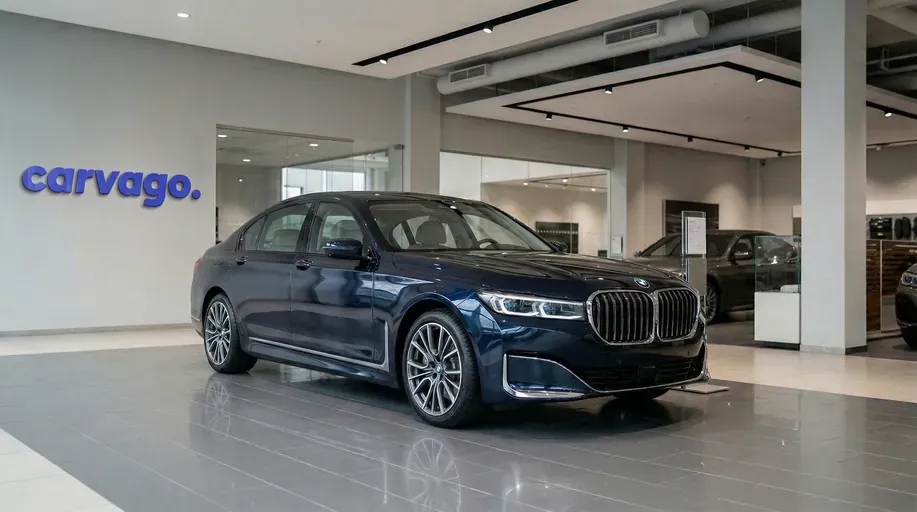
If you are looking for a roughly four-year-old luxury limousine (model years 2021–2022), for BMW you will focus primarily on the facelifted G11/G12 generation. For its Japanese competitor, it will be the facelifted fifth-generation Lexus LS (XF50). The situation on the used car market is diametrically different for both models, both in terms of overall availability and in the context of depreciation.
The BMW 7 Series is among the cars that traditionally experience a very steep drop in value on the secondary market. For a buyer of a four-year-old car, however, this represents a very tempting opportunity to acquire premium technology.
The Japanese flagship plays a completely different game on the European used car market. Exclusivity, low sales of new cars, and renowned reliability mean that the Lexus holds its value much more stubbornly.
| Parameter | BMW 7 Series (G11/G12 LCI) | Lexus LS (XF50 Facelift) |
|---|---|---|
| Lowest used car price | from approx. €39,000 | from approx. €68,000 |
| Prevailing engines on the market | Diesel six-cylinders (730d, 740d) | Gasoline hybrid (LS 500h) |
| Depreciation curve | Very steep (advantageous for used car buyers) | More gradual (high residual value) |
| Used car availability | Hundreds of vehicles available | Rarity, import often necessary |
While the massive loss of value makes the diesel BMW 7 Series an absolutely irresistible rational choice in terms of purchase price, the Lexus LS maintains a confident price tag even after years, justified by its exceptional aura and unrivaled Japanese reliability.
Although we often begin comparisons of premium cars by stating that both vehicles easily achieved a full five-star Euro NCAP rating, it is always absolutely essential to emphasize the broader context and the year these tests took place. Euro NCAP crash test protocols evolve over time and become much stricter. For this reason, percentage scores from different years cannot be directly compared. Today's latest methodologies include entirely new frontal impact simulations, more sophisticated cyclist detection, or evaluations of crisis scenarios directly at intersections.
However, if we wanted to mention the year in which each of these models was tested and compare their scores according to the latest protocols, we would find that the data is completely missing. Neither the BMW 7 Series nor the Lexus LS have ever been officially tested by Euro NCAP in their latest generations. Due to enormous acquisition costs and low sales volumes, crash tests are simply not commonly performed on models in this top luxury category by independent organizations. For this reason, you will not find any percentage ratings for adult protection, child protection, vulnerable road users, or assistance systems in our table.
The absence of these certified results, however, does not mean in the slightest that these roughly four-year-old cars are not safe. On the contrary – these flagships serve as pioneers of the absolute pinnacle of safety for the entire automotive market for both brands. The BMW 7 Series (in the sought-after G11 LCI or newer G70 generations) relies on an exceptionally robust structure (combining aluminum and Carbon Core carbon elements in older versions) and a sophisticated suite of assistants, Driving Assistant Professional. The Lexus LS (current fifth generation XF50), on the other hand, features the innovative Lexus Safety System+ (and by extension the Lexus CoDrive assistant), which introduced, among other things, unique features such as pedestrian detection combined with active steering intervention to perform an automatic evasive maneuver within the lane. In the overall assessment, both limousines represent the most comprehensive and modern safety package by today's standards, with Lexus holding a slight lead due to its philosophy of including all assistance equipment directly in the base price.
| Parameter | BMW 7 Series | Lexus LS |
|---|---|---|
| Year of testing | Not tested | Not tested |
| Adult occupant protection | - | - |
| Child occupant protection | - | - |
| Vulnerable road user protection | - | - |
| Safety assist systems | - | - |
Although neither the BMW 7 Series nor the Lexus LS have undergone official Euro NCAP tests due to their exclusivity, both cars represent the absolute technological pinnacle of passive and active safety on the used car market.
In addition to standard equipment, each of the models offers several unique features that push the boundaries of the luxury segment, with both flagships having their own distinctive approach to added value. While the German representative bets on state-of-the-art technology and sportier genes, the Japanese competitor embraces traditional craftsmanship and maximum tranquility on board.
The German flagship has long been a pioneer in introducing new electronic systems and driving assistants that make daily life easier and bring joy to driving.
Lexus approaches luxury from the perspective of traditional Japanese hospitality called Omotenashi, which aims to anticipate passengers' needs before they even think of them.
Wide range of powertrains (including diesel six-cylinders, V8s, and plug-in hybrids)
Top-tier and highly intuitive iDrive multimedia system
Excellent compromise between agile driving dynamics and top-tier comfort
Generous space and first-class comfort in the rear seats (especially in the Long version)
Advanced driver assistance systems with excellent calibration
Very high costs for out-of-warranty service and genuine spare parts
Faster depreciation in the first years on the used car market
Controversial design with giant kidney grilles that may not suit everyone
Potential for expensive repairs to the complex air suspension at higher mileages
The BMW 7 Series is an ideal choice for demanding executives and drivers looking for cutting-edge technology, confident driving characteristics even at high speeds, and a wide choice of engine options. It will suit those who require perfect connectivity and don't mind the higher operating costs typical of flagship models from German premium brands.
Renowned long-term reliability of the powertrain and electronics
Exceptionally quiet and refined performance, especially in the LS 500h hybrid version
Unique interior craftsmanship with details inspired by Japanese art
Lower fuel consumption for hybrid variants, especially in city and suburban traffic
Exclusivity on European roads (the car is not as commonplace as its German competitors)
More dated and less intuitive infotainment system (touchpad control in older models)
Significantly limited engine range without diesel or V8 options
Smaller luggage compartment, limited by batteries in the hybrid (only 430 liters)
More detached and less sporty driving experience
The Lexus LS will primarily appeal to more conservative individualists who prefer absolute acoustic tranquility, premium reliability, and unconventional luxury over aggressive dynamics. It is a perfect executive limousine for owners who plan to keep the car for a longer period and want to avoid frequent and expensive visits to the service center.
Based on our own records from the CarAudit service, long-term user experience, failure statistics, and service reports, we have compiled an overview of the most common problems that buyers of used flagships should watch out for.
The BMW 7 Series (especially the G11/G12 generation after the facelift and early models of the succeeding generation) is an extremely complex and technology-packed car, which, however, is often reflected in specific defects and more demanding maintenance in used cars.
BMW's flagship requires careful and regular service, especially regarding the air suspension and electronics. However, it rewards with top-tier driving characteristics if you thoroughly check its condition before purchase.
The Lexus LS (current XF50 generation) is considered an absolute model of reliability on the used car market, yet this Japanese premium sedan has several specific features and weak points that are worth focusing on before purchase.
The Lexus LS dominates in mechanical and engine reliability, with the biggest criticisms mainly directed at the more outdated onboard software and sensitivity to the tires used. It is an exceptionally safe choice on the used car market.
When buying a used luxury car, a thorough inspection is absolutely crucial, as potential repairs to advanced technology can be very costly. Both of these flagships have their specifics that you should primarily focus on during a test drive and a thorough physical inspection of the used car.
Lexus LS has long reigned the reliability rankings thanks to its robust hybrid powertrain and precise build quality. BMW 7 Series requires more careful and expensive maintenance, especially with more complex V8 engines or older plug-in hybrids. For more carefree ownership of a used car, the Japanese luxury sedan is therefore the safer choice.
The German representative offers a more dynamic driving experience with more agile steering, powerful engines, and a perfectly tuned adaptive chassis. The Japanese model, on the other hand, focuses on complete isolation from the outside world, a smooth ride, and perfect acoustic silence in the cabin. If you like to drive briskly yourself, the BMW will please you more, while for absolutely peaceful travel, the Lexus is ideal.
Both cars provide first-class luxury, but the German model in the long-wheelbase version offers slightly more physical legroom in the back. Its Asian competitor counters with absolutely unique interior craftsmanship with details inspired by Japanese art, such as hand-folded door panel fabrics. While BMW bets on modern technologies and screens, its rival offers more traditional armchair-like comfort.
The Japanese car relies primarily on a hybrid powertrain, which is very efficient in urban and suburban traffic, where consumption drops below 9 liters. However, the competitor from Munich has a major advantage in offering economical diesel six-cylinder engines, which consume significantly less fuel during long highway trips. BMW's plug-in hybrid versions can also drive shorter routes purely on electricity.
BMW is famous for its iDrive system, which is extremely fast, intuitive, and combines a clear touchscreen with an excellent rotary controller. Lexus cars until around 2020 used a less practical touchpad control, although later updates have already brought a more user-friendly touchscreen. Overall, the system in the German car is technologically more advanced, offers better voice control, and more seamless connectivity.
While a roughly four-year-old BMW 7 Series represents a technologically advanced and dynamic luxury sedan that attracts buyers on the used car market primarily with its massive price depreciation and excellent diesel engines, the Lexus LS is the embodiment of absolute Japanese serenity, exclusivity, and bulletproof reliability. The Munich flagship will be the ideal choice for demanding drivers and managers who regularly cover hundreds of highway kilometers, appreciate precise handling, and potentially require practicality in the form of towing capacity. In contrast, the Asian hybrid gem will perfectly serve more conservative individualists who spend more time in city traffic and prefer carefree operation with minimal risk of expensive service repairs over blistering acceleration. The final decision thus depends on whether you prefer top-tier driving assistants and a wide range of engine options with the BMW, or would rather bet on the indomitable longevity, original craftsmanship, and velvety hybrid efficiency of the Lexus.
Sources: ADAC, e15.cz, idnes.cz, hybrid.cz, smartmania.cz, autickaruvblog.cz
This article was prepared using artificial intelligence tools. The section guarantor is Petr Dušek.

Detailed comparison of the BMW 5 Series and Volvo S90. Discover the differences in comfort, performance, and reliability of used cars. Read our verdict and choose the best sedan.
Apr 14, 2026

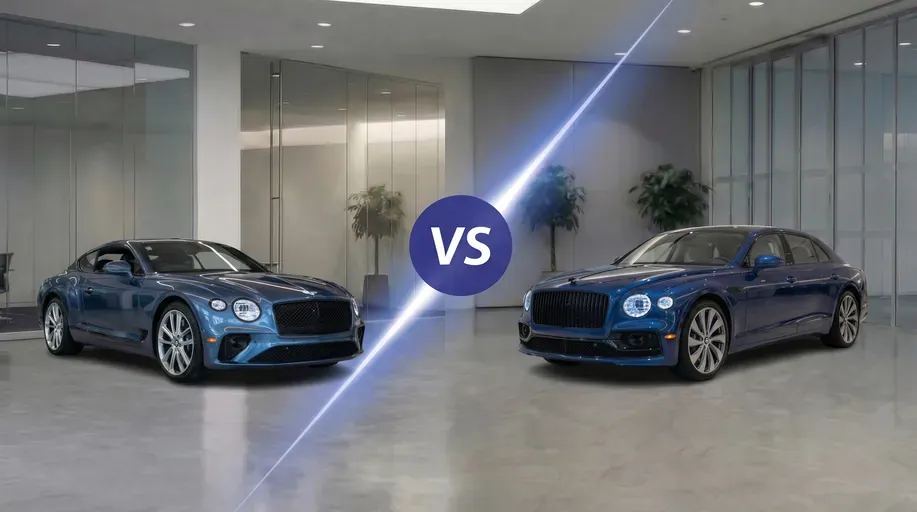
Detailed comparison of Bentley Continental GT vs Bentley Flying Spur. Discover the differences in performance, comfort, and equipment and choose the right luxury car for you.
Apr 13, 2026

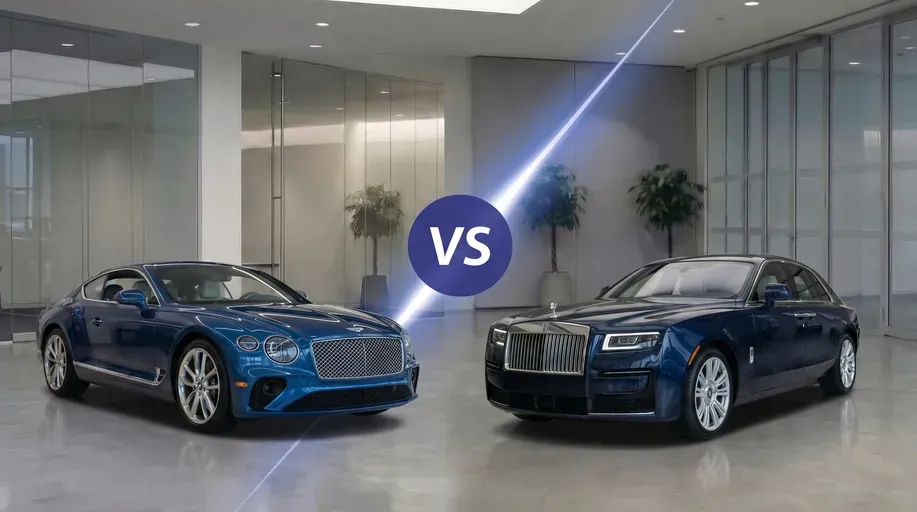
Bentley Continental GT vs Rolls-Royce Ghost. A detailed comparison of British luxury. Discover the differences in comfort, equipment, driving characteristics, and our verdict.
Apr 14, 2026