Car battle
Kia Sorento vs. Renault Espace: Complete comparison 2026
Detailed comparison of popular family cars: Kia Sorento vs Renault Espace. Discover real-world experiences, differences in equipment, and our verdict before you buy.
Oct 16, 2026
Articles
Car battle
Detailed comparison of Kia Sorento vs Toyota Highlander. Discover the differences in equipment and fuel consumption, and read our verdict to make your choice of a family SUV easier.
May 10, 2026
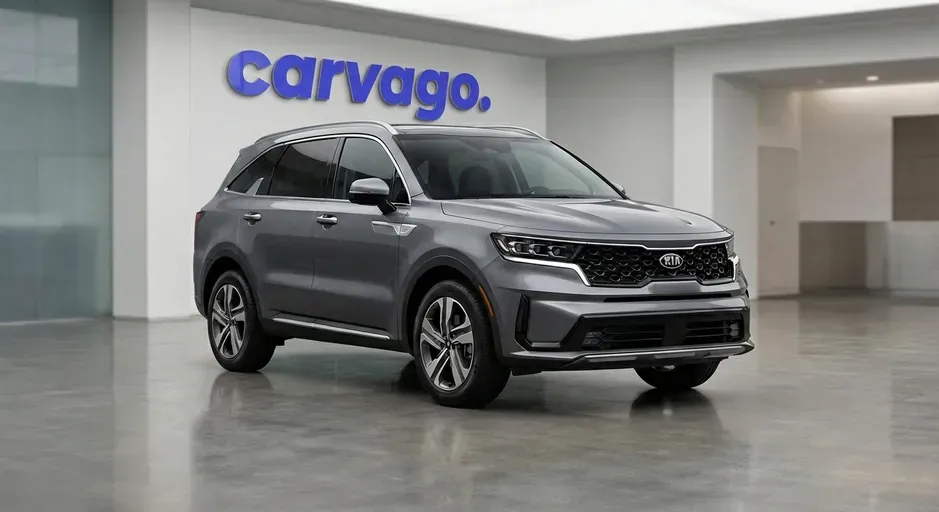
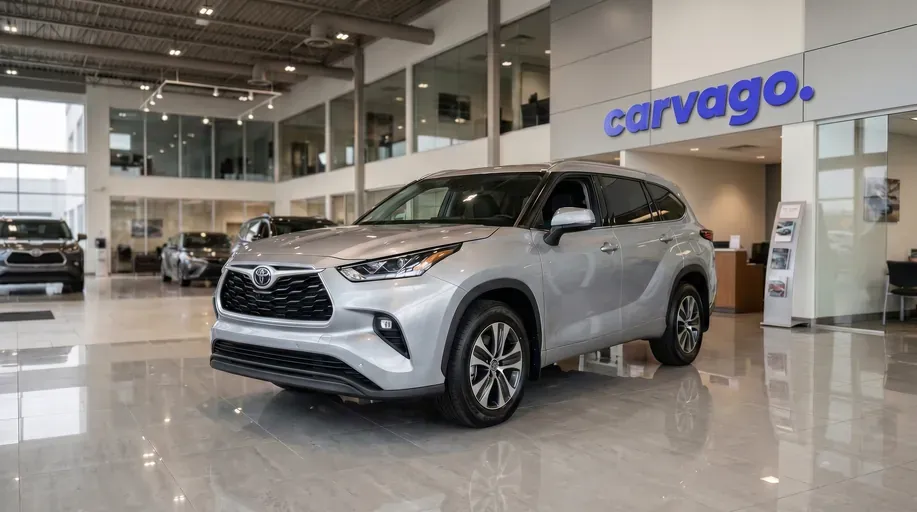
The Kia Sorento is a popular family SUV that has earned a solid position on the market thanks to its bold design, premium craftsmanship, and generous interior space. Standing against it is the robust Toyota Highlander, also known as the Toyota Kluger in some global markets, which attracts customers primarily with its legendary reliability and highly efficient hybrid powertrains. Let's take a detailed look at a comparison of both these impressive seven-seater vehicles to find out which one offers better overall value and becomes the ideal choice for your daily travels.
Looking at the external dimensions, it is clear at first glance that both cars belong to the category of large family SUVs, but each approaches this class with a slightly different philosophy. The Toyota Highlander (XU70 generation from 2021–2024), originally designed with the North American market in mind, is slightly larger and more massive in every direction. In contrast, the Kia Sorento (MQ4 generation produced since 2020) represents an ideal compromise, offering generous space while still maintaining more acceptable proportions for everyday maneuvering in narrower European streets. For those interested in a used family car about four years old, these models represent two different concepts of size, each with its specific advantages for the driver.
The most significant difference is the overall length of the vehicles. Toyota Highlander with a value of 4966 mm comes dangerously close to the magic five-meter mark, while the Kia Sorento measures a more compact 4810 to 4815 mm. The Japanese SUV is therefore more than 150 mm longer, which on one hand means the possibility of installing a more spacious third row of seats, but on the other hand can represent a major complication when parallel parking in historical centers or crowded housing estates. From a practical perspective, the South Korean representative offers a noticeably easier search for a parking space without the crew in the first two rows having to significantly compromise on their demands for comfort and convenience.
A noticeable difference can also be found in the width of both models. The Highlander measures 1930 mm in width, which is exactly 30 mm more than the Sorento with its 1900 mm. This greater width of the Toyota has a positive effect on a more airy interior at shoulder level and facilitates the potential installation of three child car seats side by side. The price for this, however, is a more cramped feeling in narrow entrances and highway lanes. If you often park in underground garages with older and narrower parking boxes, the Sorento, thanks to its slimmer body, will provide you with much more confidence and valuable extra centimeters for safely opening doors without damaging the neighboring car.
Height and wheelbase play a key role in the overall stance of the car and its driving characteristics. The Toyota Highlander, at 1755 mm, is a significant 60 mm taller than the Kia Sorento (1695 mm). This provides the Toyota driver with a more dominant view of the road and makes it easier for parents to handle children in car seats without unnecessary back bending. The Sorento, on the other hand, with its lower silhouette, benefits from slightly better aerodynamics and less sensitivity to strong crosswinds.
The wheelbase, which primarily determines the longitudinal legroom in the cabin for passengers and the smoothness of the ride, is 2850 mm for the Toyota and 2815 mm for the Kia. The longer wheelbase of the Highlander demonstrably contributes to a smoother and more stable ride on long highway routes. However, thanks to its modern platform and efficient use of interior space, the Sorento manages to skillfully mask this 35mm handicap and overall maintains much more agile and predictable behavior on winding country roads.
| Parameter | Kia Sorento SUV | Toyota Highlander SUV |
|---|---|---|
| Width (mm) | 1900 | 1930 |
| Length (mm) | 4810 - 4815 | 4966 |
| Height (mm) | 1695 | 1755 |
| Wheelbase (mm) | 2815 | 2850 |
When choosing a large family SUV, trunk capacity is one of the most important parameters. Models like Kia Sorento and Toyota Highlander are often purchased by larger families for whom not only daily practicality is key, but also the ability to transport luggage for a longer vacation or a bulky weekend shopping trip. Both cars offer up to three rows of seats as standard, meaning buyers must carefully consider the space available in both five-seat and fully occupied configurations.
The fourth-generation Kia Sorento (MQ4, typical on the used car market from 2020 and newer) is very generous and versatile in terms of transport capacity. Depending on the chosen powertrain, the total volume varies slightly due to battery placement – while traditional 2.2 CRDi diesel versions offer the most volume, the capacity is slightly lower for hybrid and plug-in hybrid versions (1.6 T-GDI). In the standard five-seat configuration, the Sorento offers an impressive 693 to 705 liters. If you use all seven seats, 175 to 187 liters remain for luggage. After folding down both the second and third rows of seats, a huge loading area with a maximum volume of 1988 to 2100 liters is created, sufficient for trouble-free moving of larger items.
The fourth-generation Toyota Highlander (XU70, since 2021), primarily supplied as a 2.5 Hybrid, approaches interior space from a slightly different angle. Behind the fully occupied three rows of seats, the Highlander offers a very solid base capacity of 241 liters. This beats the Sorento in seven-seat mode and provides valuable space for a few extra suitcases, which you will appreciate on trips with a full load. However, its maximum stated value after folding all rear backrests is 1909 liters. In terms of absolute maximum and the size of the purely five-seat trunk, the Toyota lags slightly behind the Kia.
| Parameter | Kia Sorento SUV | Toyota Highlander SUV |
|---|---|---|
| Base volume (liters) | 175 - 705 | 241 |
| Max volume with seats folded down (liters) | 1988 - 2100 | 1909 |
For families who primarily travel with five people and appreciate a huge maximum transport capacity, the Sorento is a slightly more practical choice thanks to its volume of over 2000 liters. The Highlander, on the other hand, makes more sense when you very often carry a full seven passengers and still need to stack a few bags or a small grocery shop behind the third row.
While the Kia Sorento excels in total maximum space and greater capacity in a five-seat configuration, the Toyota Highlander offers slightly more luggage space when all seven seats are occupied.
Towing capacity is often a decisive parameter for owners of large family SUVs, whether they need to tow a caravan, a boat, or a heavier work load. For approximately four-year-old used cars, which include the current generations of the Kia Sorento (MQ4) and Toyota Highlander (XU70), we find very interesting differences resulting from their different powertrain offerings. These values have a direct impact on the daily and weekend practicality of the vehicle and can fundamentally influence your final decision.
On the European market, the Toyota Highlander relies exclusively on a single engine option in the form of the 2.5 Hybrid full-hybrid powertrain. This model offers a consistent and very solid braked trailer capacity of exactly 2000 kg. In contrast, the Kia Sorento provides a significantly more diverse range of engines, where the limits differ fundamentally. The traditional 2.2 CRDi diesel version, with a maximum capacity of 2500 kg, is the absolute workhorse and the ideal choice for the heaviest loads. However, if you opt for the modern electrified versions of the Kia, the capacity drops. The standard Sorento 1.6 T-GDI Hybrid can tow 1650 kg, and for the plug-in hybrid version (PHEV), the maximum braked trailer weight for roughly four-year-old used cars drops to 1500 kg.
While the lower towing capacity of the Kia's hybrid versions won't allow for towing the heaviest twin-axle caravans, it is sufficient for common situations like weekend shopping or longer holidays with a lighter trailer, which easily provides space for several extra suitcases and sports equipment. Conversely, values at the level of two to two and a half tons open the door to trouble-free transport of large boats and bulky caravans.
In conclusion, the choice depends purely on your technological preferences and needs. If you require an economical hybrid and also need to tow medium-heavy trailers, the Toyota Highlander, with its 2000 kg, easily outperforms the electrified versions of the Sorento. But if you are looking for the absolute maximum in the form of 2500 kg and prefer highway pulling power, the diesel Sorento 2.2 CRDi has no competition in this comparison.
| Model and motorization | Braked weight of trailer (kg) | Unbraked weight of trailer (kg) |
|---|---|---|
| Kia Sorento 2.2 CRDi (142-148 kW) | 2500 | 750 |
| Kia Sorento 1.6 T-GDI Hybrid (132 kW) | 1650 | 750 |
| Kia Sorento 1.6 T-GDI Plug-in-Hybrid (132 kW) | 1500 | 750 |
| Toyota Highlander 2.5 Hybrid (140 kW) | 2000 | 750 |
Both large family SUVs approach their powertrains with completely different philosophies, which is a key decision factor for those interested in a roughly four-year-old used car. While the Kia Sorento relies on a diverse range of drives and offers a classic and very powerful diesel engine alongside modern hybrid units, the Toyota Highlander places full trust in its exceptionally proven and efficient 2.5-liter full-hybrid system. For drivers looking for the ideal towing vehicle for heavy trailers or those tackling long highway routes, the diesel Sorento makes the most sense, excelling with its massive torque and great fuel economy at highway speeds. On the other hand, customers who prefer uncompromising mechanical reliability, quiet operation, and unrivaled fuel economy in urban and suburban traffic without the need for cable charging swear by Toyota's sophisticated hybrid drive.
In the current MQ4 generation (available since 2020), the Sorento offers three distinct powertrain variants covering very different customer needs. For heavy work and driving with a full load, the absolute benchmark is the 2.2 CRDi turbocharged diesel four-cylinder, which boasts generous torque and is always paired with a modern eight-speed dual-clutch transmission (8DCT). For more relaxed drivers and families frequently moving in urban areas, Kia has prepared two electrified versions combining a 1.6-liter turbocharged gasoline engine (1.6 T-GDI) with electric motors. A traditional self-charging full-hybrid (HEV) is available, and since 2021, a more powerful plug-in hybrid (PHEV) with a larger battery, which allows for daily locally emission-free commuting. Both hybrid powertrains work very smoothly with a classic six-speed automatic.
| Engine Type | Fuel | Power (kW) | Torque (Nm) | Transmission |
|---|---|---|---|---|
| 2.2 CRDi | Diesel | 148 | 440 | 8DCT |
| 1.6 T-GDI Hybrid | Petrol / HEV | 169 | 350 | 6AT |
| 1.6 T-GDI Plug-in-Hybrid | Petrol / PHEV | 195 | 350 | 6AT |
The Toyota Highlander (XU70 generation) takes the path of absolute simplicity on the European market, offering only a single powertrain, albeit one refined over generations. Under the hood is a naturally aspirated 2.5-liter four-cylinder, complemented by two electric motors (one at the front and one on the rear axle) forming the AWD-i intelligent all-wheel-drive system. This advanced full-hybrid system utilizes a reliable electronic planetary e-CVT gearbox and achieves a very solid system output of 182 kW. While the absence of a diesel engine might deter those seeking maximum towing power, the smooth and linear pull, extremely low fuel consumption in the city, and high durability make the vehicle a highly pragmatic choice. It is important to mention that according to the database, sales of this specific specification ended in August 2024, so potential buyers must now look for it exclusively on the used car market.
| Engine Type | Fuel | Power (kW) | Torque (Nm) | Transmission |
|---|---|---|---|---|
| 2.5 Hybrid AWD-i | Petrol / HEV | 182 | 239 (ICE) / 270 (el.) | e-CVT |
While the diesel Sorento will please drivers looking for strong torque and highway endurance, the hybrid Highlander is unbeatable in terms of legendary reliability and a quiet, economical ride in the city and on country roads.
Choosing the right engine is crucial for long-term satisfaction, and our recommendations are based on real-world dynamics, fuel consumption in normal traffic, owner feedback, and mechanical reliability. While a roughly four-year-old Kia Sorento (MQ4 generation) scores on the used car market with an exceptionally sophisticated diesel, which is perfect for long highway trips and towing heavy trailers, the Toyota Highlander (XU70 generation) follows its proven Japanese philosophy. Under its hood, you'll find a top-tier naturally aspirated hybrid that dominates with unrivaled reliability and surprisingly low fuel consumption in city traffic.
In the range of roughly four-year-old used cars of the MQ4 generation, the 2.2 CRDi diesel four-cylinder is the absolute benchmark for family travel and heavy work. This engine offers an ideally balanced output of 148 kW (142 kW in the latest versions) and a generous torque of 440 Nm, ensuring confident dynamics for a fully loaded vehicle with real-world fuel consumption between 6.5 and 7.5 liters outside the city. The unit is paired with a fast eight-speed dual-clutch transmission (8DCT). From a technical standpoint, it is an extremely reliable highway cruiser, but when inspecting a used car, it is necessary to pay attention to a few specifics. The main risk is clogging of the diesel particulate filter (DPF) due to predominantly city driving. You can tell if the car was only used for short trips by signs of incomplete regenerations – a warning signal is erratic idling or a loudly humming fan even long after the engine is turned off. Neglecting this leads to an expensive filter replacement. A second potential weakness after heavy use is the transmission itself. During a test drive, thoroughly test slow crawling, hill starts, and quick shifts between "R" and "D". Any noticeable jerking, delays, or thuds mean worn clutches or a problem with the mechatronics, representing an investment of tens of thousands of crowns. The diesel Sorento is clearly most suitable for highway travelers and drivers with a caravan, who will be rewarded with long service life given a highway route profile.
For the European version of the Highlander (XU70 generation), the Japanese automaker logically offers no other choice than its sophisticated full hybrid system (HEV) with intelligent AWD-i all-wheel drive, which is the best possible news for a used car buyer. The system with a combined output of 182 kW is world-renowned for its "bulletproof" reliability, and despite weighing over two tons, it can smoothly push fuel consumption below 7 liters per 100 km in urban and suburban driving. The advantage of this technology is the demonstrable absence of delicate mechanical parts – you won't find a conventional starter, alternator, or mechanical driveshaft to the rear axle (which is powered exclusively by a separate electric motor), drastically reducing the risk of fatal failures. A certain compromise is only the reduced acoustic comfort during sharp highway acceleration, when the e-CVT planetary gearbox pushes the engine into sustained high revs, and also a lesser talent for towing heavy trailers in the hills compared to the diesel Kia. When inspecting a roughly four-year-old Highlander, focus primarily on a meticulous service history. Check the onboard documentation to see if the owner exceeded oil change intervals (they should strictly take place every 15,000 km). Neglected service and degraded oil are the only real ways to damage this otherwise mechanically indestructible engine. This hybrid is perfect for calmer drivers, daily family school runs, and all buyers looking for enormous space without the fear of unexpected service traps.
Official fuel consumption figures, which car manufacturers confidently state in their technical specifications, often differ significantly from everyday reality on the road. This discrepancy is usually most noticeable in large and heavy family SUVs, where aerodynamic drag, high curb weight, and real-world conditions take their toll. To get a truly objective picture of the real operating costs of approximately four-year-old cars on the used market, we rely not only on data from registration documents but primarily on averages reported by drivers themselves on the community portal Spritmonitor.de. For comparison, we focus primarily on the fourth-generation Kia Sorento (MQ4) and the fourth-generation Toyota Highlander (XU70), which currently represent the core offering of nearly-new used cars.
| Model and engine | Average consumption (l/100 km) |
|---|---|
| Kia Sorento 2.2 CRDi | 5.8 |
| Kia Sorento 1.6 T-GDI Hybrid | 6.5 |
| Toyota Highlander 2.5 Hybrid | 6.9 |
| Kia Sorento 1.6 T-GDI Plug-in-Hybrid | 1.6 |
When comparing real-world figures based on powertrain types, very interesting trends emerge. The proven 2.2 CRDi diesel engine in the Kia Sorento remains the uncrowned king of highway economy, with an impressive consumption staying safely below the six-liter-per-hundred-kilometer mark. Conversely, a direct comparison of the full hybrid versions brings a rather surprising finding. Although it might seem that the small turbocharged 1.6 T-GDI unit in the Sorento would bring huge savings, in reality, it requires an average of around 6.5 liters of gasoline. The Toyota Highlander takes a different approach, relying on a much larger naturally aspirated four-cylinder 2.5 Hybrid. In the real world, however, it consumes on average only less than half a liter more fuel, which is a fantastic result considering the dimensions and proportions of this Japanese giant. The catalog value of 1.6 l/100 km for the plug-in hybrid Sorento is a chapter of its own. This dream result only applies on the condition that you have the car constantly connected to a charger – without regular battery charging from the grid, a heavy SUV cannot cheat physics, and consumption will soar toward that of the standard gasoline version.
These data lead to very clear recommendations for the typical used SUV buyer. If you are a driver who mostly covers long distances, spends hours on highways, or regularly tows heavy trailers, go for the diesel Sorento, which will save your wallet the most in the long run. On the other hand, for users who mostly navigate city and suburban traffic every day or commute with children over short distances, the hybrid systems in both the Highlander and Sorento are a bullseye. In urban environments, these systems perfectly recuperate braking energy and push consumption down to incredible minimums. The plug-in hybrid is then a clear choice only for those motorists who have a home wallbox or can charge the car at work.
In conclusion, average fuel consumption should definitely be one of the main criteria when deciding between the Kia Sorento and Toyota Highlander. The different technological approaches of both manufacturers give drivers a unique opportunity to choose a powertrain exactly according to their lifestyle. If your absolute priority is efficiency on long routes, the traditional diesel engine in the Kia is the clear favorite, as Toyota withdrew diesel from the European market long ago. The Highlander, by contrast, counters with an incredibly sophisticated and demonstrably reliable full hybrid system, which simply has no rival in this class for calmer family drivers looking for versatility without the need to look for a plug.
When choosing a family SUV roughly four years old (2021 and 2022 models), fourth-generation vehicles are available for both brands – the Sorento (MQ4 generation) and the Highlander (XU70 generation). There is a noticeable price difference between these cars on the used car market, primarily due to the availability of specific engine options and the reputation of both manufacturers.
While Kia offers a more diverse range of powertrains on the used market, including highly sought-after diesel units, Toyota scores almost exclusively with its proven hybrid powertrain.
| Model (Production year 2021–2022) | Typical starting price | Price for better-equipped units |
|---|---|---|
| Kia Sorento | from €29,000 | approx. €41,000 |
| Toyota Highlander | from €37,000 | approx. €49,000 |
Toyota Highlander 2021–2022 models rely almost without exception on reliable hybrid technology (2.5 HEV). This sophisticated system and the Japanese brand's excellent reputation for durability ensure that the Highlander holds its value much better than most competitors. Used car prices from 2021 and 2022 therefore usually start at €37,000 on the secondary market. For more premium trims like Executive or Prestige, and with low mileage, purchase prices can easily exceed €47,000.
The Kia Sorento represents a significantly more accessible choice as a used car. A large percentage of nearly new used cars currently for sale are versions with the economical 2.2 CRDi diesel engine, which European drivers still strongly prefer for longer journeys. Prices for well-serviced four-year-old Kia Sorento vehicles commonly start just above €29,000. If you desire the highest trim levels such as TOP or Platinum, or are looking for a used plug-in hybrid, you will usually stay within a budget of around €41,000.
When choosing a family SUV, safety is an absolute priority. In this category, we commonly see rated vehicles proudly achieving a five-star Euro NCAP rating. However, it is crucial to emphasize the importance of context and the year the testing took place. The Euro NCAP methodology is constantly evolving and becoming increasingly strict. Newer testing protocols have begun to include more demanding frontal crash simulations, advanced cyclist detection, and detailed evaluation of collision scenarios at complex intersections. For this reason, percentage scores obtained in different years according to different methodologies cannot be directly and simply compared.
The fourth-generation Kia Sorento underwent European crash tests in 2020, fully met the requirements of the time, and took home the full five-star rating. The positive evaluation stemmed, among other things, from an exceptionally rigid body using high-strength steel and innovative passive protection features, including a central airbag that prevents head-to-head contact in the front seats. The car received an excellent 82% for adult occupant protection and 85% for child safety. Safety assistants then recorded a high score of 87%, significantly aided by a precisely functioning emergency braking system. In the protection of vulnerable road users, such as pedestrians and cyclists, the car scored 63%.
In contrast, the Toyota Highlander represents an exception in this comparison. Due to its primary focus on the global and American markets, it has not been officially tested by the European institution Euro NCAP during its recent production history, and therefore precise European data does not exist for it. The absence of this specific certificate in no way means that the car offers a lower level of protection. The Japanese SUV is built on a massive platform and uses the top-tier Toyota Safety Sense active safety package as standard. Furthermore, in the United States, the Highlander model has long and repeatedly achieved the strictest Top Safety Pick+ rating according to the extremely demanding overseas IIHS methodologies. In the attached table, we have naturally omitted the data for this model due to the lack of European measurements.
| Parameter | Kia Sorento | Toyota Highlander |
|---|---|---|
| Year of testing | 2020 | Not rated |
| Adult occupant protection | 82 % | - |
| Child protection | 85 % | - |
| Protection of vulnerable road users | 63 % | - |
| Safety assistance systems | 87 % | - |
In terms of current standards for roughly four-year-old used cars, these vehicles provide excellent protection in practice and both represent the absolute top tier for family travel. However, for the European customer, the Kia Sorento offers a more transparent and clearly documented safety package thanks to valid five-star Euro NCAP data. From the perspective of formal requirements, it thus appears to be a more modern and well-mapped choice. The Toyota Highlander does not need its European "paper" – it compensates for this with unbeatably functional assistants that actively prevent accidents and a sense of unquestionable safety given by the sheer sturdiness of its giant body.
While the Kia Sorento attracts with flawless and clearly documented Euro NCAP test results from 2020, the robust Toyota, despite the absence of European measurements, functions as an unbreakable fortress with top-tier preventive systems.
In addition to standard equipment, each model offers several unique features that can be decisive for customers in everyday family use, with each automaker approaching added value in its own way.
The South Korean SUV bets on modern technology and innovative assistance systems that make driving and handling the vehicle in tight spaces easier.
For its largest European SUV, Toyota relies on an exceptionally robust construction, its renowned hybrid system, and smart family solutions oriented towards maximizing interior space.
High-quality interior workmanship with a premium feel and high-grade materials
Long factory warranty (7 years or 150,000 km), which is a huge advantage for four-year-old used cars
Modern, clear, and fast multimedia system with rich standard equipment
Wider range of powertrains on the European market (diesel engine, full-hybrid, and plug-in hybrid)
Excellent price-to-value ratio
The third row of seats is quite cramped and suitable for adult passengers only for emergency trips
Stiffer chassis tuning, which reduces comfort on broken roads in combination with large wheels (19" or 20")
In the seven-seat configuration, there is minimal luggage space left (less than 190 liters)
Higher real-world fuel consumption for the diesel version in the city compared to hybrid competitors
Kia Sorento is an attractive choice for families looking for a modern-styled, technologically advanced SUV with rich equipment and a sense of luxury at a reasonable price. Thanks to the long factory warranty and the option of an economical diesel for highway travel, it represents an exceptionally rational and safe purchase on the used car market.
Top-tier reliability and the legendary durability of Toyota's sophisticated hybrid systems
Admirably low fuel consumption even in the city, considering the car's dimensions and weight
More spacious and usable third row of seats and an overall airier cabin
Excellent driving comfort with a smooth chassis and perfect acoustic insulation for long journeys
Extremely good residual value retention and minimal price depreciation on the used car market
Significantly higher purchase price on the used car market compared to the Sorento
Outdated-looking graphics and slower infotainment response in pre-facelift models
Limited choice – only one engine option is available on the European market (2.5 Hybrid AWD-i)
Characteristic "vacuum cleaner" engine noise at high revs during sharp acceleration due to the e-CVT gearbox
Toyota Highlander is an ideal cruiser for larger families who prioritize maximum reliability, smooth driving comfort, and low operating costs in suburban driving. Although it requires a higher initial investment on the used car market and has a more conservative interior, it more than makes up for it with bulletproof technology and minimal loss of value upon resale.
Based on long-term owner experience, service reports, and data provided by independent car condition check, we have compiled an overview of the most common problems that buyers of roughly four-year-old used cars should watch out for.
The fourth generation of the Kia Sorento (from 2020) is generally a very reliable SUV; however, with the arrival of new technologies and powertrains, several typical shortcomings have appeared.
The fourth-generation Sorento is a robust vehicle, but when buying a used one, focus thoroughly on the smoothness of the automatic transmission's shifting and verify the history of software updates.
The fourth generation of the Toyota Highlander (also from 2020 in Europe) clearly confirms the brand's reputation and is among the most reliable vehicles in its class, yet it hasn't escaped a few specific "bugs."
The Highlander is considered a bulletproof mile-muncher with an exceptionally reliable hybrid system; you just have to prepare for more outdated onboard technology and a more sensitive 12V battery.
When buying a used car, a thorough inspection is crucial, especially for large and heavy SUVs with complex technology. Here are some specific points to focus on for these two models, where a thorough physical car inspection can save you significant money on unexpected repairs.
Toyota Highlander is overall slightly longer and offers a larger maximum luggage space after folding the rear seats. Kia Sorento, however, thanks to its excellent interior packaging, provides surprisingly comparable passenger space and slightly more comfortable seating in the third row. For regular transport of seven people, the Sorento is thus slightly more practical and spacious.
Both models offer advanced hybrid powertrains, with Toyota relying on its proven 2.5-liter naturally aspirated system, which excels in maximum smoothness. Kia counters with a 1.6 T-GDi turbocharged hybrid and, additionally, is the only one of the pair to offer a plug-in hybrid version or an economical 2.2 CRDi diesel. In real-world driving, the hybrid Toyota achieves slightly better average fuel consumption, especially when driving in the city and on country roads.
The Toyota Highlander has long been considered a benchmark for reliability, and its sophisticated hybrid system is rightfully regarded as one of the most durable on the market. The Kia Sorento, on the other hand, attracts with a generous seven-year factory warranty, which largely covers the vehicle even when purchased second-hand. Both cars thus represent a very safe choice for a used car buyer with minimal risk of expensive and unexpected defects.
The Toyota is tuned for maximum comfort; its chassis smooths out bumps excellently, and the swaying ride resembles cruising, which you will appreciate most on long highway routes. The Kia has a slightly stiffer and more European shock absorber tuning, making it feel more confident in fast corners and more agile for the driver in the city. Excellent cabin soundproofing and exceptionally comfortable seats make both examined vehicles outstanding mile-munchers.
The Kia Sorento feels significantly more luxurious inside, dominated by large and fast digital displays with excellent and modern graphics. The Toyota's interior, on the other hand, is designed with a greater emphasis on solid robustness and traditional ergonomics with massive physical buttons, which will please more conservative drivers. The multimedia system in the Kia is overall more intuitive to operate and offers a noticeably snappier response than the slightly outdated system in the Toyota.
Sources: ADAC, mdcr.cz, garaz.cz, elektromobil.cz, autosalon.tv, csas.cz
This article was prepared using artificial intelligence tools. The section guarantor is Petr Dušek.
Detailed comparison of popular family cars: Kia Sorento vs Renault Espace. Discover real-world experiences, differences in equipment, and our verdict before you buy.
Oct 16, 2026
Detailed comparison of Seat Tarraco vs Toyota Highlander. Find out which 7-seater SUV offers better space, equipment, and driving characteristics. Make the right choice!
Oct 16, 2026
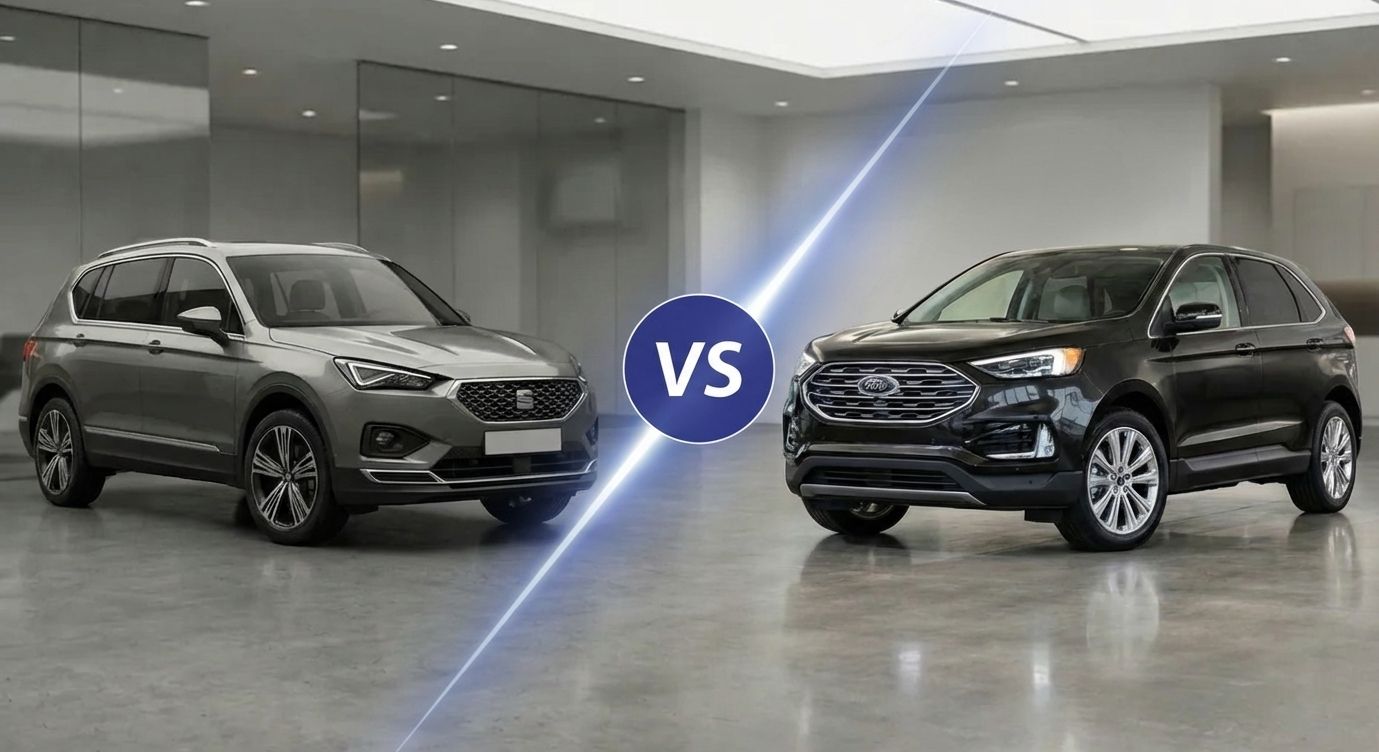
Seat Tarraco vs. Ford Edge: Which large SUV is the better choice? Our comparison reveals differences in driving, design, and practicality to help you choose right.
Oct 23, 2026