Car battle
Alfa Romeo Stelvio vs. Lexus NX: Complete comparison 2026
Alfa Romeo Stelvio vs. Lexus NX Comparison: Which used premium SUV to choose? We bring you a detailed look at reliability, equipment and a clear final verdict.
Apr 17, 2026
Articles
Car battle
Detailed comparison of popular family cars: Kia Sorento vs Renault Espace. Discover real-world experiences, differences in equipment, and our verdict before you buy.
October 16, 2026

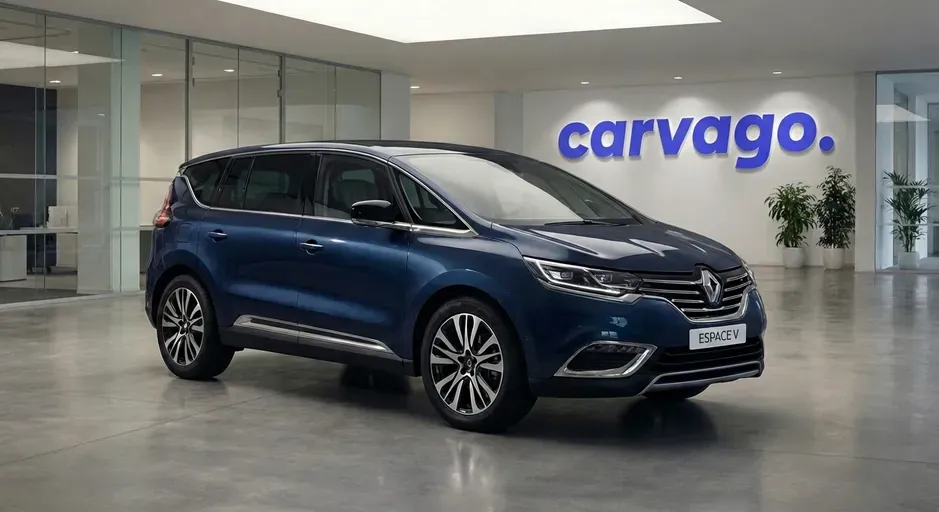
Kia Sorento represents a robust mid-size SUV that has built a reputation on the market as a reliable family car with generous interior space and rich modern equipment. Standing against it is the Renault Espace, an iconic French model which, in its fifth generation, transformed from a former MPV pioneer into a stylishly dynamic crossover focused on premium travel comfort and avant-garde design. The following lines will give you a detailed look at how these two attractive representatives of the approximately four-year-old used car market fare in a direct comparison and which of them represents the smarter choice for your daily journeys.
Looking at the exterior dimensions, an interesting battle between two different approaches to family travel unfolds before us. While the fourth-generation Kia Sorento (MQ4, produced since 2020) maintains the traditional, robust proportions of a full-size SUV with a length of 4810 to 4815 mm, the fifth-generation Renault Espace bets on an innovative mix of a family MPV and a crossover with a total length of 4857 to 4858 mm. The French competitor is thus just under 48 mm longer. However, a much more significant difference can be found in the wheelbase – the Espace has a value of 2884 mm, which is a massive 69 mm more than the 2815 mm of the Sorento. In terms of daily use, this means that the Renault provides more generous legroom in the first two rows of seats and a smoother ride quality. In contrast, thanks to its shorter wheelbase and slightly smaller overall length, the Kia promises better maneuverability and easier parking in crowded cities, making it a somewhat more practical choice for narrow European streets in this regard.
When it comes to width and height, both cars partially swap roles, and each scores in a slightly different discipline. Kia Sorento has a width of exactly 1900 mm, which, combined with a taller body structure rising to a height of 1695 mm, gives the car a majestic appearance and provides the driver with an excellent, dominant view of the surrounding traffic. Renault Espace, on the other hand, is 1888 to 1914 mm wide, but its roofline drops significantly lower to values between 1675 and 1681 mm. The more aerodynamic and overall lower silhouette of the French car helps reduce wind noise and fuel consumption during highway journeys. However, this comes at the expense of the overall airiness of the cabin, where the Sorento, thanks to its boxier and taller design, offers significantly more headroom for all passengers. The choice in this area thus depends on whether you prefer sleek highway elegance or the confident and upright stance of a classic SUV with generous headroom in a used car.
| Parameter | Kia Sorento SUV | Renault Espace Van |
|---|---|---|
| Width (mm) | 1900 | 1888 - 1914 |
| Length (mm) | 4810 - 4815 | 4857 - 4858 |
| Height (mm) | 1695 | 1675 - 1681 |
| Wheelbase (mm) | 2815 | 2884 |
When choosing the ideal family car on the used car market – especially if you are looking for models around four years old, which corresponds to the Kia Sorento (MQ4) and Renault Espace (5th generation) – luggage compartment volume often plays a decisive role. For families with children, active athletes, or simply anyone who regularly transports bulky loads, it is not just the paper value in liters that is crucial, but above all the overall practicality and shaping of the loading area. The differences in the concept of both cars clearly show their origins. While the Kia Sorento proudly profiles itself as a robust and confident SUV, the fifth-generation Renault Espace cleverly combines the generosity of a classic MPV with the design of a modern crossover. In both cases, however, you get a transport capacity that is perfectly sufficient for weekend shopping or a longer vacation.
When focusing on specific values, the differences in liters clearly reflect the interior layout. The Kia Sorento in the standard five-seater version offers an impressive basic volume of 821 liters. If you opt for the popular seven-seater version and fold the third row of seats into the floor, you still get an excellent 616 liters. The fifth-generation Renault Espace, on the other hand, benefits from its variable concept and sliding second row of seats. Depending on their setting, it offers a basic five-seat volume from 680 to 785 liters. This enormous flexibility means that if the rear passengers do not need maximum legroom, you can very easily gain space for several extra suitcases without having to fold the seats in a complicated way.
After folding the seats completely, both models transform into very capable transporters. Here, the Renault Espace has a slight edge, offering a maximum capacity of exactly 2101 liters, slightly surpassing the Sorento with its respectable 2011 liters.
| Parameter | Kia Sorento SUV | Renault Espace Van |
|---|---|---|
| Basic volume (l) | 821 | 680 |
| Max. volume after folding seats (l) | 2011 | 2101 |
Although the Kia Sorento impresses with its huge basic volume in the default five-seat configuration, the Renault Espace offers unbeatable variability and slightly more total space after folding the rear seats, thanks to its cleverly designed MPV platform. Both cars will swallow the whole family's luggage without hesitation, but the Espace brings extra flexibility thanks to its sliding seats.
When choosing a large family car, the maximum towing capacity often plays a key role, especially if you plan to frequently tow a caravan, boat, or heavy utility trailer. In the market for roughly four-year-old used cars, both representatives approach towing capacity very differently. The fifth-generation (V) Renault Espace maintains a consistent value across all its engine options, offering a standard and maximum braked trailer weight of 2000 kg. In contrast, the fourth-generation (MQ4) Kia Sorento has a much wider range of values, which depends heavily on the chosen powertrain. If you opt for the traditional 2.2 CRDi diesel engine, you achieve an excellent maximum braked trailer weight of up to 2500 kg. However, modern electrified versions are also available, where the capacity is significantly reduced – the classic hybrid (HEV) can tow 1650 kg, and for the popular plug-in hybrid (PHEV) version, the value drops to just 1500 kg. In practice, this means that while the hybrid Sorento offers a capacity ideal for smaller trailers – perfectly sufficient for a weekend purchase of building materials or transporting garden waste – the diesel Kia Sorento easily handles even the heaviest transports, such as horse trailers. The Renault Espace, with its 2000 kg, represents a solid foundation for towing most family caravans on longer holidays and offers ample space for several extra suitcases. In conclusion, for regular towing of heavy loads, the diesel Kia Sorento is clearly the best choice, while the Renault Espace represents a reliable and versatile compromise where you don't have to limit yourself by the choice of powertrain when towing medium-heavy trailers.
| Model and engine | Braked trailer weight (kg) | Unbraked trailer weight (kg) |
|---|---|---|
| Kia Sorento 2.2 CRDi (MQ4) | 2500 | 750 |
| Kia Sorento 1.6 T-GDI Hybrid (MQ4) | 1650 | 750 |
| Kia Sorento 1.6 T-GDI Plug-in-Hybrid (MQ4) | 1500 | 750 |
| Renault Espace BLUE dCi 160/190 (V) | 2000 | 750 |
| Renault Espace TCe 225 GPF (V) | 2000 | 750 |
The engine range for the Kia Sorento and Renault Espace models beautifully illustrates the different philosophies of the two manufacturers, which is a crucial factor when choosing a used car. While the South Korean Sorento in its fourth generation (MQ4) offers a classic and very robust 2.2 CRDi diesel engine as well as modern full hybrid and plug-in hybrid systems with all-wheel drive, the Renault Espace in its relevant fifth generation (V) relies primarily on efficient Blue dCi two-liter diesels built for long-distance highway driving and a dynamic 1.8 TCe petrol unit, which has its roots in the Alpine sports model. Thanks to its powerful diesel, the Sorento will primarily appeal to those who often tow heavy trailers and require a reliable 4x4, while the fifth-generation Espace excels as a front-wheel-drive highway cruiser. The latest sixth-generation Espace (VI) then completely turns the game towards the city and comes exclusively with the efficient E-Tech Full Hybrid 200 powertrain.
Among roughly four-year-old used cars (MQ4 generation produced since 2020), we find three main engine options under the Sorento's hood. The absolute benchmark for heavy work and long-distance routes is the improved 2.2 CRDi four-cylinder diesel with 148 kW, which has 440 Nm of torque and is always paired with a fast eight-speed dual-clutch transmission (8DCT). For calmer drivers and suburban traffic, Kia offers two electrified variants based on the 1.6 T-GDI turbocharged petrol engine: a classic hybrid (HEV) with a system output of 169 kW and a plug-in hybrid (PHEV) with a larger battery and output up to 195 kW. Both hybrid versions feature a traditional six-speed automatic. A major advantage of the Sorento is the fact that the vast majority of used cars on the market have intelligent all-wheel drive (AWD), with only basic diesel or hybrid variants occasionally encountered as front-wheel drive.
| Engine | Fuel | Power (kW) | Torque (Nm) | Transmission |
|---|---|---|---|---|
| 1.6 T-GDI Hybrid | Petrol / HEV | 169 | 350 | 6AT |
| 1.6 T-GDI Plug-in-Hybrid | Petrol / PHEV | 195 | 350 | 6AT |
| 2.2 CRDi | Diesel | 148 | 440 | 8DCT |
When looking for a four-year-old used Renault Espace on the market, you will most often come across the fifth generation after the facelift (offered until 2023). These model years are undoubtedly dominated by very reliable two-liter BLUE dCi diesel engines with power ranging from 118 kW to 147 kW. The more powerful specifications (190 and 200) produce a generous 400 Nm, are paired with a six-speed EDC dual-clutch transmission, and represent the ideal choice for swallowing highway kilometers with very low fuel consumption. Lovers of dynamic driving can search for the top-of-the-line TCe 225 GPF petrol engine with 165 kW, but it is a rarity on the market. Any all-wheel drive is missing here, which the Espace sometimes compensates for with unmatched agility thanks to 4Control rear-axle steering. The youngest model years (successor generation VI from 2023) have then completely abandoned diesel and rely on the E-Tech Full Hybrid 200 system with an innovative multi-mode automatic transmission, which excels in extreme efficiency at speeds up to 100 km/h.
| Engine | Fuel | Power (kW) | Torque (Nm) | Transmission |
|---|---|---|---|---|
| TCe 225 GPF | Petrol | 165 | 300 | 7EDC |
| BLUE dCi 160 | Diesel | 118 | 360 | 6EDC |
| BLUE dCi 190 | Diesel | 140 | 400 | 6EDC |
| BLUE dCi 200 | Diesel | 147 | 400 | 6EDC |
| E-Tech Full Hybrid 200 | Petrol / HEV | 147 | 300 | Multi-mode |
Summary for different types of drivers:
If you need to tow a trailer, fully load the car for a mountain holiday, or frequently use 4x4 drive, the Kia Sorento with the 2.2 CRDi engine is an almost flawless choice. For drivers of highway cruisers with a smooth driving style, the Renault Espace with the BLUE dCi 190 or 200 engine will bring immense comfort with realistically lower fuel consumption on long trips. However, those who predominantly move in the city or suburban traffic will greatly appreciate the sophisticated petrol hybrids from both brands.
The Sorento scores with a top-tier diesel engine with all-wheel drive for heavy work, while the Espace appeals with exceptionally efficient highway diesels without the need for 4x4 drive.
Choosing the right engine is absolutely crucial for long-term satisfaction with a family car, and our recommendations are based on real-world dynamics, fuel consumption in normal traffic, and mechanical reliability. While the Kia Sorento represents a classic, massive SUV that relies on technically refined diesel technology with immense durability, the fifth-generation Renault Espace embodies an aerodynamic crossover that, after years of experimenting with small-displacement engines, has finally found its ideal, silky-smooth diesel. It is important to mention that with the arrival of the latest sixth-generation Espace (from 2023), diesel engines have completely disappeared from Renault's lineup in favor of E-Tech hybrids. However, given the used car market's focus on roughly four-year-old vehicles, it is clearly worth opting for the powerful and proven diesel units for both models.
| Model | Recommended engine | Power | Torque | Availability for four-year-old used cars |
|---|---|---|---|---|
| Kia Sorento | 2.2 CRDi DCT8 | 148 kW (202 hp) | 440 Nm | 2020 – present (Gen. MQ4) |
| Renault Espace | 2.0 Blue dCi 190 EDC | 140 kW (190 hp) | 400 Nm | 2020 – 2023 (Discontinued, Gen. V) |
On the used car market for the current generation (MQ4, available since 2020), the traditional 2.2 CRDi diesel four-cylinder is clearly the most logical choice. Although Kia also offers reliable hybrid versions (1.6 T-GDI), in a heavy and tall SUV, a powerful diesel with 440 Nm of torque makes the most sense. It ensures absolutely confident pull when fully loaded and excellent real-world fuel consumption, which consistently stays between 6.5 and 7.5 liters per 100 km, even at higher highway speeds. In this generation, the engine received an aluminum block (saving 20 kg in weight) and a new eight-speed dual-clutch transmission (DCT) with wet clutches. What to watch out for: With the DCT transmission, it is crucial to carefully check the smoothness of operation. During the test drive, try slow crawling, hill starts, and quick selector changes from "R" to "D". Jerking or significant shocks can signal worn clutches or a problem with the mechatronics, both of which mean a very expensive repair. Another concern is the clogging of the diesel particulate filter (DPF) – inconsistent engine operation or frequent fan activation after turning off the car indicates incomplete regenerations. For this reason, this engine is intended exclusively for drivers towing trailers, highway travelers, and families on long trips, not as a car for the morning school run just a few kilometers away.
For a roughly four-year-old fifth-generation Renault Espace after the facelift (available between 2020–2022), the 2.0 Blue dCi in the 190 hp version is the absolute top of the range and a literal relief compared to the older, problematic 1.6 dCi engines (which struggled with cooling and undersized turbochargers). The turbocharged two-liter finally has the necessary power reserve, exceptionally refined operation, and a solid 400 Nm of torque, while real-world consumption hovers around an excellent 6.5 l/100 km. As is evident from the availability data, with the launch of the sixth generation in 2023, this excellent and mature diesel unit ended for good, making it a highly sought-after item. What to watch out for: During the inspection of a used car, focus on the EDC dual-clutch transmission (it has 6 speeds here). If the transmission jerks, especially when downshifting before an intersection, it indicates neglected oil changes or the need for a software update. Pay extreme attention to the AdBlue emission system. When starting the car, watch the dashboard closely – any warning like "Check emission system" or a kilometer countdown until the engine locks means trouble. It could be urea crystallization and pump failure, which at Renault often means an expensive replacement of the entire AdBlue tank. With its overall tuning, this Espace with the two-liter diesel is the ideal choice for calmer drivers who prefer maximum comfort and silence on long highway journeys.
When choosing a roughly four-year-old used car, real-world fuel consumption is one of the most important parameters. Official "paper" values provided by manufacturers often differ significantly from reality in everyday traffic. To get the most accurate picture of the appetite of the fourth-generation Kia Sorento (MQ4) and the fifth-generation Renault Espace, we used data from the independent community portal Spritmonitor.de. Here, thousands of real owners record their actual refuelings over the long term, providing us with the most accurate reflection of what truly awaits you at the gas station.
| Model and Engine | Average Consumption (l/100 km) |
|---|---|
| Kia Sorento 1.6 T-GDI Plug-in Hybrid | 5.5 |
| Kia Sorento 1.6 T-GDI Hybrid | 7.1 |
| Renault Espace TCe 225 GPF | 8.8 |
| Renault Espace BLUE dCi 160 | 6.8 |
| Renault Espace BLUE dCi 190 | 7.3 |
| Kia Sorento 2.2 CRDi | 7.5 |
A detailed look at the averages across individual engines reveals several clear trends. For vehicles of this weight and size, a diesel engine remains the logical first choice for overall highway efficiency. While the French Espace excels with the two-liter BLUE dCi 160 diesel, which can realistically achieve a very economical 6.8 liters per hundred kilometers, the Korean Sorento 2.2 CRDi requires an average of 7.5 liters due to its bulkier and taller body design. The behavior of smaller turbocharged petrol engines might come as a surprise to many. Renault's powerful TCe 225 GPF (1.8 l) engine has to work quite hard with the heavy MPV, pushing consumption close to the nine-liter mark—don't look for fuel savings here. Similarly, the full-hybrid system in the Kia (1.6 T-GDI Hybrid) doesn't perform miracles on highways, although an average of 7.1 l/100 km is still a solid result. For the plug-in hybrid version, it depends extremely on how often you charge the battery from the grid—on paper, this model promises a fairy-tale 1.6 liters, but in practice on combined routes with a discharged battery, expect an average of around 5.5 liters or more.
For the average user, clear recommendations emerge from this data. If you are a driver with high annual mileage, covering thousands of kilometers on highways or often towing a heavy trailer, traditional diesel engines will provide the greatest economy and cost stability. In this regard, the Renault Espace is a fantastic and surprisingly frugal highway cruiser. Conversely, for families who drive most of their kilometers in the city, suburbs, and stop-and-go traffic, Kia's hybrid system makes a lot of sense. There, the electric motor can use recuperation to push urban consumption to a minimum. The petrol Espace is then purely a choice for enthusiasts who prefer brisker dynamics over low fuel spending.
Ultimately, it is clear that fuel consumption will play a crucial role when deciding between these two vehicles. Thanks to its reliable and economical diesels, the Renault Espace can significantly save the budget on long trips, while the Kia Sorento counters with modern hybrid alternatives and a sophisticated plug-in hybrid, which make perfect sense for shorter commutes. The choice of the ideal engine (and the associated financial savings) thus depends entirely on your personal driving profile.
When looking at roughly four-year-old used cars (2021 and 2022 models), a very interesting comparison emerges between two completely different approaches to value retention. While the South Korean automaker was offering the brand-new, fourth-generation Kia Sorento at that time, Renault was selling the facelifted fifth generation of the Espace (the so-called Phase II). This creates significant price differences on the used car market.
The Kia Sorento is extremely sought after on the used car market. As a robust, well-equipped SUV with all-wheel drive options and sophisticated diesel (the popular 2.2 CRDi engine) and hybrid powertrains, it holds its price very confidently.
The Sorento shows minimal depreciation on the market. For a used car buyer, this means a higher initial investment, but also the certainty that the vehicle's price will not drop steeply in the coming years.
The fifth-generation Renault Espace is a completely different story from a used car purchase perspective. This luxury crossover, which uniquely combines MPV and SUV genes, suffers from much faster value loss. However, for families looking for a comfortable "second-hand" vehicle, this represents a huge advantage.
Thanks to its steep depreciation curve, a used Espace is an almost unbeatable purchase considering how much interior space, equipment, and premium materials you get for your money.
| Model (Generation) | Base price (from) | Average price | Highest price (up to) |
|---|---|---|---|
| Kia Sorento (4th gen) | €29,000 | €36,000 | €43,000 |
| Renault Espace (5th gen) | €18,000 | €23,000 | €27,000 |
If you are looking for an unbeatable ratio of price, equipment, and interior space, a four-year-old Renault Espace is a fantastic choice due to its rapid decline in market value. On the other hand, the Kia Sorento is noticeably more expensive to purchase but rewards you with excellent residual value and the sturdier character of a full-fledged SUV.
Both compared models boast a maximum five-star rating in crash tests by the independent Euro NCAP organization. However, when evaluating the safety of used cars, it is necessary to consider the context and the year the tests took place. Euro NCAP methodology is constantly evolving and becoming stricter – new frontal impact simulations, advanced cyclist detection, or complex emergency scenarios at intersections make today's tests much more demanding. For this reason, percentage results from different years cannot always be directly compared.
The Kia Sorento underwent Euro NCAP tests in 2020, which is an ideal reference point for the used car market for vehicles roughly four years old. The car earned a full five stars, with the test already conducted according to modernized and stricter protocols. The Sorento achieved excellent results: 82% for adult occupant protection and 85% for child protection. Safety assistance systems, including advanced emergency braking, were rated a very high 87%. Protection of vulnerable road users (pedestrians and cyclists) reached 63%. Standard equipment including a center airbag, which prevents front passengers' heads from colliding in a side impact, also contributes to high passive safety.
The Renault Espace has a longer and slightly different history. In the market for four-year-old used cars (approximately 2021–2022 models), you will most often encounter the fifth generation, which received five stars in 2015. Although this car was extremely safe for its time (81% for adults and 89% for children), its certification from the perspective of today's strict Euro NCAP methodologies has already expired. However, if we focus on the latest results of both model lines, the modern sixth-generation Espace (sharing its structure with the Austral model) underwent the strictest tests in 2022. The car earned 85% for adult protection, 83% for child protection, 69% for vulnerable participant protection, and 82% for safety assistants. These latest values are listed in the table below to allow for a comparison of the current technological maximum of both cars.
| Parameter | Kia Sorento | Renault Espace |
|---|---|---|
| Year of testing | 2020 | 2022 |
| Adult occupant protection | 82 % | 85 % |
| Child occupant protection | 85 % | 83 % |
| Vulnerable road user protection | 63 % | 69 % |
| Safety assistance systems | 87 % | 82 % |
In conclusion, both family SUVs represent an excellent choice in terms of passive and active safety. The Renault Espace, in its latest 2022 iteration, offers slightly more sophisticated protection for pedestrians and adult passengers, meeting the most current standards. The Kia Sorento, on the other hand, maintains a slight lead in the complexity of safety assistants and overall child protection. When choosing a roughly four-year-old used car, however, do not forget an important detail: while the Sorento will always offer you the high standard from the 2020 tests, with a fifth-generation Renault Espace from 2021 or 2022, you will be relying on a solid body proven by the 2015 methodology.
Both cars provide top-tier five-star safety, with the latest generation Renault Espace scoring with the most up-to-date 2022 certification, while the Kia Sorento excels with above-standard assistance systems and great child protection.
In addition to standard equipment, each model offers several unique features that can be decisive for the customer, with both cars approaching added value in their own way.
Spacious interior with very good use of space even for seven passengers
Wide range of powertrains including economical diesel, classic hybrid, and plug-in hybrid
High build quality and premium materials creating a high-end feel
Great ergonomics combining modern displays with the retention of physical buttons for key functions
Long seven-year factory warranty, which is a major advantage when buying a used car
Significantly higher purchase price on the used car market compared to mainstream competitors
Due to its massive exterior dimensions, parking and maneuvering in cramped cities is more challenging
Stiffer suspension tuning, which filters out sharp bumps less effectively on large 19" or 20" wheels
The plug-in hybrid version suffers from a smaller fuel tank and higher curb weight
Kia Sorento is an ideal choice for larger families looking for a robust, safe, and spacious SUV with premium craftsmanship. Thanks to the long factory warranty and highly reliable technology, it represents a very safe and worry-free choice on the used car market, even if buyers have to pay extra for it.
Excellent suspension comfort, which excels especially on long highway journeys
Great agility and a surprisingly small turning radius thanks to the 4Control all-wheel steering system
Attractive and fresh design combining MPV spaciousness with modern crossover style
Faster depreciation makes it a very affordable and attractive purchase on the used car market
Reliable and exceptionally economical diesel engines from the Blue dCi range for long-distance travel
The third-row seats are very cramped and realistically usable only for smaller children
The onboard system and infotainment sometimes react slowly, and their operation requires getting used to
Average reputation in terms of long-term electronics reliability and minor faults
Significantly smaller luggage capacity when all seven seats are in use
Renault Espace will primarily appeal to drivers who prioritize top-tier travel comfort, elegant French style, and clever technological solutions. As a four-year-old used car, it offers a fantastic price-to-equipment ratio, but it is better to view it as an exceptionally luxurious five-seater with the occasional option for emergency transport of two additional passengers.
Based on long-term user experience, service reports, recalls, and findings from comprehensive car inspections, we have compiled an overview of the most common problems you should watch out for when choosing a used car of these models.
The fourth generation of the Kia Sorento is considered a robust and overall very reliable family SUV; however, it can exhibit typical shortcomings associated with complex onboard electronics and the introduction of new types of powertrains.
The fourth-generation Sorento is a mechanically durable car, whose main shortcomings lie more in occasional software glitches of the onboard systems and the behavior of the dual-clutch transmission in city traffic.
The fifth generation of the Renault Espace (especially in the facelifted version available on the used car market) eliminated many initial shortcomings, but it still requires careful maintenance, and a thorough physical inspection of a used car is an absolute necessity.
The Espace can be exceptionally comfortable, but as a used car, it requires a thorough check of the dual-clutch transmission history and a detailed inspection of the complex adaptive chassis components.
When buying a used car, a thorough inspection is key. Here are a few specific points to focus on for these two models. Remember, however, that even the best test drive is no substitute for an expert's eye and diagnostics, so a detailed used car inspection through the comprehensive CarAudit service is always worth it.
Both vehicles are among the very spacious family cars with the option of seven seats. In the case of four-year-old used cars, the Renault Espace benefits from its MPV roots, offering excellent interior variability and comfortable individual seats. The Kia Sorento, on the other hand, provides a classic and robust SUV space with slightly more generous headroom for passengers in the third row.
For towing heavy trailers and caravans, the Kia Sorento is clearly the better choice. Its popular diesel versions with all-wheel drive can tow a braked trailer weighing up to 2,500 kg. Due to its different design and focus on lower emissions, the Renault Espace usually has a towing capacity limited to a maximum of 2,000 kg.
Kia has long scored points on the used car market thanks to its standard seven-year warranty (or up to 150,000 km), which very often transfers to the next owner without any problems. Furthermore, the Sorento is globally considered an above-average reliable car without significant chronic defects. The fifth-generation Renault Espace experienced minor infotainment issues at the start of production; however, facelifted models (from roughly 2020 onwards) have already been fine-tuned for reliability.
It mainly depends on the chosen powertrain, but both large family cars can maintain favorable values. In addition to an economical diesel, the Kia Sorento offers very efficient full hybrid (HEV) or plug-in hybrid (PHEV) powertrains, which save fuel especially in city traffic. The fifth-generation Renault Espace relied on great highway diesels, while its sixth generation switched exclusively to an advanced full-hybrid system with excellent fuel consumption of around 5 liters.
The Renault Espace is traditionally built as a comfortable highway cruiser and, thanks to its great aerodynamics, offers an exceptionally quiet and smooth ride. Most better-equipped used cars also feature the advanced 4Control all-wheel steering system, which significantly facilitates city parking. The Kia Sorento has a slightly higher and stiffer suspension, which takes away a bit of agility but, on the other hand, provides complete confidence on unpaved roads or in snow.
Sources: ADAC, idnes.cz, garaz.cz, autojournal.cz, smartmania.cz, automakers.cz
This article was prepared using artificial intelligence tools. The section guarantor is Petr Dušek.
Alfa Romeo Stelvio vs. Lexus NX Comparison: Which used premium SUV to choose? We bring you a detailed look at reliability, equipment and a clear final verdict.
Apr 17, 2026
Detailed comparison of Hyundai Santa Fe vs Volkswagen Tayron. We compared space, equipment, and driving characteristics. Read our verdict and choose the right SUV.
Oct 16, 2026
Detailed comparison of Nissan X-Trail vs Škoda Kodiaq. Discover real-world experiences, differences in equipment, and the final verdict that will help you choose the best SUV.
Oct 16, 2026