Car battle
Peugeot 508 vs Škoda Superb: Complete Comparison 2025
Peugeot 508 vs. Škoda Superb: Detailed comparison, real-world experiences, and the verdict to help you choose the best executive car.
Apr 13, 2026
Articles
Car battle
Detailed comparison of the Jaguar XE and Volvo V60. We compared the driving characteristics, engines, and interior space of these used cars. Read our verdict and make the right choice!
April 18, 2026
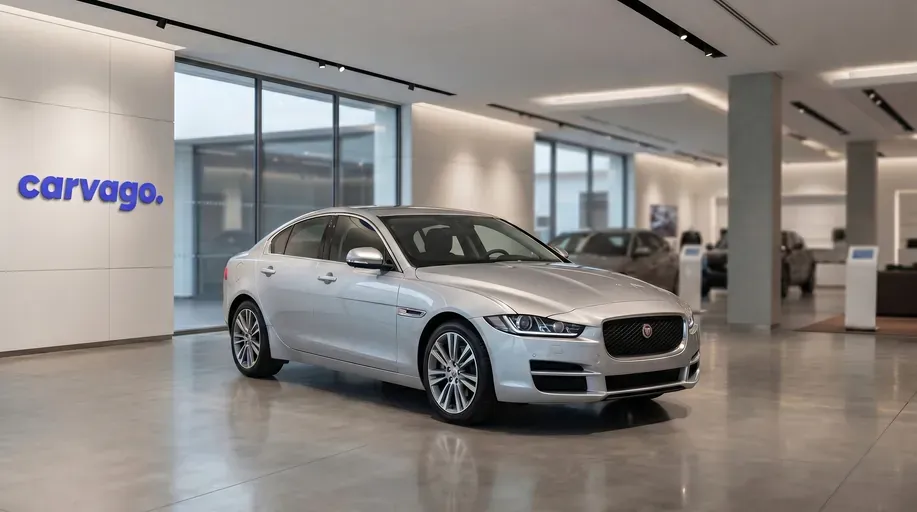
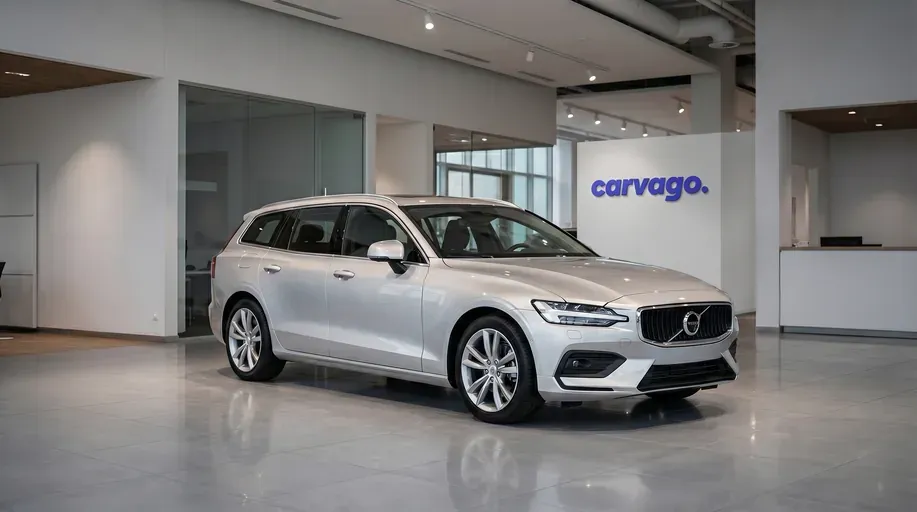
The Jaguar XE represents the embodiment of British sporting elegance in the premium mid-size segment, attracting primarily with its precise driving characteristics and unmistakable dynamic character. In contrast, the Swedish Volvo V60, which can often be found on the used car market in the raised adventurous Cross Country version or under the Recharge label for plug-in hybrid models, is an iconic estate car that bets on maximum safety, minimalist luxury, and unrivaled family practicality. In the following comparison, we will take a detailed look at how these two different approaches to luxury travel stand on the market for roughly four-year-old used cars, to help you decide whether British driving passion or rather calming Nordic well-being is the better choice for you.
When we place approximately four-year-old used Jaguar XE and Volvo V60 models side by side, the different concepts of the two vehicles immediately stand out. The third-generation Swedish estate, with a total length of 4778 mm, is exactly 100 mm longer than the British sedan (4678 mm). This extra length has a positive impact on the luggage compartment volume, although it may represent a slight handicap when parallel parking in narrow city streets. Conversely, the Jaguar XE dominates in the width parameter, where its 1967 mm exceeds the Volvo by a significant 117 mm. This difference on paper gives the British car a very confident stance on the road and natural support in corners, but the wide body can unpleasantly complicate maneuvering in tight underground garages. In terms of the overall footprint, the Volvo wins with practically-oriented buyers, while the wide Jaguar appeals more to sport-oriented drivers who prefer stability.
Height differences between the two models also confirm their different focuses. The Volvo V60 has grown to a height of 1432 mm, which is slightly more than the low-slung Jaguar XE (typically 1410 to 1425 mm depending on equipment). Although this difference may seem subtle at first glance, in practice, the higher build of the Swedish estate provides noticeably more headroom, easier entry, and a better sense of airiness. The Jaguar, on the other hand, stays low to the ground, lowering the car's center of gravity and optimizing aerodynamics for a more dynamic driving performance. The sporty and aggressive silhouette of the British feline is thus a direct trade-off for compromises in spaciousness, from which the crew in the Volvo benefits.
A crucial parameter for overall comfort and interior space is the wheelbase. In this regard, the Volvo V60, with a value of 2872 mm, surpasses the Jaguar XE (2835 mm) by a noticeable 37 millimeters. The longer wheelbase of the Swedish model means not only a smoother ride on the highway but, above all, more generous knee room for rear-seat passengers, making it an ideal candidate for longer family trips. The slightly shorter wheelbase of the Jaguar, conversely, manifests positively in greater agility and a better willingness of the car to change direction on winding country roads. The choice between these two cars thus hinges on priorities: the more spacious and highway-confident Volvo stands against the more agile and driver-focused Jaguar.
| Parameter | Jaguar XE Sedan | Volvo V60 Estate |
|---|---|---|
| Length (mm) | 4678 | 4778 |
| Width (mm) | 1967 | 1850 |
| Height (mm) | 1410 - 1425 | 1432 |
| Wheelbase (mm) | 2835 | 2872 |
When it comes to comparing the trunk capacity between the Jaguar XE and the Volvo V60, we encounter a fundamental difference in the very concept of both cars, which is a key factor for those interested in a roughly four-year-old used car. While the Jaguar XE is a sporty sedan betting primarily on elegant dynamic design and agility, the third-generation Volvo V60 is a full-fledged estate designed with maximum family utility and versatility in mind. This body style difference logically determines how much actual cargo both cars can carry safely and comfortably.
In terms of specific numbers, the Swedish Volvo V60 offers a spacious trunk with a capacity of 529 liters in its standard configuration. After folding the rear seats, this space increases to an impressive 1,441 liters. In contrast, the British Jaguar XE provides 410 liters as standard. Although moving house is not a priority for a sedan, the Jaguar also offers the option of folding the rear backrests, creating a maximum space of 1,236 liters. It is important to mention the situation with electrified powertrains. Plug-in hybrid versions of the Volvo V60 (Recharge) have the battery cleverly hidden in the center tunnel, so the basic trunk volume above the floor remains unchanged and practicality does not suffer. The Jaguar XE uses mild-hybrid technology in newer models, which also does not interfere with the total trunk volume.
In everyday life, these differences mean that the Volvo V60 is the ideal companion for active families. Its body shape offers easy access through a wide tailgate without a high loading sill. Thanks to its regular shape, it offers space for several extra suitcases and is easily sufficient for weekend shopping or a longer holiday with a stroller. Conversely, the Jaguar XE's trunk has a smaller loading opening and a lower internal height typical of sedans. While it can comfortably handle the daily commute, shopping bags, or golf bags, you will quickly run into its shape limits when trying to load bulkier items or taller boxes.
| Parameter | Jaguar XE Sedan | Volvo V60 Estate |
|---|---|---|
| Basic capacity (liters) | 410 | 529 |
| Maximum capacity with seats folded (liters) | 1236 | 1441 |
If everyday family utility and easy packing are your priorities, the Volvo V60 is the clear winner with its impressive space, while the Jaguar XE will suit those who are willing to sacrifice extra liters in exchange for the attractive silhouette of a sports sedan.
The ability to tow a trailer may not be the first parameter that comes to mind when choosing a premium sedan or a family estate, yet it plays a vital role in the overall practicality and usability of the car. Whether you need to hitch up a small trailer for a weekend trip to the DIY store or want to head off on a long summer holiday with a caravan, both of these roughly four-year-old cars have plenty to offer.
With modern versions of the Jaguar XE (especially models from the 2019 model year onwards with newer engines), you can rely on very consistent values across the range.
This value is very respectable in the field of premium sedans and perfectly sufficient for towing a standard medium-sized caravan or a platform for transporting motorcycles.
The third-generation Volvo V60 takes full advantage of its estate body style and brings higher limits that active families will clearly appreciate. While the basic petrol and mild-hybrid engines (e.g., B3, B4, and B5) mirror their British competitor and allow for towing a braked trailer weighing 1800 kg, the V60 pulls significantly ahead with other engine options.
If you are looking for a car for rather occasional towing, the 1800 kg of the Jaguar XE will not limit you in any common way and will handle everything from garden waste to transporting a boat for the weekend. However, if you plan regular trips with heavy multi-room caravans, the Volvo V60 is the more logical choice. Its two-tonne limit in the case of diesel and plug-in hybrid versions provides immense flexibility without the need for compromise.
| Model and motorization | Braked weight of trailer (kg) | Unbraked weight of trailer (kg) |
|---|---|---|
| Jaguar XE D200 (150 kW) | 1800 | 750 |
| Jaguar XE P250 (184 kW) | 1800 | 750 |
| Volvo V60 B4 MHEV (145 kW) | 1800 | 750 |
| Volvo V60 B4 Diesel (145 kW) | 2000 | 750 |
| Volvo V60 T6 / T8 Twin Engine | 2000 | 750 |
Comparing the engine options between the Jaguar XE and the Volvo V60 reveals two completely different approaches to propulsion, which is a crucial factor for buyers of roughly four-year-old used cars. Even after its facelift, the Jaguar XE sticks to a more traditional school, relying on sophisticated internal combustion engines from the Ingenium family that prefer rear-wheel drive (or optional AWD) to offer a maximally sporty and direct driving experience. In contrast, the Swedish Volvo has bet heavily on electrification for its third-generation V60. Its range focuses on highly efficient mild-hybrid units and exceptionally powerful plug-in hybrids. While the British sedan is the choice for drivers seeking purist dynamics and classic character, the Nordic estate scores points with more pragmatic users desiring economical city operation, silence, and greener technologies.
Under the hood of the more modern Jaguar XE (ideal for those looking for a car from 2020–2022), you will find exclusively turbocharged two-liter four-cylinder engines with a smooth-shifting eight-speed automatic transmission. Until 2020, the D180 diesel version (132 kW) was the standard for highway drivers, which was replaced at the turn of 2020 and 2021 by the modernized and cleaner D200 unit. This features 150 kW of power and utilizes mild-hybrid (MHEV) technology to reduce consumption and smooth out the start-stop system. The petrol portfolio is represented by the agile P250 version with 184 kW, and the absolute pinnacle of the standard range is the dynamically superior P300 (221 kW), which was supplied exclusively with all-wheel drive. While you might come across designations like 20d, 25t, or even the powerful 35t six-cylinder in older examples from the beginning of the X760 generation's production, the modernized D200 and P250 series are typical and most suitable for the younger used car market.
| Engine type | Fuel | Power (kW) | Torque (Nm) | Transmission |
|---|---|---|---|---|
| D180 | Diesel | 132 | 430 | 8AT |
| D200 | Diesel (MHEV) | 150 | 430 | 8AT |
| P250 | Petrol | 184 | 365 | 8AT |
| P300 | Petrol | 221 | 400 | 8AT |
The third-generation Volvo V60 brings a significantly more diverse, yet almost completely electrified, range of engines. If you go for a car roughly four years old, you will encounter mild-hybrid units labeled "B" and sophisticated plug-in hybrids hidden under the name "Recharge" (or formerly "T"). The foundation consists of the economical B3 petrol mild-hybrid (120 kW) and the more powerful B4 (145 kW), which can be paired with an eight-speed automatic or a seven-speed dual-clutch transmission. For those interested in diesel, the automaker offered the popular highway mile-muncher B4 Diesel (145 kW), although it has completely disappeared from the range in the latest models after 2024. Older conventional diesels (D3 and D4) ceased sales around 2020 and are hardly found on the market for newer used cars. For performance-oriented drivers, the T6 Recharge and the extreme T8 Recharge versions are the gems. These combine a petrol engine with an electric motor, thereby generating a massive combined output of up to 335 kW in the T8 version, with the added possibility of daily commuting purely on electricity.
| Engine type | Fuel | Power (kW) | Torque (Nm) | Transmission |
|---|---|---|---|---|
| B3 | Petrol (MHEV) | 120 | 265 | 7DCT / 8AT |
| B4 | Petrol (MHEV) | 145 | 300 | 7DCT / 8AT |
| B4 Diesel | Diesel (MHEV) | 145 | 420 | 8AT |
| B5 | Petrol (MHEV) | 184 | 350 | 8AT |
| T6 Recharge | PHEV (Petrol + Electric) | 257 (comb.) | 659 (comb.) | 8AT |
| T8 Recharge | PHEV (Petrol + Electric) | 335 (comb.) | 709 (comb.) | 8AT |
While the Jaguar XE appeals to traditional drivers with its characterful engines and dominant rear-wheel drive, the Volvo V60 clearly reigns with its wide range focused on sophisticated mild-hybrids and extremely fast yet quiet plug-in hybrid versions.
Choosing the right engine is absolutely crucial for long-term satisfaction with a car. While the Jaguar XE has historically targeted a sporty driving experience and its engines are designed to support an agile chassis with rear-wheel (or all-wheel) drive, the Volvo V60 is the essence of a family estate, where safety, smoothness, and cabin quietness are the priorities. Looking at the market for roughly four-year-old used cars, we can also notice an interesting development – while Jaguar gradually tuned its two-liter diesel for higher mechanical reliability, Volvo began moving away from diesels (the legendary D3 and D4) during the same period and switched to sophisticated mild-hybrid units labeled "B," which perfectly suit the character of the Nordic estate.
This two-liter diesel supported by mild-hybrid technology, available in the X760 generation from 2021 to 2024, represents the most rational choice in the current used car market. Compared to older versions labeled 20d, the British automaker significantly redesigned the problematic timing chains in the Ingenium engines, which fundamentally increased mechanical reliability. The D200 version offers a massive 430 Nm of torque, giving the sedan effortless flexibility when overtaking, with real-world fuel consumption comfortably oscillating around 5.5 liters per 100 km.
For a roughly four-year-old third-generation family estate, we recommend betting on the petrol mild-hybrid labeled B4 (available from late 2021 to the present). Although Volvo has a strong tradition of diesel engines, the petrol "B4" stands out for its completely velvety operation, which perfectly matches the car's relaxing concept. The mild-hybrid system's starter-generator smooths out turbo lag and ensures incomparably smooth starts at intersections. Additionally, you don't have to worry about the pitfalls associated with the emission systems of modern diesels. Long-term real-world consumption stays between 6.5 and 7.5 liters per 100 km, which is a very decent result for a heavy and safe estate.
When choosing a premium used car, focusing on models roughly four years old, we cannot rely solely on what manufacturers print in promotional brochures. The difference between paper and real-world consumption can be vast, as laboratory measurements rarely reflect traffic jams, highway inclines, or a more dynamic driving style. To get a true picture of how much the Jaguar XE and Volvo V60 actually consume, we looked into the database of the German community portal Spritmonitor.de, where drivers diligently record every refueling. We focused on the most sought-after two-liter engines, which are most common in the used car market.
| Model and Engine | Average Consumption (l/100 km) |
|---|---|
| Volvo V60 B4 Diesel (145 kW) | 6.2 |
| Jaguar XE D200 (150 kW) | 6.2 |
| Volvo V60 B4 Petrol (145 kW) | 7.5 |
| Jaguar XE P250 (184 kW) | 8.8 |
| Volvo V60 T6 Recharge (257 kW) | 4.5* |
(Note: The value for the Volvo plug-in hybrid depends heavily on the frequency of charging from the grid.)
Interpretation of this data reveals several interesting trends. First, the diesel engines in both cars are highly efficient and surprisingly evenly matched. The modern mild-hybrid diesel in the Volvo V60 (B4 Diesel) and the D200 engine in the Jaguar both oscillate slightly above the six-liter mark, which is an excellent result for heavy mid-size cars. However, a completely different situation arises with the petrol versions. While the Swedish Volvo B4 relies on smooth mild-hybrid assistance and stays within reasonable limits around seven and a half liters, the British beast fully reveals the downside of downsizing and sportier tuning. The turbocharged two-liter Jaguar XE in the P250 version demands nearly nine liters in real-world traffic, debunking the myth that small displacements always bring savings. A chapter of its own is the plug-in hybrid Volvo V60 T6 Recharge, whose average of 4.5 l/100 km is only a theoretical midpoint – if you charge daily, you will drive for half that, but when operating with a depleted battery, consumption conversely shoots up steeply.
What do these values mean for a typical used car buyer?
Overall, it can be stated that fuel consumption plays a major role in comparing these two competitors. While there is more or less a complete tie among the diesel power units, when looking at the petrol and electrified versions, the scales tip clearly in favor of the Volvo V60, which provides more economical operation thanks to its sophisticated mild-hybrid system and plug-in hybrid alternatives. Jaguar, with its petrol engines, bets more on emotion than on savings in the wallet.
When looking at the market for used cars around four years old (typically 2021 and 2022 models), we encounter completely different buying opportunities. While the Swedish estate is a staple on the used car market with a huge selection, the British sedan is considered more of a niche and exotic choice. For this comparison, we focus on the second-generation Volvo V60 and the updated version of the Jaguar XE (post-2019 facelift), which are the versions corresponding to this age.
There are surprisingly few used Jaguar XE cars on the European market. This limited supply means that searching for a specific trim or engine often requires some patience. On the other hand, it makes it a car that won't just blend in on the road.
In contrast, the Volvo V60 is exceptionally popular on the used car market, as it very often served as a highway fleet car or a spacious family vehicle. The selection is huge, across all trim levels and powertrain types.
| Model | Starting Price | Average Price for Good Units | Maximum Price (Top Version) | Market Availability |
|---|---|---|---|---|
| Jaguar XE | from approx. €27,000 | €31,000 | €39,000 | Very low |
| Volvo V60 | from approx. €23,000 | €32,000 | > €41,000 (PHEV) | Very high |
While the Volvo V60 benefits from a massive market supply, allowing you to easily choose equipment and a precise budget, the rarer Jaguar XE offers an interesting price-to-exclusivity ratio for people who enjoy driving and want to avoid the mundane.
When it comes to safety ratings, both cars earned the maximum five-star rating from Euro NCAP crash tests in their time. However, it is crucial to consider the context and the year these tests were conducted. The Euro NCAP methodology evolves over time and is constantly becoming more stringent. Therefore, percentage results from different years cannot be simply compared – what was sufficient for a top rating in the past would not stand up in today's tests without the presence of advanced assistance systems.
Jaguar XE underwent Euro NCAP testing in 2015. At the time, it was among the safest cars in the large family car segment and impressed with excellent protection for adult occupants. These great results were supported by the assistance features being introduced at the time, such as standard autonomous emergency braking or an active bonnet for pedestrian protection. However, the 2015 methodology did not yet require today's complex tests, such as cyclist detection with automatic braking or complex junction scenarios. Due to the age of this test, the validity of the five-star rating for the British sedan formally expired in January 2022.
Volvo V60, in contrast, underwent testing in 2018, according to significantly more demanding and modern standards. The Swedish estate confirmed the brand's traditional reputation and earned a top score for occupant protection. Furthermore, the 2018 protocol already thoroughly tested advanced active safety. Volvo succeeded thanks to its City Safety system, which reliably recognizes pedestrians, cyclists, and large animals, as well as the standard lane-keeping assistant. Although the percentage scores for vulnerable road user protection and safety assist may seem lower compared to the Jaguar, they were achieved in substantially stricter simulations. The Volvo V60's certification expired in January 2025.
When looking for a roughly four-year-old used car, both models offer an exceptionally solid construction and very good passive safety. However, thanks to development and testing according to newer methodology, the Volvo reflects modern standards significantly better and possesses a smarter range of active features that can prevent collisions more effectively.
| Parameter | Jaguar XE | Volvo V60 |
|---|---|---|
| Year of testing | 2015 | 2018 |
| Adult occupant protection | 92 % | 96 % |
| Child occupant protection | 82 % | 84 % |
| Vulnerable road user protection | 81 % | 74 % |
| Safety assist systems | 82 % | 76 % |
While both cars provide a very high level of passive protection, the Volvo V60 represents a safer and more comprehensive choice for a used car buyer thanks to more advanced assistance systems and testing according to stricter standards.
Both models offer much more than just basic equipment, with each approaching added value and technological innovation in its own distinctive way. In addition to the usual standard, both cars bring several unique elements and clever solutions that can be decisive for the end customer when making a choice.
The Jaguar XE targets primarily enthusiastic drivers looking for perfect driving characteristics who do not want to compromise on modern technology and British charm.
The Volvo V60 approaches the premium segment from a different angle. Its domain is absolute peace on board, ingenious family practicality, and a top level of active safety.
Excellent driving characteristics thanks to a sophisticated chassis and rear-wheel drive preference
Attractive and sporty design that stands out from the crowd of German competitors
Significantly improved and luxuriously crafted interior following the 2019 facelift
Very precise and communicative steering focused on the driving experience
Very cramped space for rear passengers, especially in terms of legroom and headroom
Small luggage compartment (approximately 410 liters) with poorer access due to the sedan body style
Significantly limited range of engines in newer model years (stronger six-cylinder engines are often missing)
Faster depreciation of residual value on the used car market
Jaguar XE is an ideal choice for enthusiastic drivers looking for a premium sedan focused on perfect driving experiences, agility, and fresh British style. However, due to its smaller interior space and limited practicality, it is not very suitable as a primary family car.
Top-tier level of active and passive safety with a multitude of advanced assistance systems
Exceptionally comfortable ergonomic seats and a precisely crafted, minimalist interior
High everyday practicality thanks to the estate body style and a large luggage compartment (529 liters)
Wide range of very powerful and efficient plug-in hybrid versions (Recharge)
Less engaging driving dynamics and more detached steering compared to the sportier Jaguar
Control of most vehicle functions (including air conditioning) is handled almost exclusively via the central touchscreen
Stiffer chassis tuning over bumps on versions with larger wheels (especially in R-Design/Dark trim)
The Volvo V60 will primarily appeal to families and drivers who prefer maximum safety, superior comfort on long journeys, and high practicality. It is perfectly suited for a calmer and more relaxed driving style, while its modern powertrains offer a great compromise between performance and fuel consumption.
Based on long-term user feedback, service reports, and procedures for comprehensive car inspection, we have compiled an overview of the most common problems that potential buyers of these used models should watch out for.
The Jaguar XE offers excellent driving characteristics, but for used units, attention needs to be paid to specific technical areas, especially regarding engines from the Ingenium family and onboard electronics.
When choosing a used Jaguar XE, it is absolutely crucial to verify a clear service history and the condition of the DPF filter; however, well-maintained units offer exceptional and very satisfying driving experiences.
The second generation Volvo V60 is generally a very robust and safe family estate, however, sophisticated electronics and complex powertrains bring several known service risks.
The Volvo V60 is a well-built car, but before buying, it requires a detailed check of the onboard electronics, plug-in hybrid drive components, and hose tightness in diesel variants.
When buying a used car, a thorough inspection is key. Here are some specific points to focus on for these two models to avoid unexpected and expensive repairs after purchase. For such sophisticated and premium cars, a comprehensive car audit by an expert is always recommended.
Volvo V60 as a premium estate clearly wins thanks to its practical and easily accessible 529-liter boot. The Jaguar XE is a classic sedan that has to take a back seat in this regard with a capacity of 410 liters and a narrower loading opening. For frequent transport of larger luggage or family trips, the Swedish car is a much better choice.
In terms of driving dynamics and steering engagement, the British Jaguar clearly dominates thanks to its perfectly tuned chassis and rear-wheel drive preference. Volvo, on the other hand, is built from the ground up primarily for a calm, smooth, and maximally comfortable ride. While you'll enjoy driving the Jaguar through winding backroads, you'll appreciate the Volvo more during relaxing highway journeys.
Both vehicles achieve the highest ratings in Euro NCAP crash tests; however, the Volvo V60 is considered a historical benchmark in active and passive safety. The Swedish estate offers a more spacious cabin in the rear seats and the most advanced assistance systems even in standard equipment. Thanks to its greater emphasis on family usability and excellent visibility from the car, the Volvo is a more suitable candidate for these purposes.
In recent years, the Volvo V60 has scored points with its sophisticated Recharge plug-in hybrid powertrains, which can drive around town with minimal gasoline consumption when charged regularly at home. The Jaguar XE relies more on tuned gasoline and very efficient diesel engines supported by mild-hybrid technology. If you spend most of your time on long highway routes without the possibility of charging, the diesel Jaguar can offer excellent operating economy.
In more recent model years, the Volvo V60 uses a system built on the Google Automotive platform with integrated maps and sophisticated voice control. The Jaguar XE competes ably with its Pivi Pro system, which impresses with fast response, an intuitive menu, and highly elegant graphics. Both solutions support smartphone mirroring; however, the direct integration of Google services makes the Volvo a slightly more practical companion for daily navigation.
Sources: ADAC, e15.cz, denik.cz, autorevue.cz, hybrid.cz, fastcars.cz
This article was prepared using artificial intelligence tools. The section guarantor is Petr Dušek.
Peugeot 508 vs. Škoda Superb: Detailed comparison, real-world experiences, and the verdict to help you choose the best executive car.
Apr 13, 2026
Ford Mondeo vs. Volkswagen Passat: Detailed comparison, reviews, engines, and verdict. Find out which of these popular cars is the better choice for you.
Oct 16, 2026
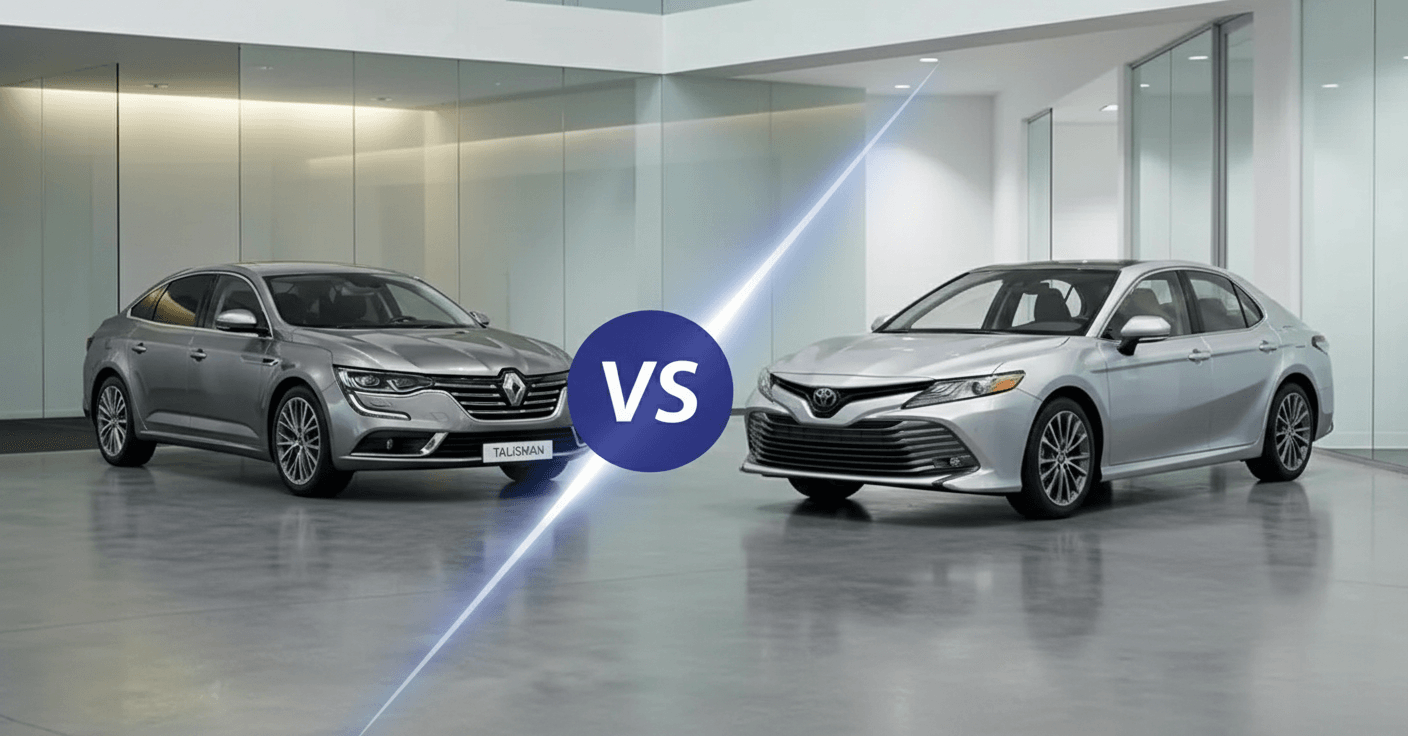
Detailed comparison of Renault Talisman vs. Toyota Camry. Discover the real differences in reliability, equipment, and fuel consumption. Find out which car to choose based on our verdict.
Oct 16, 2026