Car battle
Škoda Kodiaq vs. Volkswagen Tiguan Allspace: Complete Comparison 2025
Škoda Kodiaq vs. VW Tiguan Allspace: Which 7-seater SUV is better? Our detailed comparison, real-world insights, and verdict will help you choose.
Apr 13, 2026
Articles
Car battle
Detailed comparison of 7-seater SUVs: Hyundai Santa Fe vs. Peugeot 5008. We compared equipment, space, and engines. Find out which car is the right one for you.
April 26, 2026
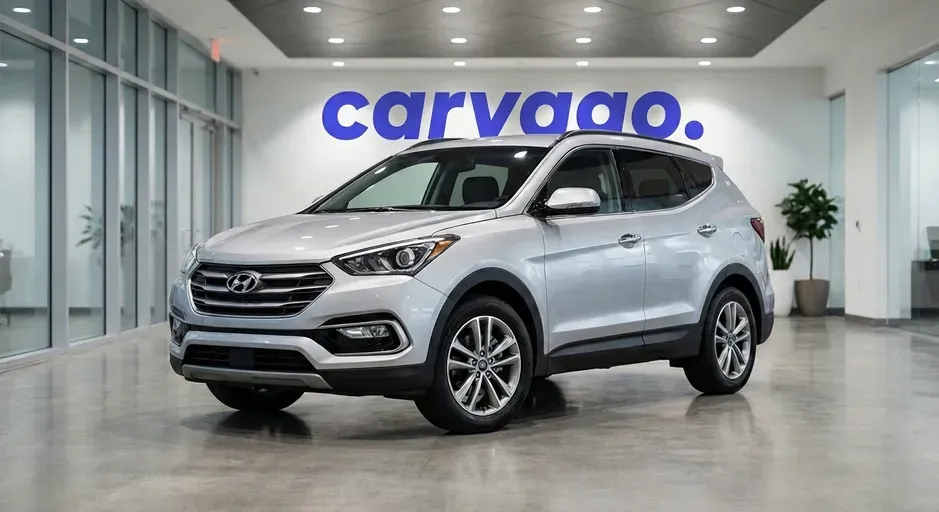
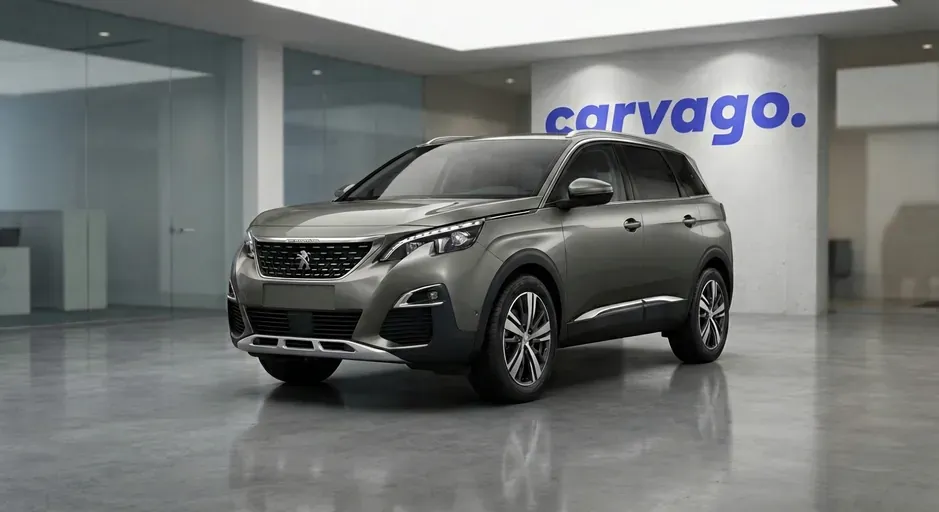
The Hyundai Santa Fe, an established and spacious mid-size SUV from the Korean automaker, has built an exceptionally strong reputation over the years thanks to its reliable build quality, generous equipment, and ability to transport the whole family in maximum comfort. On the other hand, there is the Peugeot 5008, a popular French model that has successfully undergone a transformation from a former classic MPV into a stylish crossover SUV, which today scores points with customers primarily for its avant-garde design and futuristic interior layout featuring the i-Cockpit dashboard. Now, let's take a closer look at how these two popular competitors fare in a head-to-head battle and which of them represents a smarter choice on the used car market for your daily commutes and weekend adventures.
When you place approximately four-year-old models of the Hyundai Santa Fe (4th generation) and Peugeot 5008 (2nd generation) side by side, you immediately notice the different approaches of the two automakers to building a family SUV. The South Korean Santa Fe is a traditional large vehicle that, with a length of up to 4,785 mm, clearly demonstrates its massiveness and mid-size class affiliation. In contrast, the French Peugeot 5008 is a significant 144 mm shorter (measuring 4,641 mm), revealing its development in a somewhat more compact segment. The French focused here on clever space utilization rather than external majesty. Therefore, if you often park in crowded city streets, the Peugeot's more compact dimensions will undoubtedly make daily maneuvering easier.
Significant differences also exist in the remaining exterior proportions. With a width of up to 1,900 mm, the Santa Fe is roughly 56 mm wider than the Peugeot and measures just under 40 mm more in height. This more muscular and wider body structure of the Hyundai is positively reflected primarily in the lateral cabin space. If you often carry three adult passengers in the back or need to fit three child car seats side by side, the wider body profile will be a major advantage. However, the larger proportions logically take their toll in cramped underground garages, where the otherwise respect-commanding Hyundai can feel a bit clumsy.
An interesting paradox, however, is revealed by looking at the wheelbase. Although the Peugeot 5008 is a significantly smaller car overall, its wheelbase reaches 2,840 mm, surpassing the much more robust Hyundai (2,765 mm) by a non-negligible 75 mm. Thanks to extreme shortening of the overhangs and stretching of the chassis itself, French engineers managed to conjure up above-standard legroom for passengers in the rear rows. The final choice will thus depend purely on your needs: if you prefer a more massive exterior design and a wider cabin, the Santa Fe will be a better candidate, but if you are looking for a cleverly designed car for efficient use of space and easier city life, the shorter 5008 with a longer wheelbase offers a brilliant compromise.
| Parameter | Hyundai Santa Fe SUV | Peugeot 5008 SUV |
|---|---|---|
| Length (mm) | 4770 - 4785 | 4641 |
| Width (mm) | 1890 - 1900 | 1844 |
| Height (mm) | 1680 - 1685 | 1646 |
| Wheelbase (mm) | 2765 | 2840 |
Luggage compartment volume is often one of the main decision-making factors for large family SUVs such as the Hyundai Santa Fe and Peugeot 5008. Whether you are planning a major weekend shopping trip, a summer holiday with the family, or need to transport sports equipment, every extra litre counts. For used cars around four years old, which on the market represent the fourth generation of the Santa Fe and the second generation of the 5008, both vehicles boast excellent practicality. However, the way they approach interior space differs slightly depending on their design philosophy.
The Korean Hyundai Santa Fe (in its 4th generation, 2020–2024) offers a very solid 634 litres in a standard five-seat configuration. This is more than enough space for daily use, where you can easily fit a bulky stroller and still have room for several extra suitcases. After folding down the second row of seats, the maximum volume increases to 1704 litres, creating an almost flat loading area ideal for transporting larger items. A minor compromise in total volume may be found in used plug-in hybrid versions, where the traction battery takes up a small portion of the hidden space under the floor.
The French Peugeot 5008, on the other hand, benefits from its past, having originally started as a full-fledged MPV. This flexible family DNA has remained fully intact in the 2nd generation (produced until 2024), even though it has visually transitioned fully into the tougher SUV category. In a five-seat configuration, it offers a massive 780 litres, significantly surpassing its Asian competitor. Its boot is simply sized even for a long family holiday with an excess of luggage. Furthermore, Peugeot's great weapon is its excellent variability – the third-row seats can be independently folded or even completely removed, and if you also fold the second row of individual seats flat, you get a staggering 1940 litres of total cargo space.
| Parameter | Hyundai Santa Fe SUV | Peugeot 5008 SUV |
|---|---|---|
| Base volume (litres) | 634 | 780 |
| Max. volume with seats folded (litres) | 1704 | 1940 |
Thanks to its MPV platform, the Peugeot 5008 offers unrivalled boot volume and clever variability, making it the clear choice for space-demanding families, while the Hyundai Santa Fe will please those looking for a more premium interior finish with a slightly smaller, but still fully sufficient, luggage compartment.
Differences in towing capacity can be a decisive factor for many families or active travelers when choosing a used SUV. Towing capacity directly determines whether you can hitch up a large family caravan, a heavy boat, or if the car will only be sufficient for a weekend trip with a smaller trailer. Looking at models roughly four years old (4th generation for Hyundai and 2nd generation for Peugeot), we encounter completely different approaches from both manufacturers.
Hyundai Santa Fe is a traditional powerhouse in this discipline. With the popular 2.2 CRDi diesel engine or the older 2.0 CRDi, it can easily tow a braked trailer with an impressive maximum weight of 2000 to 2500 kg. However, as soon as you opt for modern electrified versions, this capacity drops significantly. The standard hybrid (HEV) can tow 1650 kg, while for the plug-in hybrid (PHEV) version, the maximum braked trailer weight is limited to just 1350 kg due to the heavy batteries.
The French competitor, the Peugeot 5008, is on the other hand designed primarily as a spatially generous family car, rather than a classic workhorse. The best values here are achieved by the powerful two-liter diesels (2.0 BlueHDi), which can handle a trailer weighing 1500 to 1800 kg. However, a major limitation comes with the base engines such as the 1.2 PureTech three-cylinder petrol, where the standard braked trailer weight ranges between a low 950 to 1280 kg. The middle ground for Peugeot is then the 1.5 BlueHDi or 1.6 PureTech engines, which offer a towing capacity of 1200 to 1400 kg.
In practice, these differences mean a noticeable impact on daily use. While the diesel Santa Fe offers full performance that is perfectly sufficient for towing a heavy twin-axle caravan for a longer holiday, the Peugeot 5008 with its weaker engines is more suitable for a weekend purchase of building materials or a lighter garden trailer. With the Peugeot, you are more likely to get space for a few extra suitcases directly in the car's giant trunk than to rely on a heavy trailer.
Conclusion: If a huge towing capacity is a priority for you and you plan to regularly transport heavy loads, the Hyundai Santa Fe (ideally in the diesel variant) is the clear and much more capable choice. The Peugeot 5008, on the other hand, will suit those buyers who use the tow bar only occasionally for lighter loads and prefer the overall interior modularity.
| Model and engine | Braked trailer weight (kg) | Unbraked trailer weight (kg) |
|---|---|---|
| Hyundai Santa Fe 2.0 / 2.2 CRDi (4th generation) | 2000 - 2500 | 750 |
| Hyundai Santa Fe 2.4 GDI (4th generation) | 2000 | 750 |
| Hyundai Santa Fe 1.6 T-GDI Hybrid (4th generation) | 1650 | 750 |
| Hyundai Santa Fe 1.6 T-GDI PHEV (4th generation) | 1350 | 750 |
| Peugeot 5008 2.0 BlueHDi (2nd generation) | 1500 - 1800 | 750 |
| Peugeot 5008 1.6 PureTech (2nd generation) | 1300 - 1400 | 750 |
| Peugeot 5008 1.5 BlueHDi (2nd generation) | 1200 - 1300 | 740 - 750 |
| Peugeot 5008 1.2 PureTech (2nd generation) | 950 - 1280 | 690 - 750 |
When comparing the engine options of these two family SUVs, you will quickly find that each manufacturer chose a completely different philosophy for powering their models. This is of fundamental importance for used car buyers, whether it's about fuel consumption, highway pull, or the ability to tow heavy trailers. Hyundai Santa Fe focuses on more muscular powertrains with a strong emphasis on advanced hybrid technology and large-displacement diesel engines, most of which are available with all-wheel drive (4WD). In contrast, the Peugeot 5008 bets on so-called downsizing – offering smaller, highly efficient turbocharged petrol and diesel engines exclusively with front-wheel drive, making it a lighter and more economical car for everyday urban and suburban duties. While the Santa Fe attracts drivers requiring raw power and off-road capability, the Peugeot appeals to those interested in the lowest possible operating costs and agility.
In the case of roughly four-year-old used Hyundai Santa Fe models (fourth generation after the 2020 facelift), the engine range is strong and heavily electrified. The main workhorse for high-mileage drivers remains the proven 2.2 CRDi diesel engine, which after the update delivers 148 kW and a strong 440 Nm of torque, paired with a very fast eight-speed dual-clutch transmission (8DCT). For those looking for modern efficiency and who drive more often in the city, Hyundai offers the petrol 1.6 T-GDI Hybrid (169 kW) and the even more powerful 1.6 T-GDI Plug-in Hybrid (195 kW), both using a six-speed automatic. It is important to mention that if you come across older models from 2018 to 2020, you might also find the 2.0 CRDi diesel engine or the naturally aspirated 2.4 GDI petrol four-cylinder under the hood; however, these two engines completely disappeared from the lineup after 2020 in favor of newer and more efficient powertrains.
| Engine type | Fuel | Power (kW) | Torque (Nm) | Transmission |
|---|---|---|---|---|
| 2.4 GDI | Petrol | 136 | 241 | 6AT |
| 1.6 T-GDI Hybrid | Petrol / HEV | 169 | 350 | 6AT |
| 1.6 T-GDI Plug-in-Hybrid | Petrol / PHEV | 195 | 350 | 6AT |
| 2.0 CRDi | Diesel | 110 / 136 | 400 | 6MT / 8AT |
| 2.2 CRDi | Diesel | 147 / 148 | 440 | 8AT / 8DCT |
The Peugeot 5008 (second generation) takes a different path, relying exclusively on lighter and more economical units with front-wheel drive (2WD). The basis of the petrol range is the three-cylinder 1.2 PureTech 130 with 96 kW, but in a fully loaded seven-seater SUV, most drivers will appreciate the more powerful 1.6 PureTech 180 four-cylinder with 133 kW. Diesel fans can choose between the extremely economical 1.5 BlueHDi 130 (96 kW) and the more potent highway cruiser 2.0 BlueHDi 180 with up to 133 kW. A great advantage of used cars is that the vast majority of models from this period are equipped with a smooth-shifting eight-speed automatic (EAT8). When choosing on the used market, however, it is necessary to keep in mind that the most powerful versions, 1.6 PureTech and 2.0 BlueHDi, were gradually phased out of the price lists at the turn of 2020 and 2022 due to emission standards, and you will no longer find them in newer model years of this generation. You also won't find plug-in hybrid models in this generation, as the brand reserved those for its successor.
| Engine type | Fuel | Power (kW) | Torque (Nm) | Transmission |
|---|---|---|---|---|
| 1.2 PureTech 130 | Petrol | 96 | 230 | 6MT / 8AT |
| 1.6 PureTech 180 | Petrol | 133 | 250 | 8AT |
| 1.5 BlueHDi 130 | Diesel | 96 | 300 | 6MT / 8AT |
| 2.0 BlueHDi 180 | Diesel | 130 / 133 | 400 | 8AT |
While the Hyundai Santa Fe is the ideal choice for those looking for uncompromising towing power, hybrid innovation, and reliable all-wheel drive, the Peugeot 5008 wins with more frugal families who are primarily concerned with exceptionally low operating costs.
Choosing the right engine is absolutely crucial for your long-term satisfaction with the car, its reliability, and real-world fuel consumption. Interestingly, while the fourth-generation Hyundai Santa Fe focused on the gradual introduction of petrol and plug-in hybrid systems, which eventually completely displaced the previously iconic and very reliable diesels, the Peugeot 5008 initially took a different path. Although the French carmaker offered a wide range of smaller engines, it soon withdrew its highly valued and most suitable 2.0-litre diesel for such a large vehicle from the range. For these reasons, top-tier diesel engines on the market for roughly four-year-old used cars have become highly sought-after and often scarce. For both heavy family cars and long-distance travel, however, a powerful diesel remains the most sensible choice from a mechanical perspective.
The 2.2 CRDi diesel four-cylinder from the Smartstream series (available for the fourth generation until mid-2024) is an absolutely ideal choice for a large SUV. The engine offers a perfectly balanced combination of performance and practicality with a generous 440 Nm of torque, thanks to which it doesn't lose momentum even when fully loaded with the whole family. Realistic fuel consumption on longer routes stays around a pleasant 7 to 8 litres per 100 km. Mechanically, it is one of the most durable diesels on the market and is perfect for drivers seeking regular motorway commutes or frequent trailer towing. The main risk you should pay attention to when buying is the 8-speed DCT automatic transmission (wet dual-clutch). In some neglected units, it can suffer from slight jerking or imprecise behaviour during slow crawling in traffic jams. Therefore, during the test drive, closely monitor the smoothness of starts from a standstill and check the service history to see if the car has undergone the necessary transmission software updates. The engine itself only requires good oil and premium fuel to prevent unnecessary seizing of the otherwise reliable high-pressure fuel pump.
Although you will much more frequently come across the delicate 1.2 PureTech petrol three-cylinder or the smaller 1.5 BlueHDi diesel in advertisements, the 130 kW (177 hp) 2.0-litre diesel represents an absolutely unrivalled choice for the robust seven-seater Peugeot 5008. Unlike smaller units, it doesn't struggle at all with the car's high weight, lacks no flexibility even when fully loaded, and in combination with the smooth-shifting 8-speed EAT8 automatic, it offers quiet and efficient operation on longer journeys. However, it is a highly sought-after and rare variant, as this fantastic engine completely disappeared from Peugeot's range in mid-2022. Fortunately, those interested in a roughly four-year-old used car can still choose from the last years of its production. Although the cast-iron block of the 2.0-litre is a legendary mechanical "workhorse," the faulty urea injection emission system (AdBlue) can be a major weakness of the car. Pumps often fail here, which frequently leads to the costly replacement of the entire special tank. During a personal inspection, always insist on professional diagnostics to ensure that the emission system shows no hidden errors and that no engine management warning lights are illuminated on the dashboard. Also, remember that if you were to drive the car only on short city trips, there is a risk of irreversible clogging of the diesel particulate filter (DPF) – this engine primarily belongs outside the city.
As is common with modern family SUVs, official fuel consumption figures provided by the manufacturer are often too optimistic and difficult to achieve in everyday driving. To get a much more accurate picture of the actual demands of both vehicles, we focused on real-world data from independent community platforms such as Spritmonitor.de, where thousands of drivers share their records. The comparison focuses on engine versions from generations typical for roughly four-year-old used cars – for the Peugeot 5008, this is the very popular 2nd generation from 2017–2024, while for the Hyundai Santa Fe, we focus on the advanced 4th generation (2018–2024), which makes the most sense for family use on the current used car market.
| Model and engine | Average consumption (l/100 km) | Data source |
|---|---|---|
| Peugeot 5008 1.2 PureTech 130 | 7,2 | Spritmonitor.de |
| Hyundai Santa Fe 1.6 T-GDI Hybrid | 6,9 | Spritmonitor.de |
| Hyundai Santa Fe 1.6 T-GDI Plug-in-Hybrid | 1,6 - 7,1 | Spritmonitor.de |
| Peugeot 5008 1.5 BlueHDi 130 | 6,2 | Spritmonitor.de |
| Hyundai Santa Fe 2.2 CRDi | 6,7 | Spritmonitor.de |
| Peugeot 5008 2.0 BlueHDi 180 | 6,8 | Spritmonitor.de |
Looking at the real-world data, interesting trends emerge and some myths about modern powertrains are debunked. A surprising finding is the behavior of small turbocharged engines. Many customers would expect exceptional savings from the French 1.2 PureTech three-cylinder, but with the air resistance and weight of a large SUV, this engine struggles quite a bit, which reliably pushes real-world consumption above 7 liters per 100 kilometers. For comparison, the significantly larger and heavier Hyundai Santa Fe with its advanced 1.6 T-GDI HEV hybrid powertrain manages to keep average consumption even slightly below this limit. In the field of diesel engines, however, Peugeot clearly dominates with the 1.5 BlueHDi unit, which can move a fully loaded family car at an excellent 6,2 l/100 km. However, the South Korean representative is not far behind. The powerful 2.2 CRDi diesel four-cylinder in the Hyundai surprises with excellent efficiency – although it powers a bulkier car with all-wheel drive, it settles for a very pleasant average of 6,7 liters of diesel.
For the average user and future buyer of a four-year-old used car, clear recommendations follow. If you mostly drive in the city and on shorter suburban routes, it makes the most sense to go for the hybrid system from Hyundai. Especially those who have access to home or workplace charging can reduce daily costs to an absolute minimum with the Plug-in Hybrid variant. Conversely, for regular highway mile-munchers or families who often travel on longer trips, a classic diesel is still a safe bet. Here you can choose between the exceptionally economical Peugeot for a calmer ride, or the robust diesel Santa Fe, which adds the confidence of 4x4 drive without ruining your wallet.
In conclusion, although the Hyundai Santa Fe is overall a more robust, heavier, and bulkier vehicle, its sophisticated hybrid and powerful diesel engines keep real-world operating costs at a very good level. Fuel consumption should therefore not be the main argument discouraging the purchase of a large Korean SUV, as it realistically comes surprisingly close to the figures of its smaller French rival – and in the case of the turbocharged petrol engine, it even surpasses it. The main deciding factor for the choice will therefore be individual requirements for interior layout, the need for all-wheel drive, or visual preferences.
When looking at vehicles approximately four years old (manufactured around 2021 and 2022), we find that these two models occupy quite different price brackets on the used car market. The main reasons are the different technology under the hood, the approach to all-wheel drive, and their overall positioning between segments.
The Korean SUV bets on robustness, generous standard equipment, and sophisticated technology, which is directly reflected in its residual value.
The French representative scores primarily as a spacious family car without off-road ambitions. Due to the absence of 4x4 and the use of small-displacement engines in the base versions, it is a more affordable choice.
| Feature | Hyundai Santa Fe | Peugeot 5008 |
|---|---|---|
| Typical price range | €29,000 – €39,000 | €18,000 – €27,000 |
| Most common drivetrain | 4x4 (standard on most versions) | Always front-wheel drive only |
| Features increasing used value | Plug-in hybrid, Luxury/Calligraphy trim | 2.0 BlueHDi engine, GT Pack trim |
| Value retention | Very good | Average |
While the Peugeot 5008 attracts with its appealing purchase price and represents a smart and affordable choice for everyday family trips, the Hyundai Santa Fe justifies its significantly higher price with more mature technology, robust construction, and the security of all-wheel drive.
Both models achieved the maximum five-star Euro NCAP rating in the generations that typically make up today's four-year-old used car market. However, it is necessary to read these results in the context of the time. Testing protocols evolve every year and are constantly becoming stricter – new frontal impact simulations, more advanced cyclist detection, or intersection assist have been gradually integrated. For this reason, percentage results of cars from different years cannot be directly compared. At the same time, the original certification for both nearly-new generations has formally expired, which is standard procedure for all cars roughly six years after crash tests.
The most relevant data for a four-year-old used Hyundai Santa Fe (fourth generation) comes from tests conducted at the end of 2018, where the car comfortably earned five stars. At that time, the methodology already monitored stricter parameters, including the performance of autonomous emergency braking (AEB) for pedestrians and cyclists. The Santa Fe excelled with a score of 94% for adult protection and 88% for child protection. The AEB system responded reliably to pedestrians, although it showed only average results when avoiding fast-moving cyclists (vulnerable road user protection 67%). Safety assist systems overall reached 76%. (Interesting fact: The all-new generation of the Santa Fe underwent the strictest tests in 2024, where it received four stars with standard equipment, which only proves the current difficulty of the ratings).
The second-generation Peugeot 5008 shares its construction and safety certification with the smaller 3008 model from 2016. These five-star results come from a time of less stringent protocols. Adult occupant protection was 86% and child protection was a very good 85%. Given that in 2016, advanced systems (e.g., lane keep assist or advanced versions of AEB) were not always an integral part of standard equipment, the Peugeot received a weaker 58% for safety assists. Pedestrian protection was 67%, the same value as for the Korean model. (Update: The all-new, third-generation 5008 underwent updated and extremely tough tests in May 2025, where it earned four stars with a new system for protection against cyclist "dooring").
If you are looking for a nearly-new family car on the used market, both models offer excellent protection with a rigid body and well-tuned crumple zones. However, thanks to testing in a more recent year (2018 vs. 2016), the Hyundai Santa Fe demonstrably offers a more modern structure of active safety features and assistance systems even as standard. The Peugeot 5008 is still a very safe choice; however, those interested in maximum active safety should carefully search the listings for units with optional safety packages.
| Parameter | Hyundai Santa Fe | Peugeot 5008 |
|---|---|---|
| Year of testing | 2018 | 2016 |
| Adult occupant protection | 94% | 86% |
| Child protection | 88% | 85% |
| Vulnerable road user protection | 67% | 67% |
| Safety assist systems | 76% | 58% |
While both family SUVs reliably protect the occupants in the event of an impact, the Hyundai Santa Fe, thanks to its more recent homologation year, offers a generally more advanced and richer package of assistance systems as standard for four-year-old used cars.
In addition to standard equipment, both models offer more than just basic functions, and each approaches added value in a completely different way characteristic of its brand.
* Generous interior space with premium craftsmanship and excellent cabin soundproofing
* Availability of reliable all-wheel drive (AWD), which makes driving in poor conditions easier
* Modern and efficient hybrid and plug-in hybrid powertrains in newer generations
* High ride comfort even on long highway journeys
* Five-year unlimited mileage warranty, which often covers even four-year-old used cars
* Higher purchase price on the used car market compared to mainstream competitors
* More cumbersome handling in corners due to higher curb weight
* Larger exterior dimensions make parking and maneuvering in narrow city streets difficult
* Higher fuel consumption for conventional diesel engines without hybrid assistance
Hyundai Santa Fe represents a luxuriously styled and very comfortable SUV that will satisfy demanding families needing all-wheel drive and modern technology. On the used car market, it makes sense especially for those buyers who spend a lot of time on long routes, often travel fully loaded, or require a more premium interior without compromising on space.
* Three individual seats in the second row, which can easily accommodate three child car seats side by side
* Significant luggage capacity with the third row folded (up to 780 liters)
* More agile handling and an overall lighter driving feel thanks to lower curb weight
* Economical petrol (PureTech) and diesel (BlueHDi) engines with low operating costs
* Extravagant and modern design that ages much more slowly than that of conservative competitors
* Complete lack of all-wheel drive option (the car is offered exclusively as front-wheel drive)
* Specific ergonomics of the i-Cockpit dashboard layout with a small steering wheel does not suit every driver
* Space in the third row of seats is very cramped and suitable only for small children or emergency transfers
* Occasional slower responses from the central infotainment touchscreen
The Peugeot 5008 is an exceptionally smart choice for larger families primarily looking for the versatility of a traditional MPV but wanting the attractive and robust look of an SUV. Since it does not offer all-wheel drive, it will be appreciated more by drivers who mostly travel on paved roads, value a huge trunk, and need to flexibly transport multiple children.
Based on our own data from the CarAudit service, long-term experience from performing comprehensive car inspections, breakdown statistics, and service reports, we have compiled an overview of the most common problems that buyers of roughly four-year-old used cars should watch out for.
The fourth generation of the Hyundai Santa Fe is considered an above-average reliable family SUV, yet certain mechanical and software ailments can appear during a technical inspection of the car.
Except for minor software and cosmetic flaws, the fourth-generation Santa Fe is an exceptionally reliable and durable SUV that, with regular servicing, can handle huge mileages without major investments.
The second generation of the Peugeot 5008 offers an exceptionally attractive interior space and design, but when choosing a used car on the market, it requires significant caution in selecting the right engine, and a physical inspection of the vehicle is key here.
While the interior and versatility will please every family, exercise increased caution when choosing a powertrain for used cars. A thorough pre-purchase inspection is an absolute necessity here, primarily due to problematic timing components in the most common engines.
When buying a used car, a thorough inspection is key. Here are some specific points to focus on for these two models.
Peugeot excels in interior variability thanks to three separate seats in the second row, each of which has its own Isofix anchor for a child car seat. Hyundai, on the other hand, offers a classic bench but provides overall more space for adult passengers in all directions and gives a more luxurious impression. Both family cars can commonly be found on the used car market in a practical seven-seat version.
In the basic five-seat configuration, the French model offers a massive trunk volume of 780 liters, making it an absolute leader in its class. The South Korean representative provides a volume of 634 liters but scores with a wider and overall better-usable space for oversized items. After folding all rear seats, both vehicles have a total transport capacity exceeding 1900 liters.
All-wheel drive (4x4) is offered in this comparison exclusively by Hyundai Santa Fe, making it a much better choice for mountainous areas and towing heavy trailers. The Peugeot 5008 is structurally designed with front-wheel drive only, saving weight and fuel consumption. Off-road capability in light terrain for the French representative is slightly facilitated only by the optional electronic traction system Grip Control.
Hyundai scores with approximately four-year-old used cars by offering successful hybrid and plug-in hybrid units and the proven 2.2 CRDi diesel, which is great for highways. Peugeot counters with extremely economical BlueHDi diesel engines, which are considered very reliable mile-munchers. However, with the French car, watch out for the three-cylinder 1.2 PureTech gasoline engines, which can suffer from timing belt issues in neglected units.
The Santa Fe focuses significantly on a quiet, smooth, and very comfortable ride, absorbing road imperfections excellently thanks to its higher weight. The Peugeot 5008, on the other hand, is noticeably lighter and more agile, and thanks to the specific i-Cockpit architecture with a small steering wheel, it feels much more maneuverable while driving. On the highway, however, the Asian representative offers the crew a more mature driving experience and noticeably better acoustic cabin insulation.
Sources: ADAC, forbes.cz, auto.cz, autorevue.cz, dopravniinfo.cz, autorskola.cz
This article was prepared using artificial intelligence tools. The section guarantor is Petr Dušek.
Škoda Kodiaq vs. VW Tiguan Allspace: Which 7-seater SUV is better? Our detailed comparison, real-world insights, and verdict will help you choose.
Apr 13, 2026
Detailed comparison of Ford Edge vs. Hyundai Santa Fe. Discover real-world experiences with used cars, a comparison of equipment and space, and read our final verdict.
Apr 17, 2026
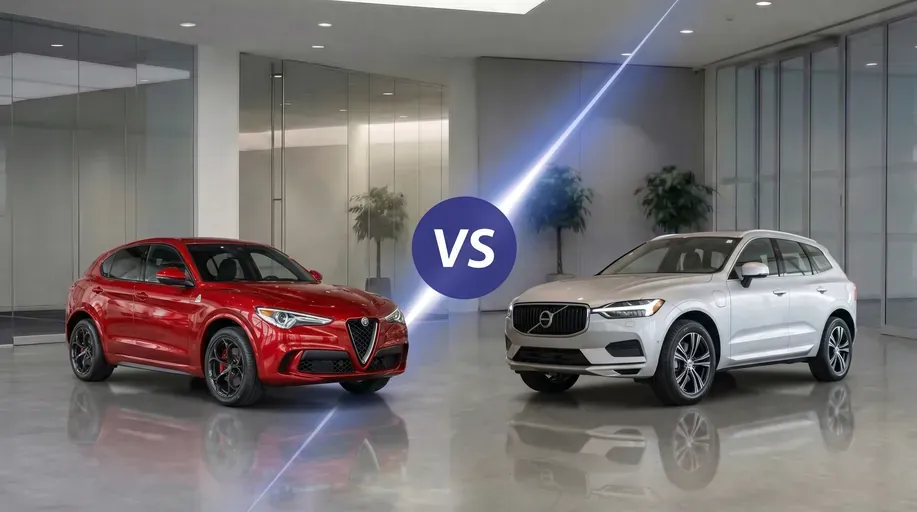
Choosing a used SUV? Detailed comparison of the Alfa Romeo Stelvio vs. Volvo XC60. A detailed verdict, performance and equipment ratings will help you make your choice. Find out more!
Apr 21, 2026