Car battle
Mazda CX-5 vs. Volkswagen Tiguan: Complete comparison 2026
Detailed comparison of Mazda CX-5 vs Volkswagen Tiguan. Find out which used SUV has better engines, equipment, and driving characteristics. Read our clear verdict!
Apr 2, 2026
Articles
Car battle
Detailed comparison of the Hyundai Kona and Volkswagen T-Cross. Discover real-world experiences, equipment comparisons, and a clear verdict to help you choose a used SUV.
April 15, 2026
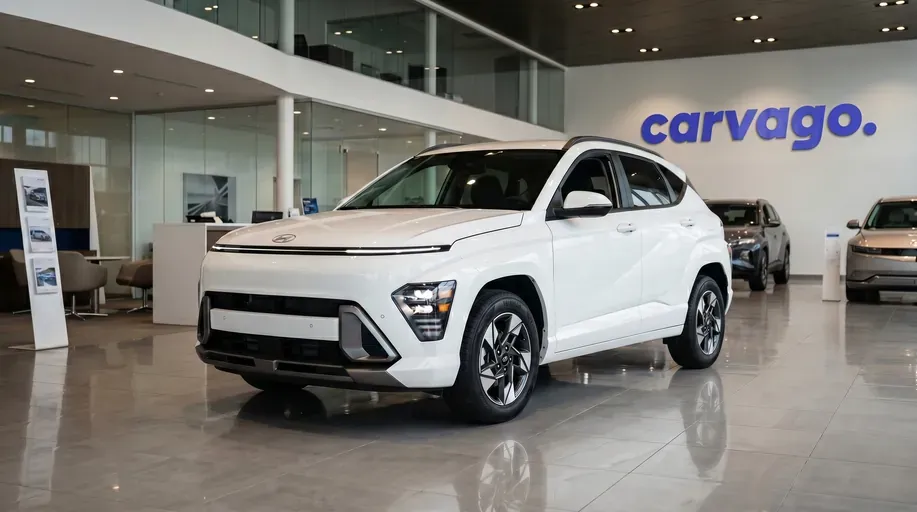
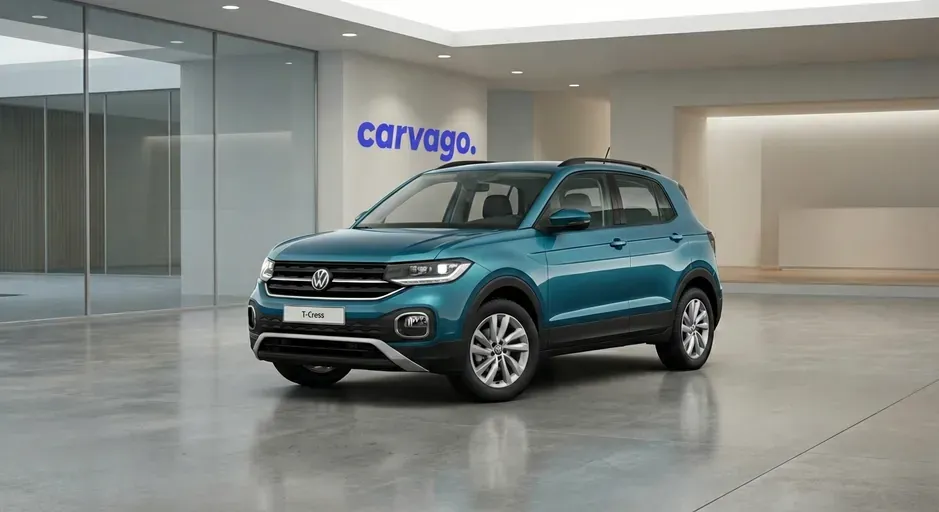
Hyundai Kona, also known as the Hyundai Kauai or Hyundai Encino in some foreign markets, is a distinctive South Korean subcompact SUV that attracts customers with its unmistakable design and a very wide range of engines. Its German challenger, the Volkswagen T-Cross, which is also sold in other parts of the world under the names Volkswagen Taigun or Volkswagen Tacqua, represents a more conservative and pragmatic choice, benefiting from excellent interior space utilization and proven Group technology. In the following comparison, we will take a detailed look at both of these popular used cars and find out which of these city crossovers offers the future owner a better balance of utility, everyday practicality, and driving comfort.
When comparing the exterior dimensions of both popular city crossovers, which most often appear on the used car market at around four years of age (i.e., versions from 2021–2022), you can notice several fundamental differences. The South Korean first-generation Hyundai Kona after the facelift gives a broader and more athletic impression. With a length of 4205 mm, it is almost 10 centimeters longer than the Volkswagen T-Cross, which, together with a width of 1800 mm (18 mm more than its German rival), ensures a more stable stance on the road and an overall more mature appearance. A longer body also usually promises slightly more generous longitudinal space.
The Volkswagen T-Cross, on the other hand, bets on a typically boxy and very compact design that maximizes everyday agility. Its length of 4108 mm is a noticeable advantage when parking in narrow city gaps. Although the T-Cross is overall shorter and narrower, it excels in height at 1584 mm. It is therefore almost two centimeters taller than the Kona (1565–1570 mm). This difference provides the driver and passengers with a slightly more upright seating position, easier entry, and an excellent view of city traffic.
A crucial metric for interior spaciousness and driving comfort is the wheelbase, which speaks more in favor of the Hyundai Kona. The value of 2600 mm is 49 mm greater than in the case of the T-Cross (2551 mm). Thanks to the longer wheelbase, the Kona can offer a slightly smoother and more confident ride on the highway or on broken country roads. As a result, when choosing between these two cars, you are choosing between a lower and wider car with slightly sportier proportions (Kona) and a taller, more compact car (T-Cross) that is slightly better prepared for space-constrained city intersections.
| Parameter | Hyundai Kona SUV | Volkswagen T-Cross SUV |
|---|---|---|
| Width (mm) | 1800 | 1782 |
| Length (mm) | 4205 | 4108 |
| Height (mm) | 1565–1570 | 1584 |
| Wheelbase (mm) | 2600 | 2551 |
When choosing a compact city car, luggage capacity often plays a surprisingly key role, especially if the car is to serve as the family's only vehicle. While both compared SUVs, roughly four years old (their first generations from around 2021), share very similar exterior dimensions and target the same customer group, their approach to interior space differs significantly. In practice, this difference defines whether you use the car only for commuting and routine shopping, or whether you can stress-free take the family on a weekend getaway.
The Volkswagen T-Cross from 2019–2023 excels here thanks to its clever variability. It comes standard with a rear bench that slides by 14 centimeters, meaning the base trunk volume can be continuously adjusted from a decent 385 liters to an excellent 455 liters. Furthermore, after folding the seats, the maximum transport capacity grows to a generous 1,281 liters. The competing first-generation Hyundai Kona (2017–2023) offers more of a class average with a fixed base volume of 374 liters, which increases to 1,156 liters after folding the rear backrests. With the South Korean model, it's also necessary to account for a slight reduction in liters for electric versions – both the fully electric and hybrid variants take away valuable centimeters and offer a base space of only 332 liters and 1,114 liters after folding the seats.
The practical impact of these numbers in everyday life is huge. Thanks to its sliding bench, the T-Cross can conjure up space for several extra suitcases, making it fully sufficient for weekend shopping as well as longer vacations without the need to limit your packing. The Kona, on the other hand, will suit users with lower transport demands, for whom a bolder design and a wider range of alternative powertrains are more important than bulky hauling capacity.
| Parameter | Hyundai Kona SUV | Volkswagen T-Cross SUV |
|---|---|---|
| Base volume (liters) | 374 (332 Hybrid/EV) | 385–455 |
| Max. volume with seats folded (liters) | 1,156 (1,114 Hybrid/EV) | 1,281 |
Thanks to its sliding rear bench, the Volkswagen T-Cross beats the Kona hands down, making it a much more practical choice for those interested in a used family SUV with higher space requirements.
When choosing a compact SUV, towing capacity often plays a decisive role, especially if you frequently transport bulky cargo or go family camping. If we focus on models from the used car market around four years old (first generation of both vehicles), we find that the Hyundai Kona offers overall slightly higher maximum trailer weights than the Volkswagen T-Cross.
While the VW T-Cross can pull a braked trailer weighing 1000 to 1200 kg (depending on the specific engine), the Hyundai Kona covers a higher range of 1200 to 1300 kg with the vast majority of its combustion and hybrid versions. The absolute peak for the Korean representative is the sporty Kona N Performance variant, which can even handle a trailer weighing 1600 kg.
However, a significant drop in capacity can be found in the electric variants of the Kona from the first generation. Unlike the hybrid versions, which rank among the most capable with a capacity of up to 1300 kg, the maximum towing weight of the electric car is limited to just 300 kg. In practice, this only means the possibility of installing a bicycle rack, but not towing a caravan. The Volkswagen T-Cross did not offer any fully electric variant in its first generation, so there is no need to deal with similar compromises in its portfolio.
In the case of an unbraked trailer, both models are roughly similar and adhere to usual class standards. The Volkswagen T-Cross allows towing an unbraked load weighing 630 to 660 kg, while standard versions of the Hyundai Kona handle roughly 600 kg (up to 700 kg in the case of the top-of-the-line N version).
In everyday practice, these values mean that both cars easily offer a sufficient solution for weekend shopping and hauling garden waste. But if you are looking for a car to tow a smaller caravan for a longer holiday or need space for bulkier and heavier cargo, the Kona with a combustion or hybrid engine will provide you with significantly more confidence and reserve.
Conclusion: For families and cottagers who require more frequent trailer towing, the combustion or hybrid Hyundai Kona comes out better from this comparison, thanks to a better power reserve and higher towing weight compared to the Volkswagen T-Cross.
| Model and engine | Braked trailer (kg) | Unbraked trailer (kg) |
|---|---|---|
| Hyundai Kona 1.0 T-GDI (1st gen.) | 1200 | 600 |
| Hyundai Kona 1.6 CRDi (1st gen.) | 1200–1250 | 600 |
| Hyundai Kona 1.6 GDI Hybrid (1st gen.) | 1250–1300 | 600 |
| Hyundai Kona 1.6 T-GDI (1st gen.) | 1250 | 600 |
| Hyundai Kona N Performance (1st gen.) | 1600 | 700 |
| Hyundai Kona Electric (1st gen.) | 300 | 300 |
| VW T-Cross 1.0 TSI (70 kW) | 1000 | 630–640 |
| VW T-Cross 1.0 TSI (81–85 kW) | 1100–1200 | 640–650 |
| VW T-Cross 1.5 TSI ACT | 1200 | 660 |
| VW T-Cross 1.6 TDI | 1100 | 650 |
When comparing the engine options of these two models, we encounter completely different approaches, which has a fundamental impact on the choice based on your priorities. The Hyundai Kona offers an exceptionally wide and technologically advanced range of powertrains, spanning from classic turbocharged internal combustion engines to mild-hybrids and full hybrids, all the way to pure electric vehicles. In contrast, the Volkswagen T-Cross chooses a much more conservative path and relies almost exclusively on proven TSI petrol engines on the used car market. This difference means that while the Kona will satisfy those interested in the latest fuel-saving technologies or more dynamic driving (including the option of all-wheel drive), the T-Cross targets drivers with a tighter budget who are looking for the lightness and mechanical reliability of low-maintenance petrol units for everyday use. For budget-conscious users, the 1.0-litre T-Cross is ideal, while drivers focused on technology and performance will welcome the rich offering of the Kona model.
The engine range for the Hyundai Kona on the market for roughly four-year-old used cars (both pre- and post-facelift models) is among the most diverse in the entire segment. The standard is the turbocharged three-cylinder 1.0 T-GDI with 88 kW, which can also be found with advanced 48V mild-hybrid technology for smoother pull-offs and slightly lower fuel consumption in the city. For performance enthusiasts, there is a very brisk four-cylinder 1.6 T-GDI boasting an excellent output of 146 kW. A significant advantage of this powerful engine is that it could be combined with all-wheel drive (4WD), which is a complete rarity in this class. For drivers who mostly drive in heavy traffic, the full hybrid version 1.6 GDI Hybrid with a combined output of 104 kW and a dual-clutch transmission makes a lot of sense, as do the fully electric Kona Electric versions (39.2 kWh or 64 kWh). Conversely, it is important to mention that the 1.6 CRDi diesel engine and its mild-hybrid variant ceased production during 2021. Therefore, you will hardly come across these diesels on the market for newer, approximately four-year-old cars.
| Engine type | Fuel | Power (kW) | Torque (Nm) | Transmission |
|---|---|---|---|---|
| 1.0 T-GDI / 48V | Petrol / Mild-hybrid | 88 | 172 | 6MT / 7DCT / 6iMT |
| 1.6 T-GDI | Petrol | 146 | 265 | 7DCT |
| 1.6 GDI Hybrid | Petrol + Electric | 104 | 265 | 6DCT |
| Electric (39.2 kWh) | Electricity | 100 | 395 | 1-speed |
| Electric (64 kWh) | Electricity | 150 | 395 | 1-speed |
While the Korean competitor is brimming with electricity, the Volkswagen T-Cross focuses on traditional certainties in the form of proven group petrol engines. Although a 1.6 TDI SCR diesel engine initially appeared here as well, it was completely phased out of the range as early as autumn 2020 and thus won't be found in reasonably aged four-year-old used cars. The backbone of sales is the exceptionally popular three-cylinder petrol 1.0 TSI OPF. Its basic version with 70 kW is paired with a five-speed manual and is ideal for shorter trips with a limited budget in mind. The more powerful variant of the 1.0-litre engine with 81 kW already offers a six-speed manual or an optional and very fast seven-speed DSG automatic. For more demanding drivers who want to take the T-Cross on the motorway frequently or simply prefer higher performance under the pedal, the excellent four-cylinder 1.5 TSI ACT OPF tuned to 110 kW is available. This top-of-the-line engine is exclusively paired with the DSG transmission and features clever technology that deactivates two cylinders under low load to effectively reduce fuel consumption. However, Volkswagen's weakness compared to the Kona remains the absence of any hybrid variants or the option of 4x4 drive.
| Engine type | Fuel | Power (kW) | Torque (Nm) | Transmission |
|---|---|---|---|---|
| 1.0 TSI OPF | Petrol | 70 | 175 | 5MT |
| 1.0 TSI OPF | Petrol | 81 | 200 | 6MT / 7DSG |
| 1.5 TSI ACT OPF | Petrol | 110 | 250 | 7DSG |
While the Hyundai Kona scores points with its stunning range of advanced powertrains including hybrids and a spirited all-wheel drive, the Volkswagen T-Cross relies on proven, reliable, and low-maintenance petrol simplicity.
Choosing the right engine for a used crossover is key to long-term satisfaction, low service costs, and realistic fuel consumption. While the Volkswagen T-Cross relies on a proven and relatively conservative range of purely petrol turbo engines, the Hyundai Kona offers a significantly more diverse palette including petrol, electric, and full hybrid variants (with diesels for both models ending between 2020 and 2021 and being practically non-existent on the four-year-old used car market). Our recommendation for roughly four-year-old vehicles is based on service center experience, long-term mechanical reliability, and everyday user-friendliness.
This full hybrid powertrain (commonly available in the 1st generation from 2019–2023) represents a great and rational choice on the used car market. It combines a 1.6-liter naturally aspirated four-cylinder engine with an electric motor and, unlike many Asian competitors, uses a six-speed dual-clutch automatic transmission (DCT).
For the light and compact T-Cross, the one-liter three-cylinder in its more powerful version (most often with 81 kW, or 85 kW in newer models) makes the most sense in terms of price-to-performance ratio. The previously available 1.6 TDI diesel engine disappeared from the range at the end of 2020, and the more powerful 1.5 TSI unit is significantly more expensive on the used car market.
Official fuel consumption figures provided by manufacturers often differ from reality in practice, mainly due to the influence of driving style, real weather conditions, and the share of city traffic. While standardized tests often promise consumption well below five liters for compact crossovers, real-world data shows a different picture. For the most accurate comparison of typical four-year-old used cars (vehicle generations from 2020–2022), we base our findings on aggregated user data from independent platforms such as the globally recognized Spritmonitor.de. This data reliably reflects the daily experiences of thousands of ordinary drivers.
| Model and engine | Average consumption (l/100 km) |
|---|---|
| Volkswagen T-Cross 1.6 TDI (70 kW) | 5.3 |
| Hyundai Kona 1.6 CRDi 48V (100 kW) | 5.4 |
| Hyundai Kona 1.6 GDI Hybrid (104 kW) | 5.4 |
| Volkswagen T-Cross 1.0 TSI (81 kW) | 6.0 |
| Volkswagen T-Cross 1.5 TSI ACT (110 kW) | 6.0 |
| Hyundai Kona 1.0 T-GDI (88 kW) | 6.1 |
| Hyundai Kona 1.6 T-GDI (146 kW) | 7.0 |
Several key facts emerge from the collected data. Diesel engines remain the most economical choice for absolute minimization of fuel costs, staying very close to the five-liter mark for both brands. Modern diesels are thus unsurpassed in terms of highway consumption, although they represent only a minority of the used car market.
An interesting surprise occurs in the category of small turbocharged gasoline engines. Although the three-cylinder 1.0 TSI from Volkswagen and 1.0 T-GDI from Hyundai promise excellent economy on paper, in the real world with heavier crossovers, they consume around 6 liters of fuel. Especially with Volkswagen, it is very remarkable that the significantly more powerful and dynamic four-cylinder 1.5 TSI ACT (thanks to cylinder deactivation technology under low load) shows an identical average consumption to the smaller one-liter unit. The larger engine simply doesn't have to work as hard with the vehicle. Conversely, the price for high performance is evident in the top-of-the-line Kona 1.6 T-GDI model, where nearly 200 horsepower demands an average of 7 liters, and even more during dynamic driving.
In the overall assessment, fuel consumption is not the main reason to prefer one of these models over the other. Both vehicles show very similar operational efficiency in comparable engine versions, with deviations of at most a few tenths of a liter. The final choice should therefore depend more on your daily driving profile – if you spend most of your time in and around the city, the sophisticated hybrid from Hyundai will be hard to beat in terms of savings and comfort. If, on the other hand, you are looking for versatility for a mix of country roads and highways, the refined and unexpectedly economical 1.5 TSI four-cylinder under the hood of the T-Cross will convince you.
When looking for a roughly four-year-old used SUV (model years 2021 to 2022), both models fall into a similar, highly sought-after price range. While the Volkswagen T-Cross relies on the stable value of the German group and slower price depreciation, the Hyundai Kona often offers a more diverse range of engines for similar money, including electric or full hybrid versions, which can, however, significantly increase the initial investment.
| Model (2021–2022) | Price from (basic equipment/higher mileage) | Price for a well-maintained unit (lower mileage/better equipment) | Electric/Hybrid version |
|---|---|---|---|
| Hyundai Kona | ~ €13,000 | ~ €18,000 | from ~ €17,000 |
| Volkswagen T-Cross | ~ €14,000 | ~ €20,000 | Not available |
A used Kona from 2021 and 2022, belonging to the facelifted first generation, represents a very versatile choice for used car buyers.
The T-Cross, on the other hand, benefits from its reputation as a robust and desirable car, whose price on the secondary market drops only very slowly.
Both cars represent an excellent price-to-value ratio in the compact SUV market. If you have a tighter budget and a solid petrol base is enough for you, a used Hyundai Kona can often be found in listings slightly cheaper than its German rival. If, on the other hand, you are looking for a conservative purchase with a high probability of a good resale in the future, the T-Cross holds its value in an exemplary manner.
The Hyundai Kona scores on the used market with a slightly lower starting price and surprises with a wide selection of alternative powertrains, while the Volkswagen T-Cross is a safe bet that holds its value with significantly smaller price drops over time.
Both of these vehicles earned the maximum five-star rating in their original independent Euro NCAP tests; however, it is essential to place these results in the correct context depending on the year of testing. Euro NCAP's methodology and testing protocols are constantly evolving and becoming more stringent over time. Percentage results from different years cannot be directly compared, as modern tests place significantly higher demands. Evaluations have gradually incorporated new frontal impact simulations, advanced cyclist detection, and emergency intersection crossing scenarios.
The first-generation Hyundai Kona, which you will most frequently encounter on the four-year-old used car market, underwent crash tests in 2017. At that time, more lenient testing protocols were still in place. According to Euro NCAP standards, the certification for this specific 2017 model officially expired in January 2024, meaning the car might no longer meet the requirements for a current five-star rating. In contrast, the Volkswagen T-Cross was not tested until 2019, following newer and stricter safety standards for which it was prepared from the start of its development.
| Parameter | Hyundai Kona | Volkswagen T-Cross |
|---|---|---|
| Year of testing | 2017 | 2019 |
| Adult occupant protection | 87 % | 97 % |
| Child occupant protection | 85 % | 86 % |
| Vulnerable road users protection | 62 % | 81 % |
| Safety assist systems | 60 % | 80 % |
A detailed look at the percentage results clearly shows the technological lead of the more recently tested vehicle. The 2019 T-Cross excels primarily in the area of active safety. Its 80% rating for assistance systems and excellent protection of vulnerable road users (81%) demonstrate much more modern behavior of autonomous emergency braking and lane-keeping assistants. The Hyundai Kona offers a very solid structural foundation and good mechanical protection for the occupants, but the score of only 60% for assistance systems shows the limits of older sensor technology.
In conclusion, although both cars met the highest requirements in their time, the Volkswagen T-Cross provides an overall more modern level of protection. Thanks to its more recent certification date and demonstrably better results in pedestrian protection and the reliability of electronic assistants, it is a step ahead for those interested in a used car from the perspective of modern safety.
Although both cars earned five stars in their time, the Volkswagen T-Cross offers a noticeably more modern safety standard thanks to newer testing methodology and more advanced assistance systems.
In addition to standard equipment, both models offer more than just basic functions for getting from point A to point B, with each having its own distinctive approach to added value and focusing on slightly different driver priorities.
In its first generation (including the popular 2020 facelift), the Hyundai Kona scores points primarily with its technological equipment and bold approach to design and powertrains.
The Volkswagen T-Cross relies on typical German ingenuity. Although it is one of the brand's smallest SUVs, its interior space is exceptionally flexible and practical for everyday life thanks to smart design.
Wide range of powertrains including an efficient hybrid and a very successful pure electric vehicle
Rich standard equipment and modern, well-functioning assistance systems
Five-year manufacturer warranty with no mileage limit (a big advantage when buying a four-year-old used car)
Confident driving characteristics with a slightly sportier chassis tuning
Distinctive and striking design that stands out from the crowd
More cramped legroom for adult passengers in the rear seats
Below-average base luggage compartment volume (361 liters)
Stiffer ride on poor surfaces, especially if the car is fitted with 18-inch wheels
Poorer rear-diagonal visibility due to the bulkier C-pillars
Hyundai Kona is an ideal choice for drivers looking for a stylish, well-equipped, and reliable city crossover. It is perfect for couples or smaller families where design, road confidence, and the potential choice of an alternative powertrain play a major role, rather than maximum carrying capacity.
Top-tier interior variability thanks to the standard sliding rear bench (within a 14 cm range)
Surprisingly spacious trunk, which can be expanded from 385 to 455 liters by sliding the seats
Highly comfortable chassis that effectively and quietly filters out city bumps
Efficient and proven 1.0 TSI petrol engines with refined operation
Exemplary dashboard ergonomics with the retention of physical buttons for the air conditioning
A significant amount of hard and cheaper-looking plastics in the interior
Complete absence of all-wheel drive in the range (not even as an option)
More conservative and boxy design that may not appeal to everyone
Higher purchase price on the used car market, especially for better-equipped versions
Volkswagen T-Cross represents a highly rational choice for those who need to get the absolute maximum interior space from a small vehicle footprint. Thanks to the sliding rear bench and excellent suspension comfort, it excels as a versatile car for everyday family duties in and out of the city.
Based on long-term user feedback, service statistics, and detailed data provided by CarAudit – our detailed and comprehensive pre-purchase car inspection – we have compiled an overview of the most common problems you should look out for when choosing roughly four-year-old used examples of these models.
The Korean crossover is generally among the above-average reliable cars, however, even it exhibits some characteristic ailments depending on the chosen engine and mileage.
Mechanically, the Hyundai Kona is a very durable car, whose greatest design weakness is the occasional jerking of the DCT dual-clutch transmission and minor software quirks of the onboard infotainment. However, with a proven history and regular servicing, it is a safe bet.
The German competitor benefits from very well-tuned VW Group technology, yet it still has certain specific weak points, especially in connection with the automatic transmission and frequent short city trips.
The Volkswagen T-Cross offers proven and service-friendly TSI petrol engines. However, if you plan to drive primarily in the city and desire a DSG automatic transmission, be prepared for the risk of more expensive repairs for worn clutches. Variants with a manual are a very reliable choice.
When buying a used car, a thorough physical inspection of the used vehicle is key. Although both mentioned crossovers are among reliable cars, there are several specific points and typical weaknesses you should focus on during the test drive and inspection of these models.
The Volkswagen T-Cross is more practical in this regard thanks to its sliding rear bench, which allows the basic trunk volume to be adjusted from 385 to 455 liters. The first-generation Hyundai Kona offers a standard luggage compartment of 374 liters, which lacks such flexibility. Furthermore, the German car has a slightly more regular cargo area shape, making it easier to transport larger items.
Hyundai clearly scores in this area, offering an economical full-hybrid and a very popular fully electric version in addition to classic internal combustion engines. Volkswagen relies exclusively on traditional TSI gasoline power units for this urban crossover. Therefore, if you require an electrified drive with lower emissions, the Korean representative is the only choice.
The T-Cross feels airier thanks to its taller body structure and offers generous head and legroom for rear passengers, especially when the bench is slid all the way back. The Kona has slightly more cramped conditions in the rear seats and smaller windows, which can create a feeling of lack of space for taller passengers. For frequent travel with four adults, the German model is therefore more suitable.
Hyundai standardly provides a five-year factory warranty with no mileage limit, which is a significant advantage when buying a roughly four-year-old car. Volkswagen usually only has a basic two-year warranty unless the original owner paid extra for an extension. With most used Korean cars, you will still have the security of at least one year of full factory coverage after purchase.
Volkswagen bets on balanced, safe, and very comfortable suspension that filters out city and country road bumps excellently and quietly. Hyundai, on the other hand, is tuned in a stiffer and more agile direction, giving the driver more confidence during dynamic cornering. The decision thus depends purely on whether you prefer a calm and smooth ride or a stiffer chassis with better steering response.
Sources: ADAC, mdcr.cz, forbes.cz, elektromobil.cz, smartmania.cz, autobox.cz
This article was prepared using artificial intelligence tools. The section guarantor is Petr Dušek.
Detailed comparison of Mazda CX-5 vs Volkswagen Tiguan. Find out which used SUV has better engines, equipment, and driving characteristics. Read our clear verdict!
Apr 2, 2026
Are you looking for the ideal used SUV? A detailed comparison of the Ford Kuga vs. SEAT Ateca reveals differences in space, equipment, and fuel consumption. Read our final verdict!
Apr 8, 2026
Detailed comparison of DS 7 (Crossback) vs Lexus UX. Discover the differences in comfort, equipment, and reliability. Read our verdict and choose the best SUV.
Apr 8, 2026