Car battle
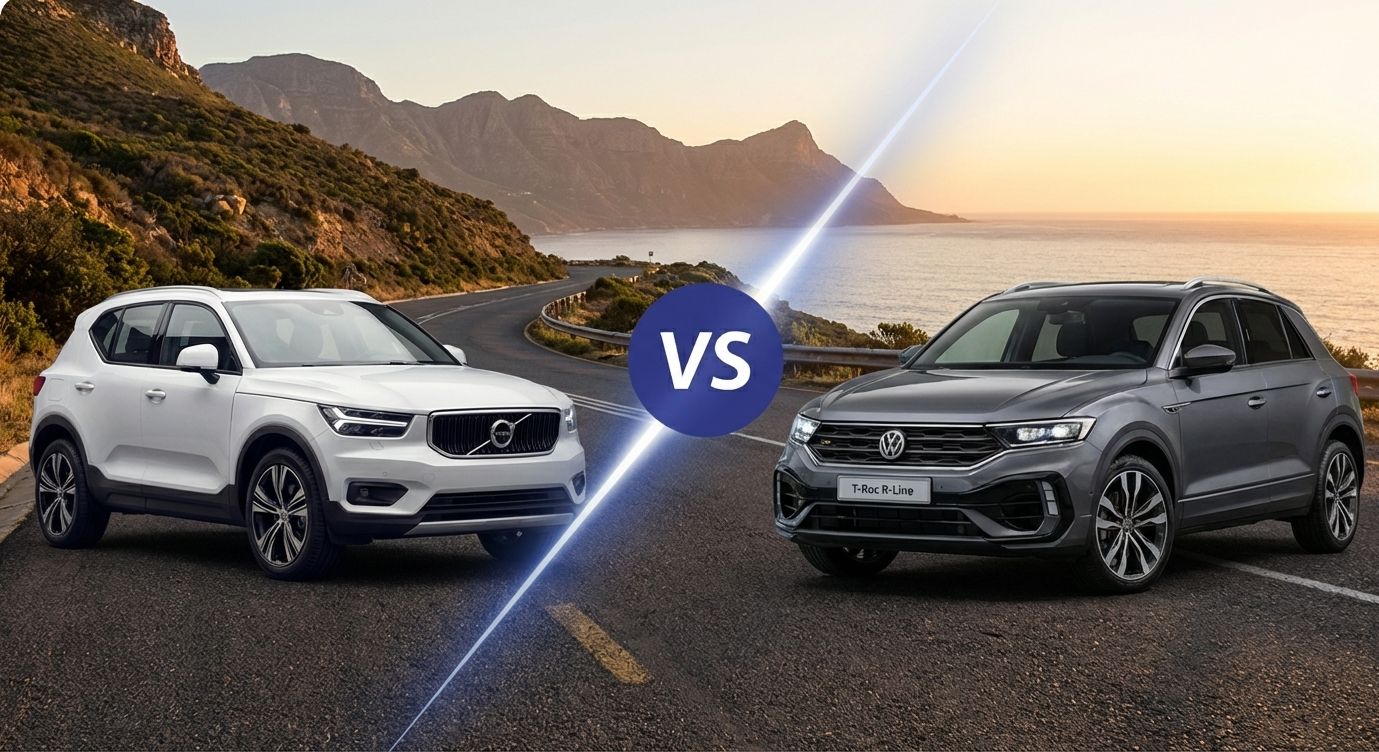
Volvo XC40 vs. Volkswagen T-Roc: Complete comparison 2026
Undecided between a Volvo XC40 and a VW T-Roc? Our comparison will help you choose. Discover the main differences, real-world impressions, and a clear verdict.
Apr 14, 2026
Articles
Car battle
Are you looking for the ideal used SUV? A detailed comparison of the Ford Kuga vs. SEAT Ateca reveals differences in space, equipment, and fuel consumption. Read our final verdict!
April 8, 2026
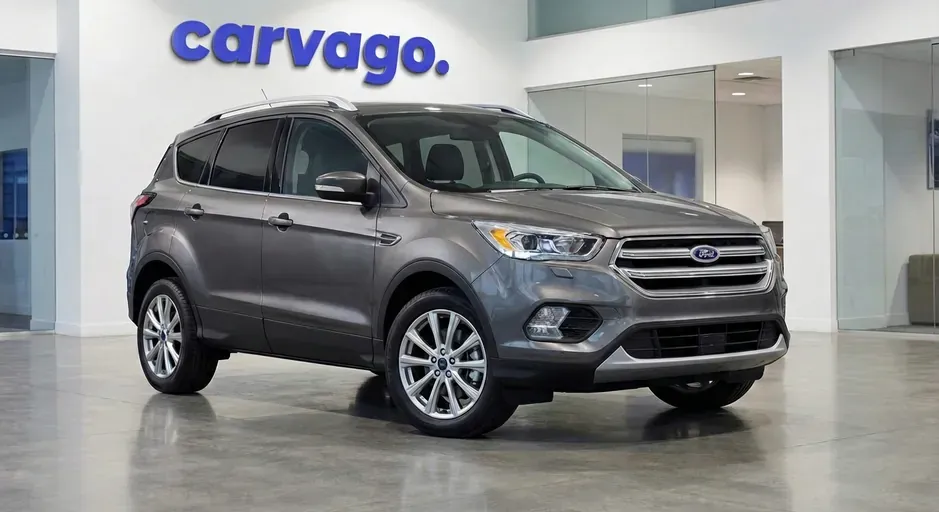
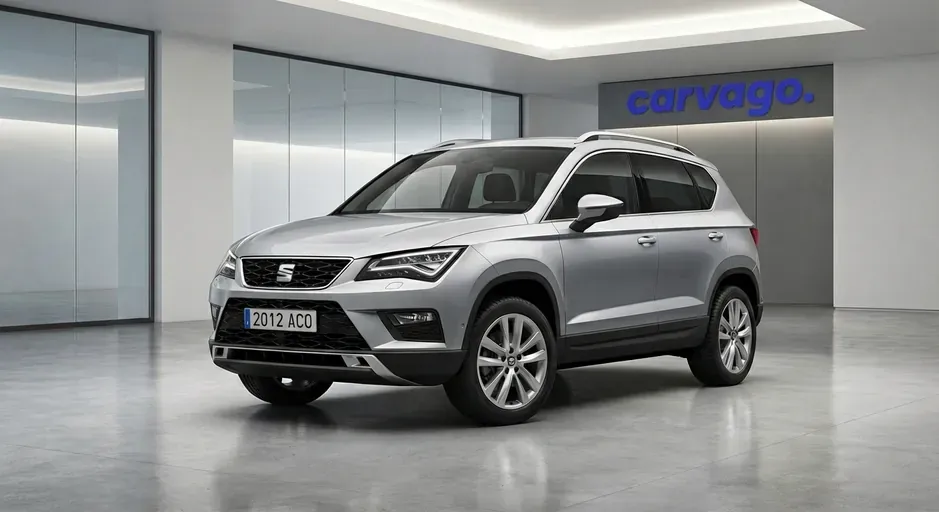
The Ford Kuga, a popular family SUV sold in non-European markets as the Ford Escape, has long won over drivers primarily with its excellent driving characteristics and dynamic appearance. Today, it faces the Seat Ateca, a versatile Spanish vehicle featuring proven Volkswagen Group technology, whose high-performance variant can be found on the market under the standalone name Cupra Ateca. Let's take a detailed look at how these two attractive representatives of the compact SUV category perform in a head-to-head battle and which one represents the better choice for your daily journeys.
Looking at the external dimensions, we find that although both vehicles fall into the popular compact SUV category, their approach to size and space differs quite fundamentally. If we focus on models roughly four years old – namely the third-generation Ford Kuga and the facelifted version of the first-generation Seat Ateca – the difference in the footprint of both vehicles is immediately apparent. With its proportions, the Ford clearly signals its ambition to offer families maximum space, leaning more towards mid-size vehicles. With a body length reaching up to 4629 mm, the Kuga is a significant 248 mm longer than its Spanish competitor.
This distinct difference carries over into other dimensions as well. At 1883 mm, the Kuga is 42 mm wider, which is positively reflected in the interior shoulder room. The wheelbase, which is crucial for rear-seat legroom, also plays in favour of the American brand. The Ford provides a generous 2710 mm, while the Seat Ateca stays within a more conservative class average with values between 2630 and 2638 mm. This means that adult passengers in the back will find considerably more knee room in the Ford.
What do these paper specifications mean for everyday life with the car? Thanks to its more compact build and overall length of 4381 mm, the Seat Ateca literally excels in city traffic. It is easier to manoeuvre in the narrow aisles of shopping centres, and typically stressful parallel parking in cities is a much more pleasant affair. Conversely, the Ford Kuga with its longer wheelbase and wider stance offers a smoother ride and confident stability on the motorway. The decision between these two models is thus closely linked to your lifestyle – if you are primarily looking for an agile SUV for the city, the Ateca will be the better choice. However, if you spend weekends on long trips and need a full-fledged family car with generous space, the external dimensions predispose the Kuga to success.
| Parameter | Ford Kuga SUV | Seat Ateca SUV |
|---|---|---|
| Length (mm) | 4614 - 4629 | 4381 |
| Width (mm) | 1883 | 1841 |
| Height (mm) | 1650 - 1663 | 1601 - 1611 |
| Wheelbase (mm) | 2710 | 2630 - 2638 |
For many prospective family SUV buyers, the luggage compartment is one of the key parameters that determines the car's daily usability. Whether you're planning regular large weekend shopping trips, transporting sports equipment, or packing for a long family holiday, extra litres in the boot are always useful. When comparing used cars approximately four years old, i.e., the third-generation Ford Kuga and the facelifted version of the Seat Ateca, we encounter different approaches by both manufacturers to interior space and overall versatility.
The Seat Ateca in its front-wheel-drive version offers a generous standard boot capacity of 510 litres, which increases to 1604 litres when the rear seats are fully folded. This space is more than sufficient for weekend shopping and longer holidays for four people. In contrast, the third-generation Ford Kuga relies on extraordinary versatility in the form of a sliding rear bench. Depending on its position, the basic volume for conventional engines ranges from 475 to a top-tier 645 litres. If you slide the seats all the way forward, you gain space for several extra suitcases, albeit at the expense of rear passenger legroom. With the seats fully folded, the Kuga offers a maximum of 1534 litres.
When choosing a specific engine, however, it is necessary to be alert, as the technology hidden under the floor can significantly affect the luggage volume. If you opt for the all-wheel-drive version (4Drive) of the Seat Ateca, the basic volume decreases to 485 litres and the maximum to 1579 litres due to the rear differential. An even more dramatic difference can be found in the Ford Kuga in the case of the popular plug-in hybrid (PHEV) and full hybrid (FHEV) versions. The traction batteries stored under the floor reduce the basic volume to approximately 412 to 553 litres, depending on how far forward you slide the rear seats.
In conclusion, if you are looking for a consistently large and deep boot without having to make any compromises on passenger space, the Seat Ateca is a safe bet. The Ford Kuga, on the other hand, will appeal to drivers who appreciate flexibility and the ability to temporarily enlarge the luggage area at the expense of the rear seats, although for electrified versions, a potential buyer must account for a slight reduction in total capacity.
| Parameter | Ford Kuga SUV | Seat Ateca SUV |
|---|---|---|
| Basic volume (litres) | 412 - 645 | 485 - 510 |
| Max. volume with seats folded (litres) | 1534 | 1579 - 1604 |
Towing capacity is often a key parameter for family SUVs, whether it's for attaching a small trailer or a large family caravan. The Seat Ateca starts at 1300 kg for a braked trailer with its base engines (e.g., 1.0 TSI), which is sufficient more for weekend transport of materials to a cottage or hauling garden waste. Conversely, more powerful versions of the Ateca, typically with 1.5 TSI or 2.0 TDI engines, can handle significantly more, and their towing capacity ranges from 1600 to 2100 kg. The third-generation Ford Kuga, on the other hand, offers a slightly stronger base – even smaller engines like the 1.5 EcoBoost or EcoBlue can easily handle a braked trailer weighing 1500 to 1800 kg. Interestingly, while older or specific full-hybrid variants of the Kuga (2.5 Hybrid) may be limited to a capacity of just 1500 kg to protect the drivetrain, the powerful 2.0 EcoBlue diesels and more modern plug-in hybrids can easily tow a maximum of 2100 kg. This maximum value is absolutely ideal and sufficient for towing heavy caravans even on longer holidays. In conclusion, both vehicles in their optimal specifications can meet the needs of most drivers. However, the Ford Kuga represents a slightly more reliable choice if you require higher towing power in base versions, while for maximum load in both cars, you must opt for the powerful two-liter engines.
| Model and engine | Braked trailer weight (kg) | Unbraked trailer weight (kg) |
|---|---|---|
| Ford Kuga 1.5 EcoBoost / EcoBlue | 1500 - 1800 | 750 |
| Ford Kuga 2.0 EcoBlue | 2100 | 750 |
| Ford Kuga 2.5 Hybrid / PHEV | 1500 - 2100 | 750 |
| Seat Ateca 1.0 TSI | 1300 | 750 |
| Seat Ateca 1.5 TSI | 1600 - 1900 | 750 |
| Seat Ateca 2.0 TDI | 1500 - 2100 | 750 |
When choosing a used SUV around four years old, the range of engines plays a key role, as both the Ford Kuga and Seat Ateca approach power units differently and target different types of customers. While the Seat Ateca relies primarily on proven and traditional technology with an emphasis on turbocharged TSI petrol engines and TDI diesel engines without significant electrification, the third-generation Ford Kuga has bet heavily on hybrid technologies from the start. Standard engines in both models (1.5 EcoBoost for Ford and 1.0 TSI or 1.5 TSI for Seat) provide sufficient dynamics for daily use, but differences become apparent in the top versions. The Kuga offers highly efficient full-hybrid (FHEV) and plug-in hybrid (PHEV) systems that the Seat does not have at all, while the Spanish SUV scores with drivers looking for classic performance with the 2.0 TSI (140 kW) model and all-wheel drive. In terms of recommendations: for drivers focused on a limited budget and primarily urban driving, the economical one-liter engine in the Ateca is a great choice. Drivers covering thousands of highway kilometers will most appreciate the reliable two-liter diesel units (2.0 EcoBlue and 2.0 TDI) in both cars. Conversely, tech enthusiasts and people with the possibility of home charging should go for the advanced plug-in hybrid from Ford, while sportier drivers will prefer the dynamic and light performance of the four-cylinder petrol engines in the Seat.
The engine range for the third-generation Ford Kuga is very diverse and places a huge emphasis on electrification and emission reduction. The base of the petrol range is the refined turbocharged 1.5 EcoBoost three-cylinder, which comes standard with a manual transmission and front-wheel drive. Diesel EcoBlue engines with 1.5 and 2.0-liter displacements, which often use mild-hybrid (mHEV) technology, have a very strong presence in the used car market. It is important to note that the smaller diesel engine (88 kW) ceased production in spring 2022 and the powerful two-liter left the range in 2024; however, they form a core part of the offering for four-year-old cars in used car dealerships. The Kuga's greatest strength, however, is its hybrid models. Both a classic full-hybrid (FHEV) and the very popular plug-in hybrid (PHEV) are available, both paired with a 2.5-liter naturally aspirated four-cylinder and an eCVT transmission. The plug-in hybrid offers an impressive system output of 165 kW and a real pure electric range of around 50 kilometers, making it an ideal choice for suburban commuting.
| Engine type | Fuel | Power (kW) | Torque (Nm) | Transmission |
|---|---|---|---|---|
| 1.5 EcoBoost | Petrol | 110 | 240 | 6MT |
| 1.5 EcoBlue | Diesel | 88 | 300 | 6MT / 8AT |
| 2.0 EcoBlue | Diesel | 110 / 140 | 370 / 400 | 6MT / 8AT |
| 2.5 Hybrid (FHEV) | Petrol / HEV | 140 | 200 | eCVT |
| 2.5 PHEV | Petrol / PHEV | 165 | 200 | eCVT |
After the 2020 facelift, the Seat Ateca offers a traditional, field-proven range of group engines that excel in reliability and linear pull. The role of the base engine is filled by the 1.0 TSI three-cylinder, which is intended more for calmer drivers and urban traffic. The golden mean and also the most sought-after engine on the used market is the 1.5 TSI ACT turbocharged four-cylinder with cylinder deactivation technology, which provides a perfect balance between dynamics and low fuel consumption. For more demanding users, the top-of-the-line 2.0 TSI petrol engine with 140 kW was available until 2023, always paired with a seven-speed dual-clutch DSG automatic and the 4Drive all-wheel-drive system. Although it is no longer in production, it is a sought-after item in the used car segment. Diesel fans will most often encounter the robust 2.0 TDI in the four-year-old car market (the smaller 1.6 TDI was phased out of production in 2020). The two-liter diesel dominates particularly in towing power and long-term efficiency on long highway routes.
| Engine type | Fuel | Power (kW) | Torque (Nm) | Transmission |
|---|---|---|---|---|
| 1.0 TSI | Petrol | 81 | 200 | 6MT |
| 1.5 TSI ACT | Petrol | 110 | 250 | 6MT / 7DSG |
| 2.0 TSI | Petrol | 140 | 320 | 7DSG |
| 1.6 TDI | Diesel | 85 | 250 | 6MT / 7DSG |
| 2.0 TDI | Diesel | 85 / 110 | 300 / 340 | 6MT / 7DSG |
Choosing the right engine is absolutely crucial for long-term satisfaction with a car. These two family SUVs approach propulsion in completely different ways. Interestingly, although the Seat Ateca is a model from a Spanish brand, it rolls off the production lines in Kvasiny, Czech Republic, alongside its sibling, the Škoda Karoq, and continues to rely primarily on traditional internal combustion engines. When looking for roughly four-year-old used cars, you will also notice an important generational change – while the oldest model years offered the 1.4 EcoTSI version (available only until 2018), you will no longer find it on the nearly-new used car market, as it has been fully replaced by the more modern 1.5 TSI ACT variant. In contrast, the third-generation Ford Kuga has become a pioneer in electrification. The older and traditional 2.0 TDCi diesel versions known from previous generations have completely disappeared from the range, replaced by more modern EcoBlue units and, above all, the plug-in hybrid version, which consistently remains at the top of European plug-in car sales. The recommendations below are based on real-world performance, actual fuel consumption, and mechanical reliability from the perspective of someone looking for an affordable used car.
The plug-in hybrid powertrain with a combined output of 165 kW (225 hp) represents the best of the entire range in the current third-generation Kuga and serves as a perfect compromise for daily operation. The heart of the system is a naturally aspirated 2.5-litre four-cylinder engine operating on the efficient Atkinson cycle, paired with an exceptionally reliable eCVT planetary gearbox and an electric motor. This mechanically robust design promises a long service life and, in practice, eliminates the expensive faults typical of smaller turbocharged units. A key technical advantage is the real-world pure electric range of around 50 km, but even after the battery is fully depleted, the Kuga functions as a traditional full hybrid, with average consumption remaining at very low levels. A known weakness of this solution is primarily the higher kerb weight due to the batteries, which the chassis handles with a stiffer setup on broken roads. During the test drive, make sure to test the SYNC onboard infotainment system, where the software can occasionally freeze or the phone connection may drop (often resolvable with an update). During the drive, also carefully test how smooth the transition from electric to petrol mode is – the system is set up so that you shouldn't feel any significant jolts. The 2.5 PHEV powertrain is ideally suited for drivers who can charge the car at home overnight and handle daily city errands purely on electricity, while safely completing long motorway journeys on weekends without the unnecessary stress of a lack of chargers.
In the case of the Seat Ateca, where for a four-year-old car you are logically choosing from the successful post-facelift version, the 1.5 TSI petrol four-cylinder with 110 kW (150 hp) is an absolute bullseye. Compared to the base one-litre three-cylinder, it provides perfectly adequate dynamics even for a fully loaded family car, is beautifully refined, and makes much more financial sense for a used car buyer than the complex and more expensive two-litre engines. Its key technical advantage is the Active Cylinder Technology (ACT) system, which imperceptibly deactivates half of the cylinders under low engine load. As a result, the Ateca can achieve real-world combined fuel consumption of between 6 and 7 litres per 100 km, which is an excellent figure for an SUV. What to watch out for in a used car: Most cars on the market have this engine paired with a seven-speed DSG automatic transmission. During the test drive, pay close attention to the gear shifts when crawling in traffic and during slow starts. If you notice obvious jerking or stuttering "hopping" between first and second gear, it could indicate excessively worn clutches or a faulty mechatronics unit, which means a very expensive repair immediately after purchase. Also focus on the sound of the warmed-up engine; the transition to two-cylinder mode should only be accompanied by a slight change in acoustics, never by noticeable vibrations or rough running. This engine is the ideal choice for the average family looking for a versatile, reliable car that can easily handle constant city driving as well as fast motorway journeys on holiday.
The difference between the official fuel consumption figures provided by manufacturers and the real-world experience of drivers on the road often represents two completely different worlds. To give you the most accurate idea of the actual costs when choosing a roughly four-year-old used car, we looked at real-world operating data. The source for our comparison of representatives of the relevant generations – the third-generation Ford Kuga and the post-facelift Seat Ateca – is the popular Spritmonitor.de portal and industry websites where thousands of European users record their daily refuelling. This gives us a much more accurate picture of how much fuel individual engines actually need in the real world.
| Model and engine | Average consumption (l/100 km) | Source |
|---|---|---|
| Petrol engines | ||
| Seat Ateca 1.0 TSI (81 kW) | 6.3 | Spritmonitor.de |
| Seat Ateca 1.5 TSI ACT (110 kW) | 6.4 | Autohled.cz |
| Ford Kuga 1.5 EcoBoost (110 kW) | 6.6 | Spritmonitor.de |
| Seat Ateca 2.0 TSI 4Drive (140 kW) | 8.2 | Spritmonitor.de |
| Hybrid engines | ||
| Ford Kuga 2.5 FHEV (140 kW) | 5.6 | Carvago.com |
| Ford Kuga 2.5 PHEV (165 kW) | 2.8* | Spritmonitor.de |
| Diesel engines | ||
| Seat Ateca 2.0 TDI (110 kW) | 5.4 | Autohled.cz |
| Ford Kuga 2.0 EcoBlue (110 kW) | 5.7 | Spritmonitor.de |
* For plug-in hybrid versions (PHEV), real-world consumption depends heavily on charging frequency and the proportion of pure electric driving.
Several interesting trends clearly emerge from the collected data. It may come as a big surprise to find that the base three-cylinder 1.0 TSI in the Seat Ateca does not save as much fuel as one might expect. Its consumption is, on average, only a tiny tenth of a litre lower than that of the significantly more powerful and dynamic four-cylinder 1.5 TSI, which is helped to this excellent result by the modern Active Cylinder Technology (ACT) system. In the petrol spectrum, the Seat Ateca generally comes out slightly more economical, although the difference of two-tenths of a litre compared to the petrol Ford Kuga 1.5 EcoBoost does not play a massive role. For diesel power units, representatives of both brands – both the 2.0 TDI and the 2.0 EcoBlue – confidently confirm their role as efficient motorway cruisers with consumption safely below the six-litre mark. However, the biggest advantage of the Ford Kuga proves to be its diverse range of advanced hybrids. While the classic full-hybrid (FHEV) can easily compete with diesel engines in terms of consumption, the plug-in version (PHEV) can, with regular charging, run long-term at under 3 litres per hundred kilometres.
For the typical used SUV buyer, these differences have very clear implications regarding how the vehicle is used. If you primarily move in heavy city traffic or commute on shorter suburban routes, it makes perfect sense to go for a Ford Kuga with FHEV or PHEV drive. Both fully exploit the benefits of recuperation and driving with the internal combustion engine switched off. If, on the other hand, you spend thousands of kilometres on motorways, the traditional and economical diesel units in both models remain a reliable safe bet. And for budget-conscious families with a universal mix of driving, the Seat Ateca with the 1.5 TSI petrol engine profiles itself as the best "golden mean," where the purchase price corresponds perfectly with more than acceptable operating costs.
In the end, fuel consumption itself will likely not be the main deciding factor between these popular models. Both cars offer excellent and comparable parameters in their core conventional engine versions. The decision itself will therefore stand more on which technological world you feel closer to. If you desire the benefits of quiet electrification, the diverse range of hybrids in the Ford Kuga is the clear winner for you. But if you prefer a tuned and honest combustion classic with sober fuel costs, a bet on the Seat Ateca is guaranteed to pay off.
Looking at the used car market for vehicles roughly 4 years old (model years 2021–2023), both models offer a very attractive alternative to new cars. While the Seat Ateca benefits from a massive group base and shared technology with the Škoda Karoq, the third-generation Ford Kuga scores with larger dimensions and a huge representation of plug-in hybrid versions (PHEV) – which, incidentally, were among the best-selling electrified cars in Europe during this period.
The Seat Ateca can usually be purchased slightly cheaper on the used market. The reason is the presence of smaller base engines (such as the three-cylinder 1.0 TSI), a shorter body, and overall more affordable purchase prices for new cars. The Ford Kuga, by contrast, starts at slightly higher amounts but compensates for this with more powerful engines as standard and richer basic equipment.
| Vehicle Condition and Equipment | Ford Kuga (3rd generation) | Seat Ateca (1st gen. post-facelift) |
|---|---|---|
| Base cars (mileage over 100k km, smaller engines) | €15,000 – €18,000 | €14,000 – €17,000 |
| The golden mean (mileage 50–100k km, popular equipment) | €20,000 – €24,000 | €18,000 – €22,000 |
| Near-new and top specifications (PHEV / 4x4, ST-Line / FR) | €26,000 – €33,000+ | €24,000 – €31,000+ |
Depreciation (Amortization)
In terms of residual value, the Seat Ateca fares slightly better. Group SUVs traditionally hold their price very well on the market, and the Ateca is no exception. The Ford Kuga, on the other hand, records a slightly steeper price drop in the first few years. For a used car buyer, however, this is great news – it means that for the same money, you can get a physically larger car from Ford, often with better optional equipment.
When comparing the safety of the Ford Kuga and Seat Ateca models, it is pleasing at first glance that both cars received the maximum five-star rating in Euro NCAP tests. However, it is crucial to put these results into the correct context. Euro NCAP crash test methodology and protocols have become increasingly stringent over the years, meaning that percentage scores from different years cannot be directly compared. More modern tests place much greater emphasis on active safety assistants, the ability to prevent collisions at intersections, and advanced detection of cyclists or pedestrians.
The third-generation Ford Kuga underwent Euro NCAP testing at the end of 2019, under a significantly stricter methodology. It defended its five-star rating with excellent results across all categories. The Kuga excels particularly in the protection of vulnerable road users (82%) and in the safety assist systems rating (73%). This result reflects the presence of modern technologies such as advanced autonomous emergency braking with pedestrian and cyclist detection, as well as a lane-keeping system. Adult occupant protection reached an excellent 92% and child occupant protection 86%.
The Seat Ateca was tested in 2016, when the Euro NCAP methodology was considerably more lenient. Although the car also received five stars, its individual results to some extent reflect the time of its creation. Adult occupant protection is at a very high level (93%), as is child occupant protection (84%). However, the Ateca shows weaker results in the area of safety assist systems, where it achieved only 60%, and in the protection of vulnerable road users with a result of 71%. From today's perspective, this means that although the car's structure is exemplarily rigid in an impact, the range of standard active safety features does not reach the level set by cars that are several years younger.
Overall, it can be said that although both models are structurally very safe and can reliably protect the occupants in an accident, the Ford Kuga offers a significantly more modern and comprehensive safety package. Thanks to its more recent certification date and the presence of more advanced assistance systems that better meet today's strict standards, the Kuga represents a technologically more advanced choice in terms of active accident prevention.
| Parameter | Ford Kuga | Seat Ateca |
|---|---|---|
| Year of testing | 2019 | 2016 |
| Adult occupant protection | 92 % | 93 % |
| Child occupant protection | 86 % | 84 % |
| Vulnerable road user protection | 82 % | 71 % |
| Safety assist systems | 73 % | 60 % |
In addition to standard equipment, each model offers something extra and approaches added value in its own distinctive way, which may be decisive for the final choice of the car.
The third-generation Ford Kuga focuses primarily on maximizing the use of interior space and a wide range of modern powertrains that facilitate everyday family travel.
The modernized version of the Seat Ateca bets on a sharper design, excellent driving characteristics, and technological features that make living with the car easier in and out of the city.
Pros:
Disadvantages:
Advantages:
Disadvantages:
Based on long-term user experience, service reports, recalls, and insights from our detailed physical car inspection, we have compiled an overview of the most common problems to watch out for when buying these used SUVs (typically around four years old).
The third generation of the Ford Kuga (produced since 2019) brought a completely new design and platform. Although it is a robust vehicle, it has several known weaknesses worth focusing on.
Ford Kuga Summary: Most serious problems (especially in PHEV versions) have already been resolved through warranties and recalls. Remaining issues are mostly minor software imperfections or typical wear for diesel engines under unsuitable use. Overall, it is a reliable choice.
The facelifted SEAT Ateca (from 2020) uses reliable and proven VW Group technology shared with models like the Škoda Karoq or VW Tiguan. This makes it even more important to know the typical ailments associated with the engines and electronics of the entire Volkswagen Group from this era.
SEAT Ateca Summary: The SEAT Ateca is a robust car where mechanical failures rarely stop you on the road. Its weakness lies more in the frustrating behavior of the newer onboard electronics (infotainment) and the need to more carefully check the condition of the DSG automatic transmission in smaller engines used in city traffic. In other respects, it is an above-average reliable model.
When buying a used car, a thorough inspection is key, as both models have their specifics and require attention to particular components.
The Ford Kuga features sliding rear seats, which allow the basic boot volume to be increased up to 645 liters, although the plug-in hybrid version offers slightly less space. The Seat Ateca has a fixed capacity of 510 liters (485 liters for all-wheel-drive versions), which, however, represents a very usable and regularly shaped space. If you need maximum interior flexibility for a family, the American model is slightly more practical.
The Spanish representative is overall more compact and noticeably shorter, which significantly facilitates maneuvering in narrow streets and crowded city centers. Its Ford competitor is considerably longer and wider, so it can feel more cumbersome in tight parking spaces. For frequent movement in urban traffic, the smaller Seat is therefore a much more pleasant choice.
Ford is the clear favorite in this area, offering efficient full-hybrid and very popular plug-in hybrid variants in its third generation. Seat, on the other hand, bets on proven group classics and focuses primarily on traditional gasoline and diesel engines without the option of plug-in charging. Those interested in quiet, purely electric driving must clearly go for the Kuga.
Both vehicles are among the best and most fun-to-drive SUVs in their category, offering the driver excellent steering feedback. The Kuga provides a higher level of bump absorption on broken roads and feels much more mature and stable at highway speeds. The Ateca feels lighter and sportier in corners, but its suspension tuning can be firmer on larger wheels.
Roughly four-year-old used cars of both brands show above-average mechanical reliability with regular servicing. With the Ateca model, owners can rely on robust VW Group parts, with the most common issues being minor infotainment software bugs. The Kuga is similarly good; its hybrid systems are considered trouble-free, but the condition of the particulate filter in older diesels deserves increased attention.
Sources: ADAC, garaz.cz, e15.cz, automagazin.cz, auto-mania.cz, transport.cz
This article was prepared using artificial intelligence tools. The section guarantor is Petr Dušek.
Undecided between a Volvo XC40 and a VW T-Roc? Our comparison will help you choose. Discover the main differences, real-world impressions, and a clear verdict.
Apr 14, 2026
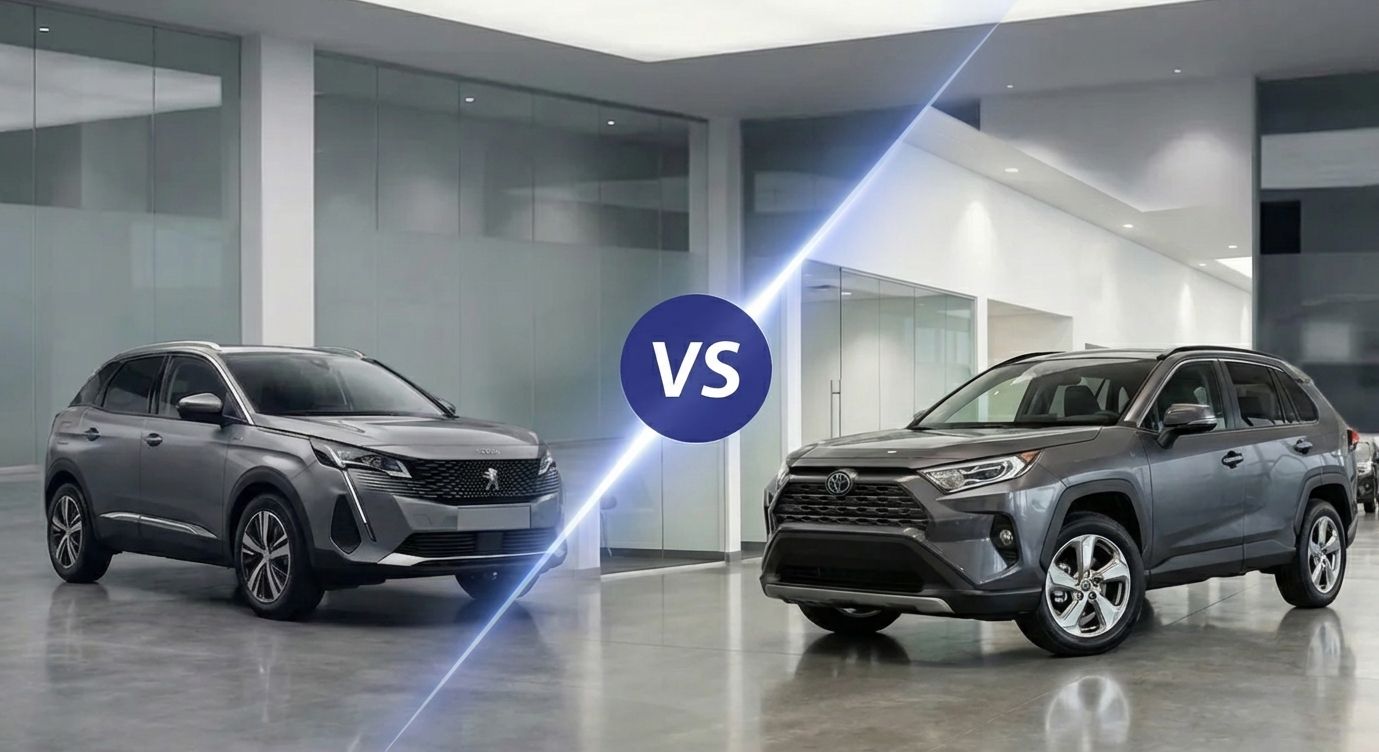
Detailed comparison of Peugeot 3008 vs Toyota RAV4. Discover real-world experiences with used cars, a comparison of fuel consumption, reliability, and a verdict that will make your choice easier.
Apr 2, 2026
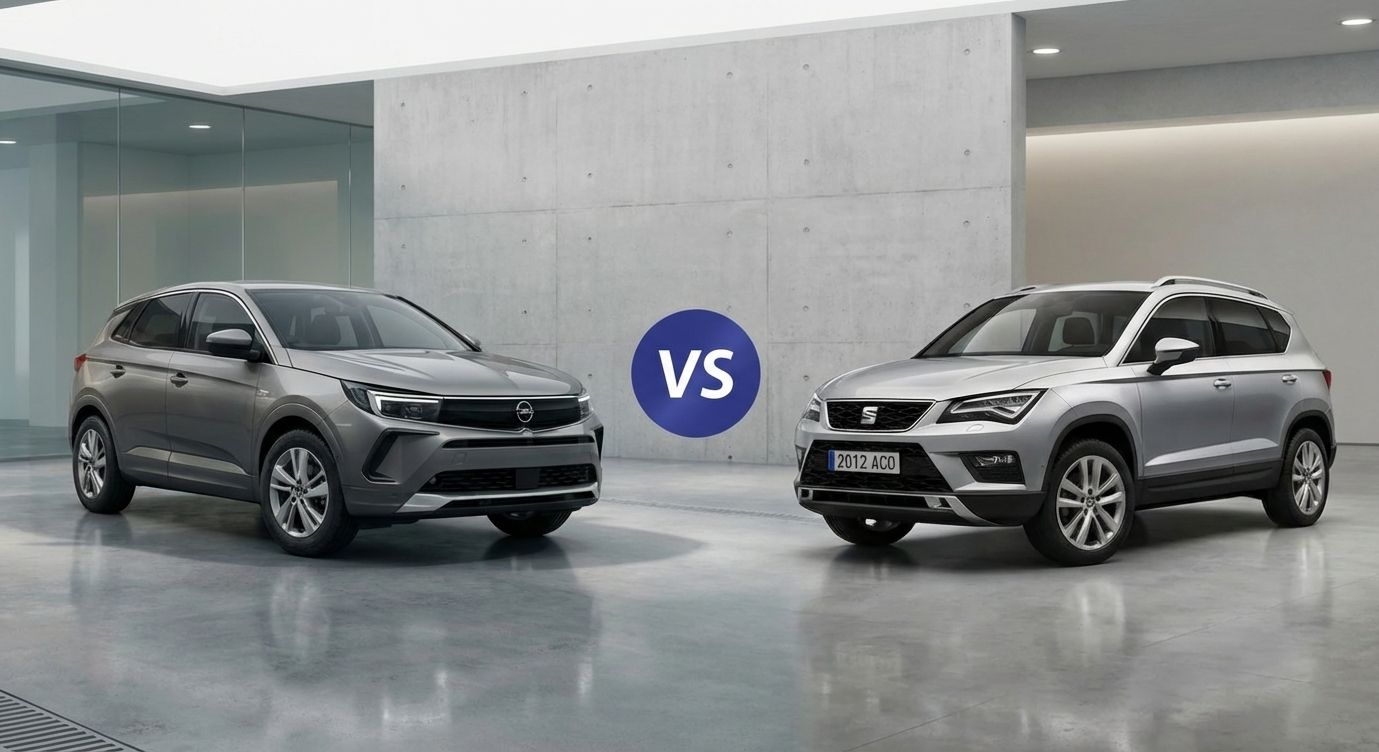
Opel Grandland vs. Seat Ateca: Which SUV to choose? Our detailed comparison will reveal the key differences and help you find the right car for you.
Apr 14, 2026