Car battle
Mazda 3 vs. Toyota Corolla: Complete Comparison 2026
Mazda 3 vs. Toyota Corolla: Which bestseller is better? Our detailed comparison of engines, features, and handling will help you make your final choice.
Oct 23, 2026
Detailed comparison of the Hyundai i30 and Škoda Octavia. Find out which used car offers better equipment, engines, and space. Read our detailed verdict!
May 9, 2026
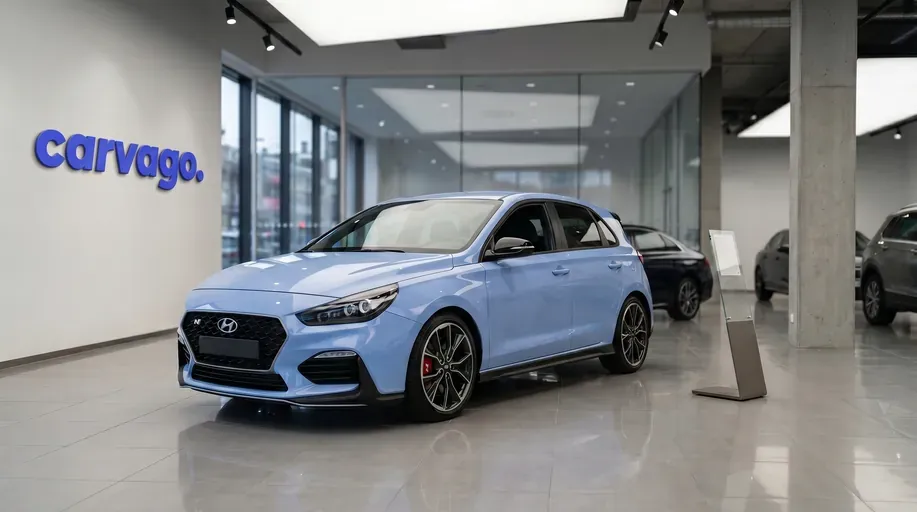
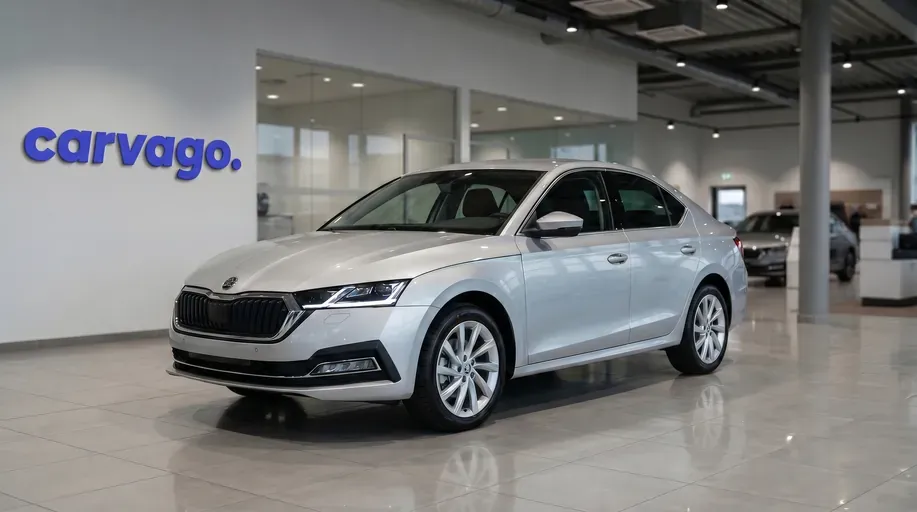
The Hyundai i30, formerly also known as the Hyundai Elantra GT in some overseas markets, is a popular representative of the compact class that wins over European drivers primarily with its excellent value for money combined with generous standard equipment. Standing against it is the traditional market leader, the Škoda Octavia (sold in an extended version as the Škoda Octavia Pro in selected Asian markets), which has long scored points mainly for its unrivaled interior space, elegant design, and legendary practicality. The following comparison will guide you in detail through the key differences between these two exceptionally popular cars and help you find out which one will become the ideal choice for your daily journeys.
The Škoda Octavia has long balanced on the border between the lower-middle and middle class, which is fully evident in its fourth generation. In contrast, the third-generation Hyundai i30 maintains the traditional dimensions of a classic European compact (C-segment). If we place the basic five-door versions side by side, we find that the Octavia in its liftback variant, with a length of 4689 mm, is a staggering 349 mm longer than the i30 hatchback, which measures 4340 mm. This striking difference clearly translates into the Škoda's more majestic appearance and provides a larger footprint for overall transport capacity. On the other hand, this results in an obvious disadvantage for the Czech model – you will appreciate the more compact proportions of the Hyundai i30 especially when looking for a parking space in crowded city streets, where the shorter length means much easier maneuverability and more carefree daily parking.
However, the differences do not end with the overall length of the vehicles. Looking at the body width, the Škoda, at 1829 mm, has a 34 mm advantage over the Hyundai's 1795 mm. While it might not seem like a drastic jump on paper, in practice, it gives Octavia passengers a noticeably airier feel and significantly more shoulder room. The wheelbase also plays a crucial role in longitudinal interior space, reaching up to 2686 mm in the fourth-generation Octavia, while the i30 sticks firmly to 2650 mm. This significantly benefits passengers in the rear seats of the Czech mainstay, who enjoy more knee room. Furthermore, the longer wheelbase gives the Octavia a smoother and more stable ride during highway travel, while the i30's shorter footprint lends the car a more agile character in twisty sections and a nimbler response.
If we look at the estate body styles, which are extremely popular among drivers, the length difference narrows slightly but remains significant. The Hyundai i30 Estate has grown to a solid length of 4585 mm, yet it still trails the Octavia Estate (from 4689 mm) by about 104 mm. In terms of height, both family models are relatively similar – typically ranging between 1465 and 1475 mm for the i30 and around 1468 mm for the Octavia (excluding the specifically raised Scout version). The overall comparison of exterior dimensions thus provides a clear guide for the final decision: the Škoda Octavia is the clear favorite for those who require maximum available space for their family, while the Hyundai i30 represents a more balanced compromise for those seeking a spacious car that hasn't outgrown the limits of pleasant urban agility.
| Parameter | Hyundai i30 Hatchback | Hyundai i30 Fastback | Hyundai i30 Estate | Škoda Octavia Liftback | Škoda Octavia Estate |
|---|---|---|---|---|---|
| Length (mm) | 4335 - 4340 | 4455 | 4585 | 4689 - 4709 | 4689 - 4709 |
| Width (mm) | 1795 | 1795 | 1795 | 1829 | 1829 |
| Height (mm) | 1439 - 1455 | 1417 - 1425 | 1465 - 1475 | 1456 - 1486 | 1454 - 1508 |
| Wheelbase (mm) | 2650 | 2650 | 2650 | 2669 - 2686 | 2647 - 2686 |
When comparing luggage capacity, the main difference between the two models quickly becomes apparent, which is absolutely crucial for many families when choosing a car. The Škoda Octavia has long been considered the uncrowned king of space in its class and fully confirms its reputation. While the Hyundai i30 offers a highly practical and rationally designed trunk that reliably serves everyday family needs, the Octavia's figures confidently approach those of vehicles from higher segments. You will appreciate this difference especially when deciding whether you are looking for a regular commuting car or a family workhorse that can easily swallow all the gear for a two-week vacation.
Looking at the exact figures, the traditional Hyundai i30 hatchback version offers a standard volume of 395 liters for current 4-year-old used cars, which increases to a generous 1,301 liters after folding the rear backrests. The slightly more practical i30 Fastback with its liftback body adds more liters, offering 450 liters as base (maximum 1,351 liters). In contrast, the Škoda Octavia with a similarly styled liftback body starts at an excellent 600 liters (up to 1,555 liters when folded). The difference is even more pronounced in the family estate versions. The Hyundai i30 Estate has a great 602 liters and 1,650 liters with the seats folded, which is perfectly sufficient for weekend shopping or transporting a stroller. However, the Škoda Octavia Estate dominates this discipline as well with a massive 640 liters, which can be expanded to a giant 1,700 liters, which in practice means exactly that sought-after space for a few extra suitcases.
It is also important to monitor the impact of alternative powertrains, which can significantly limit the interior space in some variants. While for standard and mild-hybrid versions of the Hyundai i30 the figures mostly remain the same and reduction occurs only in some N sport versions, for the fourth generation of the Škoda Octavia, the situation changes significantly with plug-in hybrid powertrains (iV) and natural gas versions (G-TEC). In these cases, the luggage capacity drops to 450 liters for the liftback and 490 liters for the estate (1,555 liters when folded). In terms of numbers, the hybrid Octavia Estate actually falls below the level of the standard i30 Estate in terms of space. In the end, however, both cars benefit from excellent access to the trunk through a huge tailgate. The choice is therefore clear – if you carry a maximum amount of things and look at every centimeter, the Octavia offers a huge reserve, but for most situations, the Hyundai i30 represents a perfect and completely pragmatic compromise.
| Parameter | Hyundai i30 Hatchback | Hyundai i30 Fastback (Liftback) | Škoda Octavia Liftback | Hyundai i30 Estate | Škoda Octavia Estate |
|---|---|---|---|---|---|
| Base volume (liters) | 395 l | 450 l | 600 l | 602 l | 640 l |
| Maximum volume with seats folded (liters) | 1,301 l | 1,351 l | 1,555 l | 1,650 l | 1,700 l |
If maximum volume and carrying capacity are your absolute priority, the Škoda Octavia with a standard engine is unrivaled within its class, but the Hyundai i30, with its more than solid figures, will easily satisfy the vast majority of real-world family needs.
Trailer weight is a key parameter for drivers planning to hitch a caravan, a heavier trailer with materials, or perhaps just a family bike rack. If we compare roughly four-year-old used cars belonging to the current generations (third generation for the Hyundai i30 and fourth generation for the Škoda Octavia), there are relatively clear differences between the two vehicles. Thanks to its platform and construction, the Octavia offers overall more robust values, making it a more practical helper for heavier loads, while the i30 relies more on basic towing capacities that will suffice for less demanding users.
The base engine of the Škoda Octavia, such as the popular 1.0 TSI (81 kW) three-cylinder, can tow a standard braked trailer weighing 1300 kg. Stronger petrol versions like the 1.5 TSI ACT or plug-in hybrid iV variants can safely handle 1500 kg. The Octavia shows its maximum towing power with the 2.0 TDI SCR diesel versions (especially with 110 kW or 147 kW output), which can handle 1600 to 2000 kg. These highest values are achieved by all-wheel-drive models or the more rugged Scout version. In contrast, the Hyundai i30 has its limits set slightly lower. The base 1.0 T-GDI (88 kW) petrol engine can tow a braked trailer from 1000 to 1200 kg. Special attention is required for the mild-hybrid (48V) variants of this engine, where in certain specifications, the permitted weight of a braked trailer drops to a limited 700 kg. Conversely, stronger petrol engines like the 1.5 T-GDI 48V (118 kW) can handle a respectable 1420 kg, and the popular 1.6 CRDi (100 kW) diesel version breaks the 1500 kg mark, matching the Octavia in standard versions.
From a practical standpoint, these differences mean that if you need to create space for a few extra suitcases in a light utility trailer, the Hyundai i30 will be perfectly sufficient for weekend hardware store shopping or occasional garden waste disposal. However, if your plans include towing a medium-sized caravan or a larger boat for a longer holiday, the Škoda Octavia provides a much calmer ride and a greater power and safety reserve. Furthermore, data for unbraked trailers for these generations show that both cars can handle standard trailers up to 750 kg without issues, though even here, the Octavia generally has a slight weight advantage. In the overall comparison, the Octavia emerges as a clearly stronger and more versatile "tower."
| Model and engine | Braked trailer weight (kg) | Unbraked trailer weight (kg) |
|---|---|---|
| Škoda Octavia 1.0 TSI (81 kW) | 1300 | 710 - 750 |
| Škoda Octavia 1.5 TSI ACT (110 kW) | 1500 | 710 - 750 |
| Škoda Octavia 2.0 TDI SCR (110 kW) | 1600 - 2000 | 710 - 750 |
| Hyundai i30 1.0 T-GDI (88 kW) | 1000 - 1200 | 600 - 700 |
| Hyundai i30 1.0 T-GDI 48V-Mildhybrid (88 kW) | 700 - 1200 | 600 - 700 |
| Hyundai i30 1.5 T-GDI 48V-Mildhybrid (118 kW) | 1410 - 1420 | 600 - 700 |
| Hyundai i30 1.6 CRDi (100 kW) | 1500 | 600 - 700 |
When comparing the powertrains of these two competitors in the market for roughly four-year-old used cars, you will quickly find that both brands represent different concepts. The fourth-generation Škoda Octavia relies on technologically advanced VW Group engines, where efficient petrol and diesel units take center stage, complemented by modern mild-hybrids (e-TEC), plug-in hybrids (iV), and a natural gas variant (G-TEC), with the option of all-wheel drive also available. In contrast, the Hyundai i30 appeals more to conservative buyers, as in addition to modern turbocharged engines, it also offers a classic naturally aspirated four-cylinder without direct injection (1.5 DPI), which has become a huge hit on the used car market for its reliability. For drivers who cover tens of thousands of kilometers a year, the Octavia makes much more sense thanks to its extremely efficient two-liter diesel engines. Hyundai, on the other hand, scores with an excellent price-to-performance ratio for its petrol versions and also brings a real gem for car enthusiasts to the ring – the pure-bred hot hatch i30 N.
The cornerstone of the range for roughly four-year-old Hyundai i30 models (after the 2020 facelift) is the aforementioned naturally aspirated 1.5 DPI four-cylinder (81 kW), which excels in exemplary longevity and is thus the perfect choice for frequent city driving. More dynamic performance is represented by the 1.0 T-GDI three-cylinder or the more powerful 1.5 T-GDI four-cylinder (118 kW), which, by the way, replaced the previously popular 1.4 T-GDI unit after the update. Both of these engines can be found on the used car market with an advanced 48V mild-hybrid system and the innovative iMT manual transmission, or with a seven-speed DCT automatic. As for diesel, the popular 1.6 CRDi engines were previously offered, but over the years they gradually began to disappear from the i30 price lists due to emission standards, and you will only rarely encounter them in the newest used cars. A chapter of its own is the sporty i30 N derivative with a fantastic 2.0 T-GDI two-liter engine, which provides its driver with up to 206 kW of power.
| Engine type | Fuel | Power (kW) | Torque (Nm) | Transmission |
|---|---|---|---|---|
| 1.5 DPI | Petrol | 81 | 144 | 6MT |
| 1.0 T-GDI (incl. 48V) | Petrol / MHEV | 88 | 172 | 6MT / 6iMT / 7DCT |
| 1.5 T-GDI 48V | Petrol MHEV | 118 | 253 | 6iMT / 7DCT |
| 1.6 CRDi (incl. 48V) | Diesel / MHEV | 85 / 100 | 280 / 320 | 6MT / 6iMT / 7DCT |
| 2.0 T-GDI (i30 N) | Petrol | 184 / 206 | 353 / 392 | 6MT / 8DCT |
The fourth generation of the Škoda Octavia, produced since 2020, offers a truly wide range of modern engines in used car dealerships. The base is formed by the reliable 1.0 TSI three-cylinder, which in versions with the seven-speed DSG automatic bears the e-TEC designation and utilizes supportive mild-hybrid technology. The same electrified principle is used by the sought-after 1.5 TSI four-cylinder with cylinder deactivation technology (ACT). There is constant high interest among used car buyers for the 2.0 TDI Evo diesel engines, which are available in several power levels. While the smaller 1.6 TDI was very popular in the older third generation, you won't find it at all in roughly four-year-old fourth-generation used cars – the automaker replaced it with a more durable, detuned version of the two-liter engine with 85 kW. Furthermore, Škoda introduced the 1.5 TGI G-TEC gas version and the 1.4 TSI iV plug-in hybrid models for daily emission-free commuting. For more demanding drivers, the powerful 2.0 TSI (140 kW) units or the sporty Octavia RS models (180 kW for petrol and 147 kW for diesel) are reserved, which – unlike the Hyundai – can also be paired with 4x4 all-wheel drive.
| Engine type | Fuel | Power (kW) | Torque (Nm) | Transmission |
|---|---|---|---|---|
| 1.0 TSI / e-TEC | Petrol / MHEV | 81 | 200 | 6MT / 7DSG |
| 1.5 TGI G-TEC | Petrol / CNG | 96 | 200 | 7DSG |
| 1.5 TSI ACT / e-TEC | Petrol / MHEV | 110 | 250 | 6MT / 7DSG |
| 1.4 TSI iV (incl. RS) | Petrol PHEV | 150 / 180 | 350 / 400 | 6DSG |
| 2.0 TSI (incl. RS) | Petrol | 140 / 180 | 320 / 370 | 7DSG |
| 2.0 TDI SCR (incl. RS) | Diesel | 85 / 110 / 147 | 300 / 360 / 400 | 6MT / 7DSG |
While the Hyundai i30 will please those looking for a highly reliable petrol powertrain with its simple units, the Škoda Octavia easily holds the crown for highway efficiency thanks to its superb TDI engines and a much wider range of modern alternative powertrains, led by plug-in hybrids and all-wheel-drive versions.
When choosing a used car around four years old, selecting the right engine is key to long-term satisfaction, as it affects not only dynamics and real-world fuel consumption but also operating costs and reliability. Both manufacturers offer very different approaches for their compact models. While Hyundai, with its updated i30 (3rd generation), relies on electrified petrol units and has completely removed the once-popular 1.6 CRDi diesel engines from its four-year-old used car lineup (which ceased to be offered in 2022), Škoda continues to score successfully with advanced diesels in its fourth-generation Octavia. Interestingly, Škoda also retired the weaker entry-level 1.6 TDI diesel and fully replaced it with a sophisticated detuned two-liter, fundamentally improving the car's real-world dynamics.
The 1.5 T-GDI four-cylinder petrol engine represents the absolute best choice in the post-facelift third-generation i30 range. It offers an excellent compromise between performance and efficiency, logically replacing the discontinued diesel engines.
The fourth-generation Octavia and the 2.0 TDI (EVO generation) diesel form an inseparable and highly sought-after pair on the used car market, representing the ideal choice after the smaller 1.6 TDI unit was phased out.
When choosing a used car, it is important not to rely solely on manufacturer figures. Real-world fuel consumption in everyday traffic can differ significantly from laboratory data, especially with turbocharged engines or at higher highway speeds. To provide the most accurate picture of the actual requirements of roughly four-year-old used cars (fourth-generation Škoda Octavia and third-generation Hyundai i30 with production years around 2020 to 2022), we analyzed data from real drivers on the popular German community portal Spritmonitor.de, where users from across Europe keep detailed long-term refueling records.
| Model and engine | Average consumption (l/100 km) | Source |
|---|---|---|
| Škoda Octavia 1.0 TSI 81 kW | 5.8 | Spritmonitor.de |
| Hyundai i30 1.0 T-GDI 88 kW | 6.1 | Spritmonitor.de |
| Škoda Octavia 1.5 TSI 110 kW | 6.0 | Spritmonitor.de |
| Hyundai i30 1.5 T-GDI 118 kW | 6.3 | Spritmonitor.de |
| Hyundai i30 1.5 DPI 81 kW | 6.5 | Spritmonitor.de |
| Škoda Octavia 2.0 TDI 110 kW | 4.9 | Spritmonitor.de |
| Hyundai i30 1.6 CRDi 100 kW | 5.2 | Spritmonitor.de |
The data clearly reveals some interesting trends. While small turbocharged one-liter three-cylinder engines (1.0 TSI in the Octavia and 1.0 T-GDI in the i30) promise very low operating costs on paper, they cannot always conjure such significant fuel savings in the real world compared to more powerful four-cylinder engines. As soon as you load a small-displacement engine with a full car or take it onto the highway, consumption rises surprisingly quickly. A great compromise, for example, is the 1.5 TSI engine in the Octavia, which, thanks to effective aerodynamics and a sophisticated cylinder deactivation system (ACT), can achieve an excellent 6 liters despite significantly higher power. Conversely, the naturally aspirated 1.5 DPI four-cylinder in the Hyundai, which is immensely popular among used car buyers for its above-standard mechanical reliability and lack of sensitive components, averages 6.5 liters. This is a perfectly understandable trade-off for an older engine design without a turbocharger.
For typical users, these findings lead to clear recommendations. For drivers commuting shorter distances daily or primarily in the city, petrol variants are the most worthwhile – budget-conscious buyers and those preferring absolute technical durability often successfully opt for the naturally aspirated Hyundai 1.5 DPI, while those interested in a more sophisticated and dynamic drive will choose the exceptionally efficient Octavia 1.5 TSI. For regular highway mile-munchers and business travelers, diesel engines remain the logical and best choice. The Škoda Octavia with the 2.0 TDI two-liter diesel confirms its reputation as an unrivaled highway cruiser, with its real average consumption easily falling below the five-liter mark. The competing Hyundai i30 with the 1.6 CRDi diesel is also an excellent and refined engine; however, given its smaller displacement, it works a bit harder at higher highway speeds, keeping consumption about three-tenths of a liter higher.
Overall, it can be concluded that although fuel consumption plays an important role when choosing between these two popular cars, it will rarely be the most important and sole deciding factor. The differences between comparable engines usually only range in the tenths of a liter per 100 kilometers. Thanks to its excellent overall aerodynamics (both for the liftback and estate body styles) and famously efficient Group engines, the Škoda Octavia has a slight edge in real-world operation. On the other hand, the Hyundai i30 can easily compensate for this very minor handicap in fuel costs with a generally lower purchase price for the used car itself and exemplary technical reliability.
When choosing a roughly four-year-old used car (model years around 2021–2022), the differences in original purchase price and how well both models hold their value become fully apparent. The Czech market has its specifics and preferences, which are very significantly reflected in the final price tags of these two direct competitors.
The Hyundai i30 has long scored points with its excellent price-to-value ratio. As a used car, it represents a very attractive choice for buyers with a more limited budget who do not want to compromise on modern equipment.
The Škoda Octavia is a phenomenon on the used car market. Its massive interior space and unquestionable status as a domestic bestseller mean that demand for used Octavias consistently exceeds supply. This naturally drives prices higher.
| Model (approx. 4 years old) | Approximate price range | Trim / Engine holding value | Depreciation rate |
|---|---|---|---|
| Hyundai i30 | €12,000 – €18,000 | N-Line, 1.5 T-GDI | Average |
| Škoda Octavia | €16,000 – €25,000 | Style / RS, 2.0 TDI, 1.5 TSI | Very low |
Key summary for buyers:
While the Hyundai i30 attracts with a lower purchase price and an excellent age-to-equipment ratio, the Škoda Octavia requires a fatter wallet but rewards with exceptionally slow depreciation and certainty during resale.
Both compared vehicles boast a maximum five-star rating in independent Euro NCAP safety tests. However, when evaluating the safety of used cars, it is crucial to consider the context and the year in which the testing took place. The Euro NCAP methodology evolves and tightens over the years, meaning that percentage scores from different years cannot be directly compared. While older test protocols focused primarily on passive passenger protection during the impact itself, newer test years place increasing emphasis on accident prevention, detection of vulnerable road users, and advanced assistance systems that intervene, for example, at intersections.
The third generation of the Hyundai i30 underwent a series of crash tests in 2017, where it comfortably achieved the full five stars. The vehicle's construction provided a very good level of passive safety by the standards of the time, reflected in high ratings for both adult and child passenger protection. However, given the age of this test, its validity has officially expired according to Euro NCAP rules. While the Hyundai i30 still possesses solid body rigidity and a necessary set of assistants such as autonomous emergency braking, in today's context, it corresponds more to the safety standards of the previous decade.
The fourth-generation Škoda Octavia faced much tougher tests. It successfully defended its five-star rating even under the stricter 2022 testing protocol. A vehicle from this period is equipped as standard with more modern passive and active safety features. Examples include the innovative center airbag, which prevents the heads of front passengers from colliding, or an advanced detection system that can react in time to cyclists and pedestrians. The high rating for safety assistance systems proves that the car passed a demanding evaluation according to modern criteria.
In a direct comparison, it is clear that the Škoda Octavia offers a more modern and comprehensive approach to safety thanks to its newer design and advanced equipment. Although the Hyundai i30 will reliably protect you in the event of an actual impact, the Czech representative benefits from its technological lead and deploys a more intelligent suite of assistants that aim to prevent potential crisis situations entirely.
| Parameter | Hyundai i30 | Škoda Octavia |
|---|---|---|
| Year of testing | 2017 | 2022 |
| Adult occupant protection | 88 % | 86 % |
| Child occupant protection | 84 % | 84 % |
| Vulnerable road user protection | 64 % | 68 % |
| Safety assist systems | 68 % | 81 % |
Even though both cars meet strict safety standards, the Škoda Octavia brings a more advanced array of preventive systems and an overall more modern approach to occupant protection to the used car market.
In addition to standard equipment, each model offers several unique features that can be decisive for the customer and clearly demonstrate the different approaches of both manufacturers to added value. While the South Korean representative focuses on interesting technological innovations in the powertrain and sporty styling, the Czech bestseller scores with unrivaled practicality and features more commonly found in the premium segment.
In its modernized third generation, the Hyundai i30 brings equipment that targets drivers looking for technologies that facilitate everyday life and a slight sporty accent.
The Škoda Octavia traditionally bets on vast interior space, to which it adds renowned practical solutions and hi-tech equipment that makes long highway journeys more pleasant.
Unrivalled interior space and luggage capacity (up to 640 litres for the Combi version)
Very low fuel consumption with TDI engines and excellent body aerodynamics
High residual value and easy resale on the used car market
Wide range of powertrains including mild-hybrids, plug-in hybrids (iV), and all-wheel drive
Comfortably tuned chassis that excels on long motorway journeys
Significantly higher purchase price for a used car compared to the i30
Impractical climate and volume controls via touch surfaces and the display
More frequent infotainment software issues in early fourth-generation models (around 2020/2021)
The fourth-generation Škoda Octavia is a confident choice for families and corporate fleets requiring maximum space, travel comfort, and low operating costs. Although the initial investment in a used car tends to be higher, it is compensated by slower depreciation and top-tier utility for long trips.
Excellent value for money when buying on the secondary market
Great user ergonomics thanks to the retention of physical buttons for key functions
Five-year factory warranty with unlimited mileage (often still valid for four-year-old used cars)
Availability of the exceptionally reliable 1.5 DPi naturally aspirated four-cylinder engine, ideal for shorter routes
Less legroom for rear passengers and a generally more modest boot compared to its Czech rival
Slightly higher fuel consumption for some petrol engines compared to TSI engines
Poorer cabin soundproofing from the chassis at higher motorway speeds
Faster depreciation of residual value
The Hyundai i30 will appeal to pragmatically minded drivers looking for a more affordable and exceptionally reliable car with a classic control layout. It is a rational choice that, thanks to attractive prices on the used market and a more traditional approach to ergonomics, will satisfy anyone who doesn't mind a slightly smaller carrying capacity.
Based on long-term user feedback, service bulletins, and data obtained from our practice, where an independent technical inspection of the car takes place as part of the CarAudit service, we have compiled an overview of the most common problems with roughly four-year-old used cars of these two popular models.
The third-generation Hyundai i30 (especially after the facelift) is considered a reliable car with solid mechanics on the used car market, yet some specific and recurring defects may occur.
From a technical standpoint, it is a robust and above-average reliable car, where potential risks are concentrated more on the wear of the dual-clutch automatic transmission in city traffic and minor quirks of the onboard electronics.
The fourth generation of the Škoda Octavia brought a revolution in digitalization upon its launch, which unfortunately translates into much more frequent error reports regarding complicated software and onboard systems in roughly four-year-old vehicles.
Mechanically and engine-wise, it is an excellent car for long distances, but purchasing a used car from the first years of production of the fourth generation requires an absolutely precise check of the functionality of the infotainment and all digital assistants.
When buying a used car, a thorough inspection is crucial because, despite their overall reliability, both of these models have specific weak points that require careful attention during selection. Before deciding on a specific car, it is always worth getting a detailed physical inspection of the used car, which will help prevent unexpected and expensive repairs.
Škoda Octavia offers a significantly larger luggage space in the liftback version, where it has a volume of 600 liters compared to 395 liters for the i30 hatchback. For the estate family body styles, the difference is slightly smaller, but the Octavia still leads with a volume of 640 liters against 602 liters for its Korean rival.
Hyundai i30 is considered a very reliable car with robust mechanics and benefits from the original five-year factory warranty. In the fourth-generation Škoda Octavia, software issues with the infotainment system occasionally occurred in the first years of production, which were addressed by subsequent updates. In terms of engines, however, both used cars are rated as above-average reliable with regular servicing.
The Škoda Octavia provides noticeably more knee room for rear passengers thanks to a longer wheelbase and overall larger exterior dimensions. The Hyundai i30 offers standard rear space typical for the compact class, which is fully sufficient for children and medium-height adults. However, for frequent travel of four tall people over longer distances, the Octavia is the more comfortable choice.
The Škoda Octavia generally has a slight advantage thanks to excellent aerodynamics and a range of economical diesel and mild-hybrid engines. In real-world driving, the fuel consumption of the gasoline versions of both cars is very similar, ranging around 5.5 to 6.5 l/100 km. For drivers with high annual mileage, however, the ideal choice is the diesel Octavia with the 2.0 TDI engine, which can easily run under 5 liters per 100 kilometers.
The Hyundai i30 feels slightly stiffer and more driver-oriented behind the wheel, contributed to by good suspension tuning and precise steering. The Škoda Octavia, on the other hand, is primarily focused on maximum comfort, absorbing bumps, and a relaxed family ride. Nevertheless, both cars provide very stable handling and safe behavior even in critical situations.
Sources: ADAC, auto.cz, novinky.cz, hybrid.cz, smartmania.cz, autotrip.cz
This article was prepared using artificial intelligence tools. The section guarantor is Petr Dušek.
Mazda 3 vs. Toyota Corolla: Which bestseller is better? Our detailed comparison of engines, features, and handling will help you make your final choice.
Oct 23, 2026
Detailed comparison of Citroën C4 vs Peugeot 308. Real-world driving experience, equipment comparison, and a detailed verdict for the right choice of your next car.
Apr 19, 2026
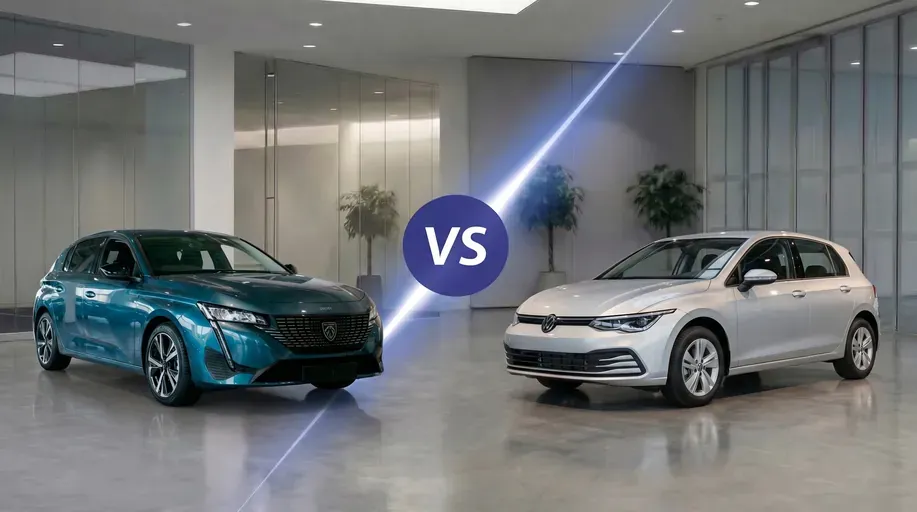
Detailed comparison: Peugeot 308 vs Volkswagen Golf (VW Golf). Read real-world experiences, engine comparisons, and a clear verdict on which hatchback to choose.
Apr 16, 2026