Articles

Car battle

Ford Ranger vs. Mitsubishi L200: Complete comparison 2026

Detailed comparison of the Ford Ranger vs. Mitsubishi L200 (Triton). Discover the differences in reliability, equipment, and real-world fuel consumption of used vehicles. Which pickup is the better choice?

May 1, 2026

VS
Ford Ranger

Ford Ranger

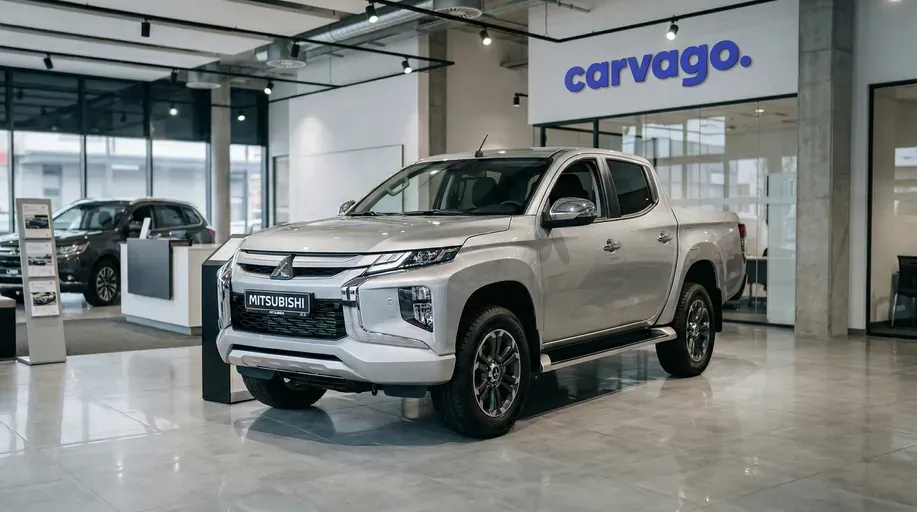
Mitsubishi L200

Mitsubishi L200

Introduction

Ford Ranger has established itself as one of the world's most sought-after pick-ups, building on its American robustness and excellent capabilities both on-road and in heavy terrain. Its tenacious challenger is the Mitsubishi L200, also known as the Triton in many global markets or previously sold as the technically related Fiat Fullback, which traditionally relies on proven Japanese reliability and an advanced all-wheel-drive system. The following comparison will reveal in detail which of these two indomitable workhorses on the used car market offers a better overall combination of utility value, equipment, and everyday practicality.

Comparison of External Dimensions

When comparing the external dimensions of these two popular pick-ups, which are commonly found on the used car market at around four years old, it is clear at first glance that the Ford Ranger plays the role of the more muscular one. While the third-generation Mitsubishi L200 (on sale until 2022) measures a maximum of 5,305 mm in length, the third and upcoming fourth-generation Ford Ranger stretches up to 5,381 mm. The difference in total body width is even more profound. Standard versions of the Ranger from this period offer a width of 1,867 to 1,918 mm, and the extreme Raptor variant even exceeds two metres (2,028 mm). In contrast, the L200 maintains a much more modest 1,815 mm. For everyday use, this presents a clear dilemma: the Ford offers an airier cabin and a wider loading area for oversized cargo, but thanks to its narrower build, the Mitsubishi slips much more readily through cramped city streets or narrow forest paths.

A fundamental technical difference that significantly affects the driving characteristics of both vehicles is hidden in the wheelbase. The Ford Ranger has a generous wheelbase of 3,220 mm (3,270 mm for the newer generation arriving in 2023). The Mitsubishi L200 relies on a traditional 3,000 mm, which is the same across all body versions. A difference exceeding twenty centimetres plays a key role in practice. The Ranger benefits from the longer wheelbase primarily through a smoother ride on broken roads, excellent directional stability at highway speeds, and more generous legroom for second-row passengers. However, the shorter wheelbase of the L200 is a hidden weapon for heavy off-roading, where it guarantees a significantly better breakover angle and surprising agility, which you will clearly appreciate when turning and maneuvering in confined spaces.

When looking at the overall height of the vehicles, the scales tip again in favour of the brand with the blue oval in its emblem. While the Japanese workhorse stays closer to the ground with a maximum height of up to 1,780 mm, the Ford Ranger reaches a height of 1,800 to 1,922 mm depending on the chosen equipment and suspension setup (for example, in the Raptor version). This tall build not only enhances the overall more majestic impression of the American vehicle and ensures a better view from the driver's seat, but also provides more headroom inside the cabin. On the other hand, the Mitsubishi's lower silhouette helps reduce the overall center of gravity and aerodynamic drag, resulting in more confident cornering on paved roads and slightly more favourable fuel consumption figures during long highway journeys.

ParameterFord Ranger Pick-upMitsubishi L200 Pick-up
Length (mm)5282 - 53815195 - 5305
Width (mm)1867 - 20281785 - 1815
Height (mm)1800 - 19221775 - 1780
Wheelbase (mm)3220 - 32703000

Trunk Volume

The cargo space volume, or in the case of pick-ups, the bed capacity, represents one of the most important parameters for future owners. Whether you are buying a vehicle as a pure work tool for construction sites, a reliable workhorse for bulky sports equipment, or a robust car for everyday family use and leisure, differences in capacity play a huge role. When comparing approximately four-year-old used cars, representatives of the third generations of both these legendary models often face off on the market. Each automaker approaches design and overall practicality slightly differently – while one vehicle tries to offer an uncompromising maximum of space for cargo transport, the other is a bit more subtle, which favors better maneuverability in the city and off-road.

In a more detailed comparison of bed volume in liters, the American representative clearly has the upper hand. The most sought-after and best-selling five-seater Double Cab variant of the Ford Ranger (model years 2019–2023) offers a massive base cargo volume of 1233 liters. In contrast, the competing Mitsubishi L200 (generation offered until 2022) works with slightly more compact dimensions in the same configuration and provides a bed volume of 1061 liters. In real life, this difference of exactly 172 liters represents safely stored space for several extra suitcases or an additional box of assembly tools. Even the slightly smaller bed of the Mitsubishi is, however, easily sufficient for weekend shopping or a longer holiday with the whole family.

If your absolute priority is the absolute maximum of usable area and you are happy to sacrifice full-size rear seats, the extended versions with a shortened cabin – referred to as Extra Cab (SuperCab) at Ford and Club Cab at Mitsubishi – increase the bed volume even more significantly. Here, the Ford Ranger reaches a massive 1466 liters, while the Mitsubishi L200 counters with a capacity of 1291 liters. It is worth mentioning a fundamental difference compared to standard family estate cars: the maximum volume with the seats folded cannot be calculated for classic pick-ups, as the cargo area and the passenger cabin form two strictly separate structural units. Also worth mentioning is the technical progress in the upcoming fourth generation, which brings a plug-in hybrid version (PHEV) to the market. Unlike conventional passenger cars with hybrid drive, where you often lose trunk capacity, engineers of the new Ranger managed to hide the batteries so skillfully in the frame that the total usable space of the bed remains untouched.

ParameterFord Ranger Pick-up (Double Cab)Mitsubishi L200 Pick-up (Double Cab)Ford Ranger Pick-up (Extra Cab)Mitsubishi L200 Pick-up (Club Cab)
Base volume (liters)1233106114661291
Max. volume with seats folded (liters)Not applicableNot applicableNot applicableNot applicable

Space for work and family 📦

With a generous bed capacity of 1233 liters in the Double Cab version, the Ford Ranger is a clear leader for craftsmen and adventurers alike, while the Mitsubishi L200 pleases with slightly more compact exterior dimensions at the cost of only a slightly smaller loading area.

Trailer Weights

When it comes to towing heavy trailers, both of these pickups represent very strong players for used car buyers, even though their maximum capabilities differ. Trailer weight is one of the key parameters for work vehicles, as it determines whether you can legally hitch a large horse trailer, heavy construction equipment, or a large caravan behind the car. The third-generation Ford Ranger (sold until 2023) is at the absolute top of its class – most common engine versions, with the exception of the weakest ones, can easily tow a braked trailer with a maximum permissible weight of up to 3,500 kg. The competing third-generation Mitsubishi L200 (which remained on the market until 2022) lags only slightly behind and offers a towing capacity of up to 3,100 kg in the more popular Double Cab version, or 3,000 kg for the Club Cab version with a smaller cabin.

Increased attention needs to be paid to specific versions that deviate from the common standard. The off-road and sport-oriented Ford Ranger Raptor, due to its unique chassis, can tow "only" 2,500 kg, and the exact same limit was given to the weakest base engine, the 2.0 TDCi with 96 kW.

In practice, the 400 kg difference on the tow ball in favor of the standard Ranger model means that Ford offers a significantly larger reserve for the heaviest professional use or the transport of large dual-axle trailers. The Mitsubishi L200, on the other hand, is easily sufficient for towing family caravans, larger yachts, or standard construction materials. Therefore, if your primary goal is frequent towing of loads just below the 3.5-ton limit, the Ford Ranger will clearly be the better choice thanks to its more massive construction. On the other hand, the L200 represents a golden middle ground that will easily satisfy the vast majority of tradespeople and weekend adventurers.

Model and engineBraked trailer weight (kg)Unbraked trailer weight (kg)
Ford Ranger 2.0 EcoBlue / 2.0 TDCi (125-156 kW)3450-3500750
Ford Ranger 2.0 TDCi (96 kW)2500750
Ford Ranger Raptor (all engines)2500750
Mitsubishi L200 2.2 Diesel / 2.4 DI-D Double Cab3100750
Mitsubishi L200 2.2 Diesel / 2.4 DI-D Club Cab3000750

Overview of Most Common Motorizations

When choosing a roughly four-year-old work pickup truck, the engine lineup represents one of the most fundamental differences between the Ford Ranger and Mitsubishi L200. This factor directly affects towing capacity, daily operating costs, and the overall refinement of the vehicle. While Ford relies on an exceptionally wide range of engines—from efficient four-cylinders to powerful V6s—Mitsubishi, in its final years on the European market, took the path of maximum rationalization and bet on a single proven unit. For drivers seeking raw power and the ability to tow the maximum possible trailers (up to 3,500 kg), Ford with its potent 2.0 EcoBlue Bi-Turbo or 3.0 V6 engines is the clear favorite. Conversely, the Mitsubishi L200 will please more conservative drivers and budget-oriented buyers who appreciate exceptionally smooth operation, long-term durability, and generally lower fuel consumption.

Ford Ranger Engines

The engine range for the Ford Ranger is remarkably diverse on the used car market, covering everything from fleet work versions to extreme off-roading. For roughly four-year-old vehicles (the transition between the 3rd and the new 4th generation), the backbone of sales consists of modern 2.0 EcoBlue diesel four-cylinders (often labeled as 2.0 TDCi). The standard version with a single turbocharger offers a solid 125 kW and up to 420 Nm of torque. However, the Bi-Turbo variant, equipped with a pair of turbochargers, is much more sought after, boasting 156 kW and a massive 500 Nm. This more powerful engine almost always works with a perfectly tuned 10-speed automatic transmission. With the arrival of the completely new 4th generation (from late 2022), the lineup was enriched by the commanding 3.0 EcoBlue V6 diesel with 177 kW and a brutal 600 Nm of torque. For performance enthusiasts, there is the special Raptor version, which hides a 3.0 EcoBoost V6 petrol engine. When searching for older used cars, you can still come across the popular and robust 3.2 TDCi five-cylinder, though its availability ended in 2020.

Engine TypeFuelPower (kW)Torque (Nm)Transmission
2.0 EcoBlue/TDCiDiesel125405 - 4206MT / 6AT / 10AT
2.0 EcoBlue/TDCi Bi-TurboDiesel15650010AT
3.0 EcoBlue V6Diesel17760010AT
3.0 EcoBoost V6 (Raptor)Petrol21549110AT
3.2 TDCi (until 2020)Diesel1474706MT / 6AT

Mitsubishi L200 Engines

Under the hood of the Mitsubishi L200, the situation for approximately four-year-old used cars is significantly simpler. In response to tightening European emission standards, the automaker replaced the previous engine range in autumn 2019 with a completely new all-aluminum 2.2 Diesel four-cylinder (commercially labeled as 2.2 DI-D). This engine provides a perhaps more modest 110 kW (150 hp) on paper, but it is perfectly sufficient for the vast majority of work tasks, complemented by 400 Nm of torque available from very low revs. The unit stands out for its excellent soundproofing, refined operation, and seamless pairing with a 6-speed automatic transmission. If you look at listings for older model years (up to 2019), you will find the earlier 2.4 DI-D units in 113 kW and more powerful 133 kW variants. However, a crucial piece of information for potential buyers is that sales of the Mitsubishi L200 were definitively discontinued on the European market at the end of 2022, so models up to four years old are gradually disappearing from the market.

Engine TypeFuelPower (kW)Torque (Nm)Transmission
2.2 DI-DDiesel1104006MT / 6AT
2.4 DI-D (until 2019)Diesel1133806MT
2.4 DI-D+ (until 2019)Diesel1334306MT / 5AT

Diversity vs. Purposeful Simplicity ⚙️

While the Ford Ranger excels with a huge selection of modern engines and immense towing power, making it the ideal choice for heavy-duty work, the Mitsubishi L200 appeals to more pragmatic buyers with a single reliable and quiet diesel designed for trouble-free daily use.

Choosing the right powertrain is absolutely crucial for long-term satisfaction with a used pickup truck. That's why our recommendations are based on real-world dynamics, actual fuel consumption, owner feedback, and mechanical reliability. In the category of roughly four-year-old used vehicles, two different philosophies meet – while Ford focused on modern technology and powerful two-liter engines at the end of its 3rd generation, Mitsubishi, with its 3rd generation (which, according to the database, ended in 2022), bets on time-tested and mechanically resilient technology for hard work.

For the Ford Ranger, we recommend: 2.0 EcoBlue Bi-Turbo (156 kW / 213 hp)

Why it's the best choice in the range:
This modern four-cylinder (often listed in advertisements as 2.0 TDCi) replaced the older and heavier 3.2 TDCi five-cylinder and represents the best on the market for models from the end of the 3rd generation (sold until roughly the beginning of 2023). It offers an excellent balance between immense power for towing trailers, solid fuel economy, and great everyday usability, while meeting the latest emission standards.

Technical strengths:
The engine boasts an excellent torque of 500 Nm, providing pull from very low RPMs. It works excellently with the advanced ten-speed automatic transmission, which not only keeps the engine in the optimal power band for maximum pull but also significantly reduces noise and fuel consumption during highway travel. It can easily handle the maximum permitted braked trailer load of 3,500 kg.

Known risks and how to address them:

  • Wet timing belt (oil-bathed belt): Why it matters: This system is extremely sensitive to oil quality and cleanliness. With neglected maintenance, the belt material can start to crumble, clogging the oil pump pickup strainer and causing fatal destruction of the entire engine. How to detect and solve the problem: When buying a used car, strictly demand a transparent service history with oil changes shortened to a maximum of 15,000 km or one year. If the vehicle was driven on extended intervals or the oil has the consistency of fuel oil, look for another unit.
  • Ten-speed automatic behavior: Why it matters: A technologically complex transmission can become a nightmare without maintenance. Reluctance to downshift or jolts during gear changes indicate neglected transmission oil changes. How to detect and solve the problem: During the test drive, thoroughly test crawling in traffic, smooth starts, and "kickdown" (flooring the accelerator for quick overtaking). All gear changes must be smooth, logical, and without any jerking.

Who it's best for:
An ideal choice for dynamically minded drivers who eat up highway miles, often need to tow heavy loads, and appreciate a refined performance in a pickup comparable to a large family SUV.

For the Mitsubishi L200, we recommend: 2.2 Diesel / DI-D (110 kW / 150 hp)

Why it's the best choice in the range:
For four-year-old used cars coming from the end of the 3rd generation production (which was available on the market until 2022), this engine is the absolute standard, replacing the older 2.4 DI-D units to comply with stricter emissions. Although it has lower power on paper than the rival Ranger, in the real working world, it scores with its indomitable tenacity, durability, and lower overall service costs. Buying a roughly four-year-old used car represents one of the last chances to get this legendary model with low mileage.

Technical strengths:
Despite the more modest maximum power, the vehicle offers a very honest torque of 400 Nm. Its greatest advantage is mechanical simplicity, the absence of a complex bi-turbo setup, and the total robustness of the entire powertrain. Furthermore, the engine is fantastically paired with a mechanically honest, improved six-speed automatic and the absolutely phenomenal Super Select 4WD-II drive system, making it an almost unstoppable machine in mud or deep snow.

Known risks and how to address them:

  • Diesel Particulate Filter (DPF) clogging: Why it matters: These work pickups often serve exclusively for slow crawling around construction sites or farms, which prevents reaching the correct temperature for burning off soot in the DPF. A clogged filter means a check engine light, limp mode, and an expensive service procedure. How to detect and solve the problem: Check the exhaust tip to see if it's coated in a thick layer of soot. During the drive, carefully monitor the smoothness of the pull at full throttle. As a preventive measure, it's enough to regularly "stretch" the car on a longer route at higher speeds to allow natural regeneration to take place.
  • Increased drivetrain strain due to lower power reserve: Why it matters: If the previous owner regularly used the L200 to tow the heaviest 3-ton trailers in hilly terrain, it meant that the more modest engine and transmission had to work almost constantly at the limit of their strength, which shortens their lifespan. How to detect and solve the problem: Carefully test for slip in vehicles with a manual transmission (whether the clutch engages only at the very top). For the automatic, monitor behavior on hills. Thoroughly inspect the tow hitch itself – a heavily worn tow ball and a stretched towing eye will suggest that the car really took a beating as a towing mule.

Who it's best for:
A perfect and uncompromising workhorse for craftsmen, builders, and foresters, for whom the main priority is indestructibility, 100% capability in heavy terrain, and long life over dazzling highway dynamics.
Real Fuel Consumption

Fuel consumption plays a key role when choosing a work pick-up, but official laboratory values provided by manufacturers often differ significantly from everyday reality on the road. Especially for large and heavy four-wheel-drive vehicles with poor aerodynamics, it pays to follow real-world operating data rather than just brochure promises. For our comparison, we have therefore used information from owners themselves from the independent community portal Spritmonitor.de, where users carefully record every refueling. To maintain relevance for the market of roughly four-year-old used cars, we focused exclusively on engines and generations available around 2019 to 2022 – primarily the late 3rd generation Ford Ranger and the 3rd generation Mitsubishi L200.

Model and engineAverage consumption (l/100 km)Source (news_site)
Ford Ranger 2.0 EcoBlue/TDCi 157 kW9.6Spritmonitor.de
Ford Ranger 3.2 TDCi 147 kW10.5Spritmonitor.de
Mitsubishi L200 2.2 DI-D 110 kW8.8Spritmonitor.de
Mitsubishi L200 2.4 DI-D 133 kW7.8Spritmonitor.de

Looking closer at real-world data, several interesting trends emerge. As expected, the massive five-cylinder Ford Ranger 3.2 TDCi demands the largest share of fuel, in practice commonly exceeding the ten-liter per hundred kilometers mark. However, it may come as a significant surprise that Ford's modern, downsizing-oriented 2.0 EcoBlue diesel does not bring such dramatic real-world savings as many would expect – its appetite stays around 9.6 l/100 km. The Mitsubishi L200 emerges from this comparison as a noticeably more economical option. Its popular 2.4 DI-D engine (common in models up to 2019) can run under eight liters of diesel with a light foot. In younger four-year-old used cars, you will encounter almost exclusively the 2.2 DI-D unit (introduced due to stricter European emissions), which still shows a very pleasant average of under nine liters. Furthermore, diesel engines clearly make the most sense compared to the rare petrol versions on the market. If you were to desire a petrol six-cylinder in a Ford (as with the recent Raptor 3.0 EcoBoost specification), real-world consumption suddenly shoots safely above 13 liters per 100 km, losing any economic advantage.

For the average user, these differences represent significant amounts in the annual budget. If you use the pick-up more as a car for daily commuting, for family trips on paved roads, or if you carefully monitor costs within a corporate fleet, the Mitsubishi L200 makes much more economic sense thanks to its more efficient engines. In contrast, you will appreciate the Ford Ranger when you regularly tow heavy trailers or spend time with a fully loaded bed; its higher consumption is simply a necessary tax for raw power and more confident dynamics.

In the end, fuel consumption will likely not be the only and final decision criterion for most buyers. The Ford's higher consumption can be excused by its work performance, but for budget-oriented buyers looking for a versatile and cheaper-to-run off-road vehicle, the scales tip clearly in favor of the Japanese Mitsubishi L200.

Price Range and Used Car Offerings

When looking for a roughly four-year-old pickup truck (2021 and 2022 models), you will find that the price gap between these models is quite wide. The market is dominated by the Ford Ranger T6 generation after its second facelift and the fifth-generation Mitsubishi L200 after its significant 2019 update.

Both vehicles offered advanced technology and modern assistance systems for their time, but their residual values differ. While the Ranger is the clear market leader and holds its price very high, the Mitsubishi plays the role of a pragmatic and more affordable alternative.

Ford Ranger: Market King and High Residual Value

The Ford Ranger is the best-selling pickup in Europe, which is reflected in the very wide selection available at used car dealerships. However, used models from 2021 and 2022 (especially the popular 2.0 EcoBlue versions) hold their value unexpectedly well.

  • Base and Work Versions: Models in trims such as XLT or Limited usually start on the used market at around €27,000 to €31,000, depending on overall condition and mileage.
  • Higher Trims (Wildtrak): The vast majority of buyers look for the popular Wildtrak version, which offers an attractive lifestyle design and rich equipment. Its price for a roughly four-year-old vehicle averages around €33,000 to €35,000.
  • Ford Ranger Raptor: The extreme version with Fox racing suspension and aggressive design lives its own price life. Even with higher mileage, it hardly falls below €37,000, and very well-maintained units easily exceed the €41,000 mark.

Mitsubishi L200: Uncompromising Value for Money

The fifth-generation Mitsubishi L200 (often referred to as Series 6) underwent a massive design change at the end of the last decade, giving the vehicle a particularly rugged and futuristic look. Most used cars from 2021 and 2022 feature the proven 2.2 DI-D diesel engine. While there are slightly fewer of them on the market than Rangers, their purchase prices are significantly more welcoming to the customer.

  • Base and Mid-range Trims: Great news for buyers with a tighter budget is that reliable work versions of the L200 from 2021–2022 (e.g., Invite or Intense trims) start at amounts around €21,000 to €25,000.
  • Top Trims (Instyle): Even fully equipped models with an automatic transmission, leather seats, and the unbeatable Super Select II four-wheel-drive system can usually be purchased for €29,000 to €31,000.

Indicative Price Comparison (approx. 4-year-old vehicles)

Model (MY 2021–2022)Starting Used PriceAverage for Better TrimTop Variants / Mint Condition
Ford Rangerfrom €27,000€33,000 (Wildtrak)€41,000+ (Raptor)
Mitsubishi L200from €21,000€27,000 (Intense/Instyle)€31,000

From a financial perspective, it depends entirely on your priorities. If you are buying a car with the vision of the smallest possible percentage drop in value upon resale and you like a wider selection and a more luxurious image, the Ford Ranger makes clear sense despite the higher initial investment. However, if you are looking for a robust workhorse with excellent off-road capabilities and your priority is maximum savings when buying a used car, the Mitsubishi L200 will impress you with its price-performance ratio.

Reason vs. Emotion 💸

While the Mitsubishi L200 represents an affordable safe bet for workers and provides a great price-to-utility ratio, you will pay a significantly higher premium on the used market for the popular Ford Ranger and its attractive image.

Safety and Euro NCAP Rating

Although customers looking for a reliable pickup often automatically expect five-star Euro NCAP ratings, it is absolutely crucial in the used car market to emphasize the importance of context and the year of testing. The assessment protocols of this independent organization have evolved continuously and tightened significantly over the years. For this reason, percentage scores from different years cannot be directly compared, as older methodologies did not require many features that are an absolute necessity today to achieve a good rating.

The Ford Ranger underwent Euro NCAP crash tests in 2022 and received the maximum five stars. Its rating corresponds to the latest and strictest protocols, which require demanding simulations of frontal impacts against a mobile barrier, cyclist detection when reversing, and comprehensive protection in intersection scenarios. An excellent score of 84 % for adult occupants and 90 % for child protection is complemented by a very strong result of 84 % in the safety assist category. In practice, this means the Ranger features top-tier active safety systems that can effectively prevent accidents in real-world traffic.

In contrast, the Mitsubishi L200 was last tested in 2015, where it earned an overall rating of four stars. Although its passive protection was rated as very solid for the time (81 % for adults and 84 % for children), the vehicle lost valuable points primarily for safety assist systems (64 %). From today's perspective, this result signifies more of a basic functionality without advanced prevention, such as autonomous emergency braking (AEB) available as standard equipment. Furthermore, the certification at that time did not include modern strict testing scenarios, and according to current demands, the L200's safety package is now outdated.

Based on current standards, the Ford Ranger offers an incomparably more modern, sophisticated, and comprehensive level of active and passive protection, making it the clear winner of this comparison.

ParameterFord RangerMitsubishi L200
Year of testing20222015
Adult occupant protection84 %81 %
Child occupant protection90 %84 %
Vulnerable road users protection74 %76 %
Safety assist84 %64 %

Safety Generational Gap 🛡️

While the Mitsubishi L200 offers a solid structural foundation for its age, the Ford Ranger is miles ahead thanks to its current five-star certification and represents an incomparably safer and more modern choice for today's used car buyer.

Comparison of Interesting Equipment Features

In addition to standard equipment, each of the models offers several unique features that can be decisive for the customer, as each manufacturer approaches added value in its own way.

Ford Ranger: Technological Sophistication and the Uncompromising Raptor Version

  • Advanced infotainment and connectivity: The Ranger scores points with the SYNC 3 multimedia system (transitioning to SYNC 4 in newer units) featuring advanced voice control. A key benefit is FordPass Connect telematics, which allows the vehicle to be linked to a mobile app to remotely unlock it, start it to cool the cabin, or check its technical condition.
  • Sport and off-road variants: A completely unique offering on the used car market is the extreme Raptor version. It differs dramatically from the standard Ranger model both visually and technically – offering a wider track, a reinforced ladder frame, special FOX Racing shocks, and a Baja driving mode designed for high-speed driving through challenging terrain.
  • Engine and transmission: Under the hood of the Ranger, powerful two-liter EcoBlue engines (often in the top-tier Bi-Turbo version) take center stage. A huge advantage is their pairing with a modern 10-speed automatic transmission. Its fine gear ratios help not only with smoother driving and lower fuel consumption but also maximize towing power when hauling a heavy trailer.
  • Smart solutions and comfort: The interior of higher trim levels (such as the popular Wildtrak) offers practical features for everyday life – for example, a standard 230V socket, Active Noise Control for a quieter highway ride, or the Easy Lift system, which uses a torsion bar to significantly ease the closing of the heavy tailgate.
  • Electronics and assistance systems: The car is packed with modern safety features. On the highway, you'll appreciate adaptive cruise control and active lane-keeping assist, while in the city, the advanced parking assistant can park this large pickup by itself.

Mitsubishi L200: Legendary All-Wheel Drive and Thoughtful Space

  • Unique 4x4 drive: The key trump card of the L200 is the phenomenal Super Select 4WD-II drive system. Unlike most pickups, which only allow the front axle to be engaged on slippery surfaces, the Mitsubishi features a center differential (Torsen). This allows you to drive in 4x4 mode completely safely even on dry asphalt, which significantly increases confidence in, for example, constantly changing autumn weather.
  • Construction and chassis: Mitsubishi is characterized by the so-called "J-line" design, which is a specific curve at the transition between the cabin and the bed. This clever solution allowed for a shorter wheelbase, giving the L200 one of the smallest turning radii in its class (excellent maneuverability in both forests and cities) while also providing rear passengers with a much more natural backrest angle.
  • Off-road technology: Off-road capability is supported by the Off-Road Mode selector. This optimizes traction specifically for different types of surfaces – gravel, mud and snow, sand, or rocks. For safe descent of steep slopes, the electronic Hill Descent Control (HDC) assistant is available.
  • Camera systems and safety: The L200 is equipped with a 360° camera system (Multi Around Monitor). This isn't just for easier parking at the shopping center; it's invaluable in tough terrain where the driver can see obstacles right next to the wheels. Safety is complemented by Blind Spot Warning (BSW) and Rear Cross Traffic Alert (RCTA).
  • Engine and durability: Rather than absolute performance, Mitsubishi focuses on the proven and reliable 2.2 DI-D power unit in 4-year-old vehicles. It is characterized by high durability, robustness, and smooth pull at low revs, seconded by a reliable 6-speed automatic transmission optimized for rougher handling.

Key Advantages and Disadvantages

Ford Ranger

Pros

Excellent towing capacity of up to 3500 kg for most engines

Comfortable and spacious interior, with build quality and soundproofing close to conventional SUVs

Modern SYNC 3 infotainment with very good connectivity (Apple CarPlay, Android Auto)

Wide range of versions from durable work variants to the luxurious Wildtrak or sporty Raptor

Excellent driving characteristics and stability on paved roads and highways

Cons

Higher purchase price on the used car market compared to Japanese competitors

Due to above-average dimensions, parking and maneuvering in tight spaces is more challenging

Models with the larger 3.2 TDCi engine have significantly higher fuel consumption

The more complex technology of the 2.0 EcoBlue (Bi-Turbo) engines can mean more expensive post-warranty service

The Ford Ranger is ideal for drivers looking for a versatile pick-up combining rugged utility with the comfort and equipment of a modern family SUV. Thanks to its massive towing power and a wide range of stylish trims, it serves demanding professionals and active lifestyle enthusiasts alike.

Mitsubishi L200

Pros

Top-tier Super Select II four-wheel drive system, which allows 4x4 driving even on dry asphalt

Significantly smaller turning radius, which greatly facilitates maneuvering in the forest and in the city

Great price-to-value ratio on the used car market

Reputation for excellent mechanical durability and reliability

Distinctive and modern exterior design characteristic of facelifted models from 2019 onwards

Cons

Lower maximum braked trailer weight (3100 kg compared to the usual 3500 kg of competitors)

The interior feels more utilitarian, with harder plastics and an older infotainment system

Stiffer rear axle tuning means a less comfortable ride with an unladen bed

Smaller cargo bed volume compared to class leaders

The Mitsubishi L200 will primarily appeal to pragmatic buyers and foresters who appreciate the advanced 4x4 drive system and extraordinary agility off-road. It offers uncompromising work durability at a more affordable price, albeit at the cost of minor compromises in absolute towing power and daily crew comfort.

Common Problems and Owner Complaints

Based on data from long-term use, service reports, recalls, and the results of our detailed inspections, such as the independent technical inspection, we have compiled an overview of the most common problems that buyers of both used pick-ups should watch out for.

The Ford Ranger is one of the most popular pick-ups on the market, offering rich equipment and modern engines, but due to more complex technology, it faces several specific defects.

  • Engine (2.0 EcoBlue): In the popular two-liter diesel engines (especially in the Bi-Turbo version), the diesel particulate filter (DPF) clogs faster and the EGR valve fails, especially if the car often drives short distances. A major risk in the early years of this engine is the wear of the timing belt running in oil, the crumbling of which can clog the oil pump pickup screen and cause engine seizure.
  • Engine (3.2 TDCi): The older five-cylinder (available until roughly 2020) is mechanically very robust but requires strict adherence to service intervals. It suffers from occasional injector failures, and at higher mileages, the turbocharger hose can crack.
  • Transmission: The modern ten-speed automatic transmission occasionally suffers from jerky shifting or delays. In most cases, symptoms are successfully resolved by updating the software to the latest version at an authorized service center.
  • Electronics and Infotainment: With the SYNC 3 onboard system, owners often complain about the touchscreen freezing, slower responses, or connection drops via Bluetooth and Apple CarPlay. Here too, a software update is a common solution.
  • Chassis and Bodywork: The Ford Ranger is not infrequently troubled by surface corrosion of the frame, especially if it was not supported by additional underbody coating from the factory. A frequent and rather acoustic problem is the squeaking of the rear leaf springs, which requires lubrication.

Ford Ranger: Advanced technology requires consistent care

The Ranger offers excellent driving characteristics and comfort almost at the level of a passenger car, but it is more susceptible to regular servicing, especially regarding the timing belts on EcoBlue engines and necessary software updates.

The Mitsubishi L200 is the embodiment of the old school and is considered a mechanically durable and robust workhorse, yet even this Japanese representative has its typical weak points.

  • Engine (2.2 DI-D): The unit meeting strict emission standards relies on urea injection (AdBlue). The biggest enemy is short-distance operation, which leads to incomplete DPF filter regenerations and engine oil dilution with diesel. Occasional problems with leaking injector washers have also been recorded.
  • Drivetrain and 4x4: The Super Select II all-wheel-drive system is mechanically excellent, but if the previous owner did not use the locks and 4x4 modes regularly, the axle engagement controls and actuators can seize. In models with a manual transmission, the clutch wears out faster when frequently towing heavy trailers.
  • Chassis and Bodywork: Similar to other Asian pick-ups, the most significant weakness is corrosion protection. The load-bearing frame starts to catch surface rust very early, and if the car has not undergone prophylactic anti-corrosion treatment of cavities and the underbody, corrosion progresses rapidly. Owners also point to the thin layer of paint, which is very susceptible to scratches.
  • Interior and Electronics: Electronics as such are highly reliable in the Mitsubishi L200 and without typical quirks. A weaker point is the hardness and susceptibility of interior plastics to scratching, as well as the outdated, though stable, infotainment system.

Mitsubishi L200: A mechanical workhorse fighting corrosion

The L200 model represents a maximally reliable worker with an excellent all-wheel-drive system; however, before buying a used one, it is absolutely crucial to check the DPF filter permeability and inspect the condition of the frame affected by rust.

Tips for Buying a Used Car

When buying a used car, a thorough inspection is key. Both of these workhorse pick-ups have their specifics, and here are a few points you should focus on during a test drive and inspection. Whichever you decide on, it is always worth investing in professional services such as a used car inspection, which will reveal any hidden defects.

When choosing a Ford Ranger:

  • 2.0 EcoBlue (Bi-Turbo) engine: Focus on how the engine runs when cold. Check for any oil leaks in the valve cover and timing belt area. Listen for any whistling or hissing sounds under load, which could indicate excessive turbocharger wear or intake leaks.
  • 10-speed automatic transmission behavior: During the test drive, watch closely to see if the automatic transmission hesitates, jerks, or stutters when downshifting (this often manifests during transitions between lower gears in traffic jams). Unpleasant jolts can indicate wear or neglected maintenance with missing oil changes.
  • 4x4 drive operation: Test the smooth engagement of the front axle drive (4H) and the low-range gearing (4L). Engagement must be smooth. Long delays, bangs from the chassis, or error messages on the display signal expensive problems with the transfer case actuator.
  • Chassis condition and frame corrosion: Pick-ups often work hard off-road or haul heavy loads. Have the vehicle put on a lift – a comprehensive check of a used car is invaluable here. Look for heavy corrosion on the load-bearing frame and check the condition of the leaf springs, which can crack under long-term overloading.
  • DPF and AdBlue system: Find out the previous owner's driving profile. If the vehicle was driven mainly on short routes around town or on construction sites without longer highway trips, the particulate filter may be clogged and the AdBlue injection system more prone to clogging and pump failures.

When choosing a Mitsubishi L200:

  • Super Select 4WD-II system: This is the L200's greatest weapon, but it must function flawlessly. Test switching between all drive modes (2H, 4H, 4HLc, 4LLc) on an unpaved surface. If the axle indicator lights on the instrument cluster flash for a long time and refuse to stay permanently lit, there is usually a problem with stiff mechanisms or vacuum control due to long-term non-use.
  • 2.2 DI-D engine and oil dilution: Monitor the smoothness of the pull and any potential smoke. This engine is sensitive to incomplete DPF regenerations. Open the hood and check the oil level on the dipstick – if the level is suspiciously high above the maximum mark (or near the "X" mark), it means excessive oil dilution with diesel, which is a warning sign of neglected servicing.
  • Manual transmission and clutch condition: On versions with manual shifting, carefully test the operation of the clutch pedal. If the clutch engages too high, the pedal is disproportionately stiff, or the car jerks when trying to pull away on a hill, you are likely facing an early replacement of the clutch kit, ruined by frequent towing of heavy trailers.
  • Rear axle squeaking and suspension condition: When driving over bumps, roll down the windows and listen. Squeaking and whistling coming from the rear leaf springs is a relatively common ailment with the L200. Sometimes just lubrication and cleaning help, but other times it indicates excessive wear of the bushings after a rough life on a construction site.
  • Corrosion protection: Japanese pick-ups tend to have weaker factory chassis rust protection. Carefully inspect the rearmost part of the frame, the cabin mounting points, and the lower edges of the bed. A thorough independent inspection of the car's technical condition will give you certainty as to whether the load-bearing frame is still solid and whether any surface corrosion has not turned into a fatal problem.

FAQ: Most Frequently Asked Questions

The Ford Ranger is the clear winner in this regard, as most engine versions can tow a braked trailer weighing up to 3500 kg. The Mitsubishi L200 offers a maximum towing capacity of 3100 kg, which is sufficient for normal use but falls short of the absolute top of the class. Additionally, the Ranger often offers more advanced assistants for stabilization and reversing with a trailer.

The Mitsubishi L200 stands out with its Super Select II system, which allows for permanent four-wheel drive even on dry asphalt without the risk of damaging the differential. Standard versions of the Ford Ranger (excluding the top-tier six-cylinder models) rely on a traditional part-time drive system that can only be used on slippery surfaces. For frequent transitions between snow, mud, and dry roads, Mitsubishi's solution is more practical and safer.

The Ford Ranger offers a more modern and spacious cabin, which, in terms of craftsmanship, soundproofing, and comfort, is very close to classic family SUVs. Passengers will especially appreciate the advanced infotainment and more shoulder and knee room in the rear seats. The Mitsubishi L200 has a more work-oriented interior and provides slightly less space for taller passengers on the rear bench.

Both vehicles handle demanding terrain with ease thanks to their rigid ladder frame and low-range gearbox. The Mitsubishi L200 has the advantage of a slightly narrower body and a smaller turning radius, which significantly facilitates maneuvering in dense forests or on narrow paths. On the other hand, the Ford Ranger scores with higher ground clearance and top-tier wading depth of up to 800 mm.

The Mitsubishi L200 has a reputation among users as a workhorse with exceptionally reliable mechanics, and its 2.2 DI-D diesel engine does not suffer from any chronic issues. The Ford Ranger is also a very durable workhorse, but older 2.0-liter EcoBlue diesel engines can occasionally experience more expensive injector failures. Overall, the costs for routine service and maintenance are slightly more favorable for the Japanese representative.

Conclusion: Which Model to Choose?

Sources: ADAC, e15.cz, svetmotoru.cz, autozive.cz, automix.cz, automotorista.cz

This article was prepared using artificial intelligence tools. The section guarantor is Petr Dušek.

Related articles

Car battle

Mitsubishi L200 vs. Volkswagen Amarok: Complete comparison 2026

Detailed comparison: Mitsubishi L200 (Triton) vs. Volkswagen Amarok. Discover the differences in equipment, driving characteristics, and price. Which pick-up to choose?

Apr 29, 2026

Car battle

Ford Ranger vs. Nissan Navara: Complete comparison 2026

Ford Ranger vs Nissan Navara (NP300) comparison. We bring real-world experience, a comparison of equipment and driving characteristics. Which used pick-up is the better choice?

Apr 14, 2026

Car battle

Isuzu D-Max vs. Mitsubishi L200: Complete comparison 2026

Isuzu D-Max vs Mitsubishi L200 (Triton): Detailed comparison of popular pick-ups. Discover the differences in off-road performance, equipment and reliability and find the winner.

Apr 21, 2026

We accept online card payments as well as wire transfers.

visa payment provider logovisa-electron payment provider logomastercard payment provider logomaestro payment provider logodiners-club payment provider logodiscover payment provider logo