Renault Clio vs. Suzuki Swift: Complete comparison 2026
Big Comparison: Renault Clio vs. Suzuki Swift: Which used hatchback to choose? We reveal the differences in fuel consumption, equipment, and reliability. Read our verdict!
Apr 13, 2026
Articles
Car battle
Detailed comparison: Fiat 500 vs Suzuki Ignis. We compared the Italian icon with the Japanese mini SUV. Discover the differences, fuel consumption, and verdict before buying a used car.
April 23, 2026


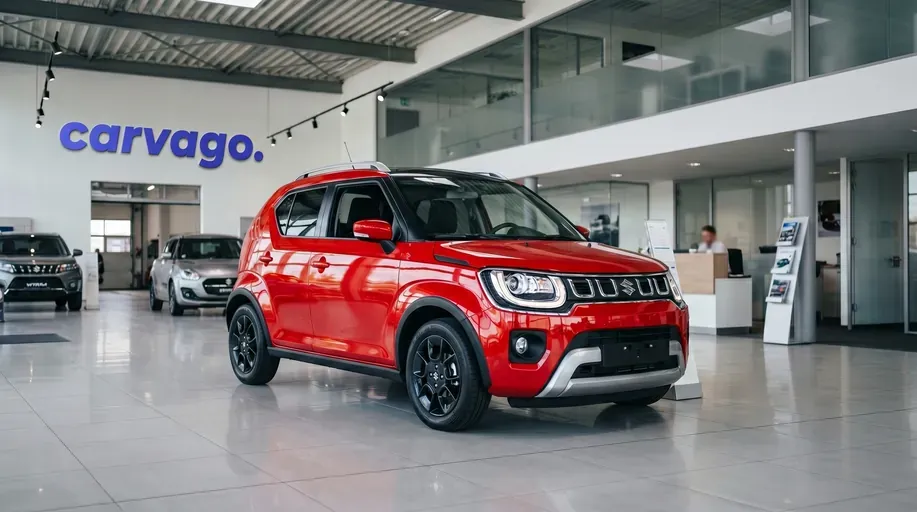
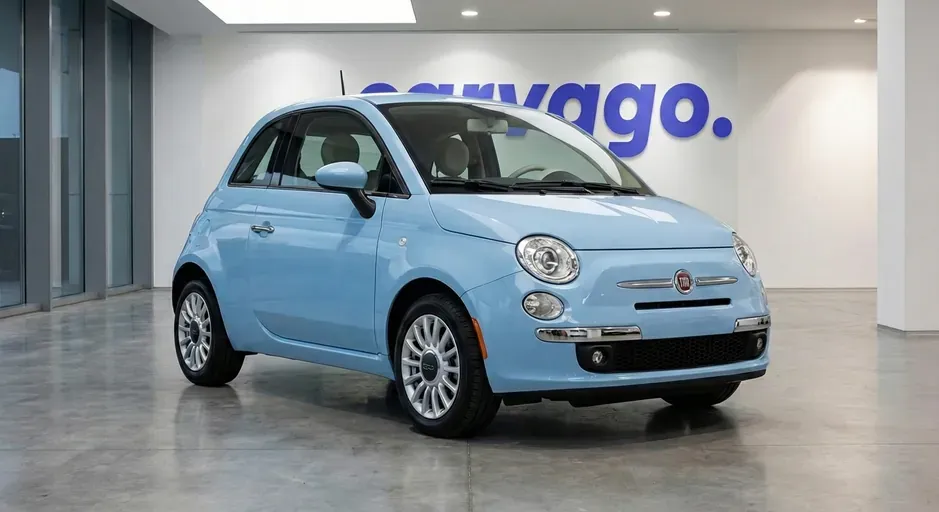
Fiat 500 is an iconic city car with an unmistakable retro design that has long been winning the hearts of drivers with its agility and timeless Italian charm. Standing against it is the Suzuki Ignis, also known as the Maruti Suzuki Ignis in some global markets, which is a distinctive Japanese model cleverly combining the compact dimensions of a mini-car with the higher ground clearance and practicality of a small crossover. The following comparison will show you in detail which of these two completely different approaches to an affordable city car will better suit your daily driving needs.
When looking at the exterior dimensions of both cars, a different approach to design and overall concept is evident at first glance. While the Fiat 500 remains faithful to the format of a typical retro city hatchback focusing on maximum compactness in its current and previous generations, the Suzuki Ignis profiles itself on the used car market as an original micro-SUV. The Japanese model, at 3,700 mm, is 68 to 129 mm longer than its Italian competitor (depending on whether we compare the Fiat in its older combustion version or the newer electric generation). The greater length gives the Suzuki not only a more robust appearance but also promises more practical proportions for everyday use. For drivers who fight for literally every millimeter when parallel parking daily, however, the Fiat's shorter body may be the key argument for purchase.
Differences in the philosophy of both brands clearly continue in other directions. With a width of 1,690 mm, the Suzuki Ignis is slightly wider than the Fiat 500 (1,627 – 1,684 mm) and, above all, significantly taller. The height of the Ignis reaches up to 1,605 mm, which, combined with above-standard ground clearance, guarantees not only easier entry but also a much better view of the surrounding traffic. On the other hand, the slightly lower and narrower build of the Fiat 500 (height from 1,488 mm) represents the absolute ideal for the narrowest city streets or less accessible underground garages. The Italian classic simply manages to squeeze in with ease even where other cars wouldn't dare, while the Suzuki tries to offer a more relaxed driving feel typical of larger crossovers.
One of the most important parameters for overall spaciousness and stability on the road is, however, the wheelbase. Here, the Suzuki Ignis, with a value of 2,435 mm, safely surpasses the Fiat 500, whose wheelbase ranges between 2,300 and 2,322 mm. These more than 110 mm extra for the Japanese car manifest themselves especially in more generous legroom for rear-seat passengers and more stable car behavior at higher speeds outside the city. If you are primarily looking for an agile car for one or two people to zip through the center, the Fiat 500 is almost unrivaled in its agility. If, however, you expect to occasionally carry adult passengers in the back and appreciate a more confident driving line on broken roads, the Suzuki Ignis will be an incomparably smarter choice for you thanks to its longer wheelbase.
| Parameter | Fiat 500 Hatchback | Fiat 500 Cabriolet | Suzuki Ignis SUV/Offroad |
|---|---|---|---|
| Width (mm) | 1627 - 1684 | 1683 - 1684 | 1690 |
| Length (mm) | 3571 - 3632 | 3631 - 3632 | 3700 |
| Height (mm) | 1488 - 1527 | 1527 - 1532 | 1595 - 1605 |
| Wheelbase (mm) | 2300 - 2322 | 2322 | 2435 |
When choosing a compact city car, trunk capacity is often one of the deciding factors, especially if the car is to serve not only for commuting to work but also for daily shopping or weekend trips. While both compared cars primarily aim at weaving through narrow streets and easy parking, their approach to interior spaciousness and practicality differs fundamentally. For buyers in the market for roughly four-year-old used cars, this means a choice between a total Italian style icon and a surprisingly practical Japanese car.
The Italian icon Fiat 500 (in both the conventional 312 generation and the newer purely electric F1A), in both the hatchback and the open convertible version, offers an identical basic trunk volume of just 185 liters. In contrast, the third-generation Suzuki Ignis, falling into the category of small SUVs and crossovers, offers significantly more generous space. Thanks to practical sliding rear seats, its basic trunk volume ranges from 260 to 267 liters. An exception is the Ignis with all-wheel drive (AllGrip), where the basic volume is reduced to 204 liters due to the installation of the rear differential. Even with this reduction, however, the Japanese model's base capacity exceeds that of the Fiat by nearly 20 liters.
The differences deepen even further after folding down the rear backrests. The Fiat 500 can increase its cargo space to 550 liters, which is sufficient for weekend shopping or transporting smaller items. However, the Suzuki Ignis literally scores here and proves its versatility. Thanks to its taller body design, it can offer a maximum volume exceeding the 1,100-liter mark (specifically up to 1,104 liters). In practice, this means that while the Fiat 500 can only hold a few bags, the Ignis offers space for several extra suitcases and can easily handle the transport of bulkier equipment, which is easily sufficient even for a longer holiday for two. This striking difference clearly shows that while the Fiat's trunk is more suited for purely urban use, the Suzuki Ignis, despite its miniature dimensions, can fulfill the role of a much more universal and practical car.
| Parameter | Fiat 500 Hatchback | Fiat 500 Convertible | Suzuki Ignis SUV |
|---|---|---|---|
| Basic volume (liters) | 185 | 185 | 267 |
| Max. volume with seats folded (liters) | 550 | 550 | 1104 |
If daily practicality and the ability to carry more than just groceries are your priority, the Suzuki Ignis is the clear choice thanks to its variability and larger trunk. The Fiat 500, on the other hand, remains more of a fashion accessory whose luggage space is truly sufficient only for the most basic needs.
Towing capacity is not usually a top priority for city cars, but the differences in towing weight between the Fiat 500 and Suzuki Ignis can play a key role for many buyers. The ability to hitch a trailer significantly increases everyday practicality, providing, for example, space for several extra suitcases, which you will appreciate when transporting larger items or moving. The third-generation Suzuki Ignis (from the current used car market, roughly from 2020–2024) is a surprising all-rounder in this regard. In its standard and maximum configuration with the 1.2 Dualjet Hybrid engine, it can tow a braked trailer weighing exactly 1000 kg and an unbraked trailer up to 400 kg. Such a capacity is sufficient for weekend shopping and longer holidays with a lighter caravan or a fully loaded utility trailer.
The Fiat 500 approaches this discipline much more modestly, and its capacity depends heavily on the generation and chosen powertrain. For traditional internal combustion versions (such as the proven 1.2 8V or 0.9 TwinAir units) that dominated until 2020, the standard and maximum permitted braked trailer weight is 800 kg (with a 400 kg limit for unbraked). However, if you are looking for a car approximately four years old, you will encounter a significant compromise in the form of hybrid and electric versions with reduced or zero capacity. For the popular Fiat 500 model with the 1.0 GSE Hybrid engine or the fully electric 500e version (F1A generation), the manufacturer did not homologate a tow bar for towing a trailer at all. While the modern hybrid Suzuki Ignis continues to maintain full towing power, the Italian icon has completely lost this practical capability in the interest of electrification and reducing emissions.
A clear conclusion follows for potential buyers. If your lifestyle requires even occasional trailer towing, the Suzuki Ignis will provide you with incomparably higher utility value. A nearly new Fiat 500, on the other hand, remains a stylish companion exclusively for those who can make do with the car's built-in luggage space and do not see the absence of a tow bar as a limitation.
| Model and engine | Braked trailer weight (kg) | Unbraked trailer weight (kg) |
|---|---|---|
| Suzuki Ignis 1.2 Dualjet / Hybrid (61 - 66 kW) | 1000 | 400 |
| Fiat 500 1.2 8V (51 kW) | 800 | 400 |
| Fiat 500 0.9 TwinAir / Turbo (63 - 77 kW) | 800 | 400 |
| Fiat 500 1.3 16V Multijet (55 - 70 kW) | 800 | 400 |
Both models offer a completely different approach to powertrains, which plays a key role when choosing a car for a specific type of use. While the Fiat 500 dominates the market for roughly four-year-old used cars primarily with the 1.0 GSE three-cylinder mild-hybrid (51 kW) and modern fully electric 500e versions (up to 87 kW), the Suzuki Ignis bets on a more traditional 1.2 Dualjet naturally aspirated four-cylinder with mild-hybrid technology (61 kW) and the unique advantage of optional AllGrip all-wheel drive. Thanks to a wider range that previously included classic petrol engines like the 1.2 8V or the more dynamic 0.9 TwinAir turbocharged two-cylinder, and new electric variants, the Fiat is the perfect choice for stylish city driving with maximum emphasis on ecology and low operating costs. Conversely, the Suzuki Ignis will appeal to practically-minded drivers – with its single but highly reliable engine, it scores points with people who are not looking for complex technologies but will fully appreciate the 4x4 capabilities in winter conditions or light terrain. For lovers of modern electrified systems and quiet locally emission-free driving, the Fiat is the clear winner, while for those looking for a versatile, mechanically robust mini car that can even handle trips to the mountains, the Ignis wins.
The engine range for the Fiat 500 has undergone a radical transformation in recent years. In the recent used car market, you will most often encounter the fuel-efficient 1.0 GSE mild-hybrid three-cylinder with 51 kW (70 hp), which has gradually replaced the legendary but older 1.2 8V four-cylinder and the 0.9 TwinAir turbocharged two-cylinder since 2020. However, a fundamental part of the modern era of this model is the purely electric Fiat 500e. This is available with two battery capacities – with the smaller battery (23.8 kWh) it reaches an output of 70 kW and is intended primarily for the city, while the more powerful version with the larger battery (42 kWh) provides 87 kW and a very solid range even for weekend trips. Earlier LPG variants or 1.3 MultiJet diesel engines are only available in older model years and have disappeared from the modern lineup. Power is transmitted by a classic six-speed manual for the mild-hybrid, while the electric models naturally use a single-speed automatic reduction gearbox.
| Engine Type | Fuel Type | Power (kW) | Torque (Nm) | Transmission |
|---|---|---|---|---|
| 1.0 GSE Hybrid | Petrol / MHEV | 51 | 92 | 6MT |
| 1.2 8V (until 2020) | Petrol | 51 | 102 | 5MT / 5AMT |
| 0.9 TwinAir (until 2019) | Petrol | 63 / 77 | 145 | 5MT / 5AMT |
| 500e (23.8 kWh) | Electric | 70 | 220 | AT |
| 500e (42 kWh) | Electric | 87 | 220 | AT |
The Suzuki Ignis relies on a very simple and clear range that has long focused on robustness, fuel economy, and user-friendliness. Given an age of around four years, you will most often choose from models powered by the 1.2 Dualjet naturally aspirated four-cylinder with 61 kW (83 hp), which has used 12V mild-hybrid assistance (SHVS) as standard since 2020. Until then, purely internal combustion versions of the same engine with a slightly higher output of 66 kW (90 hp) were sold. Although hybridization reduced the official power output, it smoothed out the car's responses at low revs and pushed fuel consumption to an absolute minimum. A huge advantage of the Ignis, completely unique in the mini car segment, is the optional AllGrip all-wheel drive with a viscous center coupling. A precise five-speed manual transmission is available as standard, or a CVT continuously variable automatic (replacing the older and less comfortable AGS automated manual) can be found on front-wheel-drive models. Although the Japanese brand's lineup lacks an electric vehicle, the naturally aspirated technology is absolutely low-maintenance.
| Engine Type | Fuel Type | Power (kW) | Torque (Nm) | Transmission |
|---|---|---|---|---|
| 1.2 Dualjet (until 2020) | Petrol | 66 | 120 | 5MT / 5AMT |
| 1.2 Dualjet Hybrid | Petrol / MHEV | 61 | 107 | 5MT / CVT |
| 1.2 Dualjet Hybrid AllGrip | Petrol / MHEV | 61 | 107 | 5MT |
While the Fiat 500 dazzles with a diverse palette from a fuel-efficient mild-hybrid to top-tier electric vehicles perfect for city centers, the Suzuki Ignis scores with rationally-minded drivers as a durable workhorse that, thanks to its naturally aspirated four-cylinder and 4x4 drive, serves as a versatile partner in winter and light terrain.
Choosing the right engine is absolutely crucial for long-term satisfaction with a used car, and our recommendations are based on real-world experience, mechanical reliability, and user-friendliness. When comparing these two popular small cars on the market for roughly four-year-old used vehicles, we encounter an interesting technological contrast. While the Fiat 500 relies on modern three-cylinder mild-hybrid technology, which replaced the legendary but aging 1.2 FIRE four-cylinder around 2020, the Suzuki Ignis stubbornly and successfully sticks to a classic four-cylinder design. Both manufacturers have integrated 12V mild-hybrid systems into modern model years to reduce fuel consumption, but Suzuki adds a completely unique all-wheel-drive option in the mini-car segment, steering both cars toward slightly different clienteles.
This one-liter naturally aspirated three-cylinder from the FireFly family is the most logical and sensible choice for roughly four-year-old used cars. Technically, it stands out with the integration of a 12V belt-integrated starter generator (BSG), which helps smooth out the power curve at low revs and ensures completely imperceptible and smooth operation of the start-stop system. Real-world fuel consumption with this engine and the standard six-speed manual transmission easily stays around 5 liters per 100 km, making it a very efficient companion. Mechanically, it is a reliable unit, but given its typical use, there is one weakness. The risk is carbon buildup on the valves during exclusively short, cold city trips. How to detect and solve this problem: During the test drive, notice if the engine idles unevenly or jerks when pulling away. As a preventive measure, we recommend taking the car for a longer drive outside the city regularly (at least once every few weeks) to allow the engine to warm up fully, and using premium fuel with cleaning additives. This engine is absolutely ideal for typical city drivers and commuters on shorter routes looking for a stylish car with minimal running costs.
For models available on the four-year-old used car market (from the 2020 facelift onwards), the improved four-cylinder designated K12D is practically the only choice, but it is a true engineering gem that perfectly suits the car's character. The engine stands out for its unprecedented mechanical reliability and, thanks to dual fuel injection (Dualjet) and the enlarged 10Ah battery of the mild-hybrid system, offers fantastic efficiency. Given that the Ignis weighs only about 900 kg, the naturally aspirated engine moves it very confidently, and real-world consumption often falls below 4.5 l/100 km. In terms of risks, it is one of the most bulletproof engines on the used car market overall. What to watch out for: Rather than the engine, focus on the condition of the chassis during inspection. If you are buying the ALLGRIP all-wheel-drive version, carefully check the protective plastics and exhaust from underneath for signs of off-road damage. Regarding transmissions, it's better to avoid the CVT continuously variable transmission, which unnecessarily dulls the dynamics, and opt for the precise five-speed manual. The Ignis with this engine is perfect for pragmatic drivers, residents of mountainous areas, and cottage owners who appreciate reliability, higher ground clearance, and unrivaled operational economy.
Official fuel consumption figures provided by manufacturers in laboratory tests often differ significantly from reality. For small city cars that spend most of their time in traffic jams and on short trips, this is doubly true. To get the most accurate picture possible, we rely on real-world data from the independent crowdsourcing platform Spritmonitor.de, which aggregates long-term consumption data from thousands of owners in everyday traffic. In our comparison, we primarily focused on engines from generations that are most common on the market as roughly four-year-old used cars. In both cases, these are mainly modern naturally aspirated and mild-hybrid units.
| Model and engine | Average consumption (l/100 km) |
|---|---|
| Petrol and mild-hybrid engines | |
| Suzuki Ignis 1.2 Dualjet (66 kW) | 4.8 |
| Fiat 500 0.9 TwinAir (63 kW) | 4.8 |
| Suzuki Ignis 1.2 Dualjet Hybrid (61 kW) | 5.1 |
| Fiat 500 1.0 GSE Hybrid (51 kW) | 5.3 |
| Fiat 500 1.2 8V (51 kW) | 5.4 |
| Diesel engines | |
| Fiat 500 1.3 Multijet (70 kW) | 3.7 |
Looking at the data, it is clear that the most fuel-efficient petrol engine among the selected recent used cars is the four-cylinder naturally aspirated 1.2 Dualjet from Suzuki. It may come as a surprise that the mild-hybrid versions of both the Ignis and the Fiat 500 show almost no miraculous fuel savings in the real world compared to the older naturally aspirated versions. In the case of the Suzuki, the average consumption of the mild-hybrid is even slightly higher. For the Fiat, the modern hybrid 1.0-litre three-cylinder is more efficient than the legendary but older 1.2 8V, but even so, no miracles occur.
The look at the small two-cylinder 0.9 TwinAir turbo engine from the Italian workshop is also very instructive. Although small turbocharged units promised a revolution on paper, in the real world, the TwinAir saves almost nothing compared to a classic naturally aspirated engine and is also extremely sensitive to driving style. The diesel Fiat 500 1.3 Multijet is in a league of its own. It proves that diesel is the undisputed leader in terms of pure consumption, but it has proven to be completely unsuitable for exclusively urban mini-cars due to notorious problems with the particulate filter on short trips, which is why you will no longer find it in the range of nearly new four-year-old used cars.
Summarizing the above data, it is obvious that absolute fuel consumption should not be the main, and certainly not the only, deciding factor between these two models. Both the Fiat 500 and the Suzuki Ignis can be driven in the real world with an appetite balancing around the favorable mark of five liters per hundred kilometers. The average driver will practically not feel differences in the order of tenths of a liter in their monthly budget. It will therefore be much more logical to focus on a documented service history, the overall technical condition of the specific unit, and your individual preferences when choosing a roughly four-year-old used car – whether it is the better versatility of the Japanese crossover or the Italian icon with an unmistakable retro design.
If you are looking for a roughly four-year-old car (2021 and 2022 model years), the situation on the used car market clearly shows the different focus of both models. While the Fiat 500 appeals to emotions and offers an affordable entry into the world of stylish city cars, the Suzuki Ignis maintains a more confident price tag thanks to its reputation as a practical and reliable micro-SUV with the option of all-wheel drive.
The Suzuki Ignis is an absolute master of value retention from a used market perspective. Used 4x4s in this smallest size category de facto have no competition, which makes the Ignis an exceptionally desirable commodity whose price drops only very slowly with age.
The Fiat 500, on the other hand, relies on more massive production and a wider market offering. Its price depreciation is slightly faster, which, however, makes it a better buy for drivers looking for a reliable and design-attractive car exclusively for city commuting who do not need to pay extra for off-road capabilities.
| Model (2021–2022 model year) | Typical price (€) | Most expensive variants on the market |
|---|---|---|
| Fiat 500 (petrol / mild-hybrid) | €8,000 – €12,000 | Fully electric Fiat 500e (€14,000+) |
| Suzuki Ignis (mild-hybrid) | €12,000 – €15,000 | 4x4 AllGrip version / CVT automatic transmission |
While a used Fiat 500 offers a cheaper purchase and irresistible Italian style, the Suzuki Ignis, thanks to its unique 4x4 drive, holds its value on the used market like few other cars in its class.
Although both models can boast five-star results in Euro NCAP crash tests in their history (the Fiat 500 in the evaluation of the older platform and the Suzuki Ignis in the version with a special safety package), when buying a used car, it is absolutely crucial to know the context and the exact year of testing. Methodology and testing protocols are constantly evolving and tightening over time. Percentage results from different years simply cannot be directly compared. Modern tests include much more demanding frontal crash simulations, intersection scenarios, cyclist detection, and place huge emphasis on the presence of advanced assistance systems.
The latest and most relevant data for the used car market for the Fiat 500 model comes from 2021, when assessors tested the new electric generation (Fiat 500e). The car was tested according to strict modern standards and earned a solid four-star rating. It excelled particularly in passive protection, where it scored 76% for adult safety and 80% for child protection. In the categories of vulnerable road user protection and safety assistants, it achieved 67% in both. It is necessary to mention that the older generation with internal combustion engines and mild-hybrids (last tested in 2017 with a three-star result) does not reach such an advanced level of active safety as this more modern electric car.
In contrast, the Suzuki Ignis underwent Euro NCAP crash tests in 2016, i.e., according to significantly older and less strict protocols. The standard version of the car received a three-star rating, which was penalized primarily by the absence of modern assistance systems (a score of only 25%). However, the passive protection of the occupants itself was at a very good level for its time (79% for both adults and children). On the used car market, you can also find versions equipped with the optional Dual Camera Brake Support package with an autonomous emergency braking function. These models achieved a full five stars in the 2016 tests and increased the assistant rating to 60%. From today's perspective, however, the validity of this certification is largely outdated.
In terms of the overall level of protection, the newer Fiat 500 represents a more comprehensive and safer package. Although the Suzuki Ignis also offers solid passive safety, its testing certification is based on older standards. Thanks to the 2021 tests, the Fiat better meets current strict standards, especially in the area of active accident prevention.
| Parameter | Fiat 500 | Suzuki Ignis |
|---|---|---|
| Year of testing | 2021 | 2016 |
| Adult occupant protection | 76 % | 79 % |
| Child occupant protection | 80 % | 79 % |
| Vulnerable road user protection | 67 % | 67 % |
| Safety assistance systems | 67 % | 25 % |
Although both models offer solid occupant protection, the Fiat 500 represents an overall safer choice for modern traffic thanks to the 2021 crash tests and more sophisticated active assistants. The safety certification of the Suzuki Ignis from 2016 is to some extent outdated from the perspective of today's strict standards.
In addition to standard equipment, each of the models offers several unique features that can be decisive for the customer, with both cars approaching added value in completely different and unmistakable ways.
Iconic retro design that doesn't age and maintains a high residual value
Extraordinary agility in the city and easy parking even in the smallest gaps
Low operating costs thanks to an economical mild-hybrid engine (in newer model years)
Stylish interior with extensive personalization options and attractive details
Reliable and time-tested mechanics
Significantly limited space in the rear seats and a less accessible three-door body
Very small luggage compartment with a volume of only 185 liters
Specific driving position that may not suit taller individuals
Structurally older platform with poorer results in modern safety tests
The Fiat 500 is the perfect choice for style-conscious drivers looking for an agile and economical car primarily for dense city traffic. Thanks to its charm and minimal service costs, it makes the most sense as a fashion accessory and a trouble-free runabout for individuals or couples.
Option of all-wheel drive (AllGrip), which is completely unique in the city car segment
Practical five-door body facilitating daily entry
Excellent interior variability thanks to sliding rear seats
Higher ground clearance, which protects the chassis on dirt roads and when parking near high curbs
Surprisingly generous head and legroom considering the overall exterior dimensions
Controversial exterior design of the rear part, which may not appeal to everyone
Ubiquitous hard and cheap-feeling plastics in the interior
More pronounced body roll in corners and sensitivity to crosswinds
Poorer cabin soundproofing and higher noise levels at highway speeds
The Suzuki Ignis will primarily appeal to rational buyers and people from mountainous areas who can fully utilize its unrivaled combination of micro-SUV dimensions and affordable 4x4 drive. It represents an unexpectedly practical and versatile car that offers the features of larger and significantly more expensive cars within a minimal footprint.
Based on our own inspection data, failure statistics, and the CarAudit expert service, which includes a detailed inspection of a used car before purchase, we have compiled an overview of the most common problems that buyers of both used cars should watch out for.
The Fiat 500 (especially after its facelifts) is considered a stylish and mechanically relatively reliable used car, but due to its predominantly urban use, certain components suffer from specific and faster wear.
Although the mechanical basis of the car is very solid, urban traffic regularly takes its toll on the chassis and clutch. Minor electronic hiccups are part of the character of this Italian model, which fortunately usually do not mean expensive repairs.
The third-generation Suzuki Ignis is a model of mechanical reliability thanks to its simple and extremely lightweight construction, but a detailed physical inspection of the car regularly shows that even this Japanese model is not immune to characteristic shortcomings associated with reducing production costs.
The Ignis is a mechanically above-average reliable car with an almost immortal gasoline engine. The real price for its low weight and affordability is only the more sensitive paint, stiffer rear shock absorbers, and cheaper materials in the interior.
When buying a used car, a thorough inspection is key. Here are several specific points to focus on for these two models, which is why a detailed physical inspection of the used car is always worthwhile before making a final decision.
Suzuki Ignis is a significantly more spacious and practical choice, primarily thanks to its five-door body and sliding rear seats. The boot capacity of the Japanese crossover is a solid 260 litres, while the three-door Fiat 500 offers a very modest 185 litres. If you often transport adult passengers in the back, the Ignis provides much more headroom and legroom.
Both cars excel in city traffic, but each in a slightly different way. Thanks to its smaller dimensions and excellent turning radius, the Fiat 500 is absolutely ideal for parking in the tightest spaces. The Suzuki, on the other hand, scores with a higher seating position, which ensures a perfect overview of what's happening at intersections.
Yes, the Suzuki Ignis is one of the few cars in this size category that can be purchased with the reliable AllGrip Auto all-wheel drive system. Thanks to this 4WD and above-standard ground clearance (180 mm), it easily handles snowy mountain roads or light terrain. The Fiat 500 is offered exclusively with front-wheel drive and is designed purely for driving on paved roads.
Models approximately four years old rely primarily on very economical mild-hybrid technologies for both brands. Fiat uses a one-litre three-cylinder engine with 51 kW, while Suzuki bets on a more dynamic 1.2-litre four-cylinder with 61 kW. Both cars are extremely wallet-friendly, and in real combined driving, their consumption typically ranges from 4.5 to 5 litres per 100 km.
For family use, even as a second car in the family, the Suzuki Ignis makes much more sense. The five-door design and higher roof make it significantly easier to seat children and handle child car seats in the back row. The Italian model, with its exclusively three-door design and cramped rear seat space, is quite impractical for these purposes.
Sources: ADAC, forbes.cz, garaz.cz, auto-mania.cz, hybrid.cz, automotodrom.cz
This article was prepared using artificial intelligence tools. The section guarantor is Petr Dušek.

Big Comparison: Renault Clio vs. Suzuki Swift: Which used hatchback to choose? We reveal the differences in fuel consumption, equipment, and reliability. Read our verdict!
Apr 13, 2026

Detailed comparison: Dacia Sandero vs. Toyota Yaris. We reveal real-world experiences, fuel consumption, and equipment. Read our verdict and choose the ideal used car.
Apr 18, 2026

Hyundai i20 vs Suzuki Swift: Which hatchback is better? Our detailed comparison of equipment, ride, and price will help you choose. Read the verdict.
Apr 13, 2026