Car battle
Audi RS 5 vs. BMW M2: Complete comparison 2026
Audi RS 5 vs. BMW M2. A detailed comparison of performance, driving dynamics, and practicality. Find out which sports coupe is the right choice for you.
Apr 14, 2026
Detailed comparison: Cupra Leon vs Ford Focus ST. Which hot hatch offers better performance, handling, and reliability? Read our final verdict.
October 16, 2026
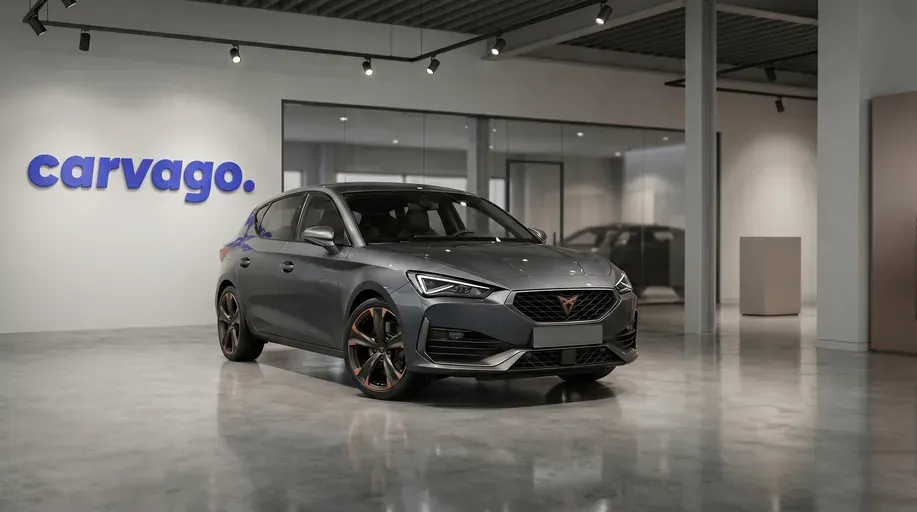
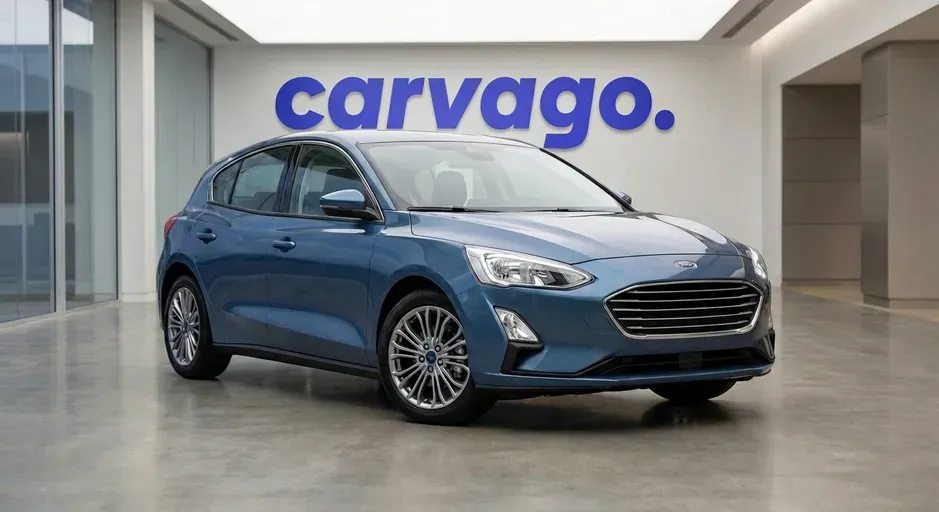
The Cupra Leon, which seamlessly followed the success of its popular predecessor formerly known as the SEAT Leon Cupra, represents a sharp and emotive offshoot of the Spanish hatchback, attracting with its aggressive design and modern technology. Standing against it is the Ford Focus ST, a long-standing benchmark for driving fun in the compact class, which has built an unshakable reputation as one of the best-handling hot hatches on the market thanks to its precisely tuned chassis. Let's take a detailed look at which of these two high-performance cars offers a better combination of driving dynamics, everyday practicality, and overall value for those interested in a sporty drive.
When choosing a sporty car for daily use, external dimensions play a key role. Both the Cupra Leon and Ford Focus ST appear on the used car market (with a focus on models around four years old) in two popular body styles – as a compact five-door hatchback and a more spacious estate, which is called Sportstourer for the Cupra and Turnier for the Ford. If we place the current generations of these rivals side by side, we find that they compete quite capably in terms of external footprint, although the Ford offers an overall more robust and wider build.
In the hatchback category, the Cupra Leon is slightly longer (measuring up to 4399 mm compared to a maximum of 4393 mm for the Focus ST), but conversely, it significantly loses out in width. With its 1825 mm, the Ford Focus ST is a significant 26 mm wider. This width difference in favor of the Ford manifests in the real world not only in more stable behavior in sharp corners but also in more generous interior shoulder room for the occupants. The wheelbase, which is a key parameter for longitudinal space in the cabin (and especially for rear passenger legroom), also plays slightly into the hands of the Focus ST with exactly 2700 mm. In contrast, the Cupra Leon has a wheelbase of 2681 to 2689 mm.
A very similar situation exists for the more practical estate variants. The Focus ST Turnier measures 4668 to 4675 mm in length, which is about 20 mm more than the Leon Sportstourer (up to 4657 mm). Although we are talking about differences in the order of tens of millimeters for both cars, every saved centimeter can be felt during daily parallel parking in crowded city streets or when entering narrower garages. The Cupra feels a bit more subtle here, which facilitates urban maneuverability, however, it makes up for it with a slightly higher roofline on some electrified (plug-in hybrid) versions, making them easier to get into.
From the perspective of external dimensions, the Ford Focus ST is therefore the car that takes up a bit more physical space on the road. Its wider body and longer wheelbase give it a visually more muscular and planted stance. The Cupra Leon, on the other hand, benefits from a slightly narrower and overall a bit more compact build, which in the role of a "daily" car can represent a valuable advantage for drivers who often struggle with narrow parking spaces.
| Parameter | Cupra Leon Hatchback | Ford Focus ST Hatchback | Cupra Leon Estate | Ford Focus ST Estate |
|---|---|---|---|---|
| Length (mm) | 4398 – 4399 | 4388 – 4393 | 4656 – 4657 | 4668 – 4675 |
| Width (mm) | 1799 | 1825 | 1799 | 1825 |
| Height (mm) | 1444 – 1467 | 1438 – 1440 | 1438 – 1463 | 1462 – 1466 |
| Wheelbase (mm) | 2681 – 2689 | 2700 | 2681 – 2689 | 2700 |
Trunk capacity is a key factor for many buyers, whether they are looking for everyday family practicality or enough space for sports equipment. When comparing four-year-old used cars, typically from 2022, the first generation of the Cupra Leon faces off against the fourth generation of the Ford Focus ST. Both sporty vehicles offer two body styles – a compact five-door hatchback and a much more spacious estate (referred to as Sportstourer by Cupra and Turnier by Ford). While the Ford Focus ST traditionally prides itself on excellent space packaging and functionality, the Cupra Leon bets on sharp-edged features, which, however, do not significantly detract from the overall utility of the standard versions.
In the hatchback version, the standard Cupra Leon offers a respectable 380 liters, which can be expanded to 1301 liters after folding the rear seats. The Ford Focus ST from the same period (after the 2022 facelift) is very similar, with a base volume of 392 liters and a maximum capacity of 1354 liters. In the more popular and spacious estate versions, Ford pulls slightly ahead. The Focus ST Turnier dominates with a base volume of 635 liters and provides up to 1653 liters with the seats folded. However, the Cupra Leon Sportstourer follows closely with a solid base of 620 liters and a maximum of 1600 liters. A fundamental and very important difference for used car buyers comes with the plug-in hybrid powertrains (e-HYBRID) of the Cupra Leon. The presence of the traction battery under the trunk floor radically reduces the boot space here – to a below-average 270 liters (maximum 1191 liters) for the hatchback and to just 470 liters (maximum 1450 liters) for the estate version.
In practice, these differences mean that while the standard internal combustion versions of both cars can easily accommodate a family weekend shopping trip, a folded stroller, and luggage for a longer vacation, the hybrid Cupra Leon requires significant compromises. The missing 110 to 150 liters in the battery versions represents, in the real world, enough space for two to three average-sized suitcases that you would otherwise have to leave at home. From the perspective of a typical family user, the Ford Focus ST is a safe bet thanks to its absolute volume and the absence of space-limiting hybrid variants. However, if you do not include the e-HYBRID in your selection, the differences between the standard models are so negligible that personal preference will likely play a bigger role than the battle for every liter of trunk space.
| Parameter | Cupra Leon Hatchback | Ford Focus ST Hatchback | Cupra Leon Estate (Sportstourer) | Ford Focus ST Estate (Turnier) |
|---|---|---|---|---|
| Base volume (liters) | 380 | 392 | 620 | 635 |
| Max. volume with seats folded (liters) | 1301 | 1354 | 1600 | 1653 |
While the purely internal combustion versions of both rivals offer great practicality for everyday life, the Ford Focus ST is a bit more generous in terms of volume and avoids the radical trunk compromises that potential buyers of plug-in hybrid Cupra Leon models must consider.
The ability to tow a trailer isn't always the top priority for sporty hatchbacks and estates, but for many buyers, it plays a key role in everyday practicality. Whether you plan to tow a caravan or need to transport a heavier load, towing capacity fundamentally determines how versatile your car will be. When comparing the fourth-generation Ford Focus ST and the first-generation Cupra Leon (both models available around 2022 on the used car market), we find interesting differences that could significantly influence your decision.
The Cupra Leon offers a very good standard towing capacity, ranging from 1,500 kg to 1,700 kg for a braked trailer. The entry-level 1.5 TSI, the mild-hybrid 1.5 eTSI, and the plug-in hybrid 1.4 e-HYBRID versions can all tow 1,500 kg. If you opt for the more powerful internal combustion variants, the 2.0 TSI or the 2.0 TDI diesel, the weight increases to 1,600 kg. The absolute maximum is then the more practical Sportstourer VZ version (with 2.0 TSI engines producing 228 kW and 245 kW) and some more powerful hybrids, for which the specifications promise a maximum braked trailer weight of up to 1,700 kg.
The fourth-generation Ford Focus ST takes a slightly different path and offers a clear bonus for fans of powerful diesels. The popular 2.3 EcoBoost petrol version can tow a braked trailer weighing 1,600 kg, exactly matching the mid-range values of its Spanish competitor. However, the real workhorse for heavier loads is the ST 2.0 EcoBlue diesel variant, which boasts an above-average maximum braked trailer weight of up to 1,800 kg. This difference is relatively rare in the sports car category and gives the Ford a clear advantage for towing very heavy loads.
The practical impact of these figures is obvious. With a capacity of 1,500 kg for the base and hybrid versions of the Cupra, you can easily hitch up a small or medium trailer, which is perfectly sufficient for weekend shopping, transporting materials, or longer holidays. However, the higher capacity of the diesel Ford (1,800 kg) or the top-tier Cupra versions (1,700 kg) opens the door to towing large family caravans or transport trailers. Such towing power ultimately saves worry and offers space for a few extra suitcases in the form of a larger trailer.
In conclusion, if your priority is absolute towing power and you prefer diesel power, the Ford Focus ST 2.0 EcoBlue is the clear winner with 1,800 kg. The Cupra Leon, on the other hand, will appeal to buyers looking for a balanced capacity available across a much wider range of modern powertrains, including efficient plug-in hybrids.
Note: Data for unbraked trailers are not always explicitly specified in the manufacturers' databases for these versions (however, they standardly reach a legal maximum of 750 kg for these vehicles).
| Model and Engine | Braked Trailer (kg) | Unbraked Trailer (kg) |
|---|---|---|
| Cupra Leon 1.5 TSI / 1.5 eTSI (110 kW) | 1500 | Not available |
| Cupra Leon 1.4 e-HYBRID (110 kW) | 1500 | Not available |
| Cupra Leon 2.0 TDI (110 kW) | 1600 | Not available |
| Cupra Leon 2.0 TSI (140 kW - 221 kW) | 1600 | Not available |
| Cupra Leon Sportstourer VZ 2.0 TSI (228 kW - 245 kW) | 1700 | Not available |
| Ford Focus ST 2.3 EcoBoost (206 kW) | 1600 | Not available |
| Ford Focus ST 2.0 EcoBlue (140 kW) | 1800 | Not available |
While the first-generation Cupra Leon (from 2021) builds on a wide and modern range of powertrains that satisfy both economical drivers and performance enthusiasts, the fourth-generation Ford Focus ST (2019–2025) sticks to a more traditional and purist recipe. In this battle, the Leon clearly scores points for diversity. Alongside classic petrol internal combustion engines, it offers mild-hybrids, advanced plug-in hybrids (PHEV) with pure electric range, and its top-tier VZ versions with the Sportstourer body style also feature 4Drive all-wheel drive. In contrast, the Focus ST bets on a pure driving experience dominated by a playful front-wheel-drive setup with a limited-slip differential and a large-displacement four-cylinder petrol engine. For customers covering thousands of kilometres on motorways, Ford also had a variant with a powerful diesel engine. In the market for roughly four-year-old used cars, both cars profile themselves differently – the Cupra as an exceptionally versatile everyday car, and the Ford as the ultimate weapon for fun on backroads.
Under the hood of used Cupra Leon vehicles, you will find a surprisingly diverse range of engines drawing from the modern Group parts bin. The foundation is the 1.5 TSI engine with a manual gearbox and its more efficient mild-hybrid derivative, the 1.5 eTSI, paired exclusively with a seven-speed DSG dual-clutch automatic. Those seeking significantly higher performance opt for the 2.0 TSI petrol engines. These cover a power spectrum from 140 kW up to a massive 228 kW (310 hp) in the flagship estate version with all-wheel drive. A completely distinct category for daily city driving is the 1.4 e-HYBRID (later also 1.5 e-HYBRID) plug-in hybrids. Most of the time, they can function as quiet electric vehicles, and when the combustion engine needs to step in, they provide a combined output of up to 180 kW. With fleet or long-distance customers in mind, the range also included a highly efficient 2.0 TDI diesel (110 kW), which, within the 2023 model year, could exceptionally be found in a version with a manual transmission.
| Engine type | Fuel | Power (kW) | Torque (Nm) | Transmission |
|---|---|---|---|---|
| 1.5 TSI | Petrol | 110 | 250 | 6-speed man. |
| 1.5 eTSI | Petrol (mHEV) | 110 | 250 | 7-speed DSG |
| 2.0 TSI | Petrol | 140 - 228 | 320 - 400 | 7-speed DSG |
| 1.4 e-HYBRID | Petrol (PHEV) | 150 / 180 | 350 / 400 | 6-speed DSG |
| 2.0 TDI | Diesel | 110 | 360 | 6-speed man. / 7-speed DSG |
For the aggressive Ford Focus ST from around 2020 to 2022, the offering was significantly more straightforward. The headline and by far the most sought-after unit is the generous 2.3 EcoBoost four-cylinder petrol engine with a respectable 206 kW (280 hp) and a massive 420 Nm of torque. This engine shares its architecture with the famous Focus RS and the sporty Mustang, and when paired with the precise six-speed manual transmission (a seven-speed automatic was also available as an option), it forms a fantastic mechanical package. If you were looking for hot hatch characteristics but also needed a car for long distances, Ford offered a powerful 2.0 EcoBlue four-cylinder diesel as an alternative, tuned to 140 kW (190 hp) with a solid 400 Nm of torque. Within the ST family, this was available exclusively with a manual transmission. However, it should be noted that over time and with the arrival of the facelift in late 2021, the diesel ST variant quietly disappeared from the range, so you will unfortunately no longer find this efficient mile-muncher in the catalogues of younger nearly-new used cars.
| Engine type | Fuel | Power (kW) | Torque (Nm) | Transmission |
|---|---|---|---|---|
| 2.3 EcoBoost | Petrol | 206 | 420 | 6-speed man. / 7-speed aut. |
| 2.0 EcoBlue | Diesel | 140 | 400 | 6-speed man. |
In the final choice, it will depend primarily on your lifestyle and priorities. The Cupra Leon is an excellent "all-rounder" – economical drivers will appreciate the 1.5 eTSI or 2.0 TDI engines, city dwellers will value the PHEV capabilities, and lovers of absolute acceleration will appreciate nothing more than the 300-horsepower VZ with 4Drive in the snow and rain. The Focus ST, on the other hand, proudly positions itself as the choice for "old-school" drivers. Its sporting heart lacks any electrical compromises, and thanks to the excellent, powerful 2.3 EcoBoost engine, it represents an undiluted driving tool with immense character.
The Cupra Leon scores with a breathtaking selection of advanced powertrains ranging from plug-in hybrids to all-wheel drive, while the Ford Focus ST will delight more conservative drivers with one of the most characterful purist petrol engines in its class.
Choosing the right engine is absolutely crucial for long-term satisfaction with a hot hatchback or estate. Our recommendations are based on real-world owner experiences, mechanical reliability, actual fuel consumption, and overall alignment with the car's character. While the Cupra Leon relies on the extremely efficient and proven two-liter from the EA888 family, the Ford Focus ST takes the path of brute force, utilizing the larger 2.3 EcoBoost, which traces its origins back to the legendary RS and Mustang models. Both cars target a slightly different driver, but in both cases, the full-fat petrol versions make by far the most sense on the used car market at around four years of age (2021–2022 models).
This engine (specifically the EA888 Evo4 generation) represents the absolute pinnacle in terms of balancing top-tier sports performance with everyday usability. Although a weaker 245-hp version or a heavier plug-in hybrid e-HYBRID is available, it is the full-fat VZ version with 300 hp (or 310 hp for the Sportstourer all-wheel drive) that provides the most joy and confidence in a used car. Its main technical advantage is unexpected efficiency – during calm driving, it can achieve a surprising 7.5 to 8.5 l/100 km, but when you step on the gas, it offers the dynamics of a full-fledged sports car with lightning-fast reactions from the DSG dual-clutch transmission.
In terms of mechanical durability, it is a very robust unit, yet it has its known weak points. The most common is the integrated plastic thermostat and water pump module. Due to temperature cycles, the plastic becomes brittle over time and typically starts leaking coolant after crossing the 70,000 km mark. When choosing a used car, carefully check the coolant level under the hood and look for any pinkish traces of leaks. For more frequent sporty use, it is also strongly recommended to shorten the oil change interval to 10,000 km. Simply put, this engine is ideal for drivers looking for a refined, blisteringly fast, and efficient "daily driver." You can take the kids to school in the morning, won't be ashamed to head to a track day in the afternoon, and at the same time, the car won't unnecessarily drain your wallet on long motorway journeys.
For the fourth-generation Focus ST, the 2.3 EcoBoost petrol engine is an absolutely unrivaled choice (the available 2.0 EcoBlue diesel cannot offer the appropriate character). This large-displacement four-cylinder was taken from the brutal Focus RS and Mustang, though it was "detuned" to 280 hp for the needs of the front-wheel-drive ST. As a result, its internals are designed for much higher loads, and the engine is hardware-wise very solid. Its greatest weapon is the massive 420 Nm of torque, available from low revs. Thanks to this, the Focus pulls like a locomotive and has a wonderfully hooligan character complemented by a gritty sound. Real-world fuel consumption is about a liter higher than the Cupra, usually between 8.5 and 9.5 l/100 km, which is entirely adequate given the displacement.
From a risk perspective, it's important to think like a mechanic. It is a direct-injection engine where carbon deposits form on the intake valves at higher mileages – these can be safely removed around the 100,000 km mark via walnut blasting. On used cars, watch out for cracking and leaking engine mounts on the passenger side, which is revealed by excessive vibrations in the cabin. A crucial piece of driving advice is to avoid full acceleration from very low revs (below 2,500 rpm) in fifth and sixth gear. By "lugging" the engine this way, you risk Low-Speed Pre-Ignition (LSPI), which can fatally damage the pistons. If you want to accelerate, always downshift and let the giant turbo breathe properly. The 2.3 EcoBoost engine is the perfect choice for enthusiast drivers who prefer a rawer, more mechanical driving feel in a hot hatch, enjoy "wrestling" with the car a bit, and appreciate its untamed, mischievous nature on twisty backroads.
Manufacturer-claimed fuel consumption figures often differ significantly from what drivers actually experience in daily operation. Laboratory testing cycles can be particularly misleading for high-performance models or popular plug-in hybrids, where driving style dynamics and battery charging frequency matter most. To get the most accurate picture possible, we focused on real-world user data from the independent community portal Spritmonitor.de. We focused on models corresponding to the market for roughly four-year-old used cars, specifically the first-generation Cupra Leon (from 2021) and the fourth-generation Ford Focus in its top-tier ST trim (model years 2019–2022).
| Model and Engine | Average Consumption (l/100 km) |
|---|---|
| Diesel Engines | |
| Cupra Leon 2.0 TDI (110 kW) | 5.6 |
| Ford Focus ST 2.0 EcoBlue (140 kW) | 6.2 |
| Petrol and Mild-Hybrid Engines | |
| Cupra Leon 1.5 eTSI (110 kW) | 6.1 |
| Cupra Leon VZ 2.0 TSI (221 kW) | 8.6 |
| Ford Focus ST 2.3 EcoBoost (206 kW) | 8.9 |
| Plug-in Hybrids | |
| Cupra Leon 1.4 e-HYBRID (150/180 kW) | 4.3 |
The collected data clearly reveals interesting operational trends. When it comes to efficiency on longer trips, traditional diesel engines do not disappoint. Although the 2.0 EcoBlue in the Ford Focus ST is more powerful, the difference compared to the more economical 2.0 TDI in the Cupra is minimal, and both cars can reliably stay just above the six-liter mark. In the high-performance petrol engine category, both cars are evenly matched. The top-tier VW Group 2.0 TSI engine in the VZ version shows excellent efficiency and, despite its extreme power, can run at 8.6 l/100 km. The slightly larger 2.3 EcoBoost under the Ford's hood requires about 8.9 liters, which is a logical trade-off given its more aggressive character. A specific case is the plug-in hybrid Cupra Leon 1.4 e-HYBRID. Although the spec sheets promise consumption approaching one liter, the real-world average of 4.3 l/100 km clearly illustrates the huge disparity between users who charge diligently every day and those for whom the battery is more of an extra weight.
For the typical user, these findings mean the need to carefully consider their daily driving profile. If you spend most of your time in city traffic jams or on suburban routes and have the option of home or workplace charging, the plug-in hybrid Cupra will be an unbeatable leader in cost minimization. Drivers who cover tens of thousands of kilometers a year on highways, on the other hand, will most appreciate the diesel versions of both models, which represent a perfect compromise between solid dynamics and favorable operating costs. A compromise for all-round drivers without charging options could be the mild-hybrid 1.5 eTSI in the Cupra, which realistically hovers around six liters and performs excellently for a smaller petrol engine.
In conclusion, while real-world fuel consumption plays an important role when purchasing a sporty car, it is rarely the only deciding factor. Thanks to a much wider range of engines, the Cupra Leon satisfies a broader spectrum of drivers with an emphasis on operational efficiency and offers them a tailored solution. The Ford Focus ST, on the other hand, represents a much more focused choice on the four-year-old used car market; here, the slightly higher consumption of the characterful petrol variant easily takes a back seat to the unrivaled and raw driving experience.
Looking at the market for used cars that are roughly four years old (predominantly 2021 to 2022 models), we find very attractive offers for both models. Both cars of this age represent the current generations – for Cupra, it is the first generation of the standalone Leon model (internal designation KL), and for Ford, the fourth generation of the Focus (Mk4). The used car market clearly reflects the different engine strategies of both manufacturers.
The price range for a used Cupra Leon is quite broad, due to the diverse range of powertrains, which extend from mild-hybrids to uncompromising sports models.
In contrast, the used Ford Focus ST is more specialized. Because it was sold as a true "ST" primarily with the powerful 2.3 EcoBoost petrol engine (206 kW / 280 hp), there is no cheaper entry-level engine, and the average purchase price is therefore slightly higher.
| Model | Lowest price (from) | Typical price (good condition) | Top versions / Top condition |
|---|---|---|---|
| Cupra Leon | €23,000 | €28,000 | €35,000 |
| Ford Focus ST | €27,000 | €31,000 | €37,000 |
For approximately four-year-old examples, both models have already undergone the most dramatic drop in value of the first few years, making them a very rational choice at present. The Cupra Leon benefits from global group technology (MQB Evo platform), which is widely available and easy to service. This helps keep the residual value of the more powerful versions relatively high.
The Ford Focus ST has built a position on the used market as a car for true enthusiasts. Especially in the version with a manual transmission, it holds its value excellently, as cars with this specification and a larger displacement engine are rapidly disappearing from today's new car market. Furthermore, the 2.3 EcoBoost engine is considered a robust and reliable power unit, with no major chronic failures reported if the car has received regular servicing.
While the Cupra Leon offers a more affordable entry into the world of sporty cars thanks to its wider range of engines, the Ford Focus ST is a more expensive sure bet with a fantastic engine that holds its value exceptionally well.
Both the Cupra Leon and the Ford Focus ST (whose safety rating is based on the standard Focus model) earned the maximum five-star rating from independent Euro NCAP crash tests. When buying a used car, however, it is important to view these results in the context of the year the tests were conducted. The Euro NCAP methodology evolves and tightens every year, meaning that percentage scores from different years cannot be directly compared without reservation. Newer protocols place significantly more emphasis on proactive safety assistants, accident prevention, and more complex crash simulations.
Cupra Leon underwent testing in 2020. The car thus had to deal with the then very strict protocol, which for the first time introduced a more complex frontal crash simulation with a moving barrier and focused on evaluating protection in a collision on the opposite side of the vehicle. Adult protection reached an excellent 91% and child protection 88%. A major advantage of the model from this year is the deployment of modern features, most notably the standard center airbag, which effectively prevents the heads of the driver and passenger from colliding. Cupra also received a very strong score of 80% for safety assistants, thanks in part to smart cyclist detection and support during emergency junction maneuvers.
The fourth generation of the Ford Focus, on which the hot ST version is based, underwent crash tests in 2018. After improvements to the front seats, whiplash protection was successfully re-tested in 2019. Even under the slightly older methodology, the car excelled with a fantastic result of 96% for adult passenger protection, primarily due to the highly rigid body of the C2 platform with a high proportion of ultra-high-strength boron steel. Although the Focus's certification has now expired from the perspective of Euro NCAP administration (which is a common process for roughly six-year-old assessments), it is considered an exemplarily safe car on the used car market. Compared to the Leon, the Focus has a slightly older generation of assistance systems (rating 75%), but its autonomous emergency braking with pedestrian and cyclist detection works perfectly reliably even at city speeds.
In an overall comparison, both cars represent a great and safe choice, both for daily family travel and for dynamic weekend driving. Thanks to its more recent certification date and innovative center airbag, the Cupra Leon offers overall more comprehensive modern safety and assistance equipment. The Ford Focus ST, on the other hand, proves the uncompromising robustness of its construction with an above-standard result in pure passive protection for adult passengers.
| Parameter | Cupra Leon | Ford Focus ST |
|---|---|---|
| Year of testing | 2020 | 2019 |
| Adult occupant protection | 91 % | 96 % |
| Child occupant protection | 88 % | 87 % |
| Vulnerable road users protection | 71 % | 72 % |
| Safety assistance systems | 80 % | 75 % |
Both hot hatches provide first-class protection. The Cupra Leon scores with more modern assistance systems and a center airbag, while the Ford Focus ST can rely on an exceptionally strong body with a fantastic rating for passive adult protection.
In addition to standard equipment, each model offers several unique features that can be decisive for the customer, with both cars taking a different approach to added value, technology, and the sports experience itself.
Wide range of powertrains including fuel-efficient plug-in hybrids (e-Hybrid) and a powerful 2.0 TSI
Excellent comfort for daily driving thanks to the perfectly tuned DCC adaptive chassis
Option of all-wheel drive (4Drive) combined with the practical Sportstourer estate body style
Modern, technologically advanced interior with high-quality materials and advanced infotainment
Lightning-fast DSG dual-clutch transmission that perfectly suits the car's character
Excessive reliance on touch controls, even for basic functions like climate control temperature settings
Frequent software bugs and slower system response in early model years (around 2020/2021)
Plug-in hybrid versions are significantly heavier, which noticeably dulls driving agility in corners
Less communicative steering that doesn't offer as much feedback as sharper competitors
Cupra Leon is an ideal choice for drivers looking for a very fast yet refined and versatile car for everyday use. Thanks to a wide range of engines, the option of a practical estate with all-wheel drive, and high driving comfort, it is an exceptionally versatile car. Its modern concept and design appeal to technology enthusiasts, although the ergonomics of the touch-based interior require a bit of patience.
Top-tier driving characteristics, immense mechanical grip, and excellent, sharp steering
Electronically controlled limited-slip differential (eLSD) on the front axle provides the car with unparalleled traction out of corners
Characterful and punchy 2.3 EcoBoost engine with a great sound profile
Option of a perfectly mechanically tuned manual transmission that enhances the purist driving experience
Top-tier sports seats (Recaro in older models, Ford Performance in newer ones) with perfect lateral support
Noticeably stiffer and harsher chassis tuning, which reduces comfort on broken backroads and in the city
Higher average fuel consumption, especially with a more dynamic driving style
Interior architecture and materials used in pre-facelift models (up to 2022) feel somewhat dated
Optional torque-converter automatic shifts slower during sporty driving than the DSG in the Cupra
The Ford Focus ST will primarily appeal to enthusiastic drivers for whom pure driving joy, precise handling, and an undiluted driving experience are absolute priorities. It is a purer and more mechanical hot hatch with a characterful performance, though one must expect certain compromises in the form of stiffer suspension and higher running costs. Combined with a manual transmission, it is one of the most fun driver's cars in its class.
Based on our own data from the CarAudit service, long-term owner experience, service reports, and breakdown statistics, we have compiled an overview of the most common problems that potential buyers of these four-year-old used sports hatchbacks should watch out for.
The fourth-generation Cupra Leon (from 2020) shares its technology with its group siblings, which brings both proven and accessible mechanics as well as some well-known electronic ailments.
Mechanically, it is a very reliable car with robust engines; however, owners must arm themselves with patience against frequent software quirks of the infotainment and sensitive assistance systems.
The fourth generation of the Ford Focus ST (from 2019) is considered a very durable and honestly built car for driving enthusiasts within the segment, yet it has its specific weak points associated with higher loads.
The Focus ST pleases with its solid construction and mechanical durability, but when buying a used car, focus primarily on the condition of the adaptive dampers and fluid leaks, which can reveal previous harsh treatment.
When buying a used car, a thorough inspection is key. This is doubly true for sporty models with higher performance, as previous owners often utilized their dynamic potential to the fullest. Before you decide on a specific unit, a careful physical inspection of a used car should always take place to reveal any hidden damage or neglected maintenance. Here are several specific points to focus on for these two models.
Both cars are sold as a classic hatchback and a more practical estate. The Cupra Leon Sportstourer offers an above-standard boot volume of 620 litres, which slightly exceeds the Focus ST estate with a volume of approximately 593 litres. For the hatchback versions, the situation is completely balanced, as both models provide a luggage space of approximately 380 litres.
The top-of-the-range Cupra Leon offers a 2.0 TSI engine with 300 to 310 hp, while Ford relies on a 2.3 EcoBoost unit with 280 hp. Thanks to higher power and the lightning-fast DSG dual-clutch transmission, the Spanish car can accelerate to 100 km/h slightly faster. However, the Focus ST makes up for this minor deficit in a straight line with sharper throttle response and a meatier sound.
The Ford Focus ST is often considered a more engaging and playful car for the driver, mainly thanks to an excellently tuned chassis with an electronically controlled limited-slip differential. The Cupra Leon, on the other hand, is more clinically precise, incredibly efficient, and provides maximum traction and confidence behind the wheel. The choice therefore depends on whether you prefer the rawer fun of the Ford or the crushing speed of the Cupra.
The Ford Focus ST is front-wheel drive only, but unlike its rival, you can also get it with an excellent manual transmission. The Cupra Leon is found on the used car market almost exclusively with the DSG automatic transmission. Its huge advantage, however, is the option of 4Drive all-wheel drive, which is available for the most powerful Sportstourer estate variant.
Thanks to adaptive dampers, the Cupra offers a slightly more refined and compliant ride in comfort mode, aided by a top-notch sound-insulated interior. Even in the normal setting, the Ford has a noticeably stiffer chassis, which can become less comfortable over time on broken city roads. For daily commuting, the Spanish representative is thus a better all-rounder, and it also makes sense for the city thanks to the available plug-in hybrid powertrain.
Sources: ADAC, lidovky.cz, forbes.cz, automagazin.cz, dopravniinfo.cz, rallylife.cz
This article was prepared using artificial intelligence tools. The section guarantor is Petr Dušek.
Audi RS 5 vs. BMW M2. A detailed comparison of performance, driving dynamics, and practicality. Find out which sports coupe is the right choice for you.
Apr 14, 2026
Detailed comparison: Jaguar F-Type vs Porsche 718 Boxster. Compare performance, engines, and real-world driving characteristics of used cars. Find out which sports car to choose!
Apr 19, 2026
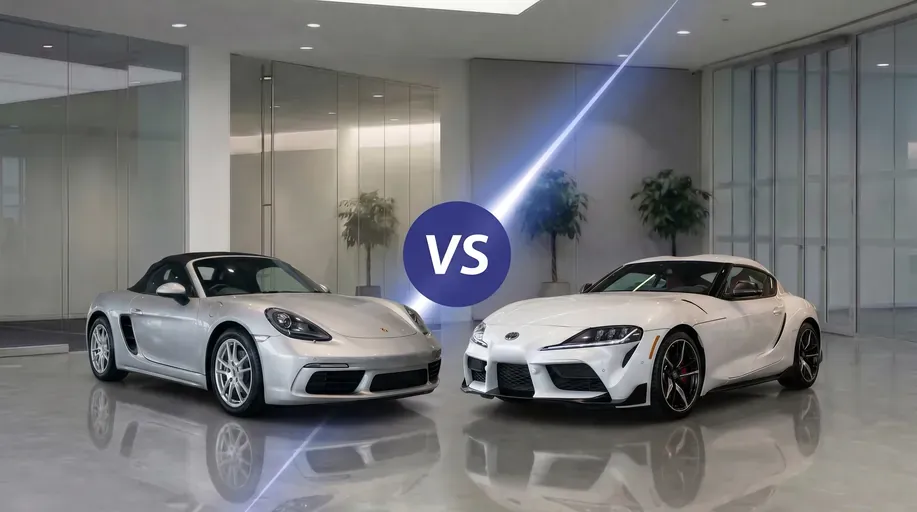
Complete comparison of the Porsche 718 Boxster vs. Toyota GR Supra. Discover the real differences in performance and handling, and read our final verdict!
Oct 16, 2026