Car battle
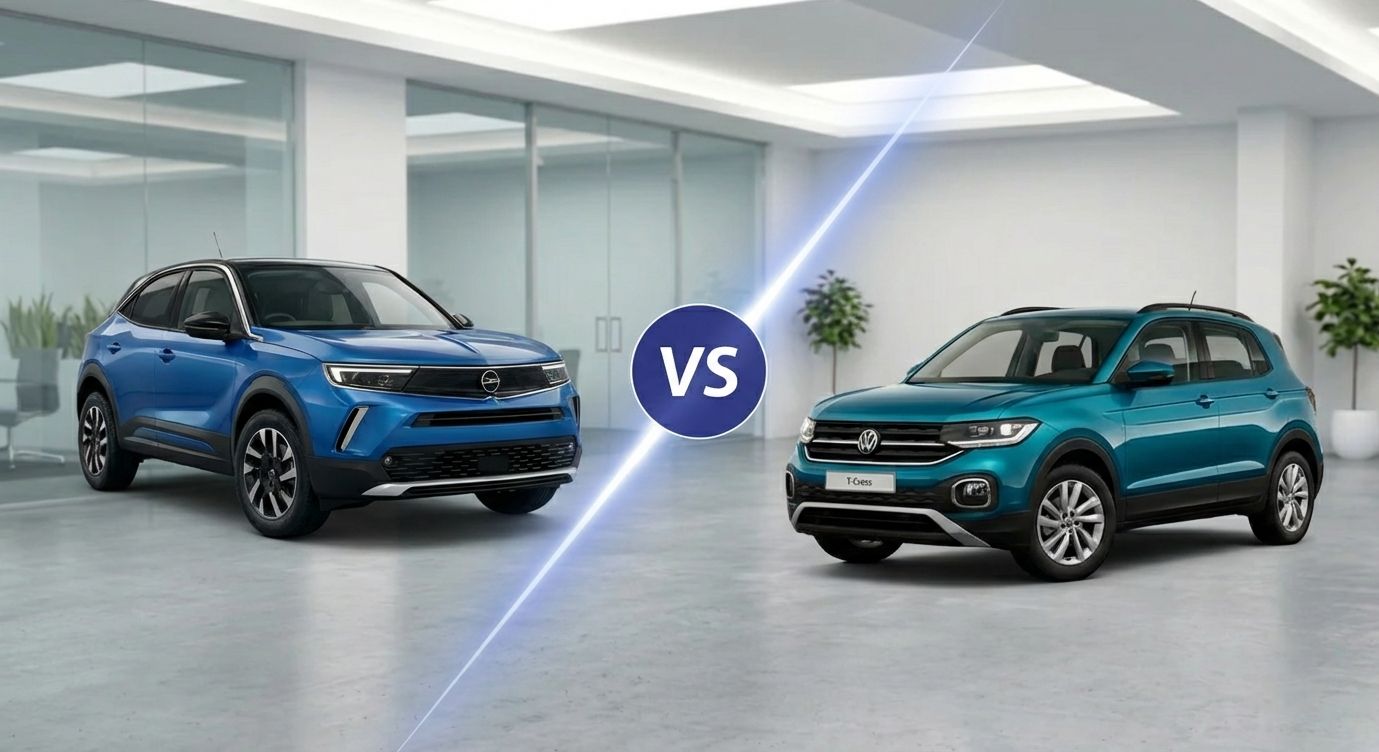
Opel Mokka vs. Volkswagen T-Cross: Complete Comparison 2026
Opel Mokka vs. VW T-Cross. A detailed comparison of engines, equipment, and price. Find out which compact SUV is right for you in our big test.
Oct 22, 2026
Citroën C5 Aircross vs Renault Austral: Which French SUV to choose? We bring you a detailed comparison of engines, equipment, and a clear verdict for your best choice.
October 16, 2026
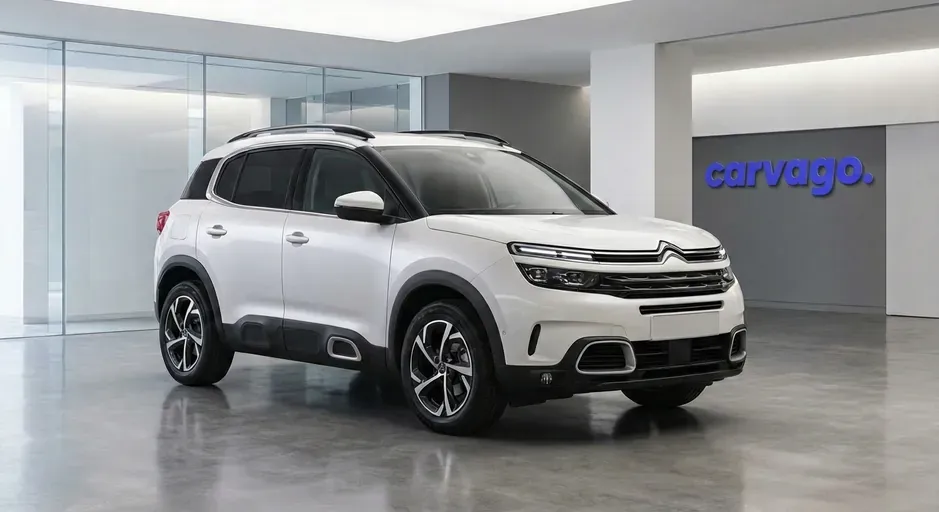
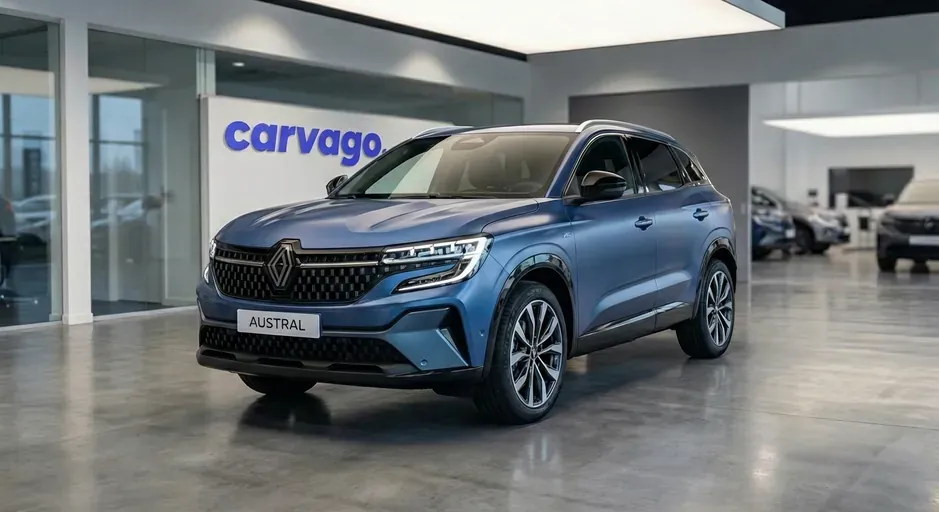
Citroën C5 Aircross, also sold in selected Asian markets under the names Dongfeng Citroën Tianyi or Tianyi Beyond, represents the French vision of a compact SUV with a maximum emphasis on smooth comfort and avant-garde design. Its challenger today is the Renault Austral, the modern successor to the popular Kadjar model, which instead bets on advanced hybrid technologies, a sophisticated interior, and a noticeably more dynamic driving experience. In the following comparison, we will take a detailed look at which of these two different French approaches represents a better choice when selecting a roughly four-year-old used car.
When you place the Citroën C5 Aircross and Renault Austral side by side, you will immediately notice a different approach to overall proportions, although both vehicles target customers in the same compact family SUV segment. If we look at models roughly four years old (from 2022), we find that they share a very similar overall length. The Renault Austral, at 4510 mm, is a negligible 10 mm longer than the Citroën C5 Aircross (4500 mm). This similarity in length means that both models require practically the same size parking space, and handling them in heavy city traffic is very similar.
The fundamental differences that define the character of both cars lie in their width and height. The Citroën C5 Aircross boasts a width of 1859 mm and a height of 1688 mm, giving it a typically robust, boxier stance. The Renault Austral, on the other hand, is 34 mm narrower (1825 mm) and significantly lower – with a height of 1618 mm, it sits a substantial 70 mm lower than its competitor. Thanks to these slightly slimmer and lower-slung proportions, the Renault makes a much more dynamic and sporty impression. At the same time, it is somewhat more comfortable to drive into older underground garages with lower clearance. Citroën, conversely, benefits from its more robust build on the inside, where the wider and taller body means a more airy cabin with more shoulder and head room for passengers.
Another key parameter that significantly affects interior space is the wheelbase. Here, the Citroën C5 Aircross has a clear advantage with its 2730 mm, surpassing the Renault Austral's 2667 mm wheelbase by a noticeable 63 mm. In practice, this means that the Citroën can offer more generous longitudinal legroom for rear passengers, and the longer distance between the axles also helps it achieve a smoother and more stable ride on the highway. In terms of overall dimensions, the Citroën C5 Aircross is therefore a more practical choice for families requiring maximum interior space and comfort, while the Renault Austral will appeal more to drivers who prefer more compact proportions and a more dynamic look.
| Parameter | Citroën C5 Aircross SUV | Renault Austral SUV |
|---|---|---|
| Width (mm) | 1859 | 1825 |
| Length (mm) | 4500 | 4510 |
| Height (mm) | 1688 | 1618 |
| Wheelbase (mm) | 2730 | 2667 |
The luggage compartment is often a decisive factor when choosing a family SUV. Both models, Citroën C5 Aircross and Renault Austral, target customers who need a practical vehicle for daily duties, from larger weekend shopping trips to long summer holidays. The size and usability of the boot therefore play an absolutely key role, and each of the French rivals approaches this discipline with slightly different cards in hand.
In a direct comparison of conventional internal combustion (or mild-hybrid) versions, which have a strong presence on the used car market, the Citroën C5 Aircross has a noticeable edge. This model scores with a generous base volume of 580 liters, which in practice means trouble-free space for several extra suitcases and a bulky stroller. By folding down the rear seats, you can turn the Citroën into a mover with a maximum volume of up to 1630 liters. In contrast, the Renault Austral offers a slightly more modest but still solid 500 liters in its mild-hybrid versions as standard, and 1525 liters with the backrests folded down. Both values are more than sufficient for a typical holiday, and the practicality of both cars is significantly enhanced by sliding rear seats, which allow the boot capacity to be flexibly increased as needed at the expense of legroom for rear passengers.
However, the situation changes significantly if you opt for advanced electrified versions, a factor that used car buyers must watch out for. The batteries of hybrid systems represent a concession in luggage space for both cars. In the plug-in hybrid Citroën C5 Aircross, the base capacity drops by more than a hundred liters to a final 460 liters (1510 liters when folded). The same trend applies to the Renault Austral with the E-Tech Full Hybrid powertrain, whose boot shrinks to just 430 liters in the base configuration and 1455 liters in a two-seater configuration. In conclusion, purely for maximizing space, the combustion-powered Citroën is unrivaled, while the hybrid versions of both representatives require certain compromises, and you might even need to get a roof box for skiing trips or longer holidays.
| Parameter | Citroën C5 Aircross SUV | Renault Austral SUV | Citroën C5 Aircross SUV (Hybrid) | Renault Austral SUV (Hybrid) |
|---|---|---|---|---|
| Base volume (liters) | 580 | 500 | 460 | 430 |
| Maximum volume with seats folded (liters) | 1630 | 1525 | 1510 | 1455 |
The Citroën C5 Aircross in its standard version offers an exceptionally voluminous boot that will please space-demanding families, while the Renault Austral represents a practical compromise fully sufficient for everyday use. However, if you are considering a hybrid powertrain, expect a significantly reduced luggage capacity in both models due to the batteries.
Towing capacity, or trailer weight, is one of the key parameters for many people interested in a spacious family SUV. The ability to tow a caravan, a sports boat, or a heavier cargo trailer significantly affects the overall practicality and versatility of the car. Looking at models approximately four years old, it is clear that the two French cars approach this discipline slightly differently.
Differences in braked trailers and the influence of hybrid drive
In terms of pure towing power, the Renault Austral clearly has the upper hand. Its standard and mildly electrified engines, such as the Mild Hybrid 160 or Mild Hybrid 140, offer a very solid maximum towing capacity of up to 1800 kg for a braked trailer (starting at 1350 kg for the weaker version). However, for the top-of-the-line full hybrid variant, the E-Tech Full Hybrid 200, this value is limited to 1500 kg. This reduction in capacity is the price for the car's higher curb weight, caused by the heavier battery and more sophisticated electrical system.
The Citroën C5 Aircross, which profiles itself primarily as the king of driving comfort, has these limits set slightly lower from the factory. Most standard engines from 2020 to 2024, such as the PureTech 130 petrol or the popular BlueHDi 130 diesel, can tow a braked trailer weighing between 1250 and 1350 kg. Even with Citroën, electrification tends to hinder towing power – popular used cars in the Plug-In-Hybrid 180 and 225 versions can tow exactly 1300 kg. If you wanted to hitch a heavier load behind the C5 Aircross, you would have to search the market for the older, powerful BlueHDi 180 diesel engine from 2019 and 2020, which was the only one that allowed towing a trailer weighing up to 1650 kg.
Practical use and everyday limits
In the case of unbraked trailers, both cars stay within the usual limits set by legislation, ranging from 720 to 750 kg. In real life, these numbers mean that both SUVs can handle hitching a smaller trailer for the cottage or transporting garden waste without any problems. In such a case, you get easy space for a few extra suitcases, which is a perfectly sufficient solution for weekend shopping or a longer holiday. However, a major turning point comes with heavier loads. If you plan to regularly tow a large family caravan, a twin-axle car trailer, or a horse trailer, the Citroën C5 Aircross, with its roughly 1300 kg, will very quickly reach its limits.
Final summary
If you know that you will use the tow bar mainly as a bike rack or for the occasional transport of material from a DIY store, both cars will serve you to your complete satisfaction. However, if you are choosing a car for active towing of heavy trailers, the wider margin and maximum limits reaching up to 1800 kilograms make the Renault Austral a much more confident and versatile choice.
| Model and engine | Braked trailer weight (kg) | Unbraked trailer weight (kg) |
|---|---|---|
| Renault Austral Mild Hybrid 140 / 160 | 1350 - 1800 | 720 - 750 |
| Renault Austral E-Tech Full Hybrid 200 | 1500 | 750 |
| Citroën C5 Aircross PureTech 130 | 1300 - 1350 | 740 - 750 |
| Citroën C5 Aircross BlueHDi 130 | 1250 - 1450 | 740 - 750 |
| Citroën C5 Aircross BlueHDi 180 | 1650 | 750 |
| Citroën C5 Aircross Plug-In-Hybrid 180 / 225 | 1300 | 740 - 750 |
When choosing a roughly four-year-old used car, the Citroën C5 Aircross and Renault Austral represent two completely different approaches to powertrains, which fundamentally affects both operating costs and driving dynamics. Citroën sticks to the proven classics, offering a wide range including pure petrol, diesel, and plug-in hybrid drives. Interestingly, thanks to the EMP2 platform, the C5 Aircross long retained the popular diesel engines that are crucial for high-mileage drivers. Conversely, the Renault Austral, which replaced the Kadjar model in 2022, arrived with a completely new strategy and completely removed diesel engines from its lineup. Instead, it bet exclusively on electrified petrol units, ranging from mild-hybrids to a sophisticated full-hybrid. For the buyer, this means a clear choice: if you are looking for an economical diesel for long highway journeys, the Citroën will suit you. However, if you prefer modern technology with low consumption in and around the city without the need for plug-in charging, the Renault will make more sense.
The range of used Citroën C5 Aircross vehicles from 2019 to 2023 relies on the popular 1.2 PureTech turbocharged three-cylinder engines and the economical 1.5 BlueHDi diesels, both with an identical output of 96 kW (130 hp). These standard engines can be found with both a six-speed manual and the reliable EAT8 eight-speed automatic transmission. If you are looking for higher performance, you have to search carefully when choosing a used car – the top-tier pure combustion versions, the 1.6 PureTech 180 and the 2.0 BlueHDi 180 diesel, were phased out as early as the turn of 2020 and 2021. In the four-year-old car market, the role of the most powerful and efficient powertrain (with regular charging) has been taken over by the Plug-in Hybrid 225 with a system output of 165 kW.
| Engine type | Fuel | Power (kW) | Torque (Nm) | Transmission |
|---|---|---|---|---|
| 1.2 PureTech 130 | Petrol | 96 | 230 | 6MT / 8AT |
| 1.6 PureTech 180 (until 2021) | Petrol | 133 | 250 | 8AT |
| 1.5 BlueHDi 130 | Diesel | 96 | 300 | 6MT / 8AT |
| 2.0 BlueHDi 180 (until 2020) | Diesel | 130 | 400 | 8AT |
| 1.6 PHEV 225 | Plug-in Hybrid | 165 | 360 | 8AT |
The Renault Austral entered the used car market primarily with the generation produced since late 2022. Its offering is more compact and relies exclusively on the combination of petrol and electricity. The foundation is the proven 1.3 TCe four-cylinder, developed in cooperation with Mercedes-Benz, which is equipped here with 12V mild-hybrid technology. It is available in Mild Hybrid 140 and the more powerful 160 versions, where a continuously variable transmission (CVT) is standard. The technological and performance peak is the E-Tech Full Hybrid 200 version. This system combines a new 1.2-liter three-cylinder engine with a powerful electric motor and a unique multi-mode clutchless automatic transmission. It provides 146 kW of power and excels in exceptional efficiency in city traffic, thereby fully compensating for the absence of diesel variants at Renault.
| Engine type | Fuel | Power (kW) | Torque (Nm) | Transmission |
|---|---|---|---|---|
| 1.3 Mild Hybrid 140 | Petrol (MHEV) | 103 | 260 | 6MT / CVT |
| 1.3 Mild Hybrid 160 | Petrol (MHEV) | 116 | 270 | CVT |
| 1.2 E-Tech Full Hybrid 200 | Petrol (HEV) | 146 | 410 | Multi-Mode |
While the Citroën C5 Aircross will please high-mileage drivers thanks to the reliable 1.5 BlueHDi diesel and comfortable plug-in hybrids, the Renault Austral is the ideal choice for those looking for a modern, smooth, and exceptionally fuel-efficient full-hybrid in the city without the need to look for charging stations.
Choosing the right engine is absolutely crucial for long-term satisfaction with a used car, with both French representatives taking quite different approaches to the powertrain. Our recommendations are based on real-world service experience, mechanical reliability, user-friendliness, and actual fuel consumption. While for the Citroën it pays to go for a classic and powerful diesel engine, Renault, on the other hand, scores with a refined and modern petrol four-cylinder with mild-hybrid technology.
If you are looking for maximum reliability and confident pull for a family SUV, the best choice in terms of long-term mechanical durability is the 2.0 BlueHDi diesel with 130 kW (180 hp). As shown by available data on the model's production cycles, this fantastic and robust engine was unfortunately phased out during 2020. Those interested in it must therefore search among slightly older used cars from the first years of production. In combination with the smooth-shifting eight-speed Aisin automatic transmission (EAT8), however, it offers top-tier driving comfort, a massive 400 Nm of torque, and real-world fuel consumption reliably staying between 6.0 and 6.5 l/100 km. It is literally an ideal partner for highway travel and families with a fully loaded car.
When choosing newer used cars (from 2021 onwards), you will much more often encounter its successor, the smaller 1.5 BlueHDi 130 (96 kW) diesel. However, from a mechanic's perspective, there is one major warning: older revisions of this unit suffered from a too narrow (7mm) camshaft timing chain, which tended to snap with fatal consequences for the engine. Before buying a 1.5 BlueHDi version, always carefully check the service history to see if the engine has already undergone the modification to a more robust 8mm chain. Generally, for diesel versions, they are not intended for purely urban driving – they need regular longer trips for proper diesel particulate filter (DPF) regeneration and to prevent oil dilution with diesel.
For the Renault Austral, which arrived on the market relatively recently (since 2022) as a modern replacement for the Kadjar, the most rational and reliable powertrain for the used car market is the 1.3 TCe four-cylinder petrol engine in the Mild Hybrid 160 version with 116 kW (158 hp). This unit was developed in cooperation with Mercedes-Benz and is currently considered one of the most durable modern petrol engines in its displacement class.
Compared to the technologically very complex top-of-the-line E-Tech Full Hybrid 200 (which uses a smaller 1.2-liter three-cylinder and a rather specific gearbox without synchronizers called a "dogbox"), the mild-hybrid 1.3-liter unit relies on proven and mechanically cleaner technology. It is paired with a smooth CVT automatic transmission (X-Tronic), which handles stop-and-go city traffic wonderfully smoothly without any unpleasant jerking. Drivers will appreciate the excellent soundproofing, solid 270 Nm of torque available from as low as 1800 rpm, and real-world fuel consumption of around 6.5 l/100 km. Mechanical risks are absolutely minimal with this engine; however, as a prevention against carbon buildup (typical for direct-injection units), it is highly recommended to shorten the engine oil change interval to the traditional 15,000 km or 1 year. The result will be a perfect and trouble-free all-rounder for both the city and the highway.
Let's be honest: official fuel consumption figures stated in vehicle documents based on laboratory tests are often overly optimistic. To get a more accurate picture of what really awaits you at the filling stations, we rely on real-world data from the European community portal Spritmonitor.de, where thousands of drivers diligently record every refueling. We focused on generations and engine versions common for the market of roughly four-year-old used cars, namely the first-generation Citroën C5 Aircross and the Renault Austral from its first years of production (since 2022).
| Model and engine | Average consumption (l/100 km) |
|---|---|
| Citroën C5 Aircross 1.5 BlueHDi 130 (96 kW) | 5,7 |
| Citroën C5 Aircross 1.2 PureTech 130 (96 kW) | 6,6 |
| Citroën C5 Aircross Plug-In Hybrid 225 (165 kW) | 4,5* |
| Renault Austral E-Tech Full Hybrid 200 (146 kW) | 5,5 |
| Renault Austral Mild Hybrid 140 (103 kW) | 6,9 |
| Renault Austral Mild Hybrid 160 (118 kW) | 7,0 |
The data clearly highlights the completely different technological approaches of the two carmakers to fuel savings. For Renault, the more complex but highly efficient E-Tech Full Hybrid system takes center stage, which, despite very solid system output and dynamics, can achieve a respectable real-world average of 5,5 liters of petrol. Conversely, in the entry-level mild-hybrid versions of the Austral (140 and 160), the small electric motor tries its best, but the internal combustion engine works hard to move the massive SUV body, and consumption logically hovers around the seven-liter mark. On the Citroën side, the enduring efficiency of diesel engines on long hauls is confirmed – the proven 1.5 BlueHDi engine can power even such a large family car with an excellent average consumption of 5,7 liters. In contrast, the three-cylinder 1.2 PureTech petrol engine won't perform miracles in terms of fuel economy, as it consumes an average of 6,6 l/100 km under load.
(Note: The value of 4,5 l/100 km for the C5 Aircross Plug-In Hybrid version is an average of all real-world profiles; however, in practice, it depends heavily on the frequency of grid charging – with diligent daily charging, you can stay below 2 liters, while driving with a depleted battery sees consumption rise to nearly 7 liters.)
For average users and those interested in a used family car, the recommendation is clear: always choose primarily based on your daily route profile. If your main territory is urban and heavy suburban traffic with frequent stops, the sophisticated hybrid system of the Renault Austral E-Tech will reward you with perfect smoothness and a very low appetite for its class. In contrast, potential buyers of the Citroën C5 Aircross Plug-In Hybrid must have a guaranteed option for daily home or workplace charging for this more complex version to make economic sense. Drivers who, on the other hand, spend weekends on long hauls and cover huge distances on motorways should take note of the diesel Citroën C5 Aircross BlueHDi. It provides unrivaled and stable operating economy even at higher speeds.
Fuel consumption and the choice of technology can thus be the deciding factor for many buyers in this duel. While the Renault Austral confidently represents the modern wave of smart electrification tailored to a suburban lifestyle, the Citroën C5 Aircross still offers the much-sought-after traditional certainty and a diesel classic that is very hard to beat for long-distance enthusiasts.
When looking at the market for used cars roughly 4 years old (2022–2023 models), we encounter a fundamental generational difference between the two French models. While the Citroën C5 Aircross underwent a significant facelift during this time and represents an established, more affordable choice, the Renault Austral was just entering the market as a hot new arrival and the direct successor to the Kadjar. This fact is clearly reflected in their residual value on the secondary market.
Buying a roughly four-year-old post-facelift C5 Aircross is a very rational choice for a limited family budget. The depreciation curve for this model is quite favorable for second-hand buyers, and the market supply is broad.
The Austral is still perceived as a very fresh model on the used car market. Due to its newer technological platform, the absence of diesel engines, and the presence of modern mild-hybrid and full-hybrid systems, it maintains a significantly higher price.
| Model | Estimated price from | Estimated price to | Most common engines available on the market |
|---|---|---|---|
| Citroën C5 Aircross (facelift) | €18,000 | €27,000 | 1.2 PureTech, 1.5 BlueHDi, 1.6 PHEV |
| Renault Austral | €25,000 | €33,000 | 1.3 TCe Mild Hybrid, 1.2 E-Tech Full Hybrid |
A four-year-old Citroën C5 Aircross offers a fantastic ratio of purchase price to family comfort, while the significantly more expensive Renault Austral acts as a more premium ticket to newer technologies and holds its residual value very strongly on the used market.
Both models boast a maximum five-star rating in independent Euro NCAP crash tests. However, for the Citroën C5 Aircross, it must be noted that it achieves this result only when equipped with the optional safety pack. When comparing the safety of used vehicles, it is absolutely essential to put both results into the correct chronological context. Euro NCAP methodology and testing protocols are constantly evolving and becoming significantly stricter every year. For this reason, percentage scores from different testing years cannot be simply and directly compared. Newer years include much more demanding frontal impact simulations, more advanced cyclist detection, and complex crisis scenarios at intersections that were not evaluated at all in earlier years.
The Citroën C5 Aircross underwent Euro NCAP tests back in 2019. In its standard equipment, it earned a solid four stars, but models with the optional Safety+ pack reached the full five-star result. This safety package adds a radar sensor to the assistance camera, which significantly improves the functionality of autonomous emergency braking (AEB) and brings more reliable cyclist detection. Although the car demonstrated a good level of passive safety and a solid cabin structure at the time, compared to the latest standards, it lacks some of today's features, such as a center airbag between the front seats. Furthermore, the validity of Euro NCAP certificates is limited in time, and the 2019 rating is thus considered expired from the perspective of today's market and current standards.
The Renault Austral, on the other hand, was tested in 2022 and took home the full five stars without hesitation. Its rating reflects substantially stricter and more modern testing criteria. The Austral features advanced passive safety elements, including the aforementioned center airbag, which effectively prevents fatal head collisions between the driver and passenger in a side impact. Moreover, the car's active assistance systems excel in more demanding scenarios. They offer a reliably functioning adaptive speed limiter and improved autonomous emergency braking that reacts promptly even in more complex situations, such as when turning through intersections. Earning 87% in the safety assist category according to the strict 2022 standards represents a top-tier result.
In an overall comparison of active and passive safety, the Renault Austral offers a more modern level of protection. Although the Citroën C5 Aircross is still a very sturdy and safe family SUV, the Austral fully benefits from its generational advantage and newer architecture. Thanks to more advanced assistance systems and compliance with much stricter safety protocols, it represents a more comprehensive, better-equipped, and more up-to-date safety package for used car buyers.
| Parameter | Citroën C5 Aircross | Renault Austral |
|---|---|---|
| Year of testing | 2019 | 2022 |
| Adult occupant protection | 89 % | 88 % |
| Child occupant protection | 86 % | 83 % |
| Vulnerable road users protection | 67 % | 69 % |
| Safety assist systems | 82 % | 87 % |
Thanks to more modern technologies and meeting the stricter 2022 tests, the Renault Austral offers a more current and sophisticated level of protection than the older Citroën C5 Aircross.
In addition to standard equipment, each model offers several unique features that can be decisive for the customer and clearly show the different approach of both French carmakers to the modern concept of a family SUV.
Exceptionally comfortable chassis with Progressive Hydraulic Cushions (Advanced Comfort)
Three individual, sliding, and reclining rear seats, ideal for installing child car seats
Generous luggage capacity, which can be increased from 580 to 720 liters thanks to the sliding seats
Soft and extra-padded seats that reduce fatigue on long journeys
Still available and reliable 1.5 BlueHDi diesel engine, ideal for frequent highway travel
Outdated and slower multimedia system with a more complicated user interface
Climate control operated exclusively via the touchscreen distracts from driving
Softer suspension leads to more pronounced body roll in corners
In the plug-in hybrid version, the luggage space is reduced to a below-average 460 liters
Citroën C5 Aircross is an ideal choice for families and drivers looking for maximum comfort, exceptional practicality, and who have no sporting ambitions. Thanks to three independent rear seats and a smooth ride, it excels as an unpretentious and highly functional transporter for everyday family duties.
Top-tier OpenR Link infotainment with integrated Google services, which is among the best on the market
High-quality interior craftsmanship with premium materials and excellent ergonomics
Great maneuverability and driving stability thanks to the optional four-wheel steering system (4Control)
Highly efficient E-Tech full hybrid powertrains with excellent fuel economy in urban and suburban traffic
Practical sliding rear bench allowing flexible adjustment of legroom and luggage space
Firmer suspension tuning, which sometimes struggles to filter out sharp bumps on larger wheels
Diesel engines are completely missing from the range, which may deter drivers who spend most of their time on the highway
Occasional hesitation or slight jerking of the hybrid system during transitions between electric and combustion power
Smaller trunk capacity in the E-Tech version (430 liters) compared to pure combustion variants and competitors
Renault Austral targets modern-minded customers who appreciate advanced digital technologies, a high-quality interior, and more confident, agile driving characteristics. It represents a great choice for those looking for a stylish family SUV for the city and country roads and who don't mind the absence of a classic diesel under the hood.
Based on service data, owner experiences, and findings from our independent technical inspection service, we have compiled an overview of the most common issues you should watch out for with these roughly four-year-old used cars.
For the C5 Aircross, both original and facelifted versions of which are commonly found on the used car market today, service technicians most often encounter shortcomings in the onboard electronics and specific design characteristics of certain engines.
Although it is an exceptionally comfortable family SUV, its onboard electronics sometimes have a life of their own, and for conventional internal combustion engines, it is necessary to strictly adhere to timely service intervals for timing belt and oil changes.
Since the Austral has only been on sale since 2022, as a nearly new used car, it does not suffer from significant mechanical wear and rust. However, typical "teething troubles" associated with the introduction of completely new technologies are appearing.
Most of the issues with a used Renault Austral focus on the teething troubles of advanced onboard electronics and the initial fine-tuning of the complex hybrid system. From a classic mechanical standpoint, however, it is proving to be a very solid car so far.
When buying a used car, a thorough inspection is key. Here are some specific points to focus on for these two models, where it pays not to underestimate even the details. During the selection process, we always recommend using a service for a comprehensive car check, which can reveal potential hidden defects before you pay for the car.
The Citroën C5 Aircross is the clear leader in comfort thanks to shock absorbers with progressive hydraulic cushions and special Advanced Comfort foam seats. The Renault Austral, on the other hand, has a stiffer and more sportily tuned chassis, designed for drivers who prefer more confident and dynamic cornering.
Citroën offers a basic boot capacity of 580 to 720 litres thanks to three individually sliding rear seats, which provides excellent modularity. The Renault Austral has a luggage compartment with a volume of 430 to 575 litres depending on the engine and the position of the sliding rear bench. For families requiring maximum space and modularity, the C5 Aircross is the better choice.
Yes, the approach of both carmakers to powertrains is completely different. In addition to petrol and plug-in hybrid versions, Citroën still offers an economical BlueHDi diesel engine, which is ideal for long motorway journeys. Renault Austral has completely phased out diesel engines and relies exclusively on advanced mild-hybrid and full-hybrid (E-Tech) technologies.
The Renault Austral clearly dominates in this category thanks to the OpenR Link multimedia system, which uses integrated Google Automotive services including excellent maps and a voice assistant. Although the infotainment in the Citroën was improved as part of the facelift, it does not match Renault's modern solution in terms of graphics or response speed.
The Renault Austral is significantly more agile in the city if equipped with the optional 4Control Advanced all-wheel steering system. This system reduces the turning radius to 10.1 metres, a value comparable to small city hatchbacks. Citroën does not offer this rear-wheel steering technology and relies on classic conventional steering.
Sources: ADAC, garaz.cz, idnes.cz, autoservis.cz, autojournal.cz, logistika.ihned.cz
This article was prepared using artificial intelligence tools. The section guarantor is Petr Dušek.
Opel Mokka vs. VW T-Cross. A detailed comparison of engines, equipment, and price. Find out which compact SUV is right for you in our big test.
Oct 22, 2026
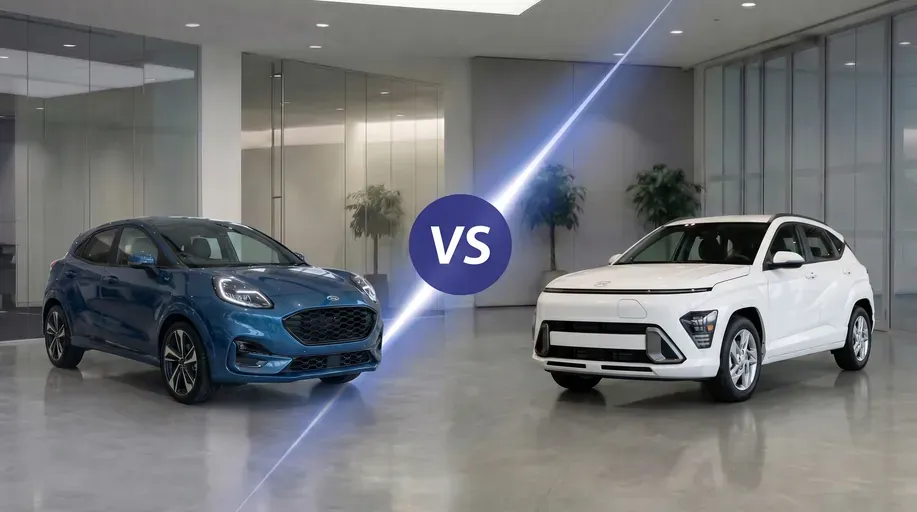
Ford Puma vs Hyundai Kona: A detailed comparison of popular city SUVs. Compare driving characteristics, fuel consumption, and space, and read our final verdict.
Oct 16, 2026
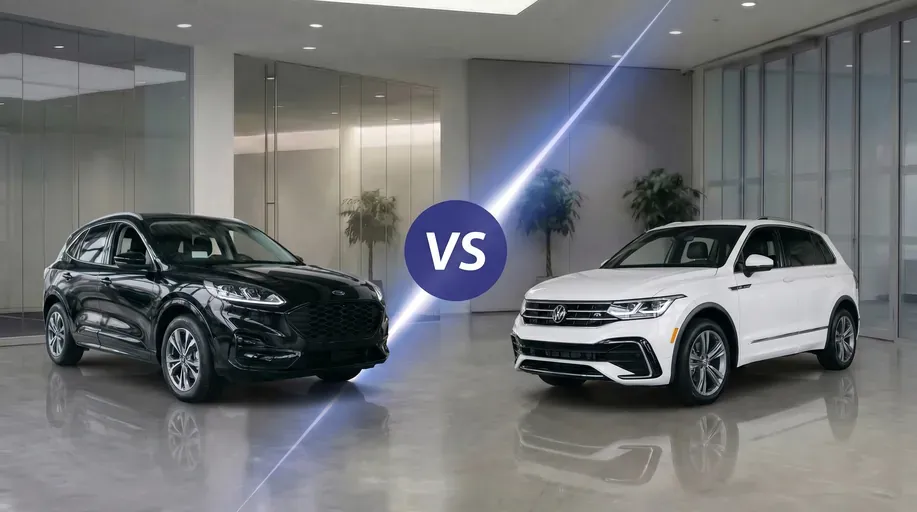
Detailed comparison of used SUVs: Ford Kuga vs. Volkswagen Tiguan. We evaluated reliability, engines, practicality, and real-world driving characteristics. Which one to choose?
Apr 19, 2026