Car battle
Hyundai Kona vs. Seat Arona: Complete comparison 2026
Detailed comparison of Hyundai Kona vs. Seat Arona. Find out which used city SUV to choose. Practical experience, equipment comparison, and a clear verdict before buying.
Apr 30, 2026
Used car comparison: Citroën C5 Aircross vs. Ford Kuga. Find out which SUV offers better space, equipment, and reliability. Read our detailed verdict!
May 4, 2026
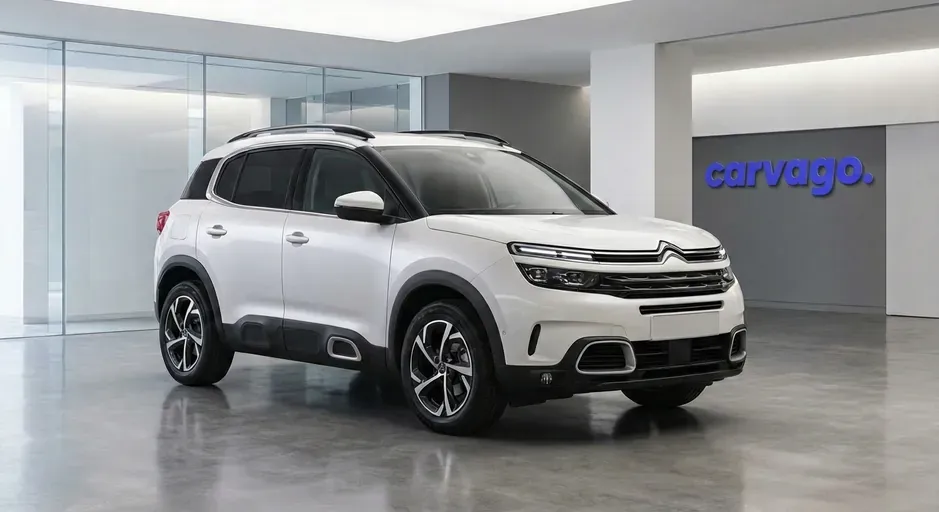

Citroën C5 Aircross, also known as the Dongfeng Citroën Tianyi in selected Asian markets, is a comfort-oriented compact SUV with unmistakable French design and unique soft suspension. Standing against it is the Ford Kuga, a popular family car sold in North America and Australia as the Ford Escape, which traditionally scores points with drivers for its sophisticated driving dynamics and a wide range of efficient engines. Let's take a closer look at how representatives of these two completely different design philosophies fare in a direct comparison and which of them represents a better choice for those interested in a modern used car.
Looking at the exterior dimensions, it is clear that the third-generation Ford Kuga takes up slightly more space on the road. With a length ranging from 4614 to 4629 mm, it exceeds the first-generation Citroën C5 Aircross (consistently 4500 mm) by more than 11 centimetres. At 1883 mm, the Ford is also 24 mm wider than its French competitor (1859 mm). In practice, this means the Kuga gives a more elongated and overall more majestic impression, but it will require a bit more caution in tight underground garages or when parallel parking on the street. Therefore, if daily agility in the urban jungle is key for you, the Citroën's shorter and narrower body will be noticeably more user-friendly when manoeuvring.
The situation is reversed when comparing the height of the two cars, where Citroën bets on more classic proportions. With a height of 1688 mm, the C5 Aircross is roughly 2.5 to just under 4 centimetres taller than the Ford Kuga (1650–1663 mm depending on the specific engine and trim level). The French representative thus maintains the boxier and more robust look of a traditional SUV, which contributes to a slightly better view from the cabin and a higher seating position. In contrast, Ford has chosen a more aerodynamic and lower-slung silhouette, which is more reminiscent of a dynamically styled, raised hatchback. The choice in this regard depends purely on personal taste: if you prefer the security of a higher driving position and a classic off-road feel, the Citroën will appeal to you, while the Kuga will please drivers looking for a sportier visual.
A very interesting paradox occurs when examining the wheelbase. Although the Citroën C5 Aircross is significantly shorter overall, it offers a longer wheelbase (2730 mm) than the Ford Kuga (2710 mm), which appears a class larger. This twenty-millimetre difference implies that French engineers have pushed the wheels much further into the corners of the body, thus minimising both front and rear overhangs. This approach makes more efficient use of the enclosed space, while the Ford pays the price for an overall longer body without an adequate extension of the distance between the wheels. When deciding on a used car purchase, this means that the Citroën can offer comparable directional stability even from a significantly smaller footprint, making it an exceptionally pragmatic and space-efficient choice.
| Parameter | Citroën C5 Aircross SUV | Ford Kuga SUV |
|---|---|---|
| Length (mm) | 4500 | 4614 - 4629 |
| Width (mm) | 1859 | 1883 |
| Height (mm) | 1688 | 1650 - 1663 |
| Wheelbase (mm) | 2730 | 2710 |
For families and active drivers, luggage capacity is often a key parameter when choosing a used car. When comparing roughly four-year-old models (1st generation Citroën C5 Aircross and 3rd generation Ford Kuga), the manufacturers' completely different approaches to interior space stand out. The French representative focuses maximally on volume capacity, while the Kuga prefers a different cabin concept. Both cars fall into the popular SUV category, and both are naturally expected to be able to accommodate everything from a large weekend shop to full equipment for a longer holiday without any problems.
Looking at the exact data, the Citroën C5 Aircross clearly dominates its class in classic internal combustion versions. It offers a generous basic volume of 580 liters, which increases to 1630 liters after fully folding the rear seats. The Ford Kuga, on the other hand, provides 435 liters in the base and a total of 1534 liters after folding the backrests in the standard internal combustion version. However, for both models, it is necessary to account for a loss of liters in the case of hybrid variants, where the battery always takes up part of the space under the floor. In the hybrid and plug-in hybrid Citroën, the basic trunk shrinks to 460 liters (maximum to 1510 liters), while in the electrified versions of the Kuga, you get 405 liters in the base and 1517 liters after folding the seats.
In practice, this difference means that the Citroën C5 Aircross provides space for several extra sports bags or suitcases, making it an excellent choice for those who require uncompromising transport capacity. The difference of almost 150 liters in the basic configuration of the internal combustion versions is very noticeable when packing. While the Ford Kuga lags behind in terms of absolute numbers, its trunk retains a practical shape and is still more than sufficient for smaller families or common daily tasks.
| Parameter | Citroën C5 Aircross SUV | Ford Kuga SUV |
|---|---|---|
| Basic volume (liters) | 580 | 435 |
| Max. volume with seats folded (liters) | 1630 | 1534 |
If a huge and deep luggage space is a priority for you, the Citroën C5 Aircross with 580 liters is the clear winner, but even the Ford Kuga, with its practical trunk shape, will safely cover most common family needs.
The ability to tow a trailer is often a key parameter for families, cottage owners, or camping enthusiasts. When comparing the towing capacity of the Citroën C5 Aircross and Ford Kuga, focusing on the market for roughly four-year-old used cars (i.e., the 1st generation Citroën and 3rd generation Ford), we encounter fundamental differences that can easily decide the final choice of vehicle.
The third-generation Ford Kuga is a very capable workhorse in this discipline. Standard petrol versions with the 1.5 EcoBoost engine can handle a braked trailer weighing 1,600 to 1,800 kg. However, if you opt for the 2.0 EcoBlue diesel, the maximum towing weight climbs to a confident 2,100 kg. This represents massive scope for your needs – the car can easily handle a heavy family caravan for a long holiday or a large cargo trailer with construction materials. It should be noted, however, that for the popular plug-in hybrid and full hybrid versions (from production years 2020–2024), this capacity is structurally reduced to 1,500 to 1,600 kg due to the battery installation.
The Citroën C5 Aircross, on the other hand, focuses primarily on smooth ride comfort, and its towing capabilities are noticeably more modest. Standard engines, such as the PureTech 130 petrol or the weaker BlueHDi 130 diesel, offer a braked towing capacity in the range of 1,250 to 1,450 kg. The French SUV achieves its best values in the variant with the more powerful BlueHDi 180 diesel engine, which can handle up to 1,650 kg. Similar to Ford, electrified plug-in hybrid versions of the Citroën also mean a significant limitation, to a maximum of 1,250 to 1,300 kg. In practice, this means that the C5 Aircross is perfectly sufficient for a weekend trip to the DIY store, hauling garden waste, or attaching an e-bike rack. However, it lacks the reserve for towing heavy horse trailers or large boats.
From an overall perspective on towing limits, the Ford Kuga emerges as the winner. While the Citroën will more than satisfy recreational users with standard requirements, the Ford offers much greater flexibility for anyone who demands an uncompromising choice with serious towing power.
| Model and motorization | Braked weight of trailer (kg) | Unbraked weight of trailer (kg) |
|---|---|---|
| Citroën C5 Aircross 1.2 PureTech 130 (1st generation) | 1300 - 1350 | 750 |
| Citroën C5 Aircross 1.5 BlueHDi 130 (1st generation) | 1250 - 1450 | 750 |
| Citroën C5 Aircross 2.0 BlueHDi 180 (1st generation) | 1650 | 750 |
| Citroën C5 Aircross Plug-In-Hybrid (1st generation) | 1250 - 1300 | 750 |
| Ford Kuga 1.5 EcoBoost (3rd generation) | 1600 - 1800 | 750 |
| Ford Kuga 2.0 EcoBlue (3rd generation) | 2100 | 750 |
| Ford Kuga 2.5 PHEV / Hybrid (3rd generation, 2020–2024) | 1500 - 1600 | 750 |
While both models target family-oriented drivers, the differences in engine offerings are quite fundamental and, from the perspective of dynamics and traction, can easily determine your final choice. The Citroën C5 Aircross focuses on a calm and economical ride, for which it exclusively uses front-wheel drive and slightly smaller, efficiently tuned units with a maximum output typically around 96 kW (130 hp). In contrast, the Ford Kuga will please more demanding drivers, as it offers a significantly wider range of more powerful engines on the used market from 2020 to 2022. The Kuga scores particularly with robust 2.0-liter diesels, which include the intelligent all-wheel drive (AWD) option completely unavailable for the Citroën, fundamentally changing the possibilities for towing trailers and driving in the mountains. In recent years, both automakers have naturally placed a strong emphasis on electrification, which in practice means plenty of economical mild-hybrids and very commercially successful plug-in hybrids, which are not in short supply in the listings.
In used examples, the backbone of the French offering consists of units with an output of 96 kW (130 hp). Both the basic 1.2 PureTech three-cylinder petrol and the popular 1.5 BlueHDi four-cylinder diesel score with pleasantly low fuel consumption. On the used car market, you can easily find them even with the excellent and smooth-shifting eight-speed EAT8 automatic transmission. However, if you desire a more powerful classic internal combustion engine, you must look exclusively among older model years at Citroën. The top-of-the-line 1.6 PureTech 180 petrol four-cylinder and the powerful 2.0 BlueHDi 180 diesel were gradually phased out in 2020 and 2021 with the arrival of stricter emission standards. After 2022, the market for more powerful versions is dominated almost exclusively by plug-in hybrids with a combined output of 180 or 225 hp, while a simplified 1.2 Hybrid 136 mild-hybrid powertrain paired with a new dual-clutch transmission was recently introduced.
| Engine type | Fuel type | Power (kW) | Torque (Nm) | Transmission |
|---|---|---|---|---|
| 1.2 PureTech 130 | Petrol | 96 | 230 | 6MT / 8AT |
| 1.6 PureTech 180 | Petrol | 133 | 250 | 8AT |
| 1.5 BlueHDi 130 | Diesel | 96 | 300 | 6MT / 8AT |
| 2.0 BlueHDi 180 | Diesel | 130 | 400 | 8AT |
| 1.2 Hybrid 136 | Mild-hybrid (Petrol) | 100 | 230 | 6DCT |
| 1.6 PHEV 180 | Plug-in hybrid (Petrol) | 132 | 360 | 8AT |
| 1.6 PHEV 225 | Plug-in hybrid (Petrol) | 165 | 360 | 8AT |
The third-generation Ford Kuga offers significantly more variants in terms of engines. For traditional petrol supporters, the lively and rev-happy 1.5 EcoBoost three-cylinder with 110 kW (150 hp) is absolutely ideal. However, much greater variability can be found in the diesel versions. In the 2020 to 2021 model years, you will come across the economical 1.5 EcoBlue (88 kW) engine or the very popular 2.0 EcoBlue MHEV (110 kW) mild-hybrid in the listings, although the automaker quietly withdrew these weaker diesel versions from production relatively early. Fortunately, the best choice for travelers and caravan owners remains abundant in used car dealerships: the top-of-the-line 2.0 EcoBlue diesel four-cylinder with a generous output of 140 kW (190 hp), primarily combined with AWD. Advanced hybrids are also an important part of the used car stock, where the main star remains the highly reliable full-hybrid (FHEV) and especially the hugely popular rechargeable PHEV; both versions are powered by an economical 2.5-liter naturally aspirated petrol engine paired with a planetary e-CVT transmission.
| Engine type | Fuel type | Power (kW) | Torque (Nm) | Transmission |
|---|---|---|---|---|
| 1.5 EcoBoost 150 | Petrol | 110 | 240 | 6MT / 8AT |
| 1.5 EcoBlue 120 | Diesel | 88 | 300 | 6MT / 8AT |
| 2.0 EcoBlue 150 MHEV | Mild-hybrid (Diesel) | 110 | 370 | 6MT |
| 2.0 EcoBlue 190 AWD | Diesel | 140 | 400 | 8AT |
| 2.5 FHEV 190 | Hybrid (Petrol) | 140 | 200 | CVT |
| 2.5 PHEV 225 | Plug-in hybrid (Petrol) | 165 | 200 | CVT |
If you are looking for a calm family SUV with exceptional fuel economy, the small-displacement engines in the C5 Aircross will serve you flawlessly, but for towing trailers, mountain trips, and performance enthusiasts, the Kuga is the better favorite thanks to its 4x4 drive and proper 2.0-liter engines.
Choosing the right engine is absolutely crucial for long-term satisfaction with a used car, and our recommendations are based on real-world performance, actual fuel consumption, owner feedback, and mechanical reliability. When comparing these two popular SUVs, we encounter different powertrain philosophies. While the French Citroën has historically dominated the field of fuel-efficient diesel engines, which benefit from massive torque for long motorway journeys, Ford hit the mark with electrified units in the third generation of the Kuga. Interestingly, the hybrid system in the Ford Kuga uses a naturally aspirated 2.5-litre engine operating on the Atkinson cycle, which is conceptually very similar to the famous and indestructible hybrids from Toyota. For Citroën, the larger 2.0 BlueHDi (180 hp) engine was considered the benchmark for diesel reliability; however, under stricter emission standards, it was replaced after 2020 by the cleaner and more compact 1.5 BlueHDi unit, which you will encounter most frequently in four-year-old used cars.
This 1.5-litre diesel forms the absolute core of the market for roughly four-year-old used cars and perfectly suits the supple, exceptionally comfortable character of the C5 Aircross. The engine offers a solid 300 Nm of torque, very refined operation, and excellent real-world fuel consumption ranging from 5 to 5.5 litres per 100 km, making it an ideal choice for drivers who cover long motorway and country road routes. If you are looking for bulletproof mechanical durability and don't mind older model years (2019–2020), the original 2.0 BlueHDi is an unrivaled workhorse – but you will no longer find it in models available after 2021. For the more current and available 1.5 BlueHDi engine, it is critically important to watch out for one major technical detail. Engines manufactured until early 2023 were fitted with a 7mm chain driving the camshafts, which has a tendency to stretch and, in extreme cases, snap, leading to fatal engine damage. How to tell: During a cold start, listen carefully to the top part of the engine. If you hear a distinct rattling or metallic clicking, the chain is most likely stretched. When choosing a used car, always look for units where the chain has already been replaced with the officially improved 8mm version as a preventative measure or under warranty, or factor the cost of this preventative replacement directly into your budget. Also, check the AdBlue system – no emission error lights should be on, as the system is prone to urea crystallization if the car is driven exclusively on short city trips.
Whether you go for the classic full-hybrid (FHEV, 190 hp) or the plug-in hybrid (PHEV, 225 hp), you get one of the most reliable and sophisticated powertrains in its class. The foundation is an exceptionally robust 2.5-litre naturally aspirated petrol four-cylinder without a sensitive turbocharger and without direct injection (it uses a more reliable combination), complemented by an eCVT planetary gearbox. From a mechanical standpoint, it is an almost indestructible system with phenomenal efficiency. The PHEV version can realistically cover around 40 to 50 km purely on electricity, and even when the battery is depleted, it continues to function as a very economical full-hybrid with consumption under 6 litres per 100 km. For families and drivers combining daily city commuting with weekend trips, it is flawless. Risks and what to watch out for: Although the engine itself is bulletproof, early plug-in hybrid models from 2020 and 2021 were plagued by a serious recall due to the risk of the high-voltage battery module overheating. How to tell: Before buying, request a report from an authorized Ford service center or check the car's VIN code. It is essential that the Kuga you are considering has already successfully undergone this recall campaign (battery and bottom cover replacement or modification). Also, on older software versions, excessive draining of the small 12V battery occurred due to a system that kept the car constantly on standby. Therefore, ensure with the seller that the car has received all available software updates. With a clear service history, this hybrid powertrain is the absolute top of the range.
When choosing a used family SUV around four years old, fuel consumption is often a key argument. However, it is important to realize that official values provided by manufacturers according to measurement cycles can differ significantly from everyday practice. While product sheets and tables show a laboratory ideal, user data from community platforms, such as the popular site Spritmonitor.de, clearly show that real-world consumption is usually slightly higher. This is doubly true for plug-in hybrid (PHEV) models, where catalog efficiency is extremely dependent on strict adherence to a daily charging cycle. Below are the average consumption values aggregated from databases for the most popular engines of the first-generation Citroën C5 Aircross and the third-generation Ford Kuga (primarily vehicles from 2020 to 2022, which dominate the current market for four-year-old used cars).
Data source:
| Model and engine | Average consumption (l/100 km) |
|---|---|
| Petrol engines | - |
| Citroën C5 Aircross 1.2 PureTech 130 | 6.3 |
| Ford Kuga 1.5 EcoBoost 150 | 6.6 |
| Diesel engines | - |
| Citroën C5 Aircross 1.5 BlueHDi 130 | 5.1 |
| Ford Kuga 2.0 EcoBlue 150 | 5.7 |
| Plug-in hybrid engines (PHEV) | - |
| Ford Kuga 2.5 Plug-in Hybrid | 1.2 |
| Citroën C5 Aircross PHEV 225 | 1.4 |
Looking at the hard data, several trends clearly emerge. For traditional use and long-distance routes, diesel engines remain the most economical choice. The French 1.5 BlueHDi four-cylinder diesel is an excellent fuel-sipper with average consumption starting slightly above five liters. The Ford Kuga, with its more robust 2.0 EcoBlue, is on average half a liter thirstier, but in return offers a noticeably better power reserve and smoother operation at higher speeds. With petrol units, we encounter an interesting finding typical of today's downsizing: the small turbocharged three-cylinder (1.2 PureTech in the Citroën) cannot perform miracles with such a large and aerodynamically demanding SUV. Its consumption is only three-tenths of a liter lower than what the slightly larger and more powerful 1.5-liter from Ford requires. Plug-in hybrids are a specific category, promising catalog values between 1.2 and 1.4 l/100 km. However, in practice, you will only achieve these figures if you charge both cars almost daily and complete most of your trips purely on electricity.
From the perspective of an average driver, this means you must choose the engine with surgical precision, tailored directly to your daily routine. If you cover dozens or hundreds of highway kilometers daily, don't hesitate to go for a diesel. Petrol versions, on the other hand, are an ideal and often slightly cheaper-to-service compromise for families who use the car primarily for shorter trips around town and on country roads, thereby eliminating the risks associated with particulate filter clogging. Highly sophisticated PHEV versions make economic sense exclusively for those users who have convenient access to a charger at home or work and whose typical range fits safely within the capacity of a charged battery.
In the end, fuel consumption itself will likely not be the main factor tipping the scales to clearly determine a winner. Both manufacturers have managed to tune their modern power units excellently, and the operating costs of both SUVs are remarkably balanced. Although Citroën holds the imaginary crown in laboratory and catalog efficiency with its smaller engines, Ford can compensate for these minor differences with a significantly more agile and driver-engaging range. The final word in the selection will therefore depend more on your specific driving profile, performance requirements, and priorities in overall chassis comfort.
When looking for a used family SUV that is approximately four years old, both models offer a very interesting price-to-value ratio. Although the starting prices of both competitors begin at a similar level, the price gap widens quite quickly for better-equipped versions and specific engine options.
The Citroën C5 Aircross is known on the used car market for a slightly faster depreciation, making it an excellent choice for buyers on a tighter budget.
The third-generation Ford Kuga is a sought-after commodity among drivers, primarily thanks to its confident driving characteristics and a wide range of powertrains. On the used market, it holds its value more confidently than its French rival.
| Model (2021–2022 years) | Entry price (higher mileage, base) | Golden middle ground (automatic, better equipment) | Top versions (PHEV / ST-Line / 4x4) |
|---|---|---|---|
| Citroën C5 Aircross | from ~ €14,000 | €16,000 – €18,000 | around €20,000 |
| Ford Kuga | from ~ €14,000 | €17,000 – €20,000 | €21,000 – €24,000 and more |
Note: Prices are based on current market supply and vehicle condition. The Citroën C5 Aircross from these production years is not offered with all-wheel drive, which is one of the main reasons why its top versions do not reach such high amounts on the used market as the technically more complex all-wheel-drive versions of the Ford Kuga.
The Citroën C5 Aircross represents a more affordable choice with an excellent ratio of entry price to comfort, while the Ford Kuga holds its value better and offers a wider, though overall more expensive, selection of desirable hybrid powertrains and 4x4 drive.
Both models boast a maximum five-star rating in independent Euro NCAP safety tests, making them an excellent choice for families looking for a safe used car. However, when evaluating crash test results, it is always necessary to consider the context and the year the testing took place. Euro NCAP methodologies and protocols are constantly evolving and becoming stricter, which is why percentage ratings from different years cannot be directly compared. Over the years, new simulations have been added, such as frontal impact into a mobile barrier or stricter emergency scenarios for detecting cyclists at intersections. In our case, however, the situation is ideal – both vehicles underwent testing in the same year (2019), meaning they were subject to identical methodologies, and their results from that time can be directly compared without issue.
The Citroën C5 Aircross completed Euro NCAP tests in 2019 with a slight caveat. It is important to mention that to achieve the full five stars, the car had to be equipped with the optional Safety Pack, which included an advanced autonomous emergency braking (AEB) system with cyclist detection (the standard version without this pack received four stars). Nevertheless, the upgraded five-star specification achieved an excellent result of 89% for adult occupant protection and 86% for child protection. Thanks to the package, active assistance systems climbed to a well above-average 82%. Protection for vulnerable road users (pedestrians and cyclists) reached 67%, slightly hampered by the shape and stiffness of the higher hood in the event of a collision.
The third-generation Ford Kuga was also tested according to 2019 protocols, but it earned its five-star rating without the need for optional packages, meaning it was achieved with standard equipment. The Kuga recorded an excellent 92% in adult protection, demonstrating outstanding body stability and a safe zone for the legs and torso of the occupants. In child passenger protection, the result was 86%, fully matching its French rival. However, the Kuga scores significantly higher in the protection of vulnerable road users, where it earned a solid 82% thanks to more compliant bodywork and bumper shape. The vehicle achieved a weaker result only in the safety assist category, where the standard equipment took home 73%.
In the overall assessment, both cars represent a very advanced and safe choice, with systems that excellently meet the current requirements of the used car market, even though the validity of the five-star certifications from that time is slowly nearing its end. The Ford Kuga offers a slightly higher level of passive protection for adults, is noticeably gentler on pedestrians, and provides maximum safety across all trim levels. While the Citroën C5 Aircross counters with a slightly more sophisticated rating for assistance systems, potential buyers must check whether the specific used unit actually features the optional Safety Pack. For an unprepared buyer, the Ford Kuga is the more comprehensive and slightly more certain five-star vehicle from a safety perspective.
| Parameter | Citroën C5 Aircross | Ford Kuga |
|---|---|---|
| Year of testing | 2019 | 2019 |
| Adult occupant protection | 89 % | 92 % |
| Child occupant protection | 86 % | 86 % |
| Vulnerable road user protection | 67 % | 82 % |
| Safety assistance systems | 82 % | 73 % |
While the Ford Kuga wins with better structural protection and consideration for pedestrians even in standard trim, the Citroën C5 Aircross with the optional package counters with higher-rated assistance systems for accident prevention.
In addition to standard equipment, each model offers several unique features that show both automakers have taken a different path to add value to the vehicle and make its daily use more pleasant.
With this model, Citroën focused on maximum passenger comfort and clever solutions that borrow the best from the family MPV segment.
With the Kuga model, Ford bets on the driving experience, a wide range of electrified powertrains, and advanced digital technologies that connect the car with the world.
Exceptionally comfortable chassis with Progressive Hydraulic Cushions (Advanced Comfort)
Three individual, sliding, and reclining rear seats offering unrivaled modularity
Spacious luggage compartment with a base capacity of 580 to 720 liters (depending on the position of the rear seats)
Very good price-to-value ratio on the used car market
Original design and good cabin soundproofing on longer journeys
Significant body roll in corners and generally uncommunicative steering
Tedious control of air conditioning and other functions exclusively via a slower touchscreen
Complete absence of all-wheel drive (only front-wheel drive available, even for the PHEV version)
Risk of higher service costs for used 1.2 PureTech petrol engines (timing belt immersed in oil)
The Citroën C5 Aircross is an ideal family cruiser for drivers who prioritize smooth ride comfort and interior modularity over sporty performance. Thanks to three full-sized rear seats and a huge trunk, it represents one of the best replacements for classic family MPVs on the used car market.
Excellent driving characteristics and precise steering, which are among the best in the SUV segment
A very wide and reliable range of engines (including an exceptionally efficient full-hybrid and plug-in hybrid)
Excellent driver's cockpit ergonomics with retained physical buttons for air conditioning control
Sliding rear bench allowing a flexible choice between legroom and trunk size
Availability of all-wheel drive (AWD) for selected diesel and hybrid versions
Average interior build quality with a higher proportion of hard and cheaper plastics
Noticeably smaller luggage compartment, especially in the plug-in hybrid version (due to battery placement)
Firmer suspension tuning (especially in the popular ST-Line trim) reduces comfort on broken country roads
More outdated graphics and interface of the older SYNC 3 infotainment system in pre-facelift models
The Ford Kuga targets primarily active drivers who expect not only everyday practicality from their family SUV but also driving pleasure. It impresses with an excellently tuned chassis, thoughtful ergonomics, and advanced hybrid systems that realistically reduce operating costs.
Based on our own CarAudit inspections, breakdown statistics from service reports, recall campaigns, and long-term owner experiences, we have compiled an overview of the most common problems that used car buyers should watch out for. For certainty and peace of mind with any used car, we always recommend a used car inspection.
The Citroën C5 Aircross attracts families with its exceptional comfort and spaciousness; however, for specific engine versions, it requires increased caution regarding maintenance and overall technical condition.
While the chassis and interior tend to be reliable apart from minor software glitches, a verifiable and regular service history is crucial for both the 1.2 PureTech petrol engine and the 1.5 BlueHDi diesel. A thorough, comprehensive vehicle inspection is an absolute necessity when buying this model.
The third generation of the Ford Kuga made a huge leap in technology, driving characteristics, and build quality; however, its early production years and electrified versions in particular struggled with teething troubles.
For the extremely popular plug-in hybrid versions, it is essential to check the records for completion of all recall campaigns concerning the traction battery. If these tasks have been resolved at an authorized service centre, it is mechanically a very robust and above-average reliable car.
When buying a used car, a thorough inspection is key. Here are a few specific points to focus on for these two models. Both family SUVs have their specifics and weak points that require attention during a test drive. The ideal solution for uncovering hidden defects before paying is a comprehensive car audit, which will save you future worries and unexpected expenses.
The Citroën C5 Aircross offers a larger basic trunk with a volume of 580 to 720 liters thanks to independently sliding rear seats. The Ford Kuga has a slightly smaller luggage compartment with a volume of 475 to 645 liters depending on the position of the rear bench. However, for plug-in hybrid versions of both cars, expect a reduction in space due to the storage of traction batteries.
The main difference lies in the overall chassis tuning and the philosophy of the brands. While the Citroën excels with a smooth and exceptionally comfortable ride thanks to special shock absorbers with hydraulic stops, Ford bets on sportier and more agile handling. The Kuga will thus please enthusiastic drivers more, while the French car will be appreciated especially during calm and long family trips.
For families who need to accommodate multiple child car seats, the Citroën is more practical because it is one of the few SUVs to offer three separate, equally wide, and adjustable seats in the back. The Kuga has a classic asymmetrically split bench in the back, which provides more generous legroom for adult passengers but is less comfortable for three children sitting side by side.
With a used Ford, watch out for recalls regarding the traction battery in the oldest plug-in hybrids from the beginning of the third generation's production. For the Citroën, it pays to be cautious with the 1.2 PureTech gasoline engine, where it is necessary to strictly monitor oil change intervals and the condition of the timing belt immersed in oil. Diesel engines from both brands are considered very robust and reliable choices for higher mileages with proper maintenance.
Ford's plug-in hybrid system uses a naturally aspirated 2.5-liter engine, which achieves excellent real-world fuel consumption even when the battery is completely discharged. Citroën relies on a turbocharged 1.6-liter engine, which is quiet and brisk, but has slightly higher gasoline consumption once the electric range is exhausted. The Ford Kuga thus leads slightly in the overall economy and efficiency of the hybrid system.
Sources: ADAC, lidovky.cz, e15.cz, motorvize.cz, autorevue.cz, e-auto.cz
This article was prepared using artificial intelligence tools. The section guarantor is Petr Dušek.
Detailed comparison of Hyundai Kona vs. Seat Arona. Find out which used city SUV to choose. Practical experience, equipment comparison, and a clear verdict before buying.
Apr 30, 2026
Detailed comparison of Ford Kuga vs. Toyota RAV4. We compared the fuel consumption, reliability, and driving characteristics of both SUVs. Read our test and final verdict.
Apr 2, 2026
Suzuki Vitara vs Volkswagen T-Cross: Which city SUV to choose? Read our detailed comparison, real-world experiences, equipment overview, and our final verdict.
Apr 25, 2026