Citroën C4 vs. Volkswagen Golf: Complete comparison 2026

Detailed comparison of Citroën C4 vs. Volkswagen Golf. Find out which hatchback offers better engines, fuel consumption, and equipment. A clear verdict for the right choice of a used car.

May 18, 2026

VS
Citroën C4

Citroën C4

Volkswagen Golf

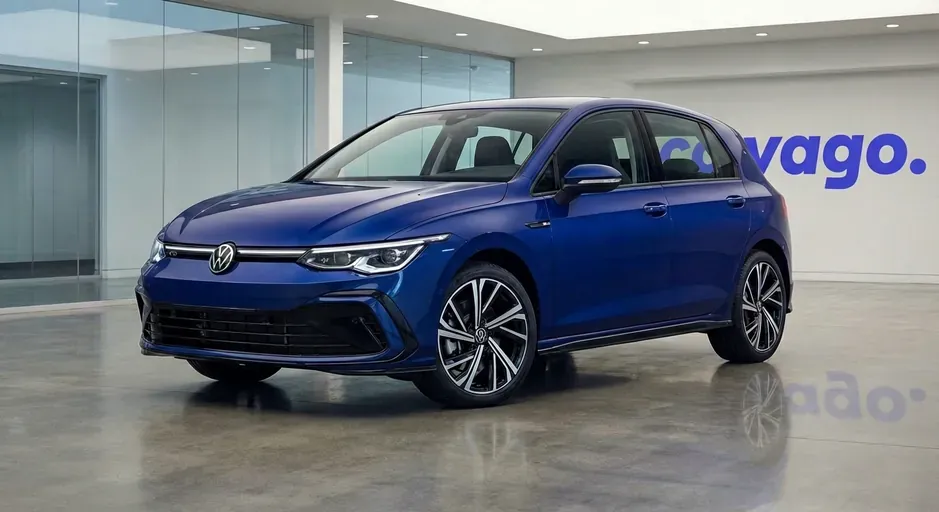
Volkswagen Golf

Introduction

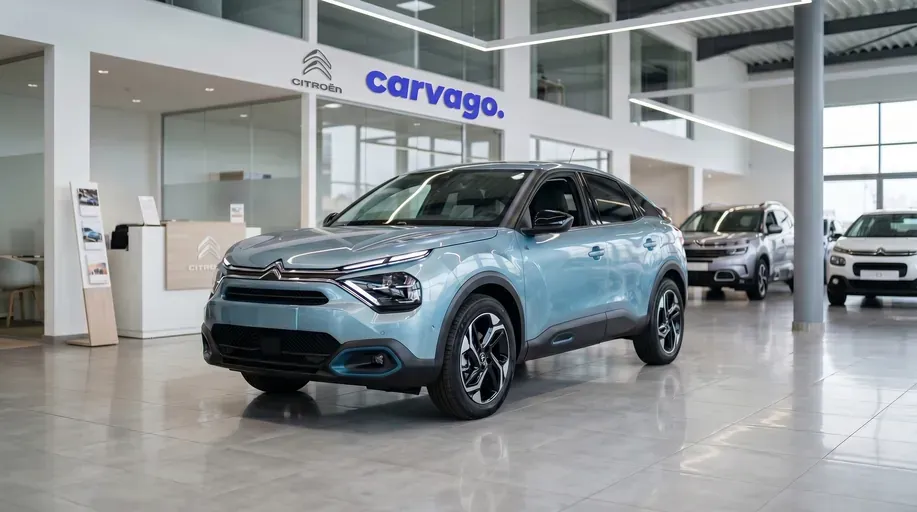
Citroën C4, which is also available on the market in its fully electric variant under the ë-C4 designation, represents a boldly designed hatchback with distinct crossover elements that places maximum emphasis on driving comfort and distinctive style. Standing against it is the absolute benchmark of the compact class, the Volkswagen Golf, which has maintained an unshakable reputation for decades as a versatile, precisely crafted car with a timeless design and cutting-edge technology. Let's take a detailed look at how this direct battle between the French innovator and the proven German bestseller turns out, and which of them represents a smarter choice for your daily journeys on the nearly-new used car market.

Comparison of External Dimensions

When comparing the exterior dimensions of these two popular models, especially when focusing on roughly four-year-old used cars of their current generations, we encounter a fundamental conceptual difference. While the eighth-generation Volkswagen Golf remains true to the traditional build of a compact hatchback (or a practical estate), the third-generation Citroën C4 has taken the path of a fashionable crossover with distinct SUV elements. This is primarily reflected in the overall height and length of the body. At 1520 to 1525 mm, the French representative is a significant 29 to 71 mm taller than the standard Golf hatchback (1454–1491 mm). At the same time, the C4 is roughly 60 to 70 mm longer. The Citroën's taller build offers the advantage of more comfortable entry and a slightly better view from the vehicle, though it may result in slightly higher aerodynamic drag on the motorway. Conversely, the Golf benefits from a lower silhouette and more compact length, which makes maneuvering in tight city streets easier and provides more confident handling in corners. From an everyday use perspective, the height and length define whether you prefer agility and easy parking, or rather a slightly elevated driving position.

Another key parameter is the wheelbase, which directly affects the longitudinal space in the interior. The Citroën C4 boasts a generous wheelbase of 2670 mm, surpassing the five-door Golf hatchback (2619–2630 mm) by 40 to 51 mm. This difference is positively reflected mainly in the legroom for rear-seat passengers, where the C4 feels airier overall. As for the width itself, both models are very close – the C4 measures exactly 1800 mm, while the Golf, at 1789 mm, is only slightly narrower. The difference of just 11 mm is barely noticeable in practice, and both cars thus offer very comparable elbow and shoulder room. A disadvantage of the Citroën's longer wheelbase may be a slightly larger turning circle, but for a traveling family, the more generous space in the back will be a clear benefit. When choosing the standard body style, the chassis dimensions slightly favor the C4 as the more spacious choice for adult passengers in the second row.

However, the situation changes radically if the Volkswagen Golf Variant (estate) enters the fray, for which Citroën cannot offer a direct bodywork competitor in its third-generation C4. The Golf Estate grows to a total length of up to an impressive 4651 mm, which is about 300 mm more than the French crossover. Along with this extension, the wheelbase also grows to 2669–2679 mm, allowing the family Golf to easily match the Citroën's spatial advantages and logically completely outclass it in terms of luggage capacity. Naturally, the estate is much more demanding of space when parallel parking and requires a more experienced driver's judgment in the city; however, for weekenders or active families with a lot of gear, it represents an unrivaled advantage. In terms of overall proportions, the Golf appeals to a significantly wider range of customers thanks to the choice between hatchback and estate, while the C4 reliably satisfies primarily lovers of stylish and comfortable crossovers.

ParameterCitroën C4 SUV/Off-roadVolkswagen Golf HatchbackVolkswagen Golf Estate
Width (mm)180017891789–1795
Length (mm)4350–43554282–42964631–4651
Height (mm)1520–15251454–14911462–1510
Wheelbase (mm)26702619–26302669–2679

Trunk Volume

When choosing a practical car for everyday use and family trips, luggage space plays one of the key roles. Whether you need to transport bulky shopping, sports equipment, or a stroller, the differences in the concept of the two compared cars can significantly influence your decision. While the Volkswagen Golf sticks to the traditional division into a compact hatchback and a spacious family estate, the third-generation Citroën C4 bets on an attractive silhouette on the border between a hatchback and a crossover, which is available only in a single body variant.

The basic trunk volume of roughly four-year-old used cars (generations produced since 2020) is surprisingly balanced in the base models. The Citroën C4 offers a solid 380 liters, a value more than sufficient for regular weekend shopping and luggage for a shorter vacation. The eighth-generation Volkswagen Golf in the hatchback version counters with an almost identical value of 381 liters. After folding the rear backrests, however, a slight difference appears in favor of the French car, which offers a maximum transport capacity of 1,250 liters compared to 1,237 liters in the German hatchback. Both cars thus provide very similar and fully competitive space in their class in the base configuration.

However, the situation changes diametrically if you are looking for a car for a larger family and require maximum transport capacity. The Volkswagen Golf scores with the Variant (estate) version, which provides a massive 611 liters in the base, bringing space for several extra suitcases and satisfying even the most demanding travelers. After folding the seats, this value climbs to a staggering 1,624 liters. With Volkswagen, however, it is necessary to watch out for plug-in hybrid powertrains (eHybrid and GTE), where the installation of the traction battery reduces the standard trunk to just 273 liters. Conversely, Citroën scores with its C4 model (including the fully electric ë-C4 version) with excellent space packaging – the 380-liter volume remains preserved for all powertrains regardless of the type of drive.

ParameterCitroën C4 CrossoverVolkswagen Golf HatchbackVolkswagen Golf Hatchback (PHEV)Volkswagen Golf Variant (Estate)
Base volume (liters)380381273611
Max. volume with seats folded (liters)1250123711291624

SummaryIf you are choosing a classic compact car, the differences in the trunk for the hatchback/crossover body are absolutely minimal and both models will meet your common requirements. Families with larger space requirements, however, should clearly reach for the Volkswagen Golf Variant model, as the Citroën C4 does not offer an adequate estate variant at all. A big plus of the French car, on the other hand, is the fact that you do not lose valuable liters of space even with electrified versions, which unfortunately does not apply to the hybrid Golf.

Family battle for every liter 🧳

While the base models offer almost identical space around 380 liters, for maximum transport practicality, the Golf Variant is the clear favorite, which Citroën cannot compete with due to the absence of an estate version.

Trailer Weights

Towing capacity is a crucial parameter for drivers who expect flexibility and maximum practicality from their vehicle. Proper towing power means not only confidence when moving loads but also freeing up the interior and providing trouble-free space for several extra suitcases thanks to the potential use of the tow bar for additional storage boxes. When comparing current used cars around four years old – namely the third-generation Citroën C4 and the eighth-generation Volkswagen Golf – we encounter very significant differences in the data. Although manufacturer data for both models lacks values for unbraked trailers (where a common legislative limit of up to 750 kg applies in practice), the values for braked trailers clearly reveal the technical and family focus of both rivals.

For standard internal combustion versions of the Citroën C4, such as models with 1.2 PureTech and 1.5 BlueHDi engines, the permitted braked trailer weight ranges in the lower spheres from 1000 to 1200 kg. In contrast, the Volkswagen Golf VIII is built on much more robust foundations. Even its smallest petrol engines, the 1.0 TSI and eTSI, start between 1100 and 1300 kg, while the very popular 1.5 TSI and 2.0 TDI units commonly offer a standard towing capacity of 1300 to 1600 kg. The absolute workhorse in our pair is the plastic-clad outdoor version, the Golf Alltrack with a 2.0 TDI engine, where the maximum towing weight reaches a generous 2000 kg.

A completely unique situation then prevails for alternative powertrains. Hybrid versions of the Citroën C4 mostly show lower table values with a capacity in the range of 1000 to 1200 kg, and for the electric ë-C4 model, factory data on the permitted trailer weight is even completely missing. However, the competing Volkswagen scores here as well. Its plug-in hybrid representatives, especially the Golf eHybrid or the more sharply tuned GTE, maintain their stability and can reliably handle a load of 1500 to 1700 kg on the hitch.

In practical operation, these details mean only one thing: the smaller towing capacity of the French model is easily sufficient for a weekend purchase of building materials at a DIY store or for attaching a standard bicycle carrier. However, the sturdier overall construction and wider range of engine options for the Volkswagen Golf make the German compact an incredibly capable and versatile towing vehicle. Its capacity is sufficient for a weekend purchase and a longer holiday with a large family caravan in tow. In conclusion, it can be stated that if you are choosing a used car primarily with regard to regular towing of caravans and trailers, the Golf is a much more rational and safer choice.

Model and engineBraked trailer weight (kg)Unbraked trailer weight (kg)
Citroën C4 1.2 PureTech (3rd gen)1000 - 1200-
Citroën C4 1.5 BlueHDi (3rd gen)1200-
Citroën C4 Hybrid (3rd gen)1000 - 1200-
VW Golf 1.0 TSI / eTSI (VIII)1100 - 1300-
VW Golf 1.5 TSI / eTSI (VIII)1300 - 1500-
VW Golf 1.4 / 1.5 eHybrid (VIII)1500 - 1700-
VW Golf 2.0 TDI (VIII)1500 - 1600-
VW Golf Alltrack 2.0 TDI (VIII)2000-

Overview of Most Common Motorizations

The differences in engine options between the Citroën C4 and Volkswagen Golf perfectly illustrate the different strategies of the two carmakers on the European market. If you are looking for a roughly four-year-old used car, the 8th generation Volkswagen Golf (produced since 2020) offers an incredibly wide and sophisticated range of powertrains. It covers everything from turbocharged petrol engines (TSI) and advanced mild-hybrids (eTSI) to extremely efficient diesels (TDI), powerful plug-in hybrids, and pure sports variants. In contrast, the 3rd generation Citroën C4 (on the market since late 2020) takes a simpler path, relying primarily on comfortable three-cylinder petrol engines (PureTech) and four-cylinder diesels (BlueHDi). However, the main draw of the Citroën is the presence of the fully electric ë-C4 version integrated directly into the model range, which the Golf lacks, as Volkswagen separated electromobility into the standalone ID series. For buyers, this means a clear choice in practice: if you are looking for technological variety, highway dominance, or dynamics, the Golf is the favorite. If, on the other hand, you prefer affordable electromobility or a calm and economical daily drive without complex systems, the C4 makes a lot of sense.

Citroën C4: In the Spirit of Calm and Electricity

Under the hood of roughly four-year-old Citroën C4 models, you will find proven units from the Stellantis group, designed primarily for a smooth and comfortable ride. The petrol base consists of the turbocharged 1.2 PureTech three-cylinder with 74 kW (100 hp), complemented by the popular more powerful variant with 96 kW (130 hp). During the first years of production (until 2022), a top-of-the-line 1.2 PureTech version with 114 kW (155 hp) was also available, but it soon disappeared from the range and is therefore a rare find on the used car market. For drivers operating on longer routes, the economical 1.5 BlueHDi diesel is available in 81 kW (110 hp) and 96 kW (130 hp) variants. While the weaker engines rely exclusively on a six-speed manual transmission, the more powerful variants are standardly equipped with the reliable eight-speed EAT8 automatic of a classic design with a hydrodynamic torque converter. An increasingly popular, quiet, and very smooth alternative is the fully electric ë-C4 model.

Engine TypeFuelPower (kW)Torque (Nm)Transmission
1.2 PureTech 100Petrol742056MT
1.2 PureTech 130Petrol962306MT / 8AT
1.2 PureTech 155Petrol1142408AT
1.5 BlueHDi 110Diesel812506MT
1.5 BlueHDi 130Diesel963008AT
ë-C4 136Electric1002601AT

Volkswagen Golf: Endless Choice and Advanced Technology

The 8th generation Volkswagen Golf is the benchmark of the compact class in terms of engines, with a range that fully covers any driver's needs. Petrol versions are represented by the economical 1.0 TSI three-cylinder and the highly refined 1.5 TSI four-cylinder (equipped with a cylinder deactivation system). A major contribution of this generation are the versions labeled eTSI – advanced mild-hybrid designs with a 48V starter-generator, which are paired exclusively with seven-speed dual-clutch DSG automatics. This technology not only helps with smoother starts but also allows the car to coast smoothly with the engine off to save fuel. Highway icons are the revolutionary 2.0 TDI engines (85 kW and 110 kW), in which Volkswagen implemented the "Twin Dosing" system for a radical reduction in nitrogen oxide emissions. The icing on the cake is the capable 1.4 eHybrid plug-in hybrid (or the more powerful GTE) and the GTI and R sports models powered by the indestructible 2.0 TSI engine.

Engine TypeFuelPower (kW)Torque (Nm)Transmission
1.0 TSI / eTSIPetrol / MHEV812006MT / 7DSG
1.5 TSI / eTSIPetrol / MHEV96 / 110200 / 2506MT / 7DSG
2.0 TDIDiesel85 / 110300 / 3606MT / 7DSG
1.4 eHybrid / GTEPHEV150 / 180350 / 4006DSG
2.0 TSI (GTI / R)Petrol180 / 235370 / 4207DSG

Proven All-rounder vs. French Calm Character ⚖️

While the Golf impresses with highly advanced technology, lightning-fast DSG transmissions, and excellent diesels ideal for the highway, the Citroën C4 excels for everyday commuting thanks to the absence of unnecessary complexity, a comfortable classic EAT8 automatic, and the option of pure electric drive.

Choosing the right engine is absolutely crucial for long-term satisfaction with a car, which is why our recommendations are based on real-world experience, mechanical reliability ratings, actual fuel consumption, and user reviews. Looking at roughly four-year-old used examples of both models, we encounter an interesting contrast in the philosophies of the two automakers. While the third generation of the Citroën C4 relies primarily on lightweight, three-cylinder power units betting on simplicity and a rev-happy character, the eighth generation of the Volkswagen Golf plays a more sophisticated game, moving extensively to refined four-cylinder engines enhanced by mild-hybrid technology (eTSI). Both approaches have their pros and cons on the used car market.

For the Citroën C4, we recommend: 1.2 PureTech 130 (96 kW)

This turbocharged three-cylinder is the best compromise for the average user in the third-generation line-up. While the base 100-horsepower version can feel breathless under a heavy load, the 130-hp variant provides sufficient power reserves for safe overtaking while maintaining excellent real-world fuel consumption of around 6 to 6.5 l/100 km. Especially when paired with the smooth-shifting EAT8 torque-converter automatic, it forms a perfectly relaxed package for everyday driving.

Technical Strengths:
The main weapon of this engine is its very solid pull from low RPMs, which ensures effortless driving. Furthermore, the low weight of the aluminum block itself doesn't put too much strain on the front axle, contributing significantly to the above-standard ride comfort for which the C4 is famous.

Risks and What to Watch Out For:
The most well-known weakness of the PureTech series is its timing belt, which is immersed in oil inside the engine (a "wet belt"). If previous owners exceeded recommended service intervals or used the wrong engine oil, the belt tends to crumble.
Why it matters and how to tell: Disintegrated belt particles can subsequently clog the oil pump pickup screen, leading to a fatal loss of oil pressure and severe engine damage. When buying a used car, always demand clear evidence of oil changes (ideally every 10,000–15,000 km or 1 year). Fortunately, the potential problem can be easily detected on many units by a quick visual inspection of the belt surface directly through the unscrewed oil filler cap. Data from available model years shows that this engine variant was supplied for the Citroën C4 until roughly 2024 – in younger model years, it began to be replaced by newer hybrid derivatives.

Who it suits best:
The 1.2 PureTech 130 engine is best suited for drivers with a balanced mix of city and suburban driving, typical of short to medium distances and occasional trips. For true highway mile-munchers, we recommend looking for the BlueHDi 130 diesel alternative instead.

For the Volkswagen Golf, we recommend: 1.5 eTSI (110 kW)

For the eighth generation of the Golf, the mild-hybrid 1.5 eTSI four-cylinder (150 hp) paired with the DSG dual-clutch automatic transmission represents the absolute pinnacle of versatility. According to available model year data, unlike older variants, it has remained on the market from 2020 to the present, so the selection of roughly four-year-old cars in the used car network is vast. It combines excellent dynamics with perfect refinement and exceptionally clever fuel savings, making it no problem to drive in combined mode below the 6 l/100 km mark.

Technical Strengths:
The powertrain benefits greatly from its 48V electrical system and starter-generator. This assists with the electric motor when pulling away from intersections, reliably filling in turbo lag, while also allowing for perfectly smooth and imperceptible engine shutdowns during so-called "coasting." For further savings, the sophisticated ACT system effectively deactivates two cylinders under low load.

Risks and What to Watch Out For:
The gasoline engine itself (EA211 Evo series) is mechanically among the best and most reliable engines on offer and does not suffer from any major inherent defects. The main risk of the Golf 8 – especially in the early model years (2020–2021) – is the onboard electronics.
Why it matters and how to tell: A freezing infotainment system, random restarts, or error messages from assistance systems can make driving very unpleasant. During the test drive, thoroughly test the speed and responsiveness of the center display and verify whether the vehicle has undergone the necessary software updates from the manufacturer at an authorized dealer. This will prevent future frustrations and unnecessary service visits.

Who it suits best:
This is an exceptionally versatile choice. It is perfectly suited for regular family trips, smooth and quiet city driving, and brisk highway journeys on vacation. Only for those drivers who frequently cover long distances across Europe at high speeds does it still make more sense to reach for the diesel benchmark in the form of the 2.0 TDI SCR model.
Real Fuel Consumption

When choosing a used car, it is good to remember that official laboratory fuel consumption figures provided by manufacturers often differ significantly from everyday reality on the roads. To get an objective picture of the efficiency of popular engines, it is best to rely on long-term user data. We therefore draw from the popular independent portal Spritmonitor.de, where hundreds of thousands of drivers carefully record their real-world refueling. For our comparison, we focused on cars roughly four years old (manufactured around 2021–2022), which is currently a highly sought-after segment in used car dealerships. This means comparing the current eighth generation of the Volkswagen Golf against the third generation of the Citroën C4.

Model and engineFuel typeAverage consumption (l/100 km)
Volkswagen Golf 1.0 TSIPetrol5.3
Citroën C4 PureTech 100Petrol5.4
Citroën C4 PureTech 130Petrol5.5
Volkswagen Golf 1.5 TSI ACTPetrol5.5
Volkswagen Golf 2.0 TDI SCRDiesel4.5
Citroën C4 BlueHDi 130Diesel4.6

From the perspective of real-world figures, the table reveals very interesting trends. Diesel engines from both manufacturers easily defend their dominance in overall operating economy. Volkswagen's renowned two-liter (2.0 TDI SCR) manages combined operation with an excellent average of 4.5 l/100 km, while the French 1.5 BlueHDi turbodiesel lags behind only slightly with a value of 4.6 l/100 km. However, much more surprising findings come from the petrol units, where it is clearly shown that very small downsized engines do not automatically guarantee a rocket-like drop in consumption. The weaker three-cylinder Citroën C4 PureTech 100 achieves an average of 5.4 l/100 km, while its more powerful and much more dynamic PureTech 130 version requires only a tenth of a liter more in practice (5.5 l/100 km). Why? Because the weaker engine has to work harder when trying to drive more briskly, and the driver forces it into higher revs. Furthermore, the Golf is a shining example of technological maturity: its solid four-cylinder 1.5-liter (1.5 TSI ACT) with stronger pull can fit into an average of 5.5 l/100 km, easily keeping pace with the aforementioned small-displacement three-cylinders and offering smoother operation in terms of user comfort.

For a typical driver moving primarily around the city and its surroundings, these findings mean that modern petrol units like the 1.5 TSI or PureTech 130 represent a trouble-free and very economical choice that makes great sense in terms of total costs and maintenance. However, if your journeys often involve long highway miles, the surcharge for economical diesel versions like the 2.0 TDI or 1.5 BlueHDi is still clearly worth it thanks to much lower consumption at higher speeds. From the overall assessment, however, it clearly follows that there are no abysmal differences in terms of efficiency between the roughly four-year-old Volkswagen Golf and Citroën C4 models. Fuel costs will therefore most likely not be the main deciding factor. A much more significant role in the final car selection will be played by preference for the overall design concept, desired interior ergonomics, or the specific purchase price on the used car market.

Current offers Volkswagen Golf

View full offer

Price Range and Used Car Offerings

When searching for a used car approximately 4 years old (production years 2021–2022), the third-generation Citroën C4 and the eighth-generation Volkswagen Golf (VIII) meet on the market. The price difference between these two models in the used car market is vast, reflecting not only the different purchase prices of new cars but also the varying rates of depreciation. While the French representative attracts with a great price-to-value ratio, the German benchmark relies on excellent residual value stability.

Citroën C4 (3rd generation, 2021–2022)

For families and individuals on a tighter budget, the C4 is an exceptionally attractive choice. Faster depreciation in the early years means that as a used car buyer, you get the most for your money.

  • Entry-level models: The cheapest units appear around €9,000 to €10,000. In this price range, expect basic 1.2 PureTech three-cylinder engines with lower power output and slightly higher mileage.
  • The sweet spot: The largest and most attractive part of the offer lies between €13,000 and €15,000. For this money, you can easily find cars in higher trim levels (Feel Pack or Shine) with excellent mileage under 50,000 kilometres and often with an automatic transmission.
  • Top-tier variants: Maximum prices for standard combustion versions with minimal mileage usually stop at the €19,000 mark.

Volkswagen Golf (8th generation, 2021–2022)

The Golf traditionally holds its value like few other cars in its class. Its huge advantage for the used car buyer, on the other hand, is the variety of the range – there is a vast selection of body styles (including the popular Variant estate) and reliable, efficient powertrains.

  • Entry-level models: The price floor for four-year-old Golfs is around €14,000 to €15,000. These are mostly "highway flyers" from corporate fleets, typically with a diesel engine and mileage approaching 200,000 km, or less equipped cars with the base 1.0 TSI engine.
  • The sweet spot: For a well-equipped and well-maintained Golf with the most popular 1.5 TSI four-cylinder (96 kW or 110 kW) and reasonable mileage around 70,000 km, you will most often pay €17,000 to €20,000.
  • Top-tier variants: High-end GTD diesel versions, nearly new cars with minimal mileage, or attractive R-Line trims easily exceed €23,000 to €25,000 on the market.

Overview of approximate used car prices (production 2021–2022)

ParameterCitroën C4 (3rd gen)Volkswagen Golf (8th gen)
Starting price (higher mileage)from approx. €9,000from approx. €14,000
Recommended cars (sweet spot)€13,000 – €15,000€17,000 – €20,000
Maximum standard prices (TOP condition)approx. €19,000€25,000 and more
DepreciationFaster (great advantage for used buyers)Slower (holds value excellently)

A price gap with a clear winner for the wallet 💰

While the Volkswagen Golf offers a huge selection of engines and holds its value perfectly, the Citroën C4 is the clear favourite for those looking for the youngest possible car and rich equipment for the least amount of money, thanks to faster depreciation.

Safety and Euro NCAP Rating

Although both of these model names may have achieved a maximum five-star rating at some point in their history or in combination with optional packages, it is absolutely crucial to view these results in a broader context and take the testing year into account. Euro NCAP crash test methodologies and protocols are constantly evolving, expanding, and becoming significantly stricter over time. Therefore, percentage scores from different years cannot be directly compared. Newer test years include much more demanding frontal impact simulations against a mobile barrier, more sophisticated cyclist detection, and entirely new emergency scenarios, such as automatic braking when crossing an intersection. What was once enough for a full star rating may no longer be sufficient today.

The current generation of the Citroën C4 (including the fully electric ë-C4 version) underwent Euro NCAP testing in 2021 according to the strict methodology of the time. With standard safety equipment, the car received an overall rating of four stars. In key disciplines such as adult protection (80%) and child protection (83%), it achieved very confident results, ensuring reliable passive safety for the cabin. However, it lost valuable points in the protection of vulnerable road users and in the evaluation of assistance systems. The standard equipment of the tested models lacked advanced cyclist detection and some other proactive assistants, which inevitably resulted in a lower overall score in these specific areas.

The eighth-generation Volkswagen Golf underwent testing not only at its launch, but its rating was recently subjected to demanding and updated protocols, with results confirmed for 2025 as well. The result is a full five-star rating. This model shows exceptionally stable results in occupant protection, but clearly excels over its French competitor in the protection of vulnerable road users and in its wide range of advanced safety assistants. This is thanks to excellent autonomous braking systems with very precise pedestrian and cyclist detection and a reliably functioning eCall feature. The excellent tuning of active safety ensures that the systems react in time even in complex traffic hubs.

ParameterCitroën C4Volkswagen Golf
Year of testing20212025
Adult occupant protection80 %80 %
Child protection83 %86 %
Vulnerable road user protection57 %85 %
Safety assistance systems63 %79 %

The overall comparison shows that although both cars provide the crew with an excellent level of structural protection in the event of an accident, the Volkswagen Golf offers a significantly more modern and comprehensive active safety package. More advanced assistance technologies and an emphasis on preventing collisions with pedestrians and cyclists make it a car that better meets the strictest current European standards.

🛡️ The King of Safety is from Germany

The Volkswagen Golf offers a more comprehensive and modern level of active and passive safety, making it a safer choice, especially for families and demanding drivers.

Comparison of Interesting Equipment Features

In addition to standard equipment, each of the models offers several unique features that bring added value to everyday use and clearly demonstrate the specific approach of both carmakers to modern travel.

Citroën C4: Uncompromising comfort and clever solutions

  • Chassis and comfort: Citroën excels in its class thanks to its patented suspension with Progressive Hydraulic Cushions. This technology smooths out even significant bumps and gives the car the famous "flying carpet" effect. The experience is enhanced by Advanced Comfort seats with an additional layer of special foam, which effectively prevents fatigue on long journeys.
  • Innovative storage spaces: A completely unique feature in front of the passenger is the Smart Pad Support. It is an integrated and extremely safe retractable tablet holder that is firmly anchored in the dashboard. A special drawer directly below it also serves for the safe and discreet storage of electronics when you leave the vehicle.
  • Design and concept: The C4 breaks the conventions of traditional compact hatchbacks. Its profile resembles a cross between an SUV and a coupe. The slightly elevated driving position improves visibility and makes entry easier, while the sloping rear helps with better aerodynamics and gives the car an unmistakable look.
  • Powertrains: In addition to traditional petrol and diesel engines, this generation is also offered as the fully electric ë-C4 model. Thanks to a cleverly designed platform, the electric version does not lose a single litre of luggage space or passenger room compared to its internal combustion siblings.

Volkswagen Golf: Digital revolution and assistance dominance

  • Infotainment and digitisation: The eighth generation of the Golf introduced a concept called the Innovision Cockpit. The interior has done away with the vast majority of physical buttons and relies on touch surfaces and a fully digital interface. There is support for wireless connection with smartphones, and the car also supports remote software updates (Over-The-Air).
  • Advanced telematics and safety: The 8th generation Golf is among the first mass-produced cars to bring Car2X technology as standard. The car can actively communicate with other vehicles and compatible traffic infrastructure in the vicinity, allowing it to warn the driver in advance of the end of a traffic jam, emergency service intervention, or an accident behind a blind corner.
  • Electronics and driving assistants: The Travel Assist system here combines advanced adaptive cruise control with active lane-keeping, enabling partially autonomous driving. The optional IQ.LIGHT LED Matrix headlights are also a great help, with dynamic and precise masking of oncoming vehicles.
  • Engine range and sports versions: While its French competitor focuses on comfort, the Golf offers a wide range of powertrains for all types of drivers. From fuel-efficient mild-hybrids (eTSI) that can coast with the engine off, to plug-in hybrids (eHybrid/GTE), and the legendary hot versions GTI, GTD, and the top-of-the-line Golf R with all-wheel drive.
  • Ergonomics: For users who spend a lot of time behind the wheel, the Golf offers excellent optional ergoActive seats. They are certified by the German medical initiative for healthy backs (AGR), have an extendable seat cushion, and often also include a massage function.

Key Advantages and Disadvantages

Citroën C4

Pros

Exceptional ride comfort thanks to suspension with progressive hydraulic cushions

Original crossover-inspired design offering a higher seating position and easier entry

More favorable purchase price on the used car market compared to German competitors

Availability of a purely electric variant (ë-C4) with a usable range

Retention of physical buttons and rotary dials for climate control settings

Cons

Very soft chassis means more pronounced body roll and more detached steering

Sloping roofline limits headroom for taller passengers in the rear seats

Slower response and more outdated graphics of the multimedia system

Average luggage space of 380 liters with a less practical shape

The Citroën C4 is ideal for drivers who primarily seek maximum comfort on broken roads and want to stand out from the crowd thanks to its unconventional look. It is a great choice for calmer personalities who don't mind a bouncier chassis and appreciate an excellent price-to-value ratio.

Volkswagen Golf

Pros

Excellent compromise between comfort and agile driving characteristics

Wide range of reliable engines (from economical diesel TDIs to mild-hybrid eTSIs)

More premium interior finish and excellent cabin soundproofing

Traditionally high residual value and very easy future resale

Airier interior in the rear seats without restricting headroom

Cons

Frustrating touch controls for climate and volume (unlit sliders on pre-facelift models)

Frequent software issues and slow infotainment responses, especially in cars from 2020–2021

Noticeably higher purchase price for used cars compared to the French rival

Very conservative exterior design

Volkswagen Golf will appeal to more demanding and conservative buyers who require confident driving characteristics, highway refinement, and a wide selection of efficient engines. Although owners must tolerate the degraded ergonomics of the touch controls in the eighth generation, the Golf rewards them with versatility and a slower depreciation.

Common Problems and Owner Complaints

Based on long-term user feedback, service bulletins, and practical insights from our detailed physical inspection of a used car, we have prepared a comparison of the most common faults of both cars.

Citroën C4

The third generation of the Citroën C4 is mechanically quite robust, however, it shares certain specifics and weak points with other models of the Stellantis group.

  • 1.2 PureTech engines (Petrol): The most well-known complication is the degradation of the timing belt, which is immersed in oil (a "wet belt"). If it crumbles due to old oil and fuel, small particles can clog the oil pump intake strainer, leading to a drop in oil pressure and potentially fatal engine damage. Prevention involves a strict shortening of the oil change interval (ideally to 10,000 to 15,000 kilometres) and regular inspection of the belt's condition.
  • 1.5 BlueHDi engines (Diesel): Here, owners most often face problems with the AdBlue system. Failures of the pump or the urea tank itself manifest as warning messages on the dashboard and often require replacement of the entire module. Also, watch out for the camshaft timing chain, which can rattle in diesel cars with higher mileage.
  • Infotainment and electronics: Owners occasionally report slower touchscreen responses, system freezes, or issues with the stability of wireless smartphone mirroring (Apple CarPlay/Android Auto). Most of these ailments are now resolved by software updates.
  • Chassis (PHC Shock Absorbers): Specific shock absorbers with progressive hydraulic cushions offer great driving comfort, but their eventual replacement in case of oil leakage is more expensive for high-mileage used cars than repairing a conventional suspension.

Citroën C4: Watch out for maintenance history

When choosing a petrol version, it is absolutely crucial to verify documented timely oil changes because of the timing belt; for diesels, focus in detail on the correct functioning of the AdBlue system.

Volkswagen Golf

The eighth generation of the Volkswagen Golf made a huge technological leap towards digitalisation, which unfortunately reflected on the reliability of electronics in the first years of production.

  • Software and infotainment (MIB3): By far the most frequent source of complaints for cars from 2020 and 2021. The onboard system suffered from freezing, slow starts, spontaneous restarts, or complete screen blackouts. The automaker gradually released extensive software updates that radically improved stability; however, older cars must have them properly installed.
  • Steering wheel and Travel Assist: A very well-known fault is constant beeping and the error message "Travel Assist is not available". The culprit is often a defective module with capacitive sensors directly in the steering wheel rim. A reliable solution is usually only a complete replacement of the steering wheel at a service centre.
  • DSG transmissions (DQ200): For weaker engines with torque up to 250 Nm (e.g., 1.0 TSI and 1.5 TSI), the Golf uses a seven-speed dual-clutch transmission with dry clutches. When crawling in traffic jams and heavy city traffic, faster wear of the linings can occur, which in used cars manifests as jerking when starting or vibrations when shifting between first and second gear.
  • 1.5 TSI engines: Some users complained in the early stages about engine jerking and stuttering immediately after a cold start (so-called "kangarooing"). The problem is already solved for the vast majority of used cars by reflashing the engine control unit maps within the authorised network.

Volkswagen Golf: Digitalisation takes its toll

The biggest risks of the Golf 8 are not related to mechanics, but to software; when buying a used car, unconditionally insist on checking the up-to-dateness of the systems and the functionality of all assistance equipment.

Tips for Buying a Used Car

When buying a used car, a thorough inspection is key, and this is especially true for modern models full of complex electronics and new types of powertrains. Here are some specific points to focus on for these two models. Remember that a detailed used car inspection by an experienced mechanic can save you a lot of trouble with expensive repairs after purchase.

When choosing a Citroën C4:

  • Timing belt on 1.2 PureTech engines: This engine uses a so-called "wet" timing belt immersed in oil. If the correct service intervals and oil type are not followed, it can degrade and clog the oil pump intake strainer. During a physical inspection of the car, visually check through the oil filler neck to see if the belt shows cracks or is crumbling.
  • Progressive Hydraulic Cushions: C4 models use Advanced Comfort suspension with hydraulic stops. During the test drive, intentionally seek out a rough road or speed bumps. The chassis must feel soothing, smooth, and without any metallic impacts, squeaks, or dull thuds from the axles, which could indicate worn shock absorbers or axle bushings.
  • Infotainment and electronics behavior: Citroën's onboard systems from the first years of production (around 2021) sometimes struggled with slow responses or screen freezing. During the test drive, click through the system in detail, try pairing a phone, and watch if the parking camera comes on without dangerous delay.
  • EAT8 gearbox shifting smoothness: If you choose an automatic transmission, the Aisin eight-speed torque converter automatic should shift silky smooth. During starts and braking to a complete stop, watch if the car jerks or hesitates. Jerking can signal worn oil or the need for a gearbox software update.
  • Battery capacity of the electric ë-C4 version: When buying a purely electric variant that has been in operation for about 4 years, always request a traction battery health certificate (State of Health – SOH). Even a slight drop in its capacity has a direct impact on the car's already rather average highway range.

When choosing a Volkswagen Golf:

  • Software stability (MIB3) and error messages: The eighth generation of the Golf was infamous for software problems at the start of its production (especially the 2020 and 2021 model years). Check if the system has been updated to the latest version. After starting, it should boot up quickly without restarts, and assistant error messages must not randomly pop up on the instrument cluster.
  • Capacitive steering wheel and Travel Assist system: A very common fault in the Golf VIII is error messages from the lane-keeping system and Travel Assist, accompanied by constant acoustic beeping. The culprit is usually a faulty capacitive steering wheel rim that stops detecting the presence of your hands. In such a case, the steering wheel often needs a complete replacement, which an independent technical inspection of the car will help detect in time.
  • Symptoms of dry clutches in the DSG gearbox (DQ200): In weaker engine versions (1.0 TSI and 1.5 TSI), you will find a seven-speed gearbox with dry clutches. During the drive, try slow crawling, as if you were in a traffic jam, or a smooth start on a slight incline. Any vibrations, shaking, or slipping indicate the approaching need for an expensive clutch kit replacement.
  • Functionality of the mild-hybrid system (eTSI): Engines labeled eTSI have a 48V starter-generator, thanks to which they can coast with the engine off. On the test route, release the accelerator pedal at a speed of around 80 km/h. The engine should turn off and then, when touching the pedal, restart instantly and completely imperceptibly. Jerking or hesitation can indicate a fault in the system.
  • State of charge and smooth switching in the eHybrid/GTE version: For the plug-in hybrid Golf, test the switching of driving modes. The connection of the internal combustion engine to the electric one should be barely perceptible while driving. As with any battery-powered vehicle, request verification of the high-voltage battery's degradation status before buying.

FAQ: Most Frequently Asked Questions

Both cars offer an almost identical basic luggage capacity, which is 380 liters for the Citroën C4 and 381 liters for the Volkswagen Golf. However, the Golf provides a slightly more regular trunk shape and a lower loading sill, making it easier to handle heavy or bulky luggage. After folding the rear seats, the space in both models increases to roughly 1250 liters, resulting in a rare tie in terms of cargo practicality.

Thanks to its special shock absorbers with progressive hydraulic cushions, the Citroën C4 is tuned for maximum smoothness and filters out urban imperfections excellently. The Volkswagen Golf, on the other hand, offers a slightly stiffer but much more balanced chassis, providing better stability in corners and confidence on the highway. For calm and soft travel, the French representative is the better choice, while more active drivers will appreciate the driving precision of the German model.

The Volkswagen Golf benefits from its traditional hatchback body, which allows it to offer enough headroom even for adult passengers in the rear seats. The Citroën C4 has a design on the boundary between a crossover and a coupe, which slightly limits headroom in the second row due to the sloping roofline. In terms of overall spaciousness and versatility for taller passengers in the back, the Volkswagen Golf is noticeably more practical.

The eighth-generation Volkswagen Golf opted for a minimalist interior controlled primarily via touch surfaces and displays, which requires some getting used to and can be more distracting. The Citroën C4, on the other hand, prudently retained a separate panel with classic hardware buttons for climate control, which significantly simplifies daily operation. However, the Golf's multimedia system has a higher-quality display, better resolution, and wider connectivity options than the one in the Citroën.

The Citroën C4 has a huge advantage in that, in addition to gasoline and diesel engines, it also offers a fully electric version, the ë-C4, with locally emission-free operation. The Volkswagen Golf does not have a purely electric variant in this generation, but on the other hand, it provides top-notch and efficient mild-hybrids (eTSI) and plug-in hybrids (eHybrid). If you are looking for a pure electric car for daily commuting, choose the C4; for universal highway use with low consumption, the hybrid Golf is the better choice.

Conclusion: Which Model to Choose?

Sources: ADAC, idnes.cz, garaz.cz, motorvize.cz, fdrive.cz, csas.cz

This article was prepared using artificial intelligence tools. The section guarantor is Petr Dušek.

Related articles

Car battle

Citroën C4 vs. Škoda Octavia: Complete comparison 2026

Detailed comparison of the Citroën C4 vs Škoda Octavia. We compare the driving characteristics, space, and equipment of these used cars. Find out from our verdict which car to choose.

Apr 18, 2026

Car battle

Citroën C4 vs. Seat Leon: Complete comparison 2026

Citroën C4 vs SEAT Leon Comparison: Which used car makes more sense? A detailed comparison of equipment, driving characteristics, and a verdict that will make your choice easier.

Apr 24, 2026

Car battle

Hyundai i30 vs. Kia Ceed: Complete comparison 2026

Detailed comparison of Hyundai i30 vs Kia Ceed. Explore real-world experiences, engine reliability, and a detailed verdict to help you choose the better car.

Apr 25, 2026

We accept online card payments as well as wire transfers.

visa payment provider logovisa-electron payment provider logomastercard payment provider logomaestro payment provider logodiners-club payment provider logodiscover payment provider logo