Articles

Car battle

BMW 5 Series vs. Volvo V90: Complete comparison 2026

Comparison of the BMW 5 Series (G30/G31) and Volvo V90. Which premium used car is better? We compared comfort, space, and reliability. Read our final verdict!

October 22, 2026

VS
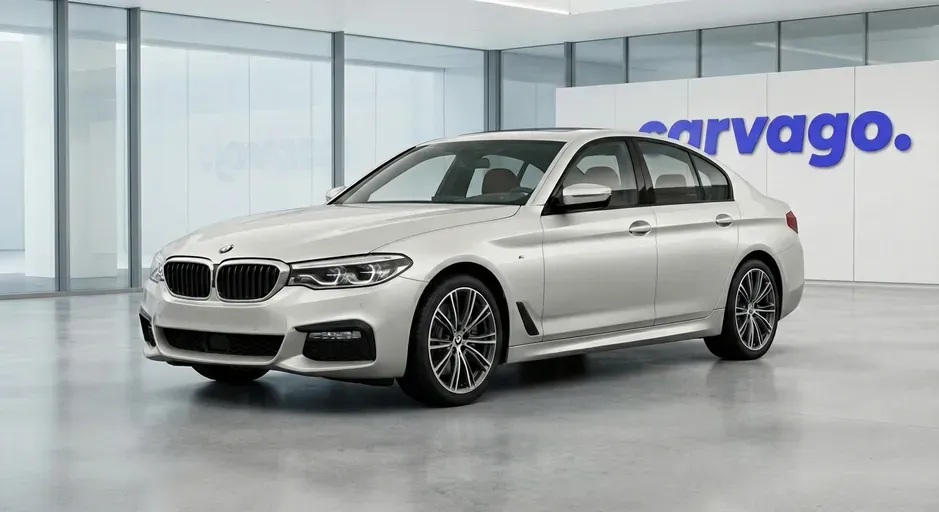
BMW 5 Series

BMW 5 Series

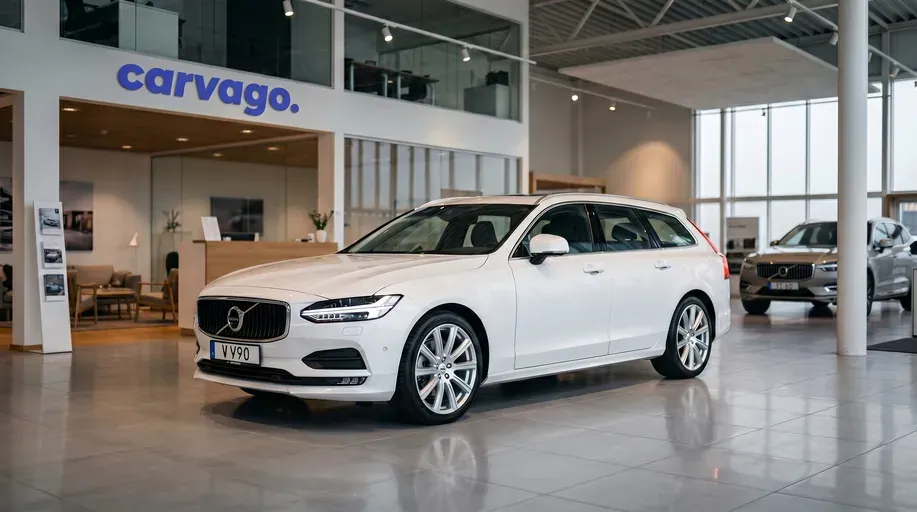
Volvo V90

Volvo V90

Introduction

BMW 5 Series, also offered in the extremely popular estate body style designated as Touring, is a long-standing benchmark of the executive class, attracting drivers primarily with its top-tier driving dynamics and sporty luxury. Standing directly against it is the Volvo V90, also available in the sought-after, more robust and slightly elevated V90 Cross Country variant, which embodies Scandinavian elegance with a maximum emphasis on innovative safety, unrivaled comfort, and timeless minimalist design. Let's take a detailed look together at which of these attractive premium cruisers emerges as the winner from our direct comparison and thus represents the better choice for your daily travels.

Comparison of External Dimensions

When comparing the exterior dimensions of these two premium executive class representatives, we encounter interesting differences that shape their character. If we focus on popular models roughly four years old (G30/G31 generation for BMW and the second generation for Volvo), the BMW 5 Series Touring measures 4963 mm in length, surpassing the rival Volvo V90 (4945 mm) by 18 mm. Conversely, the Swedish representative has the upper hand in body width, where its 1879 mm beats the German rival by 11 mm (BMW measures 1868 mm). In practice, this means the Volvo offers a slightly airier feel in the shoulder area, while the BMW relies on a more elongated and dynamic silhouette. In terms of daily use and parking, the choice between the two cars is a draw – the wider Volvo better maximizes the internal impression of space, but both vehicles require a more experienced eye when maneuvering in underground garages due to their nearly five-meter dimensions.

An interesting contrast is provided by the overall height of the vehicles. The Volvo V90 is characterized by an exceptionally low and sleek build with a height of only 1472 mm. In contrast, the BMW 5 Series Touring has grown to a height of 1498 mm (the Sedan version is slightly lower, specifically 1479 to 1483 mm depending on the engine used). This 26 mm difference in favor of the German estate has a positive effect on headroom for passengers in the second row of seats and generally makes getting in easier. On the other hand, the Volvo, with its low-slung roofline, evokes sporty shooting brake-style models, giving it visual exclusivity and aerodynamic efficiency. Therefore, a significant role in the choice is played by whether you often carry adult passengers in the back seats, for whom the BMW will offer better comfort, or whether you are more attracted to the exceptionally elegant and low-slung stance of the Volvo.

A crucial parameter for overall interior spaciousness and driving behavior is the wheelbase. In this discipline, the BMW 5 Series clearly dominates with a value of 2975 mm, surpassing the Volvo V90 (2941 mm) by a full 34 mm. The longer wheelbase of the BMW provides slightly more legroom for rear passengers and also contributes to more confident directional stability during fast highway journeys. However, Volvo responds with a clever architecture featuring transversely mounted engines, which can utilize interior space very effectively despite the shorter distance between the axles. From a driving character perspective, the Volvo's shorter wheelbase makes navigating sharp city corners slightly easier, but for long journeys and maximum passenger comfort on highways, the BMW's elongated platform represents a significant and clearly measurable advantage.

ParameterBMW 5 Series SedanBMW 5 Series TouringVolvo V90 Estate
Length (mm)496349634945
Width (mm)186818681879
Height (mm)1479 - 148314981472
Wheelbase (mm)297529752941

Trunk Volume

When choosing an executive or family car from the used car market, typically around four years old, trunk capacity is one of the decisive factors for daily usability. Both the BMW 5 Series (G30/G31 generation) and the Volvo V90 (second generation) offer generous space, but each model approaches it with a slightly different philosophy. While Volvo builds its success on renowned family practicality and clever interior packaging without a significant loading lip, its Munich rival offers a choice between a traditional estate body and an elegant sedan, scoring points with a slightly larger base volume.

In terms of pure numbers, the BMW 5 Series Touring (estate) comes out on top. Its base capacity is 570 liters, which is sufficient for weekend shopping or a longer holiday with the whole family. After easily folding down the rear seatbacks, you get an above-average 1,700 liters, creating space for several extra suitcases or transporting bulkier sports equipment. The Volvo V90, which is available exclusively as an estate (its sedan sibling is designated S90), does not lag far behind its Bavarian competitor with a base capacity of 560 liters. Its maximum capacity after folding the seats is 1,526 liters, which it compensates for with a perfectly flat loading floor and practical folding dividers that prevent smaller items from moving around. A BMW Sedan version is also available, which can accommodate a very respectable 530 liters of luggage in its basic configuration.

However, when buying on the used market, those interested in the increasingly popular plug-in hybrid versions should pay attention, as there are fundamental differences between the models. Due to its platform, BMW stores the high-voltage batteries under the trunk floor, which significantly limits the volume: the electrified 530e sedan offers only 410 liters, and the 530e Touring version has a capacity of 430 liters (1,560 liters when folded). In contrast, Volvo uses its own specific architecture (SPA), where the battery module is hidden deep in the center tunnel. The Recharge hybrid version thus suffers absolutely no loss of liters and proudly maintains its full 560-liter capacity without compromise.

If you crave the absolute largest trunk space with conventional internal combustion engines, the BMW 5 Series Touring is the more voluminous choice in this regard. However, if you want to buy a plug-in hybrid on the used market and are unwilling to compromise on family practicality, the cleverly designed Volvo V90 turns the whole situation completely in its favor.

ParameterBMW 5 Series SedanVolvo V90 SedanBMW 5 Series EstateVolvo V90 Estate
Base capacity (l)530 l-570 l560 l
Max. capacity after folding seats (l)--1700 l1526 l

Sweden wins when it comes to hybrids! 🔌

While the classic internal combustion versions of the BMW 5 Series Touring offer a few more liters for your suitcases, when buying a popular plug-in hybrid, the Volvo V90 takes the lead, as it maintains a full-sized trunk unaffected by batteries, unlike the Bavarian.

Trailer Weights

The ability to tow heavy trailers is a crucial parameter for premium executive estate cars and sedans, especially for owners who regularly use the vehicle to tow a caravan, a recreational boat, or a horse trailer. In this category, the trailer weight directly determines the car's utility value and overall flexibility. Focusing on models around four years old, the BMW 5 Series (G30/G31 generation) and the Volvo V90 (2nd generation) represent exceptionally capable towing vehicles, yet we find interesting differences in their maximum limits that may be decisive in the final choice.

Traditional internal combustion versions of the BMW 5 Series, such as the popular 530d or 530i models, offer a fully sufficient standard and maximum braked trailer weight of 2,000 kg. However, if we look at the popular plug-in hybrid versions (e.g., BMW 530e), the towing capacity is noticeably limited due to the installation of heavy batteries. Here, the permitted load often drops to 1,700 kg, and for some older or specifically equipped versions from 2019–2020, even to just 750 kg. The competing Volvo V90 approaches towing capacity differently and offers a wider range depending on the chosen engine. While the base petrol variants (B4, T4) handle a standard 1,800 to 2,000 kg, more powerful diesel versions like the D5 or B5 Diesel push the maximum towing weight up to an impressive 2,200 kg. Furthermore, the Swedish automaker has excellently optimized its T6 and T8 Recharge plug-in hybrids, which maintain excellent towing power with a maximum of up to 2,100 kg.

These differences have a clear practical impact. While the 2,000 kg value easily covers the needs of average users, the increase to 2,200 kg in the diesel versions of the Volvo provides a much larger margin and driving stability. In practice, this means more confident handling of a large twin-axle caravan, which is absolutely sufficient for a short weekend trip to the lake as well as a longer holiday in southern Europe.

Final evaluation:
If you are looking for a car with a classic internal combustion engine, both cars will do an excellent job of towing, although the Volvo offers a slightly higher absolute maximum for the heaviest loads. However, a truly fundamental difference occurs when choosing a plug-in hybrid. Here, the Volvo V90, with its 2,100 kg, clearly outperforms the BMW 530e, making it a significantly more rational and versatile choice for environmentally conscious drivers who do not want to compromise on towing power.
Model and engineBraked trailer (kg)Unbraked trailer (kg)
BMW 5 Series (G30/G31) - 530i, 530d2,000750
BMW 5 Series (G30/G31) - 530e (Plug-in Hybrid)750 - 2,000750
Volvo V90 (2nd gen) - B4, B5, T4, T51,800 - 2,000750
Volvo V90 (2nd gen) - D4, D5, B4/B5 Diesel2,000 - 2,200750
Volvo V90 (2nd gen) - T6, T8 (Plug-in Hybrid)2,100750

Overview of Most Common Motorizations

BMW 5 Series and Volvo V90 represent two completely different approaches to the powertrain layout of a premium executive car, which means a fairly radical decision for used car buyers. While with approximately four-year-old used BMWs you'll encounter the good old school including not only highly efficient four-cylinders but especially silky-smooth and powerful straight-sixes, Volvo made an uncompromising cut with its V90 model. Under the hood of the majestic Swedish estate, you'll find exclusively a two-liter four-cylinder. However, to compensate for the absence of large-displacement units, Volvo bet everything on the card of sophisticated electrification. While the weaker specifications of both models represent a great choice for a calmer drive and reasonable fuel consumption, at the top of the range stand the sovereign six-cylinders for BMW, whereas Volvo relies on plug-in hybrid systems boasting extraordinary combined power with the bonus of partially emission-free driving.

BMW 5 Series (G30/G31 generation)

Under the hood of the BMW 5 Series G30/G31 generation – the generation that today represents the most interesting part of the market for four-year-old nearly new used cars – we find a rich and diverse range of power units. The absolute standard and common choice for fleet customers or thrifty drivers is the ubiquitous 520d diesel four-cylinder, which handles very efficient journeys. However, among used cars, the iconic 530d straight-six diesel shines the most. Depending on the year of manufacture and the presence of a mild-hybrid system, it offers power from 195 kW up to 210 kW and provides massive pull completely naturally and without hesitation. Petrol engines are ideally represented by the 530i four-cylinder; for connoisseurs looking for performance that gets the adrenaline pumping, there is the 540i petrol six-cylinder. Of course, the manufacturer also thought about city traffic and reducing local emissions, which is handled by the widely represented 530e plug-in hybrid. Standard across the range is one of the very best transmissions on the market, the eight-speed Steptronic automatic, complemented by either classic rear-wheel drive (sDrive) or the smart xDrive all-wheel drive.

Engine TypeFuelPower (kW)Torque (Nm)Transmission
520dDiesel1404008A Steptronic
530dDiesel / MHEV195 / 210620 / 6508A Steptronic
530iPetrol1853508A Steptronic
540iPetrol / MHEV2504508A Steptronic
530e (PHEV)Petrol + Electric185 / 2154208A Steptronic

Volvo V90 (2nd generation)

The range of engines for the Volvo V90 is much more streamlined due to corporate policy. All engines share the exact same 2.0-liter four-cylinder architecture and gain all performance advantages through a combination of turbochargers, superchargers, and electric motors. As market data reveals, the previously widely used pure internal combustion models labeled D3 and D4 (for diesel) or T4 and T5 (for petrol) were mostly produced only until 2020. Today, with nearly new units, you will primarily encounter newer cars with a badge starting with the letter B. These represent more efficient mild-hybrids, where a powerful starter-generator smooths out starts and reduces fuel consumption (the B4 Diesel and petrol B5 versions are very popular). To achieve truly high performance, Volvo has advanced plug-in hybrids labeled T6 Recharge and the majestic T8 Recharge, where the peak total power rises towards the 294 kW mark. Power is always transmitted by the smooth-shifting eight-speed Geartronic automatic.

Engine TypeFuelPower (kW)Torque (Nm)Transmission
D4 / B4 DieselDiesel / MHEV140 / 145400 / 4208A Geartronic
T4 / B4Petrol / MHEV140 / 1453008A Geartronic
T5 / B5Petrol / MHEV1843508A Geartronic
B6 AWDPetrol / MHEV2204208A Geartronic
T8 RechargePetrol + Electric2946408A Geartronic

In terms of final recommendation, it becomes clear where both estates have their strengths and weaknesses. A weakness of the Swedish Volvo V90 can be less acoustic and mechanical refinement under high load due to the missing six cylinders under the hood. On the other hand, it excels with the absolute effortlessness of modern hybrids, and if you often move around the city and can charge the vehicle regularly, the Recharge variants will offer you fantastic daily performance with quiet operation. Therefore, we recommend it more to relaxed drivers who, in addition to safety, also admire modern technologies with regard to ecology. In contrast, the BMW 5 Series (G30/G31) has an indisputable advantage in the form of fantastically tuned and robust diesel six-cylinders. It is thus the unquestionable king of the left highway lane – if you know that you spend the vast majority of your time on long-distance journeys and appreciate perfect dynamics spiced with a dose of sportiness, the Munich representative remains the clear favorite.

Refinement of a straight-six, or the electric power of a four-cylinder? ⚖️

If you are looking for a tireless highway cruiser made for enthusiastic drivers, the six-cylinder BMW is unrivaled; however, if you spend your time more in a calmer manner in suburban traffic, the advanced mild-hybrid and plug-in hybrid units from Volvo will absolutely win you over with their smoothness.

Choosing the right engine is a critical step for your long-term satisfaction with the car, which is why we base our recommendations on real-world dynamics, actual fuel consumption, owner feedback, and, above all, mechanical reliability. When comparing these two executive estates, we encounter completely different philosophies: while the BMW 5 Series (G30/G31 generation) in this age category still offers legendary and silky-smooth straight-six engines, Volvo has opted exclusively for modular two-litre four-cylinder engines for the V90 model. Interestingly, thanks to top-tier aerodynamics and excellent pairing with the eight-speed ZF gearbox, the three-litre BMW can often achieve lower fuel consumption on the motorway than the theoretically more economical four-cylinder Volvo. On the other hand, the Swedish competitor excels with its newer mild-hybrid powertrains (designated B), featuring an incredibly smooth start-stop system and quiet operation in suburban traffic.

For the BMW 5 Series, we recommend: 530d xDrive (210 kW / 286 hp)

The three-litre straight-six diesel (code B57) represents the absolute pinnacle in terms of the ratio of dynamics, practicality, and reliability in the G30/G31 generation (available years for four-year-old used cars extend until the end of production around 2023/2024). This engine offers a massive 650 Nm of torque, ensuring a confident driving experience in every situation, while real-world fuel consumption on long trips typically ranges between 6.5 and 7.5 litres per 100 km. From a technical standpoint, this six-cylinder is very robust, but it does have its weaknesses that are easy to spot. During the inspection, check the condition of the EGR valve cooler for coolant leaks, for which BMW frequently issued recalls (resolved by free replacement at a dealer). Also, pay attention to the tyres – the xDrive system is extremely sensitive to differences in wheel circumference. Therefore, always require evenly worn tyres, ideally with BMW-specific homologation (marked with a star), otherwise there is a risk of damaging the expensive transfer case (VTG). This engine is the perfect choice for long motorway journeys and for drivers who enjoy a more dynamic driving style, and these versions are highly sought after on the secondary market as the latest generations gradually move away from large-displacement diesel engines.

For the Volvo V90, we recommend: B4 Diesel AWD (145 kW / 197 hp)

For a roughly 4-year-old Volvo V90 (2nd generation), the most sensible choice is the mild-hybrid diesel engine designated B4. We would like to point out an important fact from the available data: older pure diesel engines (such as D3 and D4) ended production around the turn of 2019/2020 and were fully replaced in the younger used car market by the "B" generation (with production continuing until 2024). With 145 kW of power and 420 Nm of torque, the B4 Diesel version offers an ideal balance for such a heavy vehicle. From a mechanic's perspective, a huge plus is that you avoid PowerPulse technology (a compressed air tank for faster turbo response), which the more powerful D5 and B5 variants suffered from. This technology frequently experienced hose cracking, the repeated replacement of which became unnecessarily expensive for owners. The main risk with the B4 remains, as with all modern diesels, DPF filter clogging and carbon buildup in the intake tract during constant city driving. We recommend taking the car for a thorough motorway drive at least twice a month to allow the particulate filter regeneration to complete correctly. The B4 Diesel is tailor-made for calm, pragmatic, and family-oriented drivers who prefer a defensive driving style and want to benefit from uncompromising safety and comfort on board.

Real Fuel Consumption

Official fuel consumption figures provided by manufacturers often differ significantly from what drivers experience in real-world traffic. While laboratory tests promise miraculous values for large premium estates and sedans, everyday driving with models around four years old – such as the BMW 5 Series (G30/G31 generation) and Volvo V90 (2nd generation) – shows a much more realistic picture. For the most accurate comparison on the used car market, we used data from the independent community portal Spritmonitor.de, where thousands of users enter their actual refueling records. We selected the most popular engines corresponding to model years from 2020 to 2022.

Model and engineAverage consumption (l/100 km)
BMW 520d (140 kW)6.5
Volvo V90 B4 Diesel (145 kW)6.7
BMW 530d (195 kW)7.4
BMW 530i (185 kW)8.5
Volvo V90 B4 (145 kW)9.0
BMW 530e (215 kW)4.5*
Volvo V90 T8 Recharge (288 kW)5.5*

\For plug-in hybrid versions, the real-world fuel consumption value is fundamentally dependent on the regularity of charging.*

Looking at the collected real-world data, it is quite clear that diesel engines still haven't run out of steam at highway speeds. The absolute most economical choice is the BMW 520d diesel four-cylinder, which can drive this heavy car at an excellent 6.5 liters per hundred kilometers. An interesting and surprising finding is the fact that the four-cylinder Volvo (B4 Diesel) does not save the driver as much fuel as might be expected given its smaller displacement. In practice, its consumption increases rapidly and almost matches the much more potent and refined three-liter six-cylinder BMW 530d. In the petrol engine category, the Bavarian carmaker demonstrates much better cooling efficiency and engine management – the smaller B4 four-cylinder in the Volvo visibly struggles more under aerodynamic drag and the weight of the entire car, resulting in consumption half a liter higher than the similarly powerful BMW 530i.

For a typical used car buyer, these figures have a clear meaning. If you are a highway mile-muncher, a regular business traveler, or commute long distances, diesel variants are by far the most rational choice. For drivers who cover shorter distances and occasional long trips, petrol four-cylinders will be more attractive, and for strictly urban or suburban users, used plug-in hybrids can be a lifesaver. However, budget-conscious buyers of plug-in versions (BMW 530e and Volvo V90 T8) should clearly answer the question of whether they can charge the car daily in a garage or at work before purchasing. Neglecting this step will immediately send the real consumption of these heavy vehicles over 8 liters.

In conclusion, it can be confirmed that fuel consumption clearly represents a strong argument that slightly tips the scales in this comparison. While the battle between these two great cars is very close for diesel four-cylinders, where the overall condition of a specific used car, design, or premium equipment will likely decide, BMW emerges as the overall winner of the engine battle. For models around four years old, the Bavarian brand managed to offer more efficient petrol four-cylinders and unbeatably economical diesel six-cylinders, making it a slight favorite in this German-Swedish battle from an operating cost perspective.

Current offers Volvo V90

View full offer

Price Range and Used Car Offerings

When looking at the used car market for vehicles around four years old (typically 2021–2022 models), we focus on the updated versions of both brands, which are highly sought after on the second-hand market. For the BMW 5 Series, this is the G30/G31 generation after the facelift (referred to as LCI). In the case of the Volvo V90, we are also talking about the refreshed version, which introduced mild-hybrid powertrains (B4, B5) or improved plug-in hybrids (Recharge).

This age category offers an excellent price-to-value ratio on the used car market. The cars have already undergone their steepest depreciation in purchase price, yet they still retain modern technology, fresh design, and high reliability.

BMW 5 Series (G30/G31 LCI)

The Munich representative holds its residual value significantly better on the market. The reason is not only the brand's strong reputation but primarily the existence of highly sought-after six-cylinder diesel engines and an overall sportier focus.

  • Base engines (520d, 520i): Prices start at approximately €31,000. For this amount, you can usually get the popular corporate four-cylinders that have higher highway mileage behind them.
  • The golden mean (530d xDrive, 540d): The most sought-after versions with the silky-smooth three-litre six-cylinder and all-wheel drive most often range between €37,000 and €49,000. The price depends mainly on optional equipment (such as M Sport packages or better adaptive suspensions).
  • Top models (e.g., M550i xDrive): Prices for top-equipped and uncompromising eight-cylinder petrol models from these years commonly exceed €53,000.

Volvo V90

The Swedish premium estate represents an exceptionally smart and rational choice for a second-hand buyer. Faster initial depreciation means that as a used car, it is thousands of euros cheaper than its direct German competitors.

  • Base engines (B4, or D4): Reliable two-litre four-cylinders with front-wheel drive can be purchased at four years old for an attractive €23,000 to €27,000.
  • Mid-range and popular versions (B5 AWD, Cross Country): Very popular variants with all-wheel drive and especially the cladded Cross Country versions form the core of the offer. They can be found from €29,000 to €37,000.
  • Top models (T6/T8 Recharge PHEV): The most powerful plug-in hybrids with luxury equipment (Inscription or Ultimate trim levels) usually fit within the range of €39,000 to €45,000 as four-year-old used cars.

Market Price Overview (2021–2022 models)

Price LevelBMW 5 Series (G30/G31 LCI)Volvo V90 (Facelift)
Base models (often higher mileage)from €31,000from €23,000
Average well-maintained and popular versions€37,000 – €49,000€29,000 – €37,000
Top versions and luxury specifications€53,000 and more€39,000 – €45,000

Reason versus emotion and six-cylinders ⚖️

While the Volvo V90 represents a significantly more affordable and exceptionally rational choice on the used car market with regard to budget, the BMW 5 Series holds its value much more firmly thanks to the desirable six-cylinders and prestige, which is naturally reflected in its higher purchase price.

Safety and Euro NCAP Rating

Both compared vehicles earned the maximum five-star rating from independent Euro NCAP tests, confirming their leading position in the field of safety. When choosing a used car, however, it is crucial to understand the context and the year the models were tested. Euro NCAP testing protocols are constantly evolving and becoming more stringent over the years, meaning that percentage ratings from earlier years cannot be directly compared with today's standards, which already assess, for example, complex intersection scenarios or advanced detection of cyclists and pedestrians when reversing. The BMW 5 Series (G30 generation) underwent testing in 2017. Since Euro NCAP certification typically lasts six to seven years, the formal validity of this rating for roughly four-year-old used cars sold today has already expired. At the time of its test, the BMW demonstrated excellent passive safety with 91% for adult protection and 85% for child protection. It also performed very well in protecting vulnerable road users (81%) thanks to its standard active hood. However, the overall result suffered in the safety assist category (59%), as many advanced accident prevention systems were offered by the Bavarian automaker only as optional equipment at the time and could not be included in the standard score.

The Volvo V90 was tested in the same year (2017), which provides an exceptionally rare opportunity for a direct and fair comparison using the identical methodology. In its case as well, the original five-star certificate has officially expired, but detailed test results continue to show the Swedish brand's historical dominance in this area. The car achieved a fantastic rating of 95% for adult occupant protection. A slightly weaker point by the standards of the time was child protection (80%) and pedestrian protection (76%), where the car lagged slightly behind its German rival. Where Volvo completely outclassed the competition in its class, however, was the crucial category of safety assistance systems. The score of 93% is a direct reflection of the automaker's firm strategy, which deployed its key City Safety package – including, among other things, autonomous emergency braking and reliable obstacle detection – as standard equipment across all versions sold.

In terms of overall safety, both models represent highly resilient and safe vehicles with excellent structural integrity of the cabin. However, if we take into account current demands for active accident prevention, the Volvo V90 emerges as the overall winner of the comparison. Its safety equipment, based on an exceptionally strong presence of standard advanced assistants, is much more comprehensive and modern from the perspective of today's used car market, thereby guaranteeing its owners a level of protection corresponding to more current market trends.

ParameterBMW 5 SeriesVolvo V90
Year of testing20172017
Adult occupant protection91 %95 %
Child protection85 %80 %
Protection of vulnerable road users81 %76 %
Safety assistance systems59 %93 %

🛡️ Standard Safety or Optional Assurance

While the BMW 5 Series excels in passive protection and pedestrian safety features, the Volvo V90 clearly wins thanks to its uncompromising standard equipment of active assistants, which keeps pace with current demands even as a used car.

Comparison of Interesting Equipment Features

In addition to standard equipment, each of the models offers several unique features and approaches to luxury that can be decisive for the customer during the final selection. While the Bavarian representative bets on ultimate technology and driving experience, the Swedish competitor scores with family practicality and minimalist comfort.

BMW 5 Series: Technological Dominance and Driving Pleasure

  • Infotainment and control: The iDrive system (typically version 7.0 in cars around 2022) is among the absolute top in the automotive world in terms of user-friendliness. It offers control via touch, voice, but also the traditional physical rotary controller on the center console, which significantly facilitates operation while driving. A bonus is the unique gesture control for basic functions such as volume adjustment or accepting a call.
  • Assistance systems and electronics: A prominent technological feature is the Reversing Assistant. This system remembers the last 50 meters driven forward at speeds up to 36 km/h and can reverse the car completely automatically back along the same trajectory. You will appreciate this function especially in narrow underground garages or tight alleys.
  • Chassis and steering: For those interested in dynamic driving, Integral Active Steering (rear-axle steering) is often available. It reduces the turning radius when parking and, conversely, increases stability during fast highway travel. In combination with the adaptive M suspension, the car offers an exceptional compromise between soft comfort and stiff sportiness.
  • Lighting: Optional laser headlights (BMW Laserlight) with typical blue details inside the lamp are among the best on the market. In ideal conditions outside of built-up areas, they can extend the high beam range up to a distance of 650 meters.
  • Engines and sports versions: While the rest of the market is downsizing, BMW still offered a wide range of powerful six-cylinder engines and even a velvety V8 (M550i version) in this generation, which is a great rarity among nearly-new used cars. Furthermore, models are often adorned with the popular M Sport package, which gives the car a more aggressive look and better aerodynamics.

Volvo V90: Scandinavian Luxury and Family Innovations

  • Infotainment and connectivity: Refreshed V90 models (from approximately model year 2021) switched to a new multimedia system based on Android Automotive OS. This brings native integration of Google Maps with perfect traffic information, Google Assistant, and access to third-party apps. The system allows for regular over-the-air (OTA) software updates.
  • Smart design for families: Volvo traditionally dominates in the field of child transport. In many units, integrated child booster seats can be found in the rear, which simply fold out directly from the seat cushion. This elegant solution eliminates the need to carry and secure traditional plastic booster seats for older children.
  • Comfort and materials: The cabin stands out with calming Scandinavian minimalism. In higher trim levels (e.g., Inscription), you will find highly specific details such as an illuminated crystal gear selector knob from the Swedish glass company Orrefors, or natural untreated wood trim.
  • Audio system: A big draw on the used car market are units equipped with the top-tier Bowers & Wilkins audio. This system features a specific sound mode that acoustically simulates the reverberation and environment of the famous Gothenburg Concert Hall very accurately.
  • Safety telematics and assistance: The advanced Pilot Assist system represents one of the smoothest solutions for semi-autonomous driving in its class. Combined with the renowned robust construction and specific body protection systems (SIPS for side impact and WHIPS for whiplash protection), it gives the occupants an extraordinary sense of security on the road.

Key Advantages and Disadvantages

BMW 5 Series

Pros

Top-tier driving characteristics with a perfect balance of comfort and sportiness

Intuitive and fast iDrive multimedia system, which is among the best on the market

Wide range of refined and fuel-efficient six-cylinder engines (e.g., reliable 530d versions)

Excellent build quality and premium materials in the interior

Advanced assistance systems with very smooth and natural steering intervention

Cons

Stiffer suspension tuning on versions equipped with the M Sport package

Higher costs for regular servicing and spare parts

Smaller luggage capacity in the Touring version (570 liters) compared to some competitors

The BMW 5 Series is the perfect choice for demanding drivers who spend a lot of time on highways and require top-tier dynamics combined with everyday luxury. Thanks to an excellent range of six-cylinder engines and unrivaled infotainment, it represents the benchmark for a driver's estate and sedan for many used car buyers.

Volvo V90

Pros

Exceptionally comfortable suspension tuning focused on a relaxed and smooth ride

Excellent level of passive and active safety with advanced occupant protection systems

First-class ergonomics with fantastically comfortable orthopedic seats

Elegant and minimalist Scandinavian design that ages more slowly than the competition

Well-insulated cabin with premium audio systems (e.g., Bowers & Wilkins)

Cons

Limited engine range consisting exclusively of four-cylinders, which lack the refinement of six-cylinders under load

More complex control of air conditioning and basic vehicle functions exclusively via the central touchscreen

The sloping roofline limits practicality and maximum luggage capacity when loading to the roof

Detached steering and an overall less engaging driving experience for enthusiastic drivers

The Volvo V90 will primarily appeal to motorists looking for maximum safety, peace, and a relaxed atmosphere on board instead of sporty performance. It is a beautifully crafted family estate with unbeatable seats, where the lack of sporting ambitions is compensated for by perfect travel comfort and a sense of security.

Common Problems and Owner Complaints

Based on our long-term experience, service network statistics, and data provided by a detailed Car Audit, we have compiled an overview of typical defects and risks that potential buyers of these approximately four-year-old premium models should watch out for.

The BMW 5 Series (G30/G31 generation) is generally considered one of the most reliable and best-built models in the executive class, yet it can still experience specific service issues.

  • Engine and Emissions: In the highly sought-after diesel engines (especially the 2.0-litre 520d and 3.0-litre 530d), problems occasionally arise with the EGR valve cooler, for which the manufacturer has repeatedly issued recalls. It is crucial to check the service history to see if this component has already been replaced; otherwise, there is a risk of coolant leaks.
  • Cooling and Thermal Management: A common defect, usually reliably detected during a physical inspection of the car, is stuck or non-functional Active Grille Shutters in the front grille. If the motor fails, they remain in the closed or open position, which can lead to warning messages or poor engine temperature management.
  • Chassis and Suspension: With higher mileage over 100,000 kilometres, wear on the front control arm bushings appears, manifesting as unwanted vibrations in the steering wheel during braking. On the more practical G31 Touring (estate) version, rear air suspension is standard, where the air bags can fail over time or start to leak air.
  • Electronics and Infotainment: Owners occasionally report iDrive system freezes, problems with Bluetooth phone pairing, or occasional dropouts of wireless Apple CarPlay mirroring. In most cases, installing the latest software update at an authorised service centre helps.

BMW 5 Series: Exemplary reliability with occasional quirks

The B-series internal combustion engines (B47, B57, B48, B58) are considered exceptionally durable, so the main focus when buying a used car should be on verifying EGR recalls and a detailed inspection of the front axle.

The Volvo V90, built on the SPA modular platform, is a robust and safe Swedish estate, but its sophisticated electronics and certain specific technologies require caution when considering used examples.

  • Engine and Accessories: On older and late-model diesel units (D4 and D5), valve cover leaks can occur. Furthermore, the more powerful D5 variant often suffered from a cracking hose in the PowerPulse system (a system using compressed air to spool the turbo), leading to a sudden loss of power and the need to replace the entire pipework. In newer mild-hybrid engines (marked with the letter B), software or hardware issues with the integrated starter-generator (ISG) occasionally appear.
  • Air Suspension: If the vehicle is equipped with the optional rear air suspension, a thorough inspection is recommended. The system's compressor and the air bags themselves are quite sensitive and may require costly replacement due to leaks at mileages exceeding 150,000 kilometres.
  • Electronics and Software: The infotainment screen, which acts as the car's central brain, occasionally acts up. With both the older Sensus system and the newer software based on Google Android Automotive, owners face long loading times after starting the car, screen freezes, non-functional speaker sound, or failures of assistance systems, which often can only be resolved by a comprehensive software restart.
  • Body and Comfort Features: A known ailment of SPA platform vehicles is malfunctioning door locks. Defective lock motors can cause some doors to fail to unlock or, conversely, fail to lock when the key fob is pressed. On models with a panoramic roof, it is recommended to check that the drainage channels are clear, as clogging leads to water ingress into the interior.

Volvo V90: A safe estate with more sensitive electronics

The mechanical foundation of the car is very solid; the greatest service risks for older models are occasional software glitches in the onboard system and potentially expensive repairs to air suspension components.

Tips for Buying a Used Car

When buying a used car, a thorough inspection is key. Here are some specific points to focus on for these two premium models. Both manufacturers offer top-tier technologies that, however, require careful checking after years of operation. To avoid being surprised by hidden defects after purchase, the ideal step is a physical car inspection by an experienced mechanic, which will reveal even problems invisible to the naked eye.

When choosing a BMW 5 Series:

  • Automatic transmission and xDrive system: The eight-speed ZF automatic is among the best on the market and must shift perfectly smoothly, without jerking during acceleration or downshifting. On all-wheel-drive versions (xDrive), watch out for hopping or dull thuds from the chassis during slow driving at full steering lock (so-called "figure-eights"). The transfer case is extremely sensitive to unevenly worn tires, and its damage manifests in exactly this way.
  • Air suspension (Touring version): Station wagons come standard with rear-axle air suspension to maintain ride height. Check if the car sags to one side after standing for a long time and if an overly noisy compressor can be heard when starting. This would indicate an air leak and an impending expensive replacement of the air bellows or the compressor itself.
  • Plug-in hybrid condition (530e version): During the test drive, switch the car exclusively to electric mode. Observe how smoothly the internal combustion engine subsequently engages and how quickly the battery percentage drops during sharp acceleration. Significant jumps in the range indicator can mean degraded battery capacity.
  • Cooling circuit in diesel engines: For the highly sought-after diesel versions (such as the 530d or 520d), focus on whether the car has undergone a recall for the EGR valve cooler. If you smell something burning in the interior during the test drive or notice a loss of coolant, it could be a neglected and potentially dangerous problem.
  • iDrive system and infotainment: Quickly go through the main menu and test the phone connection. System freezes, slow navigation loading, or screen restarts can mean a necessary software update or a failing infotainment control unit module.

When choosing a Volvo V90:

  • Stability of the onboard system and display: The infotainment in Volvos (Sensus or the newer Android-based system) integrates the control of almost all car functions, including the air conditioning. Test the redraw speed and responsiveness when launching apps or cameras. If the system "lags" significantly or restarts during the drive, it may indicate a necessary software intervention.
  • Rear axle drive (Recharge models): On plug-in hybrid versions (T6 and T8), the rear wheels are powered exclusively by an electric motor (so-called ERAD). During acceleration and braking (recuperation), listen for any humming, whistling, or distinct clicking coming from the rear axle. This would signal wear on the module, which is a known and costly fault in Volvos.
  • Aisin automatic transmission behavior: Unlike the lightning-fast ZF in BMWs, the eight-speed Aisin in Volvos can be naturally a bit more hesitant. However, it is essential to test shifting both when cold and after fully warming up. Any hard thuds, kicks, or delays when shifting from "P" to "D" or "R" indicate neglected oil changes and a worn torque converter.
  • Electronics and active safety: Volvo relies on a dense network of safety sensors and cameras. During the test drive, check the functionality of the adaptive cruise control, blind-spot monitoring, and lane-keeping assist. Any warning message on the instrument cluster regarding sensors means a diagnostic check is necessary – calibration or replacement of the radar in the grille tends to be financially demanding.
  • Condition of the rear air suspension: If the specific V90 is equipped with the optional air suspension (Active Four-C), inspect the car thoroughly from the outside before starting. The air bellows here often suffer from dirt and salt buildup, leading to premature wear and punctures. The car then typically "sits on its tail" or is tilted.

FAQ: Most Frequently Asked Questions

The BMW 5 Series Touring (G31 generation) offers a luggage capacity of 560 litres, which is slightly more than the 551 litres of the Volvo V90. With the rear seats folded down, the BMW provides 1,700 litres compared to 1,526 litres for the Volvo, making it the more practical choice for transporting bulkier loads. For both models, plug-in hybrid versions have a slightly reduced boot volume due to battery placement.

Both cars excel on long routes but have distinct characters. The Volvo V90 focuses on absolute serenity, a minimalist interior, and exceptionally comfortable seats that have long been among the best on the market. In contrast, the BMW 5 Series offers a slightly sportier and more composed chassis, perfect soundproofing, and more intuitive control of on-board systems thanks to the physical iDrive rotary controller.

For roughly four-year-old used cars, both models are considered very solid and well-built, but they require precise and professional servicing. BMW with six-cylinder diesel engines (e.g., the popular 530d version) is known for being mechanically exceptionally durable, though software glitches in the infotainment system occasionally occur. The Volvo V90 exclusively uses two-litre four-cylinder engines, for which it is critically important to adhere to timely oil changes to maintain long-term reliability.

Although Volvo has historically been the absolute benchmark for safety, both vehicles earned the maximum five-star rating in independent Euro NCAP tests. The Volvo V90 stands out for its large number of standard assistance systems and advanced run-off road protection. However, the BMW 5 Series does not lag behind in occupant protection and offers top-tier adaptive headlights and an exceptionally reliable highway driving assistant.

The BMW 5 Series offers a much wider range of engines, including highly efficient six-cylinder diesels that consume only around 6 litres per 100 km at motorway speeds. The Volvo V90 relies exclusively on electrified four-cylinder engines (mild-hybrids and plug-in hybrids), which offer the greatest fuel savings in city and suburban driving. For frequent and very long motorway journeys, the diesel BMW is usually the more economical choice.

Conclusion: Which Model to Choose?

Sources: ADAC, aktualne.cz, auto.cz, autojournal.cz, autosalon.tv, automotodrom.cz

This article was prepared using artificial intelligence tools. The section guarantor is Petr Dušek.

Related articles

Car battle

Bentley Continental GT vs. Rolls-Royce Ghost: Complete comparison 2026

Bentley Continental GT vs Rolls-Royce Ghost. A detailed comparison of British luxury. Discover the differences in comfort, equipment, driving characteristics, and our verdict.

Oct 16, 2026

Car battle

Bentley Continental GT vs. Bentley Flying Spur: Complete comparison 2026

Detailed comparison of Bentley Continental GT vs Bentley Flying Spur. Discover the differences in performance, comfort, and equipment and choose the right luxury car for you.

Apr 13, 2026

Car battle

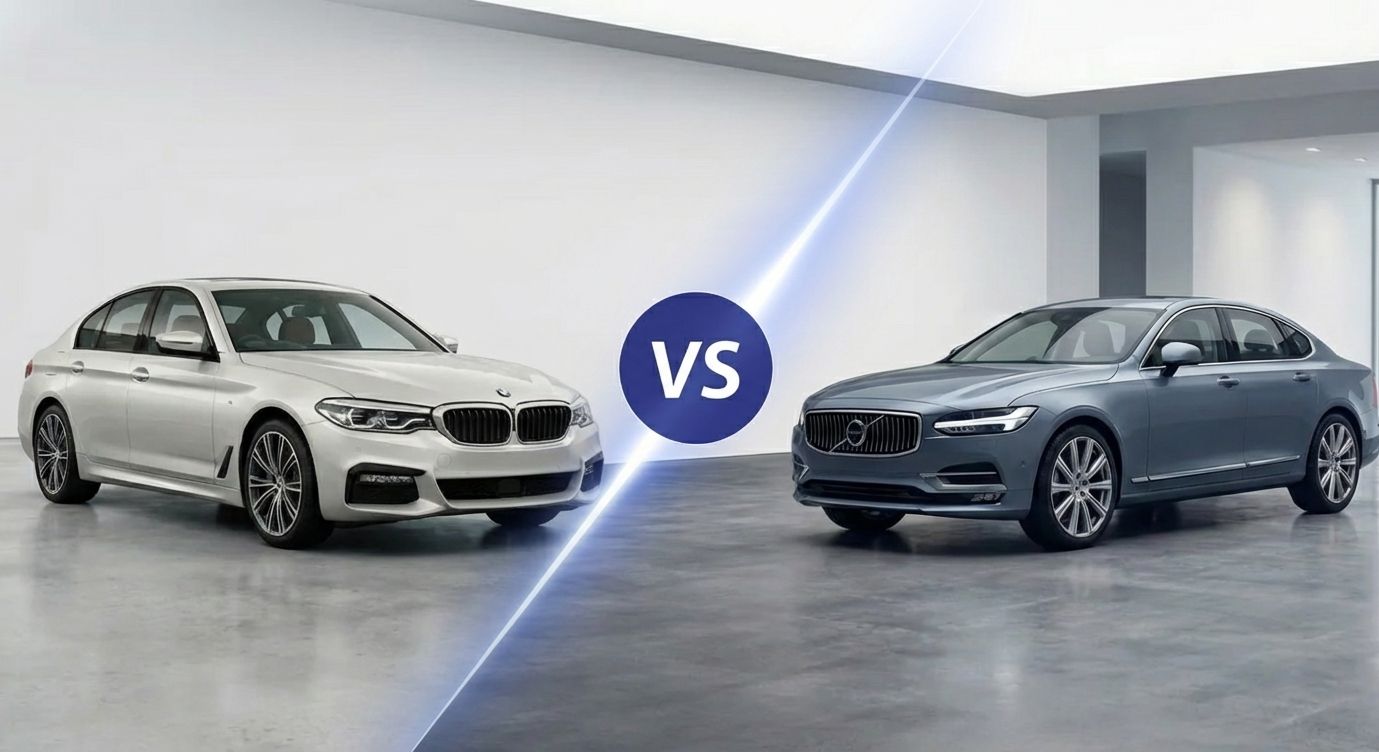
BMW 5 Series vs. Volvo S90: Complete comparison 2026

Detailed comparison of the BMW 5 Series and Volvo S90. Discover the differences in comfort, performance, and reliability of used cars. Read our verdict and choose the best sedan.

Oct 23, 2026

We accept online card payments as well as wire transfers.

visa payment provider logovisa-electron payment provider logomastercard payment provider logomaestro payment provider logodiners-club payment provider logodiscover payment provider logo