Car battle
Mercedes-Benz C-Class vs. Volkswagen Arteon: Complete comparison 2026
Detailed comparison of the Mercedes-Benz C-Class vs Volkswagen Arteon. Discover the differences in driving, used car features, and read our final verdict.
Apr 27, 2026
Articles
Car battle
Detailed comparison of the BMW 3 Series vs Volvo V60. Discover real-world experiences with used cars, compare driving comfort and reliability, and read our clear verdict.
April 28, 2026
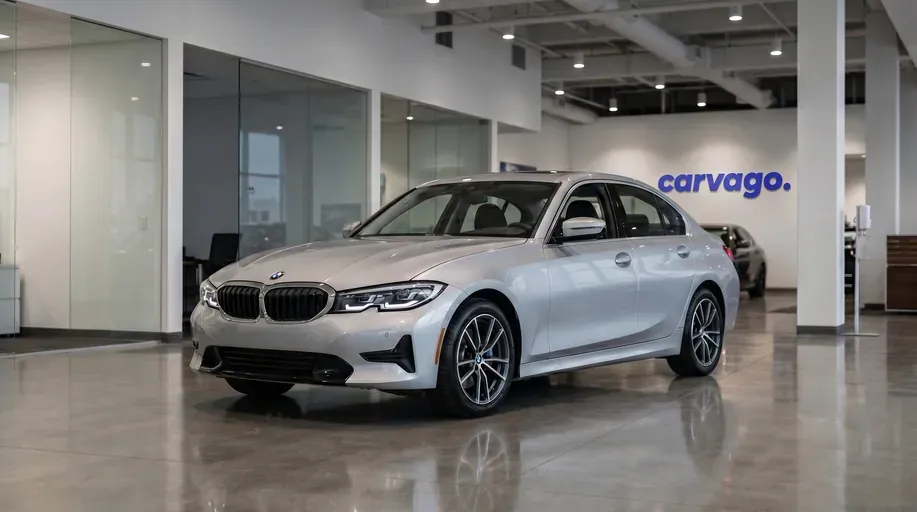
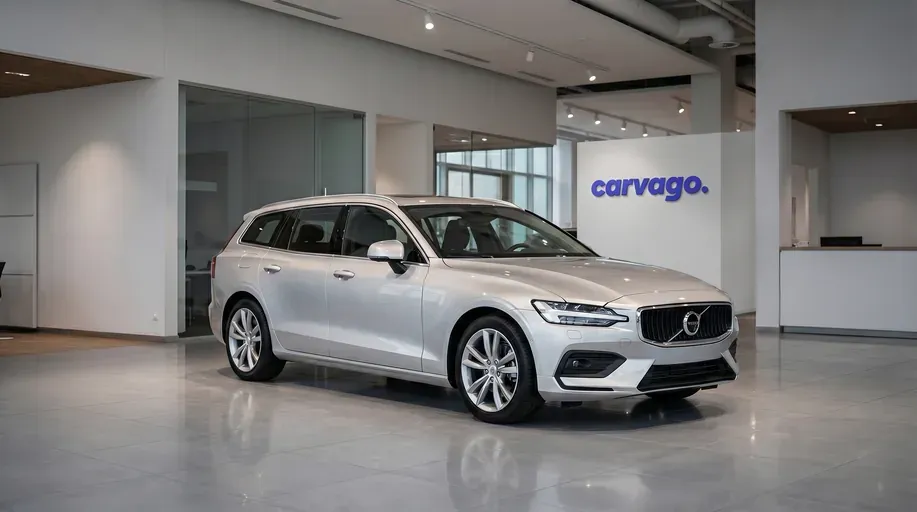
BMW 3 Series, often referred to simply as the BMW 3 or among fans by its generation codes such as F30 or G20, has for decades represented the recognized benchmark for sporty premium mid-size cars. On the other side stands the elegant Swedish estate Volvo V60, also available on the market in the raised off-road variant V60 Cross Country or as the electrified V60 Recharge, which attracts primarily with uncompromising safety, Nordic minimalism, and extraordinary travel comfort. The following comparison will map out the strengths and weaknesses of both models in detail and help you find out whether your needs are better met by driver-focused German dynamics or rather by calming and practical Swedish elegance.
When comparing the exterior dimensions of these two premium mid-size representatives, considering models current for the used car market around four years old (G20/G21 generation for BMW and the 3rd generation for Volvo), we find several significant differences. Volvo V60 presents itself at first glance as a somewhat more substantial vehicle. With a total length of 4778 mm, it surpasses the BMW 3 Series, which measures 4713 mm, by a noticeable 65 mm. This slightly more generous length of the Swedish representative translates positively into overall interior spaciousness, but on the other hand, it may represent a minor disadvantage when trying to park in narrow city streets and underground garages.
A similar trend towards larger dimensions can also be observed in width and wheelbase. The Volvo is 23 mm wider (1850 mm compared to 1827 mm for the BMW), which gives it a visually more stable stance on the road and offers passengers slightly more shoulder room in the interior. A crucial factor for driving comfort and longitudinal rear legroom is the wheelbase. Here, the Volvo V60 offers a value of 2872 mm, beating its Munich rival with its 2851 mm by 21 mm. Paradoxically, however, it is the BMW that is slightly taller (up to 1445 mm compared to 1432 mm for the Volvo). The combination of a wider and longer body with a lower roof means that the Volvo V60 possesses a naturally more aerodynamic and visually sportier stance, while the longer wheelbase helps to better filter out bumps on long highway journeys.
Overall, the BMW maintains a more compact footprint, which perfectly corresponds with its philosophy – this shape favors drivers who prefer agility, maneuverability, and precise handling on winding country roads. Volvo, on the other hand, focuses on maximizing utility for the occupants. Its more generous exterior dimensions make it a confident family car, where every extra millimeter on the outside means significantly more comfort and freedom for all passengers.
| Parameter | BMW 3 Series Sedan | BMW 3 Series Estate | Volvo V60 Estate |
|---|---|---|---|
| Width (mm) | 1827 | 1827 | 1850 |
| Length (mm) | 4713 | 4713 | 4778 |
| Height (mm) | 1440-1445 | 1440-1445 | 1432 |
| Wheelbase (mm) | 2851 | 2851 | 2872 |
Trunk capacity plays a key role for many buyers, especially if they are looking for a versatile car for family or business use. In the premium mid-size segment, practicality is often the deciding factor. Differences in trunk capacity can determine whether a stroller and sports equipment will fit comfortably in the car, or whether you will simply have enough space for weekend shopping and longer holidays without having to make any compromises.
If we focus on the generations that currently make up the bulk of the market for roughly four-year-old used cars (i.e., the G20/G21 model range for BMW and the 3rd generation for the Volvo V60), the Swedish representative excels. Volvo V60, available exclusively as an Estate, offers a generous 529 liters in its basic configuration. This volume represents an ideal space for a few extra suitcases and stands out with its well-shaped rectangular opening. The competing BMW 3 Series in the Estate version (traditionally referred to as Touring) lags only slightly behind in basic volume, offering exactly 500 liters. However, the situation changes surprisingly after folding down the rear backrests – while the Volvo provides a maximum capacity of 1,441 liters, the BMW boasts a slightly higher value of 1,510 liters. For those interested in a classic three-box silhouette, the German brand also offers a Sedan variant with a basic volume of 480 liters.
A fundamental difference between the two models occurs when choosing the now highly sought-after plug-in hybrid (PHEV) powertrains. Engineers at Volvo managed to integrate the batteries into the center tunnel so effectively that the V60 Recharge hybrid variants lose none of their capacity and retain the full 529 liters. Conversely, in the BMW 3 Series, the installation of batteries under the trunk floor is noticeably felt – in the Sedan version, the usable basic volume drops to just 375 liters, and in the estate to 410 liters (with the maximum volume after folding the backrests dropping to 1,420 liters). For family-oriented users, choosing a more eco-friendly powertrain in the Munich car can be a significant limiting factor.
| Parameter | BMW 3 Series Sedan | Volvo V60 Sedan | BMW 3 Series Estate | Volvo V60 Estate |
|---|---|---|---|---|
| Base volume (liters) | 480 | - | 500 | 529 |
| Max volume with seats folded down (liters) | - | - | 1510 | 1441 |
When deciding between these two attractive cars, trunk size primarily means choosing your daily priorities. If you plan to frequently transport longer or bulkier items with the backrests fully folded, the BMW 3 Series Touring will offer you a slightly higher total volume. However, if you insist on maximum usability of the five-seat layout for the whole family and do not want to lose valuable centimeters even when buying an efficient plug-in hybrid, the Volvo V60 represents a clearly more stable and versatile support.
While the BMW 3 Series Estate narrowly wins with the rear seats fully folded, the Volvo V60 confidently counters with a larger and more usable basic volume. The Swedish estate's major trump card is the fact that its excellent practicality does not suffer at all even when choosing the popular plug-in hybrid version.
The ability to tow heavy trailers is a key parameter for many buyers of premium family estates or sedans, whether it's transporting building materials, hauling a boat for the weekend, or traveling with a family caravan. Looking at models roughly four years old – namely the BMW 3 Series generation G20/G21 and the third-generation Volvo V60 – we encounter interesting and crucial differences in design limits.
Standard BMW petrol and diesel engines (such as the 320i and 320d versions) can typically tow a braked trailer weighing 1600 to 1800 kg, depending on the specific body style (sedan or Touring). This value is quite sufficient for common needs, providing reliable capacity for a few extra suitcases in a small trailer, a weekend purchase of firewood, or a longer holiday with an average-sized caravan. However, if your choice falls on the more eco-friendly plug-in hybrid version, the BMW 320e, the maximum permitted trailer weight drops to 1500 kg, which may already represent a limitation.
Conversely, the Volvo V60 from the same production years profiles itself as a much more robust towing beast. Even the basic mild-hybrid engines labeled B3 and B4 have a solid capacity of 1800 kg. The real difference, however, comes with the more powerful versions – models like the V60 B4 Diesel or the petrol B6 allow for towing a trailer weighing up to 2000 kg. But the Swedish estate boasts its greatest advantage in the plug-in hybrid category. Unlike its Munich competitor, the Volvo V60 T6 and T8 Twin Engine models do not suffer any reduction in capacity due to batteries and can easily tow the aforementioned 2000 kg.
The BMW 3 Series thus serves as a fully adequate car for more modest recreational towing, but if you plan on frequent transport of heavy loads, double-axle horse trailers, or owning a premium caravan – and especially if you prefer a plug-in hybrid powertrain – the Volvo V60 represents an uncompromising winner on the used car market. The unbraked trailer for both competitors is subject to the standard European limit in this weight class, which is 750 kg.
| Model and motorization | Braked weight of trailer (kg) | Unbraked weight of trailer (kg) |
|---|---|---|
| BMW 320i (G20/G21) | 1600 - 1800 | 750 |
| BMW 320d / 320d Touring (G20/G21) | 1600 - 1800 | 750 |
| BMW 320e / 320e Touring (G20/G21) | 1500 | 750 |
| Volvo V60 B3 / B4 (3rd gen) | 1800 | 750 |
| Volvo V60 B4 Diesel / B6 (3rd gen) | 2000 | 750 |
| Volvo V60 T6 / T8 Twin Engine (3rd gen) | 2000 | 750 |
When choosing a nearly new used car approximately 4 years old (production years around 2020–2022), the BMW 3 Series (G20/G21 generation) and the Volvo V60 (3rd generation) represent two completely different approaches to powertrain engineering. While the Munich-based automaker traditionally relies on longitudinally mounted engines with a preference for rear-wheel drive (or the proven xDrive all-wheel drive) and perfect weight distribution for a sporty feel, Volvo has switched exclusively to transversely mounted two-liter four-cylinder engines with front-wheel or all-wheel drive (AWD). Both brands had to respond to tightening emission standards, but Volvo plunged into electrification somewhat more aggressively. In the Swedish estate from this period, you will most often encounter a new generation of mild-hybrid units and massively powerful plug-in hybrids. For the buyer, this means a choice between the driver-focused, mechanically refined BMW and the extremely smooth Volvo, tuned for absolute comfort.
Within the most popular and sought-after mid-range of the lineup labeled "320," BMW provides an ideal compromise between daily dynamics and favorable operating costs. The absolute ruler of corporate fleets and private garages is the diesel BMW 320d. Since 2020, it has used 48V mild-hybrid technology as standard (with an additional 8 kW of power), which smooths out the start-stop system and helps push consumption well below five liters. For petrol fans, the 320i is available, benefiting from a rev-happy character and very quiet operation. If you are looking for an efficient solution for city commuting, the 320e plug-in hybrid makes sense, handling roughly 50 kilometers on pure electricity. Great news for used car buyers is that in four-year-old vehicles, the vast majority of engines are paired with the masterfully tuned 8-speed Steptronic automatic from the manufacturer ZF.
| Engine | Fuel | Power (kW) | Torque (Nm) | Transmission |
|---|---|---|---|---|
| 320i | Petrol | 135 | 300 | 8-speed automatic |
| 320d | Diesel (Mild-hybrid) | 140 | 400 | 8-speed automatic (marginally 6-speed manual) |
| 320e | Plug-in Hybrid | 150 | 350 | 8-speed automatic |
Note: The data above represents the core of the 320 series offering available for the G20 generation. Models are commonly available with both rear-wheel drive and xDrive all-wheel drive.
The engine lineup for the Volvo V60 underwent a significant generational change for models around the 2020 and 2021 production years. Traditional pure diesel (D3, D4) and petrol (T4, T5) variants were gradually phased out during this period and replaced by mild-hybrid powertrains under the B designation (B3 to B6). These updated two-liter engines received an integrated starter-generator, which significantly improves flexibility at lower revs and assists with coasting. A unique feature of the Swedish estate is the exceptionally powerful plug-in hybrid versions, the T6 and T8 Twin Engine (later renamed Recharge). These combine a petrol two-liter engine driving the front axle and an electric motor on the rear axle. The result is staggering system outputs often exceeding 300 kW (more than 400 hp), with which this understated family estate easily shames even pure sports cars in straight-line sprints.
| Engine | Fuel | Power (kW) | Torque (Nm) | Transmission |
|---|---|---|---|---|
| B3 | Petrol (Mild-hybrid) | 120 | 265 | 7-speed DCT / 8-speed automatic |
| B4 | Petrol (Mild-hybrid) | 145 | 300 | 7-speed DCT / 8-speed automatic |
| B4 Diesel | Diesel (Mild-hybrid) | 145 | 420 | 8-speed automatic |
| B5 / B6 | Petrol (Mild-hybrid) | 184 / 220 | 350 / 420 | 8-speed automatic |
| D3 / D4* | Diesel | 110 / 140 | 320 / 400 | 6-speed manual / 8-speed automatic |
| T4 / T5* | Petrol | 140 / 184 | 300 / 350 | 8-speed automatic |
| T6 Twin Engine | Plug-in Hybrid | 250 | 590 | 8-speed automatic |
| T8 Twin Engine | Plug-in Hybrid | 287 - 335 | 640 - 709 | 8-speed automatic |
* Note: The generation of non-electrified engines with the D and T prefix was replaced by the mild-hybrid B series in most trim levels between 2020-2021.
If you are looking for engaging handling in corners and top-tier fuel economy on long highway routes, the mild-hybrid BMW 320d remains the king of the class. However, if you have a place to charge and primarily aim for silence, safety, and rocket-like straight-line acceleration, the Volvo V60 with Twin Engine/Recharge engines represents a fantastic choice for the modern family.
Choosing the right engine is crucial for long-term satisfaction with a used car, and our recommendations are based on real-world experience, fuel consumption, owner feedback, and the reliability of roughly four-year-old used vehicles. While BMW continues its tradition with the current 3 Series, offering a wide range of power units including full-blooded six-cylinders, Volvo took a radical step with the third-generation V60, betting exclusively on two-liter four-cylinders (VEA architecture), which it gradually electrified. Interestingly, BMW uses advanced sequential twin-turbocharging for its modern diesel four-cylinders for instantaneous low-end response, whereas Volvo focused primarily on relaxed smoothness and safety, underscored by the universal introduction of a 180 km/h speed limiter. In the market for roughly four-year-old used cars, the more powerful two-liter diesels appear to be the most rational choice for both brands in terms of residual value, operating costs, and dynamics.
The 320d engine (engine code B47), available for the G20/G21 generation since 2019, is the most versatile choice in the long run. It offers an excellent compromise between agility and efficiency – real-world fuel consumption typically ranges between 5 and 6 liters per 100 km, which is a fantastic result for a premium car with rear-wheel (or all-wheel) drive. The smooth onset of substantial torque (400 Nm) also pairs perfectly with the lightning-fast ZF eight-speed automatic transmission. This generation of the two-liter is renowned for its high mechanical reliability, and the manufacturer has managed to completely eliminate previous issues with prematurely stretched timing chains. When buying a used car, however, check the service history; we recommend immediately shortening the extremely long factory oil change intervals (up to 30,000 km) to 15,000 km to minimize the risk of premature turbocharger wear. The greatest risk lies with units driven primarily in the city – during a test drive, watch for fluctuating idle or loss of power, which often points to a carbonized EGR valve or a heavily clogged diesel particulate filter (DPF). This engine is tailor-made for high-mileage motorway drivers who demand reliability but also appreciate the joy of more dynamic cornering.
For the relaxed and safety-oriented approach of the third-generation Volvo V60 family car, the more powerful two-liter diesel is the ideal partner. Among four-year-old used cars, you will encounter either the classic D4 version (offered until 2020) or its mild-hybrid successor, the B4 Diesel (available until 2024). Both variants provide excellent sound insulation, smooth pull, and generous torque (up to 420 Nm) necessary for safe overtaking in a loaded estate, while real-world fuel consumption comfortably stays around 6 to 6.5 liters per 100 km. Furthermore, the B4 mild-hybrid benefits from an integrated starter-generator, which smoothens operation and makes the start-stop system completely imperceptible. The mechanical foundation of the engine block is exceptionally robust, but earlier years of the VEA architecture struggled with EGR valve failures and minor coolant leaks. Therefore, during the vehicle inspection, carefully check if the coolant level in the expansion tank is decreasing. During the test drive, focus on any jerking or hesitation during sharp acceleration, which would directly reveal issues with exhaust gas recirculation. As with any modern diesel, the car requires regular longer trips for reliable DPF regeneration. This powertrain perfectly harmonizes with Volvo's comfortable character and is the best choice for relaxed and safe motorway travel rather than outright sporty driving.
Official fuel consumption figures for modern cars often represent a laboratory utopia rather than everyday reality. Especially for premium mid-size estates, vehicle weight, aerodynamics, and real-world driving style play a major role. For an objective comparison, we therefore rely on data from thousands of users from the independent portal Spritmonitor.de, which reflects normal operation far more faithfully. We focused primarily on engines belonging to the currently sought-after generations (BMW 3 Series G20/G21 and corresponding Volvo V60 models produced around 2021), which today represent the most attractive choice on the market for roughly four-year-old used cars.
| Model and engine | Average consumption (l/100 km) |
|---|---|
| BMW 320d (diesel) | 5.8 |
| Volvo V60 B4 Diesel (diesel) | 5.9 |
| BMW 320i (petrol) | 7.1 |
| Volvo V60 B4 (petrol) | 7.5 |
| BMW 320e (plug-in hybrid) | 4.2 |
| Volvo V60 T6 Recharge (plug-in hybrid) | 4.8 |
From the perspective of real-world figures, it is clear that diesel engines still represent the absolute most efficient choice for long-distance travel. The popular Munich two-liter in the BMW 320d ranks among the most economical units in its class and, in combined mode, comfortably stays below the six-liter mark. The competing diesel Volvo V60 B4, which relies on mild-hybrid technology, is in practice a negligible tenth of a liter thirstier. A more significant difference exists among petrol engines. The basic two-liter in the BMW 320i can be almost half a liter more economical in real-world traffic than its Swedish equivalent. Used plug-in hybrids may then come as a surprise to many potential buyers. Although official charts from both manufacturers promise values below the two-liter mark, without strict and regular battery charging, the average quickly climbs over four liters. On longer motorway routes with a discharged battery, consumption also often exceeds the values of classic diesel variants due to higher curb weight.
What does this mean for the typical user and used car buyer? Diesel variants clearly make the most sense for motorway mile-munchers and business travelers, where their consistently low consumption is fully realized and the investment in them pays off. Petrol versions, on the other hand, will be most appreciated by drivers with an annual mileage of up to 15,000 kilometers and more frequent suburban driving, where emission systems are not as heavily burdened. If you have the possibility of daily charging at home and at work, plug-in hybrid models can drive fuel bills down to an absolute minimum. While the differences in consumption between BMW and Volvo themselves are not dramatic enough to be the sole deciding factor for purchase, Munich engineers prove in the real world that they still have a slight lead over the heavier Nordic cars in terms of driving efficiency.
When looking at the used car market, we focus on the ideal age of around four years, specifically models from 2021 and 2022. During this period, we are talking about the current generation of the BMW 3 Series (G20 for the sedan, G21 for the Touring estate) and the second generation of the Volvo V60. For both premium representatives, the largest initial depreciation has already occurred, making them highly attractive second-hand choices.
| Category | BMW 3 Series (2021–2022) | Volvo V60 (2021–2022) |
|---|---|---|
| Entry-level versions (higher mileage) | €18,000 – €23,000 | €16,000 – €20,000 |
| The golden mean (good equipment) | €27,000 – €33,000 | €23,000 – €29,000 |
| Top-tier engines (six-cylinders / PHEV) | €41,000+ | €29,000 – €35,000 |
The German automaker benefits from a strong image and unrelenting demand. The Munich "Three" traditionally holds its value very well, especially when talking about models equipped with the popular M Sport package.
The Swedish representative loses value on the secondary market slightly faster. While this may have been a disappointment for the first owner, it is fantastic news for the buyer of a four-year-old used car – you get a comparably equipped, if not better-equipped, car for less money.
The bottom line: If your priority is to save on the initial purchase while getting a maximum-safety vehicle, the Volvo V60 is much more financially friendly on the used market. However, if you prefer a car where you can be sure of a lower financial loss upon subsequent resale and which offers unrivalled dynamics, the German BMW makes more sense.
While the Volvo V60 delights after four years on the used market with more favourable price tags and a huge amount of equipment for reasonable money, the BMW 3 Series holds its value uncompromisingly firmly, especially in the desirable six-cylinder versions and with the M package.
Both models, the BMW 3 Series and the Volvo V60, earned the maximum five-star rating in Euro NCAP's rigorous safety tests. However, it is crucial to view these achievements in the context of when the testing took place. Euro NCAP's methodology and requirements are constantly evolving and becoming stricter every year. Therefore, percentage results achieved in different years cannot be directly compared, as more complex frontal crash simulations, advanced cyclist detection tests, or urban intersection emergency scenarios are regularly added to the process.
The Bavarian representative underwent safety tests in 2019 and, given the highly demanding standards of the time, achieved excellent results.
The Swedish estate, carrying the legacy of renowned family safety, underwent tests a year earlier, in 2018. Although it was an older version of the testing methodology, the car demonstrated extraordinary structural resilience.
Given the age of both tests (2018 and 2019), both certificates are now formally considered expired from the perspective of the organization's strict rules. Nevertheless, in the eyes of a used family car buyer, both cars still represent the absolute top of the market and feature state-of-the-art crash protection.
| Parameter | BMW 3 Series | Volvo V60 |
|---|---|---|
| Year of testing | 2019 | 2018 |
| Adult occupant protection | 97 % | 96 % |
| Child occupant protection | 87 % | 84 % |
| Vulnerable road user protection | 87 % | 74 % |
| Safety assist systems | 76 % | 76 % |
In conclusion, both vehicles provide families with a top-tier level of safety and handle the prevention of critical situations without the slightest problem. On paper, the BMW 3 Series appears slightly more comprehensive. Its advantage lies mainly in the high protection of vulnerable road users, thanks to active bonnet technology and a slightly more modern set of test scenarios. Despite the absence of these minor details, the Volvo V60 retains its Nordic DNA throughout and, with its solid construction, remains hot on its competitor's heels.
Both cars guarantee five-star protection and maximum confidence behind the wheel, but the BMW 3 Series, thanks to its sophisticated pedestrian protection and slightly more modern test, appears as a slight favorite from the perspective of hard data.
Both vehicles offer much more than just basic equipment, with each taking its own distinctive approach to providing maximum value for both driver and passengers and making daily life more enjoyable.
Top-tier driving characteristics with excellent dynamics and precise steering
Interior craftsmanship at the highest level with flawless ergonomics
Intuitive and lightning-fast iDrive infotainment system with a physical controller
Availability of refined and powerful six-cylinder engines
Excellent residual value retention on the used car market
Stiffer suspension tuning, which can feel harsh on broken roads with the M Sport package
Higher purchase price and more expensive spare parts and service operations
The luggage compartment has a smaller opening (in the sedan version) and more limited practicality
Less legroom for rear-seat passengers compared to mainstream competitors
The BMW 3 Series is an ideal choice for enthusiastic drivers looking for the perfect balance between a sporty experience, premium craftsmanship, and modern technology. This car best suits those who appreciate top-tier handling on the road and don't mind paying extra for premium service or a stiffer ride.
Exceptionally high level of active and passive safety and top-tier assistance systems
Ergonomic and exceptionally comfortable seats, ideal for long journeys
Elegant, minimalist Scandinavian interior design creating a very calming atmosphere
Well-shaped and easily accessible luggage compartment
High suspension comfort and excellent cabin soundproofing
Control of most functions, including air conditioning, exclusively via the central touchscreen
Less engaging driving experience and more detached steering
Limited range of powertrains without the option of a six-cylinder engine
Factory top speed limiter at 180 km/h (on all models from 2020 onwards)
The Volvo V60 primarily targets families and calmer drivers who prioritize maximum safety, travel comfort, and understated luxury. It represents the perfect highway cruiser for those looking for a practical and representative estate car, where a relaxed ride is more important than carving corners.
Based on our own CarAudit inspections, breakdown statistics, and expert articles, we have compiled an overview of the most common problems that used car buyers should watch out for. Every comprehensive car inspection shows that although these are premium representatives, both cars have their specific weaknesses that can manifest around the four-year age mark.
BMW 3 Series (G20/G21 generation) is considered a much more reliable car compared to its predecessors; however, even it has typical ailments worth checking when buying.
The G20 generation is among the most reliable representatives of the 3 Series. The engines are very robust, and most problems are limited to fixable coolant leaks or infotainment software quirks.
The second-generation Volvo V60 (SPA platform) attracts with robust safety and Nordic design, but more complex technology and a heavier body sometimes take their toll.
The Volvo V60 is troubled in used cars mainly by brake vibrations, the risk of sunroof leaks, and quirks of complex electronics or hybrid systems, which can make long-term ownership more expensive.
When buying a used car, a thorough inspection is crucial. Here are some specific points to focus on for these two models, while for peace of mind, it is always worth using CarAudit. A careful independent inspection of the car's technical condition carried out by an experienced mechanic can detect expensive hidden defects in time, before the purchase agreement is signed.
The Volvo V60 offers a base boot capacity of 529 litres, slightly surpassing the BMW 3 Series Touring, which has 500 litres. Furthermore, the Swedish estate features a more regularly shaped luggage area and a lower loading sill, making it significantly easier to handle heavy items. However, both cars can easily accommodate standard family cargo and a pram.
For a more dynamic and sportier drive, the BMW is the clear winner thanks to its preferred rear-wheel drive and precise weight distribution. In contrast, the Volvo V60 is engineered primarily for maximum comfort, tranquility, and safety during long motorway journeys. The Bavarian model will thus offer you much better steering feedback and confidence in corners.
Both vehicles achieved a maximum five-star rating in Euro NCAP tests and are among the absolute safety leaders in their class. However, the Volvo V60 has long been more focused on family use, as evidenced by slightly more generous rear-seat space and the option of integrated child booster seats. The BMW 3 Series, on the other hand, excels with top-tier assistance systems for autonomous motorway driving.
Consumption naturally varies depending on the chosen engine, but both manufacturers offer economical mild-hybrid and plug-in hybrid versions for roughly four-year-old used cars. Popular diesel variants in both vehicles can achieve a combined fuel consumption of between 5 and 6 litres per 100 kilometres. In real-world driving, the BMW is often slightly more efficient, mainly due to its excellent aerodynamics and highly effective eight-speed automatic transmission.
BMW uses the award-winning iDrive system, which has long been rated by automotive journalists as the most intuitive on the market, primarily due to the retention of a physical rotary controller. Volvo relies exclusively on a large vertical touchscreen, which also integrates climate controls, potentially causing more distraction while driving. In terms of daily ergonomics and overall user interface responsiveness, the BMW usually comes out on top.
Sources: ADAC, svetmotoru.cz, lidovky.cz, emobility.cz, autoweb.cz, youngtimer.cz
This article was prepared using artificial intelligence tools. The section guarantor is Petr Dušek.
Detailed comparison of the Mercedes-Benz C-Class vs Volkswagen Arteon. Discover the differences in driving, used car features, and read our final verdict.
Apr 27, 2026
Ford Mondeo vs. Volkswagen Passat: Detailed comparison, reviews, engines, and verdict. Find out which of these popular cars is the better choice for you.
Oct 16, 2026
Detailed comparison of Alfa Romeo Giulia vs Jaguar XE. Discover real-world experiences, differences in driving characteristics, and the verdict on which sedan to choose.
Oct 16, 2026