Articles

Car battle

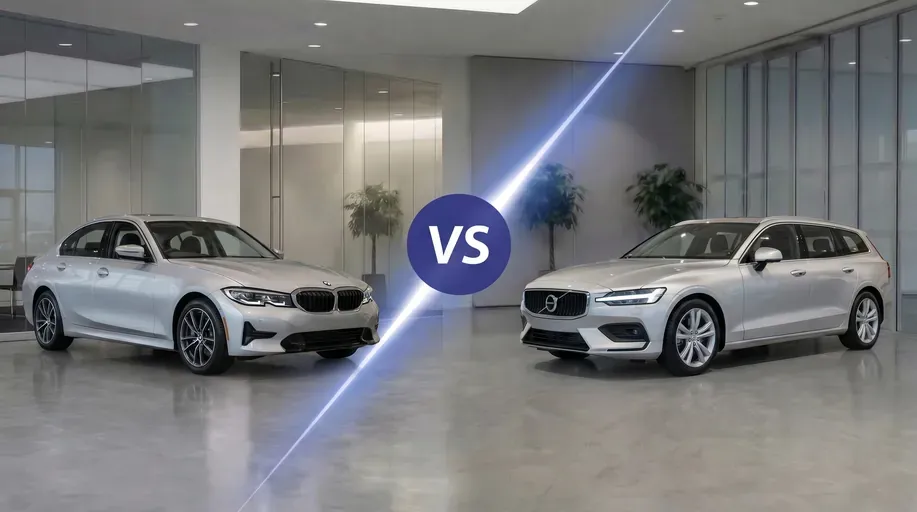
BMW řady 3 vs. Volvo S60: Complete comparison 2026

Detailed comparison of the BMW 3 Series and Volvo S60. A detailed look at real-world driving characteristics, engines, and equipment of used cars. Read our verdict and make the right choice.

May 11, 2026

VS
BMW řady 3

BMW řady 3

Volvo S60

Volvo S60

Introduction

The BMW 3 Series, also known globally as the BMW 3 Series, is a long-standing icon among premium mid-size sedans, having built its reputation primarily on unrivaled driving dynamics and a sporty character. Its confident challenger is the Swedish Volvo S60, which brings a completely different approach to this highly competitive segment, based on minimalist Scandinavian design, top-tier comfort, and pioneering safety technologies. In the following comparison, we will take a detailed look at the strengths and weaknesses of both rivals to help you find out which of these exceptional cars is the best choice for you.

Comparison of External Dimensions

When comparing the exterior dimensions of these two premium mid-size representatives from the perspective of sought-after four-year-old used cars (namely the BMW G20/G21 generation and the third-generation Volvo S60), we quickly find that the Swedish representative maintains a slight size advantage. The Volvo S60 is, with its length of 4778 mm, nearly 7 centimetres longer than its Bavarian rival and, at 1850 mm, it is also 23 mm wider. This gives it a slightly more stable stance and an overall more majestic visual impression, which can effectively evoke a sense of safety. In real-world traffic, especially in narrow parking spaces, the Volvo's bulkier and wider body will require a bit more caution, whereas the BMW's more compact footprint will be appreciated during frequent maneuvering in city centers.

The wheelbase, which is a key prerequisite for longitudinal space and cabin comfort, also speaks slightly in favor of the Nordic model. The Volvo S60 boasts a wheelbase of 2872 mm, surpassing the BMW 3 Series by 21 mm. Although this is not a massive difference, combined with the overall lower body structure (a height of just 1431 mm for the Volvo compared to 1435–1445 mm for the BMW), it contributes to excellent directional stability on the highway and emphasizes Volvo's effort to pamper passengers with a smooth ride. The taller BMW, with its slightly shorter proportions, concentrates weight distribution towards the center of the car and offers a fraction more headroom, benefiting the typically sporty and agile feel behind the wheel for which Munich models are most often purchased.

A fundamental user difference in this category is the availability of different body styles. While under the Volvo S60 designation you will find strictly only the classic three-box sedan on the used car market (to get an estate body, you must reach for the sister and completely separate V60 model), BMW covers a wider spectrum under a single name. The 3 Series offers both a sportier sedan and a highly practical and extremely sought-after estate (Touring). For family-oriented customers who require better access to the trunk and the ability to load bulkier cargo, the BMW model range itself is a noticeably more adaptable choice.

ParameterBMW 3 Series SedanVolvo S60 SedanBMW 3 Series Touring
Width (mm)182718501827
Length (mm)4709 - 471347784709 - 4713
Height (mm)1435 - 144514311440 - 1445
Wheelbase (mm)285128722851

Trunk Volume

When it comes to choosing a premium mid-size car, trunk volume plays a key role, especially if you plan to use the car for family travel or frequent transport of bulkier cargo. While both representatives offer luxury materials and top-notch craftsmanship, their approach to practicality differs quite fundamentally. The BMW 3 Series gives customers a choice between a classic sedan and the extremely popular estate (Touring). In contrast, the current third-generation Volvo S60 is available exclusively as an elegant sedan – those interested in an estate must look at the Swedish brand's differently labeled sister model, the V60. For buyers of approximately four-year-old used cars, this means carefully considering how much transport capacity they actually need.

Looking at specific numbers for standard internal combustion engines, the Munich model emerges as the winner of this duel. The BMW 3 Series (current G20 generation) offers a trunk volume of 480 liters in the sedan version, which is reliably sufficient for weekend shopping and longer vacations for four people. The Volvo S60 (3rd generation) has a smaller basic volume of 427 liters in the same body style. This difference of over fifty liters represents valuable space for a few extra suitcases or significantly easier storage of a larger stroller in practice. Furthermore, if you choose the more practical Touring version (G21 generation) of the BMW, you get a basic volume of 500 liters, which increases to a generous 1,510 liters after fully folding down the rear backrests.

An important factor in the market for slightly used cars is also the increasingly sought-after plug-in hybrid versions, where the battery installation takes its toll on trunk space. In the hybrid BMW 320e, the sedan's basic volume drops to 375 liters and the Touring version to 410 liters (maximum capacity is then 1,420 liters). The Volvo S60 in the top-of-the-line T8 Recharge plug-in hybrid engine loses part of its already smaller trunk and provides users with only 390 liters of volume. Although both manufacturers force those interested in greener driving to compromise, BMW wins from an overall perspective thanks to greater modularity and the very existence of the popular estate body variant.

ParameterBMW 3 Series SedanVolvo S60 SedanBMW 3 Series EstateVolvo S60 Estate
Base volume (liters)480427500-
Max volume with seats folded down (liters)--1510-

Clear winner for families 🏆

Thanks to the overall larger trunk volume and the option to choose the extremely practical estate version (Touring), the BMW 3 Series offers significantly wider utility value than the exclusively three-box Volvo S60.

Trailer Weights

Trailer weight is a key parameter for anyone planning to tow a caravan, horse trailer, or larger cargo trailer with their vehicle. When comparing approximately four-year-old used cars, the third-generation Volvo S60 emerges from this duel significantly better, offering higher and more consistent towing capacity values than the rival BMW 3 Series (G20 generation).

While standard internal combustion versions of the BMW 3 Series can tow a braked trailer weighing 1,500 to 1,800 kg depending on the specific engine and drivetrain, the Volvo S60 in its mild-hybrid and petrol versions (such as the B4 or B5) confidently and standardly handles exactly 1,800 kg.

A fundamental difference is evident in the plug-in hybrid variants. Due to the integration of heavy batteries and electric drive, BMW limits the maximum towing capacity of the 320e model to just 1,500 kg. In contrast, the Volvo S60 in its top-tier plug-in hybrid versions, such as the T8, is engineered to tow an impressive 2,000 kg.

In practice, these differences mean that with a hybrid Volvo, you can easily tow a large twin-axle caravan or a boat, providing enough capacity for everything from a major weekend haul to a long holiday. The plug-in hybrid BMW, on the other hand, is better suited for a lighter trailer that provides space for a few extra suitcases or for hauling building materials from a DIY store.

If the ability to tow heavy loads is a priority for you, the Swedish sedan is clearly the more robust and practical choice, especially if you are considering a more eco-friendly plug-in hybrid powertrain. While the BMW holds its own in normal use, its electrified variants lack the necessary reserve for more demanding tasks. For both models, an unbraked trailer is traditionally limited by the legislative limit of 750 kg.
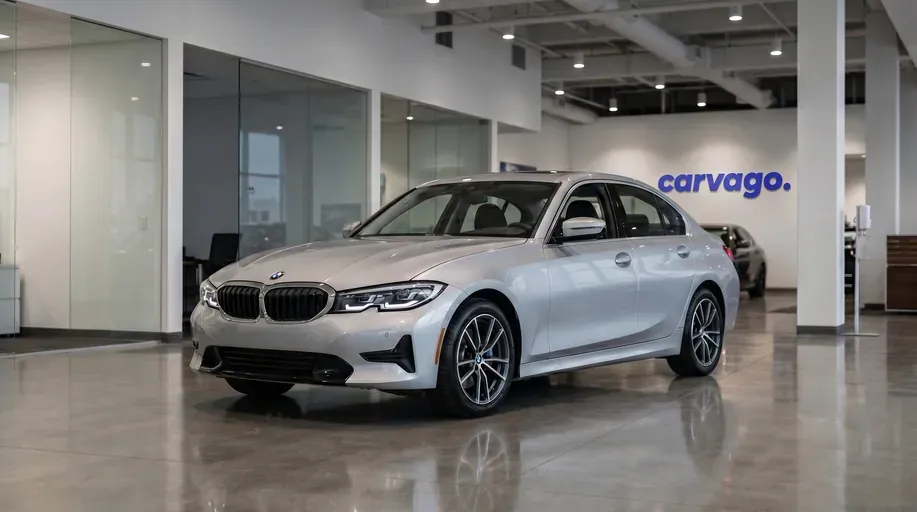
Model and powertrainBraked trailer weight (kg)Unbraked trailer weight (kg)
BMW 3 Series 320d (140 kW)1600-1800750
BMW 3 Series 320i (135 kW)1500-1800750
BMW 3 Series 320e (120 kW)1500750
Volvo S60 B4 (145 kW)1800750
Volvo S60 B5 (184 kW)1800750
Volvo S60 T8 (228 kW)2000750

Overview of Most Common Motorizations

When looking at the engine options of these two premium sedans from around 2020, we encounter completely different philosophies that can fundamentally influence your purchasing decision. While the Bavarian automaker traditionally offers an extremely wide range of petrol, plug-in hybrid, and especially highly efficient diesel engines with rear-wheel drive or xDrive all-wheel drive, the Swedes took a radical step with the third-generation Volvo S60 – they completely removed diesel units from the lineup. The choice for roughly four-year-old used cars thus boils down to whether you are looking for a fuel-efficient highway cruiser (where the BMW 320d clearly reigns supreme) or a quiet and powerful petrol or hybrid powertrain, which will lead you toward the Volvo.

BMW 3 Series: Wide Choice and the King of the Highways

The current generation of the BMW 3 Series (G20), produced since 2019, will satisfy practically any driver. The market for four-year-old used cars is dominated by the extremely popular 320d (140 kW) two-liter diesel four-cylinders, which received mild-hybrid technology in 2020 for even better fuel economy and smoother starts. For those who prefer petrol, the quiet and flexible 320i (135 kW) or the more powerful 330i (190 kW) will serve excellently. For corporate fleets and environmentally conscious drivers with charging options, the 330e plug-in hybrid with a combined output of 215 kW is very interesting. The pinnacle of standard production (outside of the full-blown M models) is the excellent M340i six-cylinder, combining xDrive all-wheel drive and a dazzling 275 kW of power. Most models on the used market are paired with the fantastic 8-speed Steptronic automatic; a manual is only found in the weakest diesel variants from the start of production.

Engine typeFuelPower (kW)Torque (Nm)Transmission
320iPetrol1353008-speed automatic
330iPetrol1904008-speed automatic
M340i xDrivePetrol (Mild-hybrid)2755008-speed automatic
318dDiesel1103206-speed manual / 8-speed automatic
320dDiesel1404006-speed manual / 8-speed automatic
330dDiesel195 / 210580 / 6508-speed automatic
330ePlug-in Hybrid2154208-speed automatic

Volvo S60: The End of Diesel and Quiet Power

The third generation of the Volvo S60 (on the market since 2019) brought a revolution to the segment by definitively burying diesel engines. In the used car market, you will therefore encounter exclusively two-liter petrol four-cylinders. Models from 2019 and early 2020 bore the designations T4 (140 kW) and T5 (184 kW), which were subsequently replaced in the lineup by more modern mild-hybrid versions labeled B4 (145 kW) and B5 (184 kW). The peak of the Swedish offering is the advanced T8 Twin Engine (or Recharge) plug-in hybrid, which offers a staggering combined output of 288 kW (390 hp) thanks to the combination of a petrol engine and an electric motor driving the rear axle. All engine versions of the third-generation Volvo S60 are, without exception, paired with the very smooth-shifting eight-speed Geartronic automatic transmission.

Engine typeFuelPower (kW)Torque (Nm)Transmission
T4Petrol1403008-speed automatic
T5Petrol1843508-speed automatic
B4Petrol (Mild-hybrid)1453008-speed automatic
B5Petrol (Mild-hybrid)1843508-speed automatic
T8 Twin EnginePlug-in Hybrid2886408-speed automatic

The approach to diesel is the deciding factor ⛽

While the BMW 3 Series is the clear choice for high-mileage drivers thanks to its excellent diesel engines, led by the 320d version, the Volvo S60 will appeal to those looking for the refinement of exclusively petrol or top-tier plug-in hybrid powertrains.

Choosing the right engine is a crucial step for long-term satisfaction with a car. While the BMW 3 Series (G20 generation) sticks to its traditional philosophy and offers a huge range of power units, including economical diesel engines and iconic six-cylinders, the third-generation Volvo S60 made a radical cut and went down in history as the brand's first modern model to completely phase out diesels. The Swedish carmaker thus focused exclusively on two-liter petrol four-cylinders and plug-in hybrids for this American-built sedan. The following recommendations are based on performance, real-world fuel consumption, and mechanical reliability of roughly four-year-old used cars.

For the BMW 3 Series, we recommend: 320d (140 kW / 190 hp)

This engine (based on the robust B47 unit) has been refined almost to perfection within the G20 generation and represents the best possible compromise between dynamics, operating costs, and reliability for the vast majority of buyers.

  • Why it's the best choice: The four-cylinder diesel offers an ideal balance. It doesn't feel heavy on the front axle like the larger six-cylinders, yet it has enough power for confident overtaking. Combined with the phenomenal ZF eight-speed automatic, it forms one of the best-tuned drivetrains on the market.
  • Technical advantages: The torque curve (400 Nm) kicks in very early, ensuring smooth acceleration. Real-world fuel consumption is particularly excellent – even with more spirited driving, it can be maintained between 5.0 and 5.5 l/100 km in the long term.
  • Risks and what to watch out for: With modern diesels, always keep an eye on the diesel particulate filter (DPF) clogging, especially if the previous owner mainly drove in the city. A known weak point of Bavarian diesels is the EGR valve cooler, for which the carmaker issued recalls – check the service history before buying and physically verify that the car is not losing coolant. If you opt for the xDrive version, remember that the transfer case requires regular oil changes (ideally every 60,000 km) to prevent expensive failure. RWD (rear-wheel drive) is cheaper to maintain and more fun to drive.
  • Who it's for: Perfect for highway mile-munchers, people with high annual mileage, and drivers who enjoy a brisk ride with minimal fuel costs.

For the Volvo S60, we recommend: B4 (145 kW / 197 hp)

Since the third generation of the Volvo S60 (available in the years we are targeting) does not offer any diesel engine, the two-liter petrol mild-hybrid labeled B4 becomes the sweet spot. It provides plenty of power and is technically less risky than the more complex T8 plug-in hybrid version.

  • Why it's the best choice: The B4 engine, which appeared on the market in 2020 and replaced the older T4, introduced a 48V mild-hybrid system. This system excellently masks turbo lag, smooths out the start-stop system to the point of being imperceptible, and gives the car a relaxed, comfortable nature that best suits Volvo's character.
  • Technical advantages: The unit stands out for its exceptionally quiet and refined operation. The 145 kW output and the auxiliary electric motor ensure a linear power delivery right from low RPMs, which you will appreciate especially in city and suburban traffic.
  • Risks and what to watch out for: The absence of a diesel means you have to accept slightly higher fuel consumption, which realistically hovers around 7–8 l/100 km. Since it is a direct-injection petrol engine, frequent short, "cold" trips carry a risk of carbon buildup on the intake valves (manifesting as idling fluctuations and loss of power). We recommend using high-quality fuel with additives and occasionally taking the warmed-up engine for a thorough run at higher RPMs.
  • Who it's for: Ideal for drivers with average annual mileage who move mainly in city or suburban areas and prefer safety, absolute quiet on board, and Scandinavian calm over corner-carving.

Real Fuel Consumption

The difference between official fuel consumption figures provided by manufacturers and real-world values in everyday driving is often vast. While testing laboratories paint idyllic scenarios, actual traffic with morning jams, highway speeds, and air conditioning running shows a slightly different reality. To get the most accurate idea of how much fuel these models actually demand, we analyzed real-world data directly from drivers. We used the community platform Spritmonitor.de, where owners record their refueling over the long term. For a relevant comparison within the used car market, we selected cars approximately four years old, which in the case of the BMW 3 Series means the G20/G21 generation and for the Volvo S60, the current third generation.

news_site: Spritmonitor.de

Model and engineAverage consumption (l/100 km)
BMW 320d 140 kW (Diesel)6.0
BMW 320i 135 kW (Petrol)7.3
Volvo S60 B4 145 kW (Mild-hybrid Petrol)7.8
Volvo S60 B5 184 kW (Mild-hybrid Petrol)8.2
BMW 320e 150 kW (Plug-in hybrid)4.0
Volvo S60 T8 288 kW (Plug-in hybrid)4.5

Interesting trends clearly emerge from the real-world data. The traditional two-liter diesel in the BMW (320d) remains a practically unbeatable choice for long-distance travel, where long-term consumption stays around an excellent six liters even at a brisker highway pace. Conversely, the Volvo S60, with its bold decision to completely remove diesels from the lineup, shows a significantly higher appetite in its B4 and B5 mild-hybrid versions. The assistance of a small electric motor cannot miraculously save fuel for the heavy Swedish sedan, and in normal combined driving, you will most often see figures near the eight liters per hundred kilometers mark. Plug-in hybrid versions are a specific chapter. For them, the real-world average is very low, but these values are strictly conditional on diligent and regular charging. As soon as you set off on a longer route with a discharged battery, consumption quickly levels out with conventional petrol engines.

Clear recommendations follow for typical buyers from this duel. If you spend a lot of time on the highway and cover thousands of kilometers a month, the economical diesel from the Munich-based automaker will clearly relieve your wallet the most. The Volvo S60, on the other hand, makes sense for drivers with lower annual mileage, or those who have the opportunity to charge their plug-in hybrid at home and at work, thus making the most of the purely electric range. Fuel consumption and the chosen engine thus become one of the main decision-making factors in this comparison, as annual differences in fuel costs can be truly significant with higher mileage.

Price Range and Used Car Offerings

Used Car Price Range: BMW 3 Series vs. Volvo S60

When choosing a premium mid-size sedan approximately four years old (2021–2022 models), you are entering a market where both availability and the rate of depreciation vary significantly. While the BMW 3 Series (G20 generation) is among the most sought-after and common representatives of its segment, the third-generation Volvo S60 is more of an exclusive sight, as European customers of the Swedish brand traditionally prefer the more practical V60 estate.

The table below shows the current market values of four-year-old models on the used car market:

Model (MY ~2021–2022)Starting price (higher mileage)The sweet spot (good condition and equipment)Top-tier versions (PHEV, 6-cyl / Polestar)
BMW 3 Series (G20)from ~ €21,000€29,000 – €35,000€39,000 – €49,000+
Volvo S60 (3rd gen)from ~ €20,000€25,000 – €31,000€35,000 – €43,000

A Detailed Look at Prices and Equipment

BMW 3 Series (G20 generation)

  • Base engines: Fleet models like the 318i or popular 320d diesels with higher mileage (often exceeding 150,000 km) start just at the €21,000 mark.
  • Most sought-after specifications: If you are looking for a car with under 100,000 km, an ideal engine (the more powerful 320d xDrive or petrol 330i), and the desirable M Sport package, expect to pay between €31,000 and €35,000.
  • Value retention: The BMW holds its value excellently on the used market. A huge advantage is the massive supply across Europe, making it easy to choose a specific paint color or equipment features. For the prized six-cylinder models (e.g., M340i), the price drop is the slowest.

Volvo S60 (3rd generation)

  • Base engines: Mild-hybrid petrol variants labeled B3 and B4 can be found on the used market with prices starting even slightly below €21,000. Depreciation in the early years is steeper for the Volvo sedan than for the BMW.
  • Most sought-after specifications: For popular trim levels like R-Design or the luxurious Inscription (mostly with B4 and B5 engines and average mileage), the most common market prices range from €25,000 to €31,000.
  • Availability and value: Compared to its German rival, finding an S60 requires much more patience due to the low number of listings. However, as a used car, the Volvo offers an excellent price-to-value ratio. Even the powerful T8 Recharge plug-in hybrids depreciate faster and can be found for very attractive prices.

Maintenance Costs and Further Depreciation

For both sedans, premium service costs must be expected. Volvo scores with a more attractive purchase price due to faster depreciation for the first owner. However, service tasks and parts are priced comparably to the German competition. With BMW, used car buyers always pay a certain "premium" for the model's popularity and sporty image; however, in the event of a subsequent resale after a few years, it will hold its residual value more firmly than the Swedish brand's representative.

Premium Choice 💰

While the vast selection of BMW 3 Series allows you to find exactly your dream specification, the rarer Volvo S60 represents fantastic value for money thanks to the steeper price drop of a nearly-new car.

Safety and Euro NCAP Rating

Both of these premium mid-size representatives received the maximum five-star rating in tests by the independent organization Euro NCAP. However, when comparing the safety of approximately four-year-old used cars, it is necessary to take into account the context and the specific year of testing. Euro NCAP's methodology and testing protocols are constantly evolving and becoming stricter over time, which means that percentage scores from different years cannot always be directly and objectively compared. While older tests focused primarily on passive safety during the impact itself, newer methodologies place huge emphasis on accident prevention using active assistance systems and the protection of vulnerable road users.

BMW 3 Series: Top performer of the demanding 2019 class

The BMW 3 Series (G20 generation) underwent crash tests in 2019, when very strict standards requiring comprehensive cyclist detection and more advanced frontal impact tests came into effect. The car excelled in these conditions, with its extremely rigid body and effective crumple zones ensuring an impressive 97% for adult occupant protection. Thanks to its advanced emergency braking system, the Bavarian sedan also took home a high score in vulnerable road user protection (87%).

Volvo S60: Traditional emphasis on prevention from 2018

The Volvo S60, whose results Euro NCAP seamlessly adopted from the structurally identical sister estate V60 from 2018, fully lived up to its brand's flawless reputation. The 2018 methodology for the first time thoroughly tested the cars' ability to automatically brake before an obstacle. Volvo scored here with its standard City Safety system, which was the first on the market to actively brake to avoid collisions with oncoming vehicles. The passive adult protection score of 96% is at a very similar and highly safe level to the rival BMW.

ParameterBMW 3 SeriesVolvo S60
Year of testing20192018
Adult occupant protection97%96%
Child occupant protection87%84%
Vulnerable road user protection87%74%
Safety assist systems76%76%

In conclusion, although both cars passed the tests several years ago and their certification at the time formally expires against the latest standards of this year, they belong at the very top of the used car market. The BMW 3 Series benefits from testing protocols that are a year newer, resulting in its slightly more robust score in the area of pedestrian and cyclist protection. The Volvo S60, on the other hand, counters with a time-tested and incredibly rich set of active prevention features as standard. From the perspective of everyday safety, both models offer exceptionally comprehensive protection that meets even the strictest family requirements.

Top-tier protection without compromise 🛡️

Whether you choose the BMW 3 Series with its exceptionally rigid body or the Volvo S60 relying on legendary assistance systems, you will get an exceptionally safe car in which your family will be in the best hands.

Comparison of Interesting Equipment Features

In addition to standard equipment, each model offers several unique features that reflect the different philosophies of the two brands and can be absolutely decisive for the customer's final choice.

BMW 3 Series: Technological Sophistication and Driver Focus

  • Infotainment and Connectivity: The vehicle is controlled by the top-tier iDrive system (typically Operating System 7 or version 8 in newer model years). In addition to the touchscreen, it retains the brilliant physical rotary controller on the center console. It also features a smart voice assistant (BMW Intelligent Personal Assistant) and support for over-the-air (OTA) wireless updates.
  • Smart Assistance Systems: A huge help for daily maneuvering is the unique Reversing Assistant. It constantly remembers the last 50 meters driven forward (up to a speed of 36 km/h) and can autonomously and precisely reverse back through a narrow driveway or a confusing garage.
  • Lighting: For demanding drivers, optional laser headlights (BMW Laserlight) are available. Compared to standard LED lights, they offer a high-beam range of up to 500 meters, dramatically increasing safety and comfort during night journeys.
  • Chassis and Steering: The emphasis on a sporty experience is underlined by the ideal 50:50 weight distribution between the front and rear axles. Customers may come across versions with adaptive M suspension and variable sport steering, which makes parking easier while also making the car's handling more precise in corners.
  • Sport Packages: The extremely popular M Sport package brings not only more aggressive exterior aerodynamics but, more importantly, excellent sports seats with adjustable side bolsters and the iconic sports steering wheel with a thicker rim that fits perfectly in the hand.

Volvo S60: Nordic Elegance and Unrivaled Safety

  • Infotainment and Audio System: Models from approximately 2022 onwards use an innovative system built directly on the Google platform (Android Automotive). This offers native Google Maps and Google Assistant. However, the real gem is the optional Bowers & Wilkins audio system with 1,400 W of power, which features a unique acoustic profile simulating the listening experience in the Gothenburg Concert Hall.
  • Design and Comfort Details: The front grille is defined by the unmistakable LED headlights with the "Thor's Hammer" motif. The interior is dominated by anatomical seats developed in collaboration with orthopedists, ensuring absolute comfort even on long journeys. In more luxurious trims (e.g., Inscription), the center console is adorned with a crystal gear selector for the automatic transmission from the Swedish glass brand Orrefors.
  • Assistance Systems and Safety: Volvo traditionally dominates in safety. The Pilot Assist system provides smooth and very reliable semi-autonomous driving on the highway. The extensive City Safety package continuously monitors the surroundings and can automatically brake for pedestrians, cyclists, and large animals.
  • Engines: This generation of the Volvo S60 took a radical step and completely eliminated diesel engines from its lineup. In the used car market, you will exclusively find sophisticated gasoline mild-hybrids (designated B3, B4, B5) or extremely powerful plug-in hybrid versions (Recharge), which allow for emission-free daily commuting in the city.
  • Interior Climate: The CleanZone function with an Advanced Air Cleaner continuously purifies the air drawn into the cabin. It captures up to 95% of fine dust particles, which is particularly appreciated by allergy sufferers and families with children when driving in heavy city traffic.

Key Advantages and Disadvantages

BMW 3 Series

Pros

Top-tier driving characteristics, precise steering, and excellent chassis balance

Very fast and intuitive iDrive multimedia system with a physical controller

Wide range of reliable, fuel-efficient, and very powerful engines (including sought-after diesels)

Premium interior craftsmanship with perfect driver-focused ergonomics

Traditionally good residual value retention on the used car market

Cons

Firmer suspension tuning on M Sport package versions reduces comfort on broken roads

Equipment levels of specific used cars can vary greatly; everything was an expensive option when new

The center tunnel significantly limits space for the middle rear passenger

Higher costs for authorized service and genuine spare parts

The BMW 3 Series (G20 generation) is the benchmark for driving experience in the mid-size class, impressing with its great handling and technological sophistication. It is particularly suitable for those looking for a more dynamic drive, perfect ergonomics, and who appreciate the choice of highly efficient diesel engines for long highway journeys.

Volvo S60

Pros

Exceptionally comfortable orthopedic seats, which are among the absolute best in their class

Traditionally uncompromising levels of active and passive safety and assistance systems

Elegant and calming Scandinavian exterior and interior design

Very powerful and refined plug-in hybrid variants (Recharge/T8)

Top-tier cabin soundproofing ensuring maximum relaxation behind the wheel

Cons

Diesel engines are completely missing from the lineup, which may deter high-mileage drivers

The front-wheel-drive-based layout does not offer as sporty and agile a ride as the BMW

Absence of physical buttons and moving climate controls to the touchscreen is distracting

Smaller and less accessible trunk space, especially in plug-in hybrid versions

The third-generation Volvo S60 is the perfect sedan for drivers who prioritize understated luxury, top-tier safety, and maximum travel comfort over sporty cornering. It will appeal to customers looking for powerful gasoline or plug-in hybrid powertrains who appreciate the overall very calming atmosphere on board.

Common Problems and Owner Complaints

Based on our own statistics, which include detailed physical inspections of used cars within the CarAudit service, service reports, and feedback from long-term users, we have compiled an overview of the most common problems you may encounter with these roughly four-year-old models.

BMW 3 Series (G20)

The BMW 3 Series G20 generation (since 2019) is considered a very reliable car, mainly thanks to the robust B-series engines (B48/B58), yet several specific and recurring faults appear.

  • Engine and cooling: The engines themselves are mechanically above-average durable, however, coolant leaks (cracked expansion tanks, water pump or thermostat leaks) and oil seepage around the valve cover or oil filter housing occur more frequently.
  • Chassis and mounts: A known weakness is the engine mounts (silentblocks), which on some units require replacement surprisingly early, often around the 100,000 km mark. In early models, knocking in the steering also occasionally occurred.
  • Body and exterior: A frequent and diagnostically annoying problem is the failure of the Active Grille Shutters. These can get stuck and subsequently report an engine error code on the instrument cluster. In models equipped with a sunroof, owners often complain about creaking and squeaking when driving on uneven surfaces.
  • Infotainment and electronics: The iDrive 7 onboard system is great from a user perspective but occasionally suffers from minor software glitches, such as unexpected system restarts or problems with wireless Apple CarPlay connection. Most of these ailments are resolved by software updates.

BMW 3 Series: Driving pleasure with minor quirks

The G20 generation brought a huge leap in engine reliability compared to its predecessors. Be especially vigilant about the cooling system and the condition of the engine mounts; otherwise, you get an above-average robust premium sedan.

Volvo S60 (3rd generation)

The third generation of the Volvo S60 (since 2019), built on the SPA platform, is a very elegant and safe choice, but its main weaknesses concern the more sensitive chassis and onboard electronics.

  • Brakes and chassis: One of the most common problems is premature wear of brake components. Owners very often report warped brake discs and vibrations when braking after just a few tens of thousands of kilometers. Furthermore, the chassis is very sensitive to perfect wheel balancing – with larger 19" or 20" rims, there is a risk of them bending easily when hitting a pothole, leading to vibrations at highway speeds.
  • Electronics and sensors: Older versions of the Sensus infotainment system (before the transition to Android Automotive) can have a slower startup and occasional freezes. Cases of hidden 12V battery drain have also been recorded, where some electronic modules did not go to sleep properly after locking the car. Assistant sensors (lane keeping or parking assistant) occasionally tend to report false errors that disappear after restarting the car.
  • Engine and drive: The two-liter four-cylinder gasoline and diesel engines (T4, T5, D4) are relatively reliable. In diesel versions, clogged EGR valves can traditionally appear. In more powerful T6 gasoline versions, which combine both a turbocharger and a supercharger, the mechanics are significantly more complex and absolutely require strict adherence to service intervals.
  • Transmission: The eight-speed automatic from Aisin can suffer from rough or confused shifting in some cars (especially when downshifting). It is rarely a fatal mechanical failure; usually, this behavior requires installing the latest software into the transmission control unit.

Volvo S60: A safe cruiser requiring brake care

The Volvo S60 is a solidly built car where major mechanical engine failures rarely occur. When buying a used car, pay the most attention to the condition of the brake discs and the smooth operation of the automatic transmission.

Tips for Buying a Used Car

When buying a used car, a thorough inspection is key. Here are some specific points to focus on for these two models to avoid expensive surprises and get a car in the best possible condition.

When choosing a BMW 3 Series:

  • Coolant and oil leaks: Petrol and diesel engines (especially the B48 and B58 petrol versions) are mechanically reliable but can suffer from hidden coolant leaks, which lead to fatal overheating if neglected. During a physical car inspection under the hood, check for dried white or greenish traces around expansion tanks, the water pump, and hoses.
  • ZF automatic transmission behavior: The eight-speed automatic is among the best on the market, but neglected service worsens its performance. During a test drive with a cold engine, focus on shifting from first to second gear. Jerking, rough engagement, or delays mean worn-out oil or a need for a transmission software update.
  • Knocking from the chassis and steering: Especially in models equipped with adaptive M suspension, front suspension components and the steering rack can show premature wear, which means an unexpected hit to the budget. When driving slowly over potholes or turning the steering wheel while stationary, listen carefully for knocking or metallic creaking.
  • iDrive 7 software and system stability: Cars manufactured around 2019 and 2020 occasionally suffer from software glitches like infotainment freezing or spontaneous restarts of the central screen. During the test drive, go through the menus, turn on the navigation, test the reversing camera and phone connection to verify the smoothness and stability of the interface.
  • Plug-in hybrid battery condition (330e): The high-voltage battery capacity decreases with years and charging cycles, limiting the real electric-only range. Have the car fully charged for the test and check the estimated range on the trip computer. Also, watch for error messages during the drive, which are often caused by just a dying 12V battery.

When choosing a Volvo S60:

  • Premature brake wear and warped discs: Heavier S60 models often suffer from accelerated wear of brake components and warped front brake discs, the replacement of which is not exactly cheap. During the test drive, brake more sharply from highway speeds – if strong vibrations are transmitted to the steering wheel or brake pedal, the discs are ready for replacement.
  • Assistant and Sensus infotainment functions: The vertical display (on versions before the switch to the Google/Android platform) needs a bit more time to boot up after starting, but the system overall must function without freezing. Activate Pilot Assist during the drive; faulty sensors or poor calibration sometimes generate false warnings or cause unnatural and jerky resistance in the steering wheel.
  • Smoothness of pull in complex T6 and T8 engines: Complex power units combining a turbocharger, supercharger, and in the T8 version, an electric motor, must work together completely imperceptibly during acceleration. Jerking, hesitation, or power drops when stepping on the gas can indicate worn spark plugs, coils, or an engine software error.
  • Energy management and Start-Stop system: Many cars of this generation struggle with excessive battery drain when the car sits for a longer period. This leads to a loss of 12V battery capacity. You can reliably tell by the Start-Stop system not working at all, or in worse cases, the engine not restarting itself after shutting off at an intersection, requiring your intervention.
  • Chassis stiffness and wheel thumping: Versions equipped with 19" or larger wheels (often in R-Design trim) suffer from poorer comfort and hard thumps on broken roads, which strain the chassis. Intentionally drive on worse asphalt during the test; the car may be stiff, but no dull metallic thumps should come from the front axle. We recommend a detailed used car inspection to check for any play in the control arms and ball joints, which large wheels accelerate.

FAQ: Most Frequently Asked Questions

The BMW 3 Series is traditionally focused on a sporty driving experience, offering more precise steering and a top-tier chassis with rear-wheel or all-wheel drive. The Volvo S60, on the other hand, emphasizes a smooth ride, safety, and overall passenger comfort with front-wheel or all-wheel drive. If you are looking for maximum driving fun, the Bavarian sedan is the clear choice.

Although both brands offer a top-notch sound-insulated interior, Volvo has long been renowned for its exceptionally ergonomic seats, which minimize back fatigue even after hundreds of kilometers. BMW, on the other hand, scores with the excellent lateral support of its optional sport seats, which you will appreciate more in the corners. For maximum relaxation on long highway routes, the Swedish representative has a slight edge in terms of comfort.

While BMW still offers a wide range of very efficient and refined diesel engines, Volvo decided to completely phase out diesel from the lineup for this generation of the Volvo S60. Those interested in the Swedish car can therefore only choose from gasoline engines with mild-hybrid technology or powerful plug-in hybrids. For high-mileage drivers looking for a traditional diesel engine with low fuel consumption, the Bavarian car is the only option.

In the case of purely internal combustion versions, BMW has a slight advantage with a trunk capacity of 480 liters, while Volvo offers 427 liters. For the popular plug-in hybrid versions of both models, you have to expect a reduction in trunk space due to the batteries to approximately 375 to 390 liters. Furthermore, the German car's trunk is slightly more practical for loading larger luggage thanks to its more regular shape.

BMW relies on the proven iDrive system with a physical rotary controller on the center console, which significantly facilitates safe control of most functions while driving. Volvo uses a vertical touchscreen oriented in portrait mode, through which the air conditioning is also adjusted, among other things, which may require a bit more attention. While the BMW dashboard is typically oriented directly towards the driver, the Swedish car calms the occupants with clean and bright Scandinavian minimalism.

Conclusion: Which Model to Choose?

Sources: ADAC, svetmotoru.cz, garaz.cz, autozive.cz, autojournal.cz, autickaruvblog.cz

This article was prepared using artificial intelligence tools. The section guarantor is Petr Dušek.

Related articles

Car battle

Opel Insignia vs. Volkswagen Passat: Complete comparison 2026

Detailed comparison of Opel Insignia vs. Volkswagen Passat. Discover the differences in fuel consumption, equipment, and reliability of used cars. Our verdict will help you choose the right car.

May 10, 2026

Car battle

Honda Accord vs. Renault Talisman: Complete comparison 2026

Detailed comparison of the Honda Accord and Renault Talisman. We compared the engines, reliability, and equipment of these used cars. Find out which sedan earns our final verdict!

May 3, 2026

Car battle

BMW řady 3 vs. Volvo V60: Complete comparison 2026

Detailed comparison of the BMW 3 Series vs Volvo V60. Discover real-world experiences with used cars, compare driving comfort and reliability, and read our clear verdict.

Apr 28, 2026

We accept online card payments as well as wire transfers.

visa payment provider logovisa-electron payment provider logomastercard payment provider logomaestro payment provider logodiners-club payment provider logodiscover payment provider logo