Car battle
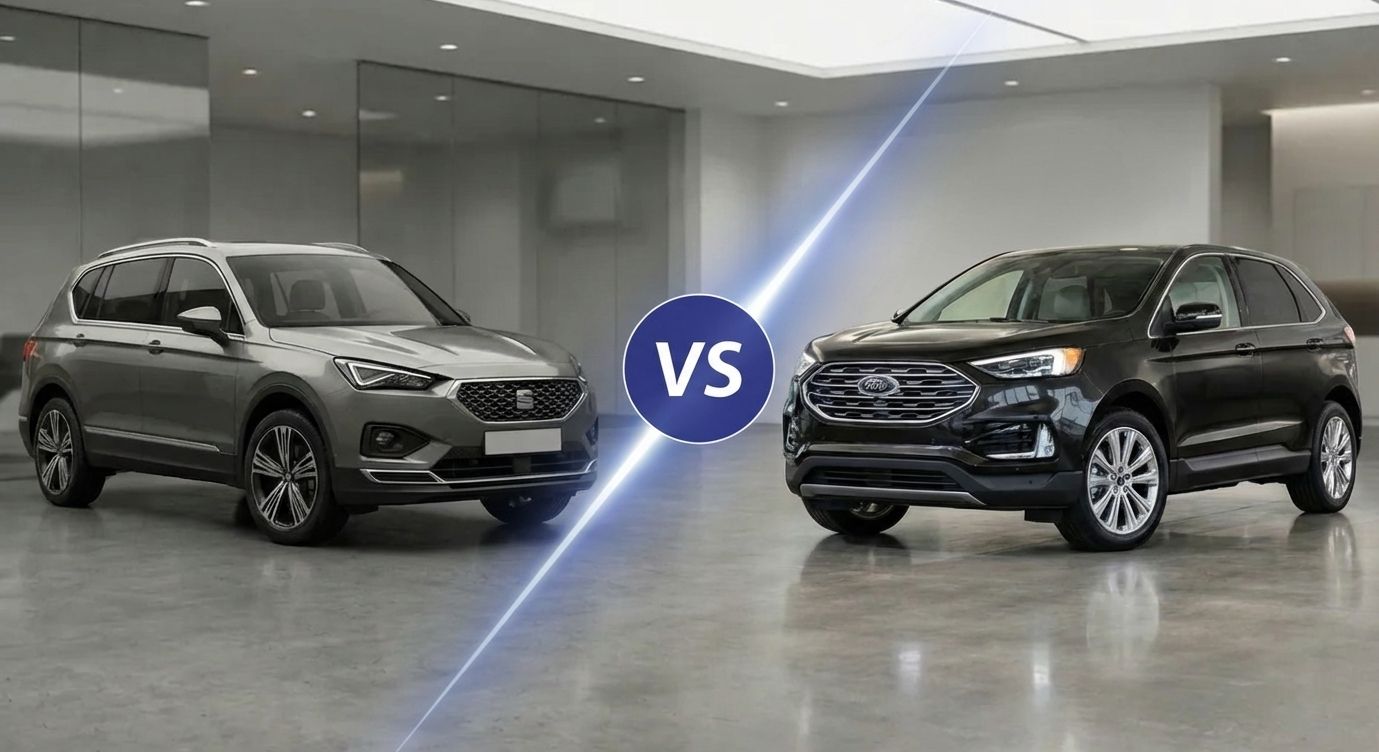
Seat Tarraco vs. Ford Edge: Complete Comparison 2026
Seat Tarraco vs. Ford Edge: Which large SUV is the better choice? Our comparison reveals differences in driving, design, and practicality to help you choose right.
Oct 23, 2026
Articles
Car battle
Detailed comparison of Audi Q5 vs. Jaguar F-Pace. Find out which used luxury SUV offers better driving characteristics, equipment, and reliability. Read our verdict!
May 8, 2026
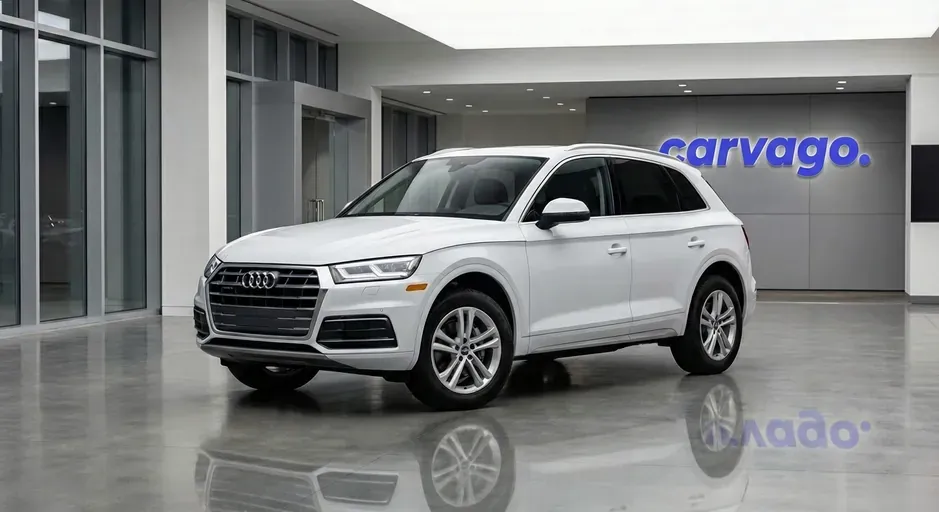
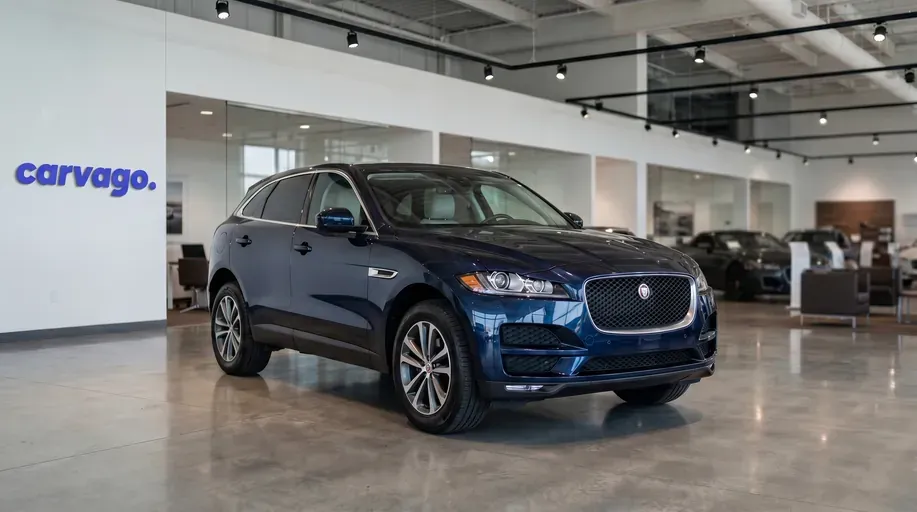
Audi Q5 represents the benchmark among premium mid-size SUVs, winning drivers over with its balanced combination of luxury, precise craftsmanship, and advanced technology. On the other hand stands the Jaguar F-Pace, the first-ever SUV from this British automaker, which attracts with its aggressive design, sporty DNA, and unmistakable elegance. Let's take a detailed look at how these two high-end representatives fare in a head-to-head battle and which one will be the better choice for your needs.
When looking at cars that have an ideal age of around four years on the used car market (production year roughly 2021–2022), we encounter an interesting contrast between these models. Although the Jaguar F-Pace (X761 generation) and Audi Q5 (FY generation) formally belong to the same premium mid-size SUV segment, the British representative's proportions push it de facto half a class higher. With a length of 4747 mm, the Jaguar F-Pace is 65 mm longer than the standard Audi Q5 (4682 mm), and with its width of 1936 mm, it surpasses its German rival by a noticeable 43 mm. What does this mean for everyday life? The Jaguar's wider and longer body brings a more robust and aggressive look to the road, but it will require more caution in narrow parking garages or tight city streets. In short, the more compact footprint makes the Audi Q5 a slightly more flexible and user-friendly choice for life in densely populated areas.
The wheelbase represents a fundamental difference for the interior layout and overall driving performance. Jaguar offers a generous 2874 mm, while the Audi Q5 counters with a value of 2819 mm. This 55 mm difference in favor of the F-Pace is fully evident in the cabin, where rear-seat passengers in particular benefit from the larger dimensions, having more generous legroom at their disposal. At the same time, the longer wheelbase gives the British car a calmer and smoother ride on long highway journeys. Conversely, the Audi Q5, with its slightly shorter wheelbase, feels noticeably more agile and nimble on winding country roads. As for height, both models are neck and neck (1662 mm for the Audi versus 1664 mm for the standard Jaguar), so the feeling of an elevated driving position, ease of entry, and the view of the road are practically identical in both cases. However, thanks to its superior wheelbase and width, the Jaguar makes a more confident overall impression.
The choice between these two cars from the perspective of external dimensions therefore depends primarily on your typical routes and options. If you regularly fight for every centimeter in underground garages, the more maneuverable and narrower Audi Q5 will be a much more practical companion for you. However, if you are looking for maximum interior space for the family, value majestic proportions, and have spacious home and office parking available, the Jaguar F-Pace will turn its superior dimensions into a great advantage for you.
| Parameter | Audi Q5 SUV | Jaguar F-Pace SUV |
|---|---|---|
| Length (mm) | 4682 - 4689 | 4747 - 4762 |
| Width (mm) | 1893 | 1936 |
| Height (mm) | 1660 - 1662 | 1664 - 1670 |
| Wheelbase (mm) | 2819 | 2874 |
When choosing a premium mid-size SUV, luggage compartment volume often plays a decisive role, especially if the vehicle is to serve as the main family car. A spacious and easily accessible boot is key for everyday practicality, whether it's for transporting a stroller, sports equipment, or family holiday trips. Although both the Audi Q5 and Jaguar F-Pace look majestic from the outside, a detailed comparison of popular four-year-old used cars reveals very interesting and, for many buyers, crucial differences at the rear of the vehicle.
The Audi Q5 (FY generation after modernization) offers a very solid 520 liters of basic volume in its standard version, which can be increased to a total of 1520 liters after folding the rear backrests. In contrast, the Jaguar F-Pace (after the significant 2021 facelift) has a slightly smaller basic volume of 470 liters for most of its conventional and mild-hybrid engines, offering 1428 liters after folding the seats. Both cars are easily sufficient for weekend shopping or longer holidays; however, the German representative provides valuable space for a few extra suitcases, making packing for longer family trips easier.
It is also necessary to point out the plug-in hybrid variants, where the installation of traction batteries takes up a significant part of the luggage compartment. While in the Audi Q5 (TFSI e version), the capacity drops to a still very tolerable 465 liters (or 1405 liters after folding), the British Jaguar F-Pace P400e falls to a relatively modest 354 liters (and 1299 liters after full folding). So, if you plan to purchase an electrified version and often transport bulkier cargo, the Audi offers much fewer compromises.
| Parameter | Audi Q5 SUV | Jaguar F-Pace SUV |
|---|---|---|
| Basic volume (liters) | 520 l | 470 l |
| Max. volume after folding seats (liters) | 1520 l | 1428 l |
From the perspective of overall transport capacity and practicality, the Audi Q5 is the clear winner in this generation. While the loss of liters in the British beast is not drastic for everyday use in standard versions, when buying a plug-in hybrid, the smaller boot in the Jaguar can represent a significant limitation for families.
The Audi Q5 offers a more voluminous and better-utilizable luggage compartment among four-year-old used cars, which is especially evident in the plug-in hybrid versions, where the Jaguar F-Pace loses a significant portion of its practicality. For families with high luggage transport demands, the German SUV is a safe bet.
Towing capacity is often one of the decisive parameters for those interested in a premium mid-size SUV, especially if they plan to use the vehicle for towing heavy caravans, boats, or utility trailers. Both the Audi Q5 and the Jaguar F-Pace are highly capable vehicles in this discipline; however, when choosing a specific engine, you will encounter differences that can affect the vehicle's practical utility, which is important to consider especially when choosing from the four-year-old used car market.
With the Jaguar F-Pace (X761 generation), you can rely on a very consistent and high towing capacity. The vast majority of standard internal combustion versions, such as the D200 and D300 diesel models or the P250 and P400 petrol models, can easily tow a braked trailer with a maximum weight of 2,400 kg. A reduced capacity is found in the P400e plug-in hybrid variant, which can handle 2,000 kg due to the battery installation, and in older fuel-efficient 20d E-Performance versions, where the value drops to 1,600 kg.
The competing Audi Q5 (in the relevant FY generation) offers a maximum braked trailer weight most often in the range of 2,000 to 2,400 kg for its classic diesel and petrol engines. Versions such as the 40 TDI or 45 TFSI reach the highest values. Similar to its British competitor, plug-in hybrid models (designated as 50 TFSI e and 55 TFSI e) have a reduced towing capacity due to the higher curb weight of the vehicle itself, ranging from 1,750 to 2,000 kg depending on the exact model year and equipment.
In practice, the maximum capacity of 2,400 kg for both vehicles represents a confident reserve that is perfectly sufficient for safely towing a large twin-axle caravan or a heavy horse trailer. The reduced capacity of around 2,000 kg for hybrid versions still comfortably meets the needs for a standard family holiday or towing smaller utility loads. Therefore, if you are looking for maximum towing power without any compromises, you will do best with both brands by choosing the more powerful classic diesels or petrols, while you will have to accept slight compromises when choosing a plug-in hybrid.
| Model and engine | Braked trailer weight (kg) | Unbraked trailer weight (kg) |
|---|---|---|
| Audi Q5 40 TDI / 45 TFSI (FY generation) | 2400 | 750 |
| Audi Q5 35 TDI (FY generation) | 2000 - 2400 | 750 |
| Audi Q5 50 TFSI e / 55 TFSI e (FY generation) | 1750 - 2000 | 750 |
| Jaguar F-Pace D200 / D300 / P250 / SVR | 2400 | 750 |
| Jaguar F-Pace P400e | 2000 | 750 |
| Jaguar F-Pace 20d E-Performance | 1600 | 750 |
The engine options for both premium SUVs offer a diverse range, from economical four-cylinder diesels to powerful plug-in hybrids and ultimate sporty versions. This wide spectrum is essential for meeting the varying demands of buyers – from managers spending hours on the motorway to environmentally conscious urban families and car enthusiasts. Considering the market for roughly four-year-old used cars (facelifted models available from 2020/2021), both brands rely almost exclusively on automatic transmissions and all-wheel drive. While the base versions of both cars (Audi Q5 35 TDI and Jaguar F-Pace D165) have the same output of 120 kW, a significant gap emerges at the top of the range. Audi offers the 55 TFSI e plug-in hybrid (270 kW) as the pinnacle of the standard range, relying more on refined technology, while Jaguar counters with emotion – for the demanding, it has prepared the brutal SVR version with a five-litre supercharged V8 and a mammoth 405 kW of power. For motorway drivers, budget-conscious motorists, and families, the most important takeaway is that both brands have massively electrified their engines using mild-hybrid and plug-in hybrid technology, which significantly reduces real-world fuel consumption.
Under the hood of the Audi Q5 (FY generation, post-facelift models), you will find a wide selection of proven Group engines. The most sought-after choice for long-distance drivers is the 40 TDI four-cylinder diesel with 150 kW, which combines excellent dynamics, great fuel economy, and standard quattro all-wheel drive. The base, most affordable 35 TDI version is one of the few paired exclusively with front-wheel drive. For the most demanding motorway travellers with a higher budget, the exceptionally refined 50 TDI V6 with a massive 620 Nm of torque is available. Petrol engines are represented by the 40 TFSI and 45 TFSI four-cylinders, while environmentally or tax-conscious buyers in suburban traffic will appreciate the 50 TFSI e and 55 TFSI e plug-in hybrids with the possibility of locally emission-free driving (electric range around 50 km). Most units use a fast seven-speed dual-clutch transmission (S tronic). Only the most powerful diesel, the 50 TDI, requires the more robust eight-speed torque-converter automatic (Tiptronic).
| Engine type | Fuel | Power (kW) | Torque (Nm) | Transmission |
|---|---|---|---|---|
| 35 TDI | Diesel | 120 | 370 | 7DSG |
| 40 TDI | Diesel | 150 | 400 | 7DSG |
| 50 TDI | Diesel | 210 | 620 | 8AT |
| 40 TFSI | Petrol | 150 | 320 | 7DSG |
| 45 TFSI | Petrol | 195 | 370 | 7DSG |
| 50 TFSI e | Plug-in Hybrid | 220 | 450 | 7DSG |
| 55 TFSI e | Plug-in Hybrid | 270 | 500 | 7DSG |
The Jaguar F-Pace (X761 generation, in the updated version from 2021) has strengthened its position with the introduction of excellent in-house Ingenium straight-six engines. The foundation consists of efficient D165 and D200 four-cylinder diesels supported by a mild-hybrid system. However, the real gem for the British brand's SUV is the D300 diesel straight-six with 221 kW, which gives the car effortless dynamics and a premium acoustic character. For petrol fans, there is the reliable P250 four-cylinder or the sophisticated P400 six-cylinder (also a mild-hybrid). A significant entry into the battle for corporate fleets is the P400e plug-in hybrid, which, with a system output of 297 kW, brings a great balance between city fuel consumption and high speed on country roads. Purely for performance and sound lovers, the manufacturer keeps the wild supercharged F-Pace SVR version in the range, which crushes the competition with its 405 kW (550 horsepower). All Jaguar engine options, without exception, rely on a precise and smooth eight-speed automatic transmission from specialist ZF and sophisticated all-wheel drive.
| Engine type | Fuel | Power (kW) | Torque (Nm) | Transmission |
|---|---|---|---|---|
| D165 | Diesel | 120 | 380 | 8AT |
| D200 | Diesel | 150 | 430 | 8AT |
| D300 | Diesel | 221 | 650 | 8AT |
| P250 | Petrol | 184 | 365 | 8AT |
| P400 | Petrol | 294 | 550 | 8AT |
| P400e | Plug-in Hybrid | 297 | 640 | 8AT |
| SVR (5.0 V8) | Petrol | 405 | 700 | 8AT |
Choosing the right engine for premium mid-size SUVs is key to long-term satisfaction with the vehicle, reliability, and reasonable operating costs. While the Audi Q5 has historically relied on its extremely popular and proven four-cylinder diesels combined with dual-clutch transmissions, the Jaguar F-Pace makes the most sense as a roughly four-year-old used car with its silky-smooth and powerful six-cylinder engines. Furthermore, these larger British engines very effectively address some of the teething problems of the smaller aluminum four-cylinders from earlier production years. Given that both brands are gradually transitioning to newer generations (such as the Audi Q5 GU generation for 2025) or have withdrawn these specific engines from dealer price lists, configurations from 2020 to 2024 are practically impossible to find as brand new. This makes them all the more attractive and sought-after choices on the used car market today.
This two-liter diesel from the FY generation (especially in the post-facelift version from late 2020) represents the absolute pinnacle among used SUVs in terms of price-to-performance ratio and everyday usability. The 150 kW output and massive 400 Nm of torque are perfectly suited for the Q5, while real-world fuel consumption easily stays around an excellent 6.5 l/100 km with a light foot. Additionally, the engine cleverly utilizes a 12V mild-hybrid system, which very smoothly irons out start-stop cycles and saves fuel through the popular "coasting" function. From a mechanical standpoint, it is an extremely reliable unit.
When choosing a used model, however, we recommend carefully checking the following in particular:
This version is the best choice overall, especially for drivers who regularly cover long distances, eat up highway miles, and demand maximum efficiency and a calm, effortless drive from a family SUV.
For the premium British SUV in its facelifted version (X761 generation from 2021 to 2024), we advise paying a bit extra and going straight for the refined D300 inline-six diesel. Older and smaller two-liter diesel four-cylinders occasionally suffered from timing chain stretching and unpleasant oil dilution. The structurally newer three-liter six-cylinder from the modernized era very successfully eliminates these shortcomings and, moreover, moves the heavier F-Pace body with extraordinary ease and premium grace. The engine delivers an excellent 221 kW and massive torque for incredibly safe overtaking.
Before the actual purchase, focus primarily on the following for this otherwise reliable six-cylinder:
The D300 six-cylinder is uncompromisingly the best choice for fans of a more dynamic driving style, large families traveling with a fully loaded trunk to the mountains, and it will absolutely excel in the hands of drivers who intend to frequently tow a heavy trailer or a large caravan behind their SUV. That is where the British power will be fully utilized.
While official fuel consumption figures provided by manufacturers in catalogs often promise miracles, real-world operation shows a somewhat more sober picture. For the most accurate comparison, we used long-term data from users themselves from the popular portal Spritmonitor.de, which collects real statistics from daily driving. To ensure the comparison fully corresponds to the used car market and makes sense for buyers, we focused exclusively on generations and models roughly four years old, i.e., from the period 2021 to 2023. Here is an overview of the actual average consumption of the most sought-after engines for both representatives of the premium SUV class.
| Model and engine | Average consumption (l/100 km) |
|---|---|
| Audi Q5 40 TDI (150 kW) | 6.4 |
| Audi Q5 45 TFSI (195 kW) | 8.4 |
| Audi Q5 50 TFSI e (220 kW) | 1.5 |
| Jaguar F-Pace D200 (150 kW) | 6.2 |
| Jaguar F-Pace D300 (221 kW) | 7.4 |
| Jaguar F-Pace P250 (184 kW) | 9.3 |
| Jaguar F-Pace P400e (297 kW) | 2.2 |
From the perspective of interpreting the measured data, it is clearly visible that diesel engines still make the most sense for such heavy SUVs with permanent all-wheel drive. The basic two-liter diesel four-cylinders (Audi Q5 40 TDI and Jaguar F-Pace D200) achieve very pleasant values in real-world operation, slightly above six liters per hundred kilometers, making them ideal companions for long highway trips and regular commuting. Conversely, for petrol versions, a more significant appetite must be expected. While the Audi Q5 45 TFSI averages a very solid 8.4 l/100 km, the British Jaguar F-Pace P250 asks for noticeably more fuel, and its real consumption often climbs above the nine-liter mark without difficulty.
The popular plug-in hybrid variants (50 TFSI e and P400e) are a specific chapter. Although the data for them shows dazzling averages of around two liters per hundred kilometers, this result is more a reflection of the behavior of exemplary users who diligently charge their vehicles every day and move primarily around the city. As soon as the battery is depleted and you set off on a longer route without the possibility of recharging, the consumption of both vehicles suddenly matches classic petrol engines, mainly due to the dead weight of the empty battery cells.
For average drivers with high annual mileage and frequent trips outside the city, the reliable two-liter diesel remains the clear and most budget-sensible choice, with which both manufacturers are doing a great job. On the other hand, petrol units will appeal more to those of you who don't mind paying extra for smoother operation and drive mostly shorter distances. Overall, it can be summarized that if you are hesitant to choose between the Q5 and F-Pace primarily because of fuel, the differences in the diesel spectrum are completely negligible and should not play a key role. Consumption thus becomes a deciding factor mainly for petrol engines, where Audi, thanks to more efficient tuning of the powertrain, can offer more favorable values in the long term and save considerable money at filling stations.
Buying a roughly four-year-old premium SUV (2021 and 2022 models) represents an ideal compromise for the family budget. You get a modern vehicle with advanced equipment but avoid the steepest initial depreciation that plagues new cars. While the German representative dominates in the number of listings, the British aristocrat bets more on road presence and uniqueness.
Thanks to the massive popularity of the Q5 model, the European and domestic used car markets are literally flooded with offers. This is great news for buyers, as huge competition keeps prices at a reasonable level and allows for a very careful selection of specific colors and equipment.
In 2021, the F-Pace underwent a major facelift, which brought a dramatically more luxurious interior and finally a top-tier modern infotainment system. However, you will find only a fraction of them in used car lots compared to the Q5, making it a more exclusive commodity with a slightly higher initial investment.
| Parameter | Audi Q5 | Jaguar F-Pace |
|---|---|---|
| Base price (higher mileage) | from ~ €25,000 | from ~ €33,000 |
| Average price of an equipped unit | ~ €35,000 | ~ €45,000 |
| Market availability | Very high | Low |
| Depreciation curve | Gradual and linear | Faster drop in the first years |
While a used Audi Q5 represents a safe, accessible, and price-stable choice with an endless selection on the market, the Jaguar F-Pace attracts with strong exclusivity for a slight premium and a significant financial advantage of buying after the largest initial drop in value.
Both of these premium SUVs received the maximum five-star safety rating from the independent organization Euro NCAP at the time of their launch. However, when assessing used cars that are approximately four years old, it is important to put these stars into a real-time context.
Euro NCAP testing methodology has evolved continuously over the years and has become stricter. Current tests place a huge emphasis on intersection accident simulations, sensitive cyclist detection, or preventing doors from being opened into the path of an oncoming vehicle. For this reason, percentage scores from earlier years cannot be directly compared with the results of the latest models.
For the generations of both vehicles that currently dominate the four-year-old used car market, the 2017 tests are the benchmark. Although both cars have undergone facelifts since then, their basic body structures remain identical. While it is true that Euro NCAP tested an entirely new generation of the Audi Q5 with modern standards in 2025, the original 2017 values remain crucial for those interested in an affordable four-year-old used car.
| Parameter | Audi Q5 | Jaguar F-Pace |
|---|---|---|
| Year of testing | 2017 | 2017 |
| Adult occupant protection | 93 % | 93 % |
| Child occupant protection | 86 % | 85 % |
| Vulnerable road user protection | 73 % | 80 % |
| Safety assist systems | 58 % | 72 % |
The measured data shows that both cars excel in top-tier passive safety. The strength of their bodies in protecting adult occupants is identical, while the Audi Q5 has a negligible one-percent lead in child passenger protection. The real difference thus appears primarily in the field of active safety. The Jaguar F-Pace recorded a much better score in vulnerable road user protection and beat its German competitor by a significant margin in the evaluation of onboard safety assist systems. The Audi Q5's low score at the time of testing was influenced by the fact that many advanced assistants were not part of the standard equipment – an aspect worth paying close attention to when looking at better-equipped used examples.
In conclusion, when it comes to protection during an actual impact, you won't go wrong with either of these SUVs. However, considering the testing standards, the Jaguar F-Pace in this generation offers a slightly more comprehensive and advanced package of assistants for preventing potential accidents from the factory.
Both family SUVs will reliably protect you in the event of an impact, but the Jaguar F-Pace boasts slightly more comprehensive equipment in the area of active accident prevention.
Beyond standard equipment, both models offer much more than just basic features, and each has its own distinct approach to added value.
The German SUV has long excelled with its attention to detail, top-tier assistance systems, and solutions that simplify daily family and professional life. In roughly four-year-old used cars following the facelift, you will also find cutting-edge electronics.
Jaguar approaches the SUV segment with an emphasis on the driving experience, premium materials, and a nod to its sports models. Modernized versions from recent years have also made a huge leap in terms of onboard technology and craftsmanship.
Top-tier interior build quality and premium materials
Excellent cabin soundproofing and overall very high ride comfort
Wide and proven range of engines (from economical TDIs to powerful plug-in hybrids)
Intuitive MMI multimedia system, which retains practical physical buttons for climate control
More stable residual value and easier resale on the used car market
More conservative exterior design, which looks a bit understated next to more aggressive competitors
Smaller base luggage compartment volume (520 liters) compared to the F-Pace
Extensive optional equipment when new means you will encounter huge price and equipment differences on the used car market
Audi Q5 is an exceptionally rational choice for drivers and families looking for maximum comfort, precise ergonomics, and trouble-free daily use. This car excels primarily in quiet long-distance driving and represents a safe investment with a slower depreciation rate.
Attractive and sporty design that gives the car a distinct character and an unmistakable presence on the road
Great driving characteristics with more agile handling in corners thanks to advanced chassis tuning
Spacious and highly usable luggage compartment with a capacity of 650 liters
Modern and lightning-fast Pivi Pro infotainment (available in facelifted versions from roughly 2021 onwards)
Stiffer chassis tuning can reduce overall ride comfort on broken city roads
Higher costs for regular servicing and spare parts compared to German competitors
Steeper depreciation and potentially narrower demand for resale
Poorer rear-quarter visibility due to the sloping roofline and massive C-pillars
The Jaguar F-Pace will primarily appeal to drivers who expect a more emotional driving experience, British elegance, and a sporty spirit from their SUV without compromising on cargo capacity. It is an ideal car for those who don't mind slightly higher service costs in exchange for owning a car that stands out from the crowd.
Based on our own CarAudit inspections, breakdown statistics, and physical inspections of used cars, we have compiled an overview of the most common problems that buyers of approximately four-year-old vehicles should watch out for.
The second generation of the Audi Q5 (internal designation FY, sold since 2017 with a facelift in 2020) is generally more reliable than its predecessor, but it still exhibits several typical defects that require attention and timely maintenance.
The Audi Q5 is a mechanically robust car where trouble primarily arises from neglected service or ignoring minor coolant leaks. However, adhering to maintenance and regular fluid changes makes it a highly reliable companion.
The British Jaguar F-Pace attracts with its appealing design and very sporty driving characteristics, but in terms of long-term reliability, its reputation is somewhat more varied and it faces more expensive problems, typically with diesel engines.
The Jaguar F-Pace offers exceptional character and extraordinary driving performance, but it requires significant caution when choosing a used car. The critical point is a timely check of the timing chains on diesel engines and accepting the occasional quirks of the onboard electronics.
When buying a used car, a thorough inspection is key. Here are several specific points to focus on for these two models – especially if you are targeting cars roughly four years old, i.e., after their major facelifts.
Jaguar F-Pace offers a significantly larger luggage compartment with a volume of 613 liters, which you will appreciate especially during family travel. Audi Q5 has a trunk with a volume of 520 liters (or less in plug-in hybrid versions), which is fully sufficient, but it lags slightly behind its British competitor. Furthermore, the F-Pace has a wider loading opening and an overall deeper loading area.
The Jaguar is built on a platform with primary rear-wheel drive, so it offers drivers sharper steering and significantly more agile cornering. Audi, on the other hand, focuses more on maximum driving comfort, chassis refinement, and perfect cabin soundproofing. If you are looking for fun behind the wheel, the F-Pace wins, while the Q5 is a better choice for calm and quiet highway travel.
The German SUV generally benefits from group technology, which brings wide availability of spare parts and a very dense network of authorized and independent service centers. The Jaguar F-Pace tends to be more expensive for regular maintenance, and its long-term reliability ratings in independent rankings tend to be slightly worse. For approximately four-year-old used cars, it is worth checking the maintenance history and the condition of the onboard electronics of the British vehicle exceptionally carefully.
Both cars underwent a significant modernization of their onboard systems around 2021. Today, the Jaguar impresses with opulent materials and the very fast Pivi Pro multimedia system with a large curved screen. In contrast, the interior of the Audi Q5 relies on more austere, flawless ergonomics, absolutely precise craftsmanship, and the brilliantly clear Virtual Cockpit digital instrument cluster.
Although both are primarily road SUVs, they can handle lighter terrain or a snowy road to a mountain hut. The F-Pace actively uses advanced off-road software inherited from its sister brand Land Rover, making it unexpectedly capable on unpaved surfaces. The German car, with its legendary quattro drive, excels on slippery roads and snow, but its lower ground clearance limits it in deeper terrain.
Sources: ADAC, aktualne.cz, garaz.cz, autoexpress.cz, autotechnik.cz, mesec.cz
This article was prepared using artificial intelligence tools. The section guarantor is Petr Dušek.
Seat Tarraco vs. Ford Edge: Which large SUV is the better choice? Our comparison reveals differences in driving, design, and practicality to help you choose right.
Oct 23, 2026
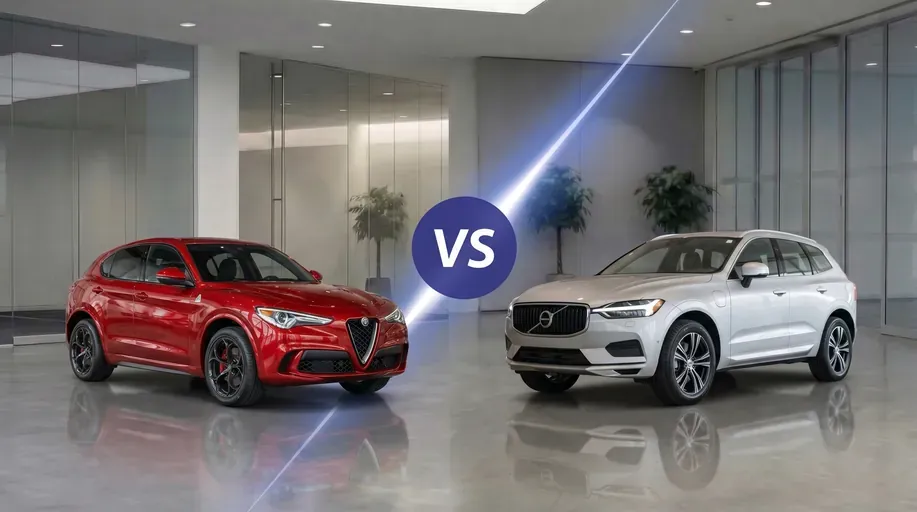
Choosing a used SUV? Detailed comparison of the Alfa Romeo Stelvio vs. Volvo XC60. A detailed verdict, performance and equipment ratings will help you make your choice. Find out more!
Apr 21, 2026
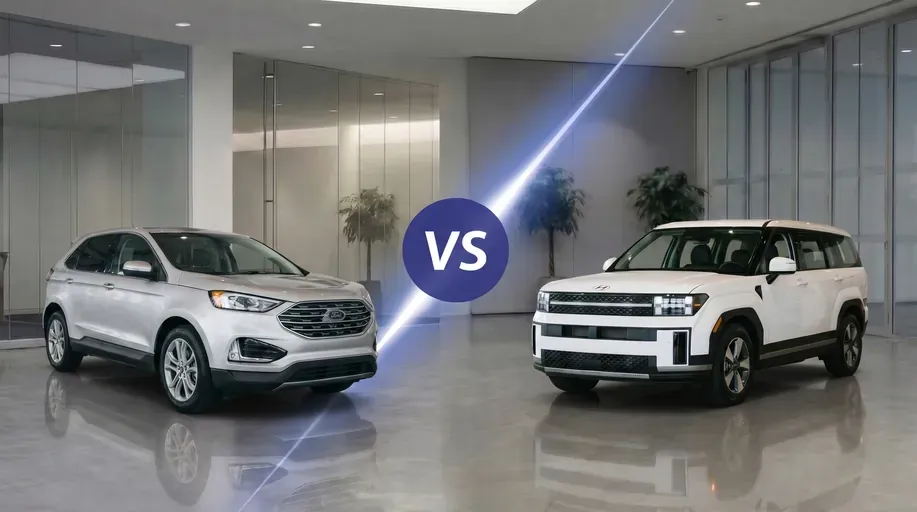
Detailed comparison of Ford Edge vs. Hyundai Santa Fe. Discover real-world experiences with used cars, a comparison of equipment and space, and read our final verdict.
Apr 17, 2026