Car battle
BMW 7 Series vs. Lexus LS: Complete comparison 2026
Comparison of used BMW 7 Series vs Lexus LS luxury sedans. Discover key differences in comfort, equipment, and reliability. Read our clear verdict before you buy!
Oct 22, 2026
Articles
Car battle
Detailed comparison of the Audi A6 and Volvo V90. We reveal the real differences in performance, equipment, and reliability. Read our verdict and choose the right car for you.
April 29, 2026
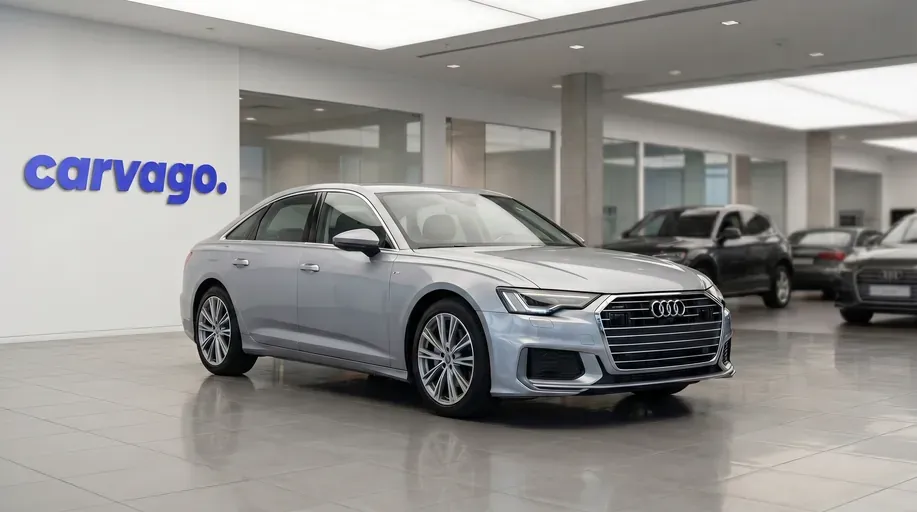
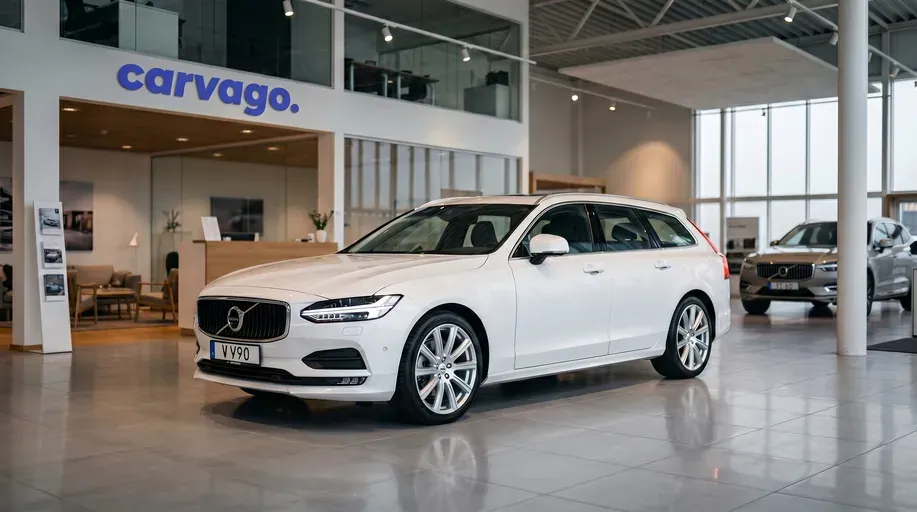
Audi A6, a popular representative of the premium executive class (also known as the Audi A6 Avant in its estate body style), represents a benchmark of German precision engineering, dynamics, and cutting-edge technology on the market. Standing against it is the Swedish Volvo V90, an elegant and exceptionally safe estate that prides itself on luxurious minimalist Scandinavian design and unrivaled comfort for all passengers. Let's take a detailed look at which of these two advanced family cruisers offers better overall value, practicality, and driving pleasure in a direct comparison.
When choosing a used executive car around four years old, in the case of the Audi A6 (C8 generation) and the Volvo V90 (2nd generation), we are talking about majestic road cruisers. Both cars confidently approach the five-meter mark, yet there are interesting differences between them. Focusing on the popular estate body styles, the Swedish Volvo V90 with a length of up to 4945 mm surpasses its German rival, albeit by a slight 6 millimeters (the Audi estate measures at most 4939 mm). However, the difference in wheelbase is much more significant. Here, Volvo offers 2941 mm, which is 17 mm more than the Audi A6 (2924 mm). In practice, this lead gives the Volvo slightly more legroom for rear-seat passengers on paper and an even smoother ride over highway imperfections. A slight trade-off for the longer wheelbase and marginally longer body is somewhat more cumbersome maneuvering in tight underground garages or crowded city parking lots.
When looking at body width, on the other hand, German precision takes the lead. With an impressive 1886 millimeters, the Audi A6 is 7 mm wider than its Nordic competitor (1879 mm). This detail, combined with the overall lower build of the car, significantly affects the vehicle's silhouette. While the Audi A6 Avant estate measures a maximum of 1467 mm in height (hybrid versions are even a centimeter lower), the Volvo V90 stands up to 1475 mm tall. The greater width and lower center of gravity give the Audi A6 a visually sportier and more crouched stance, which is positively reflected in excellent lateral stability and overall more confident handling through long, sweeping corners. In contrast, Volvo uses its taller body structure to create a slightly airier interior with generous headroom, which perfectly suits its calm character.
Overall, it can be said that both manufacturers approached external dimensions with their own corporate DNA in mind. The Audi A6 bets on a wider and lower profile to satisfy drivers looking for dynamic characteristics and a sportier look. The Volvo V90, on the other hand, makes the most of its longer wheelbase and higher roofline, primarily targeting those interested in family highway cruisers where absolute travel comfort without compromise is the priority.
Below you will find a comparison of key dimensions for cars approximately four years old, i.e., from the production period most frequently sought after on the used car market. Dimensions may vary slightly depending on the chosen engine or trim level (e.g., for plug-in hybrid powertrains).
| Parameter | Audi A6 Sedan | Audi A6 Estate | Volvo V90 Estate |
|---|---|---|---|
| Width (mm) | 1886 | 1886 | 1879 |
| Length (mm) | 4933 - 4939 | 4933 - 4939 | 4936 - 4945 |
| Height (mm) | 1457 | 1457 - 1467 | 1472 - 1475 |
| Wheelbase (mm) | 2924 | 2924 | 2941 |
When it comes to choosing an executive or family car from the market of approximately four-year-old used cars, trunk capacity plays an absolutely crucial role. Whether you are evaluating everyday practicality, transporting sports equipment, or family usability, both premium representatives – the Audi A6 (C8 generation) and the Volvo V90 (2nd generation) – offer slightly different approaches to spaciousness. While Audi scores with absolute volume and the choice between body styles, Volvo bets more on a luxurious atmosphere and a practically long loading area, albeit at the cost of slightly less total space under the roof.
Looking at the exact figures, the estate body style of both models offers a very similar basic space. The Audi A6 Avant pleases with a solid volume of 565 liters, while the Volvo V90 lags only slightly behind with its 560 liters. However, the fundamental difference comes when you need to transport oversized items and fold down the second row of seats. Here, the advantage of the German representative fully shows, offering a maximum capacity of an impressive 1,680 liters. The Swedish estate pays the price for its stylishly sloping rear and provides significantly less after folding the seats, namely 1,526 liters. Furthermore, you can also purchase the Audi A6 on the used car market in the classic three-box Sedan version, which has a basic volume of 530 liters (Volvo does not offer a classic sedan under the V90 designation; this body type is sold exclusively as a separate model, the S90).
Prospective buyers should very carefully monitor the choice of engine, especially if they are looking at the currently highly sought-after plug-in hybrids (PHEV). For both used cars, it is necessary to account for compromises due to the integration of heavy traction batteries. In the Audi A6 TFSI e version, you lose a huge part of practicality – the basic volume in the Avant version drops sharply to 405 liters and in the sedan even to a very modest 360 liters. The Volvo V90 Recharge (or older models labeled Twin Engine) handles the situation better in terms of the platform, and its trunk shrinks only to a tolerable 488 liters. In practice, this means that while the standard internal combustion versions of both cars can easily accommodate everything needed for a weekend shopping trip or a longer vacation, with the plug-in hybrid Audi, you will reliably lack space for several extra suitcases. The decision on spaciousness for these specific models therefore depends not only on the body style but, paradoxically, also on what the car draws its power from.
| Parameter | Audi A6 Sedan | Volvo V90 Sedan | Audi A6 Estate | Volvo V90 Estate |
|---|---|---|---|---|
| Basic volume (liters) | 530 | N/A | 565 | 560 |
| Max. volume with seats folded (liters) | N/A | N/A | 1680 | 1526 |
If you are looking for maximum transport capacity after folding the seats, the classic Audi A6 Avant is the clear choice with its giant space. However, if you are considering buying a fuel-efficient second-hand plug-in hybrid, the Volvo V90 has managed to maintain a much more practical trunk, which can easily fit the whole family even with the batteries.
The ability to tow heavy trailers is often a deciding factor for premium executive cars, whether you plan to hitch up a large caravan for a long family holiday or need a practical workhorse for a horse trailer. Although both the Audi A6 and Volvo V90 offer excellent values, the approach of both manufacturers to technical limits differs slightly.
Looking at the current C8 generation Audi A6 (an ideal choice on the four-year-old used car market, produced since 2018), we find that the German manufacturer has opted for complete uniformity. Whether you choose the economical 2.0-litre diesel 35 TDI and 40 TDI, the powerful six-cylinder 50 TDI, or even the modern plug-in hybrid versions (50 TFSI e and 55 TFSI e), the maximum braked trailer weight for the current generation is exactly 2000 kg in all cases. The brand thus offers great predictability across the entire engine range.
The second-generation Volvo V90 (since 2016), on the other hand, provides a slightly more diverse range and higher maximum values for selected versions. Standard mild-hybrid petrol engines and some B4 versions start at a solid 2000 kg. However, if you need to tow heavier loads, more powerful versions like the B5 Diesel, petrol B6, or older D5 diesel can handle up to 2200 kg. The situation with plug-in hybrids (designated as T6 and T8 Recharge) is also very interesting, offering a towing capacity of 2100 kg, which exceeds Audi's hybrid alternatives by exactly 100 kg.
In practice, these differences mean that both cars will handle most common needs without any problems – the two-tonne limit is perfectly sufficient for a weekend trip to buy building materials or a longer holiday with a twin-axle caravan. However, Volvo's increased capacity provides a valuable weight reserve. The mentioned 100 to 200 kg extra can in reality represent exactly the space for a few extra suitcases, heavier sports equipment inside the trailer, or a fuller water tank.
In conclusion, if you want complete certainty when choosing a used car and don't want to worry about whether a given engine will meet your requirements, the Audi A6 offers a perfectly standardized two-tonne guarantee. For the maximum possible capacity and heavy trailers, however, the Volvo V90 is the slight favorite, especially if you opt for the more powerful diesel or plug-in hybrid engines.
| Model and engine | Braked trailer weight (kg) | Unbraked trailer weight (kg) |
|---|---|---|
| Audi A6 (C8) 35 / 40 / 45 TDI | 2000 | 750 |
| Audi A6 (C8) 50 TDI | 2000 | 750 |
| Audi A6 (C8) 50 / 55 TFSI e (Plug-in Hybrid) | 2000 | 750 |
| Volvo V90 (2nd gen) B4 / B4 Diesel | 2000 - 2200 | 750 |
| Volvo V90 (2nd gen) B5 / B6 / D5 | 2200 | 750 |
| Volvo V90 (2nd gen) T6 / T8 (Plug-in Hybrid) | 2100 | 750 |
When looking at the range of powertrains, the Audi A6 and Volvo V90 take slightly different paths, even though both brands are responding to stricter emission standards with gradual electrification. If we focus on cars approximately four years old—models from around 2022—you will find representatives of the popular C8 generation at Audi on the used car market, which still confidently relies on refined and powerful six-cylinder engines in both diesel and petrol versions. In contrast, for its second generation of the V90, Volvo fully transitioned to modular two-liter four-cylinder units, which compensate for displacement with advanced turbocharging and, primarily since 2020, mild-hybrid technology. For those interested in a traditional highway cruiser with a large-displacement diesel, the Audi will be more attractive, while Volvo counters with efficient and very powerful plug-in hybrids that often surpass the six-cylinders in their specifications. In terms of choice, it primarily depends on whether you prefer absolute highway serenity and economy (diesel) or want locally emission-free and absolutely quiet city driving with extreme power in reserve (PHEV).
Under the hood of the Audi A6 (C8 generation) from around 2022, you will encounter a wide spectrum of powertrains, from economical four-cylinders to silky-smooth six-cylinders. Mild-hybrid systems (MHEV) are now standard, helping to smooth out engine operation and slightly reduce consumption. The base 35 TDI and 40 TDI engines are two-liter diesel four-cylinders which, with consumption well below six liters, are ideal for high-mileage users. However, more demanding drivers will clearly appreciate the 45 TDI and 50 TDI variants, which are majestic three-liter V6 diesels. Especially the top-tier 50 TDI version with 210 kW and a massive 620 Nm of torque offers exemplary dynamics and unsurpassed peace for highway travel. On the petrol side, you can choose from the 45 TFSI two-liter and the characterful 55 TFSI three-liter V6 (250 kW). Most engines are paired with a 7-speed dual-clutch S tronic transmission (labeled here as 7DSG), while the most powerful diesel six-cylinders rely on the more robust 8-speed tiptronic automatic (8AT). The excellent quattro all-wheel drive is also present, being standard on more powerful variants, along with efficient 50 TFSI e and 55 TFSI e plug-in hybrids.
| Engine type | Fuel type | Power (kW) | Torque (Nm) | Transmission |
|---|---|---|---|---|
| 35 TDI (2.0) | Diesel | 120 | 370 | 7DSG |
| 40 TDI (2.0) | Diesel | 150 | 400 | 7DSG |
| 45 TDI (3.0 V6) | Diesel | 170 / 180 | 500 | 8AT |
| 50 TDI (3.0 V6) | Diesel | 210 | 620 | 8AT |
| 45 TFSI (2.0) | Petrol | 180 / 195 | 370 | 7DSG |
| 55 TFSI (3.0 V6) | Petrol | 250 | 500 | 7DSG |
| 50 TFSI e (2.0) | PHEV | 220 | 450 | 7DSG |
| 55 TFSI e (2.0) | PHEV | 270 | 500 | 7DSG |
For its second generation V90, Volvo decided to go exclusively with two-liter four-cylinder units (for both diesel and petrol), which fully fit the brand's philosophy oriented towards safety and ecology. In used cars around four years old, you will mainly encounter the newer "B" designation, which since 2020 represents mild-hybrid petrol (B4, B5, B6) and diesel engines (B4 Diesel, B5 Diesel). The diesel units here have outputs of 145 kW for the B4 and 173 kW for the B5, and their strong torque makes them perfectly suited to the relaxed nature of a family estate. The top of the range consists of the modern T6 Recharge and T8 Recharge plug-in hybrid models. The T8 Recharge variant offers a total system output from 287 kW up to a staggering 335 kW (in updated versions) and torque up to 709 Nm, catapulting the heavy V90 with dynamics approaching sports cars. All engines in nearly-new used cars are standardly mated to a very smooth-shifting 8-speed automatic transmission, with more powerful versions driving both axles (AWD). If you were to come across slightly older models from before 2020 in a dealership, you would see the classic designations for pure internal combustion engines without mild-hybrid technology (D3, D4, D5 or petrol T4 and T5), which are no longer featured in the current new or nearly-new car lineups.
| Engine type | Fuel type | Power (kW) | Torque (Nm) | Transmission |
|---|---|---|---|---|
| B4 | Petrol (MHEV) | 145 | 300 | 8AT |
| B5 | Petrol (MHEV) | 184 | 350 | 8AT |
| B6 | Petrol (MHEV) | 220 | 420 | 8AT |
| B4 Diesel | Diesel (MHEV) | 145 | 420 | 8AT |
| B5 Diesel | Diesel (MHEV) | 173 | 480 | 8AT |
| T6 Recharge | PHEV | 251 / 257 | 659 | 8AT |
| T8 Recharge | PHEV | 287 / 335 | 709 | 8AT |
| D4 (until 2020) | Diesel | 140 | 400 | 8AT |
| D5 (until 2020) | Diesel | 173 | 480 | 8AT |
If you swear by the velvety operation and substantial power of a large six-cylinder while devouring highway miles, the Audi A6 will be the clear choice for you, while the Volvo V90 will win over fans of extremely powerful yet very efficient plug-in hybrids and a relaxed driving experience.
Choosing the right engine is absolutely crucial for long-term satisfaction with a used car, and these two premium automakers have taken completely different approaches. While Audi continues to please drivers of the C8 generation with a range of large six-cylinder engines, Volvo took a bold step with the V90 and installed exclusively two-liter four-cylinder engines under the hood, cleverly making up for the missing displacement with advanced mild-hybrid and plug-in hybrid technology. The following recommendations for roughly four-year-old cars on the used market are based on real-world experience, power balance, actual fuel consumption, and mechanical reliability.
Although it is tempting to reach for the prestigious three-liter six-cylinder (e.g., 50 TDI), from the perspective of a mechanic and an experienced buyer, the updated four-cylinder 40 TDI makes the most sense on the used car market. Three-liter diesel engines from 2018–2021 suffer from a noticeable delay when pressing the accelerator and occasional hesitation from the automatic transmission due to strict emission software. In contrast, the 40 TDI engine with the S tronic dual-clutch automatic is much more responsive. With a lighter engine over the front axle, the car is much more willing to turn, and the power is perfectly sufficient for everyday driving.
For V90 models around four years old, look for engines labeled "B" (from 2020 onwards), which replaced the older generation of purely internal combustion "D" engines. The B4 Diesel AWD version represents a very advanced mild-hybrid diesel two-liter. Its integrated 48V starter-generator smooths out the start-stop system to the point of being completely imperceptible and actively assists the heavy vehicle during take-off. This power level perfectly matches the wafting, relaxing character of the Swedish estate.
Official fuel consumption figures provided by manufacturers often prove unattainable in the real world, despite the introduction of the stricter WLTP testing methodology. Paper may endure much, but only daily operation full of highway commutes, morning traffic jams, and weekend trips with a fully loaded trunk reveals the true consumption. For the most accurate and objective comparison of four-year-old representatives of these used cars, we looked into the user databases of the well-known community portal Spritmonitor.de, where hundreds of owners honestly record their refueling.
| Model and engine | Average consumption (l/100 km) |
|---|---|
| Audi A6 40 TDI (150 kW) | 5.8 |
| Audi A6 50 TDI (210 kW) | 6.8 |
| Audi A6 45 TFSI (195 kW) | 8.0 |
| Volvo V90 D4 / B4 Diesel (140/145 kW) | 6.0 |
| Volvo V90 B4 petrol (145 kW) | 8.4 |
When interpreting real-world user data, it is immediately apparent that classic diesel engines continue to represent the most sensible choice for reducing operating costs for these massive executive-class vehicles. The basic two-liter diesel four-cylinders – designated 40 TDI at Audi and the earlier D4 or modernized mild-hybrid B4 Diesel at Volvo – achieve comparably excellent consumption oscillating around the six-liter mark. However, interesting differences appear in the more powerful and petrol versions. In its current generation, Volvo has switched exclusively to two-liter four-cylinders in an effort to maximize fuel savings, which in practice also brings downsides. For a two-ton station wagon, the smaller petrol turbo engine has to work quite hard. An example is the Volvo V90 with the B4 petrol engine, which commonly demands almost 8.5 liters of petrol on the road, while the adequately sized and much more powerful six-cylinder turbodiesel Audi A6 50 TDI shows a great result of just under 6.8 liters. Audi simply demonstrates here that a large engine with plenty of torque has enough reserves, allowing it to work under lower load, and real consumption does not skyrocket.
For typical buyers, these findings lead to fairly clear recommendations. If you are among the high-mileage drivers on long highway routes or are looking for a reliable business workhorse, the four-cylinder diesel versions (Audi 40 TDI and Volvo B4 Diesel) will make you very happy and easily keep your fuel bill in check. For more demanding highway travelers who want to enjoy refinement and power reserves, the three-liter Audi A6 50 TDI is the absolute ideal – its consumption increases negligibly at the cost of a massive improvement in driving dynamics. On the other hand, petrol variants or plug-in hybrids should be chosen primarily by those owners who often navigate urban or suburban zones and whose annual mileage does not reach astronomical figures. On short trips, diesel engines face a significant risk of expensive problems with diesel particulate filter (DPF) clogging.
In the prestigious company of four-year-old premium station wagons, a few saved tenths of a liter per hundred kilometers may not be the only point that drives buyers to different showrooms, yet the philosophy from Ingolstadt emerges victorious from this comparison. Thanks to the sophisticated design of its diesel six-cylinders and tuned four-cylinders, Audi knows how to get the most out of traditional powertrain proportions. The Nordic direction of drastic engine downsizing under the hood of the Volvo V90 does not always lead to automatic savings – especially on the highway or with a fully loaded family car, the smaller engine will take its toll, making the overall diversity of the Audi range a slightly more attractive offer from the perspective of consumption and performance.
When looking at the used car market for vehicles approximately four years old (typically 2021 to 2023 models), we compare the current generation Audi A6 (designated C8) and the updated version of the Volvo V90 (post-2020 facelift). In this premium executive class, initial depreciation plays a crucial role, making both models a very attractive and rational choice on the secondary market for buyers seeking luxury and safety.
The pricing policies of both manufacturers and the demand for specific engines on the used market create quite interesting differences. While the German representative benefits from a strong brand name and demand for six-cylinder engines, its Swedish competitor often offers more favorable prices for a comparable model year.
| Car Category (Mileage and Equipment) | Audi A6 (C8) | Volvo V90 (Facelift) |
|---|---|---|
| Basic used cars (mileage over 150k km, basic engines) | from €27,000 | from €23,000 |
| The golden mean (good equipment, mileage up to 100k km) | €35,000 – €43,000 | €31,000 – €39,000 |
| Premium versions (plug-in hybrids, top trim, like-new condition) | €45,000 – €53,000+ | €41,000 – €51,000+ |
In this most affordable price range, you will primarily encounter cars with mileage exceeding 150,000 kilometers. For the Volvo V90, these are typically B4 engines (often with front-wheel drive only) and the more modest Momentum trim level. In this category, the Audi A6 mostly offers the 40 TDI fleet version (two-liter four-cylinder diesel), often in a basic visual configuration without optional dynamic turn signals or sport seats.
The ideal budget for purchasing a verified four-year-old used car with a clear history. For this money, you can get a well-equipped Volvo V90 in the luxury Inscription trim (or the newer Plus/Ultimate) with advanced assistance systems and mileage well under 100,000 km. A frequent choice at this price is also the sought-after V90 Cross Country B5 AWD version. For the Audi A6, this budget opens the door to attractive six-cylinder 45 TDI or 50 TDI models with quattro drive and air suspension, although the mileage may be slightly higher than that of a comparably priced Volvo.
This is the territory of nearly new used cars and top-tier engine options. At this price, you can expect high-end plug-in hybrid systems from both brands (Audi 50/55 TFSI e, Volvo T6/T8 Recharge), premium leather-trimmed interiors, and ultimate audio systems – the legendary Bowers & Wilkins for Volvo, and the top-of-the-line Bang & Olufsen for Audi. Cars in this category usually have only a few tens of thousands of kilometers on the odometer and often still come with an extended factory warranty.
While the Volvo V90 attracts with a slightly more affordable purchase price as a used car and exceptionally rich safety equipment as standard, the Audi A6 holds its value better thanks to a wide range of desirable diesel six-cylinders and the unrivaled quattro drive.
Both of these premium models, the Audi A6 and Volvo V90, boast a maximum five-star rating in Euro NCAP safety tests. When comparing used cars on the market, however, it is absolutely crucial to take into account the context and the exact year the crash tests were performed. Euro NCAP methodology and testing protocols are constantly evolving and becoming stricter every year. For this reason, percentage results from different years cannot be directly and unconditionally compared, as newer tests include much more demanding frontal impact simulations, more advanced cyclist detection, or tricky intersection scenarios.
The current generation Audi A6 underwent independent Euro NCAP crash tests in 2018. At that time, relatively strict criteria were already in place, placing great emphasis on the comprehensive protection of all road users. The car achieved excellent results, particularly in the protection of adult occupants and children. Furthermore, the active hood contributed to a very good rating for pedestrian and cyclist protection. Although the percentage score for assistance systems reflects the scoring at the time, the standard Audi pre sense package proved highly effective in preventing collisions in city traffic and at higher speeds on the highway.
The Volvo V90 was tested a year earlier, in 2017, along with its sister sedan, the S90. The Swedish automaker traditionally dominates in the field of active safety, as clearly demonstrated by the exceptional rating of its assistance systems. Volvo excelled in the tests thanks to the then-revolutionary City Safety system, which was one of the first to detect not only pedestrians and cyclists but also large animals as standard. However, it is necessary to keep in mind that in terms of today's strictest Euro NCAP standards, the certification from that time has formally expired, and the 2017 testing protocols did not include some of the latest complex accident scenarios.
| Parameter | Audi A6 | Volvo V90 |
|---|---|---|
| Year of testing | 2018 | 2017 |
| Adult occupant protection | 93 % | 95 % |
| Child occupant protection | 85 % | 80 % |
| Vulnerable road user protection | 81 % | 76 % |
| Safety assist systems | 76 % | 93 % |
In conclusion, both vehicles offer a top-tier level of passive and active safety that meets the demands of a premium family or executive car by a wide margin. The Volvo V90 benefits from its reputation as a tireless innovator and offers exceptionally sophisticated assistance systems, confirming its dominance in this category from 2017. In contrast, the Audi A6, tested under slightly stricter and newer methodology in 2018, demonstrates a somewhat more balanced approach to protecting children and vulnerable road users. For those interested in a roughly four-year-old used car, both models represent the absolute safety elite without the need for compromise.
Whether you choose the renowned Swedish protection of the Volvo V90 or the technically precise and versatile Audi A6, you will be purchasing one of the safest family cars to be found on the used car market.
In addition to standard equipment, each model offers several unique features that can be decisive for the customer during the final selection. While the German representative bets on uncompromising digitalization and advanced driving dynamics, the Swedish competitor emphasizes innovative materials, top-tier sound systems, and overall onboard well-being.
Top-tier interior build quality using premium materials
Excellent cabin soundproofing and overall ride comfort (especially with the optional air suspension)
Modern digital interface with the highly acclaimed Virtual Cockpit instrument cluster
Very stable driving characteristics in all conditions thanks to the sophisticated quattro all-wheel drive
Wide range of highly refined and powerful six-cylinder engines (TDI and TFSI)
Climate control and most functions are operated exclusively via touchscreens, which can be distracting
A cooler, somewhat sterile driving experience without significant driver engagement
Traditionally very expensive optional equipment and higher service costs
Audi A6 is the embodiment of the perfect highway cruiser for those who appreciate state-of-the-art technology, unrivaled soundproofing, and the confidence of all-wheel drive. It is perfectly suited for managers and demanding drivers who spend long hours behind the wheel, prioritizing absolute acoustic comfort and a prestigious technocratic appearance.
Unique Scandinavian design with a minimalist, very bright, and cozy interior
Traditionally unrivaled level of passive safety and a wide range of advanced assistance systems as standard
Exceptionally comfortable, orthopedically shaped seats that are ideal for long-distance travel
Very attractive and efficient plug-in hybrid powertrains (Recharge)
Top-of-the-line optional Bowers & Wilkins audio system, among the best on the market
Range limited exclusively to four-cylinder engines, which lack the sound refinement of German six-cylinders under load
Due to the elegantly sloping roofline, it offers a smaller and less practical luggage compartment than traditional estates
Stiffer suspension tuning on versions with larger wheels, unless the car is equipped with the optional air suspension
Infotainment (especially on versions before the switch to Android Automotive) feels older and slower
Volvo V90 will primarily appeal to buyers looking for a safe and stylish alternative to the traditional German premium trio, with an emphasis on a calming atmosphere on board. Thanks to its phenomenal seats and uncompromising approach to passenger safety, it is a perfect, exceptionally elegant family estate for a relaxed driving style.
Based on breakdown statistics, long-term owner experiences, and records from our detailed inspections, which include an independent technical inspection of the vehicle, we have compiled an overview of the most common problems that buyers of used cars around four years old should watch out for.
In the Audi A6 C8 generation, potential issues mainly concern the complex electrical system and complicated mild-hybrid systems, but the mechanical foundation of the vehicle is very robust and durable.
The Audi A6 C8 is a mechanically solid car, but the greatest risk is posed by the complicated onboard electronics and especially the frequent failures of the 48V mild-hybrid system in six-cylinder models. A careful check of the service history and in-depth electronics diagnostics is an absolute necessity before purchase.
The Swedish station wagon on the SPA platform reliably scores with excellent durability of interior materials and a long body life, but specific problems appear around the complex turbocharging in more powerful diesels and occasionally unrefined software.
The Volvo V90 pleases with great occupant protection and interior quality, but when choosing the D5 diesel variant, always focus thoroughly on the condition of the PowerPulse system and potential carbon buildup in the intake. Overall, however, it is a mechanically durable car whose minor electronic quirks can in most cases be resolved with a simple software update.
When buying a used car, a thorough inspection is key. Here are a few specific points to focus on for these two premium models, for which an independent car condition check is always worth it before the final signing of the contract.
Audi A6 Avant offers a basic trunk volume of 565 liters, while the Volvo V90 has a slightly smaller space of 560 liters. After fully folding the rear seats, however, the Audi has a significant advantage with a capacity of up to 1,680 liters compared to 1,526 liters for the Volvo. Both models provide top-tier practicality, but the Audi pleases with a slightly more regular shape of the loading area.
Both premium carmakers require an appropriate budget for regular servicing, however, the Volvo V90 is often perceived as a slightly more reliable choice on the market for four-year-old used cars. With the Audi A6, software glitches in the infotainment system may occur more frequently in the early years of the current generation. With the Volvo, on the other hand, watch out for the condition of the chassis and faster brake wear on the heavier plug-in hybrid variants.
The Volvo V90 is tuned primarily for maximum relaxation and a smooth ride, especially if equipped with the optional air suspension. The Audi A6 has a slightly stiffer chassis setup, which offers a much more confident and agile feel in fast corners. If you are looking for a more dynamic driving experience, choose the Audi; for perfectly calm and quiet highway cruising, the Volvo is ideal.
For the V90 model, Volvo has relied exclusively on two-liter four-cylinder engines complemented by mild-hybrid or plug-in hybrid technology with very favorable fuel consumption. In contrast, the Audi A6 offers a much wider range of power units, including powerful and popular diesel or gasoline six-cylinders. For comparable four-cylinder diesels, the real combined fuel consumption of both cars is very close, at around 6 to 6.5 liters per 100 km.
The Audi A6 bets on a technical and austere interior design with a dominant three-display system, through which most car functions, including the air conditioning, are controlled. The interior of the Volvo V90, on the other hand, feels very cozy and minimalist, with a strong emphasis on the top-tier craftsmanship of premium natural materials. Furthermore, newer Volvo models use Google's Android Automotive onboard system, which offers excellent navigation and flawless voice control.
Sources: ADAC, idnes.cz, svetmotoru.cz, hybrid.cz, autotechnik.cz, ceskyautoblog.cz
This article was prepared using artificial intelligence tools. The section guarantor is Petr Dušek.
Comparison of used BMW 7 Series vs Lexus LS luxury sedans. Discover key differences in comfort, equipment, and reliability. Read our clear verdict before you buy!
Oct 22, 2026
Detailed comparison of Lexus ES vs. Volvo S90. Looking for a premium sedan? Discover real-world experiences, differences in equipment, and our verdict before buying a used car.
Apr 16, 2026
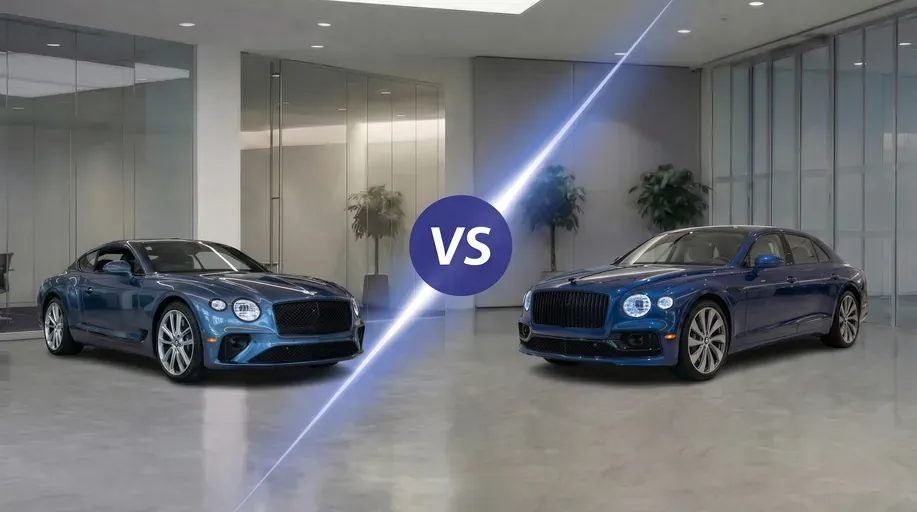
Detailed comparison of Bentley Continental GT vs Bentley Flying Spur. Discover the differences in performance, comfort, and equipment and choose the right luxury car for you.
Apr 13, 2026