Kia Sorento vs. Seat Tarraco: Complete comparison 2026
Detailed comparison: Kia Sorento vs. Seat Tarraco. Discover the differences in driving characteristics, space, and reliability. Which used family SUV is the better choice?
Oct 16, 2026
Volvo XC60 review: real owner experience, common faults, PHEV reliability and running costs. Everything you need to know before you buy.
October 29, 2026

The Volvo XC60 sits at the heart of the premium mid-size category, sold exclusively as a five-door Volvo XC60 SUV. Built on Volvo's SPA platform, it targets company-car drivers, families, and long-distance commuters looking for a safety-focused Scandinavian alternative to conventional German alternatives like the BMW X3, Audi Q5, and Mercedes-Benz GLC.
This review covers the second-generation model. Premiered at the Geneva Motor Show in March 2017, series production in Sweden started in April 2017, followed by the first European customer deliveries in July 2017. Front-wheel-drive variants arrived in April 2018, while 48-volt mild-hybrid powertrains began replacing conventional combustion engines in 2019.
Volvo revealed a mid-cycle facelift on 9 March 2021, with customer deliveries starting across Europe in June 2021. The update brought refreshed bumper styling, upgraded active-safety sensor hardware, and an Android-based infotainment operating system with integrated Google services. A longer-range plug-in hybrid setup followed in September 2021. European diesel ordering ended in May 2024, leaving petrol mild-hybrid and plug-in hybrid options as production continues.
The second-generation Volvo XC60 has been the subject of several manufacturer recall campaigns across its production run, though zero safety recalls were announced across European regulatory registers in 2026. Two significant campaigns were recorded in 2025. In July 2025, a worldwide recall covering 76,365 vehicles built between 17 May 2019 and 11 June 2025 addressed an issue where the vehicle's braking functionality can be disabled while using 'B' mode after coasting downhill, increasing the risk of an accident. The remedy is an over-the-air software update to the brake control module or a workshop flash, with drivers cautioned to avoid downhill coasting in 'B' mode until updated. In April 2025, a worldwide recall affecting 59,271 plug-in hybrids built between 29 April 2019 and 1 December 2021 was announced because problems with the high-voltage battery can cause overheating of the cells when fully charged, creating a fire risk. Workshops inspect the battery modules, replace defective modules, and apply revised battery management software.
Earlier model years involved several further safety campaigns. In January 2023, a worldwide recall of 106,691 vehicles built between 11 April 2022 and 13 January 2023 addressed a software error in the brake control module that can lead to a loss of electronic brake support functions—such as anti-lock braking and stability control—resulting in a stiff pedal while retaining unassisted hydraulic braking. In September 2021, an alert across the European Union and the UK covered 2020 to 2021 models for an insufficient or missing welding connection in the hydraulic brake unit, requiring workshop inspection and replacement. In December 2019, a worldwide recall covering engines built between 2013 and 2017 included early second-generation builds of the diesel Volvo XC60; excessive carbon deposits could raise intake air temperatures, causing the intake manifold to melt or deform. Additionally, in February 2019, a worldwide campaign for roughly 167,000 cars built from October 2017 to November 2018 replaced power tailgate lifting arms after reports that freezing temperatures could cause the spindle to separate from the ball socket.
Beyond official safety campaigns, owners report recurring issues with the electric rear axle drive unit on pre-facelift hybrid Volvo XC60 models built from 2017 to 2021. Tests describe bearing wear and clutch deterioration that produce mechanical whining or grinding noises under acceleration and regenerative braking, occasionally accompanied by hybrid system failure warnings. The rear drive unit was redesigned for the post-2021 facelift. On plug-in hybrids built between 2019 and 2023, owners also report failures of the high-voltage coolant heater element. When this element fails, the cabin cannot generate heat in pure electric mode, forcing the combustion engine to run purely for climate comfort. On vehicles fitted with optional four-corner air suspension, tests describe compressor fatigue and air spring leaks, which owners report as corner sagging after parking overnight.
Following the 2021 facelift, the introduction of the Google-based Android Automotive infotainment system brought software stability concerns. Tests describe occasional screen freezes, black displays, delayed climate control responses, and the reversing camera temporarily becoming unavailable when reverse is selected. While over-the-air software updates have progressively improved stability, owners report that intermittent freezes still require a manual reboot of the central display. For buyers seeking independent pre-purchase verification of a specific used car, a technical inspection through CarAudit can confirm physical component condition and electronic health.
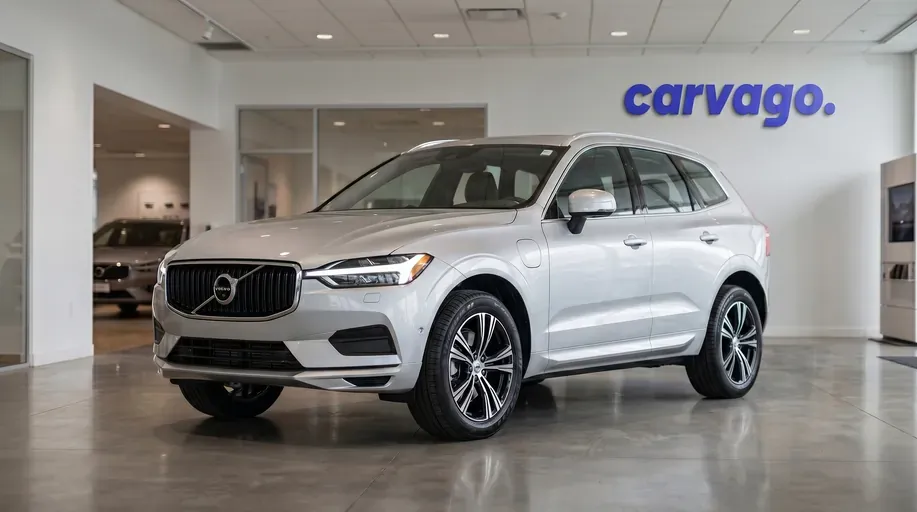
Every second-generation Volvo XC60 relies on modular four-cylinder engines paired with front-wheel drive or all-wheel drive, spanning pure combustion units, 48-volt mild hybrids, and petrol plug-in hybrids.
| Engine | Fuel | Power | Gearbox | Drivetrain | Model years |
|---|---|---|---|---|---|
| D3 | Diesel | 110 kW (150 hp) | 6-speed manual | FWD | 2018–2020 |
| D4 | Diesel | 140 kW (190 hp) | 6-speed manual / 8-speed automatic | FWD (from 2018) / AWD | 2017–2020 |
| D5 PowerPulse | Diesel | 173 kW (235 hp) | 8-speed automatic | AWD | 2017–2020 |
| B4 Diesel | Diesel Mild-Hybrid | 145 kW (197 hp) | 8-speed automatic | FWD / AWD | 2019–2024 |
| B5 Diesel | Diesel Mild-Hybrid | 173 kW (235 hp) | 8-speed automatic | AWD | 2019–2022 |
| T4 | Petrol | 140 kW (190 hp) | 8-speed automatic | FWD | 2018–2020 |
| T5 | Petrol | 187 kW (254 hp) | 8-speed automatic | FWD / AWD | 2017–2018 |
| T5 | Petrol | 184 kW (250 hp) | 8-speed automatic | FWD / AWD | 2018–2020 |
| T6 | Petrol | 235 kW (320 hp) | 8-speed automatic | AWD | 2017–2018 |
| T6 | Petrol | 228 kW (310 hp) | 8-speed automatic | AWD | 2018–2020 |
| B4 | Petrol Mild-Hybrid | 145 kW (197 hp) | 8-speed automatic | FWD | 2020–2023 |
| B5 | Petrol Mild-Hybrid | 184 kW (250 hp) | 8-speed automatic | FWD / AWD | 2019–present |
| B6 | Petrol Mild-Hybrid | 220 kW (300 hp) | 8-speed automatic | AWD | 2019–2023 |
| T6 Twin Engine / Recharge | Petrol Plug-in Hybrid | 251 kW (340 hp) | 8-speed automatic | AWD | 2020–2021 |
| Recharge T6 (Long Range) | Petrol Plug-in Hybrid | 257 kW (350 hp) | 8-speed automatic | AWD | 2021–present |
| T8 Twin Engine | Petrol Plug-in Hybrid | 300 kW (407 hp) | 8-speed automatic | AWD | 2017–2018 |
| T8 Twin Engine / Recharge | Petrol Plug-in Hybrid | 288 kW (390 hp) | 8-speed automatic | AWD | 2018–2021 |
| Recharge T8 (Long Range) | Petrol Plug-in Hybrid | 335 kW (455 hp) | 8-speed automatic | AWD | 2021–present |
| T8 Polestar Engineered | Petrol Plug-in Hybrid | 298 kW (405 hp) | 8-speed automatic | AWD | 2019–2021 |
| Recharge T8 Polestar Engineered | Petrol Plug-in Hybrid | 335 kW (455 hp) | 8-speed automatic | AWD | 2021–2024 |
For urban commuting and short daily trips, the hybrid Volvo XC60 Recharge variants are the most suitable option, provided you can charge regularly at home or work. Running on electric power covers typical daily commutes without engaging the petrol engine. For urban buyers without charging access, the front-wheel-drive petrol mild hybrids—such as the B4 or B5—are preferable to diesels for short, cold driving cycles.
For long-distance motorway driving, a used diesel Volvo XC60 like the D4 or the mild-hybrid B4 and B5 diesel remains the practical choice. Although these four-cylinder diesels sound coarser under full throttle than rival six-cylinder engines, they provide sustained pulling power and extended cruising range between refuelling stops.
For mixed driving combining suburban commutes with open-road travel, the petrol Volvo XC60 B5 mild hybrid provides a versatile baseline. Its integrated starter-generator smooths out stop-start traffic, and the automatic gearbox delivers steady progress without the high curb weight of a plug-in battery.
Buyers planning to tow heavy trailers or caravans should focus on a Volvo XC60 4x4 with all-wheel drive. The higher-output diesels—specifically the D5 and B5 diesel—are best adapted to towing over long highway stretches, maintaining pulling capacity without the sharp range decline plug-in hybrids experience once their traction battery depletes.
For detailed failure histories, factory recalls, and specific powertrain wear items, see the owner experiences section.
The Volvo XC60 accommodates five occupants across two front seats and a three-passenger rear bench. Outboard rear positions provide sufficient headroom and knee room for tall adults on long journeys, though the middle seat is compromised by a pronounced floor tunnel that houses the battery pack on electrified versions. Practicality is aided by a wide, squared tailgate opening with a flush loading sill and split-folding rear seatbacks that fold flat into a continuous cargo deck, supplemented by a centre ski pass-through hatch. The rear seat base remains fixed and does not slide fore or aft. Luggage flexibility is sensible, though underfloor utility depends on the powertrain: mild-hybrid models retain space under the load floor for small items or a tyre repair kit, whereas plug-in hybrid variants forfeit most of this underfloor volume to rear-axle electrical components, leaving room only for charging cables.
| Parameter | Mild-Hybrid & Standard ICE | Plug-in Hybrid (Recharge) |
|---|---|---|
| Length (mm) | 4,688 (pre-facelift) / 4,708 (facelift) | 4,688 (pre-facelift) / 4,708 (facelift) |
| Width without mirrors (mm) | 1,902 | 1,902 |
| Height (mm) | 1,655–1,660 | 1,651–1,658 |
| Wheelbase (mm) | 2,865 | 2,865 |
| Boot volume (seats up / folded, l) | 483 / 1,410 | 468 / 1,395 |
On open motorways, professional road tests consistently describe the Volvo XC60 as a relaxed and secure long-distance cruiser. Models equipped with optional air suspension filter out prolonged road undulations effectively, although testers note that sharp urban potholes and asymmetric ruts can provoke noticeable lateral body rocking. In contrast, the standard steel spring suspension behaves noticeably stiffer across cobblestones and transverse joints. Handling prioritises safety over agility: the steering tracks straight without requiring constant corrections, yet it provides virtually no road feedback, and electronic stability systems intervene early during sudden evasive manoeuvres. Acoustic insulation keeps road roar subdued at cruising speeds, though the four-cylinder engines sound vocal and strained under heavy acceleration.
Inside, testers widely commend the Scandinavian craftsmanship, durable cabin materials, and supportive front seat ergonomics that minimise fatigue on long journeys. The operational layout draws consistent criticism across all model years, however, because Volvo concentrated nearly all primary functions—including climate adjustments—into the central vertical touchscreen, demanding frequent eyes-off-the-road interaction. The mid-cycle facelift replaced the original infotainment software with a Google-based operating system, bringing clearer visuals and responsive voice inputs, but it did not restore dedicated physical climate dials. While reviewers disagree on whether the air suspension settles sufficiently over broken town pavement, they reach an explicit consensus on the car's overall character: it is tuned strictly for unhurried highway travel rather than driver engagement.
All charts in this section are drawn from Carvago’s listings of the whole Volvo XC60 model family, including other generations represented in the data, not only the reviewed generation, and do not establish a separate price level for the reviewed generation alone. Currently, the median asking price across available build years ranges from €30,000 for 2019 vehicles to €59,900 for 2026 cars. Across the middle model years, the median asking price sits at €38,500 for 2022 and €43,800 for 2023, reflecting secondary-market preferences for newer plug-in hybrids and mild-hybrid petrols over earlier diesels.
Between April 2026 and September 2026, the number of advertised Volvo XC60 vehicles rose from 15,151 to 17,388 listings. The monthly counts below trace how available inventory shifted over this six-month period.
Active listings over time
| Month | Volvo XC60 |
|---|---|
| 2026-04 | 15 151 |
| 2026-05 | 16 117 |
| 2026-06 | 16 746 |
| 2026-07 | 17 335 |
| 2026-08 | 16 780 |
| 2026-09 | 17 388 |
Source Carvago
Buyers have a very large selection of vehicles to consider, with monthly listing numbers remaining above 15,000 throughout the period despite a brief pullback to 16,780 in August.
Across used listings advertised today, the median asking price stands at €30,000 for cars built in 2019 and €59,900 for cars built in 2026, with each newer build year priced higher than the last.
Median advertised price by year of manufacture
| Model year | Volvo XC60 |
|---|---|
| 2019 | 30 000 |
| 2020 | 33 600 |
| 2021 | 36 000 |
| 2022 | 38 500 |
| 2023 | 43 800 |
| 2024 | 50 000 |
| 2025 | 54 400 |
| 2026 | 59 900 |
Source Carvago
Across used listings advertised today, buyers looking at 2022 models face a median asking price of €38,500, while stepping up to a 2024 model corresponds to a median asking price of €50,000.
This depreciation curve illustrates how the Volvo XC60 loses value with age, shedding 16% of its residual value in the first year. By age three, cumulative loss reaches 30% of the initial value, leading into the broader trend shown below.
Residual value by vehicle age
| Vehicle age | Volvo XC60 |
|---|---|
| New | 58 600 |
| 1 yr | 49 300 |
| 2 yrs | 44 600 |
| 3 yrs | 41 300 |
| 4 yrs | 36 700 |
| 5 yrs | 32 600 |
| 6 yrs | 29 700 |
| 7 yrs | 26 200 |
Source Carvago
Across the seven years shown, the model sheds 55% of its initial residual value, retaining roughly 45% of that baseline. The steepest drop occurs in the first year, after which annual depreciation moderates to between 7% and 12% per year.
Between April and September 2026, hybrid variants led the advertised inventory, counting 7249 listings at the start of the period and 9350 by the end. The chart below shows the monthly volume of advertised cars across each fuel type.
Supply composition by fuel type
Petrol
Diesel
Hybrid
CNG
| Month | Petrol | Diesel | Hybrid | CNG |
|---|---|---|---|---|
| 2026-04 | 4 202 | 3 514 | 7 249 | 0 |
| 2026-05 | 4 375 | 3 915 | 7 695 | 1 |
| 2026-06 | 4 373 | 3 968 | 8 331 | 1 |
| 2026-07 | 4 393 | 3 814 | 9 061 | 1 |
| 2026-08 | 4 245 | 3 582 | 8 897 | 1 |
| 2026-09 | 4 248 | 3 750 | 9 350 | 0 |
Source Carvago
In September 2026, hybrids led the offer with 9350 listings, while petrol models numbered 4248 and diesels stood at 3750. Buyers will find by far the widest selection among hybrids, though petrol and diesel powertrains remain plentiful alternatives.
Between April 2026 and September 2026, the average asking price for the Volvo XC60 began at €42,400 before settling at €41,900 in May.
Average price development over time
| Month | Volvo XC60 |
|---|---|
| 2026-04 | 42 400 |
| 2026-05 | 41 900 |
| 2026-06 | 41 900 |
| 2026-07 | 41 900 |
| 2026-08 | 41 900 |
| 2026-09 | 41 800 |
Source Carvago
Prices held at €41,900 through August 2026 and concluded at €41,800 in September, reflecting minimal movement across the six-month period.
Relaxed long-distance cruising comfort with supportive front seats and low cabin noise
Practical luggage compartment with flat-folding rear seats and a wide tailgate opening
Plug-in hybrid variants capable of handling typical daily commutes on electric power
Climate controls concentrated entirely in the touchscreen and occasional software freezes
Stiff low-speed ride on standard steel suspension and uncommunicative steering
Multiple safety recalls affecting braking systems and hybrid batteries requiring verification by VIN
For motorway travel and towing, a diesel Volvo XC60 provides steady pulling power and long cruising range. Commuters with home charging are best served by a plug-in hybrid Recharge, while urban drivers without charging access should choose a petrol Volvo XC60 mild hybrid.
Models delivered from June 2021 onward are the most sensible choice due to updated active-safety hardware and improved plug-in hybrid drive units. However, their Google-based infotainment system can experience occasional software lag.
Have an authorized retailer confirm by VIN that all safety recall campaigns have been completed. On plug-in hybrids, verify that the cabin heater warms up in pure electric mode and listen for mechanical whining from the rear axle.
Sources: volvocars.com, adac.de, kba.de, autocar.co.uk, autobild.de
This article was prepared using artificial intelligence tools. The section guarantor is Petr Dušek.

Detailed comparison: Kia Sorento vs. Seat Tarraco. Discover the differences in driving characteristics, space, and reliability. Which used family SUV is the better choice?
Oct 16, 2026

Peugeot 5008 review: real owner experience, electric and hybrid range, 7-seat space and running costs — everything you need before buying.
Oct 17, 2026

Detailed comparison of Ford Edge vs. Nissan X-Trail (Rogue). Discover the differences in spaciousness, equipment, and reliability. Read our verdict and make the right choice!
Oct 16, 2026