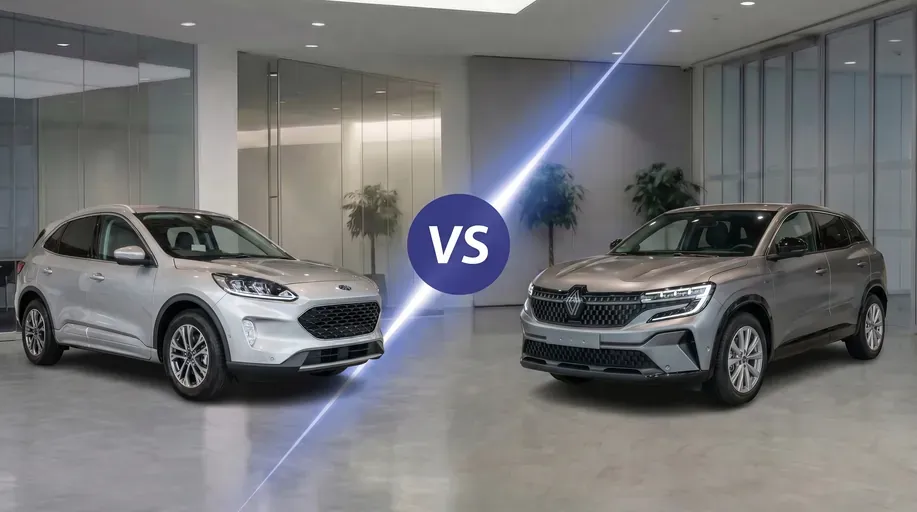
Car battle
Ford Kuga vs. Renault Austral: Complete comparison 2026
Used SUV comparison: Ford Kuga vs. Renault Austral. Find out which model offers better engines, equipment, and real value. Read our final verdict!
Oct 16, 2026
Articles
Review
Volvo XC40 review: real owner experience, reliability, running costs, and used prices. Read our comprehensive verdict before you buy.
November 1, 2026

The Volvo XC40 SUV is the Swedish brand’s contender in the compact premium crossover segment. This review focuses on the first generation, which entered series production in November 2017, with initial European customer deliveries starting in February 2018.
Sold exclusively as a five-door SUV, the lineup broadened over time. Plug-in hybrid variants opened for orders in April 2019, followed by battery-electric models arriving to European customers in late 2020. In March 2022, a mid-cycle facelift revised the front styling and standardized 48V mild-hybrid petrol engines across the combustion lineup. On 20 February 2024, the pure electric version was separated under its own model badge, leaving the Volvo XC40 nameplate for mild-hybrid petrol offerings. A second major refresh was revealed on 10 September 2026.
The model appeals primarily to urban commuters, small families, and downsizers who want an elevated driving position and distinctive Scandinavian cabin design in a practical, compact footprint.
Owner reports and road-test data show that the Volvo XC40 delivers a solid mechanical baseline, but early build years and tech-heavy revisions have generated recurring electronic and software complaints. On models equipped with the Google Android Automotive operating system introduced from 2022 onwards, owners frequently report central screen freezes, temporary loss of LTE navigation data, and camera delay when engaging reverse. In chronic instances, signal lock-ups trace back to the telematics and antenna module, which can cause the vehicle to lose remote app connectivity or temporarily fail to recognise the key fob for passive entry. While Over-The-Air (OTA) updates have stabilised software routines, persistent connectivity drops have in some cases required hardware module resets or antenna replacements at authorised workshops.
Roadworthiness inspection data highlights premature wear in the front running gear, particularly on 2018 to 2022 build years across heavier diesel, petrol, and hybrid variants. Front anti-roll bar drop links and rear hydro-bushings on the lower control arms are prone to developing play, producing a noticeable metallic knocking noise when traversing irregular road surfaces. Replacing the worn links or wishbone assemblies and aligning the wheels typically resolves the noise. In breakdown statistics, auxiliary 12V battery drain emerges as a recurring cause of immobilisation across all powertrains. Vehicles parked unused for several weeks or operated purely on brief urban trips experience parasitic drain from dormant telematics, causing low-voltage faults that prevent drive readiness even when the main traction battery is fully charged.
Several European safety campaigns have been logged for this generation, addressing both software logic and critical mechanical hardware.
| Defect Description | Powertrain / Scope | Affected Build Window | Worldwide Reach | Workshop Remedy |
|---|---|---|---|---|
| High-voltage battery module thermal overload and fire risk | Plug-in hybrid (PHEV) | 12 March 2019 – 06 December 2021 | 64,089 vehicles | Battery cell module inspection and replacement of defective modules |
| Braking functionality disabled during prolonged downhill coasting | Plug-in hybrid and electric | 17 May 2019 – 11 June 2025 | 76,365 vehicles | Software update via OTA or retailer |
| Turbocharger oil line O-ring failure and oil leak fire risk | Petrol and mild-hybrid petrol | 12 May 2021 – 21 June 2023 | 58,245 vehicles | Replacement of turbocharger oil feed line O-ring seal |
| Brake control software fault (loss of power assistance) | All powertrains (2023 model year) | 01 January 2022 – 18 November 2022 | 106,691 vehicles | Brake control software calibration update |
| Rear left turn indicator software disablement | All powertrains (2024 model year) | 13 October 2022 – 20 December 2023 | Global / EU & UK | Central electronic software update |
| Accelerator pedal wiring harness corrosion | Pure electric (Recharge) | 2021 – 2022 | Global / EU & UK | Wiring harness inspection, waterproofing, and sensor replacement |
The most critical safety action affects the plug-in hybrid Volvo XC40. Announced in September 2026, the campaign notes that high-voltage battery cell modules may suffer a manufacturing defect leading to thermal overload and vehicle fire when fully charged. Pending workshop inspection and module replacement, official guidance instructs owners not to plug the vehicle in to charge and to avoid parking in enclosed garages, though driving on the combustion engine remains permitted. Another notable safety campaign, announced in July 2025, rectifies a braking software error where regenerative braking in 'B' mode or One-Pedal Drive could deactivate after prolonged downhill coasting. For any petrol Volvo XC40 built between May 2021 and June 2023, verification of the turbocharger oil seal replacement is equally vital to eliminate oil leakage risks. Buyers can have these items and the overall mechanical condition thoroughly inspected before purchase through services like CarAudit.
Throughout its production run, the first-generation Volvo XC40 has featured an unusually wide selection of powertrains, spanning traditional petrol and diesel units, 48-volt mild hybrids, front-wheel-drive plug-in hybrids, and dual-motor electric variants.
| Engine | Fuel | Power | Drivetrain | Gearbox | Model years |
|---|---|---|---|---|---|
| T2 | Petrol | 95 kW (129 hp) | Front-wheel drive | 6-speed manual / 8-speed automatic | 2020–2022 |
| T3 | Petrol | 115 kW (156 hp) | Front-wheel drive | 6-speed manual | 2018–2019 |
| T3 | Petrol | 120 kW (163 hp) | Front-wheel drive | 6-speed manual / 8-speed automatic | 2019–2022 |
| T4 | Petrol | 140 kW (190 hp) | Front-wheel drive / All-wheel drive | 8-speed automatic | 2018–2020 |
| T5 | Petrol | 184 kW (250 hp) | All-wheel drive | 8-speed automatic | 2018–2020 |
| B3 | Mild hybrid petrol | 120 kW (163 hp) | Front-wheel drive | 7-speed automatic | 2022–present |
| B4 | Mild hybrid petrol | 145 kW (197 hp) | Front-wheel drive | 8-speed automatic / 7-speed automatic | 2020–present |
| B4 AWD | Mild hybrid petrol | 145 kW (197 hp) | All-wheel drive | 8-speed automatic | 2020–2023 |
| B5 AWD | Mild hybrid petrol | 184 kW (250 hp) | All-wheel drive | 8-speed automatic | 2020–2023 |
| D3 | Diesel | 110 kW (150 hp) | Front-wheel drive / All-wheel drive | 6-speed manual / 8-speed automatic | 2018–2020 |
| D4 | Diesel | 140 kW (190 hp) | All-wheel drive | 8-speed automatic | 2018–2020 |
| T4 Recharge | Plug-in hybrid | 155 kW (211 hp) | Front-wheel drive | 7-speed automatic | 2020–2023 |
| T5 Recharge | Plug-in hybrid | 192 kW (262 hp) | Front-wheel drive | 7-speed automatic | 2019–2023 |
| Recharge Single Motor | Electric | 170 kW (231 hp) | Front-wheel drive | 1-speed automatic | 2021–2023 |
| Recharge Single Motor | Electric | 175 kW (238 hp) | Rear-wheel drive | 1-speed automatic | 2023–2024 |
| Recharge Single Motor Extended Range | Electric | 185 kW (252 hp) | Rear-wheel drive | 1-speed automatic | 2023–2024 |
| Recharge Twin Motor | Electric | 300 kW (408 hp) | All-wheel drive | 1-speed automatic | 2020–2024 |
City driving and short trips: The entry three-cylinder petrol Volvo XC40 variants, badged T2 and T3, warm up rapidly and avoid the exhaust aftertreatment complications typical of diesels. If you have reliable home or workplace charging, the hybrid Volvo XC40 plug-in models (T4 and T5 Recharge) or the pure electric Recharge versions make the smoothest and most economical urban runabouts.
Mixed daily driving: The mild-hybrid B3 and B4 front-wheel-drive models hit the sweet spot for general family use. Their integrated starter-generator provides smooth stop-start transitions in traffic, while maintaining ample passing power on country roads and suburban bypasses.
Long motorway journeys: For drivers covering frequent long-distance routes, a used diesel Volvo XC40 (D3 or D4) remains the most relaxed choice thanks to muscular low-rpm pulling power. If low-emission zone restrictions make diesel impractical, the front-wheel-drive B4 mild hybrid serves as the best long-legged petrol alternative.
Towing and harsh weather: For pulling heavy trailers or handling snow-covered roads, choose an all-wheel-drive Volvo XC40 4x4 such as the D4 AWD or the mild-hybrid B4 AWD and B5 AWD. These versions retain the robust torque-converter automatic transmission and deliver the highest towing capacities in the model range.
For detailed information on known mechanical issues, official recalls, and transmission behavior, consult the dedicated owner experiences section.
| Dimension / Volume | Combustion & Mild Hybrid | Plug-in Hybrid |
|---|---|---|
| Length (mm) | 4,425–4,440 | 4,425 |
| Width without mirrors (mm) | 1,863 | 1,863 |
| Height (mm) | 1,652 | 1,652 |
| Wheelbase (mm) | 2,702 | 2,702 |
| Boot volume – seats upright (l) | 443–452 | 405 |
| Boot volume – seats folded (l) | 1,319–1,328 | 1,281 |
Note: Pure electric versions share the standard exterior footprint, providing comparable rear luggage capacity alongside a dedicated front luggage compartment under the bonnet.
The rear bench of the Volvo XC40 SUV accommodates adult passengers comfortably, providing adequate knee room for taller occupants. However, the bench cushion is mounted relatively low, which restricts under-thigh support over longer trips. Unlike some competitors, the rear seats do not slide fore and aft, but the backrests fold in a 60/40 split and include a standard ski hatch behind the central armrest for longer cargo. The luggage area benefits from a flat sill, upright side walls, and an adaptable folding floor that conceals partitioned underfloor storage. Daily practicality is reinforced by large door bins, though the substantial rear pillars noticeably compromise outward over-the-shoulder visibility during parking.
Professional road tests characterise the Volvo XC40 as a chassis tuned for relaxed cruising rather than agile cornering. The suspension absorbs undulations cleanly on open roads, although sharp transverse ridges and potholes transmit noticeable shiver through the cabin, particularly on cars fitted with optional larger wheels. Through bends, the body leans noticeably before steadying on its outer tyres. Testers note that the steering is light and isolated from kickback, yet it provides almost no road feedback around the centre. While all-wheel-drive Volvo XC40 variants provide sure-footed traction, vehicle weight pushes the front axle into gradual understeer under enthusiastic cornering.
The cabin isolates wind noise effectively at higher speeds, though tyre roar becomes audible over coarse asphalt on wider tyres. Inside, reviewers highlight sturdy assembly quality and plush tactile surfaces around the front fascia, though the rear door trims switch to hard plastics. Ergonomically contoured front seats deliver supportive posture on long journeys.
Professional tests agree that the Volvo XC40 prioritises comfort and safety over driver engagement. The portrait infotainment screen receives mixed assessments: while clean in presentation, the relocation of climate functions entirely into digital submenus causes unnecessary distraction while driving. Later mild-hybrid variants introduced a dual-clutch transmission that shifts unobtrusively at speed, though testers note hesitation when pulling away compared to earlier automatic gearboxes.
All the charts in this section are drawn from Carvago listings of the whole Volvo XC40 model family, including other generations represented in the data, not only the reviewed generation. Because the data reflects the wider model family without a generation filter, it does not establish a separate price level for the reviewed generation. Across the advertised build years, listings from the 2019 model year record a median asking price of €25,000, while vehicles produced in 2026 stand at a median asking price of €41,700.
Between April 2026 and September 2026, advertised listings for the Volvo XC40 moved from 13,446 to 12,001 cars on the market, as tracked in the monthly counts below.
Active listings over time
| Month | Volvo XC40 |
|---|---|
| 2026-04 | 13 446 |
| 2026-05 | 13 466 |
| 2026-06 | 13 098 |
| 2026-07 | 12 559 |
| 2026-08 | 11 910 |
| 2026-09 | 12 001 |
Source Carvago
Buyers have consistently had over 11,900 vehicles to choose from each month, with overall stock softening through the summer to a low of 11,910 in August 2026 before edging up to 12,001 in September.
Among used listings advertised today, the median asking price of cars built in 2019 is €25,000, while the median asking price of those built in 2026 is €41,700. The breakdown below shows how these median figures compare across model years.
Median advertised price by year of manufacture
| Model year | Volvo XC40 |
|---|---|
| 2019 | 25 000 |
| 2020 | 27 000 |
| 2021 | 28 300 |
| 2022 | 30 200 |
| 2023 | 34 000 |
| 2024 | 37 000 |
| 2025 | 37 800 |
| 2026 | 41 700 |
Source Carvago
Buyers reviewing listings advertised today encounter a median asking price of €27,000 for 2020 models and €30,200 for 2022 models. For more recent production years, the median asking price of listings advertised today is €37,000 for 2024 models and €37,800 for 2025 models.
This depreciation curve shows how the Volvo XC40 sheds value as it ages, recording a 15% decline in residual value in its first year and losing 35% by age three.
Residual value by vehicle age
| Vehicle age | Volvo XC40 |
|---|---|
| New | 39 800 |
| 1 yr | 33 900 |
| 2 yrs | 29 700 |
| 3 yrs | 25 700 |
| 4 yrs | 24 100 |
| 5 yrs | 21 700 |
| 6 yrs | 19 800 |
| 7 yrs | 18 700 |
Source Carvago
Across the seven years shown, the model sheds 53% of its baseline residual value. The sharpest drop occurs over the first three years, after which the pace of depreciation moderates significantly from age four.
Between April and September 2026, petrol made up the largest share of advertised stock, recording 6,488 listings in April and 7,110 in September. The chart below illustrates how active listings split across each fuel type over this period.
Supply composition by fuel type
Petrol
Diesel
Hybrid
Electric
| Month | Petrol | Diesel | Hybrid | Electric |
|---|---|---|---|---|
| 2026-04 | 6 488 | 658 | 3 185 | 3 064 |
| 2026-05 | 6 974 | 759 | 3 374 | 2 307 |
| 2026-06 | 7 118 | 774 | 3 315 | 1 848 |
| 2026-07 | 6 965 | 836 | 3 243 | 1 467 |
| 2026-08 | 6 830 | 773 | 3 034 | 1 224 |
| 2026-09 | 7 110 | 750 | 3 027 | 1 067 |
Source Carvago
In September 2026, petrol and hybrid powertrains dominated the market with 7,110 petrol and 3,027 hybrid listings, alongside 1,067 electric cars and 750 diesels. Buyers will find the widest selection among petrol and hybrid vehicles, whereas diesel and fully electric models offer considerably fewer choices.
The chart tracks the average asking price for the Volvo XC40 from April 2026 to September 2026, opening at €30,500.
Average price development over time
| Month | Volvo XC40 |
|---|---|
| 2026-04 | 30 500 |
| 2026-05 | 30 400 |
| 2026-06 | 30 300 |
| 2026-07 | 30 000 |
| 2026-08 | 30 200 |
| 2026-09 | 30 400 |
Source Carvago
Across the six months, the average moved very little overall, dipping to €30,000 in July 2026 before ending at €30,400 in September 2026, representing a net change of less than one percent.
Wide selection of powertrains covering petrol, diesel, hybrid, and electric options
Practical boot layout with an adaptable folding floor and flat loading sill
Relaxed long-distance cruising comfort paired with supportive front seats
Climate controls integrated entirely into touchscreen submenus cause driving distraction
Thick rear pillars noticeably restrict outward over-the-shoulder visibility
Software glitches and central screen freezes on Google-based infotainment systems
The Volvo XC40 offers a mechanically sound baseline, but models with Google-based software frequently suffer from screen freezes and connectivity drops. Additionally, early build years warrant inspection for worn front suspension bushings and drop links.
The front-wheel-drive B3 and B4 mild-hybrid petrol engines hit the sweet spot for mixed daily use, delivering smooth stop-start transitions in traffic. However, their dual-clutch automatic transmission can display slight hesitation when pulling away from a standstill.
Always check the vehicle’s official recall status by VIN at an authorised retailer, paying particular attention to battery module and braking campaigns on the plug-in hybrid Volvo XC40. On cars with the optional panoramic glass roof, check the front footwells for dampness caused by blocked drain tubes.
A used diesel variant provides relaxed high-speed cruising thanks to strong low-rpm pulling power. If low-emission zone restrictions make diesel impractical, the front-wheel-drive B4 mild hybrid is the most suitable petrol alternative.
Sources: volvocars.com, kba.de, adac.de, autocar.co.uk, autobild.de
This article was prepared using artificial intelligence tools. The section guarantor is Petr Dušek.
Used SUV comparison: Ford Kuga vs. Renault Austral. Find out which model offers better engines, equipment, and real value. Read our final verdict!
Oct 16, 2026
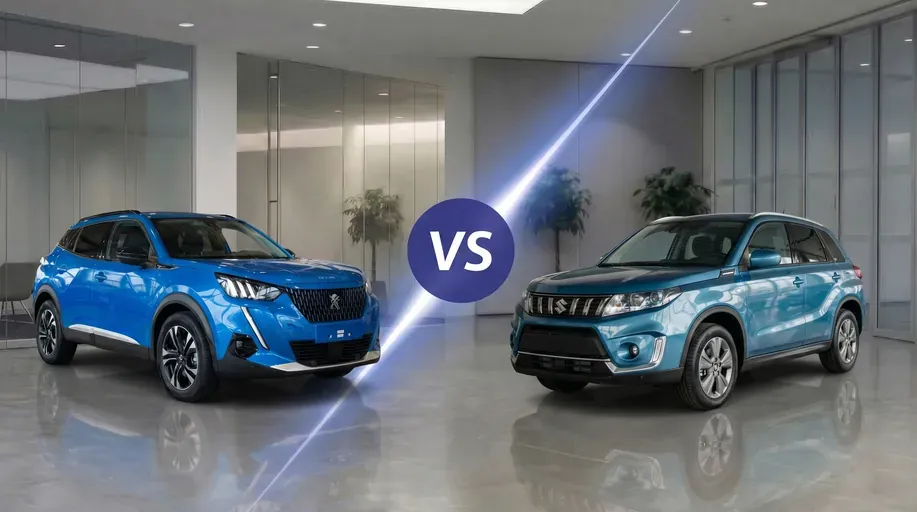
A major comparison of the Peugeot 2008 and Suzuki Vitara. Discover the differences in equipment, reliability, and fuel consumption of used cars. Read our verdict and make the right choice.
May 7, 2026

Audi Q3 review: real owner feedback, best engine picks, boot space and pricing — our definitive verdict on the third-generation SUV.
Oct 25, 2026