Car battle
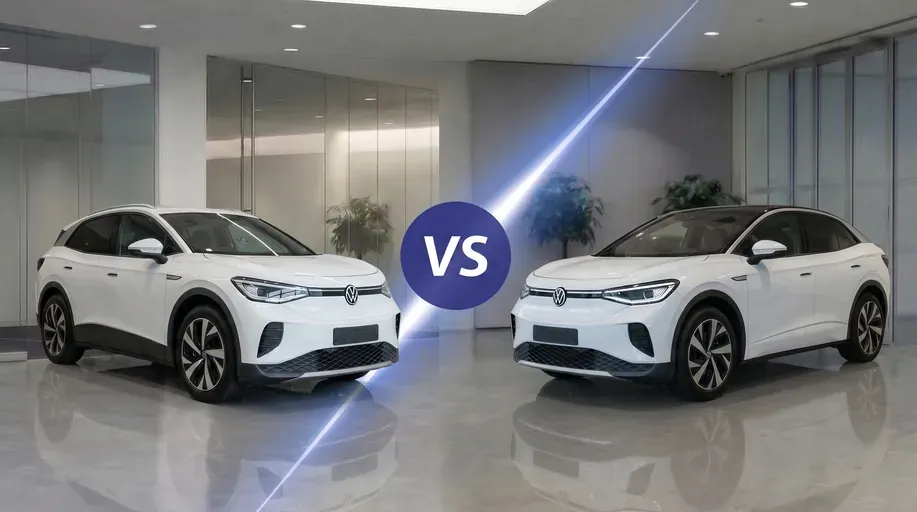
Volkswagen ID.4 vs. Volkswagen ID.5: Complete comparison 2026
Volkswagen ID.4 vs. Volkswagen ID.5: Practical electric SUV or stylish coupe? Read our detailed comparison of range, space and our final verdict.
Oct 16, 2026
Articles
Review
Volvo EX90 review: real owner impressions, charging tech, 7-seat practicality, and our definitive verdict on Volvo's electric flagship.
November 2, 2026
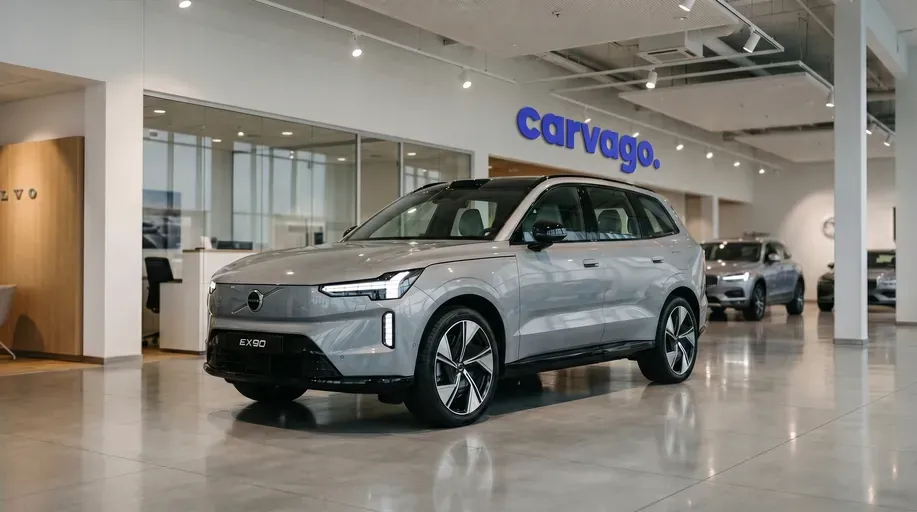
The electric Volvo EX90 SUV sits at the top of the brand’s line-up as a dedicated flagship full-size SUV. Built on a purpose-built electric platform, it serves as the company's modern vision for multi-row passenger transport in the premium segment.
This review covers the first-generation Volvo EX90. Series production commenced on 5 June 2024, with the first customer deliveries reaching European roads in September 2024. The initial production run comprised all-wheel-drive Twin Motor and Twin Motor Performance configurations, while a Single Motor rear-wheel-drive variant joined European order books in April 2024. As of November 2026, the model has undergone no exterior cosmetic facelift, though a running technical revision moving the vehicle line to an 800V electrical architecture was announced in September 2025 for Model Year 2026 onwards.
Available solely as a five-door SUV, the cabin comes in seven-seat, six-seat, or market-dependent five-seat configurations. It appeals directly to large families, luxury-focused long-distance travellers, and executive fleet users who require three rows of seating alongside dedicated electric propulsion.
Because first European customer deliveries of the Volvo EX90 only commenced in September 2024, long-term durability and high-mileage wear patterns cannot yet be established from field data. The operational record of the flagship electric SUV instead centres on teething issues with early software and high-voltage ancillary hardware, alongside two official European safety campaigns.
Two safety recalls have been registered for European models of the electric Volvo EX90, both announced in 2025.
The first campaign was notified in February 2025 and officially published in May 2025, affecting 7,244 vehicles worldwide produced between 15 August 2023 and 29 January 2025. Official recall notices state that a fault in the front lighting system can cause a temporary loss of dipped and main beam illumination for two to three seconds due to the headlamp shutter closing over the lighting units. Authorised retailers resolve the defect by applying a diagnostic software update to the lighting control module.
The second recall, announced in October 2025 and officially published in November 2025, covers 2,020 vehicles globally built between 24 January 2024 and 12 August 2024. In the wording of the official safety notice, a missing crimp inside the drive unit can cause the spindle to separate while the power tailgate is operating, creating a risk that the tailgate drops uncontrolled or closes rapidly, potentially causing injury. Authorised workshops replace both power tailgate drive units with modified components. Official notices advised owners to avoid operating the power tailgate until this physical replacement has taken place.
Beyond official recalls, professional tests describe and owners report digital instability linked to the vehicle's central computer platform on early production models. Observed issues include unexpected reboots of the central infotainment touchscreen and the digital instrument display while driving, disconnections with the digital phone key, and elevated high-voltage battery drain of one to two percent daily while parked. While subsequent software updates resolved key communication dropouts, in some cases restoring system stability on early customer vehicles required the workshop replacement of the central vehicle control hardware.
Another repeated issue on earlier launch batches involves the onboard alternating-current (AC) charger module. Some owners report interrupted charging sessions when connected to domestic AC wallboxes, accompanied by charging fault alerts in the instrument display or an inability to draw charge. Authorised workshop replacement of the internal onboard charger module alongside high-voltage control software updates resolved these charging failures under warranty.
Heavy vehicle weight also makes tyre condition an important inspection item on used examples, as rapid shoulder wear has been noted on the larger 21-inch and 22-inch wheel configurations. Prospective buyers can have any prospective Volvo EX90 thoroughly checked by an independent vehicle technician through CarAudit prior to committing to a purchase.
The first-generation electric Volvo EX90 offers a purely battery-electric powertrain lineup available with either rear-wheel drive or dual-motor all-wheel drive. During the production cycle, Volvo transitioned from an initial 400-volt electrical setup to an upgraded 800-volt architecture, bringing revisions to power delivery and charging capabilities.
| Engine | Fuel | Power | Drivetrain | Gearbox | Model years |
|---|---|---|---|---|---|
| Single Motor | Electric | 205 kW (279 hp) | Rear-wheel drive | 1-speed automatic | 2024 – 2025 |
| Single Motor | Electric | 245 kW (333 hp) | Rear-wheel drive | 1-speed automatic | 2025 – present |
| Twin Motor | Electric | 300 kW (408 hp) | All-wheel drive | 1-speed automatic | 2024 – 2025 |
| Twin Motor | Electric | 335 kW (456 hp) | All-wheel drive | 1-speed automatic | 2025 – present |
| Twin Motor Performance | Electric | 380 kW (517 hp) | All-wheel drive | 1-speed automatic | 2024 – 2025 |
| Twin Motor Performance | Electric | 500 kW (680 hp) | All-wheel drive | 1-speed automatic | 2025 – present |
For urban commuting, suburban family duties, and daily school runs, the rear-wheel-drive Single Motor is the most sensible choice. It draws less power in mixed traffic and delivers smooth, predictable progress. However, due to the vehicle's substantial mass, acceleration during high-speed overtaking feels leisurely rather than urgent.
For regular long-distance travel, harsh winter conditions, or towing trailers, the all-wheel-drive electric Volvo EX90 Twin Motor is the most balanced variant in the range. Its front electric motor engages seamlessly to provide confident all-weather traction and strong pulling capacity, while uncoupling during steady highway cruising to preserve battery reserves.
The Twin Motor Performance delivers abrupt straight-line pace, but its real-world benefit is questionable.
For details on electrical software stability and verified safety recalls, consult the dedicated owner experiences section.
Real-world range in the EX90 is heavily dictated by ambient temperature and road speed. Because of its upright SUV profile and substantial weight, continuous highway speeds reduce driving distance much faster than relaxed suburban commuting. In sub-zero winter temperatures, owners report noticeable reductions in usable range, as cabin heating draws additional energy from the high-voltage pack.
Charging behavior favors newer iterations built on the 800-volt architecture, which sustain high DC fast-charging rates deeper into the charging session. Earlier 400-volt models charge at moderate speeds on rapid chargers.
| Dimension / Parameter | Measurement |
|---|---|
| Length | 5,037 mm |
| Width (excluding mirrors) | 1,964 mm |
| Height | 1,744 mm |
| Wheelbase | 2,985 mm |
| Boot capacity (7-seat, seats upright / rear seats folded) | 324 / 2,135 l |
| Front load compartment | 34 l |
Boot volume figures include the underfloor luggage well.
Configured as a six- or seven-seater, the electric SUV Volvo EX90 provides substantial passenger accommodation across its first two rows, where adult occupants enjoy relaxed legroom and upright seating posture. Boarding requires stepping over a relatively high door sill, but the fore-and-aft sliding and reclining second-row seats make it straightforward to share knee room with the rearmost chairs. The third row comfortably accommodates children or shorter passengers on routine journeys, though taller adults will note restricted under-thigh support over longer trips. Cargo versatility is supported by standard powered buttons in the luggage area that drop and raise the third-row seatbacks flat into the floor, whereas folding the middle row requires manual release from the side doors. A dedicated storage tub under the bonnet accommodates charging cables and safety equipment, preventing wet items from encroaching on the main luggage area.
Professional evaluations describe the Volvo EX90 as a relaxed long-distance cruiser that prioritises stability over cornering agility. Acoustic insulation keeps tyre roar and wind noise thoroughly muted at motorway speeds. The steering is light and accurate, yet deliberately filtered to offer minimal road feedback. With the optional adaptive air suspension, the ride floats comfortably over gentle dips and crests, although sharp low-speed potholes still reveal the vehicle's substantial mass. The standard steel suspension also controls body sway neatly, provided buyers avoid oversized wheels that introduce harshness over transverse ridges.
Inside, testers praise the clean Nordic aesthetic and tight assembly quality. However, ergonomics face widespread criticism. Physical controls are almost entirely absent; adjusting the exterior mirrors, steering column, glovebox, and climate control requires navigating multi-layered touchscreen menus. Unlabelled steering-wheel touchpads also frustrate operation in the dark, and broad rear roof pillars compromise over-the-shoulder visibility.
Testers agree on the quiet cabin isolation and settled cruising manners, as well as on the distraction caused by the screen-heavy control layout. Opinions diverge primarily on low-speed compliance, where some reviewers note the heavy chassis feels reactive over scarred city asphalt.
All charts in this section are drawn from Carvago listings of the whole model family, including other generations represented in the broader data, rather than exclusively isolating the reviewed vehicle. In the current market offer for the Volvo EX90, the median asking price sits at €85,800 for 2024 models and €83,600 for 2025 vehicles. For 2026 builds, the median asking price reaches €89,900, reflecting newer technical revisions such as updated electrical architecture alongside high-specification configurations.
Between May and October 2026, the volume of active listings for the Volvo EX90 rose from 646 to a high of 718 in August before tapering off, as detailed below.
Active listings over time
| Month | Volvo EX90 |
|---|---|
| 2026-05 | 646 |
| 2026-06 | 668 |
| 2026-07 | 704 |
| 2026-08 | 718 |
| 2026-09 | 695 |
| 2026-10 | 572 |
Source Carvago
Buyers had a broad selection of several hundred vehicles throughout this six-month window, though choice tightened toward October 2026 when listings fell to 572.
Among used listings advertised today, the median asking price of cars built in 2024 is €85,800, while those built in 2026 reach a median asking price of €89,900.
Median advertised price by year of manufacture
| Model year | Volvo EX90 |
|---|---|
| 2024 | 85 800 |
| 2025 | 83 600 |
| 2026 | 89 900 |
Source Carvago
A buyer targeting a 2025 model sees a median asking price of €83,600, whereas securing a 2026 vehicle centers on a median asking price of €89,900.
This depreciation curve traces how the model's residual value decreases with vehicle age. Across the first three years, the model sheds roughly 29% of its initial residual value, with the steepest single-year drop occurring in year one.
Residual value by vehicle age
| Vehicle age | Volvo EX90 |
|---|---|
| New | 92 100 |
| 1 yr | 80 500 |
| 2 yrs | 74 300 |
| 3 yrs | 65 800 |
| 4 yrs | 62 600 |
| 5 yrs | 57 300 |
| 6 yrs | 55 400 |
| 7 yrs | 51 400 |
Source Carvago
Over the full seven-year span shown, the vehicle loses approximately 44% of its residual value, retaining more than half of its original level. The pace of depreciation slows noticeably after age three, with annual losses moderating in subsequent years.
Between May 2026 and October 2026, advertised listings consisted entirely of electric vehicles, moving from 646 in May to a peak of 718 in August before declining to 572 in October. The chart below tracks the monthly volume across each fuel type.
Supply composition by fuel type
| Month | Electric |
|---|---|
| 2026-05 | 646 |
| 2026-06 | 668 |
| 2026-07 | 704 |
| 2026-08 | 718 |
| 2026-09 | 695 |
| 2026-10 | 572 |
Source Carvago
In October 2026, all 572 advertised cars were electric, with zero listings recorded for petrol, diesel, or hybrid options. Anyone browsing the used market will realistically be choosing exclusively from all-electric models.
The chart outlines the average asking price for the Volvo EX90 between May 2026 and October 2026, starting the period at €81,100.
Average price development over time
| Month | Volvo EX90 |
|---|---|
| 2026-05 | 81 100 |
| 2026-06 | 80 300 |
| 2026-07 | 79 700 |
| 2026-08 | 79 600 |
| 2026-09 | 79 600 |
| 2026-10 | 80 700 |
Source Carvago
After reaching €79,600 in August and September, the average concluded at €80,700 in October 2026, shifting by less than one percent overall in a narrow band across the six months.
Quiet cabin isolation with settled, stable high-speed cruising manners
Relaxed passenger space across the first two rows and electrically folding third-row seats
Confident all-weather traction and smooth power delivery on dual-motor versions
Distracting touchscreen-dependent controls with almost no physical buttons
Teething software instability and onboard AC charger faults on early builds
Restricted under-thigh support in the third row and reactive low-speed ride over sharp bumps
Long-term reliability cannot yet be established from high-mileage data, as European customer deliveries began in late 2024. Early production runs experienced central computer glitches and onboard AC charger faults, though these have largely been addressed under warranty on the Volvo EX90.
The all-wheel-drive electric Volvo EX90 Twin Motor is the most balanced choice, delivering confident all-weather traction and relaxed highway cruising. The Single Motor suffices for suburban driving, while the Performance variant adds unnecessary straight-line speed to a comfort-focused chassis.
Models from the 2026 technical revision benefit from the upgraded 800-volt electrical architecture and faster rapid charging. When considering earlier builds, ensure workshop records confirm that all central hardware updates and safety recalls have been carried out.
Check the VIN with an authorised retailer to confirm that official safety recalls for the front lighting software and power tailgate drive units have been completed. Potential buyers should also test domestic AC charging and inspect tyres across their full width for uneven shoulder wear.
Sources: volvocars.com, adac.de, kba-online.de, autocar.co.uk, autobild.de
This article was prepared using artificial intelligence tools. The section guarantor is Petr Dušek.
Volkswagen ID.4 vs. Volkswagen ID.5: Practical electric SUV or stylish coupe? Read our detailed comparison of range, space and our final verdict.
Oct 16, 2026
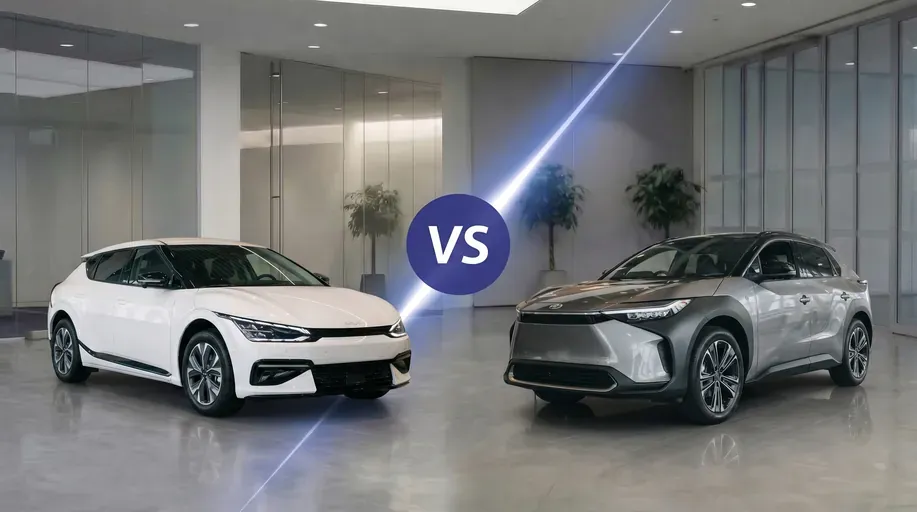
Kia EV6 vs Toyota bZ4X Comparison: Which electric SUV is better? We reveal real-world range, equipment, and driving characteristics. Read our clear verdict!
Oct 16, 2026
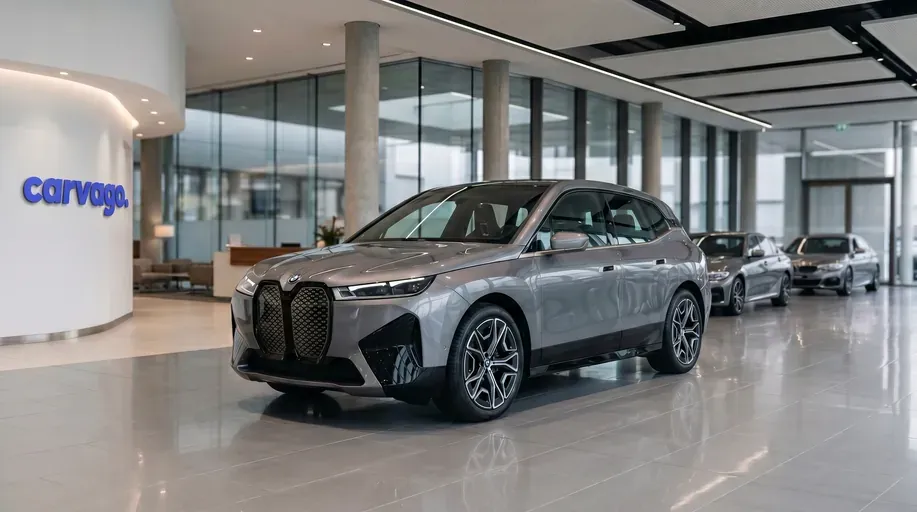
BMW iX review: real owner experience, true battery range, common faults, running costs and prices. Everything you need before you buy.
Oct 25, 2026