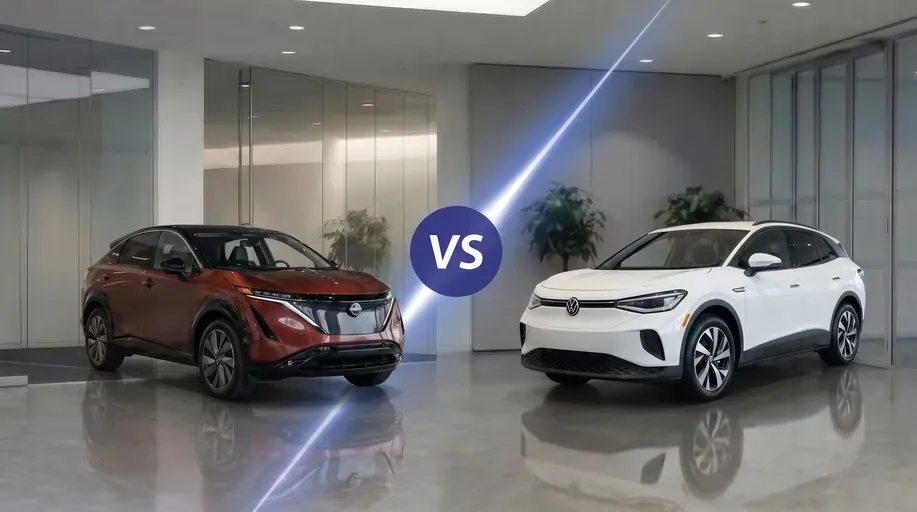
Nissan Ariya vs. Volkswagen ID.4: Complete comparison 2026
Detailed comparison of Nissan Ariya vs Volkswagen ID.4. Find out the real range, interior quality, and driving characteristics of both electric SUVs. Which one to choose?
May 17, 2026
Articles
Car battle
Kia EV6 vs Toyota bZ4X Comparison: Which electric SUV is better? We reveal real-world range, equipment, and driving characteristics. Read our clear verdict!
May 21, 2026


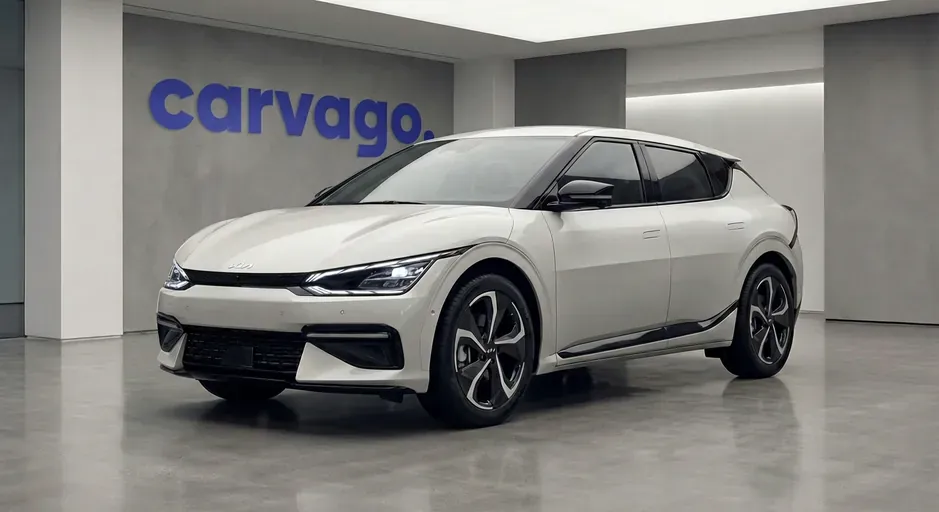
The Kia EV6 is an innovative fully electric crossover with a dynamic design and advanced architecture for ultra-fast charging, which has attracted significant attention since its debut in 2021. Standing against it is the Toyota bZ4X, more recently known simply as the Toyota bZ in some markets and developed jointly with its sister model, the Subaru Solterra, which focuses more on everyday practicality and a comfort-oriented chassis. In the following paragraphs, we will compare both cars in detail to find out which of these pure electric pioneers represents an overall better and more reliable choice on the market for four-year-old used cars.
When comparing the exterior dimensions of these two fully electric models, we find that despite an almost identical overall length, each automaker takes a completely different approach to proportions. If we focus on used cars around four years old (ideally model years 2021 to 2024), both models, with an overall length just under 4.7 meters, fall into the popular mid-size car category. They are thus versatile companions for daily family use, where you won't yet be troubled by excessive size when maneuvering in tight city streets.
The most significant differences can be found in the height and width of both bodies. Toyota bZ4X with its height of exactly 1,600 mm, maintains the features of a classic, more upright SUV. Kia EV6, on the other hand, takes the path of a sportier and more aerodynamic crossover – at 1,545 to 1,550 mm, it is noticeably lower and at the same time 20 to 30 mm wider. In practice, this means that while the Toyota offers a more traditional, perceptibly higher seating position and slightly easier entry, the Kia boasts a more aggressive, "crouched" stance that benefits highway efficiency. However, the slightly wider build of the South Korean model may require a bit more attention when parking at crowded shopping centers.
Another key parameter is the wheelbase, which has a fundamental influence on the distribution of interior space. The Kia EV6 scores in this area with an above-standard value of 2,900 mm, which is exactly 50 mm more than in the case of the Toyota (2,850 mm). This pushing of the wheels to the very corners of the body in the Kia promises slightly more generous longitudinal legroom for rear-seat passengers and improves directional stability at high speeds. The Toyota bZ4X, on the other hand, thanks to the combination of a higher build and a slightly shorter wheelbase, feels a bit more agile off-road, where it benefits from better breakover angles.
| Parameter | Kia EV6 SUV | Toyota bZ4X SUV |
|---|---|---|
| Width (mm) | 1880 - 1890 | 1860 |
| Length (mm) | 4680 - 4695 | 4690 |
| Height (mm) | 1545 - 1550 | 1600 |
| Wheelbase (mm) | 2900 | 2850 |
When choosing a fully electric family SUV, the trunk capacity often plays a decisive role. For families and active individuals alike, practicality is a key factor, whether it's for daily transport of sports equipment, a stroller, or overall spaciousness for weekend trips. The Kia EV6 and Toyota bZ4X, both representing a modern approach to the electric crossover segment, target a similar customer group, yet each handles interior proportions and maximum storage space utilization slightly differently.
Looking at the precise data for the generations that form the core of the market for roughly four-year-old used cars (2021–2024), we find that the Kia EV6 (CV generation) offers a slight advantage. The standard version features a basic trunk capacity of 490 liters, which grows to 1,300 liters after fully folding down the rear seats. It is worth noting that the sporty Kia EV6 GT variant has a slightly reduced capacity of 480 liters in the base and 1,260 liters when folded, due to its specific chassis design. The competing Toyota bZ4X (EAM1 generation) offers a slightly smaller standard trunk in this comparison with a base volume of 452 liters, while the European specification often does not even officially state the maximum volume when folded.
In real life, this difference represents 38 liters in favor of the Kia model, which means that proverbial space for a few extra small bags or backpacks. Nevertheless, both cars are sufficiently spacious and fully adequate for weekend shopping or longer vacations, especially thanks to the wide hatch and easily accessible loading area. However, the Kia EV6 overall scores with slightly greater flexibility when moving larger items, and its trunk design thus provides families with a small practical bonus.
| Parameter | Kia EV6 SUV | Toyota bZ4X SUV |
|---|---|---|
| Base volume (liters) | 490 | 452 |
| Max volume with seats folded down (liters) | 1300 | not specified |
Although neither of these vehicles breaks class records, the Kia EV6 offers a slightly more voluminous and flexible trunk, which serves a bit better than the Toyota bZ4X when packing for a family vacation.
Towing capacity is a key parameter for many buyers, especially for electric vehicles, where these values are often limited for technical reasons. When comparing used Kia EV6 and Toyota bZ4X models from 2021 to 2024, we encounter fundamental differences that can easily decide which car fits your lifestyle better. While one electric vehicle serves only for transporting light loads, the other is a surprisingly capable hauler that can handle even more demanding tasks.
Kia EV6 offers very variable values depending on the chosen battery capacity. The base version with the smaller 58 kWh battery can tow a braked trailer with a standard weight of 750 kg. However, if you opt for the more popular variant with the larger 77.4 kWh battery (or the top-of-the-line GT sports version), the maximum capacity for a braked trailer jumps to a respectable 1,600 kg.
Toyota bZ4X is significantly more modest in the 2022 to 2024 model years. Regardless of the powertrain or trim level you choose from this period, the maximum permitted weight of a braked trailer for the EAM1 generation is always just a basic 750 kg.
This technical difference has a major impact on the daily practical use of both cars. The 750 kg value for the Toyota bZ4X and the base Kia EV6 is quite sufficient for a weekend trip to the garden center, hauling light building materials on a small trailer, or installing a heavy e-bike rack. But if you plan to tow bulkier loads – for example, a family caravan, a boat, or a larger transporter – the Kia EV6 with the larger battery and 1,600 kg capacity is the only sensible choice that will provide you with enough freedom for longer holidays.
In terms of overall towing power, the Kia EV6 is the clear winner thanks to its immense versatility. The Toyota bZ4X, on the other hand, will suit drivers who expect only occasional help from the tow bar and do not plan to hitch up heavy trailers.
| Model and powertrain | Braked trailer weight (kg) | Unbraked trailer weight (kg) |
|---|---|---|
| Kia EV6 (58 kWh) | 750 | 750 |
| Kia EV6 (77.4 kWh) | 1600 | 750 |
| Kia EV6 GT | 1600 | 750 |
| Toyota bZ4X (all versions 2022–2024) | 750 | 750 |
When comparing the powertrains of these two purely electric models, the different approach of both carmakers is evident at first glance, which is key for those interested in a used car. Kia benefits from advanced 800V architecture in its EV6 model, which guarantees extremely fast charging, and offers a wide range of variants – from efficient rear-wheel drive versions to the super-sporty GT model with breathtaking performance, which ranks among the fastest crossovers on the market. In contrast, the Toyota bZ4X chooses a significantly more pragmatic and conservative path, relying on a single battery size with a choice between single or dual-axle drive. While Kia appeals to both drivers looking for maximum range and sports driving enthusiasts, Toyota targets users who prefer smooth operation, technological simplicity, and reliability, with the bonus of the sophisticated X-MODE system for confident driving on unpaved surfaces.
The range of powertrains for the Kia EV6 CV generation (from 2021 to 2024) is very diverse, and almost everyone will find something to suit them. The base of the range consists of a version with a 58 kWh battery and rear-wheel drive (RWD) with an output of 125 kW. For buyers looking for the longest possible range on a single charge, the larger 77.4 kWh battery is ideal, which was offered with 168 kW (RWD), or in an all-wheel drive (AWD) version that uses two electric motors with a total output of 239 kW. The absolute top of the range is the uncompromising GT variant, which generates a massive 430 kW and 740 Nm of torque. All versions use a single-speed automatic transmission to transfer power. Since the end of 2024, the model has undergone a modernization, and the original batteries were replaced by modules with capacities of 63 and 84 kWh. However, with roughly four-year-old used cars, you will primarily encounter the original versions listed below.
| Engine type | Fuel | Power (kW) | Torque (Nm) | Transmission |
|---|---|---|---|---|
| Electric motor (58 kWh RWD) | Electricity | 125 | 350 | 1-speed automatic |
| Electric motor (77.4 kWh RWD) | Electricity | 168 | 350 | 1-speed automatic |
| Electric motor (77.4 kWh AWD) | Electricity | 239 | 605 | 1-speed automatic |
| Electric motor (77.4 kWh AWD GT) | Electricity | 430 | 740 | 1-speed automatic |
The Toyota bZ4X EAM1 generation (from 2022 to 2024) takes a much more sober approach to the powertrain range and provides customers with a very clear choice. All available variants from these years rely on a single lithium-ion battery with a gross capacity of 71.4 kWh. Interested parties can choose from two drivetrain configurations. The basic front-wheel drive (FWD) version provides 150 kW and 266 Nm of torque, which is perfectly sufficient for normal daily commuting or family trips. The second choice is the all-wheel drive (AWD) variant, which uses two compact electric motors with a total, slightly boosted system output of 160 kW and 337 Nm of torque. Like the rival Kia, Toyota also uses a single-speed reduction gearbox for both drive versions, which ensures linear and smooth pull.
| Engine type | Fuel | Power (kW) | Torque (Nm) | Transmission |
|---|---|---|---|---|
| Electric motor (71.4 kWh FWD) | Electricity | 150 | 266 | 1-speed automatic |
| Electric motor (71.4 kWh AWD) | Electricity | 160 | 337 | 1-speed automatic |
While the Kia EV6 impresses with a wide range of power outputs and super-fast 800V charging, the Toyota bZ4X bets on proven reliability and an efficient drive ideal for calmer drivers.
Choosing the right motorization for electric vehicles is critical for your long-term satisfaction. It's not just about torque and power, but primarily about daily efficiency, charging speed on the road, and the reliability of the entire system. While Kia builds on cutting-edge 800V network technology for lightning-fast charging, Toyota relies more on a very conservative approach to battery protection. The following recommendations for roughly four-year-old used cars from the first years of production are based on real-world practice, vehicle behavior in cold weather, and feedback from owners themselves.
For the CV generation (2021–2024), the version with the larger battery (77.4 kWh) and rear-wheel drive (RWD) is clearly the best choice on the used car market.
For the EAM1 generation (offered primarily since 2022), despite established conventions, the basic front-wheel-drive (FWD) version with 150 kW (204 hp) will surprisingly bring you the most joy.
The difference between official consumption values provided by manufacturers and real-world data from daily operation is often vast for electric vehicles, especially when driving on the highway or in colder weather. While official figures according to the WLTP methodology for roughly four-year-old used cars from 2021 to 2024 promise a highly optimistic consumption of 14.4 to 16.2 kWh/100 km for the Toyota bZ4X and 16.5 to 17.2 kWh/100 km for the Kia EV6 depending on the version, the reality behind the wheel tells a slightly different story. To get a more accurate and objective picture, we used average user data from the well-known crowdsourcing portal Spritmonitor.de, which very faithfully reflects the daily use of these electric vehicles.
Data source: Spritmonitor.de
| Model and powertrain | Average consumption (kWh/100 km) |
|---|---|
| Kia EV6 58 kWh RWD | 17.8 |
| Kia EV6 77.4 kWh RWD/AWD | 19.5 |
| Toyota bZ4X FWD | 19.8 |
| Toyota bZ4X AWD | 21.2 |
| Kia EV6 GT (430 kW) AWD | 24.8 |
When interpreting real-world data, we encounter a rather surprising trend. Although the Kia EV6 has a bulkier build and, in many respects, higher performance, it manages precious energy more efficiently than its Japanese competitor. The most economical choice remains the base Kia EV6 with the 58kWh battery, but even the most popular version with the larger 77.4kWh battery maintains an excellent average below 20 kWh per 100 km. Conversely, the Toyota bZ4X pays the price for a less efficient electric powertrain; for the all-wheel-drive (AWD) model, consumption easily exceeds the 21 kWh mark, which, combined with a smaller usable battery capacity, noticeably limits its real-world range. The exception to the rule is, of course, the brutal Kia EV6 GT, where the price for supercar dynamics uncompromisingly demands nearly 25 kWh.
For average users, these numbers have a clear impact. If you are looking for an electric car exclusively for the city and suburban roads, you will only feel the difference in consumption marginally, and both models will serve you excellently. However, for drivers who regularly tackle long highway routes, or for economically minded used car buyers, the Kia EV6 is a much more sensible choice. The Toyota bZ4X consumes a surprisingly large amount of energy at higher speeds, which directly leads to more frequent and longer stops at charging stations.
Real-world energy consumption thus plays an important role in this comparison and represents the proverbial tipping of the scales in favor of the South Korean model. Buying a four-year-old used Kia EV6 promises not only lower electricity bills but, thanks to excellent aerodynamics and a more advanced powertrain architecture, also brings significantly smoother long-distance travel.
When looking for a used electric car approximately 4 years old (model years 2022 to 2023), you are choosing from the first generation of these models from both manufacturers. While the Kia EV6 (CV generation) arrived on the market in 2021 and immediately sparked huge interest, the Toyota bZ4X (EA10 generation) followed slightly later in 2022 as the Japanese giant's first global battery electric vehicle.
The different technological approaches of the two carmakers are clearly reflected in how both models hold their value on the used car market after years of operation.
The South Korean crossover benefits from the advanced E-GMP platform. Thanks to its 800V architecture, which still ensures above-standard fast charging today, the car remains in high demand and holds its residual value exceptionally well.
For its electric debut, Toyota took a slightly more conservative path (400V architecture and a slower charging curve), which has logically been reflected in the used car market. The loss of value in the first few years is somewhat steeper here, but this represents a huge opportunity for second-hand buyers.
| Model (1st generation, ~2022) | Approximate price (€) | Rate of value loss | Main advantage of a used car |
|---|---|---|---|
| Kia EV6 | 29,000 – 37,000 | Slow | Technological obsolescence is minimal thanks to 800V |
| Toyota bZ4X | 25,000 – 33,000 | Faster | Excellent price/performance ratio due to faster price drop |
While the Kia EV6 holds its value very well thanks to its advanced 800V architecture, a used Toyota bZ4X represents a surprisingly affordable path to a spacious electric SUV due to its faster price decline.
When choosing a family electric car on the used car market, safety plays a key role. Both the Kia EV6 and Toyota bZ4X boast a maximum five-star rating from the independent Euro NCAP organization. However, it is important to remember that testing protocols evolve and become stricter over time, so percentage results from different years cannot always be objectively compared. Modern tests place much greater emphasis on active accident prevention, emergency scenarios at intersections, and cyclist detection capabilities, which was not usually the rule for older vehicles.
In the case of these two models, which typically appear on the current market as roughly four-year-old used cars, we have ideal conditions for a direct comparison. Both cars underwent crash tests in the same year – 2022. Their results were therefore subject to absolutely identical, very strict criteria including modern frontal collision simulations and interaction with pedestrians. Since Euro NCAP ratings are standardly valid for six years, the safety certification of both vehicles is fully up to date and will not expire until 2028.
Kia EV6 excels in passive safety and adult occupant protection, where it performed excellently with a result of 90%. The car's cabin remained highly stable during a frontal impact and reliably protected the critical body parts of the passengers. However, the car lost valuable points in the category of protection for vulnerable road users (64%), which is due, among other things, to the absence of a so-called active hood to mitigate the consequences of a collision with a pedestrian. Nevertheless, its safety assistance package with a rating of 87% reliably covers most common risks.
Toyota bZ4X, on the other hand, offers more balanced performance across all tested disciplines. Although it lags slightly behind the Kia in adult protection (88%), it fully makes up for it with an excellent score in child protection (87%) and, above all, significantly better protection for pedestrians and cyclists (79%). Its rating for safety assistance systems (91%) is then completely unrivaled, thanks to the standard and highly sensitive package of active safety features called T-Mate.
If we are looking for a winner in terms of comprehensive protection based on current standards, both electric cars offer the best of 2022. However, the Toyota bZ4X is a step ahead as a more complete modern safety package, especially if protecting surrounding pedestrians and top-tier accident prevention are priorities for you.
| Parameter | Kia EV6 | Toyota bZ4X |
|---|---|---|
| Year of testing | 2022 | 2022 |
| Adult protection | 90 % | 88 % |
| Child protection | 86 % | 87 % |
| Vulnerable road user protection | 64 % | 79 % |
| Safety assistance systems | 87 % | 91 % |
Both cars offer a top level of passive and active safety from 2022, but the Toyota bZ4X has a slight edge thanks to better pedestrian protection and more sophisticated accident prevention assistance systems.
In addition to standard equipment, each model offers several unique features that showcase their different approaches to innovation and can be absolutely decisive for customers when choosing a family electric vehicle.
800V architecture enabling extremely fast charging (from 10 to 80% in just 18 minutes)
Great driving characteristics and dynamics, especially in all-wheel-drive versions
V2L (Vehicle-to-Load) function, which allows powering common electrical appliances from the vehicle
Above-standard interior space with a flat floor thanks to the dedicated E-GMP electric platform
Extremely quiet interior even at highway speeds
Limited headroom for rear passengers due to the sporty sloping roofline
Poorer rear visibility through the narrow window and missing rear wiper (on earlier model years)
Combined touch panel for climate control and radio requires getting used to and distracts attention
Very small front trunk (frunk) on all-wheel-drive versions
The Kia EV6 is a technologically advanced electric car that will thrill drivers looking for fast charging, attractive design, and an engaging driving experience. It is an ideal choice for those who often travel long distances and want to spend the absolute minimum time at charging stations.
Renowned brand reliability with an unrivaled extended traction battery warranty program (up to 1 million km / 10 years with regular servicing)
Very capable all-wheel-drive system (X-MODE) developed in cooperation with Subaru
High suspension comfort that excellently filters out bumps
Generous legroom for rear-seat passengers
Slower real-world fast charging (DC) speed and a steep drop in the charging curve, especially in cold weather
Shorter real-world range and overall slightly higher consumption compared to direct competition
Smaller luggage compartment volume (452 liters), absence of a classic glove box, and missing front trunk
Specific instrument cluster position, which may be obscured by the steering wheel rim for some body types
Toyota bZ4X will appeal more to calmer and pragmatic drivers who appreciate the maximum assurance of long-term reliability, excellent comfort, and above-average capabilities in light terrain. It is a very comfortable family SUV for everyday use, but you have to accept compromises regarding range and charging speed on long trips.
Based on long-term user feedback, service reports, recall records, and findings from professional technical inspections, we have compiled an overview of the most common problems you should watch out for with both models.
Kia EV6 is among the technologically highly advanced electric cars, yet several specific defects reported by owners appear.
Although it is an overall reliable car with a sophisticated drivetrain, when buying a used one, it is absolutely crucial to check the car's history regarding potential ICCU module failure and the condition of the 12V battery. Fortunately, most of the teething problems of this model are already addressed by factory recalls and software patches.
While Toyota is synonymous with bulletproof reliability in the automotive world, its first fully electric model, the bZ4X, did not avoid some unpleasant teething pains during its debut.
After fixing the initial problems with wheel attachment, it is a mechanically durable car without major design flaws. Its main disadvantage remains poorer battery thermal management and slow charging in winter, with which Toyota tries to prevent battery degradation at the expense of user comfort.
When buying a used car, a thorough inspection is key, and this is especially true for modern electric vehicles. Here are some specific points to focus on for these two models, which is why a comprehensive car inspection is always useful before making a final decision.
The Kia EV6 utilizes an advanced 800V architecture, which enables ultra-fast charging from 10 to 80% capacity in just 18 minutes. The Toyota bZ4X supports a maximum charging power of up to 150 kW, so the same battery charge takes approximately 30 minutes. In terms of energy replenishment speed on long journeys, the Korean model has a significant and very noticeable advantage.
Thanks to its larger battery capacity and more sophisticated aerodynamics, the Kia EV6 offers a longer range both on paper and in reality, exceeding the 500 km mark according to the WLTP standard. The Toyota bZ4X has slightly higher electricity consumption, and in real-world conditions, you can expect a range of around 400 kilometers on a single charge. For frequent long highway trips, the Kia is therefore a more reliable and practical choice.
The Kia EV6 is slightly more practical, as it features a rear trunk with a volume of 490 liters and additionally offers a front storage space (frunk) with a capacity of up to 52 liters. The Toyota bZ4X has a basic luggage compartment volume of 452 liters and unfortunately completely lacks a front storage compartment for charging cables. However, the access to the rear of the vehicle and overall usability for common family needs are very comparable in both vehicles.
The Toyota bZ4X emerges as the more capable vehicle off the beaten path, primarily thanks to the advanced X-Mode off-road system developed in collaboration with Subaru. While the Kia EV6 also offers a very powerful all-wheel-drive system, its ground clearance and stiffer suspension tuning are primarily intended for more dynamic driving on asphalt. If you frequently drive to the mountains or navigate unmaintained roads, the Toyota will provide you with much greater confidence.
The Kia EV6 relies on connected curved screens and a very fast, user-friendly system with support for advanced driving assistants. The Toyota bZ4X is characterized by an unconventionally placed instrument cluster high above the steering wheel and the newer Toyota Smart Connect system, which, however, does not achieve the same fluidity and variability as the Korean one. Furthermore, the Kia has a major advantage in the form of the innovative V2L (Vehicle-to-Load) function, which allows it to power external electrical devices such as laptops or camping equipment from the battery.
Sources: ADAC, garaz.cz, auto.cz, autojournal.cz, autozive.cz, csas.cz
This article was prepared using artificial intelligence tools. The section guarantor is Petr Dušek.

Detailed comparison of Nissan Ariya vs Volkswagen ID.4. Find out the real range, interior quality, and driving characteristics of both electric SUVs. Which one to choose?
May 17, 2026

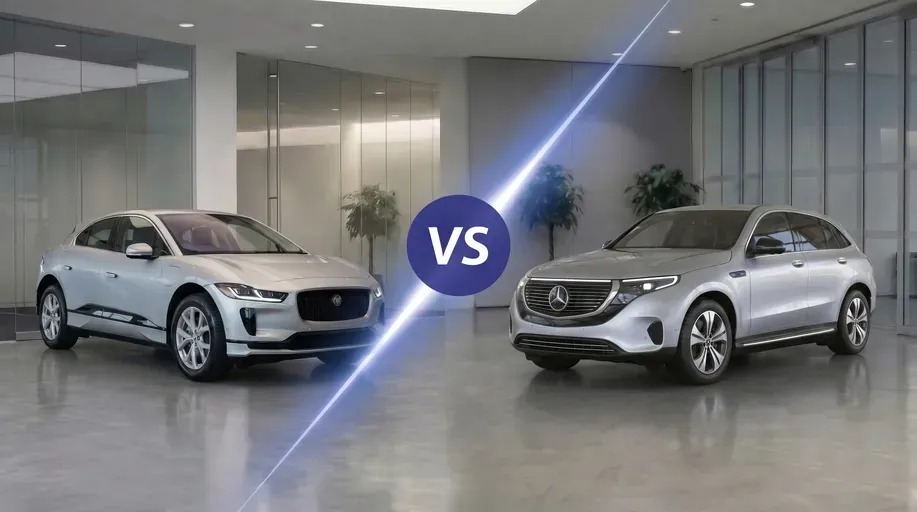
Detailed comparison of Jaguar I-Pace vs. Mercedes-Benz EQC. Find out which electric SUV offers better range, performance, and overall value on the used car market.
Apr 22, 2026

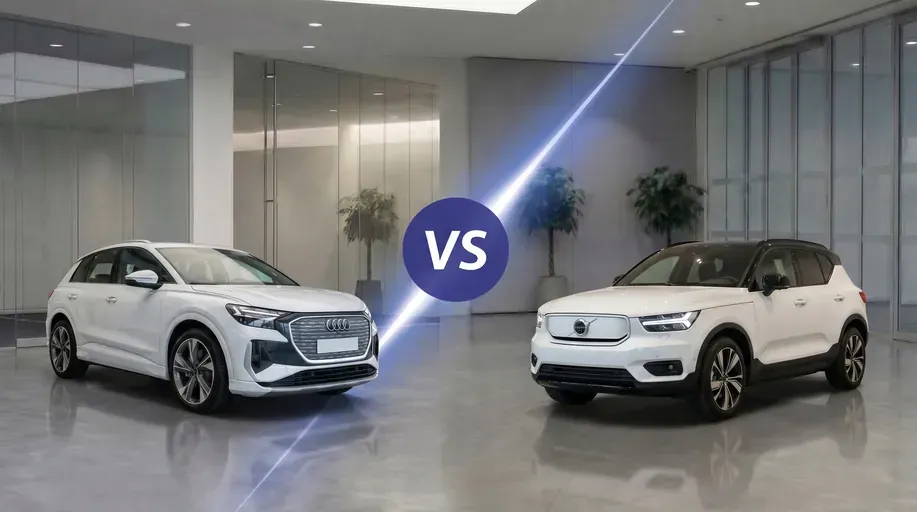
Detailed comparison of the Audi Q4 e-tron and Volvo XC40 Recharge. Which premium electric SUV has better range and real-world consumption? Read our clear verdict.
Apr 22, 2026