Review Volvo C40 Recharge: What do owners and experts really say?
Volvo C40 Recharge review: real owner experience, real-world range, common faults and used prices — everything you need before you buy.
October 22, 2026
Introduction
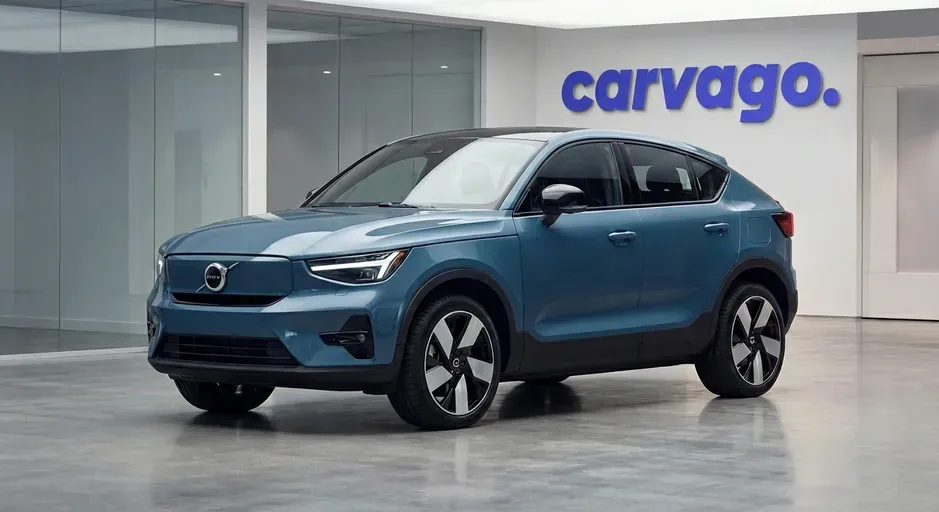
The Volvo C40 Recharge is a compact premium crossover coupé, developed exclusively as a pure electric vehicle. As the Swedish brand's first dedicated battery-electric model line without a combustion counterpart, it pairs raised ride height with a tapered roofline, targeting buyers who want crossover proportions without the upright silhouette of a conventional SUV.
This review covers the first generation, which entered series production in October 2021, with initial European customer deliveries commencing in November 2021. The model originally arrived with twin-motor all-wheel drive before a single-motor front-wheel-drive variant joined European catalogues in March 2022. In February 2024, the vehicle was renamed the EC40 to align with the brand’s revised electric naming structure.
On the pre-owned market, the electric Volvo C40 primarily attracts drivers seeking a design-led commuter vehicle with a clean Scandinavian cabin layout and emission-free daily practicality.
Owner Experiences: Common Faults and Recalls
Real-world reliability reports for the electric Volvo C40 show a durable high-voltage battery system and electric motors, but earlier production years encountered teething issues with brake control software, driveline vibrations, and telematics modules. Because European deliveries only commenced in late 2021, multi-year reliability records over high mileage are still accumulating.
European safety authorities have registered three notable safety recalls for this generation:
Announcement Date
Affected Production Period
Stated Defect
Remedy
January 2023
Calendar year 2022
Software error in the brake control module can lead to a loss of braking power, creating an accident risk
Over-the-air or workshop software update to the brake control module
July 2025
17 May 2019 to 11 June 2025 (campaign covers shared platform models)
Braking functionality can be disabled while using One Pedal Drive after prolonged downhill coasting without pedal input
Remote over-the-air or workshop firmware update
September 2025
17 June 2025 to 27 August 2025
Damaged torsion bar in the front seatbelt retractor may fail, reducing restraint performance in a crash
Inspection and replacement of front seatbelt retractor assemblies
On the mechanical side, owners report front-axle knocking noises and steering wheel vibration under hard acceleration, predominantly on early all-wheel-drive Volvo C40 variants built during 2022 and 2023. Technical investigations indicated that excessive play in the front constant-velocity driveshafts under the instant torque of the front motor caused the shudder. In many cases, installing revised, reinforced factory driveshafts resolved the knocking, whereas routine wheel balancing or damper replacements only masked the symptoms.
Owners also report intermittent communication glitches in the infotainment and onboard connectivity hardware. Drivers have observed temporary cellular dropouts, frozen navigation maps, and occasional delays or black screens when engaging the rear-view camera. While remote software updates resolved system freezes over time, hardware dropouts have occasionally required replacing the telematics backup battery or resealing the roof-mounted antenna to prevent moisture intrusion. Because regenerative braking reduces the regular engagement of the physical friction brakes, disc corrosion and uneven scoring also appear frequently on cars driven almost exclusively in one-pedal mode. Having a used Volvo C40 Recharge thoroughly checked by an independent service such as CarAudit ensures that software campaigns have been applied and the chassis components remain in good order.
🔍 What to check before buying
Check recall completion via VIN: Confirm with an authorised dealer that all software updates for the brake module and the front seatbelt retractor inspection have been completed.
Test for front driveshaft vibration: On all-wheel-drive models, accelerate firmly from low speeds to confirm there is no shudder, knocking noise, or steering oscillation from the front axle.
Inspect friction brakes: Switch off one-pedal drive and perform a firm stop to ensure the brake discs are smooth and free of deep rust, scoring, or grinding noises.
Confirm both factory keys are present: Ensure that both physical keys are supplied with the car, as pairing the mobile vehicle application to a new owner profile requires all programmed keys inside the cabin.
Verify connectivity and cameras: Check the central touchscreen for reliable cellular reception, responsive navigation, and immediate display of the rear-view camera feed when reverse is selected.
Engines: Which One to Choose
Engine
Fuel
Power
Torque
Drivetrain
Gearbox
Model years
Single Motor
Electric
170 kW (231 hp)
330 Nm
Front-wheel drive
Automatic
2022–2023
Single Motor
Electric
175 kW (238 hp)
420 Nm
Rear-wheel drive
Automatic
2023–2024
Single Motor Extended Range
Electric
185 kW (252 hp)
420 Nm
Rear-wheel drive
Automatic
2023–2024
Twin Motor
Electric
300 kW (408 hp)
660 Nm
All-wheel drive
Automatic
2021–2023
Twin Motor
Electric
300 kW (408 hp)
670 Nm
All-wheel drive
Automatic
2023–2024
Twin Motor Performance
Electric
325 kW (442 hp)
670 Nm
All-wheel drive
Automatic
2024
Which powertrain to choose
For urban commuting and short daily trips, the rear-wheel-drive Single Motor with the standard battery is a well-balanced choice. It delivers composed traction, clean steering responses, and sufficient pace without carrying unnecessary mass. As a used car, the early front-wheel-drive Single Motor functions as an adequate suburban runabout, though wet junctions quickly expose its front-axle traction limits.
Drivers tackling mixed routes and frequent motorway journeys should prioritise the Single Motor Extended Range. Pairing the rear-mounted motor with the larger battery pack yields the longest touring radius and better cruising efficiency, avoiding the energy penalties of carrying a second drive unit.
The all-wheel-drive Volvo C40 Twin Motor is the logical match for towing trailers or handling severe winter climates. While its rapid acceleration is swift, the performance can feel excessive for regular family use. The Twin Motor Performance variant sharpens initial pedal response, but brings minimal benefit in daily commuting.
Real-world range and charging
Owners report noticeable winter range loss during cold-weather motorway journeys, making pre-departure battery and cabin preconditioning essential to preserve travel radius. Rear-wheel-drive versions achieve better efficiency in year-round driving than dual-motor and early front-drive cars. On high-power DC chargers, replenishment is swift from low states of charge before the intake curve gradually steps down past the halfway mark.
Space & Practicality
Parameter
Value
Length (mm)
4,440
Width (excluding mirrors, mm)
1,873
Height (mm)
1,591
Wheelbase (mm)
2,702
Boot volume – seats up / folded (l)
413 / 1,205
Front luggage compartment (l)
31
The electric Volvo C40 SUV pairs compact outer dimensions with a raked roofline that directly influences everyday packaging. In the rear, knee clearance accommodates average-sized adults, but the descending roof contour limits headroom for taller passengers, and the broad rear pillars narrow the side glass area to restrict ambient light. The rear seating bench is fixed rather than sliding, though its backrests fold down in a divided layout.
Everyday utility benefits from a flat cargo floor with concealed underfloor space for the parcel shelf and smaller items, creating an even load surface with no step when the rear seats are folded. In addition, the dedicated front storage compartment under the bonnet keeps wet or dirty charging cables isolated from passenger luggage.
What the Tests Say
On the road, the Volvo C40 Recharge feels secure, though ride comfort depends on the road surface. While the suspension cushions undulations on smooth tarmac, it reacts abruptly over sharp ridges and manhole covers, an effect accentuated by larger factory wheels. Cornering remains safe rather than agile, exhibiting noticeable body lean despite the planted traction of dual-motor variants. The electric powertrain operates quietly, but tyre roar on coarse road surfaces and wind flutter around the windscreen pillars become audible at motorway speeds.
Inside, the cabin displays solid assembly, durable animal-free upholstery, and translucent backlit dashboard trim on higher trims, though harder plastics line the lower centre console. The Google-based touchscreen handles nearly all secondary functions, making climate adjustments fiddly while driving.
What the updates changed
Professional tests criticise rearward visibility, where the sloping roofline, shallow tailgate glass, and omitted rear wiper restrict the view through the interior mirror. Testers diverge slightly on high-speed refinement, as coarse asphalt triggers tyre resonance that some consider intrusive. The mid-cycle powertrain update brought a dynamic improvement: switching the single-motor version from front-wheel drive to rear-wheel drive eliminated wheel slip under acceleration, resolved torque steer, and gave the steering rack cleaner directional precision.
Prices and Market Offer
All charts in this section are drawn from Carvago’s advertised listings of the entire model family across all represented years, not exclusively the reviewed generation. Because the dataset spans the broader model line without separating generational sub-types, it does not establish a distinct price level for the reviewed generation alone. In the current market offer, the median asking price ranges from €32,200 for 2022 models to €44,000 for 2025 examples, alongside a median asking price of €34,000 for 2021 builds of the Volvo C40 Recharge.
Active monthly listings for the Volvo C40 Recharge decreased across this six-month span, falling from 1,684 advertised cars in April 2026 to 725 in September 2026. The chart below traces the month-by-month count of vehicles on offer.
Volvo C40 Recharge - availability over time
Active listings over time
Month
Volvo C40 Recharge
2026-04
1 684
2026-05
1 360
2026-06
1 184
2026-07
1 011
2026-08
845
2026-09
725
Source Carvago
For prospective buyers, overall choice has narrowed consistently each month, although 725 active listings in September 2026 still offer a substantial pool of cars to compare.
Among used listings advertised today, the median asking price of cars built in 2021 is €34,000, while the newer 2022 model year is cheaper with a median asking price of €32,200. The comparison below illustrates the median asking price across each represented build year.
Volvo C40 Recharge - median price by model year
Median advertised price by year of manufacture
Model year
Volvo C40 Recharge
2021
34 000
2022
32 200
2023
35 000
2024
42 900
2025
44 000
Source Carvago
Buyers looking at earlier model years encounter median asking prices of €34,000 for 2021 and €32,200 for 2022. Newer vehicles require a larger outlay, with median asking prices standing at €42,900 for 2024 and €44,000 for 2025.
Between April and September 2026, all advertised cars were electric, with monthly listings decreasing from 1684 in April 2026 to 725 in September 2026. The chart below tracks these listing counts across each fuel type.
Volvo C40 Recharge - supply by fuel over time
Supply composition by fuel type
Month
Electric
2026-04
1 684
2026-05
1 360
2026-06
1 184
2026-07
1 011
2026-08
845
2026-09
725
Source Carvago
Electric power dominates the entire selection on offer, with zero listings recorded for petrol, diesel, or hybrid alternatives across all six months. Anyone shopping for this model family will realistically choose exclusively from fully electric vehicles.
The chart below tracks how the average asking price developed between April 2026 and September 2026, starting at €31,500.
Volvo C40 Recharge - price trend over time
Average price development over time
Month
Volvo C40 Recharge
2026-04
31 500
2026-05
31 900
2026-06
32 300
2026-07
32 400
2026-08
32 600
2026-09
32 600
Source Carvago
Across the six months shown, the average moved from €31,500 to €32,600, representing a modest increase of roughly 3.5% that leveled off in the final two months.
Composed traction and precise steering on updated rear-wheel-drive versions
Solid interior build quality with durable animal-free materials
Practical front luggage compartment that isolates charging cables from cargo
Cons
Severely compromised rearward visibility with no rear window wiper
Restricted rear-seat headroom for taller passengers beneath the sloping roofline
Suspension reacts abruptly over sharp ridges and rough road imperfections
Frequently asked questions
Is the C40 reliable as a used purchase?
The Volvo C40 Recharge proves durable in its high-voltage battery and electric motors, though early production models encountered software glitches and front driveshaft vibration. Because deliveries began in late 2021, multi-year reliability records over high mileage are still accumulating.
Which powertrain is the best choice?
The rear-wheel-drive Single Motor Extended Range is the most balanced choice for mixed driving, offering higher cruising efficiency without carrying the mass of a second motor. Buyers needing winter traction or higher towing capacity should consider the all-wheel-drive Volvo C40 Twin Motor.
What should you check before buying a used model?
Confirm via the VIN with an authorised dealer that all software recalls for the brake module and seatbelt retractor inspections have been completed. On dual-motor cars, accelerate firmly to check for front driveshaft vibration and ensure both factory keys are present to pair the mobile application.
Is the crossover practical enough for families?
It handles daily routines well thanks to a flat load floor and divided folding rear seats. However, the sloping roofline restricts headroom for taller rear occupants, and the shallow rear glass compromises rearward visibility.