Articles

Review

Review Volkswagen ID.3: What do owners and experts really say?

Volkswagen ID.3 review: real owner experience, reliability, battery range, running costs and used prices — read our definitive verdict.

October 26, 2026

Volkswagen ID.3

Introduction

The electric Volkswagen ID.3 hatchback represents Volkswagen’s purpose-built entry into the compact electric family car segment. Positioned as a zero-emission alternative within the European C-segment, this review evaluates the first generation, covering vehicles from the start of European customer deliveries in September 2020 through active 2026 production. Across its entire run, it has been sold strictly in a five-door hatchback body style.

The model line has undergone multiple staged updates since its market launch. A mid-cycle facelift had its world premiere on 1 March 2023, followed by first European customer deliveries in autumn 2023. This revision introduced sharpened exterior styling, upgraded interior materials, and updated central displays. Volkswagen expanded the line-up in 2024 with dedicated sport-oriented models, before introducing the thoroughly overhauled Neo evolutionary stage on the updated MEB+ platform in April 2026, with customer deliveries starting in July 2026.

Targeted at daily commuters, family buyers seeking compact zero-tailpipe-emission transport, and commercial fleet drivers, the Volkswagen ID.3 remains one of the foundational volume electric models in the European market.

Owner Experiences: Common Faults and Recalls

Early production years of the Volkswagen ID.3 (principally 2020 to 2022) were defined by digital and electrical teething issues. Owners report frequent central touchscreen latency, frozen navigation screens, and unexpected reboot cycles while driving. Independent tests note that subsequent manufacturer software updates deployed through workshops and over the air resolved the majority of system stability issues, though isolated early cars required physical replacement of the central display control unit. In addition, early models suffered from auxiliary 12-volt battery discharge, which prevented the vehicle from entering ready mode despite a fully charged traction battery; manufacturer service campaigns remedied this by installing revised auxiliary batteries alongside updated vehicle management software.

Chassis wear is influenced by vehicle mass. Periodic inspection data and long-term tests show that the front suspension anti-roll bar drop links exhibit accelerated wear, with ball joints developing play that produces audible knocking or clunking sounds over low-speed bumps between 30,000 and 60,000 km. In some cases, replacement with revised linkage rods resolves the noise. At the rear axle, where regenerative motor braking handles the vast majority of daily deceleration, owners describe surface rust and friction lining adhesion in the standard rear drum brakes after prolonged parking in wet conditions. This can cause a dull thump or scraping noise upon driving away, which tests note can typically be cleared by applying firm mechanical braking.

High-voltage traction battery safety has prompted notable official recall actions across Europe. In January 2026, a recall (campaign 93MU) covered ID.3 vehicles built between 2 September 2023 and 21 March 2024, where cell manufacturing flaws cause increased self-discharge leading to thermal overload and fire risk. In October 2026, a worldwide recall covering 62,927 vehicles produced between 13 July 2022 and 6 June 2025 was issued because cell modules from a specific supplier failed to meet manufacturing specifications, creating a risk of overheating and fire when charged above 80%. Authorized workshops perform diagnostic tests, apply an interim 80% charging cap, and replace defective modules. A related worldwide recall in October 2026 addressed 5,050 vehicles built between 18 September 2023 and 27 June 2025 due to defective cells overheating during fast charging, requiring module inspection and replacement alongside an interim 80% charging recommendation. Previously, in March and April 2026, an action covering 74,600 vehicles worldwide built between 17 February 2022 and 23 August 2024 addressed out-of-specification battery modules that triggered a yellow dashboard warning light, reduced range, and posed thermal overload risks.

Mechanical and assembly recalls have also been registered across European safety databases. An October and November 2025 recall affected a European batch of vehicles manufactured between 29 July 2025 and 16 September 2025 due to an incorrectly installed spring pin in the differential, which could cause a transmission housing rupture, fluid leaks, and sudden loss of drive. Earlier European safety campaigns included an action for vehicles built between 5 February 2021 and 12 January 2023 for improperly bolted front passenger airbags—with instructions to deactivate the passenger airbag until inspected and torqued—and a November 2021 recall for cars built in March and April 2021 regarding a missing steering rack bearing bush. For the updated revision of the electric Volkswagen ID.3 delivered from July 2026, long-term reliability is not yet established. Prospective buyers should always verify that all open safety campaigns have been completed for their specific car via its vehicle identification number (VIN), or have its complete history and mechanical condition inspected independently through CarAudit.
🔍 What to check before buying

  • Confirm official completion of all high-voltage battery recall campaigns and software updates by checking the vehicle identification number (VIN) with an authorized dealer.
  • Test the central touchscreen across climate, audio, and navigation menus to verify the car runs updated, stable operating software without freezing or rebooting.
  • Listen for knocking or metallic clicking from the front suspension when traversing speed bumps, which signals worn anti-roll bar drop links.
  • Perform several firm mechanical stops during the test drive to verify the rear drum brakes release cleanly without binding or persistent scraping.
  • Check the motorized charging port flap on the rear wing by pressing it repeatedly to ensure the locking solenoid releases without sticking.

Engines: Which One to Choose

The Volkswagen ID.3 relies exclusively on a rear-mounted electric motor driving the rear axle through a single-speed automatic reduction gearbox. Across its production run, the lineup has evolved through multiple battery capacities and motor tunes, spanning urban-focused base variants to assertive dual-tier performance models.

EngineFuelPowerGearboxModel years
ID.3 Pure PerformanceElectric110 kW (150 hp)Automatic2021–2022
ID.3 ProElectric107 kW (145 hp)Automatic2020–2022
ID.3 Pro PerformanceElectric150 kW (204 hp)Automatic2020–2022
ID.3 Pro SElectric150 kW (204 hp)Automatic2020–2022
ID.3 PureElectric125 kW (170 hp)Automatic2024–2026
ID.3 ProElectric150 kW (204 hp)Automatic2023–2026
ID.3 Pro SElectric150 kW (204 hp)Automatic2023–2024
ID.3 Pro SElectric170 kW (231 hp)Automatic2024–2026
ID.3 GTXElectric210 kW (286 hp)Automatic2024–2026
ID.3 GTX PerformanceElectric240 kW (326 hp)Automatic2024–2026
ID.3 Neo (50 kWh)Electric125 kW (170 hp)Automatic2026–present
ID.3 Neo (58 kWh)Electric140 kW (190 hp)Automatic2026–present
ID.3 Neo (79 kWh)Electric170 kW (231 hp)Automatic2026–present

For city driving and short daily commutes, the entry-level battery variants deliver nimble step-off acceleration and lower unladen weight, making them sensible second cars or urban runabouts. These early base versions are now available primarily as used cars.

Drivers looking for balanced, all-round capability should target the mid-size battery options. In everyday mixed driving, they provide responsive overtaking pace without requiring frequent charging stops, representing the most versatile compromise in the Volkswagen ID.3 hatchback range.

For regular long-distance motorway travel, the large-battery variants are the natural choice. Their expanded capacity spaces out rapid-charging intervals on extended journeys, while post-facelift editions benefit from upgraded output that sustains steady high-speed cruising. Enthusiasts seeking genuine hot-hatch punch should consider the GTX and GTX Performance, which deliver strong mid-range torque and rapid rolling acceleration.

Buyers intending to tow should note that the electric Volkswagen ID.3 is not homologated for pulling trailers in Europe; any rear coupling is certified strictly for carrying bicycle racks.

For detailed findings regarding high-voltage battery health, electronic control modules, and manufacturer service campaigns, refer to the owner experiences section.

Real-world range and charging

Real-world driving range is heavily influenced by ambient temperature and driving style. In cold winter conditions, owners report that increased heating demands and battery internal resistance reduce usable range by roughly a third compared to mild summer driving.

On long trips, DC rapid charging is most effective when arriving with a warm, low battery. Charging speeds remain strong through the lower half of the pack but taper off sharply once the battery reaches eighty percent, making that the recommended threshold to unplug and resume driving. Cold weather also slows charging sessions considerably if the pack has not reached optimal operating temperature beforehand.

Space & Practicality

DimensionValue
Length4,261–4,265 mm
Width (excluding mirrors)1,809 mm
Height1,552–1,568 mm
Wheelbase2,766–2,770 mm
Boot capacity (seats upright / folded)385 / 1,267 l

Luggage capacity is identical across all battery variants.

Thanks to its dedicated electric architecture, the electric Volkswagen ID.3 hatchback provides ample legroom for adult passengers in the outer rear positions. However, the underfloor traction battery elevates the cabin floor, which positions the rear cushion relatively low and forces taller occupants into an upright seating posture with reduced under-thigh support. Early production examples built with the largest battery pack were homologated exclusively as four-seaters with a fixed plastic storage tray occupying the middle position, whereas later examples adopted a standard five-seat bench. In the cargo area, the 60:40 split-folding rear backrests allow flexible extensions to the load floor, although there is no secondary front luggage compartment under the bonnet, meaning charging cables must be stowed under the variable rear boot floor.

What the Tests Say

Professional road tests describe the Volkswagen ID.3 as an undemanding car to drive, distinguished by a tight turning circle and light steering that simplify urban parking. The rear-wheel-drive layout provides neutral, predictable cornering balance, though testers consistently point out that the steering lacks tactile road feel. Non-switchable stability control intervenes early to enforce safe understeer, eliminating driver involvement even on performance-oriented variants. High-speed wind buffeting and electric motor whine remain well subdued, though coarse asphalt generates noticeable tyre roar inside the cabin.

Ride comfort depends heavily on wheel specification. Testers agree that chassis setups riding on smaller wheels absorb broken urban surfaces with greater compliance. Larger wheels produce a brittle, jarring reaction over sharp expansion joints and drain covers, even when paired with optional adaptive dampers.

What the facelift changed

Early production years faced severe criticism for pervasive hard plastics and flawed switchgear ergonomics. Unlit climate sliders proved difficult to adjust at night, while capacitive steering-wheel touchpads consistently registered accidental inputs during normal steering manoeuvres.

Subsequent revisions addressed the primary cabin complaints by adding soft-touch dashboard surfaces, padded door linings, and a larger infotainment display with illuminated climate sliders. Professional testers agree that these interior revisions noticeably elevate perceived quality, but note that the finicky capacitive steering controls remain a source of everyday frustration.

Prices and Market Offer

All the charts in this section are drawn from Carvago's listings of the whole Volkswagen ID.3 model family, including other generations represented in the data, not only the reviewed generation. As the supplied data lacks generation-specific filtering, it does not establish a separate price level for the reviewed generation alone. Looking at today's advertised inventory, the median asking price is €20,900 for 2020 and 2021 model years, €28,300 for 2023 cars, and €40,000 for 2026 examples.

Between April 2026 and September 2026, active Volkswagen ID.3 listings moved from 6,401 to 8,121 cars. The chart below tracks how monthly advertised inventory developed over these months.

Volkswagen ID.3 - availability over time

Active listings over time

MonthVolkswagen ID.3
2026-046 401
2026-055 626
2026-065 714
2026-076 849
2026-087 280
2026-098 121

Source Carvago

After falling to 5,626 listings in May 2026, the count of advertised cars increased each month through September 2026. Buyers currently have substantial choice, with overall availability expanding over the observed period.

Across used cars advertised today, the median asking price for models built in 2020 is €20,900, while the median asking price for those built in 2026 is €40,000.

Volkswagen ID.3 - median price by model year

Median advertised price by year of manufacture

Model yearVolkswagen ID.3
202020 900
202120 900
202222 300
202328 300
202429 800
202539 800
202640 000

Source Carvago

Buyers looking at 2020 and 2021 models encounter identical median asking prices of €20,900, whereas 2023 examples show a median asking price of €28,300. Those considering 2025 and 2026 build years face median asking prices of €39,800 and €40,000.

This depreciation curve illustrates how the Volkswagen ID.3 loses value as it ages, shedding 17% of its initial residual value in the first year and 38% by age three. The data below tracks how that loss progresses across vehicle age.

Volkswagen ID.3 - value loss by age

Residual value by vehicle age

Vehicle ageVolkswagen ID.3
New40 300
1 yr33 300
2 yrs29 200
3 yrs25 000
4 yrs23 500
5 yrs20 800
6 yrs17 500
7 yrs17 500

Source Carvago

Over the full seven-year span, the model sheds 57% of its residual value, with the steepest decline occurring in the opening year before losses moderate and level off between age six and seven.

Between April 2026 and September 2026, the tracked listings with known fuel types consisted entirely of electric models, moving from 6,400 advertised cars at the start of the period to 8,121 by the close.

Volkswagen ID.3 - supply by fuel over time

Supply composition by fuel type

MonthElectric
2026-046 400
2026-055 626
2026-065 714
2026-076 849
2026-087 280
2026-098 121

Source Carvago

In September 2026, electric vehicles accounted for all 8,121 active listings with zero petrol, diesel, or hybrid alternatives on offer, meaning buyers will exclusively encounter all-electric choices.

The chart below tracks the average asking price for the Volkswagen ID.3 from April 2026 to September 2026, beginning at €25,600.

Volkswagen ID.3 - price trend over time

Average price development over time

MonthVolkswagen ID.3
2026-0425 600
2026-0526 900
2026-0628 200
2026-0730 200
2026-0830 800
2026-0931 000

Source Carvago

Across this span, the average asking price increased by roughly 21% overall, climbing in each consecutive month to finish at €31,000 in September 2026.

Pros & Cons

Volkswagen ID.3

Pros

Ample rear passenger legroom provided by the dedicated electric platform architecture

Tight turning circle and light steering that simplify urban manoeuvring and parking

Well-subdued electric motor whine and wind buffeting at motorway cruising speeds

Cons

Multiple official high-voltage battery recalls requiring verification of completed work by VIN

Finicky capacitive steering-wheel touchpads and unlit climate sliders on early model years

Inability to tow trailers in Europe and lack of a front luggage compartment for charging cables

Frequently asked questions

Facelifted models delivered from autumn 2023 onward are the most balanced choice, offering upgraded cabin materials and more stable software. Earlier cars cost less but suffered from early software and auxiliary battery issues.

Verify by the vehicle identification number (VIN) that all safety recalls—particularly those concerning high-voltage battery modules—have been officially completed. On the test drive, listen for front suspension knocking and check that the rear drum brakes release cleanly.

Mid-size battery models represent the most versatile choice for mixed daily commuting and road trips. Large-battery versions suit frequent long-distance motorway driving best, though early examples were homologated exclusively with four seats instead of five.

No, the Volkswagen ID.3 is not homologated for towing trailers in Europe. Any rear coupling is certified strictly for carrying bicycle racks.

Sources: volkswagen-newsroom.com, vwpress.co.uk, adac.de, kba.de, europa.eu

This article was prepared using artificial intelligence tools. The section guarantor is Petr Dušek.

Related articles

Car battle

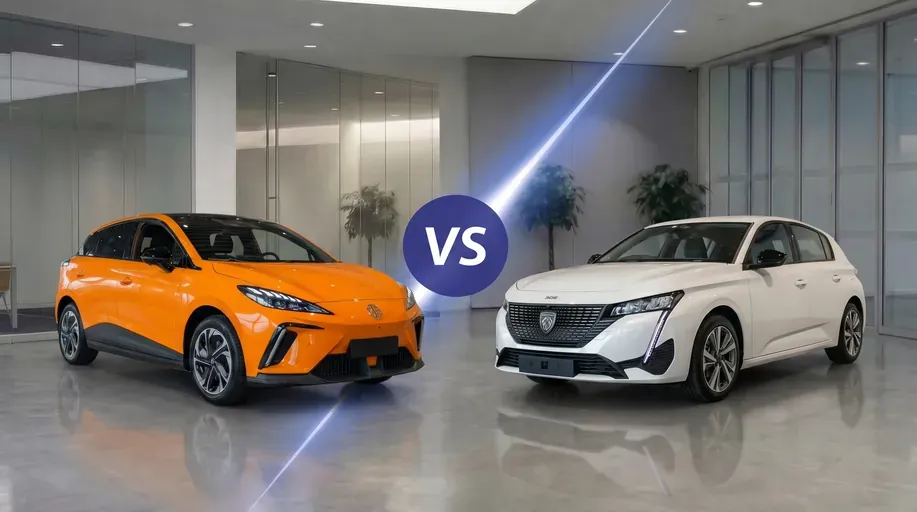
MG4 vs. Peugeot e-308: Complete comparison 2026

Detailed comparison of the MG4 and Peugeot e-308. We compared the real-world range, equipment, and driving characteristics of both electric vehicles. Read our verdict before you buy!

Apr 13, 2026

Car battle

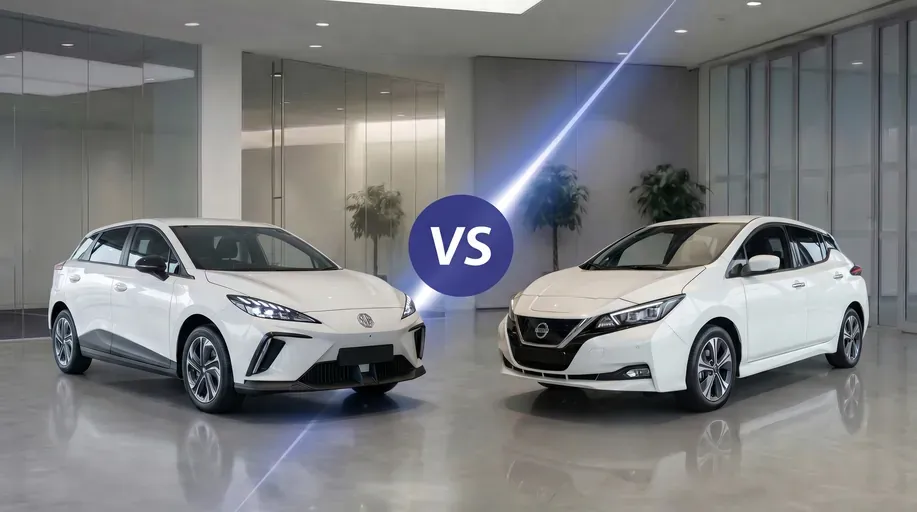
MG4 vs. Nissan Leaf: Complete comparison 2026

Detailed comparison of MG4 vs Nissan Leaf. Find out which of these electric vehicles offers better real-world range, equipment, and value for money. Read our verdict!

May 1, 2026

Car battle

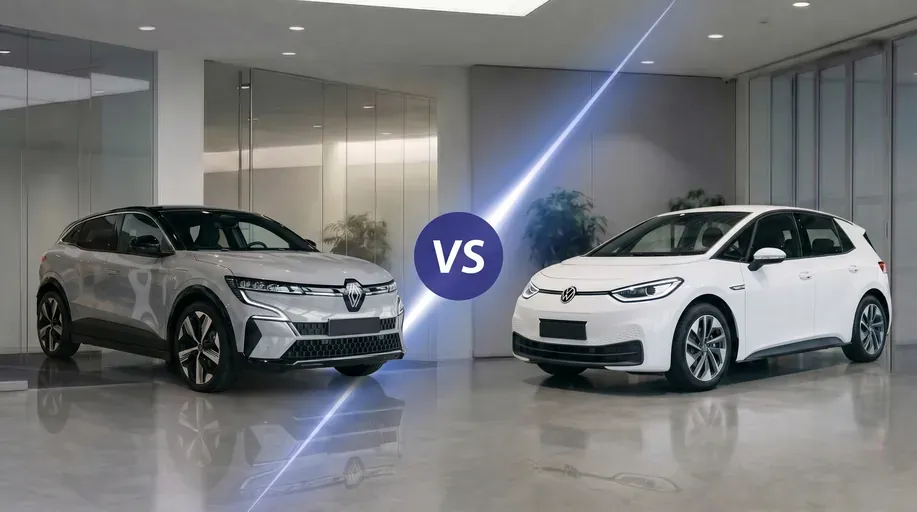
Renault Mégane E-Tech vs. Volkswagen ID.3: Complete comparison 2026

Detailed comparison of Renault Mégane E-Tech vs Volkswagen ID.3. Discover real-world range, differences in equipment, and driving characteristics. Read our final verdict.

May 7, 2026

We accept online card payments as well as wire transfers.

visa payment provider logovisa-electron payment provider logomastercard payment provider logomaestro payment provider logodiners-club payment provider logodiscover payment provider logo