Review
Review Škoda Kamiq: What do owners and experts really say?
Škoda Kamiq review: real owner experience, common faults, running costs, engine picks and prices — our comprehensive verdict before you buy.
Oct 27, 2026
Toyota Yaris Cross review: real owner experience, hybrid running costs, practical boot space and used prices — what to know before buying.
October 28, 2026
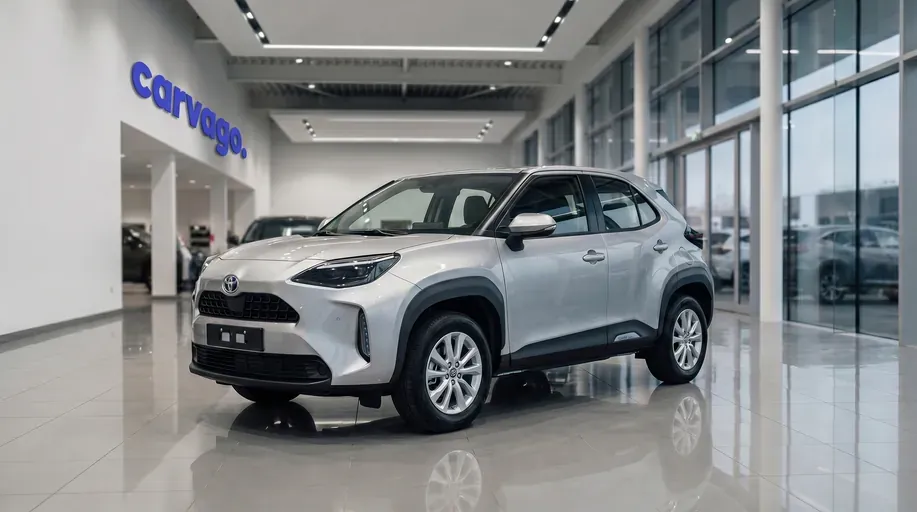
The Toyota Yaris Cross represents the Japanese manufacturer’s entrant into the competitive European B-SUV segment, blending a compact footprint with an elevated driving position. Sold exclusively as a five-door subcompact crossover, it targets urban commuters and smaller households looking for manageable exterior dimensions alongside hybrid running costs.
This review covers the first-generation model. European production commenced on 6 July 2021 in France, with initial customer deliveries starting in August 2021. Available with front-wheel drive or an electrically driven rear axle for all-wheel drive, the lineup has remained continuously on sale across European markets.
Toyota introduced a technical update revealed on 21 November 2023, which reached European dealerships in May 2024. This update brought revised digital interfaces alongside a more powerful hybrid powertrain choice. A subsequent exterior styling facelift premiered on 16 April 2026, introducing a redesigned front grille and revised lighting before customer deliveries began in September 2026.
Owner reports and roadside assistance logs for the Toyota Yaris Cross show that the mechanical hybrid drivetrain is dependable, but early production years suffered from auxiliary electrical trouble. The most frequent breakdown issue on cars built between 2021 and November 2024 involves the 12-volt auxiliary battery. Because connected standby telematics and keyless polling draw power continuously, cars left parked for more than a week or driven exclusively on short urban trips frequently suffer battery depletion. When the auxiliary battery drops below its operational threshold, the hybrid system cannot energise its primary electronics to engage drive, completely immobilising the car. In November 2024, factory production introduced an enlarged battery tray and an upgraded auxiliary unit, which reduced breakdown occurrences significantly. For earlier models, workshop software calibrations and higher-capacity replacement batteries typically resolve the issue.
Under chassis wear, owners report that the friction brakes require scrutiny. Because the hybrid Toyota Yaris Cross relies heavily on electric regeneration for gentle braking, the mechanical rear discs see light hydraulic pressure during routine driving. In damp climates, this low operating temperature causes rear discs to develop surface rust, pitting, and horizontal scoring long before the friction pads reach their wear limit. Drivers who habitually coast without occasional firm braking often face early disc replacement to pass roadworthiness inspections.
In-car electronics generate minor owner complaints on early production cars. Drivers of 2021 to 2023 models report periodic wireless smartphone connection dropouts, slow touchscreen response, and frozen display menus. These glitches stem from early multimedia software iterations and are typically resolved with dealer firmware updates.
Several official safety recalls have been issued across European markets, primarily targeting electronic control modules and software logic.
| Defect | Affected Build Window | Reach | Workshop Remedy |
|---|---|---|---|
| Instrument display memory failure | 21 February 2022 – 6 May 2025 | Worldwide | Reprogram instrument cluster ECU; replace complete display assembly if memory has deteriorated |
| Panoramic view monitor freeze | 3 April 2024 – 10 October 2025 | European variants with 360° camera | Reprogram parking assist ECU with updated software |
| Emergency call module shutdown | 15 July 2021 – 28 July 2023 | Pan-European / Worldwide | Over-the-air update or manual dealer re-flash of communication module software |
| Loose right-hand wheel nuts | 13 June 2023 – 23 June 2023 | European Union and UK | Inspect seating and retorque all right-hand wheel nuts to specification |
The European lineup of the Toyota Yaris Cross centres primarily on self-charging petrol-electric hybrid technology, pairing an automatic transmission with front-wheel drive as standard or intelligent all-wheel drive on selected versions. A conventional non-hybrid petrol engine was also offered in select mainland European markets during earlier production years.
| Engine | Fuel | Power | Gearbox | Drivetrain | Model years |
|---|---|---|---|---|---|
| 1.5 Dynamic Force | Petrol | 92 kW (125 hp) | 6-speed manual | Front-wheel drive | 2021–2024 |
| 1.5 Dynamic Force | Petrol | 92 kW (125 hp) | Automatic | Front-wheel drive | 2021–2024 |
| 1.5 Hybrid 116 / 115 | Full Hybrid | 85 kW (116 hp) | Automatic | Front-wheel drive | 2021–present |
| 1.5 Hybrid 116 AWD-i | Full Hybrid | 85 kW (116 hp) | Automatic | All-wheel drive | 2021–2024 |
| 1.5 Hybrid 130 | Full Hybrid | 96 kW (130 hp) | Automatic | Front-wheel drive | 2024–present |
| 1.5 Hybrid 130 AWD-i | Full Hybrid | 96 kW (130 hp) | Automatic | All-wheel drive | 2024–present |
For urban commuting and routine local journeys, the base hybrid Toyota Yaris Cross is an effective match. The electric motor provides prompt initial response away from traffic lights, and the powertrain shifts smoothly between battery drive and the combustion engine in stop-and-go conditions.
Buyers who regularly tackle motorway trips or travel with passengers and cargo will find the more powerful hybrid introduced in 2024 more capable. Its upgraded electric drive unit delivers stronger mid-range pulling power, which shortens overtaking manoeuvres and allows the car to maintain high cruising speeds with less engine strain.
If you regularly encounter snowy roads or loose surfaces, consider the all-wheel-drive Toyota Yaris Cross. This system uses a dedicated electric motor on the rear axle to aid traction without requiring a physical propshaft, though it slightly decreases underfloor boot capacity. Towing capabilities across both hybrid options remain modest, making them suitable only for lightweight utility trailers.
As a used purchase, the pure petrol Toyota Yaris Cross appeals to drivers who prefer a manual gearbox and mechanical simplicity. However, it lacks the instant low-speed electric assistance of the hybrids and requires working through the rev range to produce brisk momentum.
For detailed reporting on long-term mechanical durability and electrical components, consult the owner experiences section.
| Dimension / Capacity | Value |
|---|---|
| Length (mm) | 4,172–4,180 |
| Width (mm) | 1,765 |
| Height (mm) | 1,595 |
| Wheelbase (mm) | 2,560 |
| Boot volume, seats up (l) | 397 (350 with upper floor) |
| Boot volume, seats folded (l) | 1,097 |
Luggage figures apply to front-wheel-drive models; all-wheel-drive versions have a smaller luggage compartment due to the electric motor mounted beneath the boot floor.
While the front cabin offers an elevated seating position with clear forward visibility, rear passenger space in the Toyota Yaris Cross SUV is tight. Knee clearance behind taller front occupants is limited, making the back bench best suited for children or shorter trips for adults, though the upright crossover roofline preserves adequate headroom. Everyday versatility benefits from a functional boot layout with an adjustable split-level floor on front-wheel-drive models. The rear bench is fixed without fore-and-aft sliding adjustment, but flexibility improves on higher trims, which replace the standard 60:40 seatback with a 40:20:40 independent split that allows through-loading for longer items while keeping two usable passenger seats.
Professional road tests describe the Toyota Yaris Cross as having an inherently taut suspension setup. While the chassis suppresses body roll through corners and settles on smooth highways, the low-speed ride is stiff-legged around town, fidgeting over sharp road seams, sunken drains, and expansion joints, particularly on versions fitted with larger wheels. The steering is light and accurate for city manoeuvres, yet it provides numb on-centre road feel and minimal feedback when pressed along twisting roads.
Cabin refinement varies significantly by driving condition. The powertrain runs quietly during low-speed electric driving, but brisk acceleration prompts the petrol engine to flare up and hold high revs, generating a vocal drone through the automatic transmission. Motorway journeys also expose occupants to noticeable tyre roar and wind rustle over coarse tarmac.
Testers agree that the cabin is solidly assembled with no squeaks, featuring an elevated driving position and intuitive physical controls for the heating and ventilation. However, interior textures draw consistent criticism for an extensive use of hard, scratch-prone plastics across the lower dashboard and door cards. Subsequent updates introduced faster infotainment displays and added acoustic glass that marginally subdued cruising noise, but the underlying firm urban ride and utilitarian cabin surfaces remain defining traits across the entire production run.
All market charts in this section are drawn from Carvago listings for the entire Toyota Yaris Cross model family, including other generations represented in the data, rather than the reviewed generation alone. Because no verified generation-specific price data is supplied, these figures do not establish an isolated price level for the reviewed generation. Current listings show a median asking price of €23,000 for 2021 cars and €28,900 for 2026 models. Front-wheel-drive variants make up the vast majority of available stock across these model years.
Between April and September 2026, the volume of active Toyota Yaris Cross advertisements began at 7,804 listings and reached a high of 8,033 in July.
Active listings over time
| Month | Toyota Yaris Cross |
|---|---|
| 2026-04 | 7 804 |
| 2026-05 | 7 978 |
| 2026-06 | 8 027 |
| 2026-07 | 8 033 |
| 2026-08 | 7 386 |
| 2026-09 | 7 827 |
Source Carvago
Across these months, available listings remained substantial despite a brief dip to 7,386 in August, meaning buyers have consistently had several thousand vehicles to choose from.
Across used listings advertised today, the median asking price is €23,000 for cars built in 2021 and €28,900 for cars built in 2026, as outlined below.
Median advertised price by year of manufacture
| Model year | Toyota Yaris Cross |
|---|---|
| 2021 | 23 000 |
| 2022 | 23 500 |
| 2023 | 25 500 |
| 2024 | 27 400 |
| 2025 | 28 000 |
| 2026 | 28 900 |
Source Carvago
Buyers focusing on 2021 and 2022 model years encounter median asking prices of €23,000 and €23,500, whereas opting for 2025 or 2026 builds requires €28,000 or €28,900.
This depreciation curve illustrates how the Toyota Yaris Cross loses value over time, shedding 9% of its residual value by age one and 19% by age three. The data below charts this progression across consecutive vehicle ages.
Residual value by vehicle age
| Vehicle age | Toyota Yaris Cross |
|---|---|
| New | 28 800 |
| 1 yr | 26 100 |
| 2 yrs | 24 800 |
| 3 yrs | 23 300 |
| 4 yrs | 22 000 |
| 5 yrs | 21 500 |
| 6 yrs | 18 500 |
| 7 yrs | 17 000 |
Source Carvago
Over the seven years shown, the model sheds 41% of its initial residual value. The annual decline moderates to its gentlest pace between ages four and five, before the largest single-year drop of 14% occurs between ages five and six.
This chart outlines the volume of advertised cars split by fuel type from April to September 2026, where hybrid supply reached 7,688 listings in September 2026 against 135 petrol models.
Supply composition by fuel type
Petrol
Hybrid
| Month | Petrol | Hybrid |
|---|---|---|
| 2026-04 | 140 | 7 655 |
| 2026-05 | 169 | 7 800 |
| 2026-06 | 147 | 7 873 |
| 2026-07 | 136 | 7 893 |
| 2026-08 | 139 | 7 243 |
| 2026-09 | 135 | 7 688 |
Source Carvago
Anyone browsing the market will realistically be choosing almost exclusively from hybrid options, as petrol vehicles make up only a tiny fraction of available stock and other powertrains are entirely absent.
Between April 2026 and September 2026, the average asking price for the Toyota Yaris Cross began at €25,700, as shown in the monthly data below.
Average price development over time
| Month | Toyota Yaris Cross |
|---|---|
| 2026-04 | 25 700 |
| 2026-05 | 25 500 |
| 2026-06 | 25 600 |
| 2026-07 | 25 500 |
| 2026-08 | 25 600 |
| 2026-09 | 25 700 |
Source Carvago
Across this six-month span, the average remained stable, fluctuating within a narrow range between €25,500 and €25,700 before concluding at €25,700.
Smooth and responsive hybrid operation in urban stop-and-go traffic
Elevated driving position providing clear forward visibility
Practical boot layout with versatile split-folding rear seatbacks
Stiff low-speed ride that fidgets over sharp urban road imperfections
Cramped rear knee room behind taller front occupants
Auxiliary battery depletion issues on early production models
Yes, the Toyota Yaris Cross has a dependable hybrid drivetrain, though cars built between 2021 and 2024 can suffer auxiliary battery depletion if parked for extended periods. Checking that battery calibrations or replacements have been carried out helps avoid unexpected immobilisation.
The standard hybrid works well for urban commuting and everyday errands, but buyers who regularly tackle motorways or travel loaded should seek the more powerful hybrid introduced in 2024. That updated unit provides stronger mid-range pulling power with less engine noise during acceleration.
It serves smaller households well, but limited rear knee room makes the back seats tight for taller adults on long trips. Luggage carrying remains versatile thanks to a split-level boot floor, though opting for all-wheel drive reduces underfloor cargo capacity.
Have a dealer verify via the vehicle identification number (VIN) that all safety recalls were completed, especially updates for the instrument display and communication modules. You should also inspect the rear brake discs for rust ridges and scoring, which often develop early due to regenerative braking.
Sources: newsroom.toyota.eu, adac.de, check-vehicle-recalls.service.gov.uk, autocar.co.uk, autoexpress.co.uk
This article was prepared using artificial intelligence tools. The section guarantor is Petr Dušek.
Škoda Kamiq review: real owner experience, common faults, running costs, engine picks and prices — our comprehensive verdict before you buy.
Oct 27, 2026

Comparison of used Ford Kuga and Hyundai Tucson SUVs. Find out which one is the better choice. We bring a detailed comparison of equipment, space, and reliability.
Oct 16, 2026

Used SUV comparison: Ford Kuga vs. Renault Austral. Find out which model offers better engines, equipment, and real value. Read our final verdict!
Oct 16, 2026