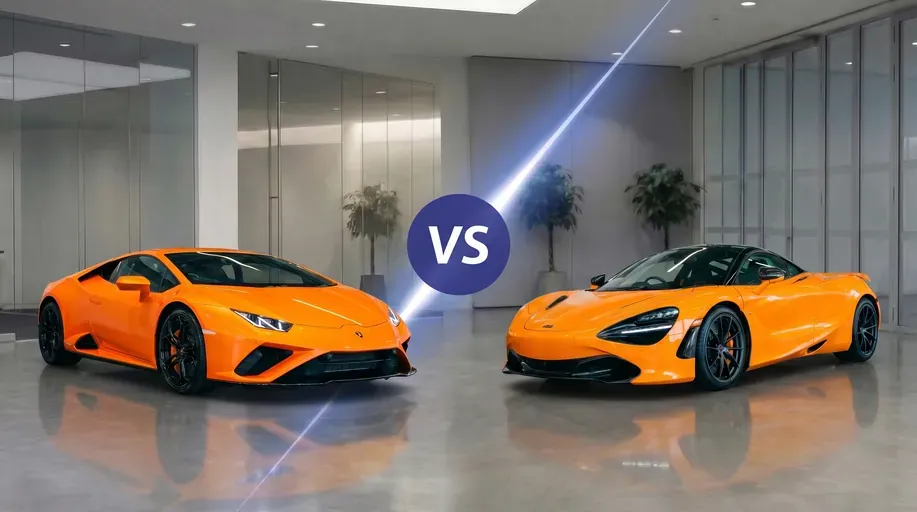
Lamborghini Huracán vs. McLaren 720S: Complete comparison 2026
Lamborghini Huracán vs McLaren 720S: A detailed comparison of supercars. Find out everything about performance, driving characteristics, and read our final verdict.
Oct 16, 2026
Toyota GR Supra review: real owner insights, 2.0 and 3.0 engine picks, running costs, common faults, and our definitive buying verdict.
October 17, 2026

The fifth-generation Toyota GR Supra represents Toyota's flagship rear-wheel-drive sports car, developed on a dedicated two-seater platform in collaboration with BMW. European customer deliveries began in September 2019 following the start of assembly in Graz in March 2019. This review focuses exclusively on this fifth-generation model across its production run, which concluded in March 2026.
Sold strictly as a fixed-roof Toyota Supra coupé, the model expanded beyond the launch six-cylinder variant when a four-cylinder alternative arrived in European markets in January 2021. A run-out edition was subsequently unveiled in November 2024 ahead of the model's retirement.
The car targets driving enthusiasts looking for a classic front-engine, rear-wheel-drive layout with modern chassis dynamics. With its two-seat cabin and compact footprint, it serves buyers prioritising driver engagement and winding-road precision over passenger capacity or luggage versatility.
European deliveries of the fifth-generation Toyota GR Supra coupe began in September 2019, with Austrian contract assembly concluding in March 2026. Across this production lifespan, official European safety recalls centered primarily on the vehicle's electrical starting equipment, braking assistance software, and running gear.
The starter assembly received two separate safety campaigns. In October 2025, a worldwide recall covering 2,113 vehicles (incorporating component build dates from September 2015 to September 2021, affecting 2020 and 2021 model years) was registered due to insufficient water ingress protection around the starter relay. In the presence of moisture, corrosion can induce short circuits and an increased fire risk, requiring workshops to inspect the unit and fit a protected relay or a replacement starter. In March 2026, a subsequent recall was issued for 1,285 vehicles globally built between 8 September 2020 and 29 September 2022. The official safety notice identified that abrasion-related deposits inside the starter relay could increase electrical contact resistance, creating a short circuit and an increased fire hazard; authorised workshops replace the starter motor assembly.
Earlier production batches were subject to mechanical and software campaigns. In September 2021, a European and worldwide recall for vehicles manufactured between 31 July 2018 and 15 June 2021 resolved an engine control issue where management software could mechanically damage the vacuum pump that supplies the brake booster during specific engine restart cycles. While hydraulic base braking remained operable, the unexpected loss of vacuum assistance increased required pedal effort and extended stopping distances; dealers remedied the defect by flashing updated engine software. In December 2020, an isolated early build batch produced between 13 March 2019 and 5 April 2019 was recalled because steering tie rods could experience vibration fatigue fractures in the bent groove under severe stress, which compromised handling; workshops replaced both tie rods.
Beyond official campaigns, owners report specific operational characteristics on the Toyota Supra. On 2020 and 2021 model-year examples with the 3.0-litre six-cylinder engine, owners report recurring low engine oil warnings between 3,000 and 8,000 km. Factory tolerance guidelines permit oil consumption up to one litre per 1,500 to 2,000 km under performance driving, though reports diminished significantly on 2022 and later model years once internal sealing updates were implemented. Furthermore, on both the 2.0-litre four-cylinder and 3.0-litre six-cylinder engines, workshop technicians report that the cartridge oil filter pleats can twist and shear away from the cap during oil changes, leaving the lower plastic cage lodged inside the housing and necessitating extraction tools to avoid contaminating the oil passages.
Factory wheel alignment can drift out of specification, leading to accelerated inner-shoulder tyre wear and high-speed tramlining. When evaluating a used eight-speed automatic or a six-speed manual Toyota GR Supra, scheduling a pre-purchase inspection through CarAudit provides an independent assessment of chassis alignment and verifies original factory software.
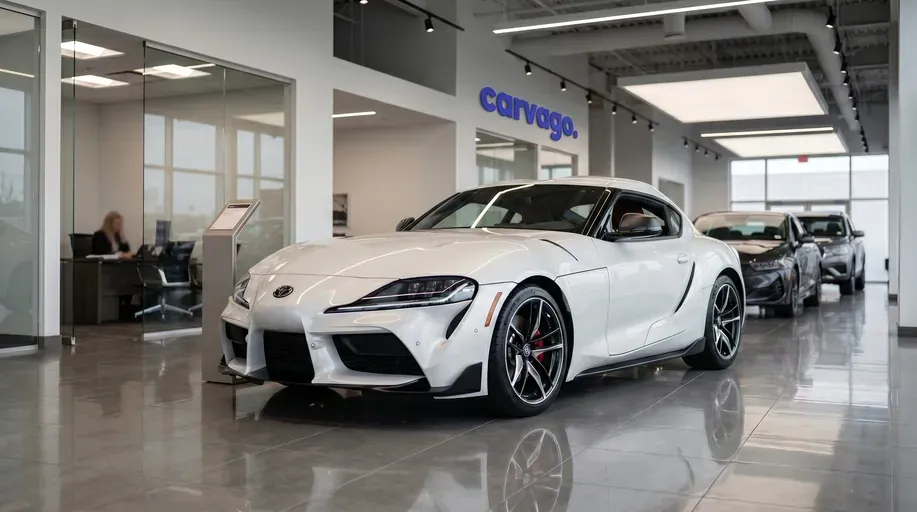
European buyers of the fifth-generation Toyota Supra could choose between two turbocharged petrol engines: an entry-level four-cylinder and a flagship inline-six. Both powerplants drive the rear wheels exclusively, with transmission options comprising a torque-converter automatic and, on later six-cylinder cars, a six-speed manual.
| Engine | Fuel | Power | Gearbox | Model years |
|---|---|---|---|---|
| GR Supra 2.0 | Petrol | 190 kW (258 hp) | 8-speed automatic | 2021–2026 |
| GR Supra 3.0 | Petrol | 250 kW (340 hp) | 8-speed automatic | 2019–2026 |
| GR Supra 3.0 | Petrol | 250 kW (340 hp) | 6-speed manual | 2022–2026 |
| GR Supra 3.0 A90 Final Edition | Petrol | 324 kW (441 hp) | 6-speed manual | 2025–2026 |
For frequent urban driving or short errands, neither turbocharged unit is well matched to cold-start cycles due to exhaust particulate filtration requirements, though the lighter four-cylinder reaches operating temperatures faster and proves easier to modulate in stop-start traffic. As a used car for daily commuting and mixed country-road driving, the four-cylinder represents a balanced option; its lower weight over the front axle gives the chassis noticeably agile directional changes in tighter bends.
For long-distance motorway travel, the six-cylinder paired with the eight-speed automatic Toyota Supra is the sensible configuration. The automatic shifts cleanly through intermediate ratios and keeps cruising revs low at sustained highway speeds, leaving substantial acceleration reserves for overtaking without downshifting aggressively.
Drivers seeking traditional mechanical involvement should look for the manual Toyota Supra introduced for the 2022 model year. Its six-speed manual gearbox features rev-matching downshifts that deliver greater driver engagement on demanding secondary roads.
Towing is not an option across the entire range, as the model was never homologated for trailers.
Regarding long-term powertrain durability, oil consumption nuances on early six-cylinder engines, and official safety recalls, refer to the dedicated owner experiences section of this review.
| Dimension | GR Supra Coupé |
|---|---|
| Length (mm) | 4,379 |
| Width without mirrors (mm) | 1,854 |
| Height (mm) | 1,292 |
| Wheelbase (mm) | 2,470 |
| Boot capacity, standard (l) | 290 |
| Boot capacity, seats folded (l) | Not applicable |
The Toyota GR Supra Coupé is engineered strictly as a two-seat sports car, dispensing entirely with a second row of seats or a folding rear bench. Everyday usability centres on the two-seat cockpit and the continuous luggage area positioned directly behind the front bucket seats. Accessing the cargo bay requires some forethought, as the tailgate lacks an exterior release button and must be unlatched using the cabin switch or the key fob. Because the load deck flows into the cabin without a solid bulkhead or dividing partition, loose cargo can slide forward under heavy braking. The shallow boot floor and narrow aperture suit soft weekend bags or routine shopping rather than rigid, oversized suitcases, giving the Toyota Supra adequate touring practicality for two occupants who pack neatly.
On the road, the Toyota GR Supra balances grand touring compliance with immediate agility. Fitted as standard on the six-cylinder, adaptive dampers absorb gentle undulations effectively, but sharp transverse ridges and sunken manhole covers send abrupt vertical impacts through the cabin. Steering is direct off-centre, though testers noted a lack of textured road feedback. Early production models drew consistent criticism for sudden rear-axle breakaway when pushed hard over mid-corner bumps or on wet surfaces. Road roar from the wide rear tyres is noticeable on coarse tarmac, and opening the windows causes severe cabin air buffeting, though steady cruising refinement is otherwise well isolated.
Inside, the cabin features solid fit and finish, supportive sports seats, and an intuitive infotainment interface operated via physical switchgear and a central rotary dial. The low-slung seating position suits spirited driving, but thick roof pillars and shallow windows create restrictive outward visibility and pronounced blind spots.
While early road tests debated whether the car felt like a relaxed cruiser or a nervous sports coupe at the limit, the 2022 chassis updates resolved the tension. Revised suspension valving and recalibrated steering stabilised body control and produced far more progressive breakaway angles. The manual Toyota GR Supra introduced that year added mechanical engagement through short, tactile shift throws and rev-matching software, trading light daily usability for a noticeably firm clutch pedal in congested city traffic.
All charts in this section are drawn from Carvago listings across the entire Toyota Supra model family, including other generations represented in the data, so they do not establish a separate price level exclusively for the reviewed generation. Across the recorded years of manufacture, the median asking price ranges from €45,900 for 2021 models to €69,300 for 2025 cars. The underlying data does not isolate specific powertrains or specifications, meaning individual listings within each year vary considerably based on the chosen engine and fitted equipment.
Between April and September 2026, active Toyota Supra listings began at 119 before reaching 131 in May. The chart below illustrates the monthly listing counts across this six-month span.
Active listings over time
| Month | Toyota Supra |
|---|---|
| 2026-04 | 119 |
| 2026-05 | 131 |
| 2026-06 | 116 |
| 2026-07 | 113 |
| 2026-08 | 106 |
| 2026-09 | 124 |
Source Carvago
Buyers had between 106 and 131 listings to browse across these months, with the total dipping to 106 in August before rising to 124 in September. While the count of cars on offer moved from month to month, choice remained at or above 106 throughout the period.
Across listings advertised today, the median asking price of cars built in 2021 is €45,900, whereas listings for cars built in 2025 show a median asking price of €69,300.
Median advertised price by year of manufacture
| Model year | Toyota Supra |
|---|---|
| 2019 | 52 000 |
| 2020 | 50 000 |
| 2021 | 45 900 |
| 2022 | 55 000 |
| 2023 | 58 900 |
| 2024 | 63 800 |
| 2025 | 69 300 |
Source Carvago
Buyers exploring earlier model years will find that asking prices do not scale uniformly by age, as 2021 cars show the lowest median asking price at €45,900 compared to €52,000 for 2019 models, while the newest 2025 models command a median asking price of €69,300.
The breakdown below shows monthly active advertisements by fuel type from April to September 2026, where petrol listings moved from 119 in April to 124 in September.
Supply composition by fuel type
| Month | Petrol |
|---|---|
| 2026-04 | 119 |
| 2026-05 | 131 |
| 2026-06 | 116 |
| 2026-07 | 113 |
| 2026-08 | 106 |
| 2026-09 | 124 |
Source Carvago
Petrol represents the entire volume on offer with 124 cars listed in September 2026, meaning buyers will find an exclusively petrol-powered selection.
Between April 2026 and September 2026, the average asking price for the Toyota Supra began at €56,100 before fluctuating across the following months.
Average price development over time
| Month | Toyota Supra |
|---|---|
| 2026-04 | 56 100 |
| 2026-05 | 55 500 |
| 2026-06 | 56 500 |
| 2026-07 | 57 800 |
| 2026-08 | 58 800 |
| 2026-09 | 57 900 |
Source Carvago
Prices reached a low of €55,500 in May and peaked at €58,800 in August before closing at €57,900 in September, representing a modest overall shift of around 3% across the six months.
Agile chassis dynamics paired with compliant grand touring ride comfort
Intuitive infotainment system with physical rotary controls and solid interior build
Engaging six-speed manual transmission available from the 2022 model year
Severe cabin air buffeting when driving with the windows open
Restrictive outward visibility and pronounced blind spots from thick roof pillars
Impractical cargo space lacking an exterior release button and a cabin partition
Examples of the Toyota GR Supra from 2022 onwards are preferable, as factory chassis updates delivered more progressive handling and internal engine revisions curbed oil consumption on six-cylinder models. Earlier cars remain viable provided safety recall work is verified and oil levels are monitored regularly.
The four-cylinder petrol suits daily driving because its lower front-axle weight sharpens handling in tighter turns. For long-distance travel, the six-cylinder provides strong overtaking reserves, though it carries higher running costs.
Confirm via the VIN with an authorised dealer that safety recalls for the starter assembly and braking software have been completed. It is also advisable to inspect the front tyres for inner-shoulder wear and have chassis alignment verified through CarAudit.
It functions well for daily commuting and weekend touring for two occupants, though practicality is limited by restrictive outward visibility and a strict two-seat layout. Cargo space is also shallow and lacks a partition to prevent luggage from shifting forward under braking.
Sources: newsroom.toyota.eu, media.toyota.co.uk, adac.de, autocar.co.uk, autoexpress.co.uk
This article was prepared using artificial intelligence tools. The section guarantor is Petr Dušek.

Lamborghini Huracán vs McLaren 720S: A detailed comparison of supercars. Find out everything about performance, driving characteristics, and read our final verdict.
Oct 16, 2026

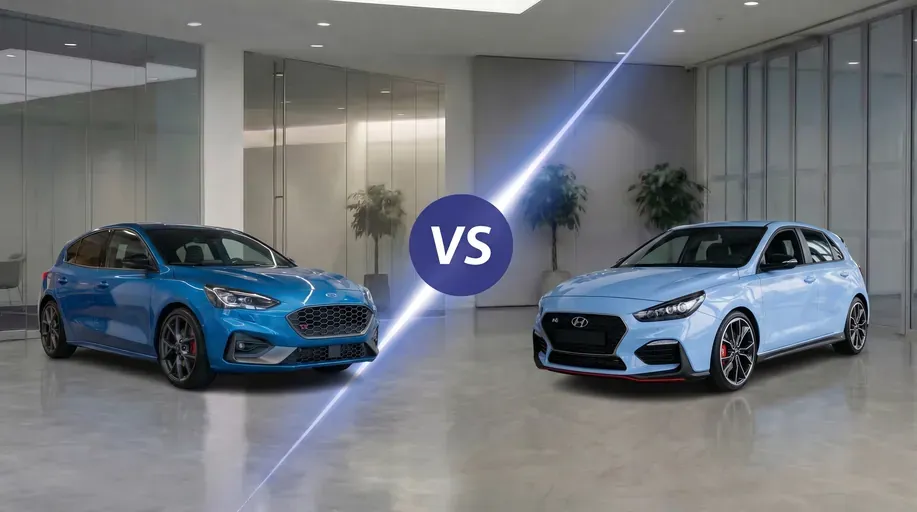
Detailed comparison of Ford Focus ST vs Hyundai i30 N. Discover the real differences in driving characteristics, performance, and equipment. Which hot hatch should you choose?
May 13, 2026

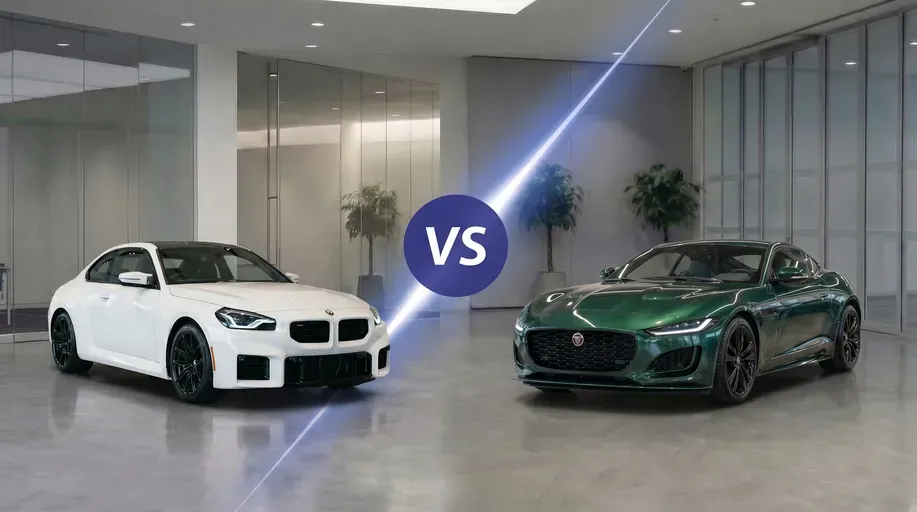
Detailed comparison of BMW M2 vs Jaguar F-Type. Discover real-world experiences, differences in performance and reliability of used cars, and read our detailed verdict.
Apr 29, 2026