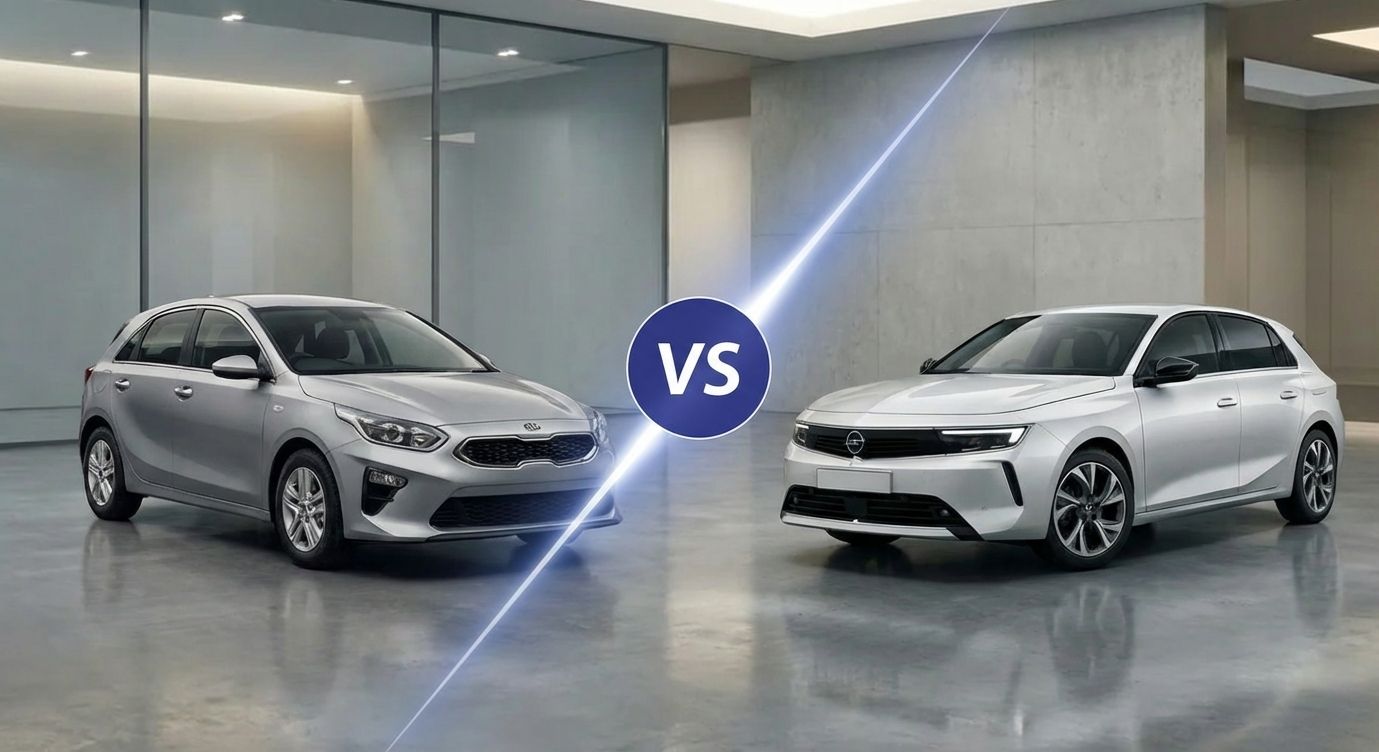
Car battle
Kia Ceed vs. Opel Astra: Complete comparison 2026
Detailed comparison of the Kia Ceed and Opel Astra. We compared real-world fuel consumption, reliability, and equipment. Find out which popular hatchback is worth buying.
Oct 16, 2026
Škoda Octavia IV review: real owner experience, reliability, running costs, engine picks and prices — our complete verdict before you buy.
October 26, 2026
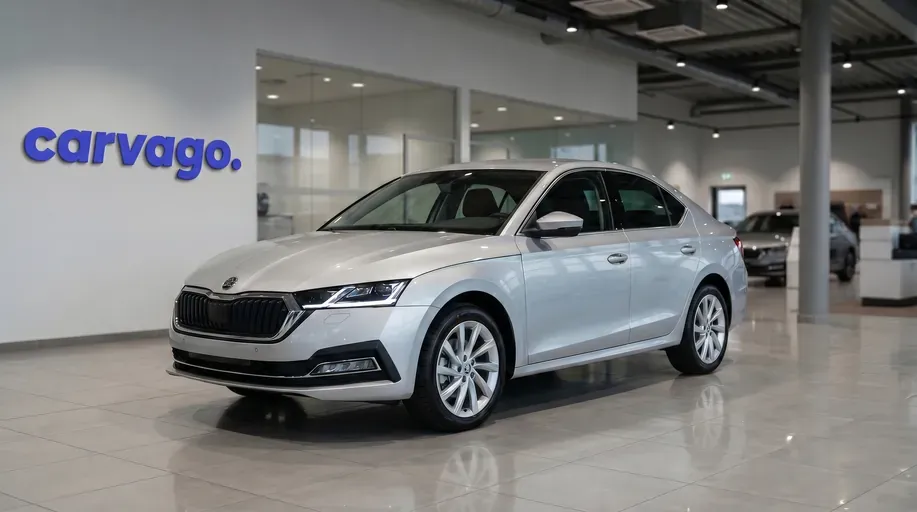
The fourth-generation Škoda Octavia occupies a distinct position in the European compact segment, bridging traditional family hatchbacks and larger mid-size vehicles. This review covers the fourth generation (type code NX), which entered series production on 28 November 2019, with first customer deliveries commencing in continental Europe in spring 2020.
Available as either a five-door Škoda Octavia hatchback or an estate Škoda Octavia Combi, the model remains a staple for corporate fleet operators, long-distance commuters, and families requiring functional passenger and luggage capacity.
A mid-cycle facelift was unveiled on 14 February 2024, with series production beginning in April 2024 and European customer deliveries following in summer 2024. The revision introduced redesigned aprons, updated lighting signatures, revised interior trims, and refreshed cabin technology across the lineup.
Real-world owner reports for the fourth-generation Škoda Octavia reveal an ownership experience largely shaped by software maturity and production timing. While the mechanical underpinnings have proved durable, cars produced between 2020 and 2022 generated widespread complaints on owner forums regarding digital stability. Professional endurance tests describe central touchscreen blackouts, unprompted reboots, delayed climate control menus, and false instrument cluster warnings. In most cases, these issues were resolved by workshop software updates, though dealers replaced the multimedia head unit in persistent isolated cases. For the revised infotainment hardware introduced with the mid-cycle facelift in summer 2024, long-term durability in field service is not yet established.
A distinct hardware fault affects models fitted with the capacitive multi-function steering wheel and Travel Assist. Official dealer advisories and owner reports indicate that malfunctioning hands-off detection sensors inside the rim trigger repeated acoustic chimes alongside warnings that assistance systems are unavailable. Because software calibrations proved ineffective, authorised workshops in many cases resolved the problem by replacing the complete steering wheel assembly with a revised part. Separately, tests and owners of the manual petrol Škoda Octavia with the 1.5 TSI engine report low-speed hesitation or jerky surging when pulling away in first gear from a cold start, which dealer networks addressed through engine control unit software updates.
| Affected Scope | Description of Defect | Remedial Workshop Action |
|---|---|---|
| Multiple generations (Build: Nov 2015 – Aug 2026) | Steering gear fastening bolt corrosion risk in areas exposed to road salt; potential loss of steering control | Inspection and replacement of fastening bolts with revised parts |
| Automatic models (Build: May 2020 – Nov 2023) | Incorrectly fitted heat protection mat near electromechanical brake servo; brake fluid reservoir melting risk | Inspection of mat seating and fitment of a secondary heat shield |
| All models (Build: Apr 2023 – Apr 2023) | Defective rear left wheel hub and steering knuckle assembly impairing stability | Replacement of rear left steering knuckle assembly |
| Plug-in hybrid (Build: Dec 2019 – Feb 2022) | High-voltage traction fuse produced with insufficient fire-extinguishing sand; interior flashover risk | Inspection of fuse, installation of insulation mat, fuse replacement |
| 2.0 TSI petrol (Build: Sep 2020 – Feb 2022) | Loose engine design cover coming into contact with the hot turbocharger | Removal of engine cover; replaced by redesigned cover with updated fixtures |
| Early builds (Build: Nov 2019 – May 2020) | Emergency call system (eCall) audio and data transmission failure | Software flash update applied to the online connectivity unit |
Several official safety recalls apply to the fourth-generation Škoda Octavia across Europe. The widest-reaching campaign was announced in October 2026 and covers vehicles built from November 2015 to August 2026 worldwide. It addresses potential corrosion on a steering system fastening bolt after prolonged operation in areas using road salt, which could cause the steering gear to shift; workshops inspect the assembly and fit revised bolts. In January 2024, a recall for automatic Škoda Octavia models with an electromechanical brake servo addressed an incorrectly seated heat protection mat that could cause the brake fluid reservoir to melt and leak.
Targeted recalls were also issued for specific powertrains and narrow production windows. In April 2022, a campaign for the hybrid Škoda Octavia 1.4 TSI iV addressed high-voltage fuses manufactured with insufficient fire-extinguishing sand, where a short circuit could cause a voltage flashover into the interior. In March 2022, 2.0 TSI petrol models were recalled because the engine design cover could detach under spirited driving and touch the turbocharger. Other verified campaigns include an October 2023 recall for a defective rear left steering knuckle across a two-week production batch, and an August 2020 software update for early cars to restore proper eCall functionality.
The fourth-generation Škoda Octavia arrived with an extensive engine portfolio that includes traditional combustion units, mild hybrids, plug-in hybrids, and a factory natural-gas option. The mid-cycle update simplified the line-up by phasing out the three-cylinder unit, the plug-in hybrids, and diesel all-wheel-drive configurations in favour of an electrified four-cylinder range.
| Engine | Fuel | Power | Gearbox | Drivetrain | Model Years |
|---|---|---|---|---|---|
| 1.0 TSI | Petrol | 81 kW (110 hp) | 6-speed manual | FWD | 2020–2024 |
| 1.0 TSI e-TEC | Mild Hybrid (Petrol) | 81 kW (110 hp) | 7-speed automatic | FWD | 2020–2024 |
| 1.5 TSI ACT | Petrol | 110 kW (150 hp) | 6-speed manual | FWD | 2020–2024 |
| 1.5 TSI e-TEC | Mild Hybrid (Petrol) | 110 kW (150 hp) | 7-speed automatic | FWD | 2020–2024 |
| 1.5 TSI G-TEC | CNG / Petrol | 96 kW (130 hp) | 7-speed automatic | FWD | 2020–2022 |
| 2.0 TSI | Petrol | 140 kW (190 hp) | 7-speed automatic | AWD | 2021–2024 |
| RS 2.0 TSI | Petrol | 180 kW (245 hp) | 6-speed manual / 7-speed automatic | FWD | 2020–2024 |
| 1.4 TSI iV | Plug-in Hybrid | 150 kW (204 hp) | 6-speed automatic | FWD | 2020–2023 |
| RS 1.4 TSI iV | Plug-in Hybrid | 180 kW (245 hp) | 6-speed automatic | FWD | 2020–2023 |
| 2.0 TDI | Diesel | 85 kW (115 hp) | 6-speed manual / 7-speed automatic | FWD | 2020–2024 |
| 2.0 TDI | Diesel | 110 kW (150 hp) | 6-speed manual | FWD | 2020–2024 |
| 2.0 TDI | Diesel | 110 kW (150 hp) | 7-speed automatic | FWD | 2020–2024 |
| 2.0 TDI | Diesel | 110 kW (150 hp) | 7-speed automatic | AWD | 2020–2024 |
| RS 2.0 TDI | Diesel | 147 kW (200 hp) | 7-speed automatic | FWD / AWD | 2020–2024 |
| 1.5 TSI | Petrol | 85 kW (115 hp) | 6-speed manual | FWD | 2024–present |
| 1.5 TSI mHEV | Mild Hybrid (Petrol) | 85 kW (115 hp) | 7-speed automatic | FWD | 2024–present |
| 1.5 TSI | Petrol | 110 kW (150 hp) | 6-speed manual | FWD | 2024–present |
| 1.5 TSI mHEV | Mild Hybrid (Petrol) | 110 kW (150 hp) | 7-speed automatic | FWD | 2024–present |
| 2.0 TSI | Petrol | 150 kW (204 hp) | 7-speed automatic | AWD | 2025–present |
| RS 2.0 TSI | Petrol | 195 kW (265 hp) | 7-speed automatic | FWD | 2024–present |
| 2.0 TDI | Diesel | 85 kW (115 hp) | 6-speed manual | FWD | 2024–present |
| 2.0 TDI | Diesel | 110 kW (150 hp) | 7-speed automatic | FWD | 2024–present |
For drivers operating mostly in town or tackling shorter daily commutes, the smaller petrol Škoda Octavia variants make the most practical sense. On early model years, the three-cylinder petrol offers adequate agility for urban trips, while the updated base four-cylinder petrol provides smoother operation at low speeds. When paired with the automatic gearbox, the mild-hybrid system delivers seamless stop-start engagement and allows unpowered coasting, keeping urban running uncomplicated.
For general, mixed driving routines encompassing school runs, suburban commuting, and regular weekend trips, the mid-range four-cylinder petrol is the most balanced option in the range. It delivers ample pulling power from low engine speeds and features cylinder deactivation to curb consumption when cruising. Buyers seeking an automatic transmission in this bracket will naturally land on the mild-hybrid variant, which remains available as a new car.
Frequent motorway commuters and drivers accumulating high annual mileages are best served by the diesel Škoda Octavia. The more powerful 2.0 TDI settles into an unobtrusive hum at sustained cruising speeds and provides robust mid-range endurance. Buyers who regularly tow heavy trailers or require all-weather traction should focus on used pre-facelift diesel models, which offered all-wheel drive, or step into the updated all-wheel-drive Škoda Octavia 4x4 petrol variant introduced from 2025.
For detailed information regarding mechanical wear patterns, factory software updates, and verified safety recalls across the powertrain family, refer to the owner experiences section of this review.
| Dimension | Liftback | Combi |
|---|---|---|
| Length (mm) | 4,689–4,698 | 4,689–4,698 |
| Width (mm) | 1,829 | 1,829 |
| Height (mm) | 1,470 | 1,468 |
| Wheelbase (mm) | 2,686 | 2,686 |
| Boot capacity (standard petrol/diesel, seats up / folded, l) | 600 / 1,555 | 640 / 1,700 |
These standard luggage capacities apply to front-wheel-drive petrol and diesel variants; they do not apply to all-wheel-drive configurations, sports suspension setups, or plug-in hybrid and natural gas variants, which have reduced luggage compartments due to underfloor battery and tank packaging.
In the passenger compartment, the Škoda Octavia provides ample legroom and headroom across the outer rear seats, allowing tall adult passengers to sit comfortably behind tall front occupants. The outer cushions offer supportive posture contouring for long-distance travel, though carrying three adults abreast is restricted by cabin width and the central floor tunnel. Daily practicality relies on a fixed rear bench with a 60:40 split-folding backrest, a centre armrest with an integrated ski hatch, and practical bag hooks in the luggage bay. Choosing the Škoda Octavia Combi adds a level loading sill and greater vertical loading clearance, which simplifies sliding in bulky cargo compared to the liftback's deeper luggage lip.
On the road, whether in liftback form or as the Škoda Octavia Combi, the Škoda Octavia prioritises calm stability over driver involvement. Standard suspension setups absorb low-speed road imperfections softly, though severe dips can cause the dampers to reach their limits. Optional adaptive dampers improve body control over undulations. However, lower-powered models with a standard torsion-beam rear axle react stiffly to sharp transverse ridges, occasionally stepping out across broken tarmac mid-corner. The electromechanical steering feels light and progressive, but provides little tactile road feedback, maintaining predictable understeer. Cabin noise remains subdued with petrol engines, though diesel variants transmit noticeable combustion clatter and vibration under load, and the liftback produces wind rustle around the rear tailgate at motorway pace.
Inside, the cabin features soft upper dashboard surfaces and textile trim, offset by unpadded hard plastic on the lower dashboard and rear door cards. Early cars drew criticism for touch-sensitive climate sliders that distract while driving, alongside the absence of physical air vent thumbwheels. Front seats with certified ergonomic support and optional sports seats offer sustained posture comfort.
While professional road tests praise the Octavia for its composed long-distance cruising, opinions diverge on secondary ride comfort across rough urban tarmac. The mid-cycle update addressed key cabin complaints with a faster, larger central touchscreen, introduced matte interior accents that eliminate distracting sun reflections, and replaced the former three-cylinder base petrol with a calmer four-cylinder unit that eliminates low-speed drivetrain shudder.
All market charts in this section reflect current Carvago listings across the entire Škoda Octavia model family, including earlier generations represented in the data rather than the reviewed fourth generation alone. Consequently, this overview does not establish a separate price level exclusively for the newest generation. In the current European market offer, the median asking price spans from €16,800 for 2019 model years to €36,300 for 2026 model years, with 2023 cars recording a median asking price of €26,500.
Between April and September 2026, active Škoda Octavia listings remained in a narrow band, opening at 25,668 in April and standing at 26,100 by September. The chart below shows how the volume of advertised vehicles developed over these six months.
Active listings over time
| Month | Škoda Octavia |
|---|---|
| 2026-04 | 25 668 |
| 2026-05 | 25 926 |
| 2026-06 | 26 584 |
| 2026-07 | 26 278 |
| 2026-08 | 25 859 |
| 2026-09 | 26 100 |
Source Carvago
With monthly supply consistently between 25,668 and 26,584 listings, buyers can count on an extensive selection across the market with little change in overall availability.
Among used Škoda Octavia listings advertised today, the median asking price of cars built in 2019 is €16,800, compared to a median asking price of €36,300 for cars advertised today built in 2026. The chart below details how these median asking prices compare across each build year.
Median advertised price by year of manufacture
| Model year | Škoda Octavia |
|---|---|
| 2019 | 16 800 |
| 2020 | 19 400 |
| 2021 | 21 900 |
| 2022 | 23 000 |
| 2023 | 26 500 |
| 2024 | 32 500 |
| 2025 | 33 800 |
| 2026 | 36 300 |
Source Carvago
Buyers exploring older model years see median asking prices ranging from €16,800 for 2019 models to €23,000 for 2022 models. Newer options range from €26,500 for 2023 builds to €36,300 for 2026 builds, with the largest difference between consecutive model years occurring between 2023 at €26,500 and 2024 at €32,500.
This depreciation curve illustrates how the Škoda Octavia loses residual value with vehicle age, shedding roughly 17% in its first year and 34% by age three.
Residual value by vehicle age
| Vehicle age | Škoda Octavia |
|---|---|
| New | 36 800 |
| 1 yr | 30 400 |
| 2 yrs | 27 300 |
| 3 yrs | 24 200 |
| 4 yrs | 20 700 |
| 5 yrs | 18 800 |
| 6 yrs | 16 300 |
| 7 yrs | 14 500 |
Source Carvago
Across the seven-year span shown, the model loses about 61% of its residual value overall, with the sharpest decline occurring in the first year before annual losses moderate.
Across the six recorded months, diesel and petrol made up the vast majority of listings, with 13,120 diesel and 10,677 petrol cars advertised in April 2026. The following chart shows how advertised counts broke down across each fuel type through September 2026.
Supply composition by fuel type
Petrol
Diesel
Hybrid
CNG
LPG
| Month | Petrol | Diesel | Hybrid | CNG | LPG |
|---|---|---|---|---|---|
| 2026-04 | 10 677 | 13 120 | 1 650 | 204 | 2 |
| 2026-05 | 10 433 | 13 758 | 1 526 | 189 | 2 |
| 2026-06 | 10 424 | 14 429 | 1 544 | 171 | 2 |
| 2026-07 | 10 284 | 14 337 | 1 498 | 144 | 1 |
| 2026-08 | 9 994 | 14 307 | 1 426 | 120 | 0 |
| 2026-09 | 10 128 | 14 450 | 1 403 | 111 | 0 |
Source Carvago
In September 2026, diesel remained the most prevalent fuel with 14,450 active listings, followed by petrol at 10,128 cars, hybrids at 1,403, and CNG at 111. Buyers will find the overwhelming majority of available vehicles equipped with diesel or petrol engines, while hybrid and alternative-fuel options form a much smaller selection.
The chart tracks the average asking price for the Škoda Octavia between April 2026 and September 2026, opening at €26,100 before leveling off at €25,900 in May and June.
Average price development over time
| Month | Škoda Octavia |
|---|---|
| 2026-04 | 26 100 |
| 2026-05 | 25 900 |
| 2026-06 | 25 900 |
| 2026-07 | 25 900 |
| 2026-08 | 25 800 |
| 2026-09 | 25 700 |
Source Carvago
Across the six-month period, the average asking price moved modestly from €26,100 to €25,700, representing a minor overall decline of roughly 1.5 percent.
Accommodating rear passenger legroom and practical luggage capacity in both body styles
Composed long-distance cruising manners paired with supportive ergonomic front seats
Balanced four-cylinder petrol and diesel engine options suited to high annual mileage
Infotainment software reboots, frozen screens, and delayed climate menus on 2020–2022 builds
Stiff, wooden reaction from the standard torsion-beam rear axle over sharp ridges and potholes
Distracting touch-sensitive climate sliders and unpadded hard plastic on lower interior surfaces
Mechanically the fourth-generation Škoda Octavia is dependable, but early 2020–2022 models suffered from widespread software instability. Most glitches were resolved via workshop updates, though long-term durability for post-2024 infotainment hardware remains unproven.
Models from 2023 onwards or the updated 2024 facelift are the safest choices, as they avoid the digital teething troubles of early production runs. For older examples, confirm that all dealer software updates and safety recalls have been completed.
Frequent motorway drivers are best served by the 2.0 TDI diesel Škoda Octavia, which delivers quiet high-speed cruising and robust endurance. Urban drivers should opt for the smoother petrol engines instead.
Check the vehicle identification number (VIN) with an authorised dealer to confirm all safety recalls have been completed. During a cold-start test drive, verify that the infotainment screen boots promptly and that the gearbox shifts smoothly without hesitation.
Sources: skoda-storyboard.com, adac.de, autobild.de, autocar.co.uk, autoexpress.co.uk
This article was prepared using artificial intelligence tools. The section guarantor is Petr Dušek.
Detailed comparison of the Kia Ceed and Opel Astra. We compared real-world fuel consumption, reliability, and equipment. Find out which popular hatchback is worth buying.
Oct 16, 2026
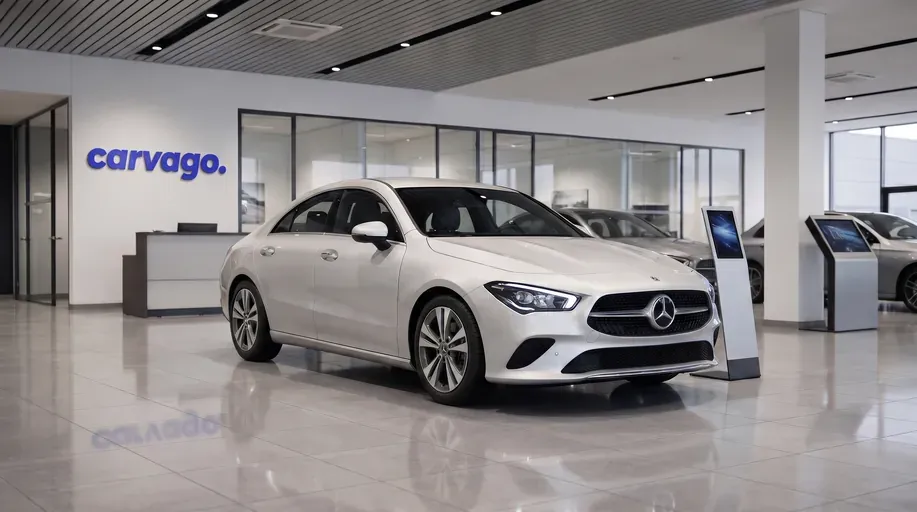
Mercedes-Benz CLA review: real owner insights, EV range, practicality, running costs, and expert verdict on the third-generation model.
Oct 25, 2026
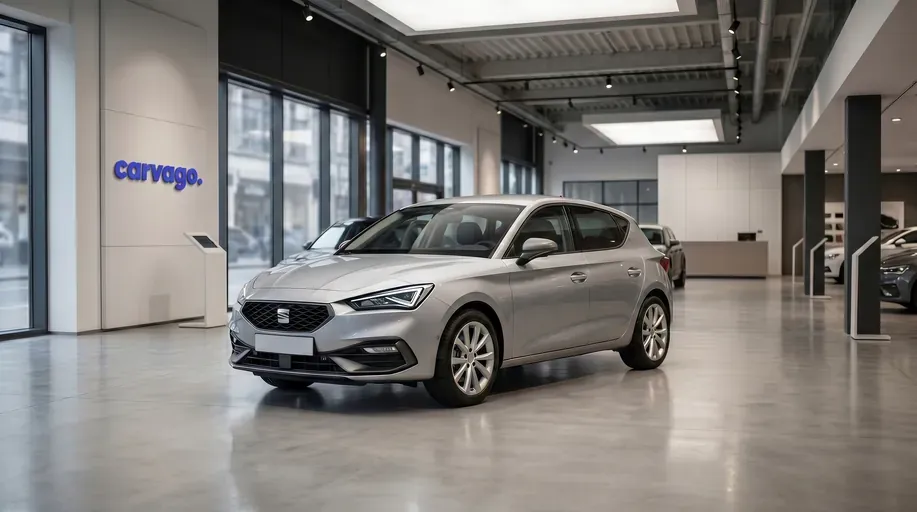
SEAT Leon Mk4 review: real owner experience, common faults, engine picks, and running costs. Read our expert verdict before you buy.
Oct 24, 2026